
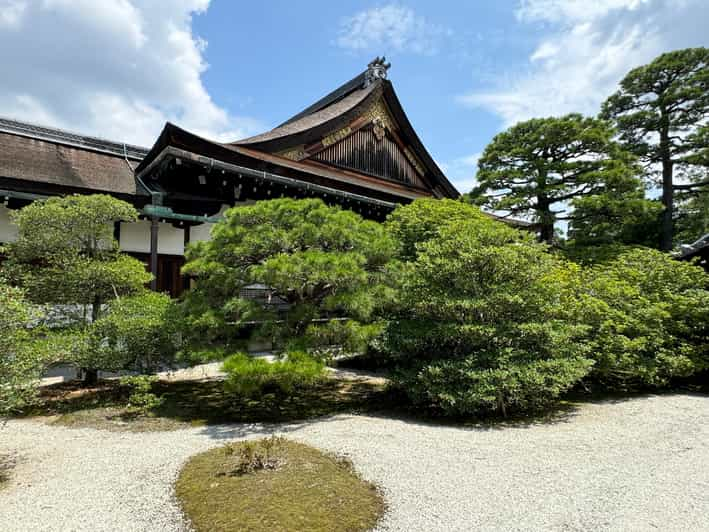
Review · PALACES WORLDWIDE
Kyoto: Discover Every Bit of Kyoto Imperial Palace
Kyoto Imperial Palace gives you a rare look at Japan’s former seat of power, from the grand Shishinden ceremony hall to the quiet garden once connected with imperial daily life. An English-speaking guide helps explain why these buildings mattered, rather than leaving you to admire the roofs and gates without context.
I like the focus on imperial traditions and the chance to see several parts of the palace grounds in one short visit. I also like the small-group or private format, which can make it easier to ask questions. The main caution is guide quality: some visitors received lively explanations, while one found the tour offered little information.
Key points
- Meet at Hamaguri Gate: Your guide waits outside the Kyoto Imperial Palace entrance with a yellow DeepExperience sign.
- See the Shishinden: This majestic hall was used for major imperial ceremonies and is the visual high point of the visit.
- Learn about court life: The tour includes the Emperor’s personal residence and the routines of the imperial court.
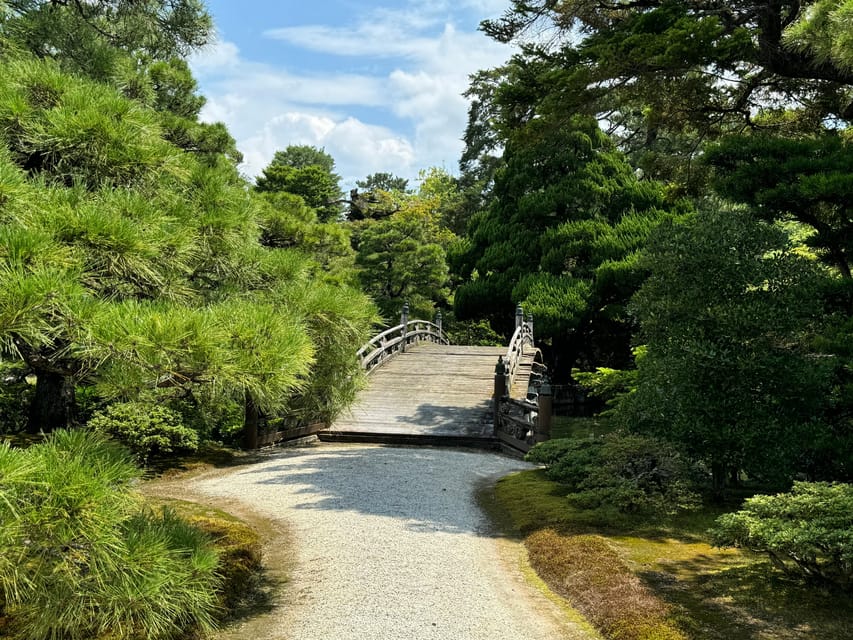
- Walk through quiet gardens: Landscaped grounds offer a welcome change from Kyoto’s busier streets.
- Expect a short visit: The activity is advertised as one hour, while the guided palace visit is also described as lasting about one and a half hours.
- Guide quality matters: Yoshi earned special praise for explaining Japanese history and pointing out small details around the grounds.
Why Kyoto Imperial Palace is worth your time
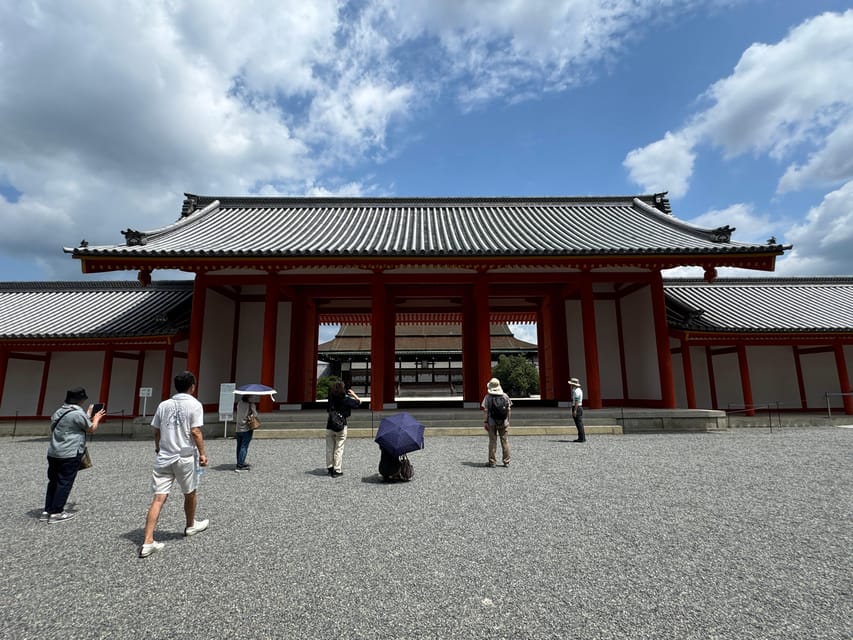
Kyoto Imperial Palace was home to Japan’s imperial family until the capital moved to Tokyo in 1869. That simple fact gives the visit its shape: you are not just walking through an old residence, but through the former center of imperial government and ceremony.
The palace sits inside Kyoto Gyoen National Garden, a broad green area that gives the complex room to breathe. The setting feels more open and measured than many of Kyoto’s compact temples. You can take in large gates, formal buildings, gardens, and long paths without feeling squeezed into a narrow sightseeing route.
I especially like that this experience deals with both public and private imperial life. The Shishinden shows the formal side of monarchy, with grand ceremonies and official duties. The Emperor’s personal residence gives you a closer look at the quieter side of court life. Together, they help you understand how the palace functioned.
You should keep your expectations sensible. The experience lasts only about an hour, or roughly an hour and a half according to the guided-visit details. That is enough for a focused introduction, not a slow, exhaustive examination of every building and garden.
More Royal Palace Tours around the world:
- Madrid: Royal Palace Fast-Access Admission Ticket
★ 4.6 · 13,856 reviews - Madrid: Royal Palace Expert Guided Tour with Skip-the-Line
★ 4.7 · 8,407 reviews - Amsterdam: Royal Palace Entry Ticket + Audio guide
★ 4.6 · 7,889 reviews
Starting at Hamaguri Gate
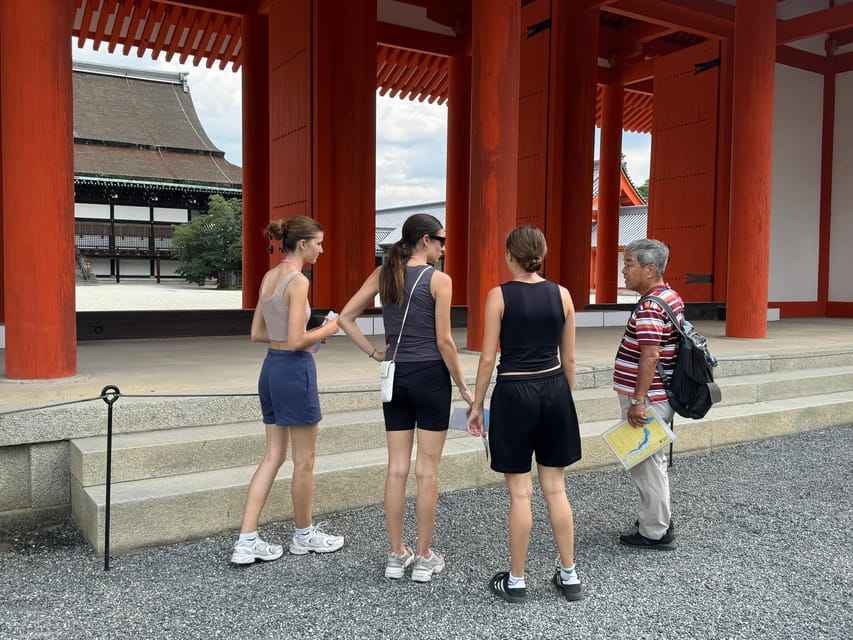
The meeting point is in front of Hamaguri Gate, also called Hamagurigomon, at Kyoto Imperial Palace. Look for the guide holding a yellow sign marked DeepExperience.
This is a useful arrangement because the gate gives you a clear visual target. Kyoto Imperial Palace is part of a large garden area, so having a precise meeting point matters. Arrive with enough time to locate the gate and identify the guide before the scheduled start.
The meeting point is also a good reminder that this is a walking tour. You will move between palace buildings and outdoor areas rather than settle into one viewing room. Comfortable shoes are a practical choice, especially if you want to enjoy the gardens instead of treating them as a quick passage between stops.
The tour is offered privately or in small groups. That affects the feel of the visit. A private group should give you more room to shape the conversation around your interests, while a small group can keep the cost reasonable and still allow some questions.
The Shishinden and the public face of the palace
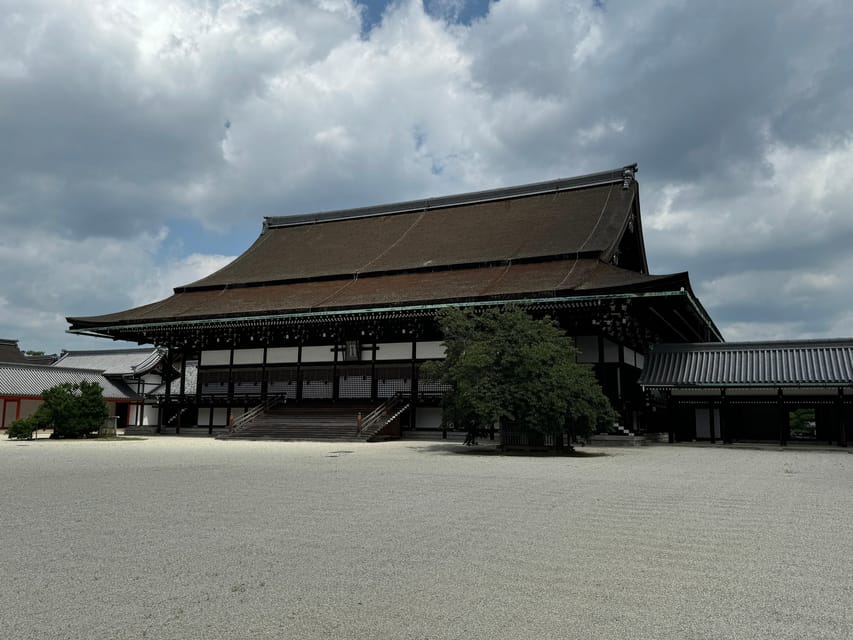
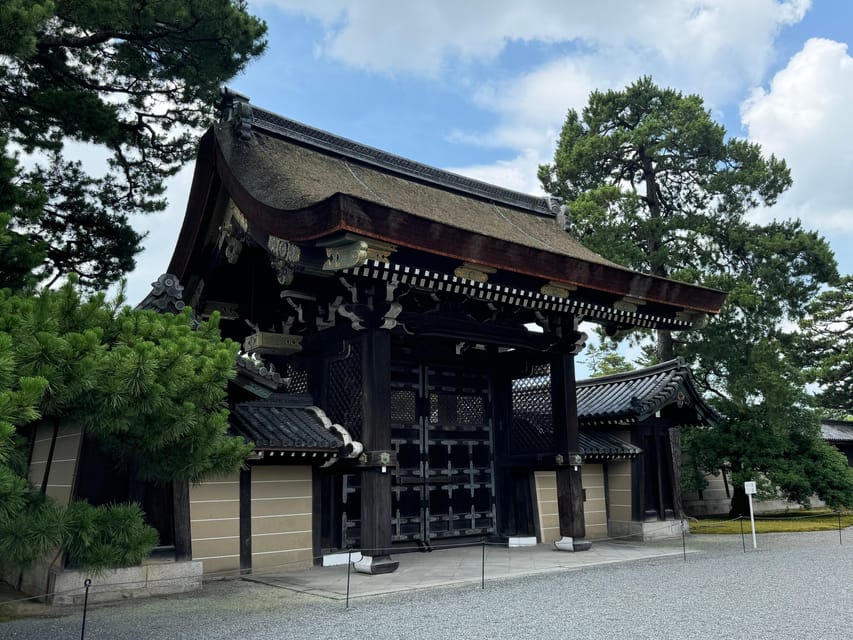
The Shishinden, or main hall, is the tour’s grandest architectural stop. This is where emperors conducted important ceremonies, so the building represents the public role of the imperial family.
You will likely notice the strong sense of order in the design. The hall, surrounding grounds, and formal approach all reinforce ceremony and rank. Even if you know little about Japanese court customs, the scale and placement of the building make its purpose clear.
This is where a guide can add real value. Architecture alone tells you that the hall is important, but an explanation of the ceremonies held there helps you read the space. The best version of this tour connects the building’s appearance with imperial tradition, official functions, and the way Japan’s court was organized.
Yoshi received especially strong praise for explaining Japanese history and pointing out interesting details within the palace grounds. That kind of guidance is useful here. You do not need a lecture on every date, but you do need enough context to understand why this hall mattered.
If your guide is less prepared, the Shishinden can become a photo stop with limited meaning. One poor experience reported a guide who mainly walked along and took pictures without explaining the palace or its past. That is the clearest risk with booking this format: the setting is valuable, but the guide determines how much you take away.
Imperial ceremonies and official buildings
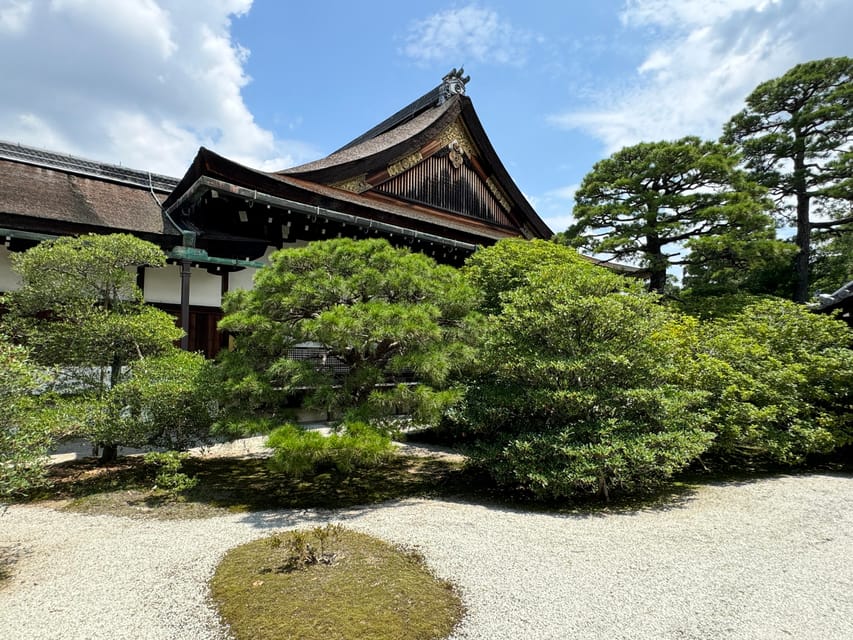
The palace complex includes several buildings used for ceremonies and official functions. These places help you see how the imperial residence worked as both a home and a center of state life.
The tour’s emphasis on grand ceremonies is useful because the imperial court can feel distant and abstract. Standing near the halls where formal events took place gives those traditions a physical setting. You can begin to picture the strict movement, careful presentation, and separation between public duty and private life.
I would pay close attention to the guide’s explanations of function. Ask which buildings were used for ceremonies, which served official purposes, and how those roles differed from the Emperor’s private residence. The activity is short, so direct questions are the best way to make the visit fit your interests.
The palace’s traditional Japanese architecture is another reason to take your time. Look beyond the most famous hall. Rooflines, gates, open spaces, and the relationship between buildings and gardens all contribute to the formal mood of the complex.
That said, do not expect access to every interior space. The information provided describes visits to the palace grounds and its notable buildings, but it does not promise unrestricted entry into every room. Much of the experience is about seeing the architecture and hearing how the spaces were used.
More palaces to tour around the world:
- Venice: Doge’s Palace Reserved Entry Ticket
★ 4.6 · 42,716 reviews - Paris: Versailles Palace and Gardens Full Access Ticket
★ 4.6 · 41,579 reviews - Granada: Alhambra & Nasrid Palaces Tour with Tickets
★ 4.7 · 19,801 reviews - Sintra: Pena Palace and Park Entrance Ticket
★ 4.2 · 17,410 reviews
The Emperor’s personal residence and court life
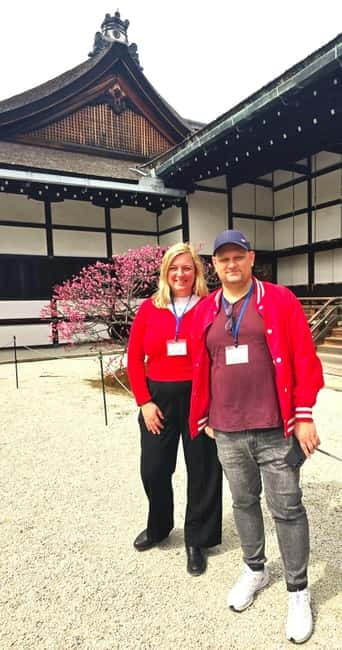
The Emperor’s personal residence offers a different angle from the ceremony halls. Here, the focus shifts from public appearances to daily life within the imperial court.
That contrast is one of the strongest reasons to choose this tour. A palace can seem like a collection of impressive rooms until you understand who used them and why. The personal residence helps make the imperial family feel less like a symbol on a distant stage and more like people living within a demanding court system.
The guide is expected to explain traditions, routines, and the history of the imperial family. You may find this section especially useful if you are interested in how Japanese customs shaped court life. The information supplied for the activity does not give a room-by-room list, so the exact emphasis may depend on the guide and the day’s route.
I would ask questions if the explanation feels too general. For example, ask how the private residence differed from the ceremonial halls, or how court life balanced personal space with formal obligations. A good guide should be able to build on the basic points rather than simply name each building.
This is also where the private or small-group setup can help. With fewer people, you have a better chance of keeping the conversation focused. If you are visiting with family or friends, a private format may be worthwhile if the additional cost fits your budget.
Gardens that slow the pace
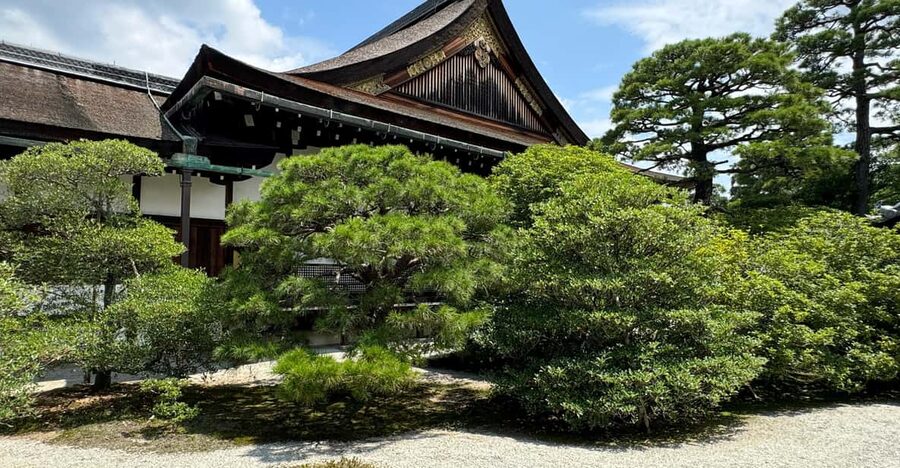
The palace gardens provide a quieter counterpoint to the formal buildings. Their careful planting, open paths, and calm arrangement give you time to look rather than simply move from one historical point to the next.
One visitor described the interior garden as jaw-droppingly beautiful. That reaction makes sense as a guide to what you should watch for: do not rush through the green spaces while waiting for the next hall. Notice how the gardens soften the strict lines of the palace architecture.
The gardens also help explain traditional Japanese design. Their appeal does not depend only on bright flowers or dramatic views. The balance between buildings, paths, trees, and open areas creates a controlled sense of calm.
The tour does not promise a long garden walk, and the total duration is limited. Still, this section can be one of the most memorable parts of the visit. If gardens are your main reason for coming, allow extra time before or after the tour to enjoy the wider Kyoto Gyoen National Garden on your own.
How much does the $38 price offer?
At $38 per person, this is not the cheapest way to see a palace whose entry is free. The price pays for the guide, organization, and interpretation rather than admission.
That can be good value if you want the imperial buildings to make sense. A free visit may show you the same broad setting, but a strong English-speaking guide can explain the purpose of the halls, the meaning of ceremonies, and the difference between public and private court spaces.
The value drops sharply if the guide provides little commentary. One very poor experience described a guide who offered almost no useful information. Since entry to Kyoto Imperial Palace is free, you are mainly deciding if expert explanation is worth $38.
I would book this tour if you enjoy history but do not want to research the palace beforehand. I would think twice if you prefer exploring quietly at your own pace, taking photographs, and reading information independently. A German visitor considered the guided booking unnecessary for exactly that reason.
The rating of 4.4 from 21 reviews suggests a generally positive experience, but not a flawless one. The split between highly praised guiding and a disappointing visit tells you to treat the guide as the key part of the purchase.
Timing, group size, and practical details
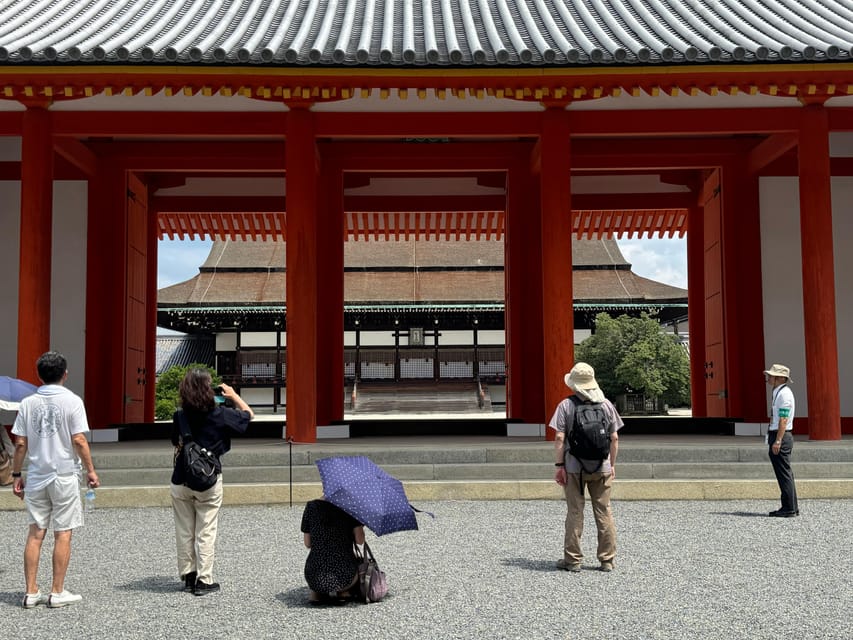
The activity is advertised with a one-hour duration, while the palace visit is also listed as lasting one and a half hours. Check the available starting time and the exact duration shown when you reserve. Either way, plan for a compact walking experience rather than a half-day outing.
The guide speaks English. Private and small-group choices are available, which is useful if you care about conversation or have specific questions about Japanese history.
The experience includes the guide and entry to Kyoto Imperial Palace, with palace entry listed as free. You can cancel up to 24 hours before the start for a full refund, and you can reserve now while paying later. Those terms help if your Kyoto plans are still shifting.
No transportation is included in the activity details, so you should make your own way to Hamaguri Gate. Use the exact gate name when checking your route, and allow time to find the yellow DeepExperience sign.
Who should book this Kyoto palace tour?
I would recommend it to first-time Kyoto visitors who want context without committing to a long historical tour. It also suits anyone curious about the imperial family, traditional architecture, formal ceremonies, and court life.
Families may appreciate the short length, especially if children can manage a walking visit but are unlikely to enjoy a long museum program. A private group may make it easier to keep younger visitors engaged with questions and details.
History fans should book only if they value spoken explanation. If your main goal is photography or quiet garden time, the free palace access may be enough. You can see the setting independently and spend as long as you like in the areas open to you.
The tour is also a reasonable choice for visitors who want to ask questions in English. Yoshi’s praised performance shows what the experience can offer when the guide is prepared: connections between architecture, Japanese history, and small details that are easy to miss.
Should you book it?
Book this Kyoto Imperial Palace tour if you want the palace explained, not merely seen. The Shishinden, ceremonial halls, imperial residence, and gardens give you plenty to look at, but the guide is what turns those sights into a coherent story.
At $38, it is fair value with a strong guide and less convincing value with a weak one. Choose a small group or private option if asking questions matters to you, and confirm the current tour length before booking. If you prefer self-guided sightseeing, save the money and explore the free palace grounds on your own.
FAQ
Where does the Kyoto Imperial Palace tour begin?
The tour begins in front of Hamaguri Gate, also called Hamagurigomon, at Kyoto Imperial Palace. The guide waits with a yellow sign marked DeepExperience.
What language is the tour offered in?
The tour is offered in English with a live English-speaking guide.
How long does the experience last?
The activity is described as lasting one hour, while the guided palace visit is also listed as one and a half hours. Check the available details for your chosen starting time.
Is entry to Kyoto Imperial Palace included?
Yes. Entry to Kyoto Imperial Palace is included, and the entry itself is listed as free.
Can I book a private tour?
Yes. Private and small-group options are available.
Can I cancel the booking for a refund?
Yes. You can cancel up to 24 hours in advance for a full refund.
Fresh palace tours around the world
- Bangkok Private Grand Palace Emerald Buddha and Reclining Buddha★ 4.5 · 2 reviews
- Bangkok Markets, Palaces and Temples Excursion★ 5.0 · 8 reviews
- Bangkok Two Temple Tour: Wat Pho, Emerald Buddha & Grand Palace★ 5.0 · 4 reviews
- Bangkok Royal Road – Top 3 Major Monuments (Grand Palace, Wat Pho, Wat arun)★ 4.5 · 111 reviews
- Bangkok Grand Palace and Emerald Buddha Tour★ 4.0 · 91 reviews
- Bangkok’s Landmarks Tour : GrandPalace WatTraimit WatPho WatArun★ 5.0 · 8 reviews
- Private Tour: Grand Palace,Wat Phra Kaew, Museum&Cooking Class★ 5.0 · 7 reviews
- Bangkok Grand Palace & Emerald Buddha Flexible Entry with Audio★ 3.5 · 3 reviews
Royal Palace Tours: the shortlist.

Royal Palace Expert Guided Tour with Skip-the-Line
Read our review →
Dubai To Abu Dhabi: Grand Mosque, Royal Palace & Etihad Towers
Read our review →
Madrid Essential: Historic Center, Plaza Mayor & Royal Palace
Read our review →

Abu Dhabi Day-Trip Grand Mosque, Royal Palace & Lunch
Read our review →
Louvre Entry & Etihad Tower/Royal Palace Options
Read our review →This visit also appears in