Review · BUCHAREST
Palace of the Parliament, Village Museum & Ceaușescu Mansion
Bucharest’s most revealing sights sit far apart, and this tour links them in one well-planned day: the Palace of the Parliament, the open-air Village Museum, and Ceaușescu’s former home. I like the sharp contrast between giant government rooms, old wooden farmhouses, and a dictator’s polished private world. I also like the private minivan, which saves you from piecing together several rides across the city.
The main catch is cost clarity. The $45 price covers the guide, city-center pickup and drop-off, and transfers, but entrance tickets are extra. Palace entry also cannot be guaranteed, and the Ceaușescu Mansion is closed on Mondays. Check those details before you book.
Key points to know before booking
- Three very different sides of Bucharest: communist power, Romanian village life, and Ceaușescu family luxury.
- Private six-hour tour: You travel by air-conditioned minivan with a professional guide and city-center pickup.
- Palace entry needs identification: Bring a valid ID, and understand that an exterior panorama may replace the interior visit if tickets are unavailable.
- Tickets cost extra: The operator can book them for you and help you skip the ticket line.
- Guide quality matters here: Gabriel is singled out for being kind, caring, and clear when explaining Romanian history and culture.
- Monday needs care: The Ceaușescu Mansion is closed that day, so choose another date if seeing all three main sights matters.
Why these three Bucharest sights belong together
This is not just a greatest-hits bus ride. The three stops tell a connected story about Romania in the twentieth century.
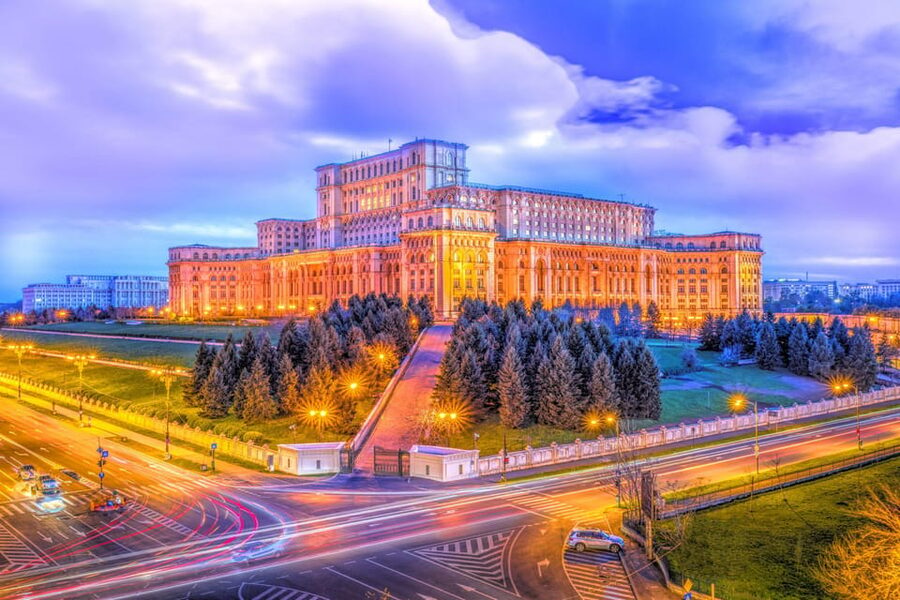
At the Palace of the Parliament, you see how Nicolae Ceaușescu wanted the state to look: huge, formal, and impossible to ignore. At the Village Museum, you see the older rural culture that existed long before communism and still shapes Romanian identity. At the Ceaușescu Mansion, you see the private comfort enjoyed by the country’s ruling family while ordinary Romanians lived under a far more restrictive system.
I like this range. You are not left with only grand architecture or only political history. Each stop changes the mood, which helps Bucharest feel like a real city rather than a collection of monuments.
The tour lasts six hours, with roughly one and a half hours at each major stop and driving time between them. That is enough time to see the main features without giving you an entire day of one subject. It is still a full outing, so wear comfortable shoes and keep some energy for the final stop.
More palace museums around the world:
- Venice’s Best: Basilica, Doge’s Palace, Gondola & History Gallery
★ 4.5 · 2,478 reviews - Royal Palace & Prado Museum Skip the Line Guided Tour
★ 4.5 · 1,347 reviews - Venice: City Pass with Museums including Doge’s Palace
★ 4.1 · 1,020 reviews
Inside the Palace of the Parliament
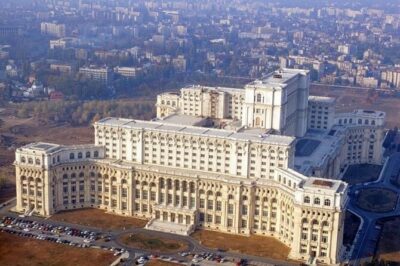
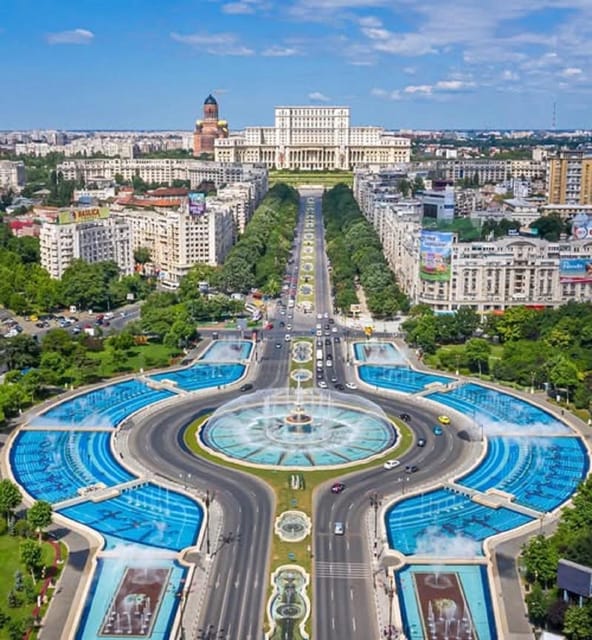
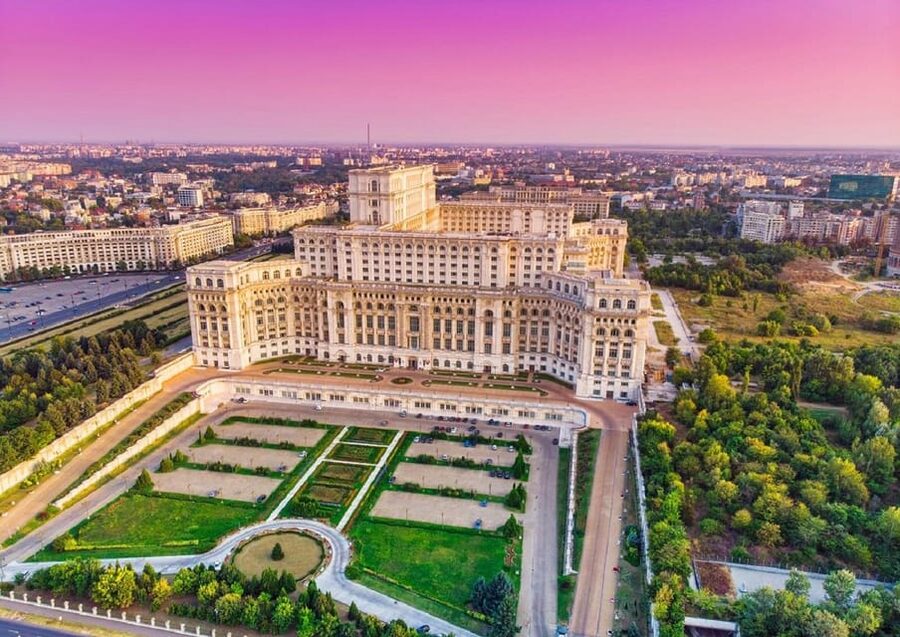
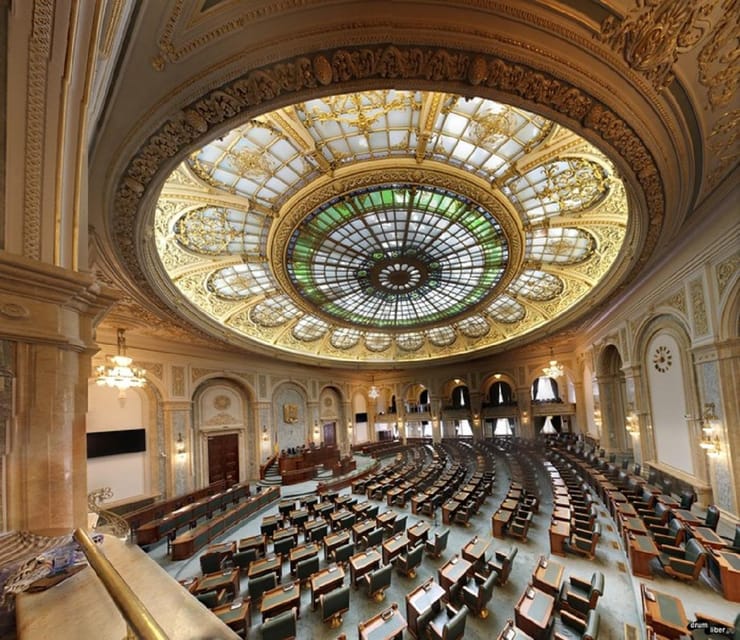
The Palace of the Parliament is the tour’s biggest visual shock. It is the largest administrative building in Europe, a vast project ordered under Nicolae Ceaușescu and built as a display of state power. Its scale is the point. Even before you study a room, the size of the building tells you what the regime wanted people to feel.
Inside, the guided route takes you through grand halls, conference rooms, ceremonial spaces, and the large balcony overlooking the city. Marble, gold, crystal, and heavy decoration fill the interiors. Your guide explains the construction, the difficulties involved, and the political events tied to the building.
I recommend listening closely to the explanations rather than treating the palace as a string of impressive rooms. Without context, it can look like an oversized collection of shiny surfaces. With a guide, the building becomes a lesson in ambition, control, and the cost of monumental projects.
The balcony and city view add a useful pause. After the dark scale of the interior, looking outward helps you understand the palace’s position in Bucharest. The tour includes photo time, guided touring, free time, and shopping time at this stop, although the exact balance depends on the day’s schedule.
There is an important practical issue. The palace requires a valid ID for entry, so bring one. Entrance tickets are not part of the $45 tour price, though the operator can arrange tickets for you. Even then, admission cannot be guaranteed. If interior tickets are unavailable, the visit changes to an exterior panorama.
That uncertainty is the largest weakness of the experience. If the interior is the main reason you want to book, confirm the ticket arrangement before paying. The outside view still gives you a sense of the building’s size, but it is not the same as walking through the marble halls.
The Village Museum in Herastrau Park
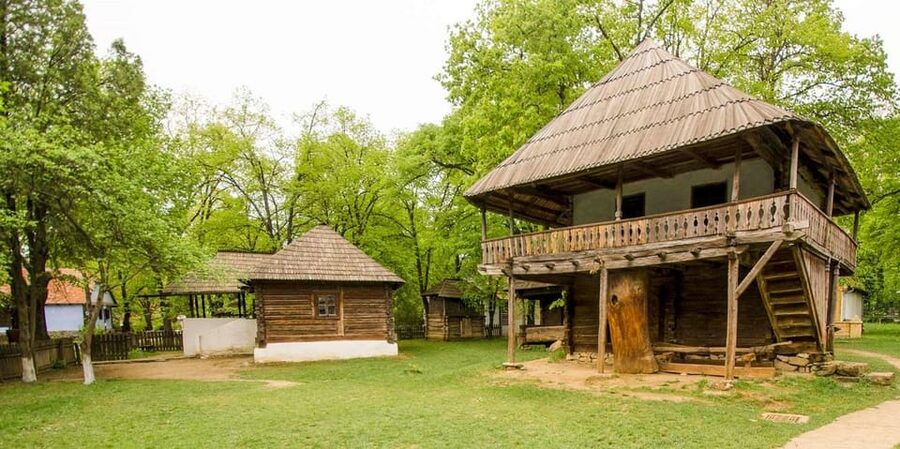
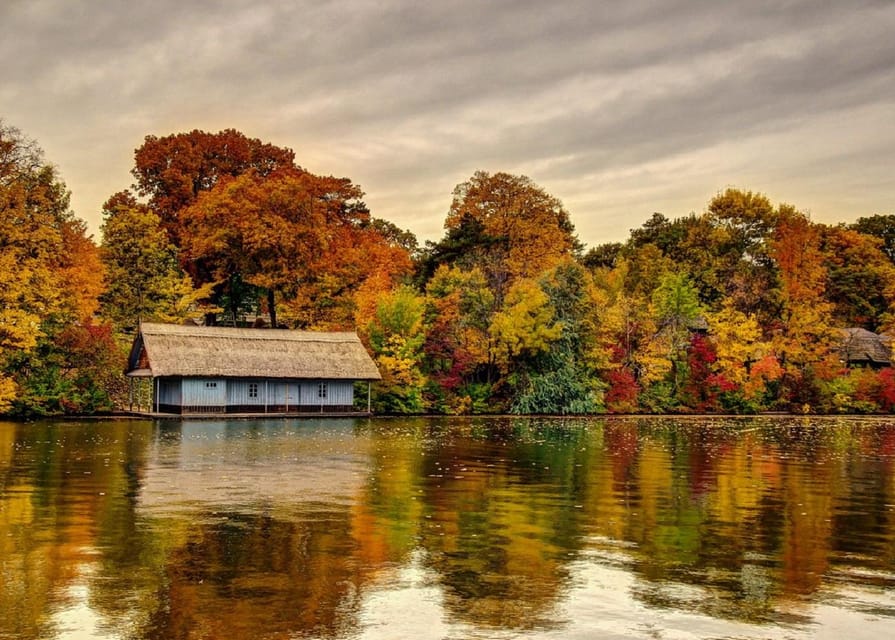
The Dimitrie Gusti National Village Museum provides the tour’s best change of pace. After the palace, you move to an open-air collection of traditional Romanian buildings in Herastrau Park.
Here you can walk among wooden houses, windmills, and churches brought from different parts of Romania. The buildings show regional differences in construction, decoration, and village life. This is not a museum of small objects behind glass. The buildings themselves are the exhibits, and the grounds give you room to see how homes, religious structures, and farm buildings relate to one another.
I like this stop because it gives you a clearer sense of Romania beyond Bucharest. The capital can feel dominated by grand avenues and twentieth-century politics. The Village Museum turns your attention to local materials, practical homes, handmade details, and long-running customs.
Your guide explains the architectural styles of different Romanian regions and the place these traditions hold in modern Romanian identity. That context is useful. Without it, you might see a series of attractive old houses. With it, you can compare how geography and regional habits shaped the buildings.
The stop includes a break, photos, guided touring, free time, and shopping. The peaceful setting also gives you a chance to slow down. The museum is still a walking visit, so the tour may feel less restful than the greenery first suggests, especially after the palace.
This is also one place where a private guide can add value. You can ask why one building looks different from another, how a structure was used, or what a particular regional style means. The published languages are English, Italian, and Spanish, so choose the language that lets you ask those questions comfortably.
What to expect at the Ceaușescu Mansion
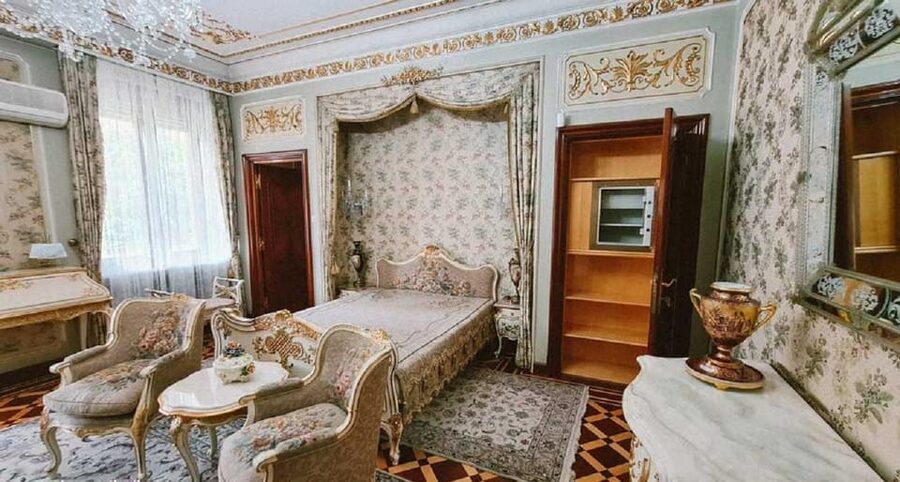
The final main sight is the former Ceaușescu residence, also called Primăverii Palace. It sits in Bucharest’s upscale Primăverii neighborhood and offers a close look at the private surroundings of Nicolae Ceaușescu, Elena Ceaușescu, and their family.
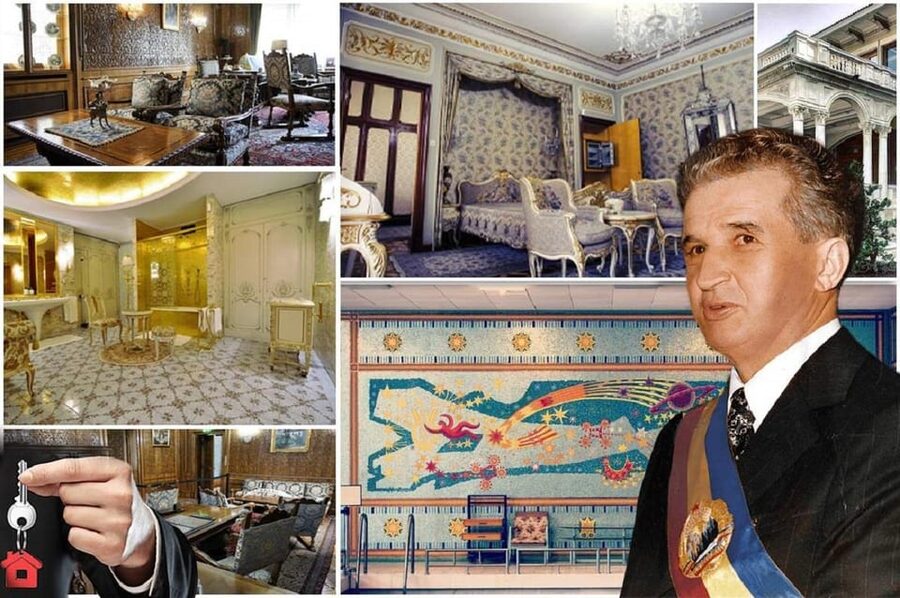
The villa is presented as an intact, luxurious home. Expect decorated rooms, large chandeliers, gold-plated bathrooms, and personal touches that reveal how the ruling family lived. The contrast with the Village Museum is striking. One stop shows modest rural homes shaped by daily needs. This one shows comfort and display at the top of the communist system.
Your guide explains the family’s life, leadership, and use of the residence as a private retreat. I would pay attention to that difference between public ideology and private living. The mansion is valuable not because it is simply fancy, but because it puts the regime’s elite lifestyle in a domestic setting.
The schedule needs checking here. The information for this experience names the Ceaușescu Mansion as a main attraction, but the route details refer to a stop in Cotroceni, Bucharest. Since the supplied tour details also say the mansion is closed on Mondays, contact the operator before booking to confirm exactly which site you will visit on your chosen date.
That clarification matters. If you want the mansion specifically, do not assume every route description means the same thing. A quick confirmation can prevent disappointment, especially because the mansion is one of the three central reasons to choose this tour.
More palaces to tour around the world:
- Venice: Doge’s Palace Reserved Entry Ticket
★ 4.6 · 42,716 reviews - Paris: Versailles Palace and Gardens Full Access Ticket
★ 4.6 · 41,579 reviews - Granada: Alhambra & Nasrid Palaces Tour with Tickets
★ 4.7 · 19,801 reviews - Sintra: Pena Palace and Park Entrance Ticket
★ 4.2 · 17,410 reviews
Why the private minivan helps
Bucharest’s attractions are spread across different parts of the city. The private, air-conditioned minivan takes you between them, with pickup and drop-off from the city center. That makes the six-hour schedule easier than arranging separate taxis or public transport.
I especially like this format for a first day in Bucharest or for a short visit. You can cover three major sites without spending your limited time figuring out routes. The vehicle also gives you a place to reset between the palace and museum.
The tradeoff is that a minivan tour gives you less unplanned city time. You will not be wandering from one sight to another or stopping at every café that catches your eye. The schedule is built around the three attractions, so book it for efficient sightseeing, not for a loose day of independent exploration.
The group is private, which changes the feel of the day. You can ask questions as they come up, request clarification, and spend more time on subjects that interest you. Feedback about Gabriel highlights exactly the qualities you want in this format: kindness, care, and clear explanations of Romanian history and culture. If Gabriel is assigned to your group, his style should suit visitors who want conversation rather than a memorized speech.
Is $45 a good value?
At $45 per person, the tour is reasonably priced for a private six-hour outing with a guide, minivan transportation, and city-center pickup and return. The price is not an all-inclusive admission pass, though. You must add entrance fees for the Palace of the Parliament, Village Museum, and Ceaușescu Mansion.
The value depends on what you would otherwise spend. If you are comfortable finding each site yourself and arranging transport, an independent day may cost less. If you want three distant attractions handled in one private schedule, the guide and transfers make the price easier to justify.
The operator can book tickets for you and help you skip the ticket line. That is useful at the palace, where entry can involve more planning and a valid ID is required. Still, ticket booking does not remove the warning that palace entry cannot be guaranteed.
Before booking, ask for the current total with admissions included. That gives you a fair comparison with other tours and prevents the $45 headline price from becoming misleading.
Timing, languages, and practical comfort
The tour runs for six hours, with starting times based on availability. The planned visits allow about one and a half hours at each major stop, plus travel between them. That pace is sensible for seeing the main features, but it does not promise a slow, detailed study of every room or building.
The live guide can conduct the tour in English, Italian, or Spanish. Since the experience depends heavily on historical explanation, language choice matters more here than on a simple sightseeing transfer.
The tour is listed as wheelchair accessible. The minivan is air-conditioned, and food and drinks are not included, so plan for your own refreshments. The description does not specify a meal stop, which means you should not count on lunch being part of the schedule.
Free cancellation is available up to 24 hours before the start time, and you can reserve now and pay later. Those policies help if your Bucharest schedule is still moving, but they do not solve the more important question of ticket availability. Confirm the palace and mansion arrangements first.
Who should choose this Bucharest tour?
I would recommend it to you if you want a guided overview of Bucharest’s major historical contrasts in one day. It suits first-time visitors, couples, families, and small private groups who value a local guide and door-to-door transport.
It is especially good for anyone curious about Romania’s communist period. The palace and mansion show power from two angles, public and private, while the Village Museum keeps the tour from becoming only a study of Ceaușescu.
You may want another plan if you prefer long museum visits, independent wandering, or a relaxed café-filled day. The schedule is active, and the stops are spread out. You should also reconsider a Monday booking if the Ceaușescu Mansion is essential.
Should you book it?
Book this tour if you want efficient transportation, a private guide, and three very different Bucharest sights in six hours. The strongest reasons are the thoughtful contrast between the stops, the helpful minivan service, and the chance to ask questions throughout the day. Gabriel’s praised approach, described as kind, caring, and clear, is exactly what can make a history-heavy tour work well.
Before you commit, confirm two things: the full cost after entrance tickets and whether the Ceaușescu Mansion will be visited on your date. Bring a valid ID for the Palace of the Parliament, avoid Monday if you want the mansion, and treat palace admission as subject to availability. With those points settled, this is a practical and worthwhile introduction to Bucharest’s political past, rural traditions, and private power.
FAQ
How long does the tour last?
The tour lasts six hours, including transportation between the stops.
What attractions are included?
The experience is designed to include the Palace of the Parliament, Dimitrie Gusti National Village Museum, and Ceaușescu Mansion, also called Primăverii Palace.
Is this a private tour?
Yes. It is offered for a private group.
What transportation is provided?
You travel between the sites in an air-conditioned minivan. City-center pickup and drop-off are included.
Are entrance tickets included in the $45 price?
No. Entrance fees for the Palace of the Parliament, Village Museum, and Ceaușescu Mansion are not included.
Can the operator arrange entrance tickets?
Yes. The operator can book tickets on your behalf so you can skip the ticket line.
Do I need identification for the Palace of the Parliament?
Yes. The Palace of the Parliament requires a valid ID for entry.
Is entry to the Palace of the Parliament guaranteed?
No. Palace entrance tickets cannot be guaranteed. If tickets are unavailable, the tour will include an exterior panorama instead.
Is the Ceaușescu Mansion open on Mondays?
No. The Ceaușescu Mansion is closed on Mondays.
What languages are available for the live guide?
The live guide is available in English, Italian, or Spanish.
Fresh palace tours around the world
- Bangkok Private Grand Palace Emerald Buddha and Reclining Buddha★ 4.5 · 2 reviews
- Bangkok Markets, Palaces and Temples Excursion★ 5.0 · 8 reviews
- Bangkok Two Temple Tour: Wat Pho, Emerald Buddha & Grand Palace★ 5.0 · 4 reviews
- Bangkok Royal Road – Top 3 Major Monuments (Grand Palace, Wat Pho, Wat arun)★ 4.5 · 111 reviews
- Bangkok Grand Palace and Emerald Buddha Tour★ 4.0 · 91 reviews
- Bangkok’s Landmarks Tour : GrandPalace WatTraimit WatPho WatArun★ 5.0 · 8 reviews
- Bangkok Grand Palace & Emerald Buddha Flexible Entry with Audio★ 3.5 · 3 reviews
- Private Tour: Grand Palace,Wat Phra Kaew, Museum&Cooking Class★ 5.0 · 7 reviews
Bucharest Palace Tours: the shortlist.
Small Group Tour to Mogosoaia Palace & Snagov Monastery
Read our review →