
Review · GERMANY
Premiumstadtführung (historische Altstadt und Schlossberg)
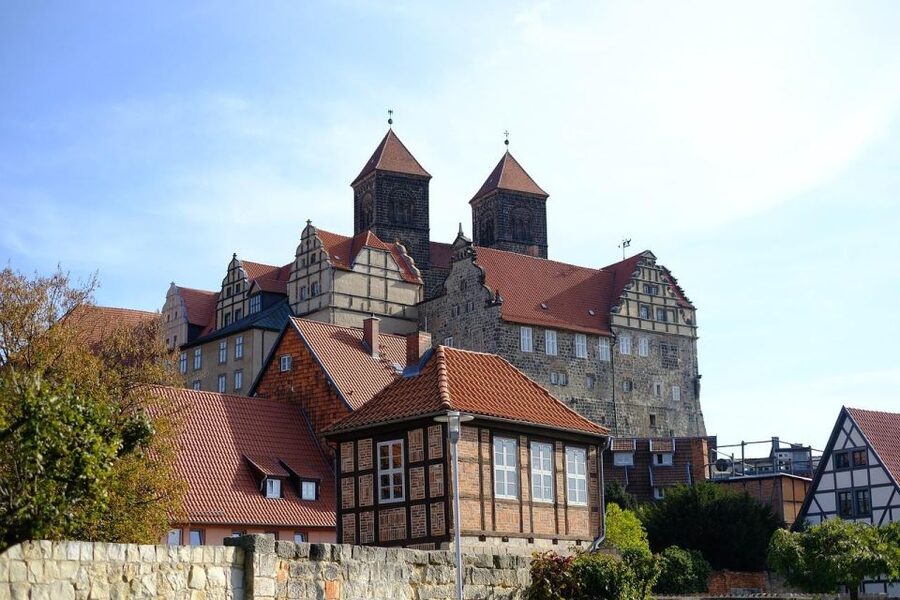
Quedlinburg’s Schlossberg gives this tour its real character. You begin among the old town’s crooked lanes and half-timbered houses, then climb toward the hilltop church and castle district, where more than 1,100 years of history come into view. I like the clear route through major sights, and I like that the guide adds food tips you can use after the walk. The main caution is the steep, cobbled climb, which can be slippery in winter or wet weather.
I also appreciate the price, about $10 per person, especially since children and adolescents up to age 16 join free. This is a German-language tour, so you’ll get the most from it if you understand German. Bad weather does not normally stop the walk, but icy conditions have led to at least one cancellation, so check the forecast and wear firm shoes.
Key points at a glance
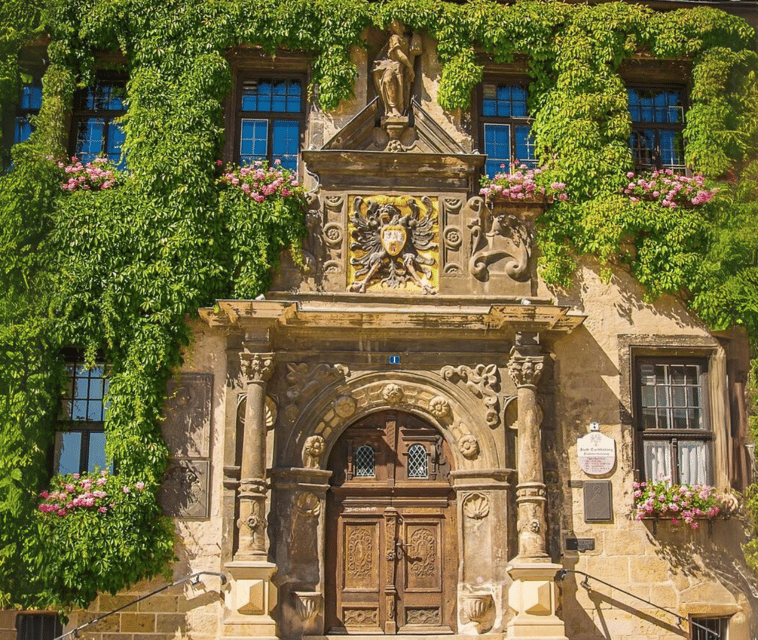
- Schlossberg is the tour’s highlight: Climb to the hilltop St. Servatii collegiate church and castle area.
- 1,100 years of Quedlinburg history: The route links medieval streets, churches, civic buildings, and famous local figures.
- Half-timbered architecture up close: You see a wide range of building styles rather than only a few postcard facades.
- A useful food finish: The guide points out culinary spots and gives recommendations for eating in town.
- Good family value: Children and adolescents up to age 16 are free.
- Plan for uneven ground: Cobblestones and a steeper Schlossberg section make sensible footwear important.
Starting at the market square with Quedlinburg’s story
The tour begins outside the Quedlinburg city information office on the market square. Look for the green sign, and arrive with your ticket ready for the guide. This is a practical meeting point because the town hall and several central sights are close by, so the story begins without a long walk to the first stop.
The market square also gives you an early sense of Quedlinburg’s unusual character. This is not a town built around one grand boulevard. Instead, its appeal comes from layers of old streets, irregular buildings, church towers, and half-timbered houses packed into a walkable center.
Your guide introduces the city’s 1,100-year story as you move through it. That long time span matters here. Quedlinburg is not simply a collection of old buildings. Its churches, civic spaces, and hillside institutions reflect the changing role of the town across many centuries.
The tour is conducted in German. If you understand the language, you can ask questions and follow the historical explanations directly. If you do not, the route and architecture are still visible, but the value of the guided commentary will be limited.
More halls, courtyards and throne rooms open around Germany:
- Neuschwanstein & Linderhof Castle-Fairytale Day Tour from Munich
★ 4.5 · 7,275 reviews - Potsdam: Palace Tour by Boat
★ 4.5 · 2,369 reviews - Potsdam: Sanssouci Palace and Prussian Palaces Entry Ticket
★ 4.5 · 2,101 reviews
Town hall, St. Benedikti, and the medieval lanes
From the market square, the route takes in the town hall and the market church of St. Benedikti. These stops help connect public life with religious life, two forces that shaped the town’s growth.
The town hall is a natural place to begin looking at Quedlinburg as a working city rather than an open-air museum. A guide can point out how the civic center fits into the market area and explain why the building matters within the town’s past.
St. Benedikti adds another layer. Historic churches in Quedlinburg are not just photo stops. They help you understand the religious importance of the town and the way church institutions influenced local power, education, and daily routines.
The walk then moves into smaller lanes, including the Schuhhof and Hölle. These names are memorable, but the streets themselves are the main attraction. You’ll see how narrow passages and uneven paving create a very different experience from a modern city grid.
This is where comfortable shoes matter. Cobblestones can slow you down, especially if it has rained or snowed. The pace is designed for looking and listening, not racing from one point to the next, but you should still expect a proper walking tour rather than a seated sightseeing experience.
Half-timbered houses beyond the postcard view
Quedlinburg is famous for its half-timbered buildings, and this tour gives you time to look at their variety. The appeal is not only the number of houses. It is the changing patterns, proportions, colors, and construction details you encounter from street to street.
I like this kind of architectural walk because it teaches you how to look. At first, you may see a charming old facade. After a guide explains the differences, you may start noticing timber arrangements, projecting upper floors, decorative details, and the way buildings fit tightly along the lanes.
The Half-Timbered Museum adds useful context. Its inclusion makes the architecture easier to understand instead of leaving you with a string of pretty photographs. The museum stop also gives the tour a practical focus, showing why these buildings require care and why Quedlinburg’s old town feels so distinctive.
The route includes Blasii Church as well. Like St. Benedikti, it helps show that Quedlinburg’s identity is tied to more than domestic architecture. Churches, markets, workshops, and homes all sit within the same compact historic center.
You should not expect an interior tour of every church. The itinerary names the buildings and the route around them, but the St. Servatii collegiate church is specifically not included from the inside. That distinction matters if entering the hilltop church is your main reason for booking.
Famous Quedlinburg personalities and local connections
The tour also introduces famous people connected with Quedlinburg. One named stop is Klopstock-Haus, associated with the writer Friedrich Gottlieb Klopstock. Seeing a person’s former home gives the city’s history a human scale.
This is one of the better reasons to take a guided walk instead of simply following a map. A map can identify a building, but a guide can explain why that person mattered and how the house fits into the city’s story.
The route also includes the Museum Lyonel-Feininger on the Schlossberg. The museum is named in the itinerary as an exterior stop or nearby point of interest, not as an included museum visit. You should not assume that admission or an indoor visit forms part of the two-hour walk.
The mix of local personalities, religious buildings, and architecture keeps the tour from becoming a list of dates. You get several ways into Quedlinburg’s past. If you prefer social and cultural context to a rapid checklist of monuments, this balance should suit you.
Same royal city, another way in:
- Berlin: Charlottenburg Palace Entry Ticket
★ 4.4 · 2,076 reviews - Koblenz: Rhine Valley Castles and Palaces Boat Tour
★ 4.4 · 1,824 reviews - Neuschwanstein Castle and Linderhof Palace Day Trip from Munich
★ 4.5 · 1,756 reviews - From Berlin: Potsdam and Sanssouci Palace Tour with Entry
★ 4.7 · 1,219 reviews
Climbing the Schlossberg to St. Servatii
The second half of the tour heads toward the Schlossberg. This is the physical high point and the place where Quedlinburg’s history feels most concentrated.
The climb includes a steeper section, and cobbled paths continue underfoot. Take your time. In dry weather, the hill should be manageable for many visitors, but it can be demanding for anyone who has trouble with inclines or uneven paving.
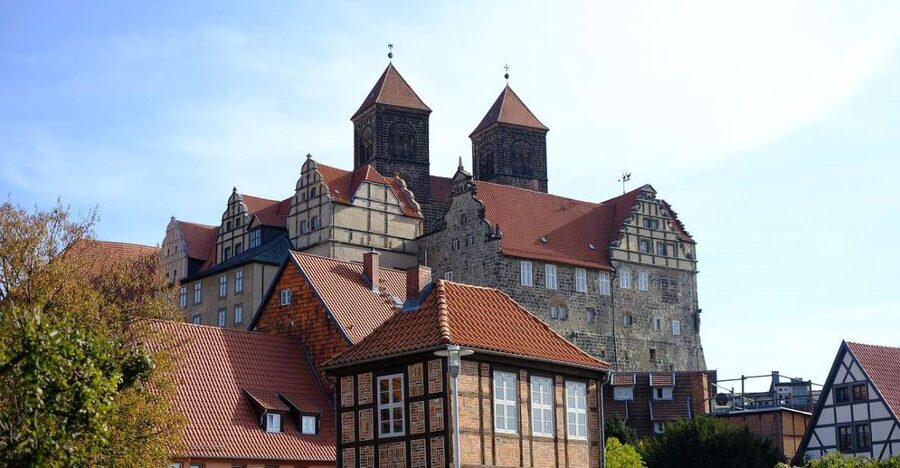
At the top, the route passes the Schlossgarten and reaches the collegiate church of St. Servatii. The church is one of Quedlinburg’s major landmarks, and its position above the old town gives the walk a strong finish.
The tour does not include the church interior. You’ll see the building and learn about its place in Quedlinburg’s history, but you’ll need a separate visit if you want to go inside. This is the most important limitation to understand before booking.
Winter deserves special attention. The walk operates in rain or sunshine, but icy conditions can change the plan. One January departure was canceled because the Schlossberg was considered too slippery, with an alternative time offered for the following day. If you visit during freezing weather, keep your schedule flexible and ask about conditions before setting out.
Why the two-hour format works
Two hours is enough time to cover the old town center and the Schlossberg without turning the experience into an all-day commitment. You get a clear introduction, then have time afterward to revisit a church, museum, street, or cafe that caught your eye.
The route is also useful at the start of a Quedlinburg stay. You can learn the town’s basic layout first, then return independently to the places you want to examine more closely.
A recent assessment praised the guide for giving detailed explanations, a friendly manner, and enough room for questions. That is exactly what you want from a small historic city tour. The best moments often come when you can stop over a detail instead of being hurried onward.
Still, the two-hour limit means the tour cannot cover everything. You will not receive an exhaustive visit to every historic building, and you should not expect lengthy indoor time at the museums or church. Think of this as a strong orientation walk with historical depth, not a full museum program.
Price, family value, and what you really receive
At about $10 per person, the tour is inexpensive for a two-hour guided walk through a UNESCO World Heritage site. The price is especially favorable for families because children and adolescents up to age 16 are free.
The value comes from the route and the local explanation. You are not paying for transport, a meal, or entry to the St. Servatii collegiate church. You are paying for a guide who connects the town hall, churches, lanes, half-timbered houses, museums, and hilltop district into one understandable story.
That makes the tour a better deal for first-time visitors than for someone who already knows Quedlinburg well. If you have already studied the city and plan to visit the main buildings independently, the guided commentary may add less.
The food recommendations are a welcome extra. The guide presents culinary spots and offers suggestions for eating afterward. This is useful because opening hours can vary, particularly outside the busiest season. One January visit found many restaurants closed at once, leaving limited lunch choices, so do not wait until you are hungry to think about your meal.
Who will enjoy this walk most
I would recommend this tour to first-time visitors who want a strong introduction to Quedlinburg’s old town and hilltop district. It also suits anyone who likes architecture, local history, church buildings, and stories about writers and artists.
Families get good financial value, though younger children should be ready for cobblestones and the Schlossberg climb. The free admission policy helps, but the physical route still deserves attention.
German speakers will benefit most because the live guide speaks German. If you need an English-language tour, this is not the right choice based on the available information.
The walk is less suitable for anyone seeking a fully accessible route. The steep hill and uneven paving are stated parts of the experience. You should also think twice about booking during icy weather unless you can accept a possible change of plan.
Practical advice before you go
Wear shoes with good grip, especially in winter. The tour runs in rain or sunshine, so a rain layer is sensible, and you should not count on perfect pavement.
Arrive at the market square city information office a little early. Find the green sign and keep your ticket ready. The guide is expected there at the agreed time.
If you want to eat after the tour, listen closely to the food suggestions and consider checking opening times on your own. Quedlinburg’s dining choices can be more limited in January, when several restaurants may close at the same time.
You can cancel up to 24 hours before the start for a full refund, and the reserve-now, pay-later option keeps your plans flexible. Starting times vary, so check availability for your chosen date.
Should you book the Quedlinburg city and Schlossberg tour?
Book it if you want a low-cost, German-language introduction to Quedlinburg that combines the old town with the hilltop St. Servatii district. The route covers the places that give the city its identity, and the guide’s detailed explanations and food tips add value beyond a self-guided stroll.
Skip it if you need an English tour, an accessible route, or guaranteed access inside the collegiate church. Also be cautious during icy weather, when the Schlossberg can force a cancellation or schedule change.
For most German-speaking first-time visitors, the price, two-hour length, family policy, and carefully chosen route make this a sensible way to get oriented before exploring Quedlinburg on your own.
FAQ
Where does the tour begin?
It begins at the Quedlinburg city information office on Quedlinburger Marktplatz. Look for the green city information sign and have your ticket ready.
How long does the tour last?
The tour lasts two hours.
What language is the tour in?
The live tour guide speaks German.
What places are included in the old town portion?
The route includes the town hall, the market church of St. Benedikti, Schuhhof, Hölle, Blasii Church, and the Half-Timbered Museum.
What places are included on the Schlossberg?
The Schlossberg route includes Klopstock-Haus, the Museum Lyonel-Feininger, Schlossgarten, and St. Servatii collegiate church.
Can I go inside St. Servatii collegiate church during the tour?
No. The interior of St. Servatii collegiate church is not included.
Is the tour suitable in bad weather?
The tour takes place in rain or sunshine. The route includes cobblestones and a steeper section on the Schlossberg, and icy conditions can affect departures.
Are children charged for the tour?
Children and adolescents up to age 16 are free.
Fresh palace tours around Germany
- Bamberg – Excursion to Seehof Palace★ 5.0 · 3 reviews
- Segway Tour: Gerberbach, Schlosspark & Castle Weinheim★ 4.9 · 14 reviews
- Potsdam: Private Bus Tour with Park Walk to Sanssouci Palace★ 4.3 · 2 reviews
- Munich: Neuschwanstein Castle and Linderhof Palace Day Trip★ 4.8 · 5 reviews
- Munich: Residenz Palace and Hofgarten Skip-the-Line Tour★ 4.8 · 148 reviews
- Munich: Nymphenburg Palace with official Guide★ 5.0 · 12 reviews
- Munich: Nymphenburg Palace OR Residenz Guided Tour★ 4.4 · 31 reviews
- Munich Nymphenburg Palace & Carriage Museum Fast-Track Tour★ 4.9 · 57 reviews
Germany Palace Tours: the shortlist.
Sanssouci Palace and Prussian Palaces Entry Ticket
Read our review →
Koblenz: Rhine Valley Castles and Palaces Boat Tour
Read our review →

Potsdam Tour from Berlin With Guided Sanssouci Palace Visit
Read our review →
Small group Potsdam: A Journey Through History and Palaces
Read our review →This visit also appears in