
Review · BUCHAREST
Bucharest: Parliament Palace Skip-the-line Ticket
Bucharest’s Parliament Palace is less a normal sight than a dose of architectural shock. Ceaușescu’s communist-era project reaches 84 meters high, covers 365,000 square meters, and is said to be the heaviest building in the world. I like the official guide and the chance to see working government areas, not just a museum display. I also like the skip-the-line access, since security and entry can take time.
The one-hour visit covers only a tiny part of the building, roughly 3 percent according to the tour explanation. The entrance can be confusing, and you will climb about 200 steps with no elevator, so arrive early and wear sensible shoes.
Key points to know before booking
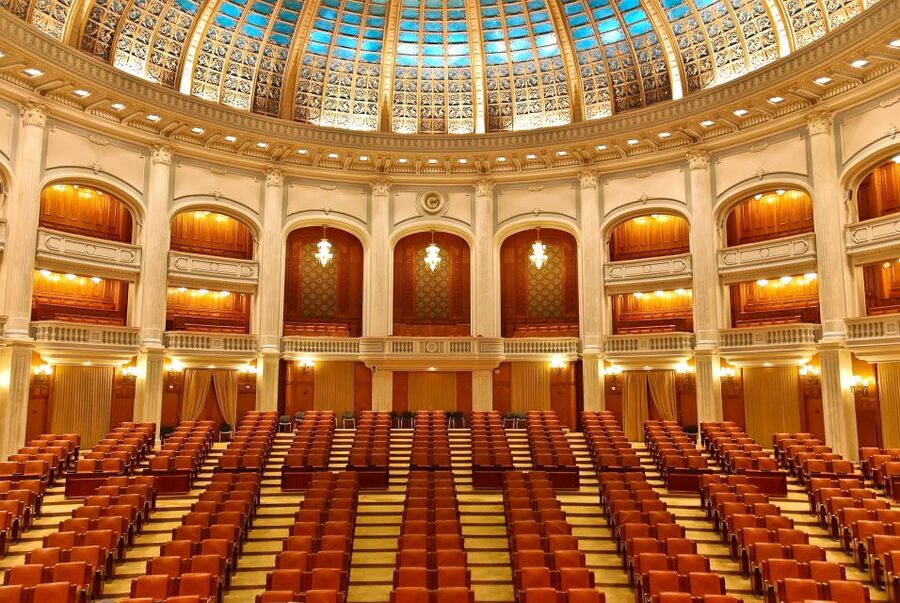
- See the Senate side of the palace: The route includes grand meeting rooms, the Ballroom, staircases, and government spaces still used today.
- Hear the building’s communist-era story: Your English-speaking guide explains Ceaușescu’s plans, the construction period from 1984 to 1997, and the palace’s place in modern Romania.
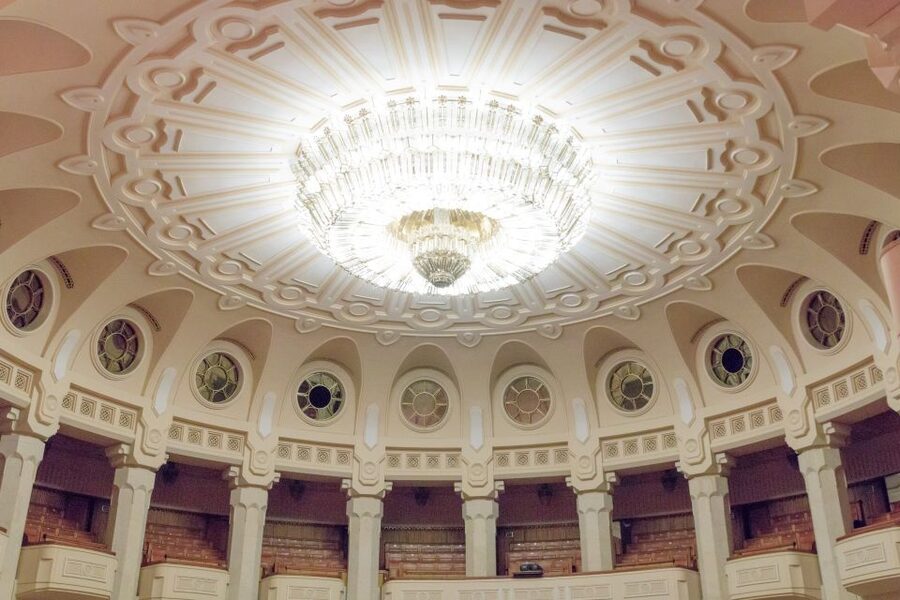
- Expect extraordinary scale: Nearly 500 chandeliers, more than 1,400 mirrors and ceiling lights, vast quantities of marble and wood, and eight underground levels are part of the story.
- Arrive 25 minutes early: Security checks require time, and late arrivals can create problems at a tightly controlled government building.
- Bring your passport: It is required for entry. A photo fee may also apply if you want to take pictures.
- Plan for stairs: The tour is not suitable for people with limited mobility. There is no elevator on the route.
Why Parliament Palace is worth your time in Bucharest
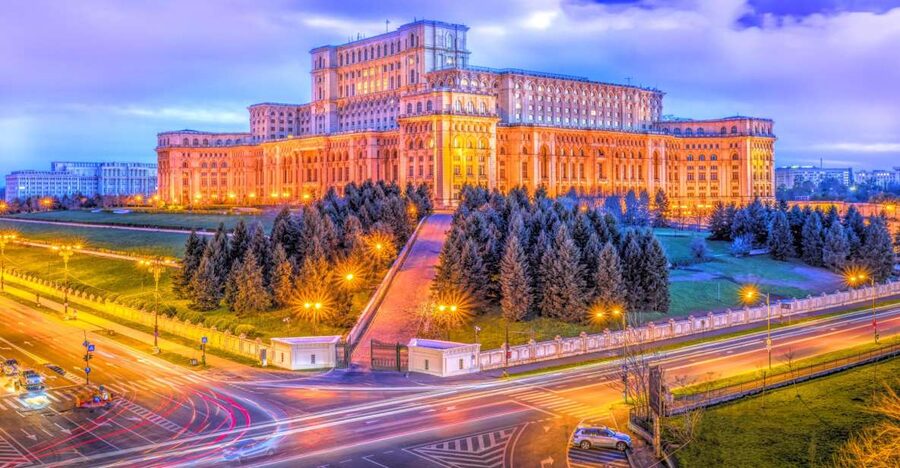
You can see the palace from outside and understand its size. You cannot really understand its scale until you walk through its doors.
The building was ordered by Nicolae Ceaușescu, Romania’s communist dictator, during the darkest years of his rule. Construction began in 1984 and continued until 1997, long after Ceaușescu was removed from power. The result is a building of startling ambition and uncomfortable meaning.
That tension is the reason I recommend the visit. The palace is grand, but its grandeur came at a serious human and urban cost. Entire neighborhoods were cleared for the project, and the building was created to project state power. Inside, the marble, wood, carpets, mirrors, and chandeliers make the place feel almost unreal.
The visit does not try to hide that background. A good guide connects the decoration to the communist regime and explains how the palace is used today. The best guides, including Christian and Anca, have been praised for making the subject clear, lively, and occasionally funny without losing sight of its darker side.
More Skip-the-Line Palace Tickets in the world:
- Versailles: Skip-the-Line Tour of Palace and Gardens Access
★ 4.7 · 10,429 reviews - Madrid: Royal Palace Expert Guided Tour with Skip-the-Line
★ 4.7 · 8,407 reviews - Vienna: Schönbrunn Palace & Gardens Skip-the-Line Tour
★ 4.7 · 7,739 reviews
Finding the correct entrance on the left side
The palace is so large that the meeting point can be harder to find than expected. You are told to meet at Senatul Romaniei on the left side of the building, rather than simply walking to the most obvious front entrance.
This matters. Several people have approached the wrong side, then had to walk around the enormous building. The meeting point is also described in relation to the opposite side of the street from the university, which can help you orient yourself. Use the supplied map, check the exact gate before setting out, and do not assume every entrance serves the public tour.
Plan to arrive 25 minutes before the start time. You need that cushion for the security check, passport inspection, and group organization. A few people have arrived late after getting turned around, and the start can be delayed while the group is assembled. You should not rely on that extra time. The safest plan is to arrive early and treat the security process as part of the visit.
Bring your passport. The palace is an active government building, not an ordinary public attraction, so identification is required.
The ground floor sets the scale
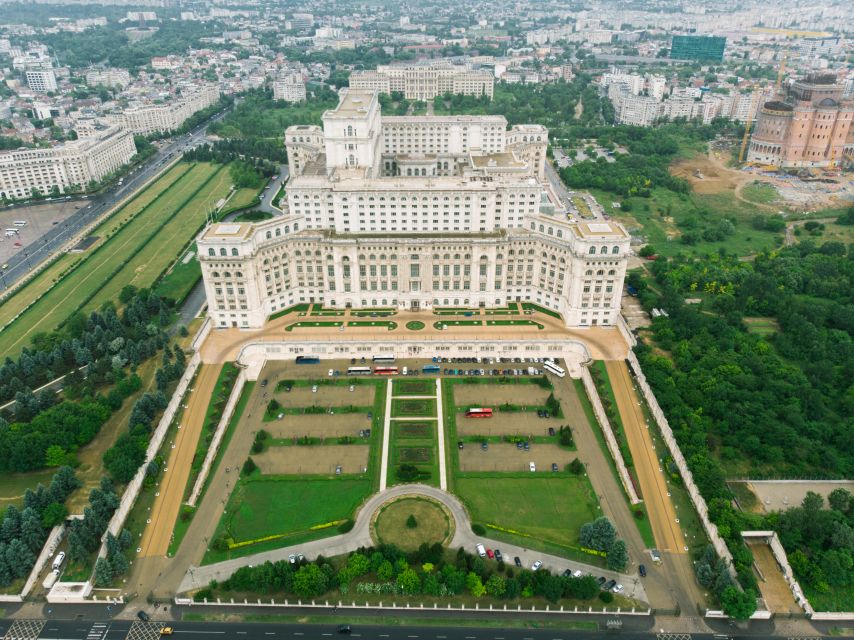
The tour begins on the ground floor, where the public entrance is located. This first section is useful because the guide gives you the numbers needed to grasp the building before the rooms begin competing for your attention.
The palace reaches 84 meters, or 276 feet. Its floor area covers about 365,000 square meters, or 3.93 million square feet. You will also hear that it is the largest building in Europe and the second-largest building in the world.
Those labels can feel like dry statistics until you are inside. The corridors, staircases, and formal spaces make the size physical. You are not simply looking at one grand hall. You are moving through a government complex large enough to contain a maze of offices, meeting rooms, ceremonial areas, and underground facilities.
The guide also explains the materials used. About 35 million cubic feet of marble and 32 million cubic feet of wood went into the palace, along with carpets and other decorative elements. Even if you forget the exact figures, you will remember the sheer amount of material devoted to making the state look permanent and powerful.
Grand rooms, chandeliers, and the Ballroom
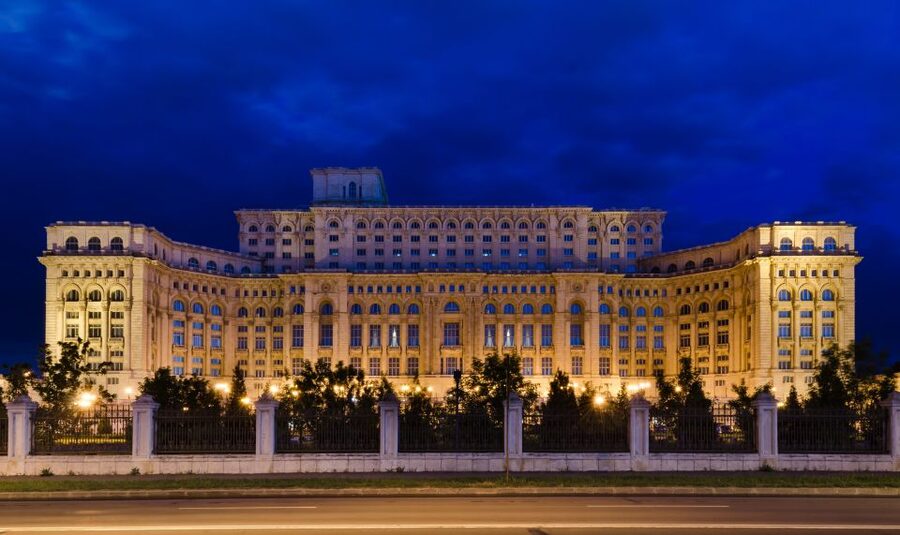
From the ground floor, the route goes up to the first level, where the main meeting rooms and Ballroom are located. This is the part most people come to see, and it delivers the visual drama.
The rooms are filled with polished marble, large mirrors, heavy carpets, carved wood, and ceiling lights. Almost 500 chandeliers are spread throughout the building, and the palace contains more than 1,400 mirrors and ceiling lights. The effect is intentionally excessive. This is not restrained European palace decoration. It is power displayed at full volume.
The meeting rooms are especially useful for understanding how the building was meant to function. The palace was not designed only as Ceaușescu’s residence or a ceremonial monument. It was intended as the center of Romania’s political machinery, and parts of it still serve that role.
You may see the Senate areas and rooms where current politicians gather. That makes the visit more interesting than a walk through an abandoned dictatorship-era building. You are looking at a place that has changed political meaning but remains active.
The route includes places to sit, and the pace has generally been described as manageable. Still, this is not a stroll across one flat gallery. You will use multiple flights of stairs during the hour, with about 200 steps in total. There is no elevator available for this tour.
More palaces to tour around the world:
- Venice: Doge’s Palace Reserved Entry Ticket
★ 4.6 · 42,716 reviews - Paris: Versailles Palace and Gardens Full Access Ticket
★ 4.6 · 41,579 reviews - Granada: Alhambra & Nasrid Palaces Tour with Tickets
★ 4.7 · 19,801 reviews - Sintra: Pena Palace and Park Entrance Ticket
★ 4.2 · 17,410 reviews
The history is strongest when the guide makes connections
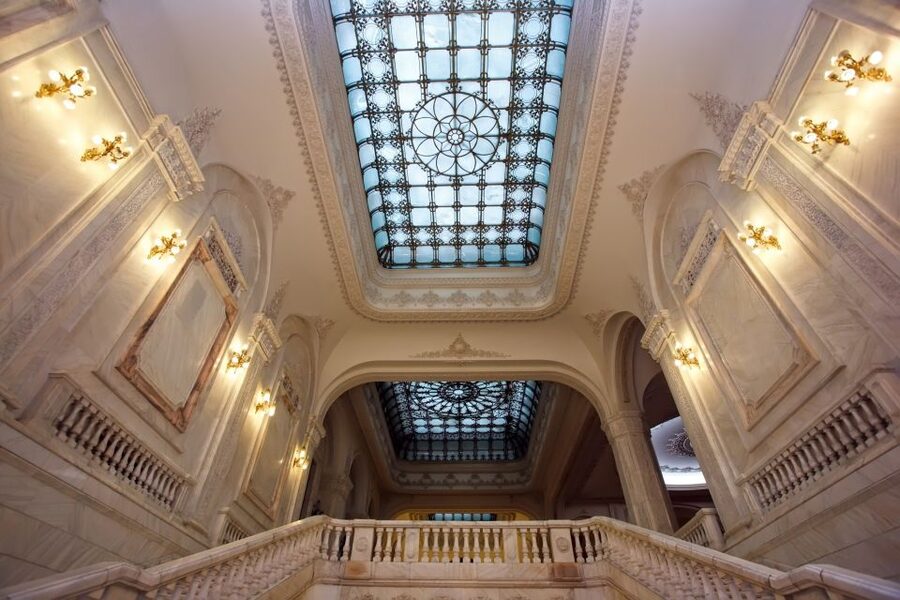
The English-speaking official guide is central to the experience. Without one, the palace risks becoming a parade of marble rooms and unbelievable numbers. With a good guide, the building becomes a lesson in Ceaușescu’s Romania.
Christian has been praised for his humor, clear English, and ability to keep a large group involved. Anca has also been singled out for her patience and strong explanations, especially when discussing communism and the palace’s present use. Individual guides vary, but the tour is designed around live commentary rather than an audio device.
The humor can be dry, and that works well here. A completely solemn presentation would make the palace feel like a dusty monument. A guide who can point out the absurdity of the scale while explaining the political background gives you a more honest sense of the place.
Large groups are possible, sometimes around 25 people or more. A strong guide will need to keep everyone close enough to hear in the echoing halls. The best accounts describe guides who handled large groups well, answered questions, and kept the hour moving. If you are hoping for a quiet, private visit, this is not that kind of outing.
The underground story adds a darker edge
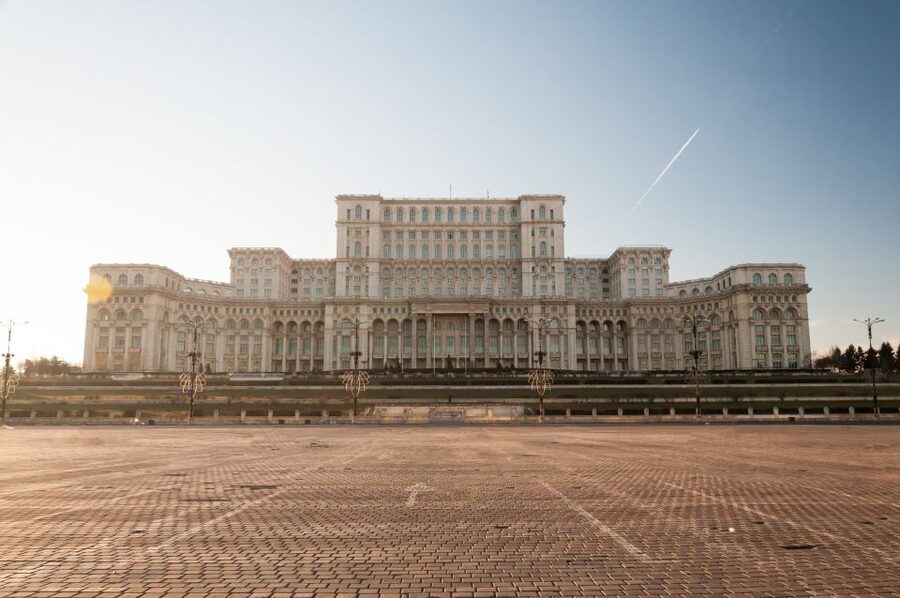
The palace contains eight underground levels. The lowest is described as a nuclear bunker, with about 20 kilometers of catacombs linking the complex to key state institutions.
You will not see the entire underground system on this route. That is worth understanding before you book. The bunker and catacomb details add context, but the standard one-hour visit focuses mainly on accessible interior rooms across three levels.
Still, the underground information changes the way you look at the elegant rooms above. The palace was designed with both ceremony and survival in mind. The chandeliers and marble halls projected authority, while the protected lower levels reflected the fear and control of the Cold War era.
This contrast is one of the most useful parts of the visit. You are not just admiring decoration. You are seeing how a dictatorship imagined power, danger, and permanence.
What skip-the-line access really saves you
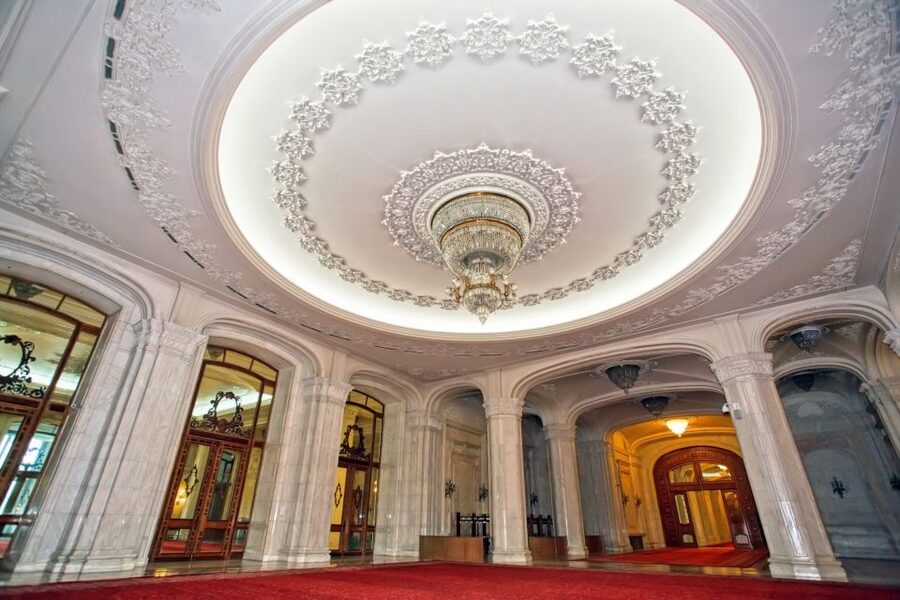
At $29 per person, this is not the cheapest way to see the palace. One booking experience also noted that buying directly through the venue could cost less, so it is sensible to compare prices before paying.
The value comes from organization. Your ticket is arranged in advance, you meet the group, and you use fast-access entry rather than trying to sort out admission at the building. Because the palace has security procedures and a confusing entrance, that convenience can be worth paying for during a short Bucharest visit.
The price includes the booking fee, standard tour entrance, and official guide. Hotel pickup and drop-off are not included, so you must make your own way to the meeting point. Photo fees are also excluded.
For many people, the hour is enough. The palace is physically demanding and visually intense, and a tightly planned visit keeps the experience from becoming tiring. Still, several visitors wished the tour lasted longer, especially because the building is so vast. You see only a small fraction of it.
A one-hour tour with a clear tradeoff
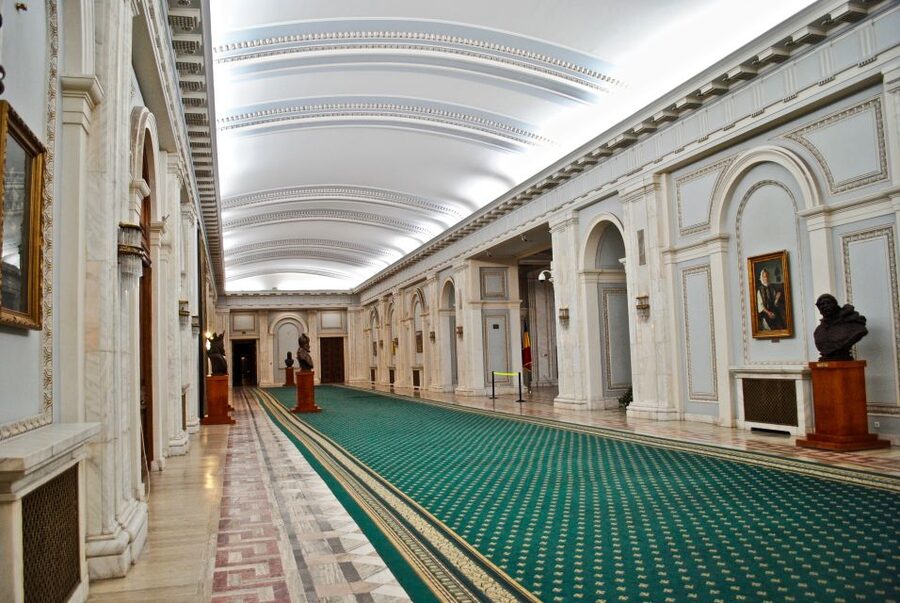
The short duration is both an advantage and a limitation.
If you have one free hour between other Bucharest sights, this tour fits neatly into your day. You get the main interiors, the political background, the grand rooms, and the essential facts without giving up half a day.
If you are fascinated by architecture or Romanian communism, the hour may feel rushed. The palace is so large that even a longer visit would cover only part of it. You may leave wanting to know what lies behind the closed doors and how the remaining offices function.
The route is also more focused on the Senate side and standard public areas than on every major room in the complex. Do not book expecting access to the whole building. You are seeing a carefully selected public route inside an active government institution.
That limitation is not a flaw so much as a fact of visiting Parliament Palace. The palace cannot operate as a normal museum while government business continues inside.
Practical advice for a smoother visit
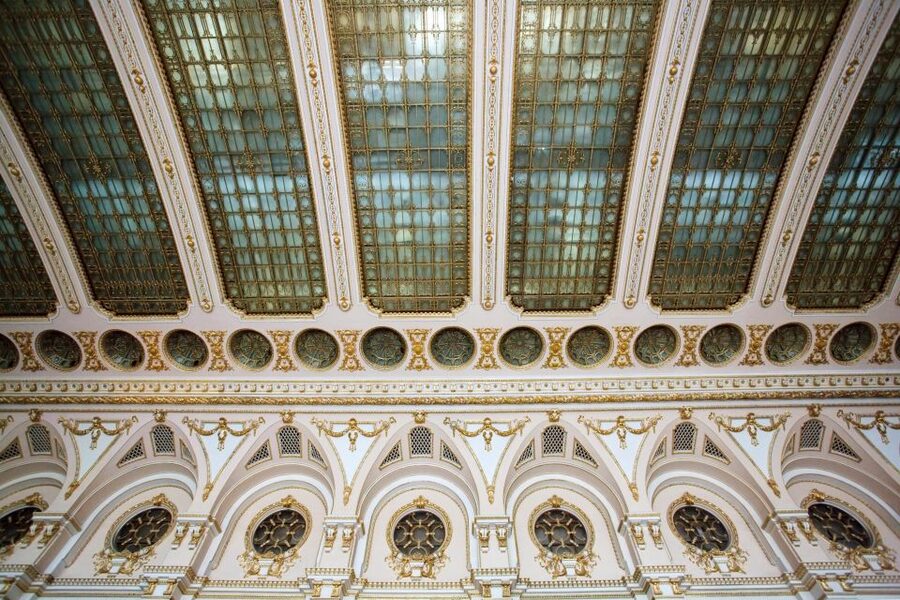
A few simple choices will make the experience easier.
- Use the exact meeting-point instructions, not only a general map pin.
- Arrive 25 minutes early for security.
- Carry your passport, which is required.
- Wear shoes suited to stairs and hard floors.
- Expect about 200 steps and no elevator.
- Keep your schedule flexible if security takes longer than expected.
- Check the rules and possible fees before taking photographs.
- Listen for the guide’s explanation of which areas are Senate spaces and which are ceremonial rooms.
The building can feel cool, echoing, and formal, so a small bottle of water is sensible. One person specifically wished drinks were available, but refreshments are not listed as part of the visit.
Who will enjoy this palace tour most
I would choose this for first-time visitors to Bucharest who want a major sight with real political context. It works especially well if you are interested in architecture, dictatorship-era history, government buildings, or unusual examples of state power.
It is also a good fit if you have limited time. The one-hour route gives you a strong introduction without requiring transport outside the city or a full day of sightseeing.
You should think twice if stairs are difficult for you. The tour is not recommended for people with mobility impairments, and the lack of an elevator is a firm limitation. You may also prefer another activity if you dislike organized group tours or want to explore at your own pace.
The guide makes a large difference. Christian and Anca have been particularly well received for their humor, clear explanations, and ability to answer questions. Even when an accent has made the English harder for some people to follow, the building and subject still provide plenty to see.
Should you book the Parliament Palace tour?
Yes, if you want to understand why Bucharest’s most famous building is so enormous, controversial, and visually startling. The grand rooms alone are worth seeing, but the visit becomes much more useful when the guide explains Ceaușescu’s plans, the communist regime, the building’s current political role, and the scale hidden below ground.
Book it if you value a prearranged entry and can handle stairs. Compare the $29 price with direct admission before paying, and take the meeting-point warning seriously.
Skip it if you need step-free access, want to see the entire palace, or prefer a long and leisurely architectural visit. For most visitors who can manage the climb, this is one of Bucharest’s most memorable hours.
FAQ
How long does the Parliament Palace tour last?
The tour lasts about one hour.
What language is the tour in?
The tour is conducted in English with a live official guide.
Where is the meeting point?
Meet at Senatul Romaniei on the left side of the Parliament Palace. The entrance can be difficult to identify, so use the supplied map and arrive early.
How early should I arrive?
Arrive 25 minutes before the scheduled start time to allow for security checks.
Do I need to bring identification?
Yes. You must bring your passport.
How many stairs are involved?
You will climb about 200 steps over several flights. There is no elevator available on the route.
Is hotel pickup included?
No. Hotel pickup and drop-off are not included.
Fresh palace tours around the world
- Bangkok Private Grand Palace Emerald Buddha and Reclining Buddha★ 4.5 · 2 reviews
- Bangkok Markets, Palaces and Temples Excursion★ 5.0 · 8 reviews
- Bangkok Two Temple Tour: Wat Pho, Emerald Buddha & Grand Palace★ 5.0 · 4 reviews
- Bangkok Royal Road – Top 3 Major Monuments (Grand Palace, Wat Pho, Wat arun)★ 4.5 · 111 reviews
- Bangkok Grand Palace and Emerald Buddha Tour★ 4.0 · 91 reviews
- Bangkok’s Landmarks Tour : GrandPalace WatTraimit WatPho WatArun★ 5.0 · 8 reviews
- Private Tour: Grand Palace,Wat Phra Kaew, Museum&Cooking Class★ 5.0 · 7 reviews
- Bangkok Grand Palace & Emerald Buddha Flexible Entry with Audio★ 3.5 · 3 reviews
Skip-the-Line Palace Tickets: the shortlist.
Skip-the-Line Tour of Palace and Gardens Access
Read our review →
Royal Palace Expert Guided Tour with Skip-the-Line
Read our review →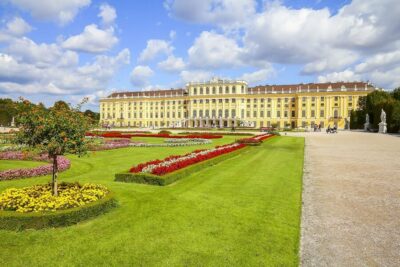
Schönbrunn Palace & Gardens Skip-the-Line Tour
Read our review →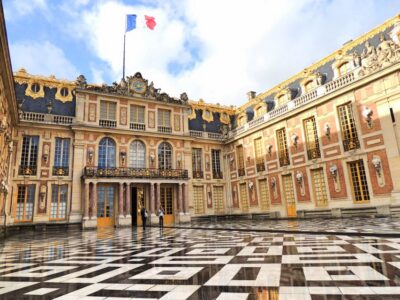
Skip-the-Line Guided Palace Tour and Full Access
Read our review →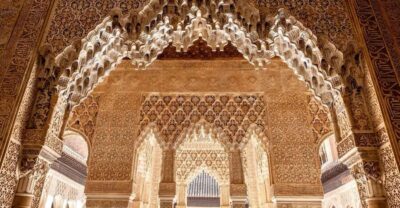
Fast-Track Alhambra & Nasrid Palaces Guided Tour
Read our review →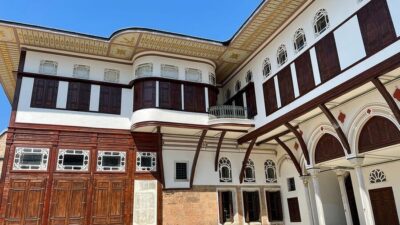
Topkapi Palace and Harem Skip-the-Line-Tickets & Audio Guide
Read our review →
Alhambra & Generalife Skip the line Small Group including Nasrid Palaces
Read our review →
Bus & Schönbrunn Palace Skip-the-Line Guided Tour
Read our review →This visit also appears in