
Review · VIENNA
Vienna: Imperial Treasury in the Hofburg Palace
The Imperial Treasury packs centuries of royal power into the oldest part of the Hofburg Palace. You’ll see the Austrian Imperial Crown, Holy Roman Empire regalia, Habsburg jewels, and objects so strange that they sound like props from a medieval tale, including a unicorn horn and a bowl linked with the Holy Grail.
I like the remarkable range here, from crowns and emeralds to religious relics, military textiles, and the cradle of Napoleon II. I also like the manageable size: you can see the main collection in about an hour to an hour and a half, though an audio guide can stretch the visit much longer. The main drawback is practical: the ticket requires a printed voucher, and some bookings still involve exchanging that voucher at a ticket counter.
Key points
- The Austrian Imperial Crown: See one of Europe’s most famous crowns, along with the regalia of the Holy Roman Empire.
- Habsburg women’s jewelry: Look for pieces connected with Empress Elisabeth, known as Sisi, and other imperial women.
- Unusual legendary objects: The collection includes the Holy Lance, a huge agate bowl associated with the Holy Grail, and a supposed unicorn horn.
- A compact palace visit: Most people can see the exhibition in roughly one to one and a half hours, without rushing.
- Audio help matters: An audio guide is not included in the basic ticket, but detailed explanations can add a lot to the objects on display.
- Easy access for young visitors: Children and young people under 19 generally enter free, while the museum is wheelchair accessible.
Entering the Swiss Wing of the Hofburg
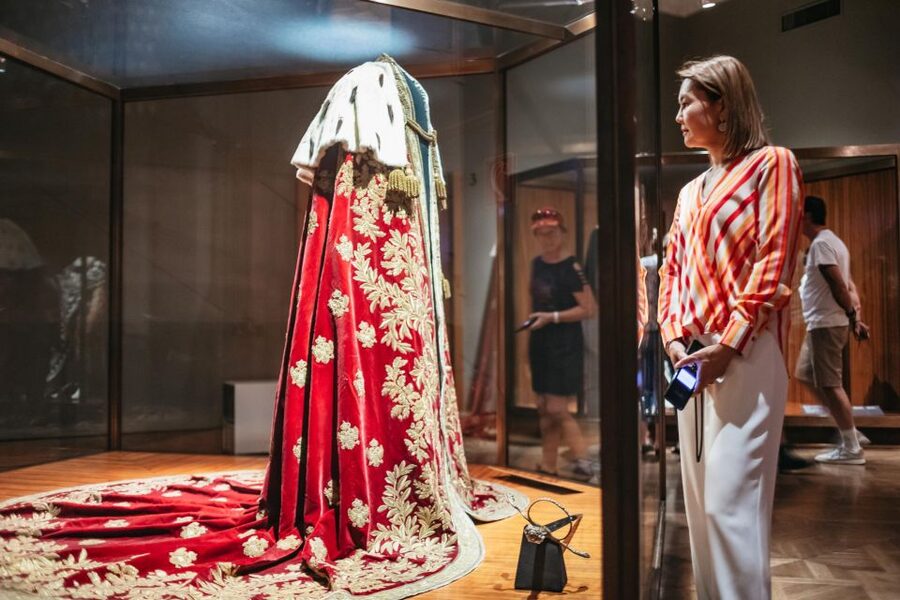
The Imperial Treasury is in the Swiss Wing, the oldest part of Vienna’s Hofburg Palace. The name can make the entrance sound more mysterious than it is, but it helps to know exactly where you are going because the wider palace complex has many wings, courtyards, museums, and ticket points.
Your admission is for one day, and the listed price is $18 per person. That is a fair price if you enjoy royal collections, religious art, or European history. You are not paying for an escorted tour, so the value depends on how much you get from reading labels and using the optional audio guide.
One practical warning deserves attention. A printed voucher is required. Some digital bookings must be exchanged for an actual ticket at the counter, so this does not always function like a true skip-the-line ticket. If you are booking while out in the city, arrange printing before you arrive. The ticketing setup can feel needlessly complicated, particularly when the palace signs do not make the route obvious.
The museum is wheelchair accessible. Children and young people under 19 generally receive free admission. School groups under 19 must be registered through the museum’s booking department, so school organizers should not simply arrive with a voucher.
More Schonbrunn and Hofburg tours around Vienna:
- Vienna: Schönbrunn Palace & Gardens Skip-the-Line Tour
★ 4.7 · 7,739 reviews - Vienna: Skip-the-Line Schönbrunn Palace & Gardens Tour
★ 4.8 · 5,411 reviews - Vienna: Bus & Schönbrunn Palace Skip-the-Line Guided Tour
★ 4.3 · 2,802 reviews
The crowns that explain Habsburg power
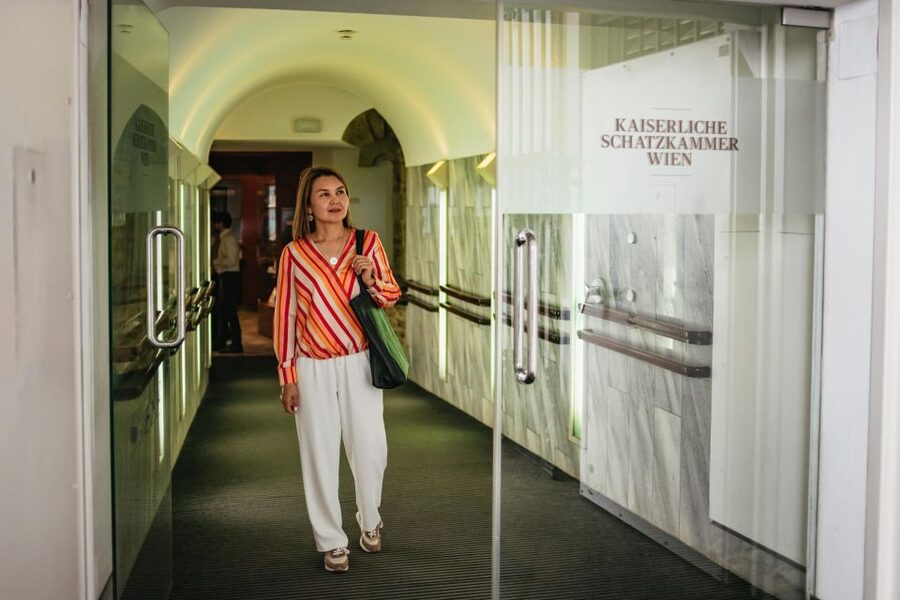
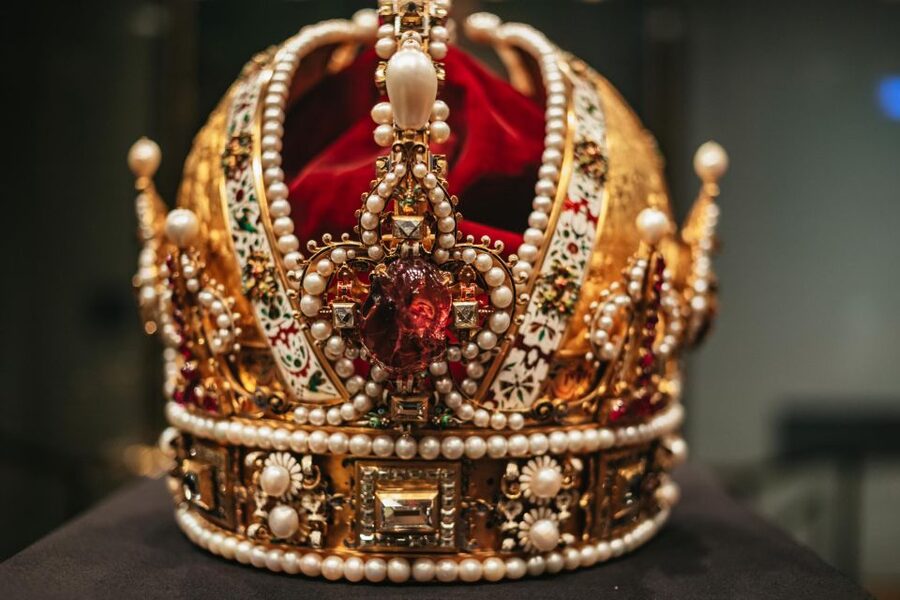
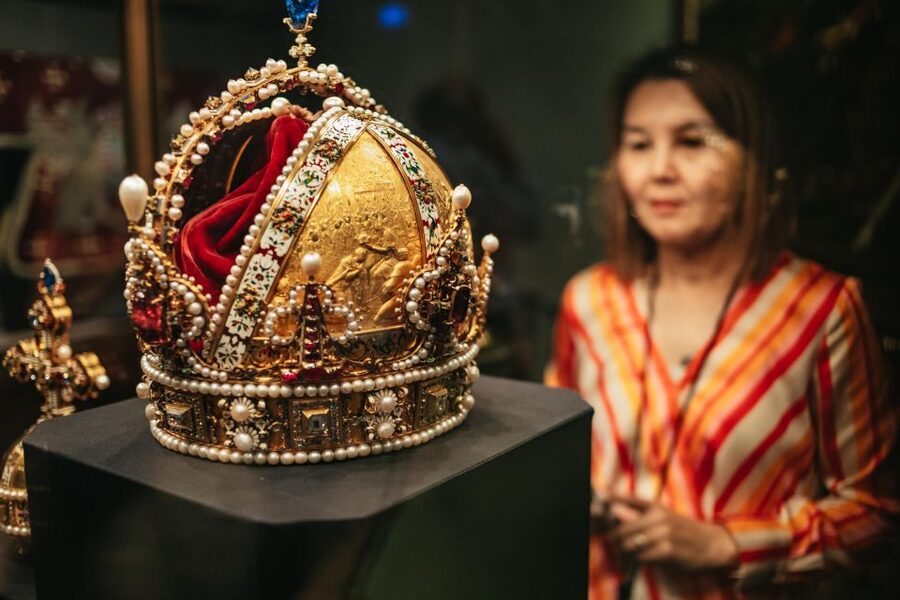
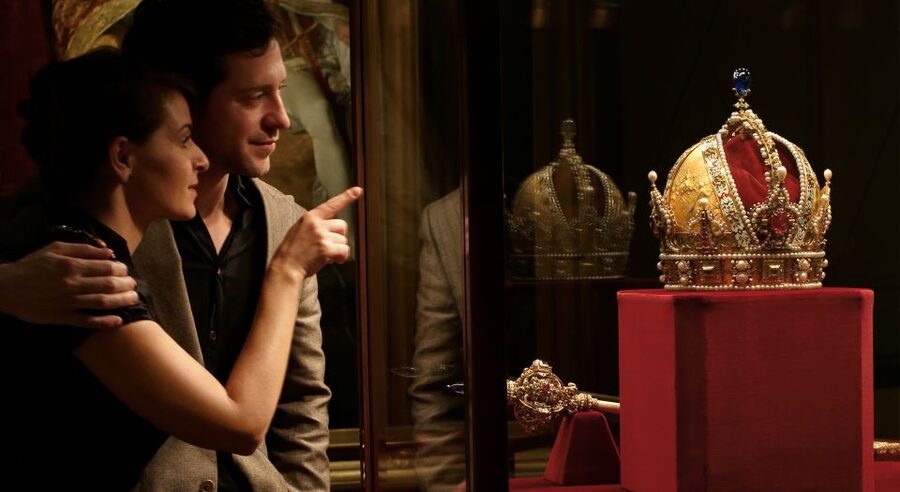
The first major reward is the imperial regalia. The Austrian Imperial Crown is the star for many people, and it deserves time rather than a quick glance through a crowded room. Its materials and design were meant to show authority, dynastic continuity, and a claim to rule far beyond Vienna.
You’ll also see the crown jewels of the Holy Roman Empire, including the Imperial Crown. These are not merely fine objects. They were working symbols used to express the position of rulers within a complicated political and religious order.
I find this section most useful when you look past the sparkle. A crown tells you who had power, but the surrounding regalia helps explain how that power was presented to subjects and rivals. The collection lets you compare objects made for ceremony with objects made for private use or worship.
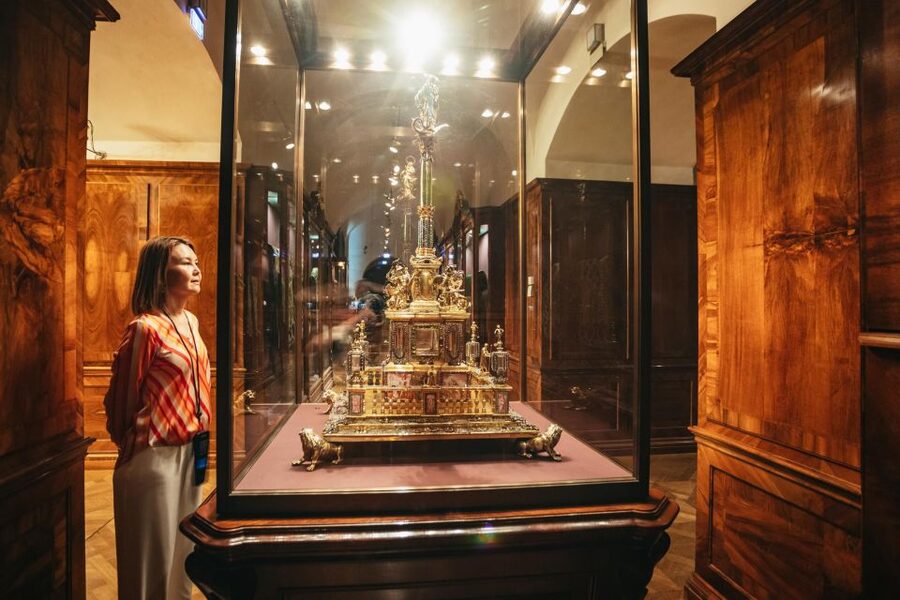
The displays are generally well labeled, and the cases allow you to see the craftsmanship at close range. Lighting has not pleased everyone, however. Some pieces can be difficult to view clearly in darker cases, so take your time and move around the display rather than judging an object from one angle.
Habsburg jewels and Sisi’s personal world
The jewelry rooms offer a more intimate side of the dynasty. Here you can see fine pieces associated with Habsburg empresses and princesses, including parts of the original jewelry of Empress Elisabeth.
Sisi remains one of Vienna’s most familiar imperial figures, often presented as a beautiful and restless empress. The jewelry gives you a more tangible connection to that public image. You are no longer looking only at state ceremony. You are looking at objects worn by women whose clothing, appearance, and possessions were part of court life.
The collection also includes jewels and diamonds of exceptional size. One emerald is among the largest in the world, and another description identifies the largest cut emerald in the world. Since superlative claims can vary depending on how an object is measured or classified, focus on the object itself: it is a striking example of the wealth available to the dynasty.
This is a good place to use an audio guide if you want more than a visual impression. The basic ticket does not include one, and the audio option may turn a quick visit into a much longer one. That is useful if you enjoy detailed explanations, but less so if you have a packed day at the Hofburg.
Burgundy, the Golden Fleece, and court ceremony
The Imperial Treasury is not only a room of crowns and diamonds. It also holds the treasure of the Order of the Golden Fleece, along with collections connected to 15th-century Burgundy.
These objects help widen the story beyond Austrian emperors. The Habsburgs gained influence through marriage, inheritance, political alliances, and ceremonial institutions. The Burgundy material gives you a glimpse of the wealth and prestige that flowed into the dynasty from earlier European courts.
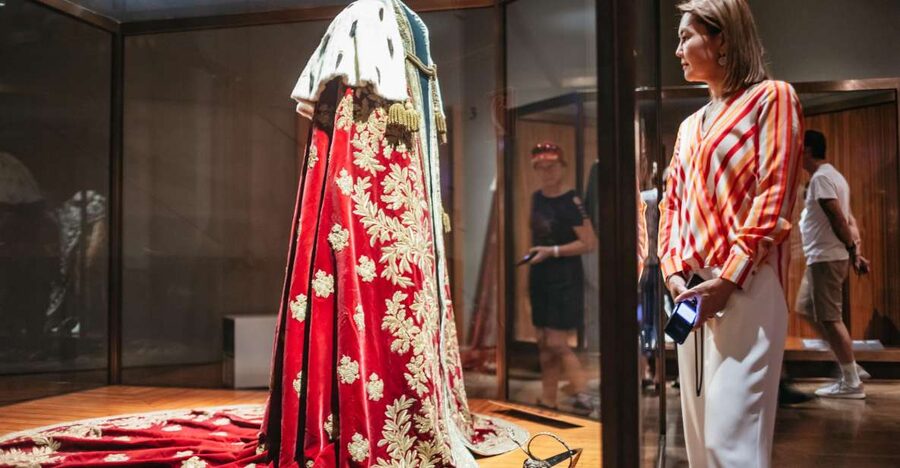
Look closely at the textiles and ceremonial clothing. One particularly rewarding detail is the group of chamberlains’ keys and the various tabards. They are easy to overlook beside a famous crown, but they show how court life worked on an everyday level. A key or formal garment could signal rank, access, and responsibility.
This is one reason I would avoid rushing straight from the crown cases to the exit. The collection’s strength is its variety. You can move from a spectacular object to a quieter one that explains the machinery of court life.
More palaces to tour around Vienna:
- Vienna: Skip the Line Schönbrunn Palace and Gardens Guided Tour
★ 4.5 · 1,540 reviews - Vienna: Schönbrunn Palace & Garden Skip-the-Line Guided Tour
★ 4.1 · 1,240 reviews - Vienna: Panorama Train Tickets to explore Schönbrunn Palace
★ 4.3 · 1,164 reviews - Vienna: Skip-the-Line Schönbrunn Palace and Gardens Tour
★ 4.8 · 1,089 reviews
Relics, sacred objects, and legendary claims
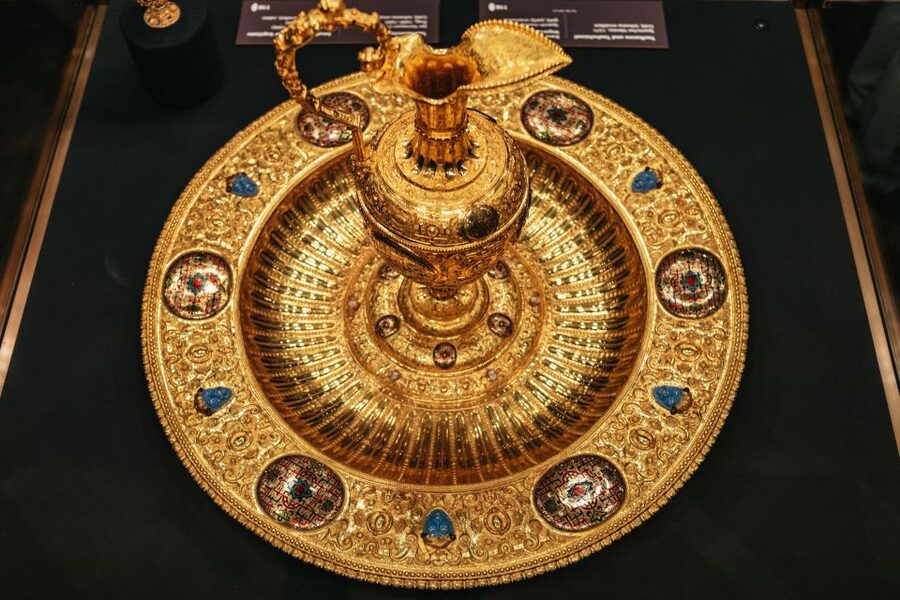
The religious objects are among the most unusual parts of the visit. You’ll see the Holy Lance, described as dating from the 8th century, along with other relics and ecclesiastical treasures.
Then come the objects wrapped in legend. The collection includes a large agate bowl known as the Holy Grail and a horn identified as a unicorn horn. Modern visitors may approach these claims with a raised eyebrow, but that is part of their appeal. They show how medieval and early modern courts collected objects not only for beauty, but also for their supposed sacred, magical, or historic meaning.
The point is not to decide whether the unicorn existed. The point is to see how belief, prestige, and collecting worked together. A ruler who possessed a sacred relic or a legendary object could present the court as a guardian of something far greater than ordinary wealth.
The religious displays can also be visually dense. If you want to understand each relic, give yourself time with the labels or choose the audio guide. If you are mainly interested in the crowns, you can move through this section faster, but you would miss some of the collection’s strangest material.
The cradle of Napoleon II and objects beyond the jewels
One unexpected exhibit is the cradle of the King of Rome, Napoleon II. It adds a personal and political note to a museum otherwise dominated by formal regalia.
A cradle may seem modest beside an imperial crown, but that contrast is exactly why it works. Dynasties depended on heirs, marriages, births, and carefully managed succession. An object made for a royal child can tell you as much about the court’s ambitions as a ceremonial sword.
The collection also includes many pieces that do not fit the simple label of crown jewels. You may find sculpture, devotional items, garments, keys, and other signs of court rank. The museum is at its best when you let these smaller objects slow you down.
If you have only an hour, concentrate first on the Imperial Crown, Austrian Imperial Crown, Habsburg jewelry, Golden Fleece material, and the legendary relics. Then return to the quieter objects if time allows.
How long to allow, and how to use the audio guide
The official duration is listed as one day because your admission remains valid for the day, not because you need eight hours inside. A focused visit can take about an hour. A slower visit usually takes around an hour and a half, and the audio guide can make it last several hours if you listen to everything.
I would allow 90 minutes for a satisfying first visit. Add more time if you want to read every label, study the religious objects, or listen to detailed commentary.
The audio guide is not included in the entrance ticket. That matters because several parts of the collection benefit from context. A crown needs an explanation of its role. A relic needs information about its tradition. A ceremonial garment needs a note about who wore it and why.
If you prefer to look independently, the exhibition is easy enough to follow once you find the correct route. The layout can be slightly confusing, and the signs around the palace are not always clear, so take a moment to get oriented at the entrance.
A guided visit can also change the experience. A guide named Petee was praised for giving a useful overview of the Habsburgs and clearer background on Franz Joseph and Sisi. Alex was also singled out for strong explanations. These names are useful if you are arranging a separate guide, but a guided tour is not included with this admission.
The $18 price and who gets the best value
At $18, the ticket is good value for anyone who has a real interest in royal collections, religious objects, or Vienna’s imperial past. You are getting access to a focused exhibition rather than a broad palace tour, which makes it easier to fit into a busy day.
The price feels less attractive if you expect a guided experience or a guaranteed fast entrance. Admission alone does not include a guide or audio guide, and the printed voucher requirement can mean another stop at the ticket desk.
Young visitors under 19 generally enter free, making this especially reasonable for families. Adults who want maximum context should budget for the audio guide or arrange their own guide. Groups can bring their own guide, though the free guide rules are specific: one guide may receive free admission for groups of more than 10 people, and guides for smaller groups are charged as paying participants. State-certified tourist guides generally enter free.
The small-group designation, limited to 10 participants, does not turn this into a guided small-group tour. It refers to the booking arrangement, while the included service remains entrance admission. Read that distinction carefully before booking.
Who should visit the Imperial Treasury
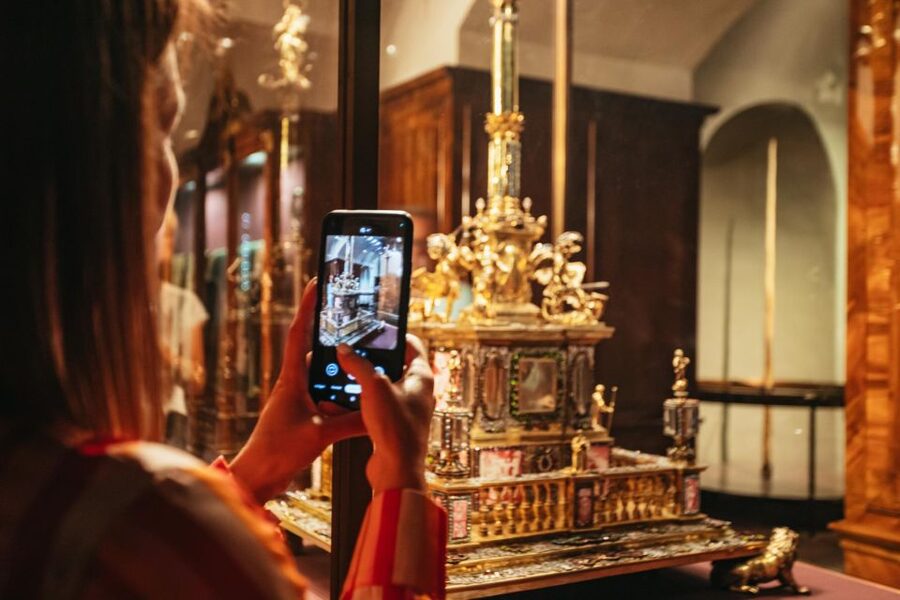
I would put this high on the list for anyone already planning to visit the Hofburg. The objects add useful context to other imperial sights in Vienna, and seeing the treasury early in your stay can help you recognize references to Habsburg rulers, Sisi, and imperial ceremony elsewhere in the city.
This is particularly good for:
- People who enjoy crowns, jewelry, and formal clothing
- Anyone interested in the Habsburg dynasty
- Families with older children who like unusual objects and legends
- Visitors who want a museum that can be covered in about 90 minutes
- People drawn to religious relics and European court history
It is less suitable if you want a live performance, a broad architectural tour of the Hofburg, or a fully guided visit included in the price. The exhibition asks you to bring your own curiosity and, ideally, enough time to read.
Should you book the Imperial Treasury?
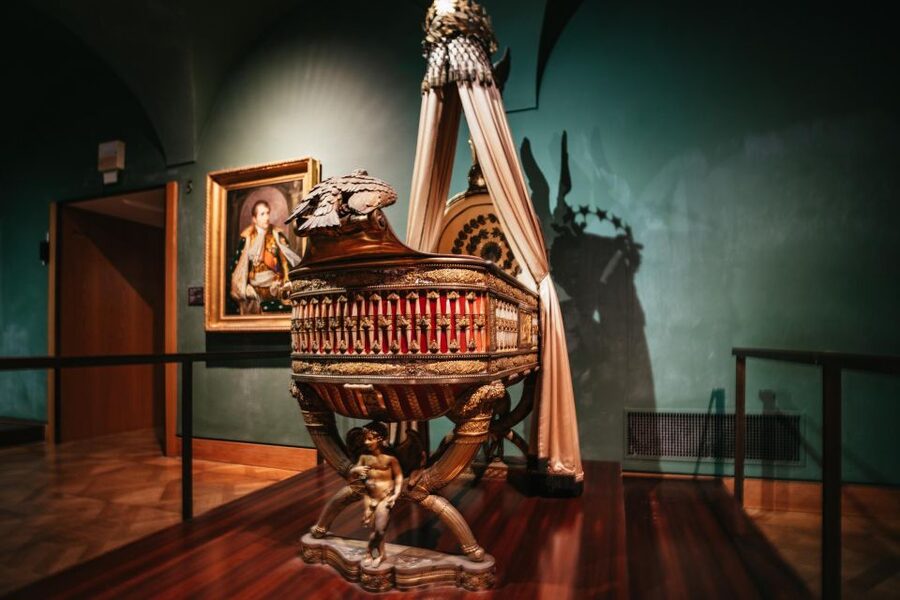
Yes, if you want to see the most important imperial objects connected with Vienna’s Habsburg past. The crowns are impressive, but the collection becomes more rewarding when you notice the less obvious material: chamberlains’ keys, tabards, women’s jewelry, Burgundy treasures, and the cradle of Napoleon II.
Book it if you can handle the voucher rule and do not mind arranging your own context. Print the voucher, allow around 90 minutes, and consider the audio guide if you want the stories behind the objects rather than a quick look at expensive things in glass cases.
Skip it only if your Vienna schedule already has more royal interiors and museum displays than you can enjoy. For most visitors with an interest in the Hofburg, $18 buys a compact, unusual, and worthwhile look at the dynasty’s public power and private world.
FAQ
Where is the Imperial Treasury located?
It is located in the Swiss Wing of the Vienna Hofburg Palace, the oldest part of the Hofburg complex.
How much does admission cost?
The listed price is $18 per person.
How long is the ticket valid?
Admission is valid for one day. The exhibition itself can usually be seen in about an hour to an hour and a half, while using an audio guide may take several hours.
Is a guided tour included?
No. The entrance ticket includes admission only. You may come with your own guide, and a separate guided visit may be arranged.
Is an audio guide included?
No. The audio guide is not included in the basic entrance ticket.
Do I need a printed voucher?
Yes. A printed voucher is required. Some bookings may still need to be exchanged for an actual ticket at the ticket counter.
Do children enter for free?
Children and young people under 19 generally receive free admission. School groups under 19 must be registered through the museum’s booking department.
Is the Imperial Treasury wheelchair accessible?
Yes, the museum is wheelchair accessible.
Fresh palace tours around Vienna
- Vienna: Schönbrunn Palace Gardens Private Guided Tour★ 4.9 · 28 reviews
- Belvedere Palace: Tour with Skip-the-Line/Transfer Options★ 4.7 · 27 reviews
- Schönbrunn Palace: Exclusive Ticket after the opening hours★ 4.1 · 374 reviews
- Schönbrunn Palace Private Photoshooting tour★ 5.0 · 4 reviews
- Vienna: Schönbrunn Palace & Christmas Market Walking Tour★ 3.9 · 6 reviews
- Private Vienna Night Tour – Palaces & City Lights★ 5.0 · 2 reviews
- Private Schönbrunn Palace Tour: Entrance included★ 4.8 · 5 reviews
- Vienna and Skip-the-Line Schönbrunn Palace Private Tour★ 4.8 · 7 reviews
Schonbrunn and Hofburg Palace Tours: the shortlist.
Schönbrunn Palace & Gardens Skip-the-Line Tour
Read our review →
Bus & Schönbrunn Palace Skip-the-Line Guided Tour
Read our review →
Panorama Train Tickets to explore Schönbrunn Palace
Read our review →
Skip-the-Line Schonbrunn Palace Guided Tour and Vienna Historical City Tour
Read our review →
Exclusive Evening at Schönbrunn Palace: After-Hours Audiotour, Dinner, Concert
Read our review →
Schönbrunn Palace Evening Tour, Dinner and Concert
Read our review →
Imperial Treasury & New Hofburg Palace Combo Ticket
Read our review →This visit also appears in