
Review · GREECE
Heraklion: Palace of Knossos 3D Virtual Audio Tour by Tablet
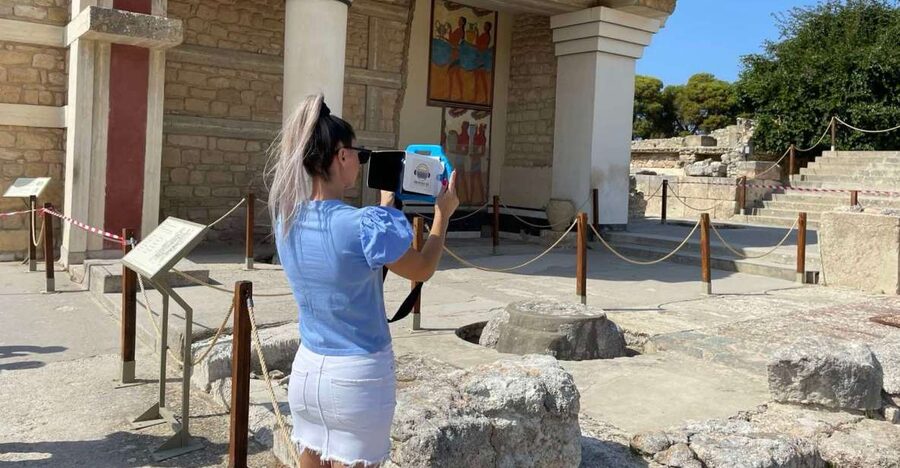
The clever part of this Knossos visit is that your tablet lets you compare the ruins in front of you with a 3D reconstruction of the palace as it may have looked. You can watch scenes such as the bull-riding display and see where objects once stood, rather than trying to make sense of bare walls and broken stone on your own.
I like the self-guided pace and the practical gear: a sun shield, strap, protective case, and disposable headphones. The $22 price is also appealing beside the cost of a private human guide. The tradeoff is that the tablet can take a few minutes to learn, and the 3D images may feel lighter on detail than a good live guide.
Key points to know before you go
- 3D and 360-degree reconstructions show how the Palace of Knossos may have looked in antiquity.
- Audio commentary in eight languages lets you explore without joining a fixed group.
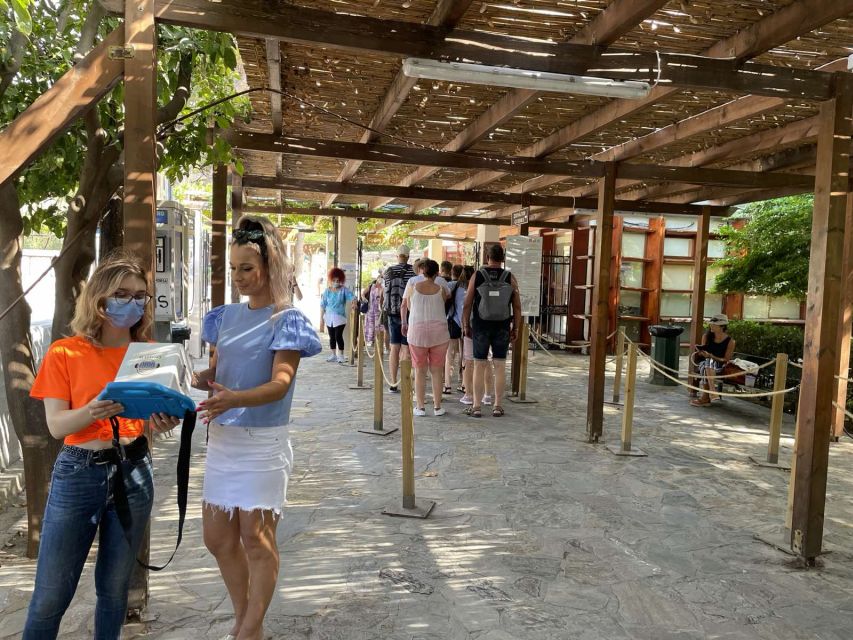
- The tablet works outdoors with a sun shield, shockproof case, carry strap, and headphones.
- The visit lasts 90 minutes, though many people finish in roughly 75 to 80 minutes.
- Admission is not included, and the palace entry fee is paid separately in cash at check-in.
- Skip-the-ticket-line access is provided, but you still meet the local team at the palace entrance.
Why Knossos needs more than a map
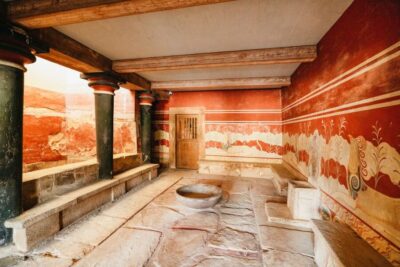
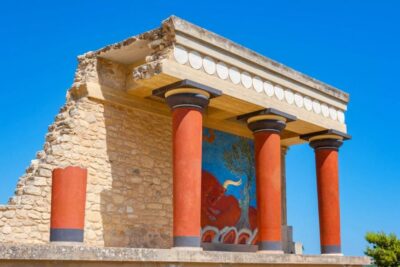
Knossos is famous, but it is not an easy site to read at a glance. You walk among walls, columns, stairways, painted fragments, and reconstructed sections. Without help, it can be hard to tell which parts belong together or imagine the height, color, and purpose of the palace rooms.
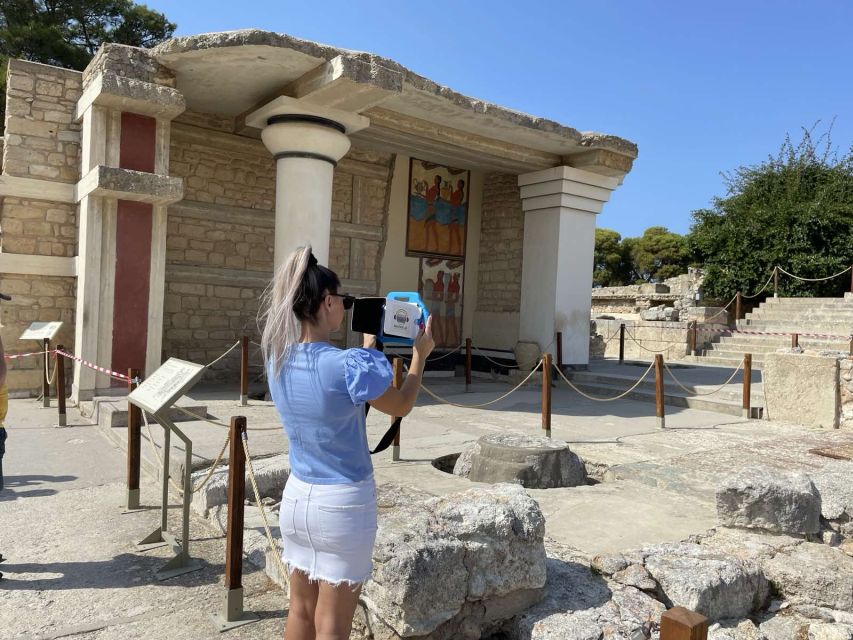
This is where the 3D tablet earns its keep. You point it toward a section of the ruins and see a digital version of the same area in its proposed ancient form. The contrast matters. A low wall becomes part of a room. A pile of stones connects with a larger building plan. A spot on the path becomes a place where an object or activity once belonged.
The experience does not replace the actual ruins. It gives you a second view of them. You can look at the stonework, then raise the tablet and compare it with the reconstruction. That back-and-forth is the main reason to choose this activity.
The reconstructions are based on archaeological studies overseen by a team of internationally recognized archaeologists. Still, a reconstruction is an informed interpretation, not a time machine. I would treat the digital palace as a useful visual guide, not as a final answer to every question about the ancient site.
More Palace Audio Guide Tours in Greece
- Crete: Knossos Palace Entry Ticket with Optional Audio Guide
★ 3.9 · 2,251 reviews - Crete: Knossos Palace and Museum E-Tickets with Audio Guides
★ 4.0 · 828 reviews - Crete: Palace of Knossos E-Ticket and Audio Guide
★ 3.8 · 1,540 reviews
Meeting the orange-shirted team at the entrance
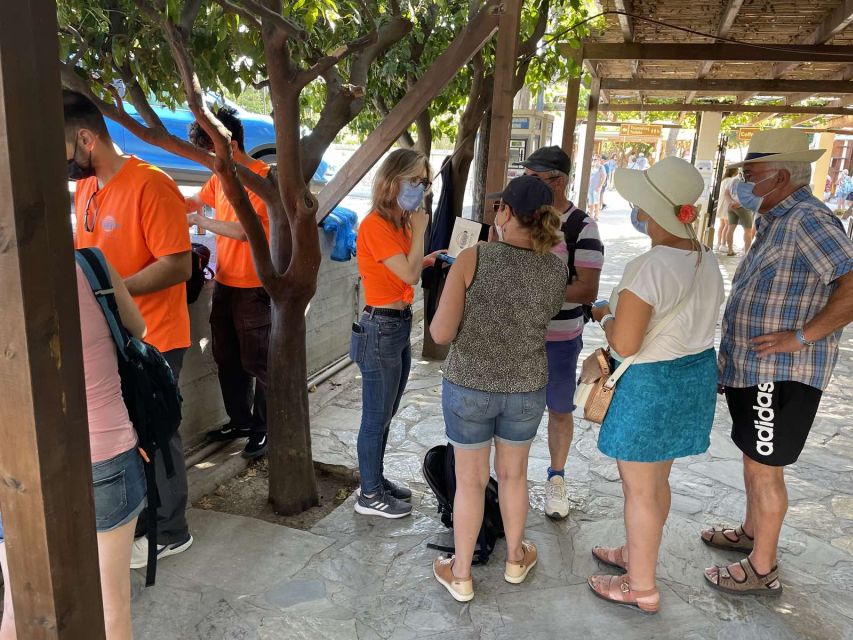
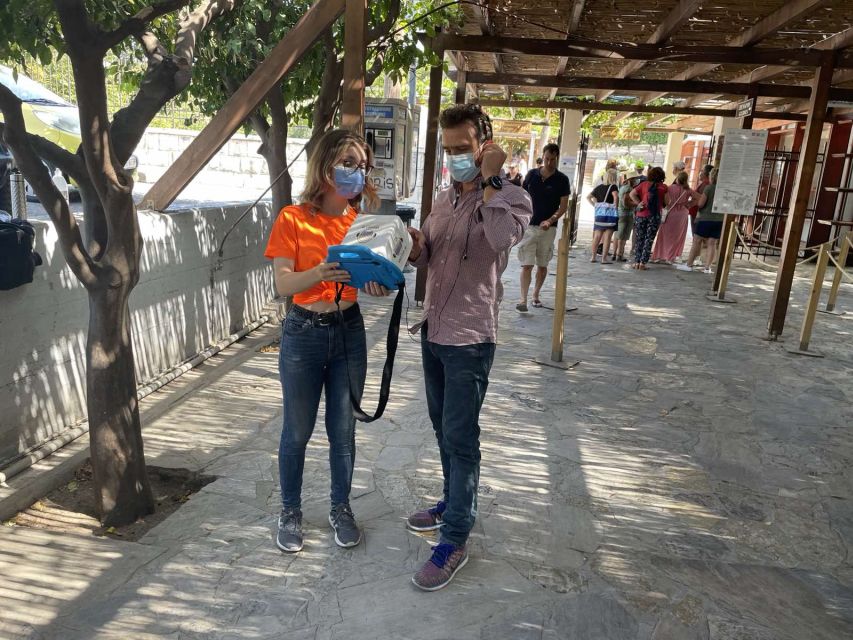
You meet the local staff at the entrance to the Palace of Knossos. Look for the team in orange shirts. This simple detail matters because the meeting location is given by a plus code, 75X6+79, rather than a familiar street address.
At check-in, you receive the mini iPad and the equipment needed for the visit. The tablet sits inside a shockproof case and has a carry strap, which is helpful when you are walking over an archaeological site. A fitted sun shield helps you see the screen in Crete’s bright summer light.
You also receive disposable earphones sealed in a small bag. They are intended for one-time use, and you return the tablet at the end. The headphones are useful because the visit is self-guided, so you can listen while moving from one area to another instead of stopping for a group explanation.
The staff explain the route and the tablet before you set off. Allow a few minutes to get comfortable with the controls. One practical complaint is that the 3D features are not always obvious at first, and the tablet needs to be aimed carefully. If you rush away from the meeting point, you may miss part of the orientation.
Following the 90-minute route through Knossos
The advertised duration is 90 minutes. In practice, the route can take about 75 to 80 minutes if you keep moving, though your pace will depend on how long you spend comparing the screen with the ruins.
The visit begins with the palace grounds and continues as a self-guided walk. You are not following a guide who sets the speed, so you can pause the audio, replay information, or spend extra time with a reconstruction. A private group format makes this especially useful for couples or families who want to move together without waiting for strangers.
The route is not presented as a series of separate stops with a live guide. Instead, you use the tablet and audio as you move around the site. That gives you freedom, but it also puts more responsibility on you. You need to keep track of the route and pay attention to where each digital view belongs.
Some people find the locations easy to match, while others need time to orient themselves. The tablet helps most when you stand in the right place and aim it carefully at the ruins. Take a moment at each point rather than waving the device around while walking.
Seeing the palace before the ruins
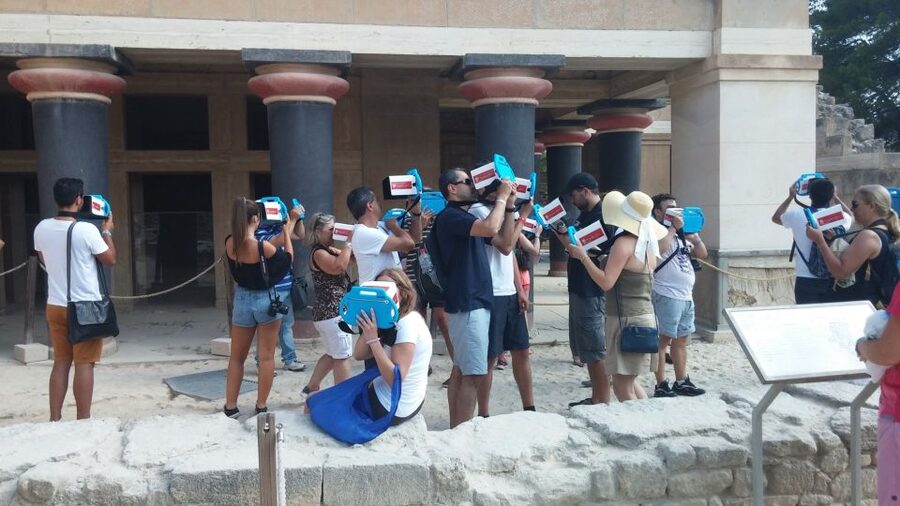
The best feature is the direct comparison between present and past. You can look at the remains in front of you, then view a 3D representation of the palace in its earlier form. The visual change is more helpful than another paragraph of dates and names.
The application also uses 360-degree views. These give you a sense of how the buildings related to one another, rather than showing each ruin as an isolated object. That broader view can make the palace plan easier to follow.
The digital scenes include details that would otherwise be hard to picture. One particularly memorable feature is a bull-riding scene, presented as part of the ancient activity connected with the palace. You can also see where artifacts were originally placed. Those details give the site a human scale and help turn the visit from a walk among stones into a story about how the rooms were used.
The visuals are not perfect. Some visitors find the 3D renders underwhelming, and the audio may feel short on substance compared with a strong specialist guide. If you want a long discussion of archaeology, myth, excavation methods, and competing interpretations, you may prefer a live guide or a more detailed book.
For many visitors, though, the digital images provide exactly what the site lacks: a clear visual bridge between the ruins and the building they once formed.
More Knossos tours around Crete:
- Knossos: Knossos Palace Skip-the-Line Guided Walking Tour
★ 4.8 · 1,380 reviews - Crete: Knossos Palace & Heraklion Guided Tour
★ 4.4 · 1,127 reviews - Knossos Palace Skip-the-Line Ticket & Private Guided Tour
★ 4.9 · 633 reviews - Knossos Palace Skip-the-Line Ticket (Shared Tour Group)
★ 5.0 · 284 reviews
Listening to the audio guide in eight languages
The audio guide is available in English, French, German, Greek, Italian, Polish, Russian, and Spanish. That choice makes the activity practical for couples and families who do not all want commentary in the same language as a larger group.
The commentary provides information about the palace as you walk. You can listen through the supplied headphones and match the spoken explanation with the view on the tablet. This combination works better than either feature alone. The audio gives context, while the screen shows the physical location being discussed.
The tone is designed for a visit rather than a university lecture. That keeps the route moving, but it also explains why some people find the content a little thin. I would think of it as a solid introduction and visual aid, not a full course on Minoan archaeology.
If you already know a great deal about Knossos, you may want more depth. If this is your first visit, the commentary should help you understand what you are seeing without forcing you to read every information board.
The equipment in Crete’s bright sun
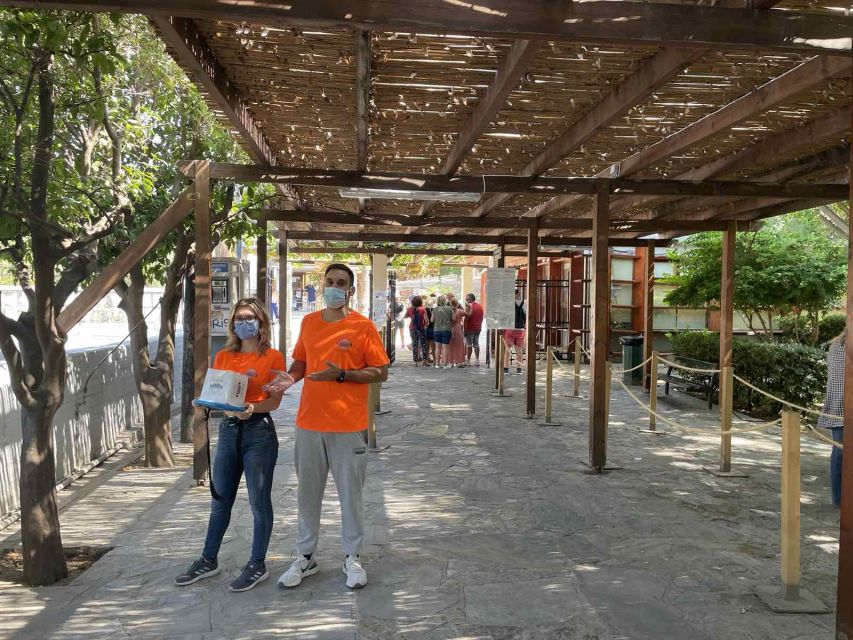
The accessories are not flashy, but they solve real problems. The sun shield is the most useful item because tablet screens can be difficult to read outdoors. The case protects the device from the knocks that come with walking through an archaeological site, and the strap leaves your hands free.
The headphones keep the commentary private and make it easier to hear over outdoor noise. They are disposable, and the supplied pair may be kept after the visit in some cases, though the key point is that the tablet itself must be returned.
The equipment does add a little bulk. You are not simply strolling with a phone in your pocket. You are carrying a tablet, wearing headphones, and stopping to line up the digital image. For most people, the extra effort is justified by the way it changes the site, but you should expect a hands-on visit rather than a passive audio walk.
Is $22 a fair price?
At $22 per person, the activity sits in a useful middle ground. You pay more than you would for walking through with only a printed guide, but much less than many private guided tours. The price includes the tablet, 3D reconstruction, audio guide, headphones, sun shield, and skip-the-ticket-line service.
The admission ticket to Knossos is not included. You pay that separately in cash to the local staff at check-in. This is the most important budget detail. Bring cash and include the entry fee when comparing the total cost with other options.
The value depends on what you need. If you are happy studying signs and using your own guidebook, you may not need the tablet. If the ruins feel too abstract without pictures, the digital reconstruction can make the extra cost worthwhile.
I particularly like this option for two people who want more structure than a solo walk but do not want the price or fixed pace of a private human guide. It also suits families because the visual scenes can hold attention better than a long spoken explanation.
What the activity does better than a live guide
A live guide can answer questions, adjust the explanation, and point out small details you might miss. This tablet tour cannot do those things. Its commentary is recorded, and the content is the same for every user.
The tablet has other strengths. You set the pace, stop when you want, and do not need to stay close to a guide’s voice. You can spend extra time comparing a reconstruction with a wall or move on if a section does not interest you.
The cost is another clear advantage. A good guide may offer more depth, but this option gives you visual context at a lower price. One useful comparison is that the audio covers much of the basic explanation you might hear in a general guided visit, while the screen adds something a live guide cannot provide in quite the same way: an image of the palace restored on the spot.
The fairest way to see it is as a different kind of guide, not a complete substitute for one. Choose the tablet for visual clarity, freedom, and price. Choose a human guide if questions, detailed archaeology, and personal interpretation matter most.
Who should book this Knossos visit?
I would recommend it to first-time visitors who want help making sense of the site. It is also a good fit for couples, families, and private groups who prefer to walk at their own speed.
The activity suits you particularly well if:
- You learn best by seeing rather than reading.
- You want commentary in English, French, German, Greek, Italian, Polish, Russian, or Spanish.
- You want to avoid joining a large guided group.
- You are comparing the cost of a guide with a lower-priced digital option.
- You like spending extra time at some sections and moving quickly through others.
You may want another option if you expect detailed archaeological debate or one-to-one answers throughout the visit. You should also skip it if carrying a tablet and wearing headphones sounds more distracting than helpful.
Small tips for a smoother visit
Read the meeting instructions carefully and look for the orange shirts at the palace entrance. Since the entry ticket is separate and paid in cash, prepare for that before you arrive.
Give the staff a moment to explain the tablet. The controls are not necessarily self-evident, and accurate aiming matters for the 3D views. If a reconstruction does not appear, stop and adjust your position rather than assuming the feature is missing.
Use the sun shield from the beginning. It is there for a reason, especially under strong midday light. Keep the strap on while walking and return the mini iPad when the tour ends.
Plan around 90 minutes, even if you expect to finish in 75 to 80 minutes. That leaves room to listen, compare the digital images with the ruins, and recover from a slow start with the technology.
Should you book the Knossos 3D tablet tour?
Book it if you want Knossos to look like a palace rather than a collection of ruins. The 3D and 360-degree views, especially the scenes showing ancient activities and artifact placement, are the main reason to pay for this experience.
The $22 price is reasonable when you want visual help without paying for a private guide. Just remember that admission is extra, bring cash, and allow a few minutes to learn the tablet. If you prefer expert conversation and deeper detail, choose a live guide instead. For a flexible first visit, this is a practical and often entertaining way to understand what you are seeing.
FAQ
How long does the Knossos 3D tablet tour last?
The activity is valid for 90 minutes. The self-guided walk may take about 75 to 80 minutes, depending on how long you spend at each section.
Is the Palace of Knossos admission ticket included?
No. The palace admission ticket is not included in the $22 activity price. You can pay for entry separately in cash to the local staff at check-in.
Where do I meet the activity team?
You meet the team at the entrance to the Palace of Knossos. The staff wear orange shirts, which should help you identify them.
What languages are available for the audio guide?
The audio guide is available in English, French, German, Greek, Italian, Polish, Russian, and Spanish.
Do I receive headphones?
Yes. Disposable headphones are included with the tablet rental. They are supplied in a sealed small bag.
What equipment comes with the tablet?
The mini iPad comes with a shockproof protective case, a carry strap, a sun shield, and headphones.
Do I keep the tablet after the tour?
No. The mini iPad is rented for the duration of the visit and must be returned at the end.
Is the activity wheelchair accessible?
Yes. The activity is listed as wheelchair accessible.
More Palace Audio Guide Tours in Crete
- Amsterdam: Royal Palace Entry Ticket + Audio guide
★ 4.6 · 7,889 reviews - Topkapi Palace and Harem Skip-the-Line-Tickets & Audio Guide
★ 4.3 · 4,745 reviews - Istanbul: Topkapi Palace and Harem Ticket with Audio Guide
★ 4.4 · 2,401 reviews - Istanbul: Dolmabahce Palace and Harem Fast-Track & Audio
★ 4.7 · 1,772 reviews
Fresh palace tours around Crete
- Knossos Palace Guided Walking Tour (Without Tickets)★ 4.6 · 32 reviews
- Knossos Palace & Archaeological Museum Private Tour★ 4.8 · 23 reviews
- Knossos Palace: Family-friendly Mythology Tour★ 4.5 · 7 reviews
- Knossos Palace and Pottery experience. Excursion Safari★ 4.7 · 21 reviews
- Knossos Palace & Archaeology Museum | Private Tour★ 5.0 · 2 reviews
- Knossos Palace ( Private tour Skip-The-Line )★ 4.8 · 4 reviews
- Crete: Knossos Palace and Museum Skip the line Guided tour★ 4.7 · 16 reviews
- Heraklion: Guided Tour of the City and Knossos Palace Ticket★ 4.8 · 5 reviews
Knossos Palace Tours: the shortlist.
Knossos Palace Entry Ticket with Optional Audio Guide
Read our review →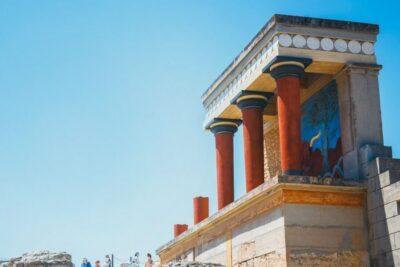
Knossos Palace Skip-the-Line Guided Walking Tour
Read our review →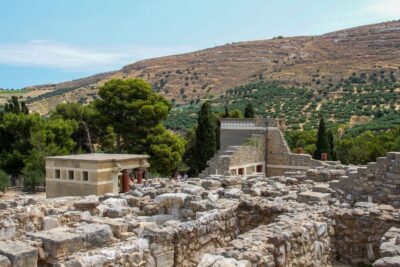
Knossos Palace and Museum E-Tickets with Audio Guides
Read our review →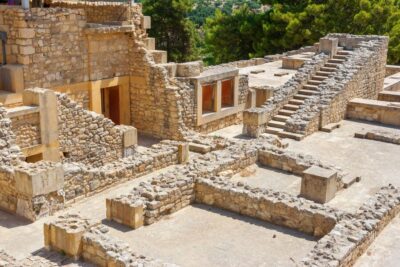
Knossos Palace Skip-the-Line Ticket & Private Guided Tour
Read our review →
From Heraklion: Historical Center City Tour & Knossos Palace
Read our review →
Knossos Palace Skip-the-Line Ticket (Shared Tour Group)
Read our review →This visit also appears in