
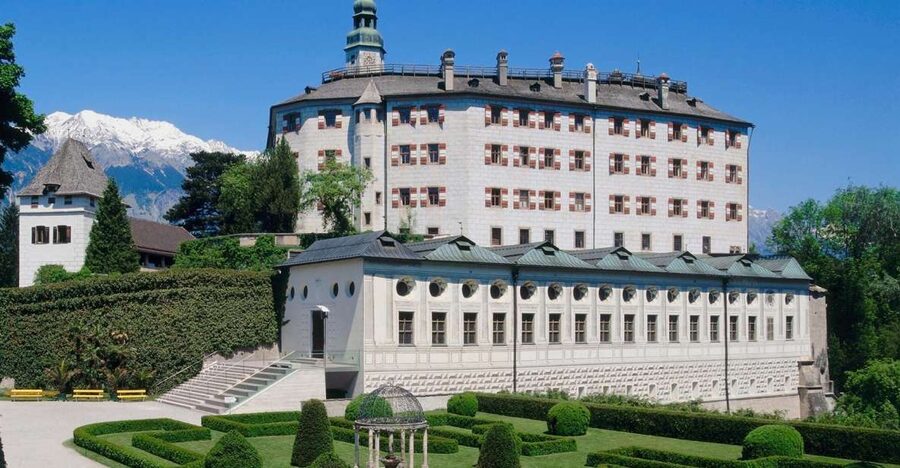
Review · PALACES WORLDWIDE
Innsbruck: Tickets for Schloss Ambras
Schloss Ambras gives you an unusually personal look at Renaissance collecting. Instead of simply walking through grand rooms, you see what fascinated Archduke Ferdinand II: strange natural objects, scientific tools, distant treasures, elaborate armor, and portraits of Europe’s ruling families. The Chamber of Art and Wonders is the star, especially if you enjoy odd objects with a story behind them.
I like two things here. First, the collection is varied enough to hold a child’s attention, with coral, ivory, unusual musical instruments, games, and a portrait of a hairy man. Second, the armories and Habsburg portrait gallery add serious historical weight, with tournament armor, generals’ armor, and more than 200 paintings. The main drawback is that admission does not include an audio guide or tour, so you need to explore on your own or arrange a private guide.
Key points to know before visiting
- Ferdinand II’s Chamber of Art and Wonders brings together art, science, nature, foreign objects, and curiosities in one remarkable Renaissance collection.
- The armories include tournament suits, ceremonial armor, generals’ armor, and the Turkish Chamber.
- The Habsburg portrait gallery contains more than 200 paintings spanning several centuries.
- Admission costs $16 per person and is valid for one day.
- Audio guides and guided tours cost extra, though you may visit with a private guide.
- A 4.6 out of 5 rating from 204 bookings reflects a visit that is often praised as easy, interesting, and suitable for children.
Why Schloss Ambras is different from a standard palace visit
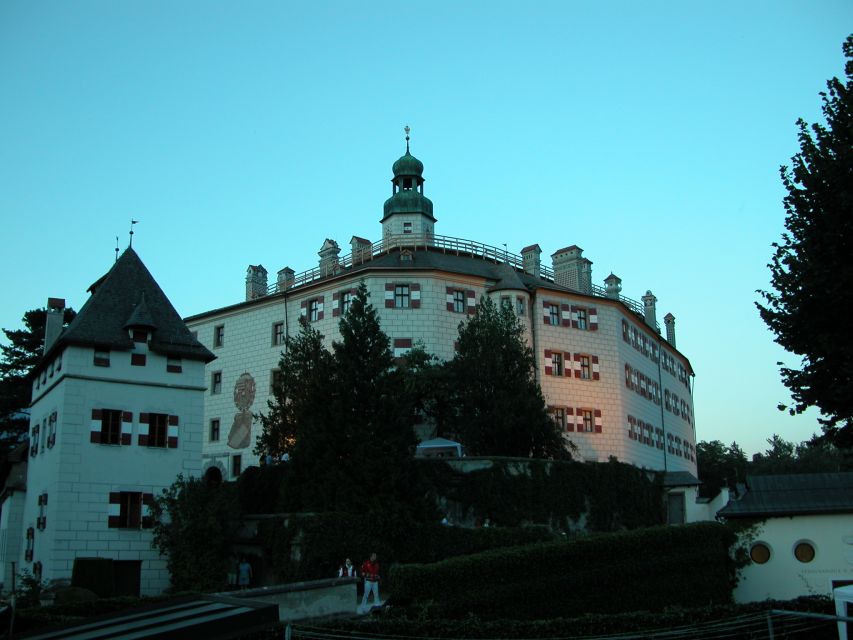
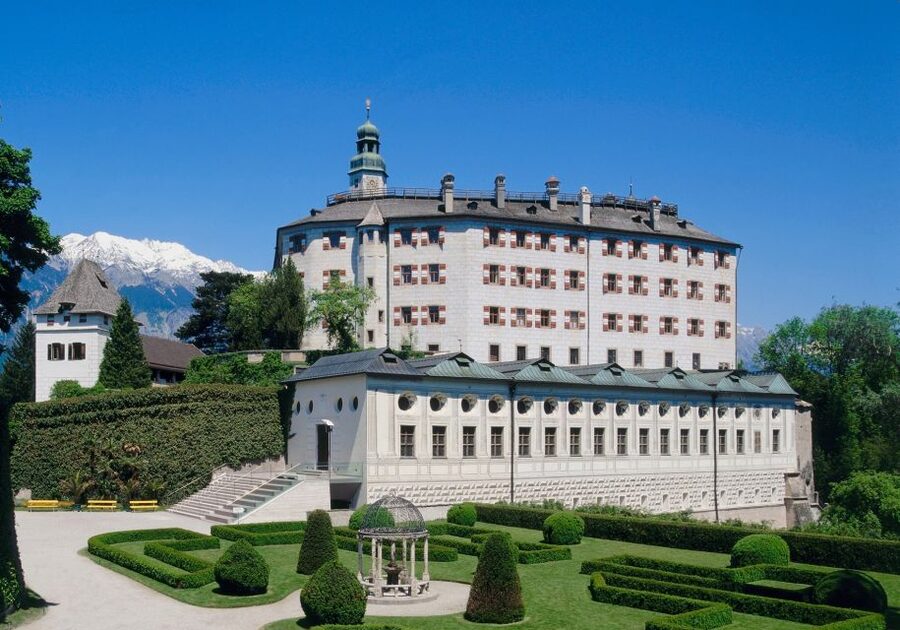
Many European palaces ask you to admire rooms, furniture, and royal decoration from a respectful distance. Schloss Ambras offers something more revealing: a look at how one Renaissance prince tried to gather the world under one roof.
Archduke Ferdinand II lived from 1529 to 1595 and treated collecting as both a passion and an intellectual project. His holdings were meant to represent the knowledge of his age. Art sat beside science. Rare natural materials appeared beside objects from distant countries. Portraits of unusual people shared space with games and musical instruments.
That mix gives the visit its character. You are not moving through a single theme, such as royal apartments or military history. You are moving through Ferdinand’s idea of the world. Some objects are beautiful. Others are puzzling. A few are frankly strange, which is part of the fun.
I would allow enough time to look closely rather than rush from room to room. The ticket is valid for one day, so you do not need to treat the visit like a timed race. That flexibility matters if you want to read labels, pause over the paintings, or give younger visitors time to take in the unusual objects.
More palaces to tour around the world:
- Venice: Doge’s Palace Reserved Entry Ticket
★ 4.6 · 42,716 reviews - Paris: Versailles Palace and Gardens Full Access Ticket
★ 4.6 · 41,579 reviews - Granada: Alhambra & Nasrid Palaces Tour with Tickets
★ 4.7 · 19,801 reviews
The Chamber of Art and Wonders
Start with the Kunst- und Wunderkammer, usually translated as the Chamber of Art and Wonders. In the Renaissance, a collection like this aimed to gather examples of the known world, the natural world, and the imagined world in one place.
The collection includes works of art such as the Tödlein, scientific objects such as an attachment with a compass, and objects brought from far away. The Ryukyu bowl adds an international touch, while coral and other rare products of nature show the period’s fascination with materials that seemed exotic or mysterious.
You will also find portraits of people who were considered miracles, including the hairy man. Modern visitors may see such images as cruel, sensational, or simply strange. That reaction is useful. It reminds you that Renaissance curiosity did not always follow modern ideas about privacy, science, or human dignity.
The room also contains unusual musical instruments and fascinating games. These details make the collection work well for families. A child may not care much about dynastic succession, but a strange object, a game, or a portrait unlike anything seen at home can create an immediate point of interest.
I like this section because it is not polished into a neat modern story. It shows curiosity in its raw form. The collection can feel chaotic at first, but that disorder is historically meaningful. Ferdinand was trying to collect marvels, not arrange a modern science exhibition with clear categories and simple conclusions.
The armories and Ferdinand’s view of power
The armories shift the mood from curiosity to military display. Here you can see rare tournament armor, ceremonial armor made for courtly feasts, and armor associated with famous generals.
Tournament armor is especially useful for understanding how warfare and spectacle overlapped at court. These suits were not only practical equipment. They also displayed status, wealth, craftsmanship, and the physical ideals of aristocratic competition.
Ceremonial armor tells a different story. It was made for courtly occasions, where appearance mattered as much as protection. You can read these objects as clothing, political symbols, and examples of skilled metalwork all at once.
The armories also include the Turkish Chamber, connected with Ferdinand II. It documents two attitudes that existed together in the 16th century: fear of the Turks and fascination with the Orient. That tension gives the room more meaning than a simple display of weapons or foreign objects.
I recommend taking your time with the contrast between the Chamber of Art and Wonders and the armories. One section shows a prince collecting the unusual world around him. The other shows how princes presented strength, authority, and military identity. Together, they offer a fuller picture of Ferdinand’s court.
The Habsburg portrait gallery
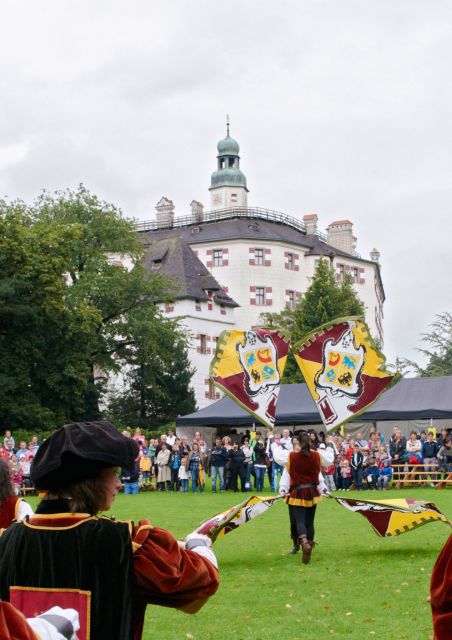
The Habsburg portrait gallery contains more than 200 paintings, covering the period from Albrecht III, who lived from 1349 to 1395, through the reign of Emperor Franz II, also known as Franz I, who lived from 1768 to 1835.
That time span is enormous. You are not looking at one generation of a family, but a long sequence of rulers and relatives. The gallery helps you see how portraiture changed over the centuries, while also showing how dynasties used images to preserve identity and authority.
The collection includes works by important artists such as Lukas Cranach, Giuseppe Arcimboldo, Peter Paul Rubens, Anton van Dyck, and Diego Velázquez. Those names give the gallery real artistic importance, not just dynastic interest.
Arcimboldo is likely to catch your eye because of his unusual approach to portraiture. Rubens and Van Dyck bring the grand style associated with European courts. Velázquez adds another major name to the collection. You do not need to be an art specialist to appreciate the variety. Look for changes in clothing, pose, facial expression, and the way status is communicated.
The main challenge is scale. More than 200 paintings can become tiring if you try to inspect every work equally. I suggest choosing a few periods or artists to focus on, then allowing yourself to move faster through the rest. That makes the gallery more enjoyable than treating it like a checklist.
Same royal city, another way in:
- Sintra: Pena Palace and Park Entrance Ticket
★ 4.2 · 17,410 reviews - Granada: Alhambra and Nasrid Palaces Entry Ticket
★ 4.6 · 15,130 reviews - Madrid: Royal Palace Fast-Access Admission Ticket
★ 4.6 · 13,856 reviews - Doge’s Palace & St. Mark’s Basilica with Terrace Access Tour
★ 4.7 · 10,697 reviews
How to plan your one-day visit
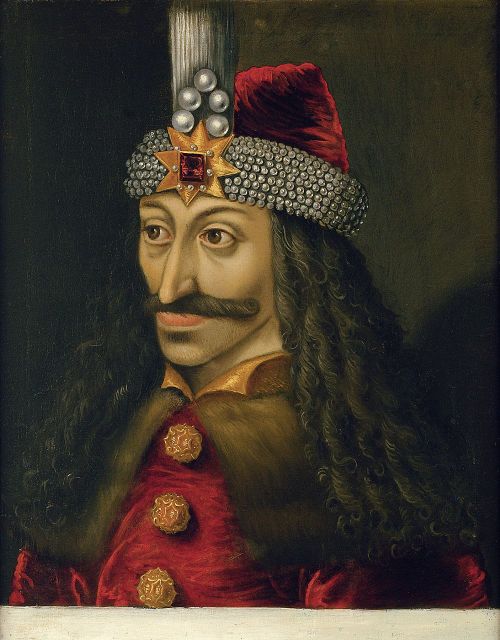
Your admission is valid for one day, and the meeting point is Schloss Ambras at Schlossstrasse 20, 6020 Innsbruck. The supplied information does not include a detailed schedule of room-by-room timings, so plan around the flexibility of a self-guided museum visit rather than a fixed tour itinerary.
Because the ticket covers admission only, you should decide before arrival how much explanation you want. If you enjoy setting your own pace, the independent format is simple and practical. You can pause where the objects interest you and move on when a section feels less important.
An audio guide is not included. A guided tour is also not included, though you may come with a private tour guide. If you want a structured explanation of Ferdinand’s collections, arrange that separately before visiting.
The ticket costs $16 per person. I consider that fair value for the range of material on display. You are paying for several distinct experiences in one place: the Chamber of Art and Wonders, the armories, the Turkish Chamber, the Antiquarium, and the Habsburg portrait gallery.
Value depends on your interests. If you only want a quick view of a palace interior, this may feel like more museum than you need. If you enjoy art, royal collections, armor, oddities, or family-friendly cultural stops, the price is easier to justify.
Is Schloss Ambras good for families?
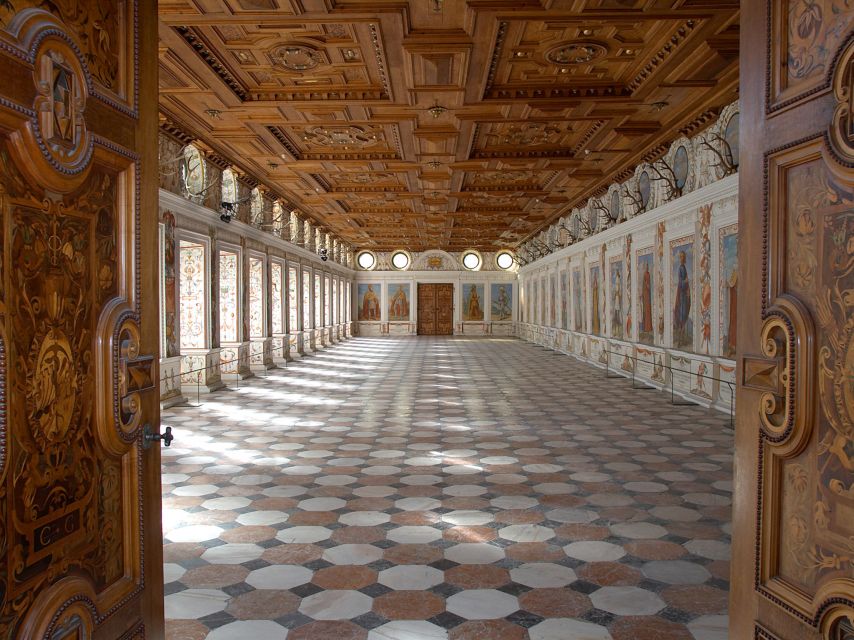
Yes, particularly because the collection does not rely only on formal paintings or long explanations. Children can respond to the unusual side of the museum: ivory objects, coral, games, musical instruments, scientific tools, and the portrait of the hairy man.
The visit still contains plenty of material aimed at adults, including dynastic portraits, military history, and Renaissance collecting practices. That mix lets families move between visually striking objects and more serious subjects.
I would avoid promising younger children that every room will hold their attention. The portrait gallery, in particular, may feel slow if you try to cover all 200-plus paintings. Use the unusual objects and armor as natural stopping points, then treat the gallery as a shorter art selection rather than a test of endurance.
The 4.6 out of 5 rating from 204 bookings supports the idea that this is a well-received visit, and one recent rating specifically described it as interesting for children. The practical, easy nature of the admission also helps families who do not want to commit to a long guided program.
What is not included in the ticket
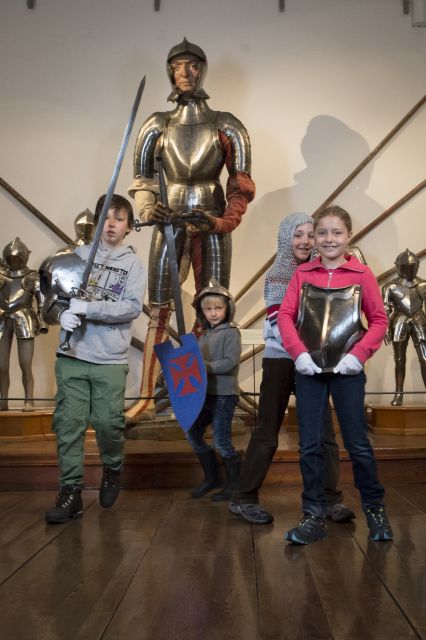
The $16 price includes admission to Schloss Ambras. It does not include an audio guide or a guided tour.
That distinction matters. Some museum tickets bundle interpretation into the price, but this one leaves the format up to you. You can visit independently, or you can bring a private guide if you prefer more context.
The rules for guides are specific. One tour guide per group booking receives free admission when accompanying the group to the museum, but the group must contain at least 10 people. Groups of fewer than 10 do not receive free guide admission. An additional tour guide and an accompanying person are charged as regular visitors.
State-certified tourist guides always receive free admission. If you are arranging a professional guide, confirm which category applies before you book.
Cancellation and payment flexibility
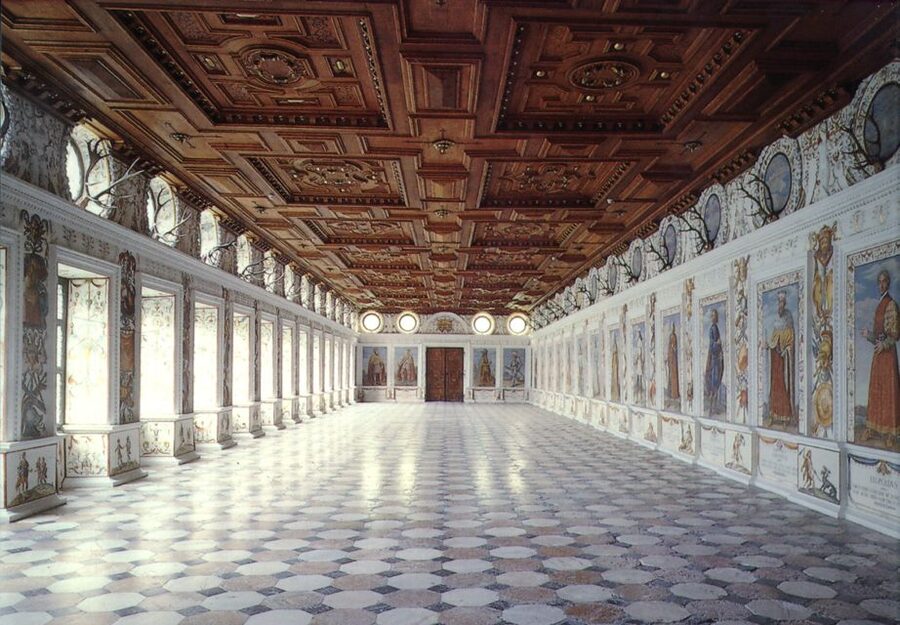
You can cancel up to 24 hours in advance for a full refund. You can also reserve now and pay later, which is useful if your Innsbruck schedule is still shifting.
These policies do not change what you see inside the castle, but they do reduce the risk of booking too early. Since the ticket is valid for one day, you can fit the visit around other plans rather than committing to a tightly fixed program.
Check availability for the starting times shown when you book. The information provided does not give a full set of opening hours or transport directions, so confirm the current practical details before setting out.
Who should book Schloss Ambras?
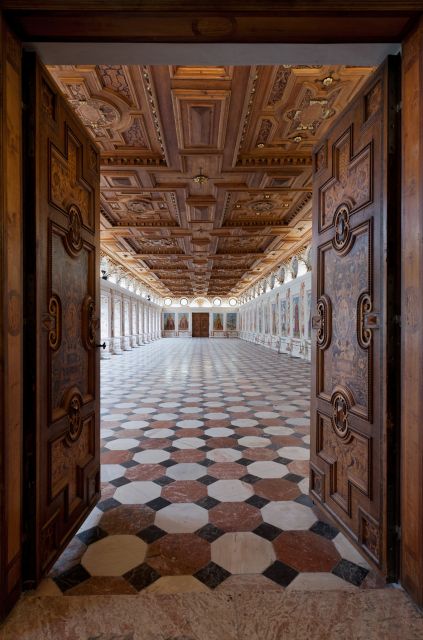
I would choose this experience if you like museums with a strong personality. It suits people interested in Renaissance culture, Habsburg history, court life, armor, portrait painting, and the strange side of collecting.
It is also a good choice if your group has mixed interests. One person can focus on the paintings, another on armor, and a child can look for the unusual scientific objects, games, instruments, and portraits.
You may want to skip it if you dislike self-guided museums or need every object explained by a guide. The lack of an included audio guide means you must bring your own curiosity or arrange additional help.
Should you book Schloss Ambras?
Book it if you want more than a grand building. The strongest reason to go is the Chamber of Art and Wonders, where art, science, nature, foreign objects, and human curiosities sit side by side. The armories and the Habsburg portrait gallery then give the visit depth and scale.
At $16, the ticket is good value for a one-day admission covering several substantial collections. Families, art lovers, and anyone drawn to unusual museum objects should find plenty to enjoy.
Skip it only if you prefer a short, highly guided attraction with a simple storyline. Schloss Ambras rewards a slower, self-directed visit. Go with a little time, choose the rooms that speak to you, and let the odd objects do some of the storytelling.
FAQ
Where is Schloss Ambras located?
Schloss Ambras is at Schlossstrasse 20, 6020 Innsbruck, Austria.
How much does admission cost?
Admission costs $16 per person.
How long is the ticket valid?
The ticket is valid for one day.
What does the ticket include?
It includes admission to Schloss Ambras in Innsbruck.
Is an audio guide included?
No. The audio guide is not included.
Is a guided tour included?
No. A guided tour is not included, though you can visit with a private tour guide.
Can I cancel for a refund?
Yes. You can cancel up to 24 hours in advance for a full refund.
Can I reserve now and pay later?
Yes. The booking option allows you to reserve your place and pay later.
Can tour guides enter for free?
One tour guide per group booking receives free admission when accompanying a group of at least 10 people. State-certified tourist guides always receive free admission. Groups with fewer than 10 people do not receive free admission for a guide.
Fresh palace tours around the world
- Bangkok Private Grand Palace Emerald Buddha and Reclining Buddha★ 4.5 · 2 reviews
- Bangkok Markets, Palaces and Temples Excursion★ 5.0 · 8 reviews
- Bangkok Two Temple Tour: Wat Pho, Emerald Buddha & Grand Palace★ 5.0 · 4 reviews
- Bangkok Royal Road – Top 3 Major Monuments (Grand Palace, Wat Pho, Wat arun)★ 4.5 · 111 reviews
- Bangkok Grand Palace and Emerald Buddha Tour★ 4.0 · 91 reviews
- Bangkok’s Landmarks Tour : GrandPalace WatTraimit WatPho WatArun★ 5.0 · 8 reviews
- Private Tour: Grand Palace,Wat Phra Kaew, Museum&Cooking Class★ 5.0 · 7 reviews
- Bangkok Grand Palace & Emerald Buddha Flexible Entry with Audio★ 3.5 · 3 reviews