
Review · PALACES WORLDWIDE
Kyoto: Nijo-jo Castle and Ninomaru Palace Guided Tour
Nijo Castle is less a fortress than a carefully staged seat of power. The shogun came here to receive officials, conduct business, and remind everyone who ruled Japan. Inside Ninomaru Palace, painted tigers, golden decorations, squeaking floors, and carefully arranged rooms turn political theater into something you can see and hear.
I like the way this one-hour tour gives the palace a clear storyline, and I like the chance to enter parts of the complex normally closed to the public. Guides such as Ai, Kaoru, Miki, and Don have been praised for clear English and lively explanations. The drawback is simple: castle admission is not included, so you pay an extra fee in cash before the tour.
Key points at a glance
- Ninomaru Palace tells the shogun’s story: See the rooms used for official meetings, private quarters, and daily palace life.
- Restricted areas may be included: The tour can take you into two additional spaces not available to ordinary visitors.
- The guide adds the missing meaning: Learn why certain animals, paintings, room layouts, and floorboards mattered.
- One hour is a useful length: You get the main highlights without giving up half a day in Kyoto.
- English delivery is the focus: Guides including Ai, Kaoru, Miki, Ayu, and Don have led clear, engaging tours.
- Plan for the extra admission fee: The $16 tour price does not cover entry to Nijo Castle, and the venue fee must be paid in cash.
Why Nijo Castle matters in Kyoto
Nijo Castle was built in 1603 as the Kyoto residence of Tokugawa Ieyasu, the first shogun of the Edo Period. That date matters. The castle was not simply built to defend Kyoto. It was built to show who held power, especially in a city where the emperor and the imperial court still carried enormous prestige.
The Tokugawa Shogunate ruled Japan for more than 250 years. Nijo Castle was the shogun’s base when he visited Kyoto, and Ninomaru Palace served as both residence and office. The building let visitors read the political order before a word was spoken: who could enter, how far they could approach, which room they waited in, and how the shogun appeared before them.
After the shogunate fell in 1867, the castle became an imperial palace. It was later donated to Kyoto City and opened as a historic site. In 1994, UNESCO designated it a World Heritage site.
I find this background especially useful because it changes the way you look at the buildings. You are not just seeing handsome woodwork and gardens. You are walking through a place built for ceremony, control, and careful displays of rank.
More palaces to tour around the world:
- Venice: Doge’s Palace Reserved Entry Ticket
★ 4.6 · 42,716 reviews - Paris: Versailles Palace and Gardens Full Access Ticket
★ 4.6 · 41,579 reviews - Granada: Alhambra & Nasrid Palaces Tour with Tickets
★ 4.7 · 19,801 reviews
Meeting your guide at the East Main Gate
The tour begins at the Nijo Castle Tour Ticket Booth, inside the East Main Gate. After entering, go to the reception area beside the General Reception, on the left. The booking confirmation provides the exact meeting details, and the listed coordinates are 35.012586265298516, 135.75085333862305.
Arrive early. You cannot join once the tour has started, and the castle grounds can take a little time to cross. You also need time to pay the separate admission fee in cash. The $16 price covers the guided tour, not entry to the castle itself.
This is a practical point that can easily cause trouble. You do not want to arrive at the last minute, search for the reception desk, then discover you still need to pay at the gate. Get inside, find the reception area, and notify the staff of your presence before the scheduled start.
The tour is conducted only in English. That makes it a good fit for visitors who want a direct explanation rather than a written guide or a quick walk through the rooms on their own.
The East Main Gate and the route into power
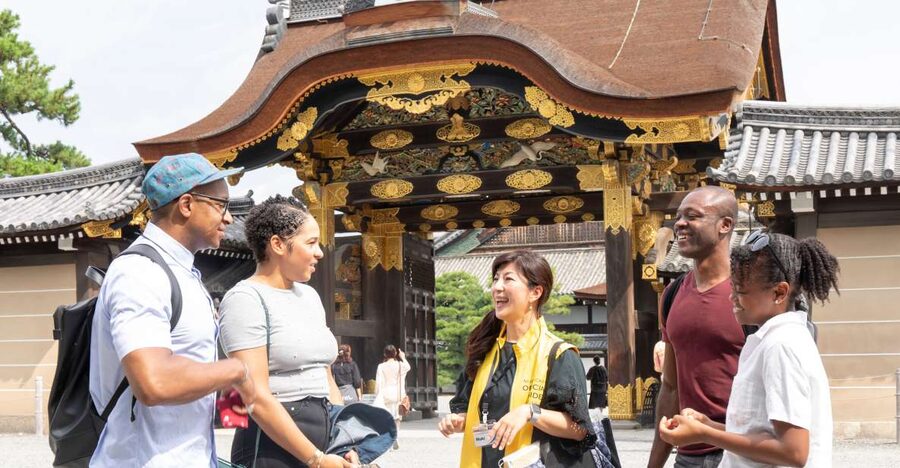
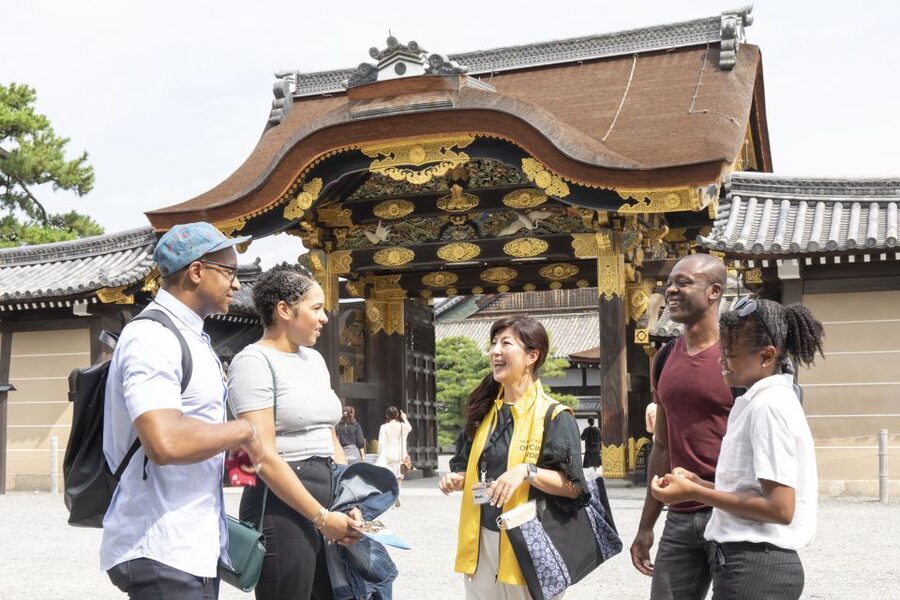
The East Main Gate is your first reminder that this was a working seat of government, not just a decorative attraction. From there, the guide sets the historical scene and leads you toward the main architectural features.
The route includes the East Main Gate, Karamon Gate, Ninomaru Palace, and Ninomaru Garden. That sequence works well because each stop adds another layer. You begin with the defensive and formal layout, pass through a richly decorated entrance, then reach the palace where political life took place.
Nijo Castle has three main parts: the Honmaru, or main defensive circle; the Ninomaru, or secondary defensive circle; and the gardens around both. This tour focuses on the East Main Gate, Ninomaru section, and garden. It does not try to cover every corner of the wider property in one hour.
That limitation is also useful. You get a focused visit instead of a long march through a large site with a guide trying to explain too much. After the guided portion, you can spend additional time wandering on your own if the opening schedule allows.
Karamon Gate: the entrance as a statement
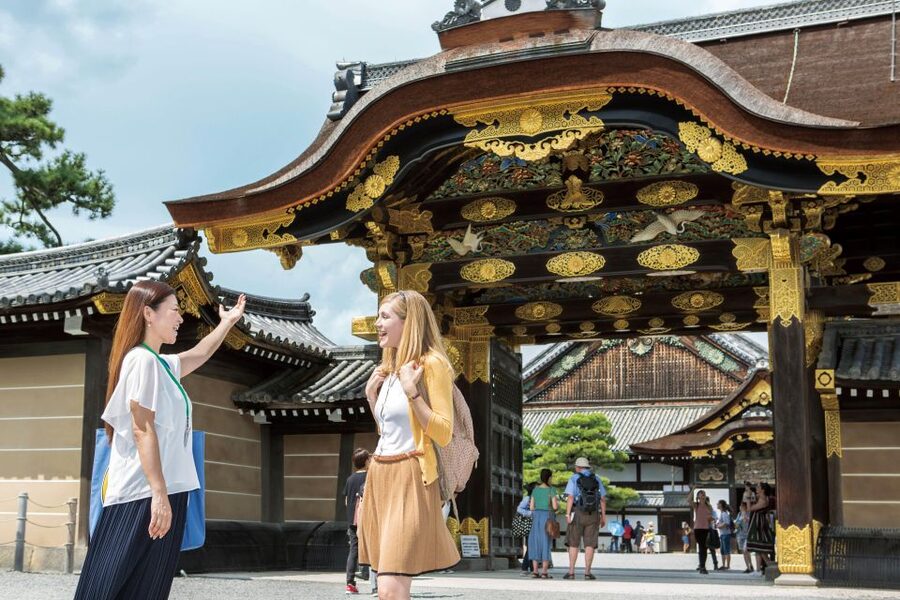
Karamon Gate is the entrance to the Ninomaru area and one of the first places where the castle’s visual language becomes obvious. Its decoration announces that you are moving from the outer grounds into a more private and important part of the complex.
A guide can point out the symbolism and craftsmanship that are easy to pass without noticing. The explanations do not stop at this is beautiful. They connect the decoration to power, rank, and the people who used the gate.
This is one reason I would not treat the tour as a simple escort. Nijo Castle has plenty to see without a guide, but the meaning behind the carvings and paintings is not always apparent. One guide may discuss animals and symbols in the artwork, while another may connect the details to shogun customs and palace life.
The pace is generally described as comfortable rather than rushed. That matters at Karamon Gate because you want a moment to look upward, study the details, and hear the explanation without losing the group.
Same royal city, another way in:
- Sintra: Pena Palace and Park Entrance Ticket
★ 4.2 · 17,410 reviews - Granada: Alhambra and Nasrid Palaces Entry Ticket
★ 4.6 · 15,130 reviews - Madrid: Royal Palace Fast-Access Admission Ticket
★ 4.6 · 13,856 reviews - Doge’s Palace & St. Mark’s Basilica with Terrace Access Tour
★ 4.7 · 10,697 reviews
Ninomaru Palace, the heart of the visit
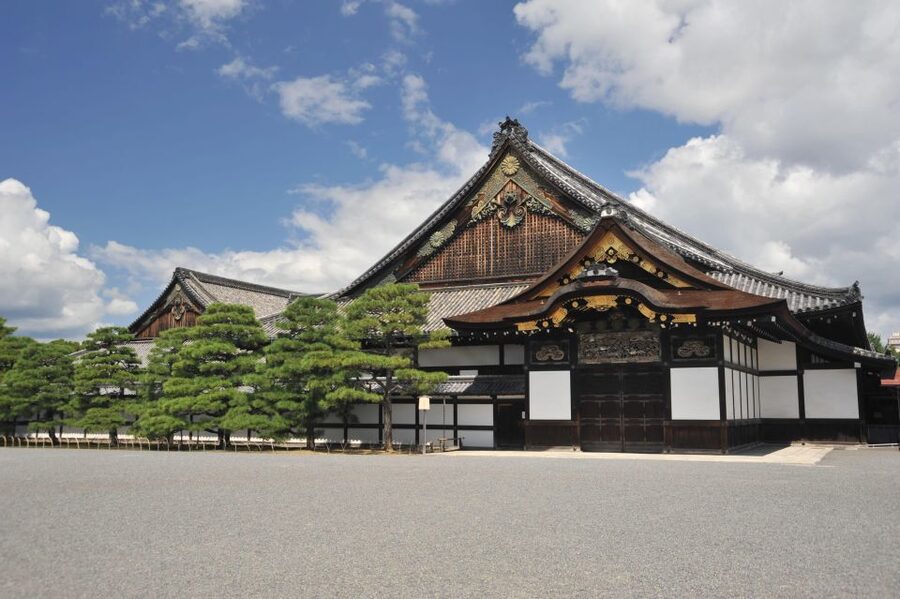
Ninomaru Palace is the main event. The palace remains intact and once served as the shogun’s home and workplace during visits to Kyoto. Its rooms were not arranged casually. Their size, decoration, and position reflected the visitor’s rank and the shogun’s relationship to that person.
Your guide explains the purpose of the rooms and helps you follow the movement from public business toward more private spaces. You may learn where official meetings took place, how visitors approached the shogun, and how daily palace routines worked.
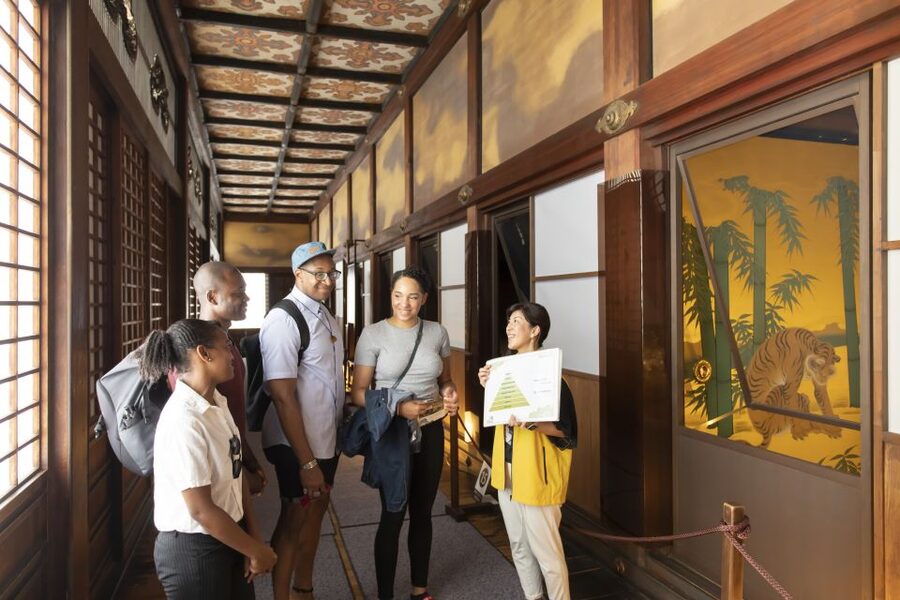
The painted interiors carry much of the visual impact. Guides have pointed out the meaning of the artwork, including the use of animals and scenes designed to communicate strength, authority, and status. Details such as tigers can seem like decoration at first, but the tour gives you a reason to stop and look.
You also learn about the risks surrounding palace life. One explanation shared during the tour concerns meal preparation and the fear of poisoning. That detail brings the political tension closer to home. A formal dinner was not just a social event. In a world of rival factions, food, access, and ceremony could all carry danger.
The famous nightingale, or nightingale-floor, effect is another detail associated with Nijo Castle. The floorboards make a squeaking sound as people walk across them. The design helped alert occupants to movement inside the building. It is a small feature with a big effect: the palace could be elegant and watchful at the same time.
Photography is not allowed inside the palace, and there is no air conditioning inside. In Kyoto’s hot months, the rooms can feel warm. Bring water for the outdoor portions and prepare for a more traditional interior experience, with no modern cooling system and no drink in your hand while you are inside.
The restricted rooms are worth the extra attention
A major reason to book the guided option is the possibility of entering two additional areas that regular visitors cannot access. The exact access can depend on the operation of the site, but the experience is presented as a special part of the tour.
These rooms offer more than a quick thrill of being allowed behind a barrier. They help you see further features of the shogun’s private quarters and make the guided route feel different from a standard self-guided visit.
This is where the $16 tour fee can make sense. You are paying for an English explanation, a structured route, and access that may not be available to people walking through alone. Since the castle admission is separate, you should think of the total cost as entry plus a modest guide fee rather than assuming $16 covers the whole visit.
The restricted access also makes this a stronger choice for repeat visitors or anyone who has already seen major Kyoto temples and wants a more focused historical experience.
Ninomaru Garden and time beyond the palace
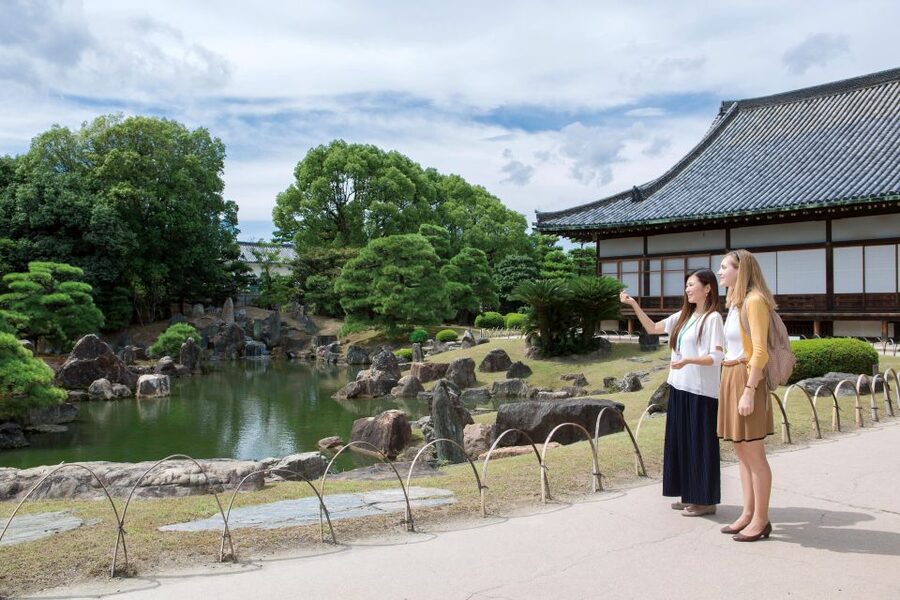
The tour includes Ninomaru Garden, which provides a change of pace after the enclosed palace rooms. The garden is part of the castle’s design, not merely a pleasant extra. Its placement helped create an ordered setting around the shogun’s residence.
Your guide may connect the garden to the palace and explain how the grounds fit into the larger arrangement of Honmaru, Ninomaru, and surrounding defenses. The outdoor section also gives you room to look around, take photographs, and catch your breath.
One hour is enough for the main route, but it is not enough for a slow exploration of every garden path and castle area. I like the arrangement because you can get the historical framework first, then wander independently. If you prefer a very slow visit, set aside extra time after the tour rather than expecting the guided hour to cover everything.
Summer deserves special planning. Guides including Miki, Ayu, and Mr. Suzuki have been praised for keeping the group comfortable in very hot weather, but the heat is still real. Wear light clothing, carry a cold drink for the outdoor parts, and remember that the palace itself has no air conditioning.
What the English guides add
The strongest feature of this experience is the guide’s ability to turn rooms into scenes from Japanese history. Ai has been praised for clear, detailed explanations. Kaoru is known for an expressive, humorous style. Miki has been singled out for answering questions and pointing out details that are easy to miss. Don has led tours that balance history with a relaxed tone.
Ayu, Kiku, Michiko, and Mr. Suzuki have also guided visitors through the castle. The individual style will vary, but the central promise is consistent: the tour is conducted in English and focuses on history, architecture, symbolism, and life inside the palace.
You should expect a small-group atmosphere at some departures, though group size is not fixed in the information provided. Some tours have had only four people, while other departures can feel busier inside the palace. Guides use earphones for paid participants, which helps in crowded spaces.
The earphone rule matters for families. Each paying participant may bring one child aged 0 to 12 free of charge. The child must stay with an adult. Earphones are supplied only to paid participants, so a child who needs one must have an adult ticket. If you bring more than one child, each additional child needs an adult ticket.
Price, timing, and who gets the most from it
At $16 per person, the guide fee is reasonable if you care about context or want access to areas that are normally closed. It is less compelling if you only want to stroll through the grounds, take photos, and read at your own pace.
The one-hour length suits a busy Kyoto schedule. You can fit the castle into a morning or afternoon alongside other sights. The tradeoff is that the visit moves at a set pace, and the guided portion will not satisfy someone who wants to linger in every garden or examine every room for a long time.
This tour is especially useful for:
- First-time visitors who want the castle’s political story explained clearly.
- People interested in samurai customs, shogun government, and palace ceremony.
- Families who benefit from a guide turning visual details into a story.
- Solo visitors who want help taking photos and staying oriented.
- Anyone who values restricted access and an English-speaking guide.
You may prefer to visit independently if you have already studied Nijo Castle, dislike fixed start times, or want to move slowly through the grounds. The castle is worth seeing either way. The guide mainly determines how much meaning you take away from the rooms.
Practical things to know before booking
Book only a departure you can reach early. If you are not present when the tour begins, you cannot join later. Enter through the East Main Gate, report to the reception area next to General Reception, and keep cash ready for the separate admission fee.
The tour is English only. It includes the East Main Gate, Karamon Gate, Ninomaru Palace, and Ninomaru Garden. Transportation is not included, so you make your own way to Nijo Castle.
Ninomaru Palace closes on Tuesdays in July, August, December, and January. It is also closed from December 26 through January 3. Since the palace is the centerpiece of the experience, check the operating date carefully before booking.
Free cancellation is available up to 24 hours before the activity for a full refund. That gives you some flexibility if your Kyoto plans change, but it does not help if you simply arrive late on the day.
Should you book this Nijo Castle tour?
I would book it if you want to understand what you are seeing rather than simply walk through an old palace. The guide makes the political structure, artwork, room functions, and palace customs easier to follow. The possibility of entering restricted areas gives the experience an extra reason to choose it over a self-guided visit.
I would skip it only if you want complete freedom or plan to spend several hours studying the gardens at your own pace. For most visitors, the $16 guide fee is a fair trade for one focused hour, provided you budget separately for castle admission and arrive early with cash.
FAQ
Is admission to Nijo Castle included in the $16 tour price?
No. Nijo Castle admission is separate and must be paid in cash on site.
How long does the guided tour last?
The guided tour lasts 60 minutes.
What language is the tour conducted in?
The tour is conducted only in English and includes a live English-speaking guide.
Where do I meet the guide?
Enter through Nijo Castle’s East Main Gate. After entering, go to the reception area next to the General Reception, on the left side, and notify the staff that you have arrived.
What areas are included in the tour?
The route includes the East Main Gate, Karamon Gate, Ninomaru Palace, and Ninomaru Garden.
Can children join the tour?
Each paid participant may bring one child aged 0 to 12 free of charge. The child must be accompanied by an adult. Each additional child needs an adult ticket.
Are earphones provided for children?
Earphones are provided only to paid participants. If a child needs earphones, the child must have an adult ticket.
When is Ninomaru Palace closed?
Ninomaru Palace is closed every Tuesday in July, August, December, and January. It is also closed from December 26 through January 3.
Fresh palace tours around the world
- Bangkok Private Grand Palace Emerald Buddha and Reclining Buddha★ 4.5 · 2 reviews
- Bangkok Two Temple Tour: Wat Pho, Emerald Buddha & Grand Palace★ 5.0 · 4 reviews
- Bangkok Royal Road – Top 3 Major Monuments (Grand Palace, Wat Pho, Wat arun)★ 4.5 · 111 reviews
- Bangkok Markets, Palaces and Temples Excursion★ 5.0 · 8 reviews
- Bangkok Grand Palace and Emerald Buddha Tour★ 4.0 · 91 reviews
- Bangkok’s Landmarks Tour : GrandPalace WatTraimit WatPho WatArun★ 5.0 · 8 reviews
- Private Tour: Grand Palace,Wat Phra Kaew, Museum&Cooking Class★ 5.0 · 7 reviews
- Bangkok Grand Palace & Emerald Buddha Flexible Entry with Audio★ 3.5 · 3 reviews