
Review · MARRAKECH
Marrakech: Bahia Palace, Madrasa Ben Youssef and Medina Tour
The beauty of this Marrakech tour is its strong mix of grand architecture and ordinary city life. You move from the tiled courtyards of Bahia Palace to the narrow souks, then finish among the storytellers, food stalls, and sellers of Jemaa el-Fnaa. It gives you a useful first map of the old city without asking you to find every sight alone.
I like the small-group or private format, and I like that the guide enters the monuments with you instead of pointing at a door and waiting outside. Guides such as Yassine, Mouhssine, Ahmad, Hassan, and Youness are repeatedly praised for clear explanations, humor, patience, family-friendly pacing, and practical shopping advice.
The main caution is simple: this is a four-hour walking tour through tight lanes, crowded areas, and historic buildings. The price looks low at $19, but monument tickets cost another 150 MAD per adult, and you should bring water, sunglasses, and sturdy shoes.
Key points to know before booking
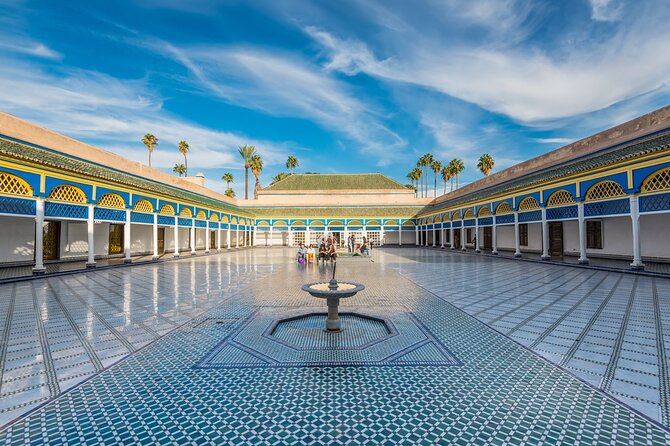
- Bahia Palace gives you the biggest visual payoff: Expect carved cedar, painted ceilings, stucco, and zellij tilework across rooms and courtyards.
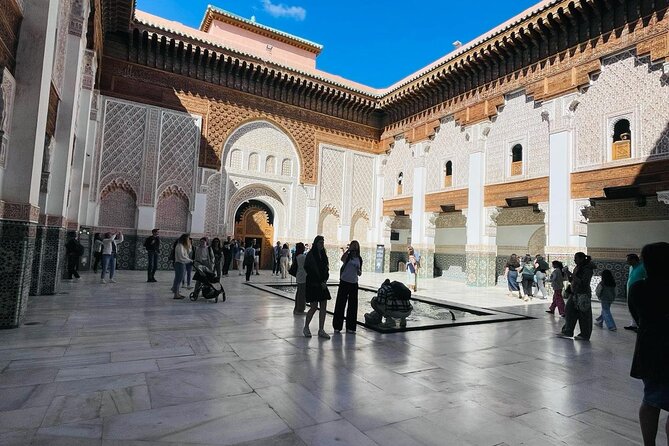
- Ben Youssef Madrasa is the quietest stop: Its central courtyard and precise decoration reward a slower look.
- The guide matters here: Yassine, Mouhssine, Ahmad, Hassan, and Youness have been especially praised for history, humor, safety, and family-friendly care.
- Souk time is part of the experience: You will see spices, leather, fabrics, perfumes, silver jewelry, and traditional workshops.
- Budget for 150 MAD extra: Bahia Palace costs 100 MAD and Ben Youssef Madrasa costs 50 MAD per adult, paid in cash.
- Plan for real walking: The route is not a good fit for anyone with serious mobility limits, despite the activity being labeled wheelchair accessible.
Why this four-hour route works well in Marrakech
Marrakech can feel confusing on your first day. The Medina is a web of lanes rather than a neat grid, and its most important sights are spread among homes, shops, workshops, cafés, and small squares. A guide helps you spend less time checking maps and more time looking up at the architecture.
This tour also avoids the common mistake of treating the Medina as one giant shopping stop. You get several different sides of the city: the Koutoubia Mosque from outside, a royal palace, the former Jewish quarter, a historic Islamic college, the souks, and Jemaa el-Fnaa.
The route lasts about four hours. That is enough time to see the main monuments without turning the day into an exhausting march, though you should not expect long, unhurried visits at every stop. The planned visits to Bahia Palace and Ben Youssef Madrasa run about 45 minutes each. The Mellah takes around 20 minutes, the wider Medina about 40 minutes, and Jemaa el-Fnaa about 15 minutes.
I would choose this as one of my first activities in Marrakech. It helps you get your bearings, learn how the old city fits together, and collect useful advice for later shopping, meals, and independent walks.
More Bahia Palace Tours around Marrakesh:
- Marrakech: Bahia Palace, Saadian Tombs, Souk and Medina Tour
★ 4.7 · 4,974 reviews - Marrakech: Bahia Palace, Saadian Tombs, & Koutoubia Mosque
★ 4.5 · 2,529 reviews - Marrakech: Bahia Palace Guided Tour with Skip-the-Line Entry
★ 4.7 · 811 reviews
Starting at Café de France and the Koutoubia Mosque
The usual meeting point is in front of Café de France on Jemaa el-Fnaa. If you choose the private option and stay at a riad inside the Medina, pickup can take place at your riad reception. The provider sends the guide’s name, meeting point, and reminders through WhatsApp a day or two before the tour.
The first formal stop is the Koutoubia Mosque. You view it from outside, since entry is restricted to Muslims during prayer times. The stop lasts about 10 minutes, so think of it as an introduction and photo opportunity rather than a mosque visit.
Your guide can explain why the building is so important to Marrakech. The name refers to booksellers who once gathered around the mosque, while the tall minaret reflects classic Almohad design. Four copper globes crown the tower, which can be seen from many parts of the city.
This is a short stop, but it gives you a useful visual reference. Once you know the Koutoubia minaret, you can often use it to orient yourself while walking around the old city.
Bahia Palace, where decoration does the talking
Bahia Palace is the tour’s grandest interior stop. This 19th-century palace contains about 160 rooms arranged around courtyards, with gardens extending across eight hectares. The route takes you through rooms decorated with carved cedar, painted ceilings, stucco plaster, and zellij mosaics.
The palace is less about a single spectacular hall and more about repeated details. Look closely at the geometric tile patterns, the carved surfaces around doorways, and the way light enters the courtyards. Your guide can give the rooms a human context by explaining the palace’s connection to Morocco’s elite and the people who lived and worked there.
The planned visit lasts about 45 minutes. That is a sensible amount of time for a first visit, though you may wish you had longer if you enjoy architectural photography. You get guided explanations, then some free time to look around and take pictures.
Some areas may be under renovation. That is worth keeping in mind if you are choosing the tour mainly for access to every room. Even with occasional work underway, Bahia Palace remains one of the clearest places in Marrakech to see how tile, plaster, wood, and painted surfaces work together.
Entry is not included. Allow 100 MAD per adult, paid in cash on site. The guide can help you avoid the initial ticket queue, which matters during busy periods.
The Mellah and Marrakech’s Jewish past
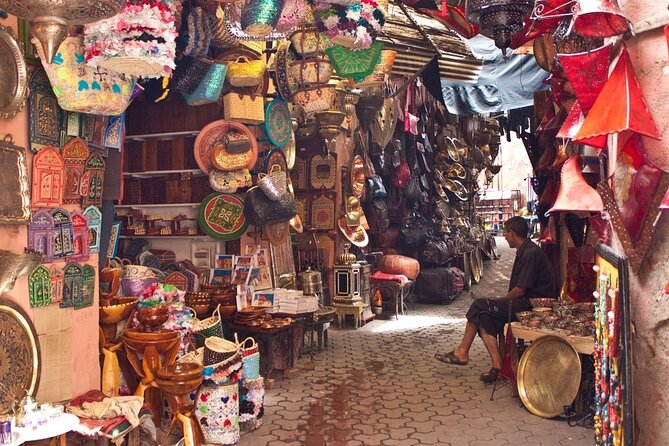
From the palace, the route continues through the Mellah, the former Jewish quarter. This stop lasts about 20 minutes and adds an important layer to the city’s story.
The Mellah is not presented as a separate museum visit. Instead, you walk through the neighborhood and consider the community that once lived and worked there. Its buildings and street plan offer a glimpse of Marrakech as a place shaped by more than one religious and cultural tradition.
This is one of the reasons I prefer a guide on this route. Without local explanation, the Mellah can look like another section of the old city. With context, you begin to notice how the neighborhood fits into Marrakech’s wider past.
The stop is fairly short, so do not expect a full historical study. It works best as a bridge between the palace and the souks, giving the walking portion more meaning than a simple shopping route.
More palaces to tour around Marrakesh:
- Marrakech: Palace, Museum, Madrasa & Medina Highlights Tour
★ 4.7 · 706 reviews - Marrakech: Saadian Tombs, Bahia Palace, Medina and Souk Tour
★ 4.7 · 673 reviews - Marrakech: Bahia Palace, Ben Youssef Medersa, & Souks Tour
★ 4.3 · 554 reviews - Marrakech: Bahia Palace, Madrasa Ben Youssef & Secret Garden
★ 4.7 · 225 reviews
Walking through the souks and artisan workshops
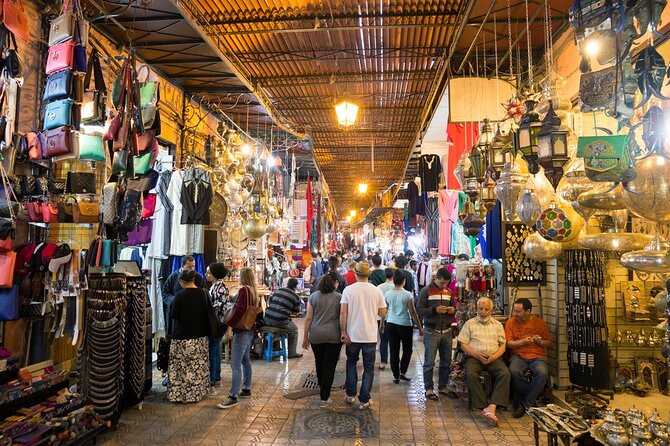
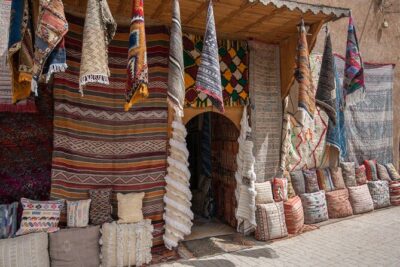
The souks bring the strongest sensory change. The route passes stalls selling spices, leather goods, fabrics, perfumes, souvenirs, and silver jewelry. You will hear sellers calling out, smell spices and oils, and need to watch for other people and the steady movement through the lanes.
Your guide is especially useful here. The Medina’s shopping streets can be hard to navigate, and several people who took this tour appreciated having someone lead them through the maze. Guides also offered advice about shopping and helped some visitors find particular jewelry or other items.
The shopping element appears to be handled with a light touch, but the route may include artisan workshops or shops. That is not automatically a problem. A good stop can show you how pottery, metalwork, woodcarving, or other crafts are made. Still, you should remember that these visits also create an opportunity to sell products.
If you want an entirely shopping-free walk, tell your guide at the start. If you are interested in buying, ask questions, compare prices, and take your time. The best value here is the orientation: learning what you are looking at and how to move around the souks with more confidence.
Some guides also explain argan oil and other local products at a herbalist shop. Treat those explanations as useful background, not as a reason to feel obliged to buy anything.
Ben Youssef Madrasa and its calm courtyard
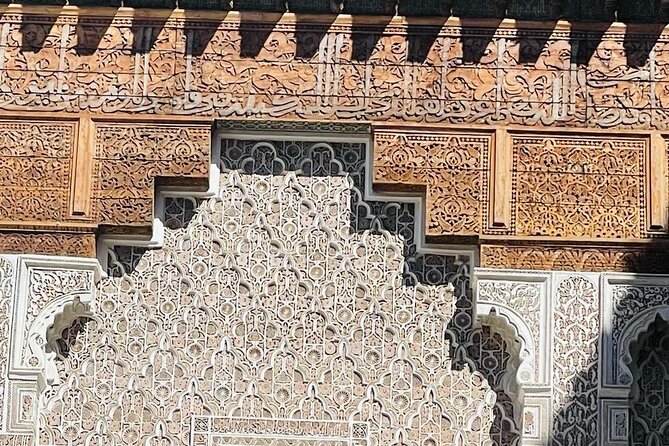
Ben Youssef Madrasa is likely to be the favorite stop for anyone who enjoys Islamic architecture. Founded in the 14th century and rebuilt by the Saadians, this former Quranic school centers on a peaceful courtyard.
The decoration is exacting rather than flashy. Stucco plaster, zellij tiles, and finely carved cedar cover the surfaces around the courtyard and rooms. Take a moment to look at how the patterns change from one material to another. The craftsmanship rewards close attention more than a quick photograph.
The visit lasts about 45 minutes. Your guide goes inside, explains the building, and leaves you time to look around independently. That balance works well here because you need a little quiet to appreciate the symmetry.
The madrasa costs 50 MAD per adult, again paid separately in cash. Skip-the-line help is included, but crowds can still affect how long you spend in the most attractive spots. If you want clear courtyard photographs, listen for your guide’s instructions and use the free time wisely.
The madrasa is also a good contrast with Bahia Palace. Bahia feels residential and royal, while Ben Youssef feels ordered, scholarly, and inward-looking. Seeing both in one morning or afternoon makes the differences easier to understand.
Finishing in the Medina and Jemaa el-Fnaa
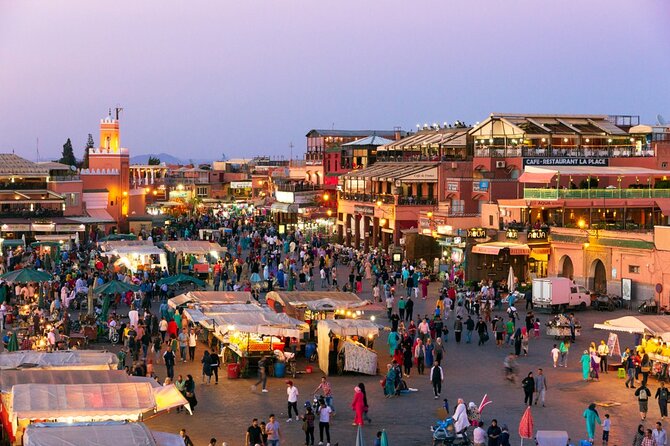
After Ben Youssef Madrasa, you continue through the Medina for roughly 40 minutes. This part is less about one named monument and more about seeing how daily life continues inside the old city.
You may pass handwoven textiles, workshops, small shops, and lanes that seem to change character every few minutes. The guide helps connect the separate stops and points out details you could easily miss while trying to keep your bearings.
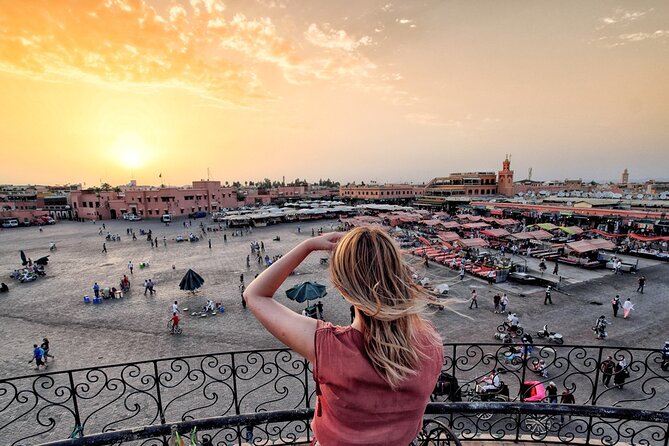
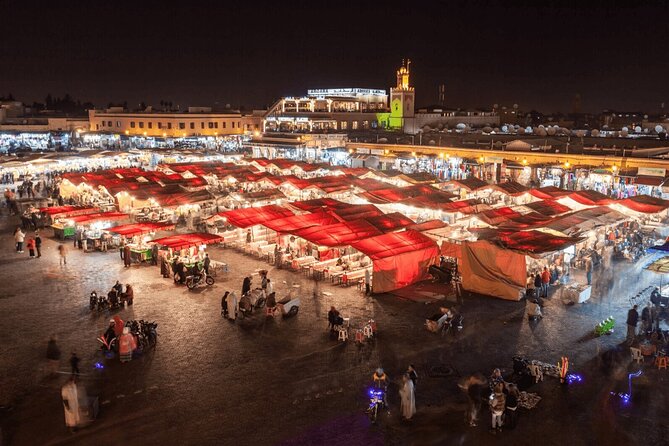
The tour ends with about 15 minutes at Jemaa el-Fnaa. This square changes through the day, so the exact atmosphere depends on your start time. It is a useful place to finish because it brings together food, commerce, public life, and the Medina’s constant movement.
The listed drop-off points are the Medina and Café de France. If you want to stay in the square afterward, you can continue exploring on your own, but the formal tour ends there.
What the guides add to the experience
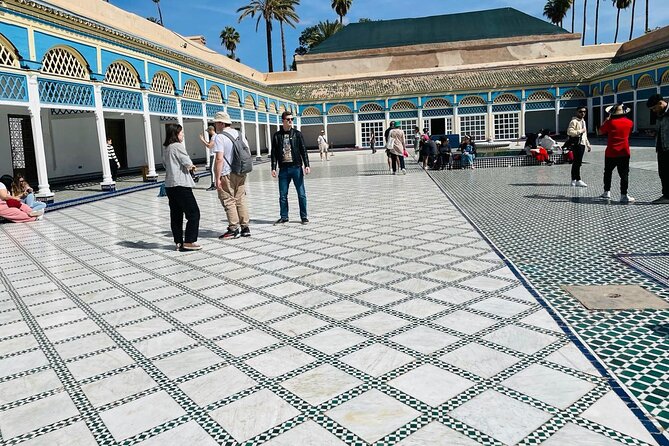
The strongest part of this tour is the human guide. The route itself contains famous sights, but the quality of the explanations determines whether you remember more than pretty tilework.
Yassine is repeatedly praised for humor, clear history, photography help, and useful advice about hammams and other activities. Mouhssine is noted for making people laugh, taking photographs, checking that everyone was safe, and adjusting to different languages and ages. Ahmad is described as professional and engaging, while Hassan is praised for thoughtful explanations and sensible decisions at the monuments.
Families appear to do well on this tour. Ayoub kept children aged seven and nine interested, and several guides made the route enjoyable for children around 10 to 13. That suggests the history is explained in a conversational way rather than as a long lecture.
The guides also seem attentive to group pace. Some visitors were offered rest stops, and Lachen was praised for considering physical limitations. Still, the route remains a walking tour through old-city lanes. Good guiding can help, but it cannot remove uneven surfaces, crowds, stairs, or the need to walk for several hours.
English and French are the available tour languages. Private groups are offered, while the standard option may be a small group. If you want more time for questions, photography, or shopping advice, the private option is the better choice.
Price, extra costs, and practical value
At $19 per person, the guiding fee is attractive for a four-hour route covering several major sights. The real cost is higher because the two main monuments charge separate entry fees: 100 MAD for Bahia Palace and 50 MAD for Ben Youssef Madrasa per adult.
Transportation, food, and drinks are not included. This is not a concern if you are already in the Medina, since the route is on foot and the meeting point is central. It does matter if you are staying outside the old city, as you must arrange your own way to Café de France unless the private pickup option applies to your riad inside the Medina.
The value comes from the guide’s route planning and explanations. Bahia Palace and Ben Youssef Madrasa can be beautiful but fairly quiet on their own, with limited information inside. A good guide gives you the background that turns decoration into something you can understand.
The group format also affects value. A small group keeps the cost down while allowing questions. A private tour costs more, but it gives you more control over pace and shopping stops.
Timing, Ramadan, and what to bring
Wear comfortable shoes. You will walk through narrow lanes, open areas, and historic buildings for much of the four hours. Bring water and sunglasses, especially during warm weather.
During Ramadan, monuments close earlier. Morning tours begin at 9:30 instead of 10:00, and afternoon tours begin at 13:00 instead of 14:00. Check the current schedule when booking, since the timing is designed to leave enough time before the monuments close.
The activity allows free cancellation up to 24 hours before the start and offers reserve-now, pay-later booking. Those terms are useful if your Marrakech plans are still shifting.
The activity is marked wheelchair accessible, but it is also listed as unsuitable for people with mobility impairments. That is an important contradiction. Ask the provider directly about your route, stairs, street surfaces, and monument access before booking if you use a wheelchair or have difficulty walking.
Who should book this Marrakech tour?
I would choose it for a first visit, especially if you want the major historic sights explained in one half-day. It suits couples, families, and small groups who want structure without spending a full day in a vehicle.
It is also a good match if you are nervous about finding your way through the souks. You still have time to shop, but you do not begin by wandering without a map or local reference point.
You may prefer a private booking if you want a slower pace, have specific shopping interests, or are traveling with older relatives. Independent walkers may find the route too scheduled, particularly if they have already visited Bahia Palace or Ben Youssef Madrasa.
Should you book it?
Book this tour if you want a practical introduction to Marrakech’s old city, with a guide who can explain the architecture, keep you oriented, and offer useful local advice. The strongest reasons are the two major interiors, the Mellah, and guided movement through the souks.
Skip it if you dislike group timing, shopping stops, or four hours on foot. Also budget the 150 MAD monument fees and confirm accessibility before paying.
For most first-time visitors, this is a good-value way to begin in Marrakech. Choose the small-group option for price, or pay extra for private attention and a more flexible pace.
FAQ
How long does the Marrakech city tour last?
The tour lasts four hours, with starting times depending on availability and the season.
Where do I meet the guide?
The standard meeting point is in front of Café de France in Jemaa el-Fnaa Square. If you choose the private option and stay at a riad inside the Medina, pickup can take place at your riad reception.
Are the Bahia Palace and Ben Youssef Madrasa tickets included?
No. Bahia Palace costs 100 MAD per adult, and Ben Youssef Madrasa costs 50 MAD per adult. These fees are paid separately in cash on site.
Can I enter the Koutoubia Mosque?
The Koutoubia Mosque is viewed from outside only. Entry is restricted to Muslims during prayer times.
Which languages does the guide speak?
Guided tours are available in English and French.
Is transportation included?
No. Transportation is not included. The experience is a walking tour, with optional riad pickup only for the private option when you are staying inside the Medina.
What should I bring?
Bring comfortable shoes, sunglasses, and water. Cash is also needed for the Bahia Palace and Ben Youssef Madrasa entry fees.
Fresh palace tours around Marrakesh
- Marrakech Private Medina Tour: Bahia Palace & Ben Youssef★ 4.8 · 48 reviews
- Marrakech: Bahia Palace, Madrassa & Souks Guided Tour★ 4.8 · 47 reviews
- Marrakesh: Bahia Palace, Ben Youssef Medersa & Secret Garden★ 4.8 · 55 reviews
- Marrakech Palaces and Monuments Half-Day Tour★ 5.0 · 11 reviews
- Marrakech Palaces and Monuments Half-Day Tour★ 4.1 · 13 reviews
- Marrakech: Bahia Palace, Saadian Tombs & Medina Walking Tour★ 4.6 · 63 reviews
- Marrakech City Tour: Souks, Palaces & Hidden Gems★ 4.7 · 35 reviews
- Marrakech: Medina Tour, Bahia Palace and Medrasa Ben Youssef★ 5.0 · 2 reviews
Bahia Palace Tours: the shortlist.
Bahia Palace, Saadian Tombs, Souk and Medina Tour
Read our review →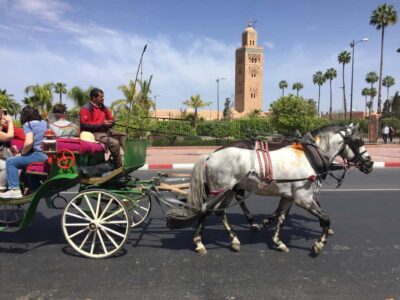
Bahia Palace, Saadian Tombs, & Koutoubia Mosque
Read our review →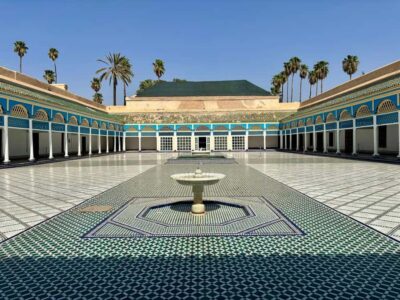
Bahia Palace Guided Tour with Skip-the-Line Entry
Read our review →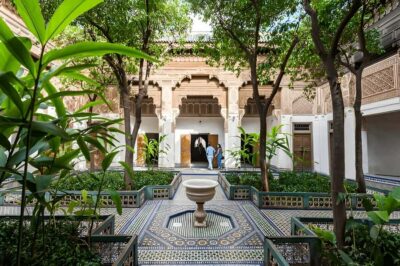
Bahia Palace, Ben Youssef Medersa, & Souks Tour
Read our review →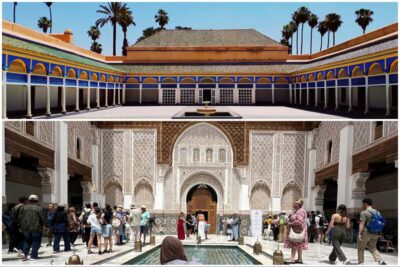
Bahia Palace, Madrasa Ben Youssef & Secret Garden
Read our review →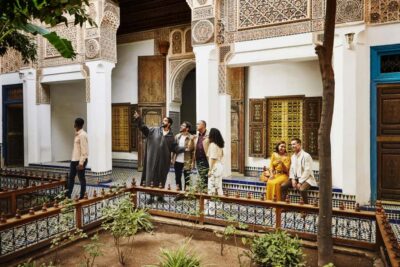
Bahia Palace, Saadian Tombs & Top Highlights Tour
Read our review →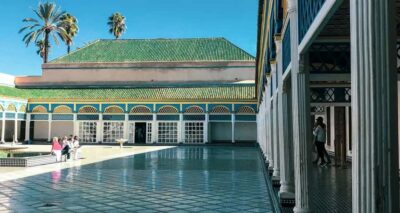
Bahia Palace, Madrasa Bn Yousef, Souk Medina Tour
Read our review →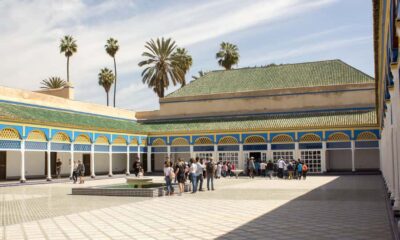
Marrakesh: Bahia Palace, Ben Youssef Medersa & Secret Garden
Read our review →This visit also appears in