
Review · PALACES WORLDWIDE
Québec City: Saint-Louis-Forts-and-Châteaux visit
Beneath Québec City’s famous Dufferin Terrace lie the remains of Château Saint-Louis, where French and British governors governed from 1620 to 1834. The archaeological site turns a familiar Old Québec viewpoint into a place of political decisions, household routines, and diplomatic meetings that shaped North America.
I like two things especially: the chance to see more than 120 excavated artifacts in their original setting, and the Huron-Wendat perspective on alliances with colonial governors. The main drawback is access. Stairs and uneven historic surfaces make this a poor choice for wheelchair users or people with mobility limits.
Key points at a glance
- A seat of power beneath Dufferin Terrace: Enter the remains of the only château erected in Québec City.
- Two ways to hear the story: Join an on-site heritage guide or use the downloadable Parks Canada audio tour.
- Diplomacy beyond the usual colonial story: An exhibition created with the Huron-Wendat Nation explains political alliances from its perspective.
- Artifacts with everyday meaning: Displays explore items connected with food, household work, hygiene, and life inside the château.
- A compact one-hour visit: The short duration fits neatly into an Old Québec sightseeing day.
- Good value at $9: The low admission price gives you a focused archaeological and historical experience in the heart of the city.
What lies beneath Dufferin Terrace
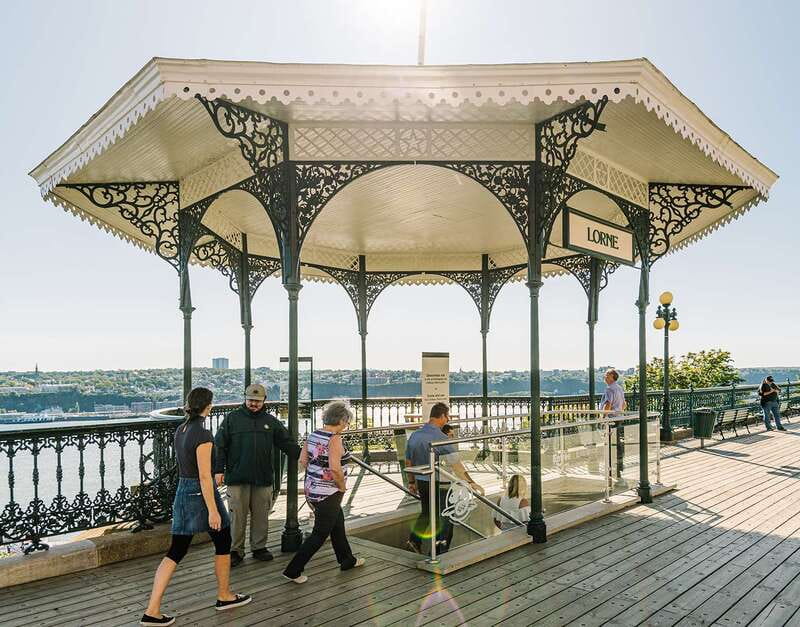
Most people come to Dufferin Terrace for the view of the St. Lawrence River and the grand Château Frontenac above it. This experience asks you to look down. A stairway leads beneath the boardwalk to the remains of Château Saint-Louis and its related fortifications.
That change in level matters. You are not simply walking into another museum room. You are moving from one of Québec City’s busiest public viewpoints into the buried footprint of the place where governors lived and made decisions.
The site served as the official residence and seat of power for French and British governors between 1620 and 1834. Political choices made here affected trade, military affairs, colonial administration, and relations with First Nations. The exposed remains help you connect those large events to the actual rooms and working spaces where decisions were made.
You should allow about an hour. That is long enough to listen carefully, study the displays, and follow the main story without turning the visit into a half-day commitment. If you like archaeology, colonial politics, or the less polished side of historic houses, this is one of the more useful short stops in Old Québec.
More halls, courtyards and throne rooms open around the world:
- Venice: Doge’s Palace Reserved Entry Ticket
★ 4.6 · 42,716 reviews - Paris: Versailles Palace and Gardens Full Access Ticket
★ 4.6 · 41,579 reviews - Granada: Alhambra & Nasrid Palaces Tour with Tickets
★ 4.7 · 19,801 reviews
Starting at the green and white kiosk
Find the green and white kiosk with a Canadian flag at the beginning of Dufferin Terrace. Look for the sign marked Frontenac. If you have booked the guided option, your guide wears a green and beige uniform.
The meeting point is easy to pair with a walk through Old Québec. You do not need a separate transportation plan if you are already sightseeing around the terrace, Château Frontenac, Place d’Armes, or the upper town. The activity begins above the site, then takes you below the terrace.
You can choose between a live heritage guide and a self-guided audio route. The live tour is offered in English, French, Spanish, German, and Chinese. The downloadable Parks Canada app supports the self-guided option and adds narration as you move through the remains.
I would choose the guide if you enjoy questions, lively storytelling, and a clear route through the site. The strongest guided experience appears to come from the human delivery. One recent guide was described as animated and entertaining, and another visitor found the explanations highly informative. No guide names are provided, so you cannot request a particular person in advance.
Following 200 years of political power
The first major idea is the château’s long working life. This was not a single-period fort frozen in time. It served French and British governors across more than two centuries, so the site reflects changes in government, architecture, diplomacy, and daily life.
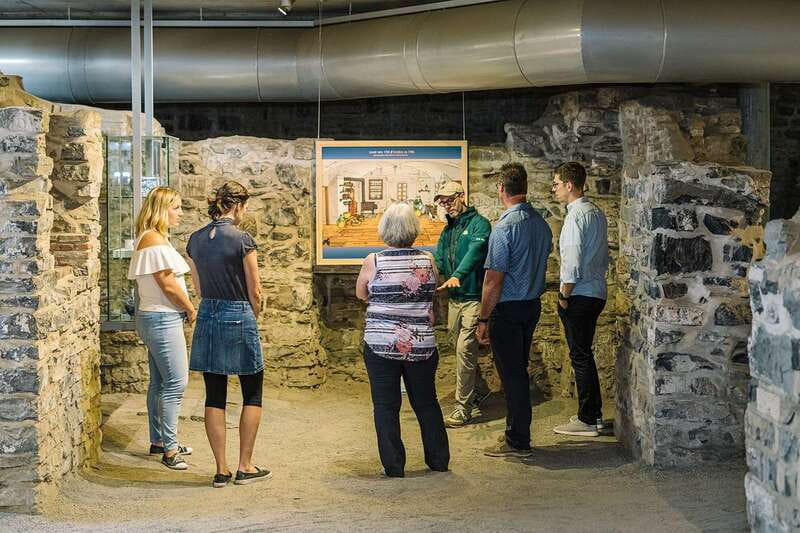
The remains allow you to think about how the complex was planned and altered. You see the physical traces of a residence that also functioned as an administrative center. The route helps explain how architecture, governance, and household life fit together.
That connection is one of the visit’s best features. A textbook can tell you that Québec was a seat of colonial power. Here, you can picture the spaces where governors received people, handled official business, hosted events, and managed a large household.
The experience also gives attention to the château’s end. The site was used until 1834, and the archaeological work has brought its earlier layers back into view. You are not looking at a complete château with furnished rooms. You are reading a building through foundations, surviving traces, displays, and explanation.
That distinction is important. If you want intact interiors, period furniture, and rooms restored to their former appearance, this visit may feel spare. If you like seeing how archaeologists reconstruct a vanished building, it is far more rewarding.
Reading the archaeological remains
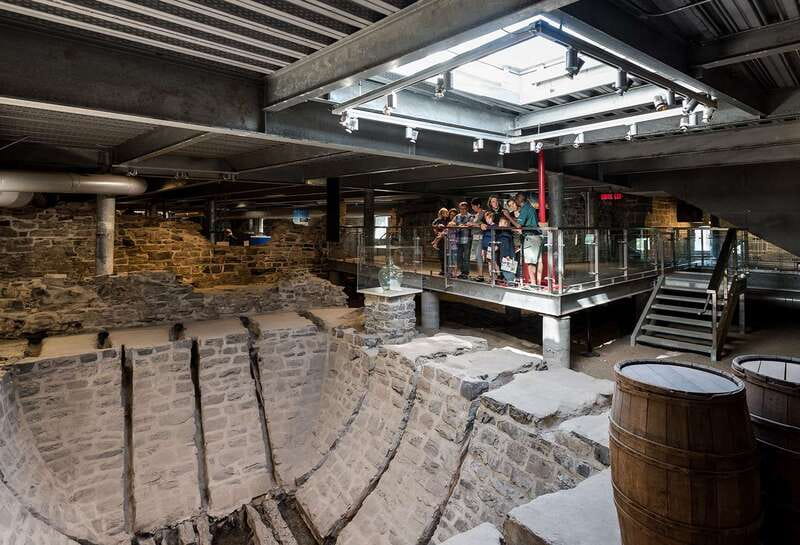
Archaeological sites can be hard to understand without guidance. A low wall or groove may mean little at first glance. The tour helps you connect those physical traces to the building’s former layout, use, and changes over time.
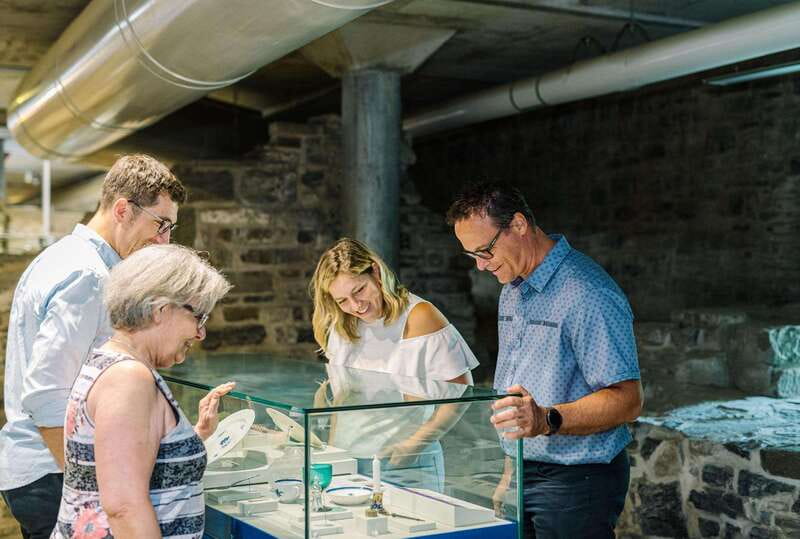
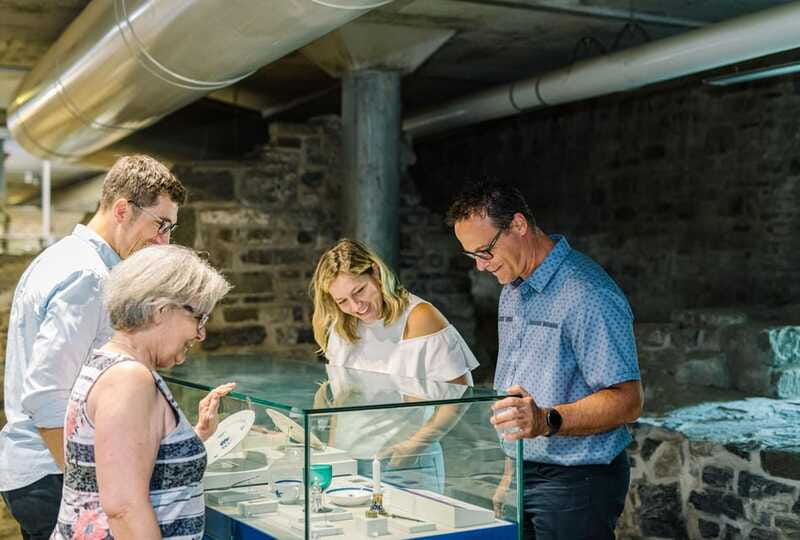
More than 120 artifacts are displayed. Together, they give the remains a human scale. Instead of thinking only about governors and official decisions, you can consider what people ate, stored, repaired, cleaned, and used each day.
The objects also help explain the château’s social structure. A governor’s residence required servants, household workers, visitors, officials, and diplomatic contacts. Everyday items show that the site was not just a grand address. It was a busy working household.
Some of the most useful details concern objects that might otherwise seem mysterious. The audio route explains how an icebox was used, what grooves in the bottom were for, and why women used bottles of ammonia. These small questions are exactly what make archaeology memorable. They turn an old foundation into a place where practical problems had practical solutions.
The self-guided route uses theatrical elements, at times presenting the voices or roles of a governor and a servant. That approach will appeal to you if you like historical interpretation with a bit of performance. If you prefer a plain museum audio track, you may find the role-playing distracting. You can make a better choice by deciding in advance whether you want character-based storytelling or a traditional explanation.
Same royal city, another way in:
- Sintra: Pena Palace and Park Entrance Ticket
★ 4.2 · 17,410 reviews - Granada: Alhambra and Nasrid Palaces Entry Ticket
★ 4.6 · 15,130 reviews - Madrid: Royal Palace Fast-Access Admission Ticket
★ 4.6 · 13,856 reviews - Doge’s Palace & St. Mark’s Basilica with Terrace Access Tour
★ 4.7 · 10,697 reviews
The Huron-Wendat perspective on diplomacy
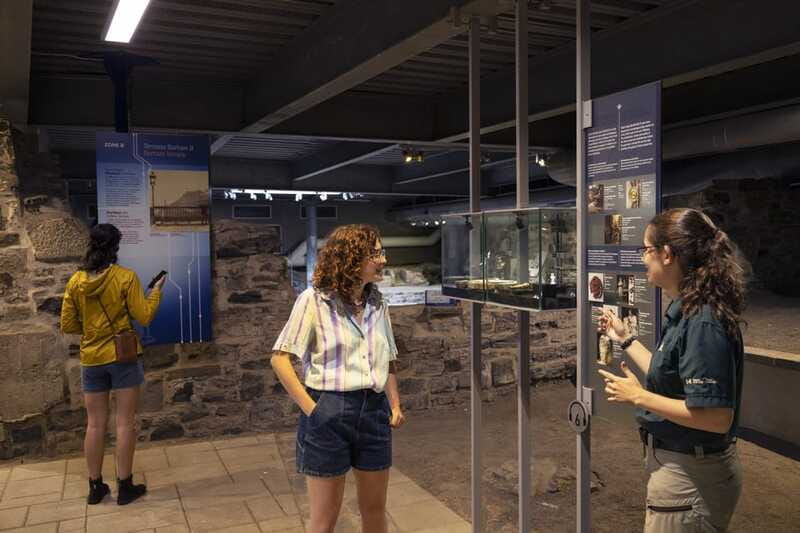
A particularly valuable part of the visit is the exhibition about Huron-Wendat diplomatic alliances with colonial governors. It was presented in collaboration with the Huron-Wendat Nation, giving the political story a perspective that is not limited to French and British officials.
This matters because the château’s history is not only about who governed inside its walls. It is also about the relationships and negotiations that made colonial rule possible. First Nations diplomacy, alliances, and political choices were part of the region’s history, not a side note.
The exhibition helps you see official meetings in a wider setting. A governor’s reception could involve diplomacy, military concerns, trade, or alliance-building. The Huron-Wendat perspective adds context to those encounters and makes the site’s political story more balanced.
I would give this section proper time rather than rushing toward the artifact displays. It is one of the most distinctive parts of the experience, and it adds value beyond the usual account of French and British administration.
Lavish events and ordinary routines
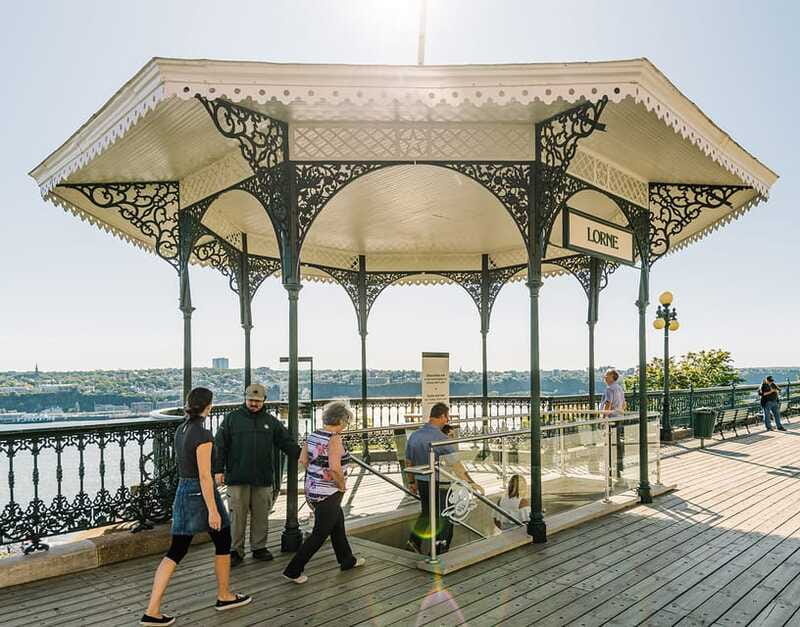
The château hosted important visitors and lavish events, but the visit does not leave the story at the level of ceremony. It also considers ordinary life inside the residence.
That contrast is useful. A grand event requires food preparation, storage, serving, cleaning, and staff. An official household still needs ice, household supplies, lighting, washing, and repairs. The objects and explanations help you picture those less glamorous tasks.
I like this balance because it keeps the château from becoming a parade of governors and military dates. You learn about power, but you also learn how people worked around power. The result feels more tangible and less like a list of names.
The small household details may be the part children remember best, especially if they are curious about old tools and unusual practices. Adults interested in social history will also find them useful because they show the difference between a formal residence and a normal home.
Guided tour or Parks Canada audio route
The guided option gives you a person who can organize the story and explain what you are seeing. This is the better choice if you want to ask questions or need help making sense of the remains. The strongest comments about the experience focus on guides who were clear, animated, and entertaining.
The audio route gives you more control. You can move at your own pace, pause to inspect artifacts, and spend longer on sections that catch your attention. The downloadable Parks Canada app is included, so you have a structured way to follow the site without joining a live group.
There is one caution. The self-guided circuit includes role-playing, with the listener sometimes placed in the position of a governor or servant. If you dislike audio theater, that style may not suit you. The route still contains useful information, including practical explanations of household objects, but the presentation is not purely neutral.
For a first visit, I would lean toward the live guide if the timing works. For repeat visitors, independent history readers, or anyone who prefers to stop and start, the app makes sense.
Is one hour enough?
Yes, for the core experience. The visit is designed as a one-hour activity, and the compact format works well in Old Québec. You can fit it between a walk along Dufferin Terrace and other nearby sights without sacrificing an entire morning or afternoon.
The short length also keeps the price reasonable. At $9 per person, you are paying less for a full museum visit and more for a focused interpretation of one important site. The value is strongest if you care about the history of Québec City and want more than a view from the terrace.
Do not expect a huge complex with many galleries. The site is limited to the remains, displays, and interpretation connected with the forts and château. The low cost reflects that focused scope.
The experience can also anchor a larger walk through Old Québec. Start on Dufferin Terrace, take in the river view, visit the remains below, then continue through the historic upper town. Because the tour is short, it works well for an afternoon when you want one substantial historical stop without overloading your schedule.
Access, comfort, and what to leave behind
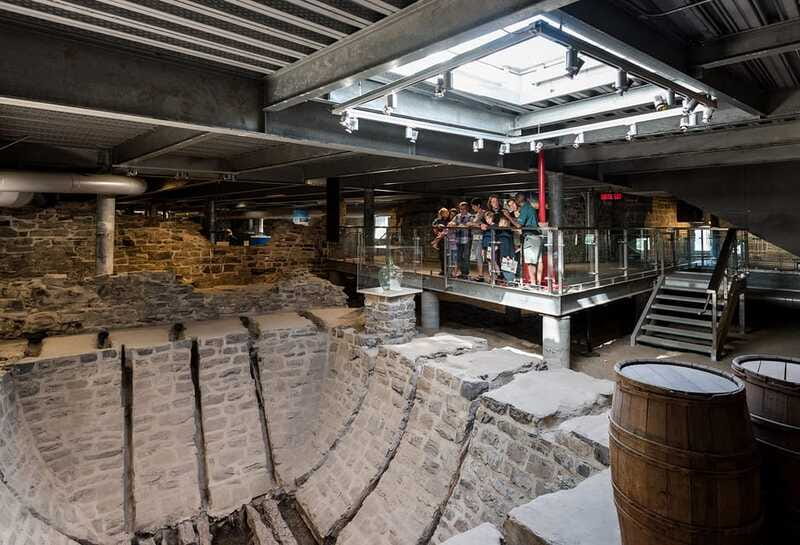
This is not suitable for wheelchair users or people with mobility impairments. You descend stairs from Dufferin Terrace, and the historic site is not presented as an accessible route. If stairs or uneven surfaces are difficult for you, choose another Old Québec attraction.
Leave food and drinks outside. Large bags and luggage are not allowed, and pets are not permitted, though assistance dogs are allowed. Bare feet are also not allowed, so wear normal walking footwear.
You do not need to dress formally, but practical shoes are sensible. The visit involves moving through an archaeological site rather than sitting through a long presentation. A small day bag is more useful than a suitcase, though large bags cannot enter.
The outdoor setting above the site is exposed to changing weather, while the archaeological area provides a different environment below the terrace. Check the conditions before you set out and plan your clothing for the walk to the meeting point as well as the visit itself.
Who will enjoy the Saint-Louis site most?
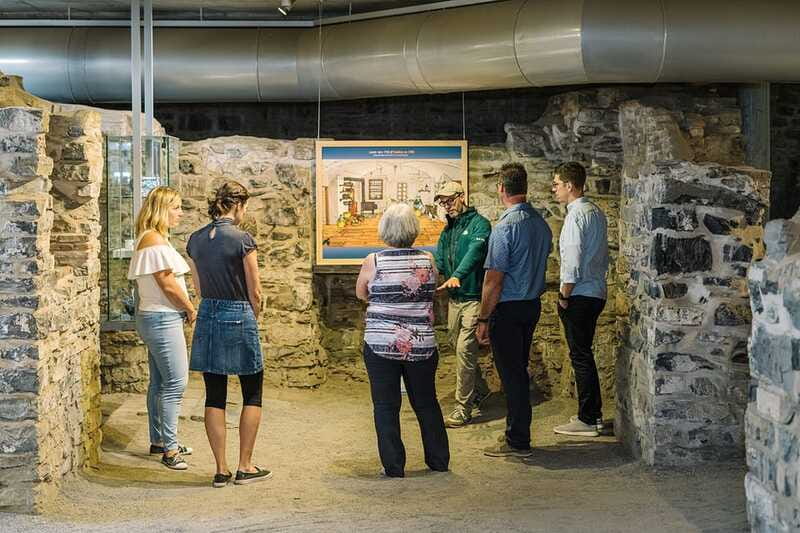
I recommend this experience to you if you enjoy archaeology, colonial politics, First Nations history, or the everyday details of historic homes. It is also a good pick if you want a short activity with a strong sense of place.
Families may like the unusual objects and practical stories. Children who enjoy fortifications, old buildings, or historical role-playing may stay engaged, though the political background could be more demanding for younger children.
History-minded visitors should consider the guided version. The site has enough layers that a clear explanation adds real value. You will get more from the foundations when someone points out how the château’s design and use changed.
The audio option suits independent visitors, repeat visits, and people who want to control the pace. It is less ideal if you dislike theatrical narration. The live tour and audio route are not identical in feel, so this choice matters more than it might at a simple museum.
Should you book this Québec City visit?
Book it if you want to see what lies beneath Dufferin Terrace and understand Québec City as a place of government, diplomacy, and daily work. The combination of archaeological remains, more than 120 artifacts, and Huron-Wendat interpretation gives the visit substance beyond a standard photo stop.
At $9 for an hour, the value is strong, especially if you are already exploring Old Québec. Choose the live guide for conversation and energetic storytelling. Choose the Parks Canada app if you prefer independence and do not mind role-based audio narration.
Skip it if you need step-free access, want intact furnished rooms, or have little interest in archaeology. For everyone else, this is a compact, affordable way to put real foundations beneath the grand views of Dufferin Terrace.
FAQ
How long does the Saint-Louis Forts and Châteaux visit last?
The visit lasts one hour. Check availability for the available starting times.
How much does admission cost?
The listed price is $9 per person.
Is the experience guided or self-guided?
You can choose a live tour with an on-site heritage guide or a self-guided audio tour using the downloadable Parks Canada app.
Which languages are available?
Live tours are available in English, French, Spanish, German, and Chinese.
Where is the meeting point?
Meet at the beginning of Dufferin Terrace, near a green and white kiosk with a Canadian flag and a Frontenac sign. The guide wears a green and beige uniform.
Can I bring food, drinks, luggage, or a pet?
Food and drinks are not allowed. Large bags and luggage are not allowed, and pets cannot enter. Assistance dogs are allowed.
Is the site wheelchair accessible?
The experience is not suitable for wheelchair users or people with mobility impairments.
Can I cancel my reservation?
You can cancel up to 24 hours in advance for a full refund. A reserve-now, pay-later option is also available.
Fresh palace tours around the world
- Bangkok Private Grand Palace Emerald Buddha and Reclining Buddha★ 4.5 · 2 reviews
- Bangkok Markets, Palaces and Temples Excursion★ 5.0 · 8 reviews
- Bangkok Two Temple Tour: Wat Pho, Emerald Buddha & Grand Palace★ 5.0 · 4 reviews
- Bangkok Royal Road – Top 3 Major Monuments (Grand Palace, Wat Pho, Wat arun)★ 4.5 · 111 reviews
- Bangkok Grand Palace and Emerald Buddha Tour★ 4.0 · 91 reviews
- Bangkok’s Landmarks Tour : GrandPalace WatTraimit WatPho WatArun★ 5.0 · 8 reviews
- Private Tour: Grand Palace,Wat Phra Kaew, Museum&Cooking Class★ 5.0 · 7 reviews
- Bangkok Grand Palace & Emerald Buddha Flexible Entry with Audio★ 3.5 · 3 reviews