Review · VIENNA
Schönbrunn Palace & Gardens Tour
Schönbrunn is more than a pretty palace. It is the place where Habsburg power became personal, from Maria Theresa’s grand court to Sisi’s private escape route. This 2.5-hour tour combines the formal gardens with the palace rooms, then adds stories of Vienna’s Jewish Quarter and its former ghetto.
I like the gardens-first approach, since the views toward the Gloriette help you understand the palace’s scale before you enter. I also like the chance to see rooms that are easy to miss, including Maria Theresa’s Porcelain Room and the jewel-like Millions Room. The main catch is price: at $176 per person, with admission not included, this is a serious splurge.
Key points to know before booking
- Maria Theresa’s Porcelain Room served as her office, giving you a more personal view of the empress than a grand reception hall alone.
- The Millions Room combines Indo-Persian miniatures with carved Antillean rosewood in an unusually lavish Rococo setting.
- The Gloriette viewpoint provides a broad view across Vienna’s woods and explains why the palace grounds were planned as a statement of power.
- Guides such as Katarina bring extra family history, anecdotes, and answers to questions, with private and small-group formats available.
- Palace admission costs extra, so add that expense before comparing the tour with a standard entry ticket.
- A central hotel pickup is optional on private tours, with the guide accompanying you by Vienna’s metro to Schönbrunn.
Why Schönbrunn works best with context
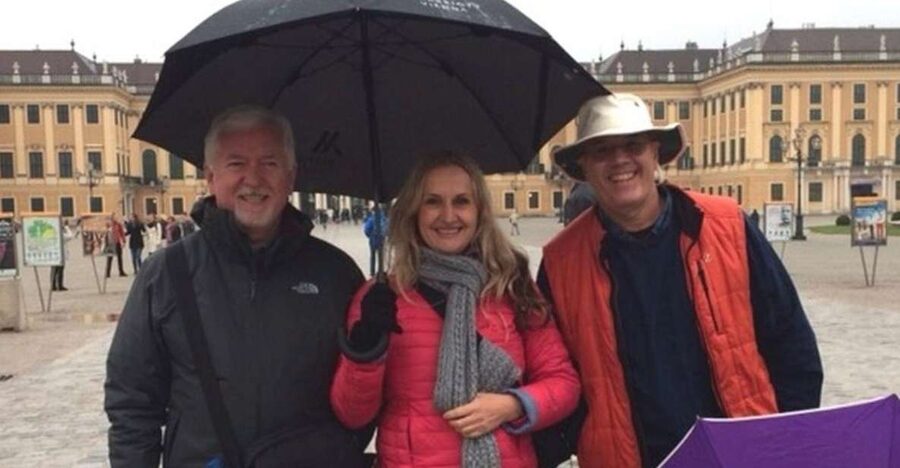
The palace was built to rival Versailles, and the comparison is useful. Schönbrunn was not simply a summer house with attractive rooms. Under Empress Maria Theresa, it became a center of court life and imperial policy, while also serving as the summer home of a ruling family with 16 children.
That scale can be hard to grasp if you move from room to room without a guide. A good explanation connects the furniture, family stories, military victories, and court rituals. This tour is designed for that kind of visit, with historian guides who may be professors, doctoral students, journalists, art critics, or published authors.
You should expect interpretation rather than a casual stroll. The guide leads you through the gardens for about 30 minutes, then spends roughly two hours inside the palace. The pace is structured, which helps you cover a lot without wandering into the wrong corridor, though it may feel brisk if you prefer to linger over every decorative detail.
More Palace Gardens and Grounds in Vienna
- Vienna: Schönbrunn Palace & Gardens Skip-the-Line Tour
★ 4.7 · 7,739 reviews - Vienna: Skip-the-Line Schönbrunn Palace & Gardens Tour
★ 4.8 · 5,411 reviews - Vienna: Skip the Line Schönbrunn Palace and Gardens Guided Tour
★ 4.5 · 1,540 reviews
The gardens and the long view to the Gloriette
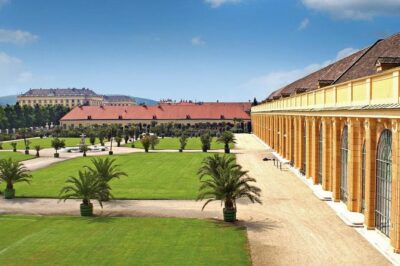
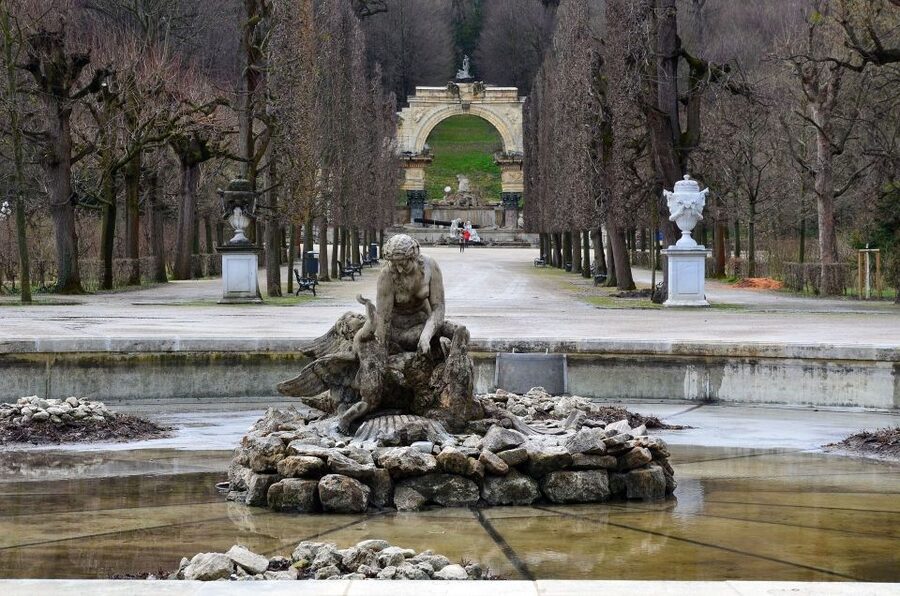
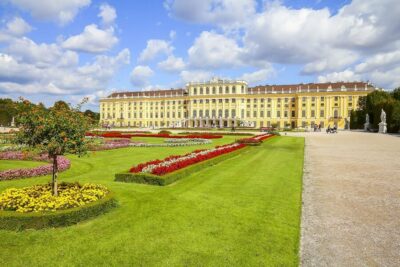
The tour begins outside, at Schönbrunn’s formal gardens. This is a smart opening because the palace makes more sense when you see it as part of a planned royal setting rather than as an isolated building.
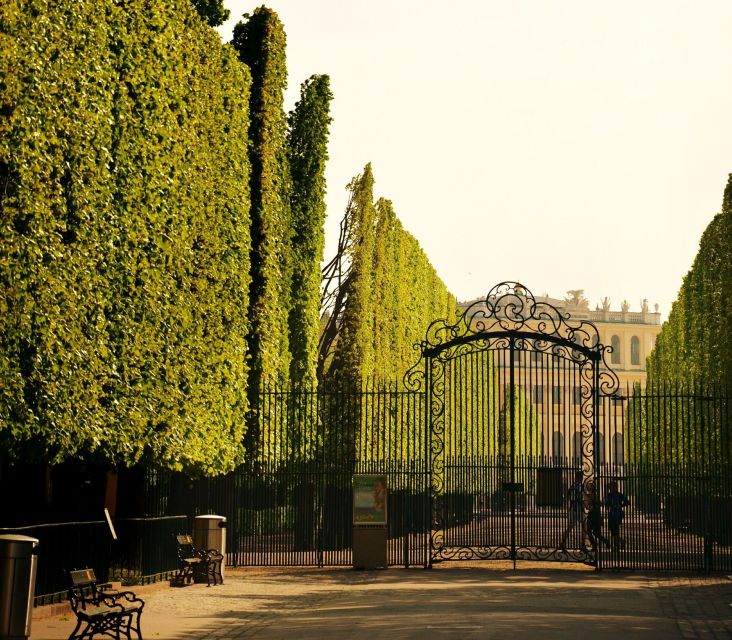
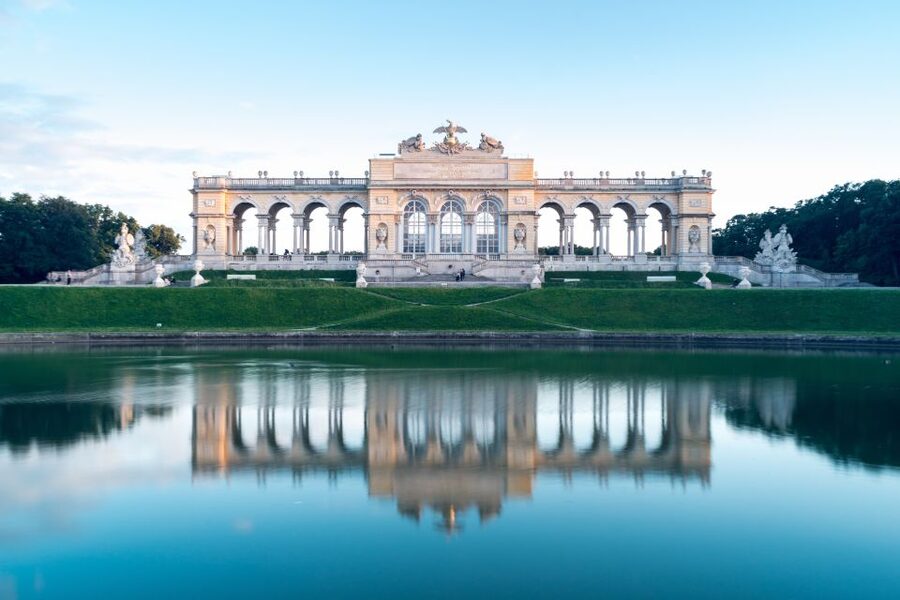
The grounds follow the Baroque idea of linking nature with architecture. Long views, formal planting, and carefully placed structures direct your eye toward the palace and up to the Gloriette, the huge triumphal arch on the hill. The walk takes about 30 minutes, so it is an introduction rather than a full survey of every path and feature.
The Gloriette gives you the tour’s clearest sense of scale. From this high point, you can look back across the palace grounds toward Vienna’s woods. Your guide uses the view to explain the military victories that helped make Maria Theresa’s reign a high point of Habsburg political and cultural power.
That historical link matters. The Gloriette was not just placed there for a nice photograph. Its position helped turn military success into a visible royal message. The palace, gardens, hill, and arch worked together as one display.
There is also an appealing human detail: Maria Theresa opened the park to the public in 1779. The decision had political value, but it also made the imperial residence part of Vienna’s public life. Your guide can use this moment to show how Maria Theresa mixed ceremony with a shrewd sense of public image.
The garden portion may not suit you if you want a long, unhurried walk. It is an organized 30-minute visit, and much of the emphasis is on the view and the story behind the design. Still, it gives the indoor tour a useful frame.
Maria Theresa’s office in the Porcelain Room
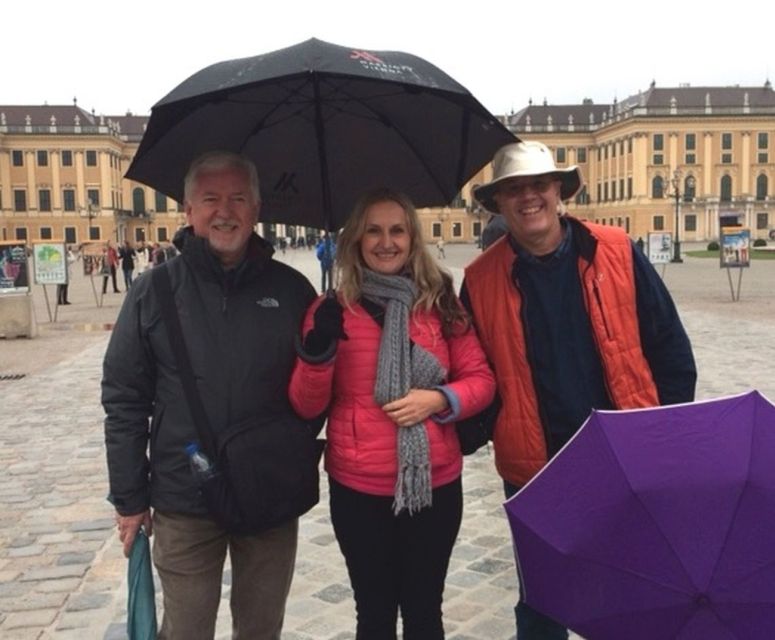
Inside the palace, one of the most worthwhile stops is the Porcelain Room. It served as Maria Theresa’s office, which makes it more interesting than a room presented only as a decorative showpiece.
The name points to its delicate finish, but the real value is the room’s connection to daily work. Maria Theresa ruled a large empire, managed a demanding court, and raised 16 children. Seeing the room associated with her office helps you picture the empress not only as a ceremonial figure but also as a working head of state.
This is where a guide can add value. Without context, you may notice the decoration and move on. With an explanation of Maria Theresa’s role and the way Schönbrunn functioned, the room becomes part of the larger story of administration, family, and power.
The tour’s guide-led format is especially useful here because you can ask questions. Katarina, also referred to as Katharina in the booking information, is one guide associated with the experience. She has been praised for lively anecdotes, a friendly manner, and making room for questions. You should not assume she will lead every departure, but the guide team is described as including historians and other professional researchers.
The Millions Room and Rococo excess
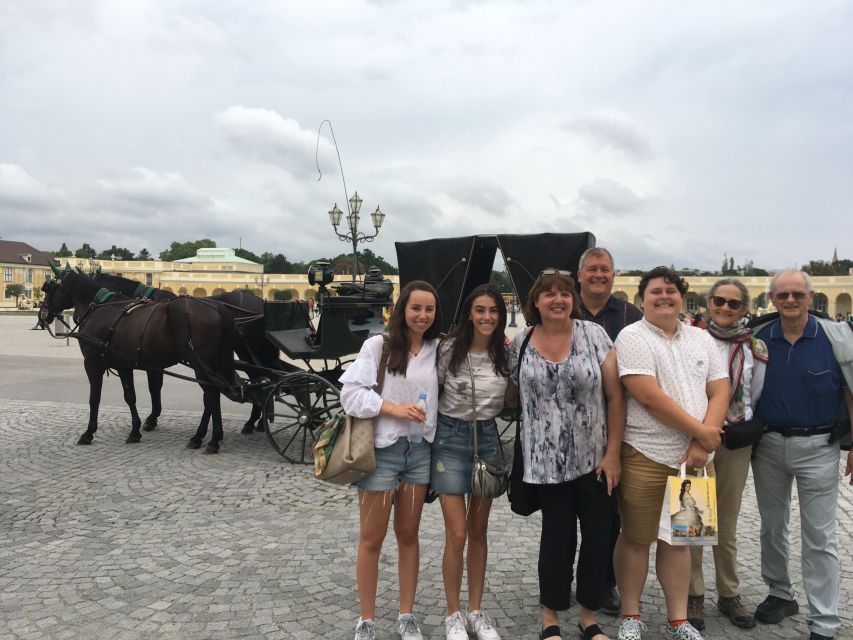
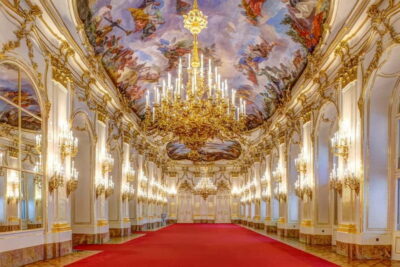
The Millions Room is likely to be one of the tour’s strongest visual moments. Its name comes from its extraordinary cost, and the room earns that name through a bold mix of materials and styles.
You will see antique Indo-Persian miniatures set in Rococo frames. The walls feature carved rosewood from the Antilles. The result is an unusual meeting of Oriental and European decoration, with delicate images placed inside elaborate European framing.
This is not just another richly decorated palace room. The combination tells you something about imperial taste and the reach of Habsburg collecting. Materials and objects from far beyond Austria were brought together to create a room that announced wealth, access, and cultural ambition.
I would pay close attention here to how the parts work together. The miniatures, frames, and rosewood are not presented as separate museum objects. They form one carefully planned interior, and the guide’s explanation can help you see why the Millions Room is considered one of the finest Rococo combinations of Oriental and European design.
The drawback is that palace interiors can become crowded, and viewing time may be limited by the group’s pace. A private or small-group booking gives you a better chance to ask about details, but it does not remove the fixed route or the need to keep moving.
More Schonbrunn and Hofburg tours around Vienna:
- Vienna: Bus & Schönbrunn Palace Skip-the-Line Guided Tour
★ 4.3 · 2,802 reviews - Vienna: Imperial Treasury in the Hofburg Palace
★ 4.4 · 1,791 reviews - Vienna: Schönbrunn Palace & Garden Skip-the-Line Guided Tour
★ 4.1 · 1,240 reviews - Vienna: Panorama Train Tickets to explore Schönbrunn Palace
★ 4.3 · 1,164 reviews
Franz Joseph, Sisi, and the private side of court life
The Franz Joseph and Elisabeth Apartments shift the story from Maria Theresa’s active rule to a later imperial couple under strain. Emperor Franz Joseph married the Bavarian princess Elisabeth in 1854. She became widely known by the affectionate name Sisi.
Sisi disliked court ritual and the heavy formality of palace life. That dislike gives these rooms a human edge. You are not simply looking at imperial furniture. You are seeing the setting that one of Austria’s best-known royal figures found confining.
One of the most memorable details is the spiral staircase Sisi commissioned. It led from her official rooms to a private entrance, allowing her to leave the palace for the gardens. The route captures the tension between public duty and private freedom better than a general explanation of court etiquette could.
You will move through lavish rooms that help explain what Sisi was trying to escape. The contrast is the point. The palace offered beauty, ceremony, and status, but those same things could become a burden when every movement was shaped by court expectations.
The guide’s role here is to connect architecture with personality. In earlier rooms, the focus is on Maria Theresa’s work and political authority. In these apartments, the story becomes more intimate: a couple separated by the demands of state, and a woman looking for a private way out.
The Jewish Quarter and Vienna beyond the palace
The experience also includes an introduction to Vienna’s Jewish Quarter and stories connected with the time of the Jewish ghetto. This adds a different layer to the visit.
Schönbrunn can easily make Vienna look like a city of emperors, grand rooms, and court ceremonies. The Jewish Quarter brings attention back to the people and communities who lived under very different conditions. It helps place imperial Vienna in a wider social setting.
The supplied schedule lists the gardens and palace as the main stops, so you should clarify how the Jewish Quarter material fits into your selected departure. It may be handled as part of the guide’s broader historical discussion rather than as a separate extended walking segment. That is worth asking before booking if this subject is a main reason for choosing the tour.
Even as a shorter portion of the commentary, the topic is valuable. It keeps the palace from becoming an isolated story about royal taste. Vienna’s past included privilege, exclusion, court power, and religious tension, and a strong guide can show how those strands meet.
What the 150-minute schedule feels like
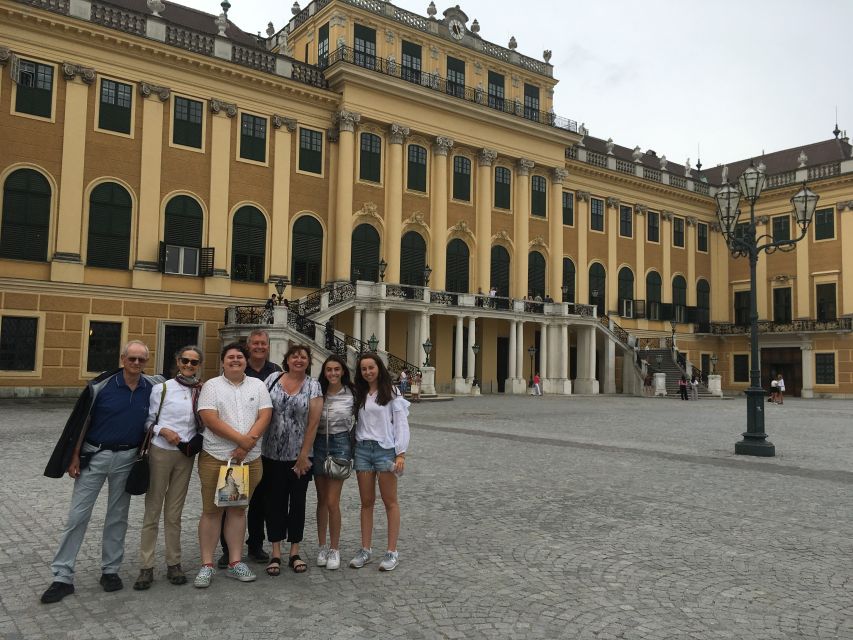
The full experience lasts 150 minutes. About 30 minutes are set aside for the gardens, followed by approximately two hours inside Schönbrunn Palace.
That is enough time for a focused first visit. You get the main outdoor view, several key palace interiors, and a historical thread running from Maria Theresa to Franz Joseph and Sisi. You should not expect a complete examination of every room or a slow architectural study of the entire complex.
The schedule is a good match for you if you want a substantial visit without giving Schönbrunn an entire day. It also works well when you have other Vienna plans, since the activity finishes at the Schönbrunn Group Centre.
The guide waits at the Schönbrunn Arrival Centre, Schönbrunner Schloßstrasse 50, in front of the Group Centre Building across from the palace’s main entrance. Follow the meeting instructions carefully. The palace complex is large, and arriving at the wrong side could cost you time.
For private tours, pickup can be arranged from a central hotel, holiday flat, or another meeting place. The guide then accompanies you to Schönbrunn using Vienna’s metro. This is useful if you value a smooth start and want historical commentary before reaching the palace, though the pickup is an optional feature of the private format.
Is $176 per person a fair price?
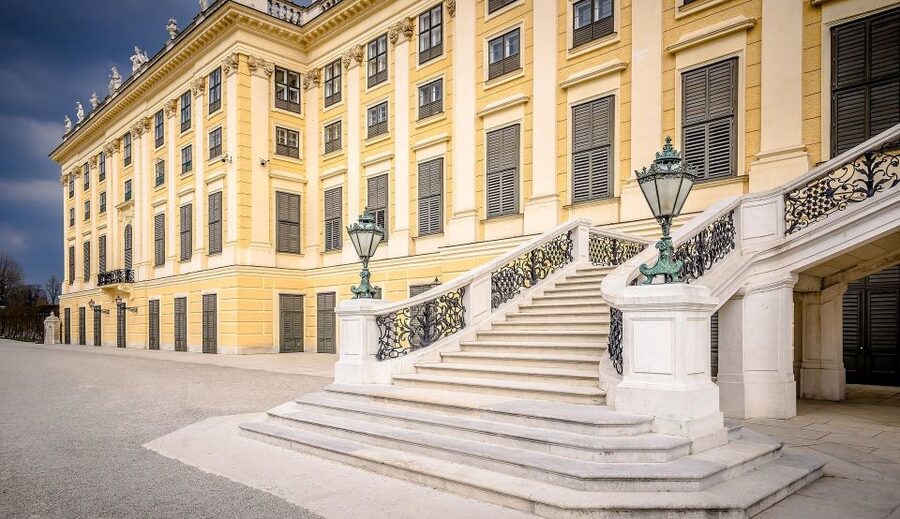
The listed price is $176 per person, and the palace and park entrance fee is not included. That makes this a high-priced experience compared with simply entering Schönbrunn on your own.
The price begins to make more sense if you choose a private or small-group tour and care about interpretation. You are paying for a live English-speaking guide, a structured route, historical explanation, help with purchasing admission, and the chance to ask questions. Guides may have backgrounds as professors, doctoral students, historians, journalists, art critics, or published authors.
It is less compelling if you mainly want to see the rooms at your own speed. Since admission costs extra, compare the total price with a regular palace visit before booking. You should also decide how much you value a guide who can explain the difference between a decorative room and a room tied to Maria Theresa’s work, Sisi’s private life, or Habsburg policy.
The strongest value comes from the human stories. Katarina’s approach, as described in the booking details, includes anecdotes and time for questions. Another booking describes her meeting the group in central Vienna and keeping the visit moving through the crowds while finding quieter corners for explanations. That kind of crowd management can matter at a major palace.
Who should book this Schönbrunn tour?
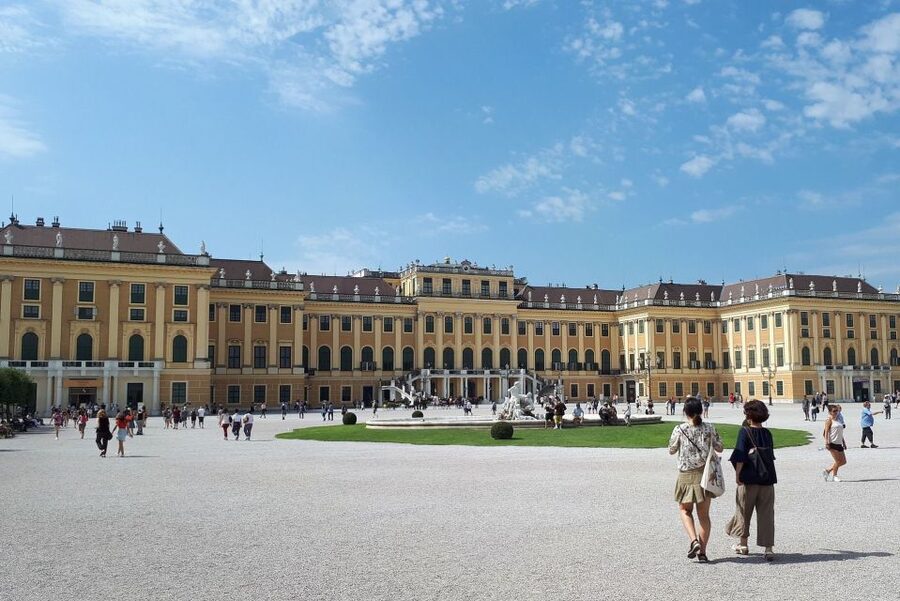
I would recommend it to first-time Vienna visitors who want the palace explained rather than simply entered. It suits history-minded visitors, architecture fans, and anyone curious about Maria Theresa, Franz Joseph, and Sisi.
It is also a good choice for you if you want a small-group or private setting. The ability to ask questions can turn a grand but confusing series of rooms into a clear story.
Families may appreciate the Sisi material and the spiral staircase detail, though the visit remains a serious historical tour rather than a child-focused activity. Anyone who dislikes guided pacing should consider a self-guided visit instead.
The Jewish Quarter material may appeal to you if you want the city’s imperial story balanced with the experience of Vienna’s Jewish community. Just confirm how much time is devoted to that subject in your chosen option.
Booking is flexible, with cancellation up to 24 hours in advance for a full refund and a reserve-now, pay-later option. English is the stated tour language.
Should you book it?
Book this tour if you want Schönbrunn to make sense as a center of Habsburg power, family life, design, and personal conflict. The Porcelain Room, Gloriette, Millions Room, and Sisi’s private staircase give the visit several memorable anchors, while a guide such as Katarina can add the anecdotes and historical links that a solo visit may lack.
Skip it if $176 per person plus admission feels too steep, or if you prefer to linger alone in palace rooms. For everyone else, the private or small-group format offers the best case for the price, especially if you want direct answers and a more personal pace.
FAQ
How long does the Schönbrunn Palace and Gardens Tour last?
The tour lasts 150 minutes, or 2.5 hours.
Where does the tour meet?
Meet the guide at the Schönbrunn Arrival Centre at Schönbrunner Schloßstrasse 50. The guide waits in front of the Group Centre Building across from the palace’s main entrance.
What language is the tour offered in?
The tour is offered in English with a live guide.
Is palace admission included in the price?
No. The Schönbrunn Palace and Park entrance fee is not included. The guide helps you purchase the required tickets.
What is included in the tour?
A guided tour and a historian guide are included.
Does the tour visit the Schönbrunn Gardens?
Yes. The garden visit lasts about 30 minutes and includes the formal grounds and the approach toward the Gloriette.
How much time is spent inside the palace?
The guided palace portion lasts about two hours.
Does the tour include hotel pickup?
Pickup is optional on private tours. The guide can meet you at a central hotel, holiday flat, or another meeting point, then accompany you to the palace by Vienna’s metro.
Are private and small-group options available?
Yes. The experience is available as a private tour or in a small group.
Can I cancel the booking?
You can cancel up to 24 hours in advance for a full refund. A reserve-now, pay-later option is also available.
Fresh palace tours around Vienna
- Vienna: Schönbrunn Palace Gardens Private Guided Tour★ 4.9 · 28 reviews
- Belvedere Palace: Tour with Skip-the-Line/Transfer Options★ 4.7 · 27 reviews
- Schönbrunn Palace: Exclusive Ticket after the opening hours★ 4.1 · 374 reviews
- Schönbrunn Palace Private Photoshooting tour★ 5.0 · 4 reviews
- Vienna: Schönbrunn Palace & Christmas Market Walking Tour★ 3.9 · 6 reviews
- Private Vienna Night Tour – Palaces & City Lights★ 5.0 · 2 reviews
- Private Schönbrunn Palace Tour: Entrance included★ 4.8 · 5 reviews
- Vienna and Skip-the-Line Schönbrunn Palace Private Tour★ 4.8 · 7 reviews
Schonbrunn and Hofburg Palace Tours: the shortlist.
Schönbrunn Palace & Gardens Skip-the-Line Tour
Read our review →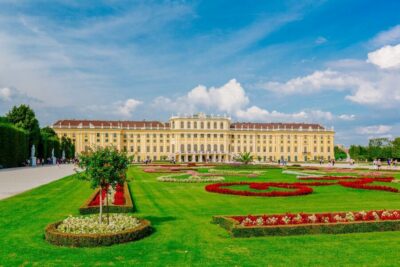
Bus & Schönbrunn Palace Skip-the-Line Guided Tour
Read our review →
Panorama Train Tickets to explore Schönbrunn Palace
Read our review →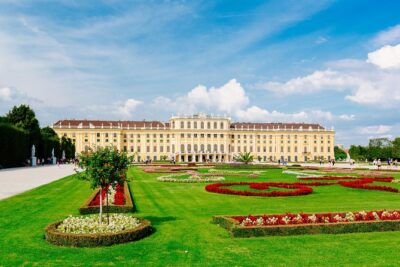
Skip-the-Line Schonbrunn Palace Guided Tour and Vienna Historical City Tour
Read our review →
Exclusive Evening at Schönbrunn Palace: After-Hours Audiotour, Dinner, Concert
Read our review →