
Review · BEIRUT
Small Group Tours to Baalbek, Anjar & Chateau Ksara with lunch and Tickets
Baalbek is the star here: a vast Roman sanctuary with towering columns, enormous stone blocks, and temples built for Jupiter, Venus, and Bacchus. You also get a useful cross-section of Lebanon in one day, from Roman and Umayyad ruins to a working winery in the Bekaa Valley.
I like the small-group format, capped at 15, because you can ask questions without shouting across a coach. I also like the practical value: hotel pickup, a local Lebanese lunch, an air-conditioned vehicle, and admission to Baalbek and Anjar are included. The catch is the long day, roughly nine hours, and the Chateau Ksara admission is not included.
Key points before you book
- Three very different sites in one day: Roman Baalbek, Umayyad Anjar, and Chateau Ksara winery.
- Baalbek gets the most attention: Allow about 90 minutes for the main temple complex.
- Lunch is part of the package: You get a local Lebanese meal rather than arranging food on your own.
- Comfortable transport matters: Hotel transfers and a climate-controlled private minivan make the long outing easier.
- The group is limited to 15: That gives you a better chance to hear the guide and ask questions.
- Ksara costs extra at the gate: The winery visit is included in the plan, but its admission ticket is not listed as included.
Why this Beirut day trip works so well
I like this tour because it does not treat Lebanon as a single postcard stop. In one outing, you see the monumental Roman world at Baalbek, the orderly remains of an Umayyad city at Anjar, and a winery tied to Lebanon’s modern food and drink culture.
That variety gives the day a clear rhythm. Baalbek is the grand opening, Anjar is more compact and archaeological, and Ksara offers a change of pace. You are not spending nine hours looking at the same kind of ruin.
The tour leaves at 8:00 am and lasts about nine hours. That is a full day, but the timing makes sense. Baalbek and Anjar are in the Bekaa Valley, so reaching both from Beirut takes time. A private minivan is more useful here than a large bus because it keeps the group together and makes hotel pickup and drop-off simple.
The price is $75 per person. For that, you get transportation, a local guide, a tour leader, lunch, Baalbek admission, and Anjar admission. Chateau Ksara is the one clear extra cost. For a day that covers major sites far from Beirut, the package offers good value, especially if you want one organized outing instead of arranging transport, tickets, lunch, and explanations separately.
More palace days with lunch around the world:
- Dubai: Abu Dhabi Day-Trip Grand Mosque, Royal Palace & Lunch
★ 4.9 · 5,368 reviews - Versailles Palace and Giverny Monet House Visit with Lunch
★ 4.0 · 1,948 reviews - Agios Gordios: Corfu ATV Quad Tour with Lunch at Pink Palace
★ 4.2 · 258 reviews
Entering Baalbek’s colossal Roman sanctuary
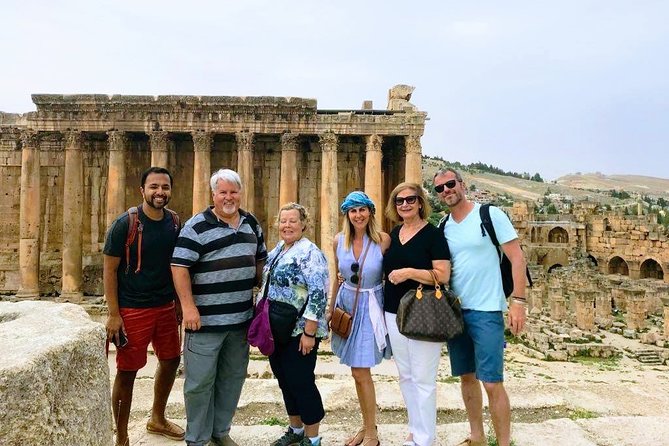
Baalbek deserves the largest share of your attention. The complex sits at about 1,150 meters at the foot of the Anti-Lebanon range, close to the Bekaa Valley. Its position helps explain why this was more than a collection of temples. It was a major sanctuary that drew pilgrims to the Romanized Phoenician gods of Heliopolis.
You spend about 90 minutes at the main temple complex. That is enough time for a guided introduction and a close look at the principal remains, though it is not enough for an unhurried archaeological study of every corner.
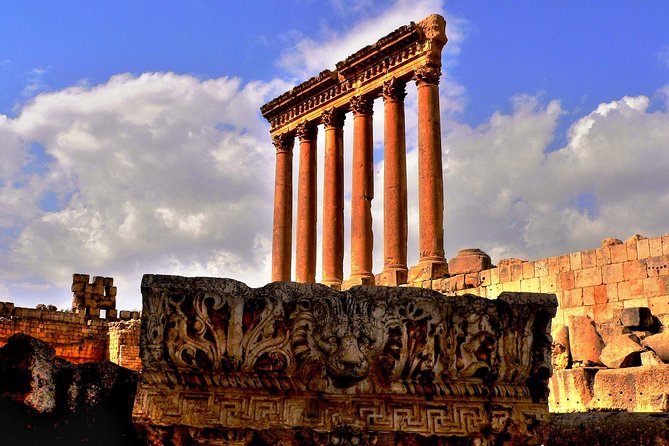
The scale is what makes Baalbek memorable. Roman builders worked here for more than two centuries, creating a sanctuary known for its enormous platforms, columns, and carefully planned temple spaces. The main religious focus was the triad of Jupiter, Venus, and Bacchus. The names are Roman, but the worship reflects an older Phoenician tradition.
Your guide adds real value here. A guide with an archaeological background, such as Natasha on some departures, can help you read the ruins rather than simply photograph them. You can ask how the sanctuary was arranged, why the temples were so large, and how the site connects to the wider history of Heliopolis.
I would give Baalbek your full attention. Look up at the remaining columns, then look down at the stonework beneath your feet. The contrast between delicate carved details and massive structural blocks is part of the site’s appeal.
The main drawback is simple: 90 minutes can feel short. If you enjoy ancient architecture, you may wish for more time. Still, the guided visit gives you a useful first encounter and covers the part of Baalbek most people come to see.
A brief stop at Sayeda Khawla Mosque
The schedule also includes a stop at the Mosque of Sayeda Khawla in Baalbek. It is associated with Sayyida Khawla, believed by local people to have been buried at the site. She is identified as the daughter of Imam al-Hussein, the grandson of the Prophet Muhammad.
This stop adds a religious and local dimension to a day otherwise dominated by ancient ruins. It also reminds you that Baalbek is not only an archaeological site. It remains a living place of faith.
The provided timing does not specify how long you spend at the mosque, so treat it as a brief part of the Baalbek portion rather than a separate extended visit. Dress and behave respectfully at a religious site, and follow your guide’s instructions.
Seeing the Stone of the Pregnant Woman
The Stone of the Pregnant Woman is a quick but striking stop, lasting about 15 minutes. This worked Roman monolith is one of two huge ancient blocks near Baalbek, and both are linked to the construction of the nearby temple complex.
The name is memorable, but the useful point is its size. The block helps you understand the scale of Roman building work better than a column or carved doorway can. You are looking at a single massive piece of stone, presumably intended for use in the sanctuary.
Do not expect a long walk or a full museum visit here. This is a short viewing stop, best used to grasp the practical problem faced by the builders: quarrying, moving, and placing blocks of extraordinary weight.
Same royal city, another way in:
- Venice: Doge’s Palace Reserved Entry Ticket
★ 4.6 · 42,716 reviews - Paris: Versailles Palace and Gardens Full Access Ticket
★ 4.6 · 41,579 reviews - Granada: Alhambra & Nasrid Palaces Tour with Tickets
★ 4.7 · 19,801 reviews - Sintra: Pena Palace and Park Entrance Ticket
★ 4.2 · 17,410 reviews
Walking through Umayyad Anjar
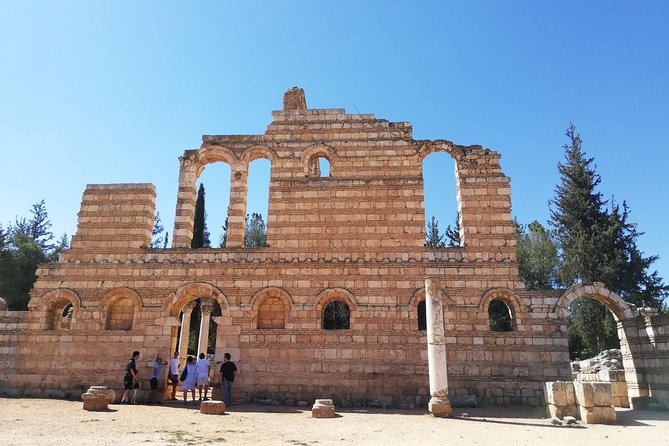
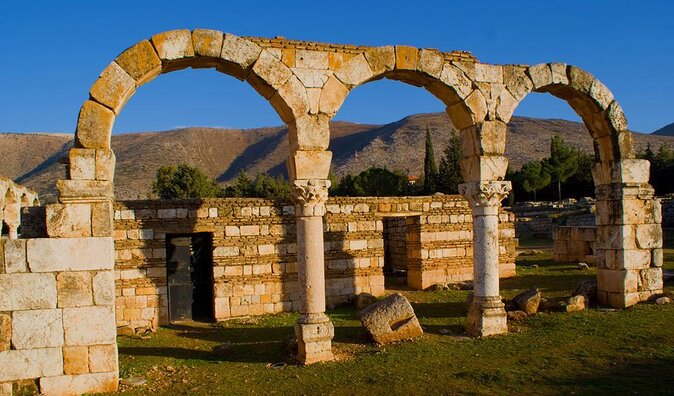
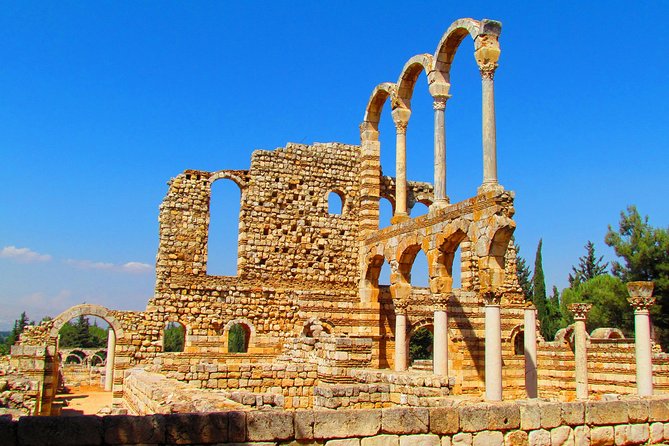
Anjar gives you a different period and a different kind of ruin. The city was an Umayyad inland commercial center at the meeting point of routes linking Beirut with Damascus and the Bekaa with Homs and Tiberias.
The site was only discovered by archaeologists in the late 1940s. Its remains include city walls, a mosque, the caliph’s great palace, harems, thermal baths, and many pillars. Some of the architectural details show Roman influence, which gives the ruins an interesting visual connection to Baalbek without making the two sites feel alike.
You spend about 45 minutes here, so the visit is compact. I would focus on the city plan and the surviving palace and bath structures rather than trying to inspect every stone. Anjar is valuable because it shows how an Umayyad city functioned as a planned center of trade and government, not simply as an isolated monument.
The shorter visit is also the main limitation. If you want detailed archaeological context, you may find the time tight. The guide’s explanations matter here, since the ruins can be harder to read than Baalbek’s towering columns.
Still, Anjar earns its place on the route. Baalbek shows imperial Roman power through monumental temples. Anjar shows a later Islamic city organized around commerce, administration, worship, and daily life. Together, they give you a wider view of the region’s past.
Lunch at a local Lebanese restaurant
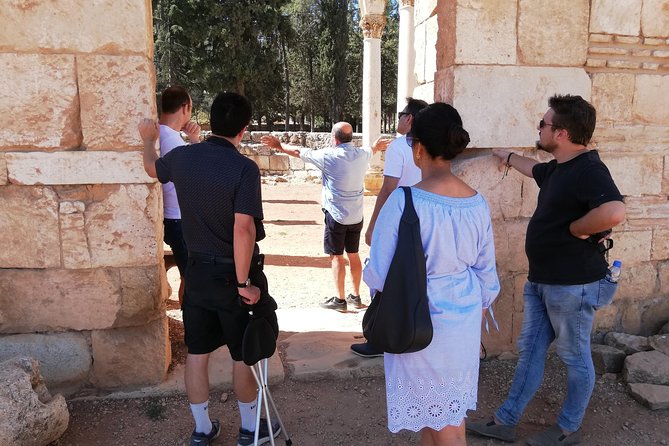
Lunch is included, and that is more useful than it may sound. A day in the Bekaa Valley needs a proper break, and arranging food independently would make the schedule harder to manage.
The meal is at a local Lebanese restaurant. The menu is not specified, so you should not book this expecting a particular dish. The experience is designed to give you a substantial Lebanese meal during the tour rather than a rushed snack between ruins.
Several elements of the outing depend on good organization: getting everyone seated, keeping the schedule moving, and allowing enough time for the winery later. A tour leader can handle those details while you concentrate on the meal and the company.
The lunch is also one of the stronger value points in the $75 price. You are not paying only for transport and entrance tickets. Food is covered as part of the day, which makes the total cost easier to judge.
Touring Chateau Ksara and tasting Lebanese wine
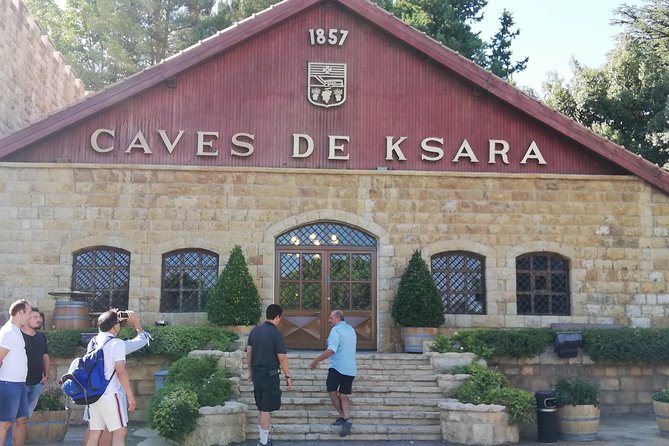
Chateau Ksara changes the mood of the day. Founded by Jesuit priests in 1857, the winery developed Lebanon’s first dry wine and now produces about three million bottles each year. Its wines are sold in many countries, so this is not a tiny informal stop.
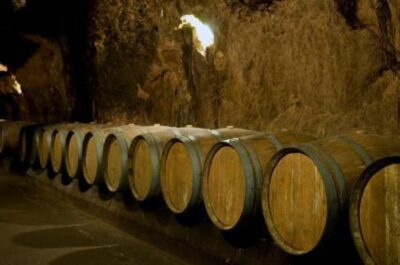
You spend about one hour at the winery. The visit includes an explanation of how Lebanese wine is made, wine samples, and a look inside the on-site cave. That combination makes the stop more than a simple tasting at a counter.
The cave is especially useful because it connects the finished bottle with the storage and production process. You can see part of the working setting behind the wine rather than treating the winery as a retail stop.
The admission ticket is not included, so budget for that separately. The supplied details also do not state the exact tasting fee or number of samples. I would confirm what is covered at the time of booking if the wine portion is important to you.
This is a good stop for adults who enjoy food and drink culture, but it will not appeal equally to everyone. If you do not drink wine, the cave and production explanation may still be worthwhile, though the tasting is naturally the focus of the visit.
Transport, guides, and the pace of the day
Hotel pickup and drop-off are included, with an 8:00 am start. The air-conditioned private minivan is a practical choice for a long route through the Bekaa Valley, especially compared with a large vehicle carrying a full coachload.
The group maximum is 15 people. That is small enough for a guide to answer questions and keep the day personal, while still making the tour affordable. You should expect a shared outing rather than a private tour.
Guide quality can shape this experience. Natasha is identified as an archaeologist on some departures, while Khalil is described as an on-site guide at Baalbek and Ziad as a driver who took care of the group and lunch arrangements. Staff can vary, so do not assume a specific person will lead your date. The useful point is that the operation may combine specialist site interpretation with attentive transport support.
The day is active but not presented as a strenuous hike. Most people can participate, according to the tour information. You move between the minivan, archaeological sites, the mosque, the stone stop, and the winery, so comfortable shoes are sensible even though no special fitness level is stated.
Who should book this experience
I would choose this tour if you have limited time in Beirut and want to see major sites beyond the capital without arranging several separate trips. It is also a strong fit if you want history, food, and wine in the same day.
The tour suits you especially well if:
- You want Baalbek but prefer a guide to explain the ruins.
- You value hotel pickup and do not want to negotiate long-distance transport.
- You like small groups rather than large coach tours.
- You want a Lebanese lunch included in the price.
- You are interested in both ancient sites and local wine production.
I would think twice if you want long, independent visits at each site. Baalbek gets about 90 minutes, Anjar about 45 minutes, and Ksara about an hour. That is efficient, but not leisurely.
The weather policy also matters. The experience requires good weather. If poor conditions lead to cancellation, you are offered another date or a full refund.
Is the $75 price good value?
Yes, for most people. The price combines transport from Beirut, a guide, tour leadership, lunch, air conditioning, and two admission tickets. The route covers a large amount of ground, and the small group improves the experience over a basic shared bus excursion.
The one cost to watch is Chateau Ksara, since its admission is not included. That does not ruin the value, but you should add it to your budget. You may also want to confirm the exact terms of the wine tasting.
The package is strongest when you value convenience. If you already have a rental car and prefer to set your own schedule, a self-guided visit may offer more freedom. For a first visit to Lebanon, though, this tour puts three distinctive stops into one well-organized day.
Should you book this Baalbek, Anjar, and Ksara tour?
I would book it if you want an efficient day from Beirut with strong variety and little planning. Baalbek supplies the unforgettable scale, Anjar adds a less familiar Umayyad chapter, and Ksara gives you a taste of Lebanon’s wine tradition.
Choose it with realistic expectations. This is a full day, not a slow archaeological study. You will spend time on the road, the site visits are timed, and Ksara requires an extra admission payment. But the mix of included transport, lunch, tickets, and a group capped at 15 makes the $75 cost persuasive.
For history-minded visitors with limited time, this is one of the more practical ways to reach the Bekaa Valley from Beirut.
FAQ
How long does the tour last?
The tour lasts approximately nine hours.
What time does the tour start?
The stated start time is 8:00 am.
Does the tour offer hotel pickup and drop-off?
Yes. Hotel pickup and drop-off are included.
How many people can join the group?
The group has a maximum of 15 travelers.
Is lunch included?
Yes. Lunch at a local Lebanese restaurant is included.
Are admission tickets included?
Admission to the Temples of Baalbek and the Umayyad Ruins of Anjar is included. Chateau Ksara admission is not included.
Is wine tasting part of the Chateau Ksara visit?
The experience includes multiple wine samples and a look inside the winery cave. The exact tasting terms are not specified, so confirm any details when booking.
Can most people participate?
The tour information says most people can participate. It does not list a special fitness requirement.
What is the cancellation policy?
You can cancel up to 24 hours before the start time for a full refund. Cancellations or changes made less than 24 hours before the start time are not accepted for a refund. If poor weather causes the tour to be canceled, you are offered a different date or a full refund.
Fresh palace tours around the world
- Bangkok Private Grand Palace Emerald Buddha and Reclining Buddha★ 4.5 · 2 reviews
- Bangkok Markets, Palaces and Temples Excursion★ 5.0 · 8 reviews
- Bangkok Two Temple Tour: Wat Pho, Emerald Buddha & Grand Palace★ 5.0 · 4 reviews
- Bangkok Royal Road – Top 3 Major Monuments (Grand Palace, Wat Pho, Wat arun)★ 4.5 · 111 reviews
- Bangkok Grand Palace and Emerald Buddha Tour★ 4.0 · 91 reviews
- Bangkok’s Landmarks Tour : GrandPalace WatTraimit WatPho WatArun★ 5.0 · 8 reviews
- Private Tour: Grand Palace,Wat Phra Kaew, Museum&Cooking Class★ 5.0 · 7 reviews
- Bangkok Grand Palace & Emerald Buddha Flexible Entry with Audio★ 3.5 · 3 reviews
Beirut Palace Tours: the shortlist.
Guided Private Full Day Tour to Baalbek, Anjar and Chateau Ksara
Read our review →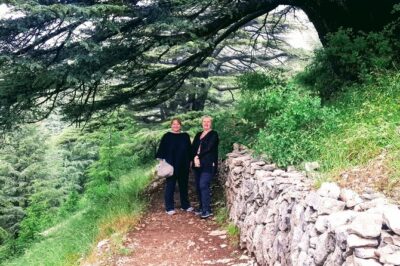
Guided Full-Day Private Trip to Cedars, Baalbek and Chateau Ksara
Read our review →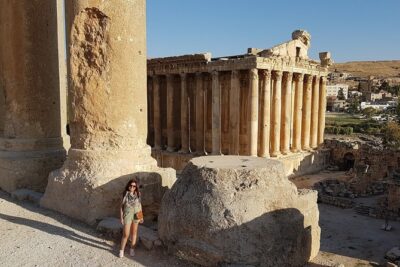
Full-Day Private Trip to Jeita Grotto, Baalbek and Chateau Ksara
Read our review →This visit also appears in