
Review · PALACES WORLDWIDE
Tbilisi: Ritual Palace & Vintage Car Museum
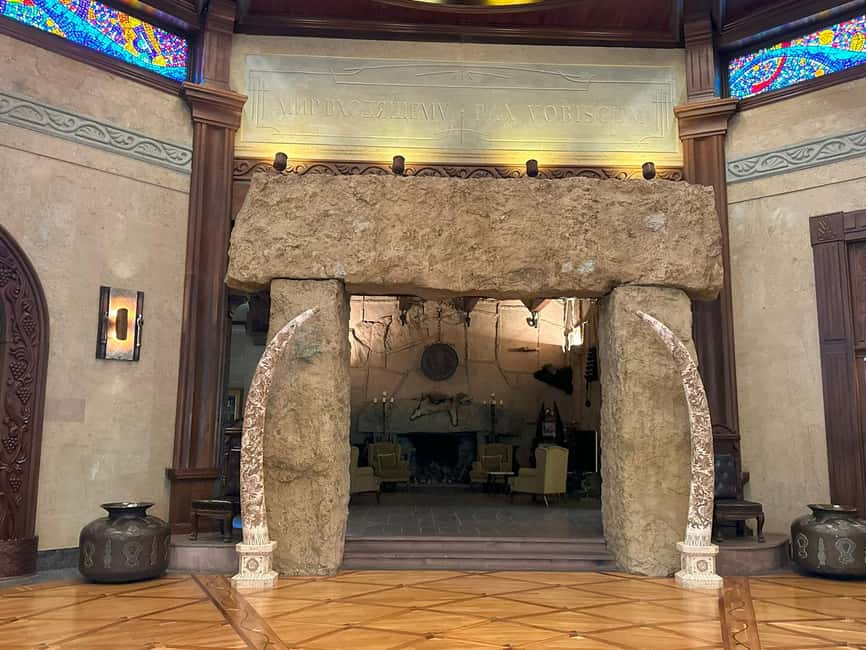
The most surprising part of this Tbilisi tour is the Palace of Rituals, a Soviet-era wedding hall that looks part Georgian church, part fairy-tale palace, and part theatrical set. Inside, frescoes, a bell tower, high spaces, and halls styled after Egypt, China, France, and Morocco create a building unlike almost anything else in the city.
I like the mix of architecture and oddball history, especially the rare-tree garden with peacocks and the vintage car collection. The English-speaking guide keeps the visit focused and easy to follow. The main drawback is the fixed weekday schedule, plus the tour is not suitable for children under 18 or wheelchair users.
I also like that the tour does not stop at the palace itself. You get entry to the Arkadia event hall, its garden, and the vintage car park for $44, with optional churchkhela and homemade Georgian wine available at extra cost.
Key points
- A Soviet palace with Georgian religious touches: Victor Jorbenadze designed the building in 1985, working Georgian cultural details into a ceremonial Soviet setting.
- Four international halls: Egyptian, Chinese, French, and Moroccan rooms give the tour a theatrical, international flavor.
- A garden with peacocks: Rare trees from the Lappen Baumschule nursery surround Arkadia Hall.
- Royal and historic cars: See Daimlers associated with Queen Elizabeth II, Yuri Gagarin’s personal car, and a World War II vehicle linked to Joseph Goebbels.
- A rare Excalibur automobile: The neo-classical car is known for its gangster-era image and unusual styling.
- A compact weekday visit: The tour takes about 1.5 to 2 hours and starts at 11:00 or 16:00, Monday through Friday.
Why Tbilisi’s Palace of Rituals Is Worth Seeing
Tbilisi has plenty of old churches, balconies, bathhouses, and fortress walls. The Palace of Rituals offers something else: a grand ceremonial building from the late Soviet period that tried to make a wedding feel sacred without being a traditional church.
Architect Victor Jorbenadze completed the palace in 1985. The building was designed for wedding ceremonies and other formal occasions, but its design reaches beyond plain civic architecture. Georgian church forms, decorative painting, a bell tower, and soaring interior spaces give it a spiritual mood.
That contrast is the reason I find the place so interesting. It was built under Soviet rule, when public life was meant to reflect socialist values, yet the design includes clear Georgian cultural and religious references. The result is not a simple historical monument. It is a building shaped by compromise, imagination, and a desire to preserve local identity.
You should expect unusual rather than polished. The palace is not a classic medieval monument, and its decoration may feel theatrical. If you prefer quiet old stonework, this could seem strange. If you enjoy architecture with a story behind it, the building gives you much more to think about than its short visit time suggests.
More palace museums around the world:
- Venice’s Best: Basilica, Doge’s Palace, Gondola & History Gallery
★ 4.5 · 2,478 reviews - Royal Palace & Prado Museum Skip the Line Guided Tour
★ 4.5 · 1,347 reviews - Venice: City Pass with Museums including Doge’s Palace
★ 4.1 · 1,020 reviews
Entering the 1985 Palace of Rituals
The tour begins at the main gate at 21 Bochorma Street. Look for a guide wearing a Concierge Tbilisi Badge. Since the meeting point is at the palace itself, you do not spend part of the two hours traveling between unrelated sights.
Once inside, the guide explains how the palace was meant to bring ceremony and grandeur to weddings. That background matters. Without it, the building might look like an eccentric collection of towers, halls, and decorative details. With it, the design becomes easier to read as a Soviet answer to a sacred ceremony.
Pay attention to the mix of shapes and symbols. Georgian church architecture provides much of the visual language, while frescoes and large interior spaces create a sense of occasion. The bell tower adds another church-like note, even though the building was not built as a church.
The tour is guided in English and normally lasts between 1.5 and 2 hours. That is enough time to see the main areas without turning the visit into a long architecture lecture. The pace is intended to be relaxed, and the guide can connect the visual details with the palace’s political and cultural setting.
The Egyptian, Chinese, French, and Moroccan Halls
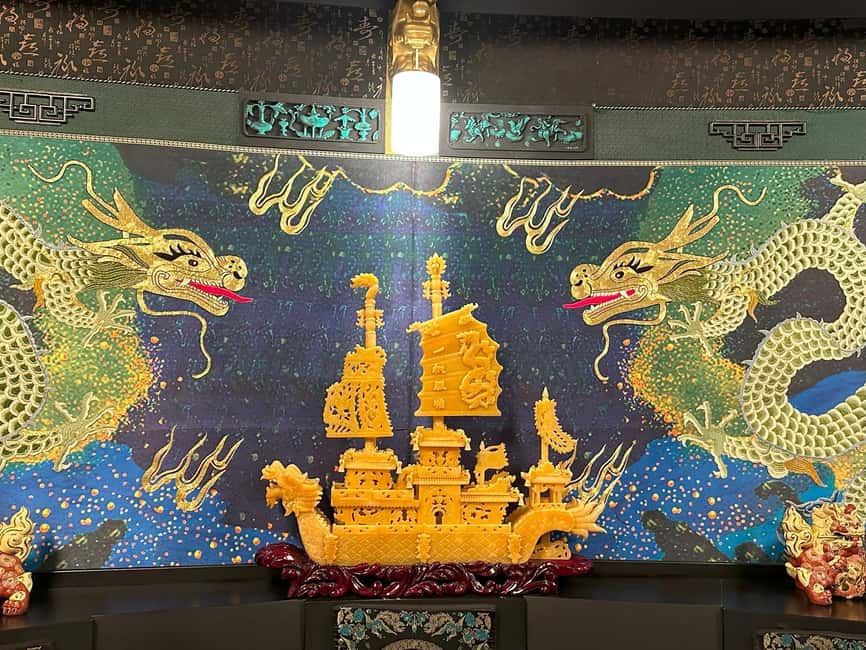
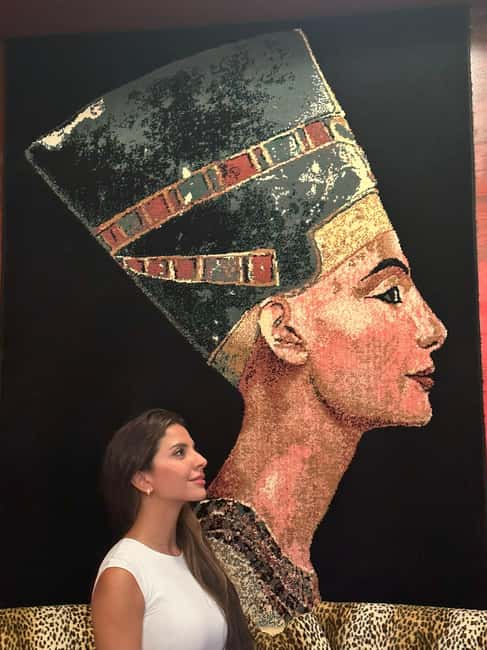
One of the palace’s most unusual features is its collection of rooms dedicated to different nations. You visit Egyptian, Chinese, French, and Moroccan halls, each adding another layer to the building’s grand ceremonial plan.
These rooms are best understood as themed spaces rather than precise museum displays. Their value is in showing how an official Soviet-era venue used international styles to create a sense of importance. The effect can be wonderfully over the top, especially when placed next to Georgian religious forms.
The Egyptian and Chinese halls bring visual ideas from far beyond Georgia. The French and Moroccan rooms add further variety, making the palace feel less like a single architectural statement and more like a series of connected stage sets.
I would not book this tour expecting a detailed art collection with labels at every turn. The appeal comes from the building as a whole, and from the guide’s explanation of how its parts fit together. You will get more from the halls if you enjoy comparing styles and noticing how they sit beside Georgian references.
The Georgian Courtyard and Patarkatshvili Home Replica
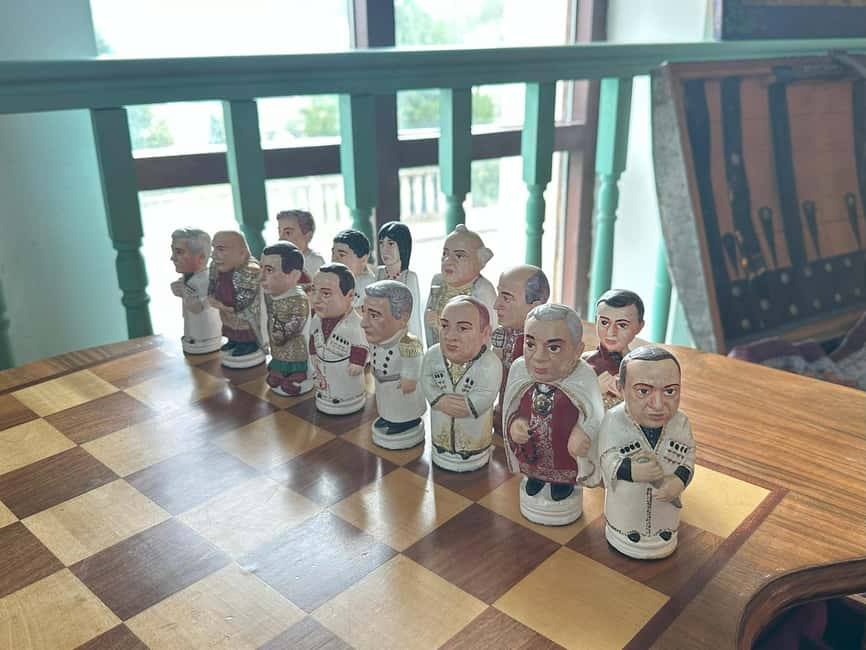
The Georgian courtyard gives the tour a more local focus. It is described as an exact replica of Badri Patarkatshvili’s home in old Tbilisi, bringing the visual language of traditional Tbilisi into the palace complex.
This is a useful contrast with the international halls. Instead of looking outward to Egypt, China, France, or Morocco, the courtyard points back to Georgian domestic architecture and old Tbilisi. It also helps explain why the palace is not simply a Soviet building decorated with foreign themes.
The courtyard is one of the places where you can slow down and compare styles. The palace’s ceremony is large and public. The Georgian home replica suggests a more personal setting. That change of scale keeps the tour from feeling like one long series of grand rooms.
The available information does not promise a long stop here, so think of it as one part of the palace route rather than a separate house museum. Still, it adds local character to an experience that could otherwise feel too international in its decoration.
More palaces to tour around the world:
- Venice: Doge’s Palace Reserved Entry Ticket
★ 4.6 · 42,716 reviews - Paris: Versailles Palace and Gardens Full Access Ticket
★ 4.6 · 41,579 reviews - Granada: Alhambra & Nasrid Palaces Tour with Tickets
★ 4.7 · 19,801 reviews - Sintra: Pena Palace and Park Entrance Ticket
★ 4.2 · 17,410 reviews
Arkadia Hall and the Garden of Rare Trees
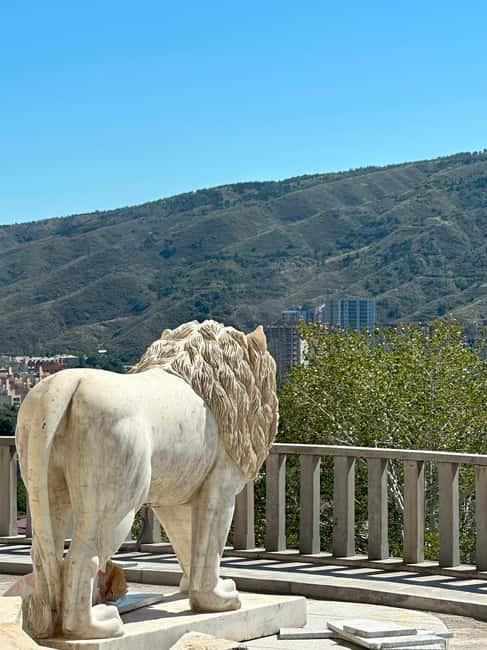
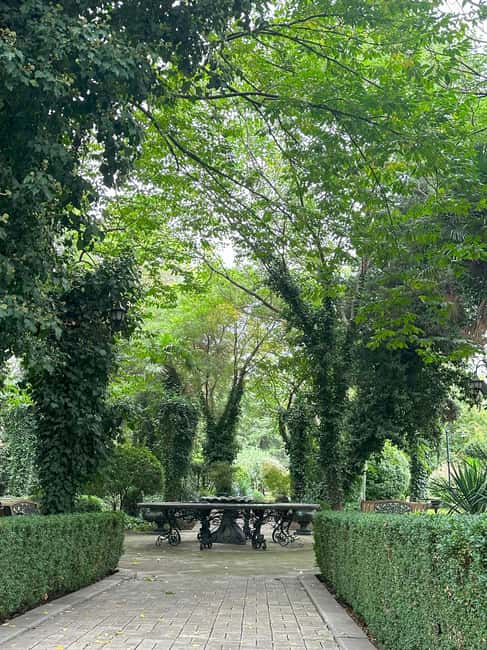
The tour includes Arkadia event hall and the garden around it. The garden is home to rare trees brought to Georgia from Lappen Baumschule, a world-famous tree nursery.
For you, this means the visit moves outdoors before the tour ends. That matters because the palace interiors are dense with decoration and ceremony. The garden provides a change of pace and gives you room to look at the grounds in a different way.
Peacocks live in the garden around Arkadia Hall. They are an unexpected touch, and they reinforce the almost storybook quality of the complex. You might see them during your walk, though animal sightings are never something to treat as guaranteed.
The garden is not presented as a standard public botanical garden. Its appeal is the combination of unusual trees, the event hall, and the strange setting created by the palace grounds. If you enjoy gardens, ornamental trees, and distinctive places for photographs, this part adds real value to the $44 price.
Bring water and wear comfortable shoes. The tour includes both indoor and outdoor areas, so clothing that works for a walking visit is the sensible choice. High heels are not allowed, and the rules also prohibit smoking indoors, food, drinks, chewing gum, and pets.
The Vintage Car Park’s Royal and Wartime Stories
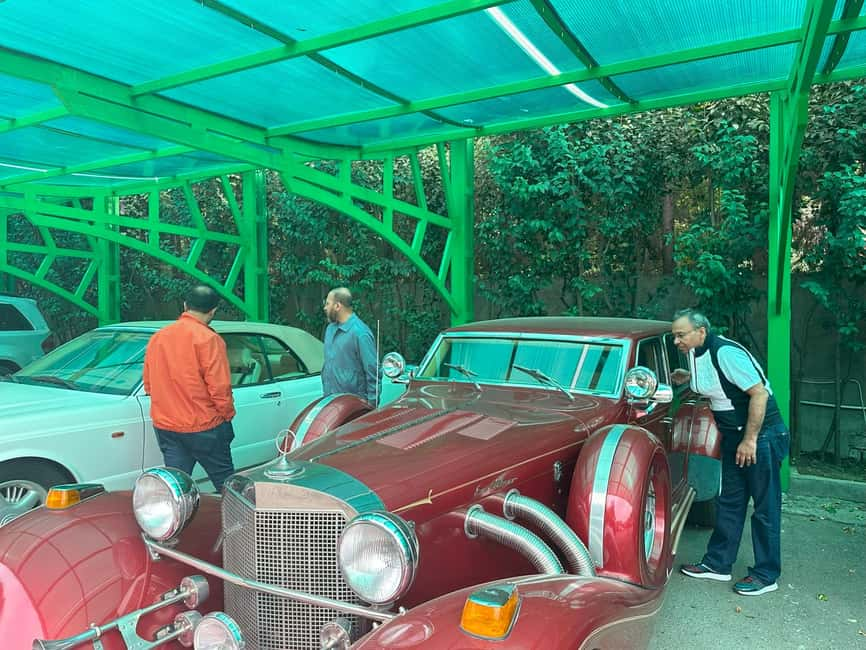
The vintage car park changes the mood again. Instead of focusing on architecture, the guide introduces a group of rare and historically linked automobiles.
Among the most eye-catching are Daimler cars associated with Queen Elizabeth II. The collection also includes Yuri Gagarin’s personal car and a World War II vehicle connected with Joseph Goebbels. These names give the car park a broad historical reach, from British royalty to Soviet space history and wartime Germany.
You should treat the collection as a display of notable vehicles and their associations, not as a full automobile museum covering every period and manufacturer. The strength is the unusual mix. A single stop can take you from royal transport to space-age celebrity to wartime political history.
The rare Excalibur is another highlight. This neo-classical automobile is known as a favorite among gangsters, and its styling makes it easy to understand why it attracts attention. It looks very different from an ordinary vintage sedan, so even people who are not serious car enthusiasts should find something memorable here.
I like this part because it prevents the tour from becoming too narrowly focused on architecture. You do not need to know much about cars in advance. The guide’s explanations provide the context, while the vehicles offer a visual change after the palace rooms and garden.
Optional Churchkhela and Homemade Georgian Wine
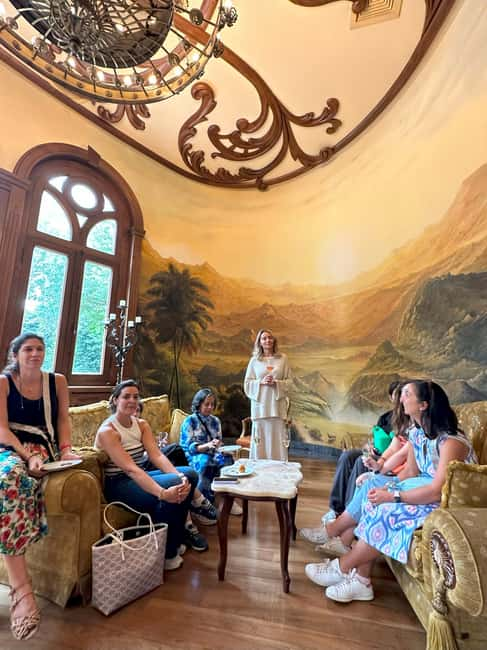
At the Georgian Room, you can add a churchkhela tasting and a glass of homemade Georgian wine. These are optional and cost extra, so the base price does not include them.
Churchkhela is a Georgian sweet made by coating nuts with thickened grape mixture. It is a useful food introduction because it connects the tasting to Georgia’s grape-growing and home-making traditions without requiring a full meal.
The homemade wine offers another local touch. Since the palace itself is an unusual mix of Georgian and international design, these optional extras can make the visit feel more connected to everyday Georgian culture.
Bring cash if you want to take part. The activity notes list cash among the useful things to bring, and the tasting and wine are not included in the $44 fee. If you are trying to keep costs fixed, you can skip them and still receive the full palace, garden, Arkadia Hall, and car park tour.
Is $44 Good Value for Two Hours?
At $44 per person, this is not the cheapest short activity in Tbilisi. The value depends on how much you want a guided visit to a place that is difficult to compare with the city’s usual sights.
The price includes an English-speaking guide, entrance to all listed sites, the Ritual Palace, Arkadia event hall, the garden tour, and the vintage car park. You are paying for a compact cultural experience with several distinct stops, not just entry to one building.
I think the price makes the most sense for visitors who enjoy architecture, unusual collections, and guided context. Without a guide, the palace’s mixture of Soviet ceremony, Georgian religious references, and international halls could be hard to interpret. The guide helps turn odd details into a story.
The price is less compelling if you only want a quick look at the outside of the palace, or if you have limited interest in cars and themed interiors. In that case, two hours and $44 may feel like too much for a specialized stop.
The available feedback highlights careful organization, clear explanations, a comfortable pace, and a friendly guide. Those details matter here because the experience depends on interpretation. A rushed or vague tour would reduce the value of the palace and car collection. The planned pacing is one of the strongest reasons to book rather than simply attempt to visit on your own.
Timing, Restrictions, and Who Should Book
Tours run Monday through Friday, with stated start times of 11:00 and 16:00. The activity is listed as operating from September 3, so check the available date before booking. The two-hour length makes it easy to fit into a weekday Tbilisi schedule, provided one of the two starting times works for you.
Free cancellation is available up to 24 hours before the tour for a full refund, and you can reserve now and pay later. That flexibility helps if your plans around Tbilisi are still changing.
The tour is not suitable for children under 18. It is also not suitable for wheelchair users, and the restrictions exclude mobility scooters, electric wheelchairs, non-folding wheelchairs, baby strollers, and baby carriages. These limits are important because you move through a building and garden with rules about what can enter.
Wear comfortable clothes and shoes, bring water, and carry cash for the optional food and drink. High heels are not allowed. The site also prohibits pets, smoking indoors, food and drinks, chewing gum, and jumping.
This experience suits adults with an interest in architecture, Soviet-era cultural history, Georgian traditions, gardens, or unusual cars. It works especially well for someone who has already seen Tbilisi’s main old-town sights and wants something less familiar.
Should You Book the Palace of Rituals Tour?
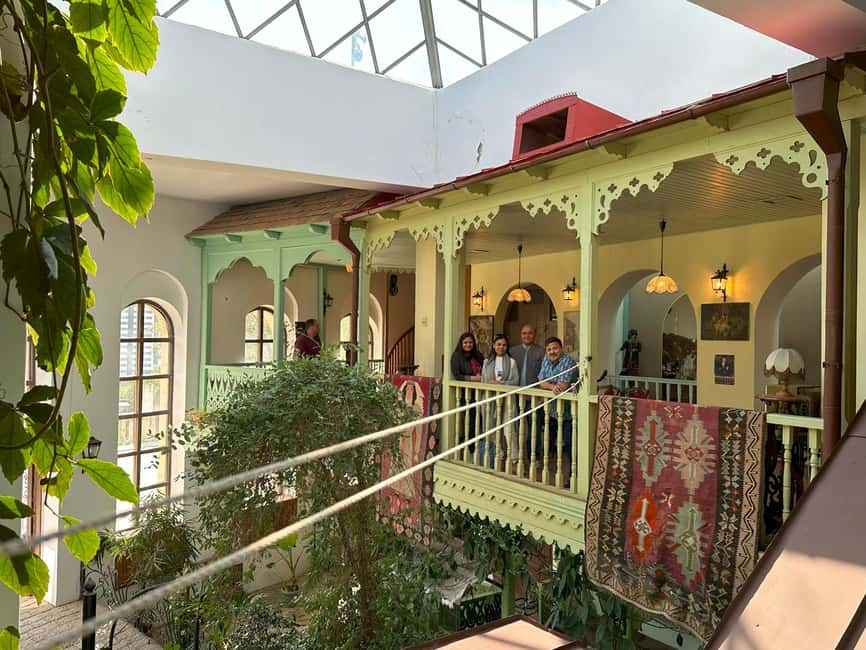
Book it if you want an offbeat Tbilisi experience with a strong guide, a strange and memorable building, a garden with peacocks, and a car collection that includes royal and historic vehicles. The best part is the range: in about two hours, you move from Georgian-inspired ceremonial rooms to international halls, rare trees, and unusual automobiles.
Skip it if you need a weekend tour, are traveling with children under 18, need wheelchair access, or prefer traditional monuments over theatrical modern architecture. For everyone else, $44 is a fair price for a guided visit that combines several attractions in one compact outing.
FAQ
Where does the tour meet?
Meet at the main gate of the Palace of Rituals, at 21 Bochorma Street in Tbilisi. Your guide will be waiting with a Concierge Tbilisi Badge.
How long does the tour take?
The tour takes about 1.5 to 2 hours. It is listed as a two-hour activity.
What time does the tour start?
The stated start times are 11:00 and 16:00, Monday through Friday. Check availability for the date you want.
What language is the tour in?
The live guided tour is in English.
What does the $44 price include?
The price includes an English-speaking guide, entrance to all sites, the Ritual Palace, Arkadia event hall, the vintage car park, and the garden tour.
Is Georgian wine included?
No. A glass of homemade Georgian wine is available at an optional extra cost.
Is churchkhela tasting included?
No. Churchkhela tasting at the Georgian Room is optional and costs extra.
Can children join the tour?
No. The activity is not suitable for children under 18.
Is the tour suitable for wheelchair users?
No. The activity is not suitable for wheelchair users and also excludes several types of wheelchairs, mobility scooters, and non-folding strollers.
What should I bring?
Bring comfortable shoes, water, comfortable clothes, and cash. High heels are not allowed.
Fresh palace tours around the world
- Bangkok Private Grand Palace Emerald Buddha and Reclining Buddha★ 4.5 · 2 reviews
- Bangkok Markets, Palaces and Temples Excursion★ 5.0 · 8 reviews
- Bangkok Two Temple Tour: Wat Pho, Emerald Buddha & Grand Palace★ 5.0 · 4 reviews
- Bangkok Royal Road – Top 3 Major Monuments (Grand Palace, Wat Pho, Wat arun)★ 4.5 · 111 reviews
- Bangkok Grand Palace and Emerald Buddha Tour★ 4.0 · 91 reviews
- Bangkok’s Landmarks Tour : GrandPalace WatTraimit WatPho WatArun★ 5.0 · 8 reviews
- Private Tour: Grand Palace,Wat Phra Kaew, Museum&Cooking Class★ 5.0 · 7 reviews
- Bangkok Grand Palace & Emerald Buddha Flexible Entry with Audio★ 3.5 · 3 reviews