
Review · PALACES WORLDWIDE
The Hague: Escher in The Palace Museum Ticket
Escher in Het Paleis turns impossible staircases, shifting birds, and endless patterns into a museum visit that feels part art lesson, part optical trick. The centerpiece is the 7-meter Metamorphosis III, displayed in a way that lets you follow Escher’s strange union of time and space.
I like the palace setting, where royal rooms, chandeliers, and decorative details share attention with the art. I also like the interactive top floor, which gives children and adults something to do instead of simply reading labels. The main caution is that large bags and luggage are not allowed, and some rooms can feel small when several people gather around the same work.
Key points to know before you go
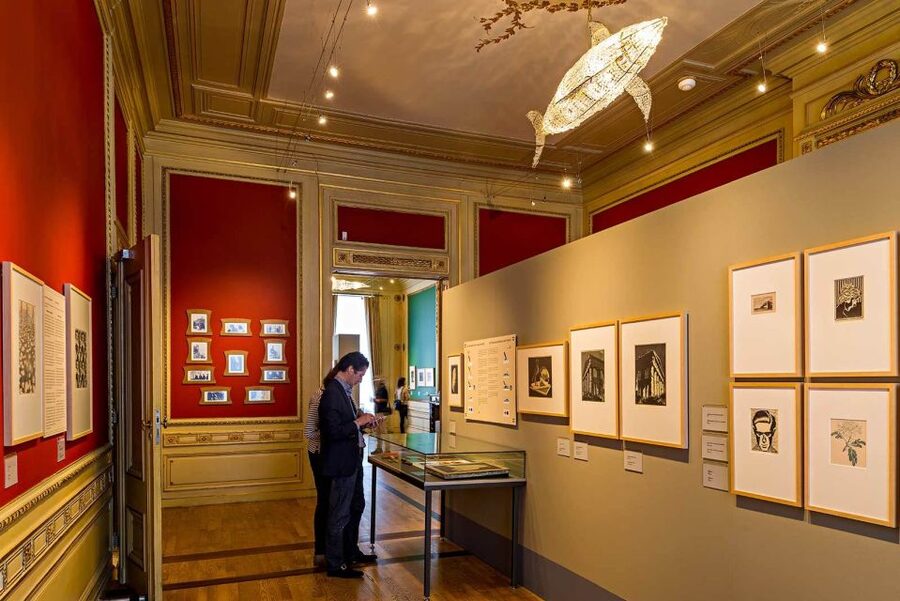
- More than 130 Escher prints: See famous works such as Day and Night and Climbing and Descending, along with less familiar pieces that show how his ideas developed.
- A former winter palace: The museum occupies Queen Mother Emma’s former Winter Palace, with much of its royal character intact.
- Metamorphosis III is the major stop: The long woodcut is displayed unconventionally, encouraging you to move along it and watch its forms change.
- Hands-on exhibits upstairs: Looking as Escher Does uses puzzles, optical illusions, and physical activities to explain how Escher played with perception.
- Good for families: Children up to age six enter free with a paying adult, and a free treasure hunt helps keep younger visitors engaged.
- Easy central location: From The Hague Central Station, take tram 9 to Korte Voorhout or tram 17 to Kneuterdijk.
Entering Escher’s former royal home
The museum sits at Lange Voorhout 74, on one of The Hague’s most attractive central streets. You are not entering a plain white gallery. You are stepping into the former Winter Palace of Queen Mother Emma of the Netherlands, and the building still carries a clear royal mood.
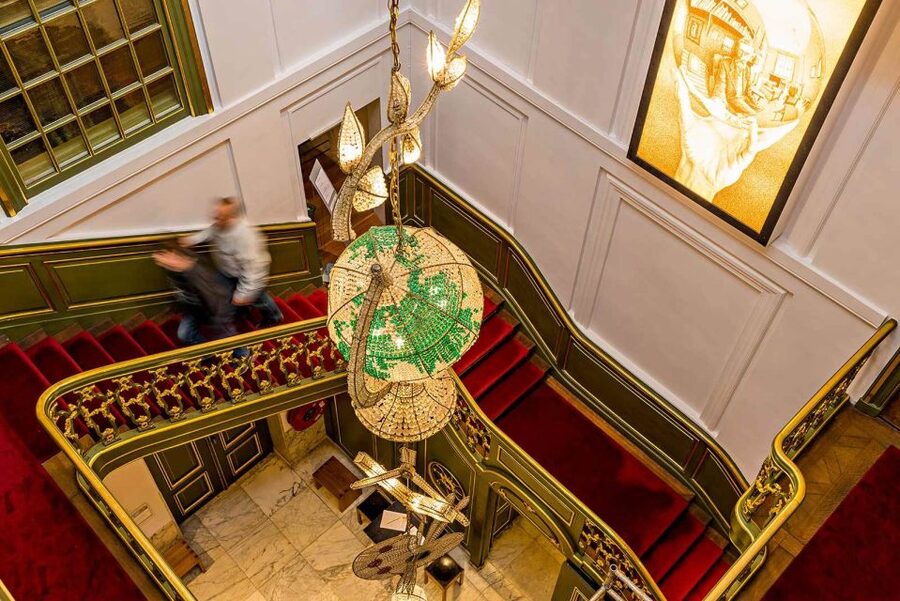
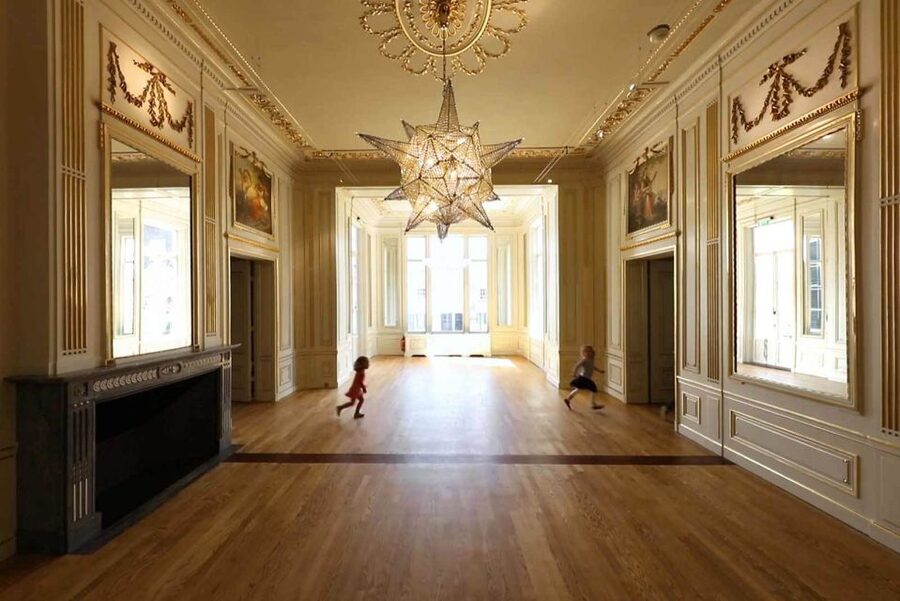
That contrast gives the visit much of its charm. Escher’s black-and-white prints can look severe in a modern gallery, but here they share space with chandeliers, polished details, and palace rooms. Pay attention to the building itself as you move around. The ceiling fixtures are especially memorable, and one visitor specifically advised keeping an eye on the chandeliers.
The palace is also the only public building in The Hague where the original royal atmosphere has been maintained. That makes the museum more than a container for Escher’s work. You get a small look at how the Dutch royal household used the building, while the art explains how a Dutch graphic artist turned geometry and perception into something widely popular.
More palace museums around the world:
- Venice’s Best: Basilica, Doge’s Palace, Gondola & History Gallery
★ 4.5 · 2,478 reviews - Royal Palace & Prado Museum Skip the Line Guided Tour
★ 4.5 · 1,347 reviews - Venice: City Pass with Museums including Doge’s Palace
★ 4.1 · 1,020 reviews
Seeing Escher beyond the famous staircases
Most people arrive knowing a few images: birds becoming fields, figures climbing forever, or hands drawing hands. The museum gives you those familiar works, but it also makes room for the less obvious parts of Escher’s career.
You can follow his artistic development and see how certain themes returned in different forms. That is useful because Escher did not simply produce one clever optical illusion after another. His work moved through different interests, including landscapes, architecture, patterns, tessellations, and mathematical ideas.
Day and Night is a good example of his visual control. A Dutch countryside scene gradually becomes a flock of birds, with one image turning into another without a clear break. Climbing and Descending presents rows of people endlessly moving up and down a staircase, creating a picture that makes logical sense at first glance and then refuses to resolve itself.
I recommend standing back from the famous works before reading the explanation. Let your eyes try to solve the image. Then move closer to inspect the fine lines and repeated forms. Escher’s designs reward both quick recognition and slow looking.
The collection includes almost all of Escher’s work, so you should expect more than the greatest hits. If you know his art mainly from posters or online images, the original prints reveal details that reproductions often flatten. The fine patterns, careful line work, and changes in scale are easier to appreciate in person.
The long journey of Metamorphosis III
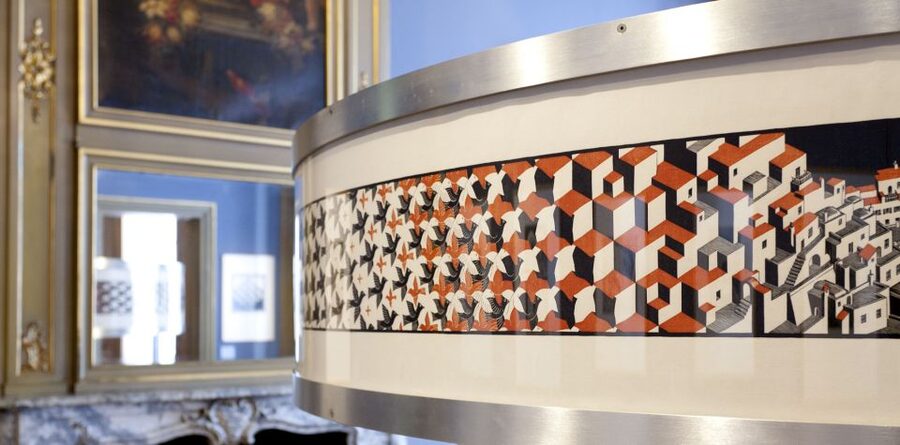
Metamorphosis III is the museum’s grand visual event. This woodcut stretches for 7 meters and is displayed in a nontraditional way, allowing you to experience the work as a continuous movement rather than a single framed image.
The title tells you what to watch for. Escher lets one form become another, then another, while time and space seem to operate as one flowing system. The piece is not something you should rush past. Follow its changes from beginning to end, then look back at sections that caught your eye.
Its size also helps explain why an original work can feel different from a familiar reproduction. A small image on a screen can show you the concept. The long display gives you a sense of the physical effort and visual planning behind it.
This is likely to be the most rewarding part of the visit for serious Escher fans. For children, it can work as a visual search game. Ask them to find the point where one shape changes into another, or to decide where the image begins and ends.
Looking as Escher Does on the upper floor
The interactive exhibition, Looking as Escher Does, is where the museum becomes especially useful for families and visitors who want more than framed prints. You can try puzzles with your eyes and use your hands to explore some of the ideas behind Escher’s illusions.
The activities help explain why the art feels impossible. Instead of simply telling you that Escher used repetition, reflection, or shifting viewpoints, the exhibits give you a chance to test how your own perception works.
This section is a strong reason to visit with children. A free treasure hunt adds another layer for younger visitors, and children up to age six enter free when accompanied by a paying adult. The interactive floor has Escher-themed features, and the hands-on displays give children a clear reason to slow down and look closely.
Adults should not skip this area. It can make the prints upstairs or downstairs easier to understand, particularly if you are not familiar with mathematical art. You may find the interactive displays a little more playful than the gallery rooms, but that change of pace is helpful.
The museum also includes an introductory video about Escher’s life. It sets up his interests and gives you context before you begin studying the prints. The screening area is small, so it may not be the most comfortable place if several people are watching at once.
More palaces to tour around the world:
- Venice: Doge’s Palace Reserved Entry Ticket
★ 4.6 · 42,716 reviews - Paris: Versailles Palace and Gardens Full Access Ticket
★ 4.6 · 41,579 reviews - Granada: Alhambra & Nasrid Palaces Tour with Tickets
★ 4.7 · 19,801 reviews - Sintra: Pena Palace and Park Entrance Ticket
★ 4.2 · 17,410 reviews
How much time should you allow?
The museum works well as a one-hour stop if you want to see the principal works and keep moving. I would allow closer to two hours if you plan to read the material, watch the introductory video, follow Escher’s development, and spend time with the interactive exhibits.
The building is compact enough to fit into a day of sightseeing in The Hague, but there is enough here to reward a slower visit. One practical approach is to start with the video, follow the main exhibition rooms, pause for Metamorphosis III, and finish upstairs with the hands-on displays.
If you are visiting with children, the treasure hunt and interactive area may extend your stay. If you are a dedicated Escher fan, the less familiar works and repeated themes deserve extra time. People who only want a quick look at the famous optical illusions can finish more quickly.
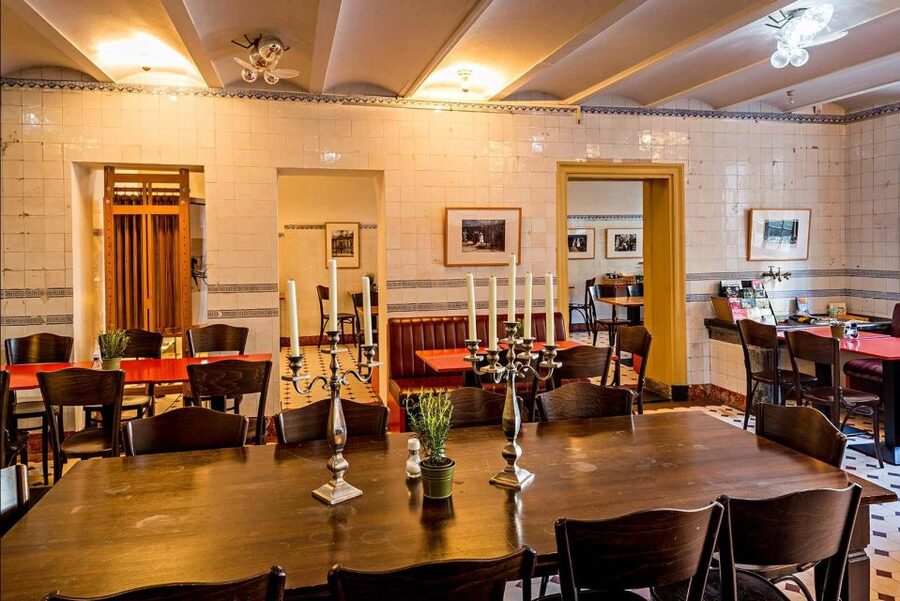
The museum café occupies the former palace kitchen. It gives you a convenient place to pause, though the available information does not specify the menu or prices. The souvenir shop is described as reasonably priced, which is useful if you want a small reminder without committing to a major purchase.
The palace setting changes the pace
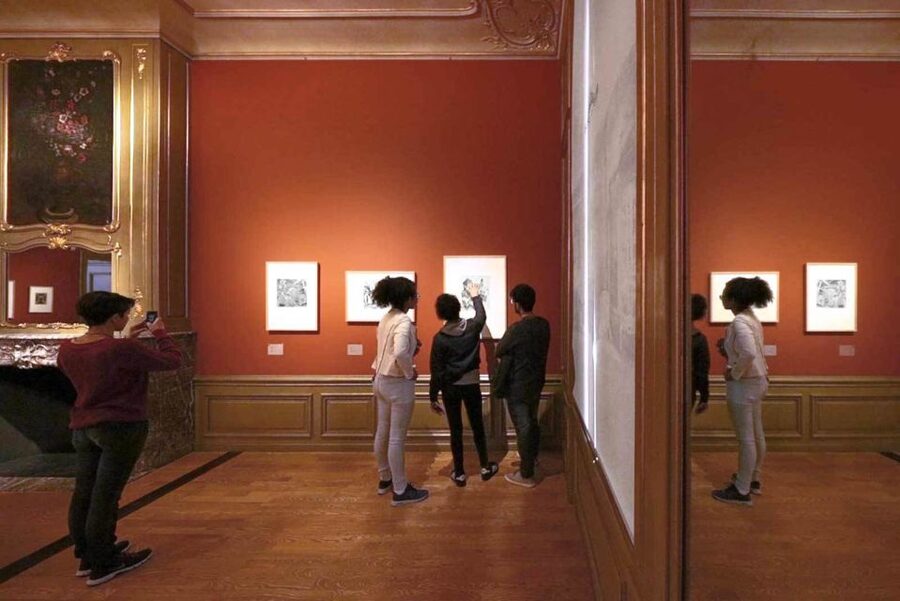
Many art museums ask you to move through large rooms in a fairly formal way. Escher in Het Paleis feels more intimate. The rooms are relatively small, and the art is spread through the former palace rather than placed in a huge modern hall.
That intimacy works in two ways. It lets you get close to the prints and notice small details, but it can also make certain areas feel crowded or stuffy. The video area is particularly compact. If you prefer lots of open space and plenty of air around each work, this may not be your ideal museum.
The royal rooms also bring visual competition. Chandeliers, floors, ceilings, and architectural details attract your eye, sometimes almost as much as the artwork. I see that as part of the appeal, but it means you should not expect a neutral gallery setting.
Look up as you walk. The palace interiors are not just background decoration, and the building’s details help make this visit different from seeing Escher in a standard exhibition hall.
Getting there from The Hague Central Station
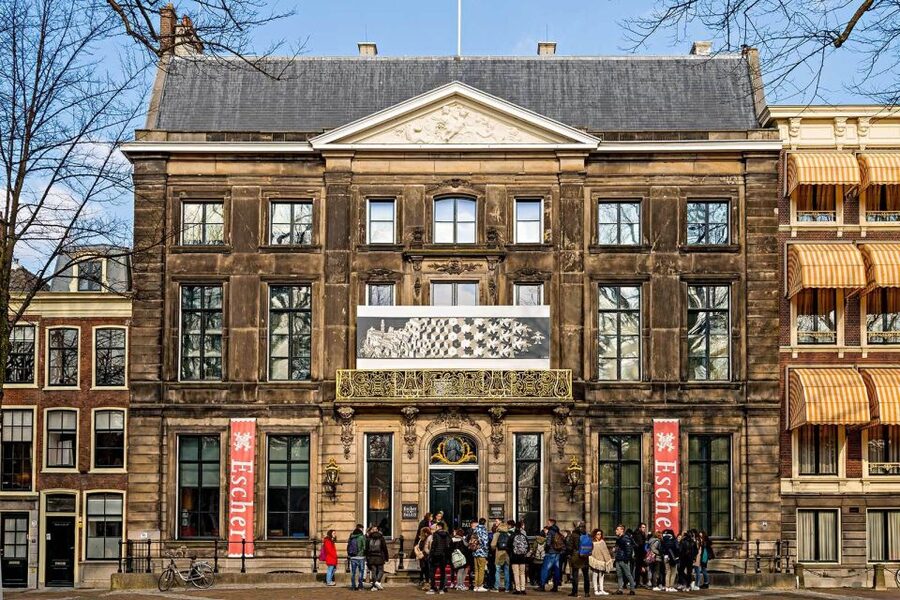
The museum is easy to reach by public transport. From The Hague Central Station, take tram 9 and get off at Korte Voorhout, or take tram 17 and get off at Kneuterdijk.
The location is useful for a wider day in The Hague. The museum is near a park, lunch spots, a lake, and the Parliament buildings, so you can combine it with a walk and a meal without building a complicated route. It also works as a day trip from Amsterdam for people who want to pair it with another museum.
Give yourself enough time to find the correct tram stop and walk to Lange Voorhout 74. The supplied information does not give an exact walking time from either stop, so check the current route before leaving.
Large bags and luggage are not allowed inside. Free lockers are available according to the visitor information, but I would still avoid arriving with more than you need. This matters if you are visiting The Hague between hotel check-out and a train departure.
Ticket value, timing, and guided options
Admission costs about $15 per person through the online offer. That is fair value if you care about Escher, since the ticket covers the permanent exhibition, the palace rooms, the introductory material, and the interactive displays.
The ticket is valid for 365 days, with availability and starting times shown when you book. That unusual period is useful if your plans may change, though it does not mean you should treat one admission as unlimited entry during a year. Check the available date and time before you go.
Free cancellation is available up to 24 hours in advance, and you can reserve now and pay later. Those policies are helpful when you are arranging a day around train connections or uncertain weather.
An audio guide is included in English, Dutch, German, French, Chinese, Japanese, Ukrainian, and Korean. If you prefer to move at your own pace, the guide can add context without requiring a scheduled group tour.
A private guided option is also available for groups of up to 20 people. It costs EUR 60 per guide and must be reserved in advance. For most independent visitors, the audio guide and written information should be enough. A live guide makes more sense for a school group, a large family, or anyone who wants to discuss Escher’s ideas as they go.
Who will get the most from this museum?
Escher fans should make this a priority in The Hague. You will see original prints, famous impossible scenes, tessellations, and works that are less familiar from reproductions. The chance to view Metamorphosis III in person is a major reason to come.
Graphic designers, architecture students, mathematicians, and anyone interested in visual perception will also find plenty to study. The museum does not treat Escher as a one-joke artist. It shows how his interests developed and how he returned to certain ideas from new angles.
Families are well served by the treasure hunt, free admission for children up to six, and the interactive upper floor. Younger children may not have the patience for every label, so plan the visit around the hands-on section rather than expecting them to inspect every print.
Even if Escher is new to you, the museum offers an easy introduction. The video, famous images, palace setting, and optical puzzles provide several ways into the subject. You do not need a background in mathematics or art history to appreciate the basic visual tricks.
The main mismatch is for visitors who want a large, airy museum with broad contemporary galleries. This is a more intimate building, and some spaces may feel tight. It is also focused heavily on one artist, so pair it with another The Hague sight if you want a broader art day.
Practical details that improve the visit
The Palace is closed on Christmas Day and January 1. It remains open on Easter, King’s Day, Ascension Thursday, Whitsun, and Whit Monday.
The official activity information does not give a fixed visit length, so check the available entry times when booking. Plan around one hour for a quick visit and up to two hours for a careful look at the art and interactive exhibits.
The museum offers an audio guide in eight languages, and the written material is available in English and Dutch. If you are visiting with children, ask about the free treasure hunt when you arrive.
Do not bring large bags. If you need to store one, allow a little extra time for the lockers before beginning the exhibition.
The museum has an overall rating of 4.6 from 896 ratings, with especially strong praise for the artwork, the palace, the introductory video, and the interactive exhibits. The most useful takeaway is simple: this is not only a collection of famous optical illusions. It is a manageable, family-friendly museum that explains how Escher arrived at those images.
Should you book Escher in Het Paleis?
I would book it if Escher interests you at all, and I would still consider it if you only know his most famous staircases and tessellations. The combination of original prints, a royal interior, Metamorphosis III, and hands-on exhibits gives the visit more range than a quick gallery stop.
The $15 price is reasonable, especially if you use the audio guide and spend 90 minutes or more inside. Families get added value from the treasure hunt and free entry for children up to six.
Skip it only if your schedule is extremely tight or if you dislike compact museums focused on one artist. For everyone else, this is one of the easiest cultural stops to fit into a day in The Hague, and a particularly good choice when you want an attraction that works for both serious art fans and curious children.
FAQ
Where is Escher in Het Paleis located?
The museum is at Het Paleis, Lange Voorhout 74, in The Hague, South Holland.
How do I reach the museum from The Hague Central Station?
Take tram 9 to Korte Voorhout or tram 17 to Kneuterdijk.
How much does admission cost?
The listed price is $15 per person.
How long is the ticket valid?
The ticket is valid for 365 days. Check availability for the available starting times.
What does admission include?
Admission includes entry to Escher in Het Paleis and its permanent exhibition.
Is an audio guide included?
Yes. Audio guide languages are English, Dutch, German, French, Chinese, Japanese, Ukrainian, and Korean.
Is there a guided tour?
A guided tour for up to 20 people is available for EUR 60 per guide, but it must be reserved in advance.
Can I bring luggage or a large bag?
No. Luggage and large bags are not allowed inside the museum. Free lockers are available for storage according to the visitor information.
Are children allowed in free?
Children up to six years old enter free when accompanied by a paying adult. There is also a free treasure hunt for children.
Is the museum open on public holidays?
The museum is closed on Christmas Day and January 1. It is open on Easter, King’s Day, Ascension Thursday, Whitsun, and Whit Monday.
Fresh palace tours around the world
- Bangkok Private Grand Palace Emerald Buddha and Reclining Buddha★ 4.5 · 2 reviews
- Bangkok Markets, Palaces and Temples Excursion★ 5.0 · 8 reviews
- Bangkok Two Temple Tour: Wat Pho, Emerald Buddha & Grand Palace★ 5.0 · 4 reviews
- Bangkok Royal Road – Top 3 Major Monuments (Grand Palace, Wat Pho, Wat arun)★ 4.5 · 111 reviews
- Bangkok Grand Palace and Emerald Buddha Tour★ 4.0 · 91 reviews
- Bangkok’s Landmarks Tour : GrandPalace WatTraimit WatPho WatArun★ 5.0 · 8 reviews
- Private Tour: Grand Palace,Wat Phra Kaew, Museum&Cooking Class★ 5.0 · 7 reviews
- Bangkok Grand Palace & Emerald Buddha Flexible Entry with Audio★ 3.5 · 3 reviews