
Review · ITALY
Siena: Palazzo Pubblico Entry Ticket
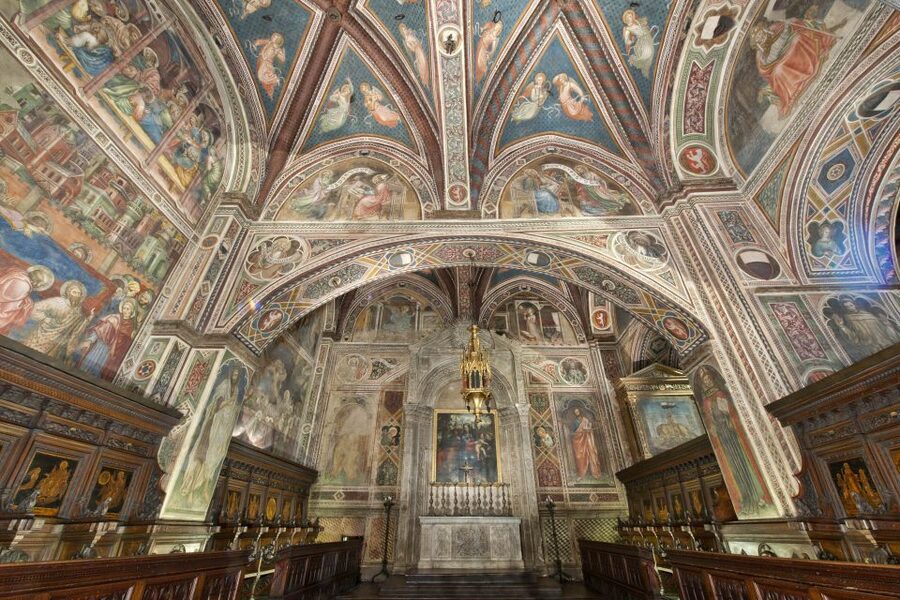
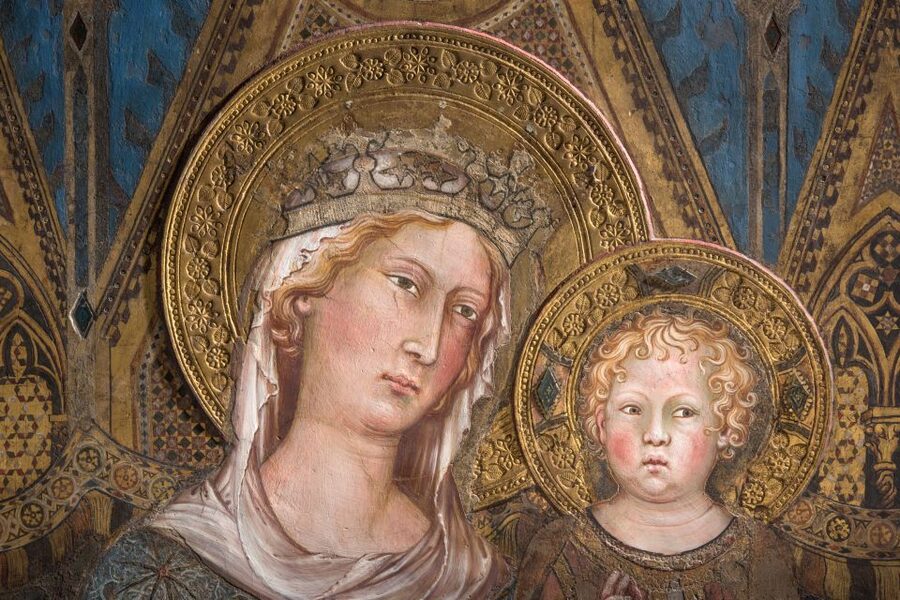
Siena’s Palazzo Pubblico is not just a museum stop. It is a lesson in how the city once linked art, religion, and government. Inside, wall-to-wall frescoes turn the old civic offices into one of Siena’s most memorable sights, with Simone Martini’s Maestà as the star.
I like the low $7 price and the chance to see several major rooms in a short visit. I also like that the ticket includes the Loggia dei Nove, where you can look beyond the square toward the Tuscan countryside. The main drawback is that the celebrated Allegory and Effects of Good and Bad Government frescoes may be closed for restoration, and the ticket does not include Torre del Mangia.
Key points to know
- Simone Martini’s Maestà: See a major Gothic painting in the Sala del Mappamondo, the building’s widest room.
- A compact one-hour visit: The route covers several richly decorated rooms without requiring a full morning.
- The Loggia dei Nove: Step outside for broad views behind Palazzo Pubblico.
- No guide or audio guide: You explore independently, so a little preparation helps.
- Torre del Mangia costs extra: You can buy a separate tower ticket at the Palazzo Pubblico ticket office.
- Use the inner courtyard: Enter the Cortile del Podestà to exchange your voucher before going into the museum.
Why Palazzo Pubblico matters in Siena
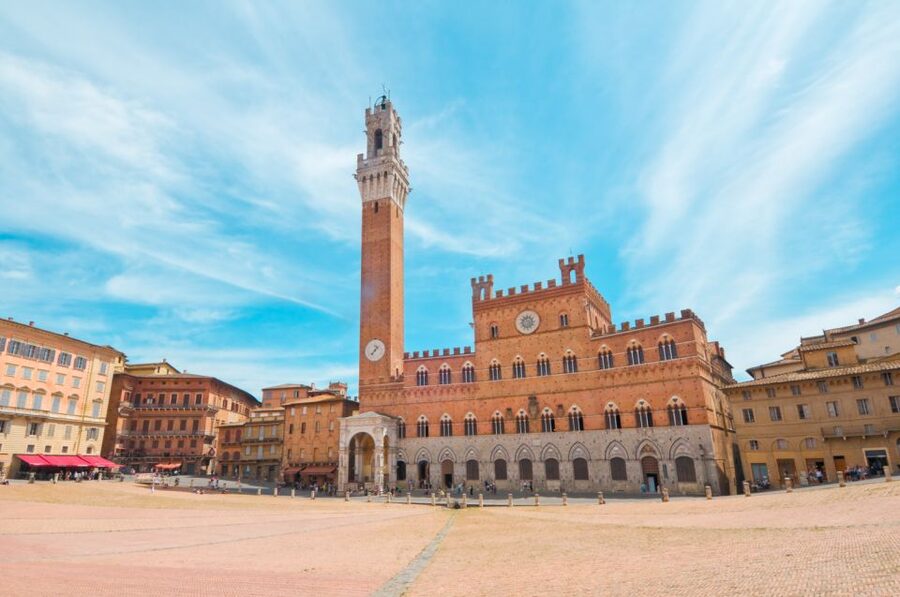
The Palazzo Pubblico sits on Piazza del Campo, Siena’s great shell-shaped square. For centuries, this was the working center of city government. The building’s art was not placed here simply for decoration. It carried a message about power, faith, civic duty, and the behavior expected from those who ruled Siena.
That gives the Civic Museum more weight than a standard picture gallery. You are walking through rooms designed for councils, officials, and public ceremonies. Paintings cover the walls because the city wanted its leaders surrounded by reminders of justice and good government.
I like this setting because it makes the art easier to understand. You are not looking at isolated works in white rooms. You are seeing paintings where political decisions were once made, inside the same building that still anchors Siena’s public life.
The visit lasts about one hour, which is enough time to appreciate the main rooms without turning the stop into an exhausting art marathon. If you enjoy medieval and Renaissance art, you may want longer. If your day in Siena is already packed, the compact route works well.
More Palace Entry Tickets in Italy
- Venice: Doge’s Palace Reserved Entry Ticket
★ 4.6 · 42,716 reviews - Florence: Palazzo Vecchio Entrance Ticket & Audioguide
★ 4.4 · 4,822 reviews - Florence: Entrance Ticket to Pitti Palace
★ 4.5 · 4,528 reviews
Starting in the Sala del Risorgimento
After exchanging your voucher, the visit begins in the Sala del Risorgimento. This room contains frescoes showing the life of Vittorio Emanuele II, the first king of Italy.
The subject changes the mood from medieval Siena to the creation of modern Italy. It is a useful opening because it shows that Palazzo Pubblico was not frozen in the age of city-state politics. The building continued to serve as a place where important chapters of Italian public life were presented.
Do not rush through this first room just because the later medieval paintings are more famous. The frescoes help place Siena within the wider story of Italian unification. They also give you an early example of how the building uses painted walls to explain political ideas.
Since there is no guided tour or audio guide included, you will need to read the available information at your own pace. If you want a deeper understanding of the historical figures, a quick look at Siena’s civic history before arriving will make this room more meaningful.
Spinello Aretino and Martino di Bartolomeo in the Sala di Balìa
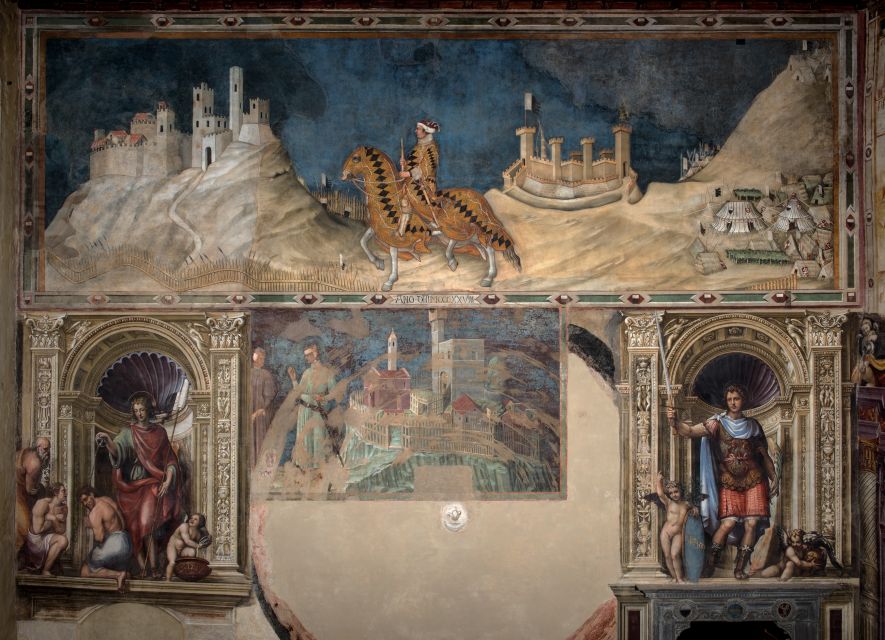
The route continues into the Sala di Balìa, decorated with 15th-century wall paintings by Spinello Aretino and Martino di Bartolomeo. This is one of the rooms where the building’s age becomes especially clear.
The art is not confined to a single framed panel. Paintings stretch across the walls and create an enclosed visual world. Look closely at the details rather than trying to absorb the entire room in one glance. Faces, gestures, clothing, and architectural backgrounds reward a slower look.
This room is also a good reminder that the museum’s appeal comes from the combination of art and place. You are not only seeing works by named painters. You are seeing how those works functioned inside a room used by the government of Siena.
I find the Sala di Balìa particularly useful for setting up the better-known highlights later in the visit. By the time you reach Simone Martini, you have already seen how Siena’s public rooms were decorated and how much effort went into making civic interiors visually powerful.
Coffers and reliquaries in the Sala dei Cardinali
The Sala dei Cardinali offers a different kind of detail. Here, precious carved coffers hold reliquaries. The room is less about a single famous fresco and more about objects, craftsmanship, and the sacred side of Siena’s public culture.
Take time to look at the carved surfaces. A coffer can seem secondary beside a major wall painting, but these objects show the care given to storage and presentation. Reliquaries also point to the close ties between civic authority and religious devotion in medieval Italy.
This section helps break up the sequence of frescoed rooms. You move from large painted scenes to smaller works that depend on close viewing. If you enjoy decorative arts, this may be one of the more satisfying stops in the museum.
The museum is not enormous, and only a limited number of rooms are open for viewing. That can feel slightly restrictive in such a large building. Still, the rooms you do see are densely filled with art, so the visit rarely feels empty.
Same royal city, another way in:
- Doge’s Palace & St. Mark’s Basilica with Terrace Access Tour
★ 4.7 · 10,697 reviews - Venice: Doge’s Palace and St Mark’s Basilica Walking Tour
★ 4.4 · 6,291 reviews - Legendary Venice: Doge’s Palace, St Mark’s & VIP Terrace Access
★ 4.5 · 5,033 reviews - Venice: Doge’s Palace and St. Mark’s Basilica Tour
★ 4.5 · 3,734 reviews
Beccafumi’s vault in the Sala del Concistoro
Next comes the Sala del Concistoro, known for its vault by Beccafumi. Look upward here. The ceiling is a major part of the experience, and it is easy to miss details if you focus only on the walls.
Beccafumi’s work gives the room a more developed Renaissance character. The decorated vault shows how artists used ceilings to extend a room’s visual message above the people meeting below. It is one of those places where standing still for an extra minute pays off.
The adjoining Cappella, painted by Taddeo di Bartolo in the 15th century, adds another layer. The chapel connects the political rooms with religious practice. Civic officials did not separate government, faith, and ceremony in the way modern institutions often do.
This part of the route is worth taking slowly. You do not need specialist art training to enjoy it. Notice how the paintings fill the architecture, how the ceiling changes the feeling of the room, and how the chapel creates a more intimate pause before the largest gallery.
Simone Martini’s Maestà in the Sala del Mappamondo
The Sala del Mappamondo is the widest room in Palazzo Pubblico and was used as the meeting place of the General Council. Its size gives the room a formal, public character, but the key attraction is Simone Martini’s Maestà.
The painting is a Gothic masterpiece and one of the clearest reasons to visit the Civic Museum. Simone Martini presents the Virgin Mary with an elegance and refinement that contrast with the hard business of government once carried out in the room.
The setting matters. The Maestà was not hidden away in a private chapel. It was placed in a civic meeting room, where officials could see it while conducting public affairs. The image gave the council a religious frame and a reminder that authority carried responsibilities.
I would allow extra time here, even if your total visit is only an hour. Step back to see the composition as a whole, then move closer for the intricate details. The scale of the room and the importance of the painting make this the museum’s central moment.
Some visitors expect to see the famous Allegory and Effects of Good and Bad Government by Ambrogio Lorenzetti. That series has been unavailable during restoration at times, so check the current display situation before you book if it is your main reason for coming. Even without it, the Maestà and the other decorated rooms provide a strong visit.
The Loggia dei Nove and views over the countryside
The ticket includes access to the Loggia dei Nove, a 14th-century gallery with views behind Palazzo Pubblico. This is a welcome change after the dark, enclosed rooms of the museum.
From here, you can look over the Sienese countryside. The view adds a sense of place that paintings alone cannot provide. You see the setting connected to the city’s power and wealth, rather than only the rooms where those ideas were expressed.
The Loggia is also a good reason to avoid treating the museum as a quick indoor art stop. Take a moment outside and let the visit open back onto Tuscany. The view is one of the most frequently praised parts of the experience, and it gives you a fine pause before returning to Piazza del Campo.
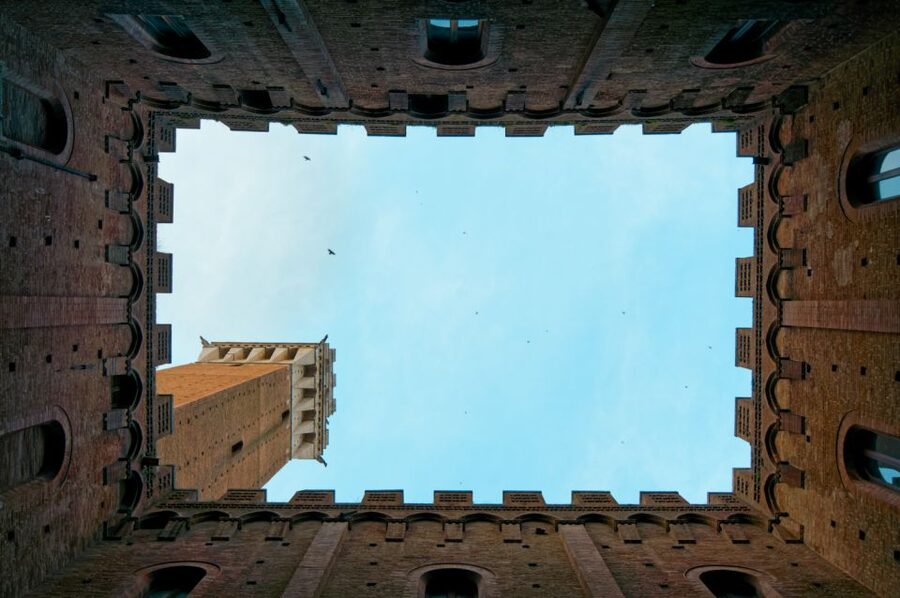
Do not confuse this gallery with the top of Torre del Mangia. The tower is not included in this ticket. You can purchase tower tickets directly at the ticket office, but that is a separate visit with a separate cost.
What the $7 ticket gives you
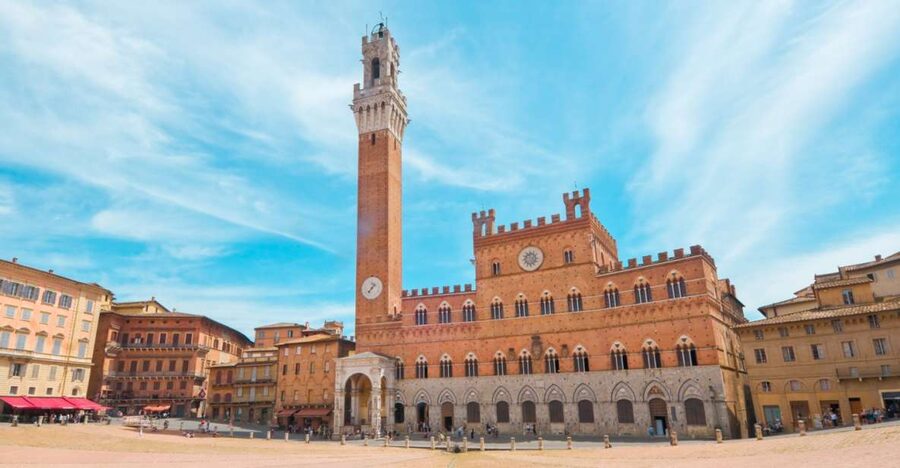
At $7 per person, this is one of Siena’s easier cultural purchases to justify. You receive entry to the Civic Museum, access to the decorated rooms, and the Loggia dei Nove. For a central attraction in a famous historic building, the price is modest.
The value is strongest if you already plan to spend time around Piazza del Campo. You do not need to arrange transportation to a distant site, and the museum fits neatly into a walking day in Siena. The one-hour duration also makes it easy to place between other sights, lunch, or a stroll through the city center.
The ticket is less useful if your only goal is climbing Torre del Mangia. That requires a separate ticket, so check what you are buying before you arrive. If you want both the museum and the tower, ask at the ticket office about adding the tower visit.
A voucher must be exchanged for an entry ticket at the ticket office. Go inside the Cortile del Podestà rather than stopping at the outside wall along Via di Salicotto. Google Maps can point you toward the exterior, which has caused confusion. Arrive about 10 minutes before your booked time.
Practical details that affect your visit
This is a self-guided experience. No guide or audio guide is included, so you control the pace but also need to supply your own context. I recommend reading a short introduction to Simone Martini, Beccafumi, and Ambrogio Lorenzetti before arriving.
The group is limited to 10 participants, although the museum itself is an independent visit rather than a guided group tour. That small-group arrangement can make the ticket exchange and entry more orderly, but it does not turn the experience into a personal tour.
Large bags and luggage are not allowed. Pets are not allowed either, with assistance dogs permitted. Flash photography is prohibited, so keep your camera settings respectful of the paintings.
The museum is wheelchair accessible. The elevator door is 69 centimeters wide and the elevator is 83 centimeters deep, so check those measurements if you use a wheelchair or mobility aid. Access can be suspended during extraordinary events, and opening times may change.
Free cancellation is available up to 24 hours before the booking time, and you can reserve now and pay later. Those terms help if your Siena schedule depends on weather, train timing, or another timed visit.
Who should book the Palazzo Pubblico ticket
I recommend this visit for anyone interested in medieval art, civic history, or the way Italian cities used public buildings to express power. It is also a strong choice if you want a short cultural stop that delivers more than a single painting.
Families and casual sightseers can manage the one-hour route without committing to a long museum session. Art lovers should plan to linger in the Sala del Mappamondo and inspect the ceiling in the Sala del Concistoro.
You may want to skip it if you dislike self-guided museums or if the Lorenzetti frescoes are your only reason for going. In that case, confirm that they are on display before booking. If they are under restoration, adjust your expectations and come for the Maestà, the painted rooms, the historic setting, and the Loggia dei Nove.
Should you book this Siena museum visit?
For $7, yes, especially if you are already visiting Piazza del Campo. The Palazzo Pubblico gives you major art, political history, beautiful interiors, and a countryside view in roughly one hour.
Book it if you want excellent value and a compact cultural stop. Just remember three things: exchange your voucher in the inner courtyard, bring identification, and buy a separate Torre del Mangia ticket if you want the tower. Check the status of the Lorenzetti frescoes before you commit, then let the Maestà and the remarkable rooms carry the visit.
FAQ
How much does entry to the Civic Museum cost?
The listed price is $7 per person.
How long does the visit last?
The stated duration is about one hour. Starting times depend on availability.
Is a guided tour included?
No. The ticket includes museum entry only. A guided tour and audio guide are not included.
Where do I exchange my voucher?
Enter the Cortile del Podestà inside Palazzo Pubblico and go to the ticket office. Arrive about 10 minutes before your booked time.
Is Torre del Mangia included?
No. Torre del Mangia requires a separate ticket, which can be purchased directly at the ticket office.
What major artwork can I see?
You can see Simone Martini’s Maestà in the Sala del Mappamondo. The museum also contains frescoes by Spinello Aretino, Martino di Bartolomeo, and Taddeo di Bartolo, along with Beccafumi’s decorated vault.
Are the Allegory and Effects of Good and Bad Government frescoes always on display?
No. The frescoes may be unavailable during restoration. Check their current status if they are your main reason for visiting.
Is the museum wheelchair accessible?
Yes. The museum is wheelchair accessible. The elevator door is 69 centimeters wide and the elevator is 83 centimeters deep.
Can I bring luggage or take flash photographs?
Large bags and luggage are not allowed. Flash photography is also prohibited.
Fresh palace tours around Italy
- Foligno and the frescoes of Palazzo Trinci, a masterpiece of the Middle Ages – Private Tour★ 4.5 · 2 reviews
- Venaria Royal Palace and Gardens in Turin★ 4.0 · 12 reviews
- Tour of Doge’s Palace and Gondola Ride★ 4.5 · 60 reviews
- Full Venice Walking Tour: Doge’s Palace and St. Mark’s★ 4.6 · 32 reviews
- The places of the Medici family: the Palace and the Chapels★ 4.7 · 12 reviews
- St. Mark’s Basilica, Doge’s Palace & Glass Factory Tour★ 4.1 · 216 reviews
- Venice: St Mark’s Basilica and Doge’s Palace Private Tour★ 4.8 · 56 reviews
- Venice: Doge’s Palace and St. Mark’s Basilica Guided Tour★ 4.6 · 458 reviews
Palace Entry Tickets: the shortlist.
Buckingham Palace: The State Rooms Entrance Ticket
Read our review →
Prague Castle and Lobkowicz Palace Entry Tickets
Read our review →This visit also appears in