
Review · ITALY
The places of the Medici family: the Palace and the Chapels
Florence’s Medici story makes the most sense when you see both sides of their power: the family palace where politics and patronage took shape, then the grand burial complex where that power was carved into stone. This private tour links the two in three focused hours, with the Chapel of the Magi providing the first great visual shock and Michelangelo’s work waiting at the end.
I like the clear historical arc and the private format. A guide can connect bankers, popes, queens, artists, and city politics instead of leaving you to decode a parade of portraits and tombs alone. I also like that the tour includes both the Palazzo Medici Riccardi and the Medici Chapels, giving you architecture, painting, sculpture, and family history in one outing.
The main consideration is guide quality and communication. The guides named for this experience include Rossana, Christina, Catherina, Adriana, and Susanna, and several are praised for warmth and strong explanations. One person found a heavy accent difficult to follow, so clear spoken English may vary by guide.
Key points at a glance
- The Chapel of the Magi: A glittering palace chapel filled with a famous Renaissance procession.
- Two Medici monuments: Start at the family’s political home and finish among its tombs.
- Michelangelo’s New Sacristy: See his sculptural vision in the Medici burial complex.
- A private three-hour visit: The format allows questions, pauses, and a more personal pace.
- Six language choices: Tours are offered in English, Italian, Spanish, German, French, and Portuguese.
- A useful first-days-in-Florence tour: The family story helps explain much of the city you see afterward.
Why these two Medici sites belong together
The Medici family shaped Florence for nearly three centuries. They began as bankers, then used money, marriage, public office, and artistic patronage to control the city’s direction. Their influence reached far beyond one handsome palace. It touched painting, sculpture, architecture, science, books, jewelry, and collecting.
This tour gives you a practical way to understand that reach. At Palazzo Medici Riccardi, you see how the family lived and projected authority. At the Medici Chapels, you see how they wanted to be remembered after death.
That contrast matters. The palace is about daily power, receptions, status, and carefully staged magnificence. The chapels are about dynasty, memory, and the claim that the family belonged among Florence’s most important figures. I find the pairing more useful than visiting either site in isolation.
The family’s importance also goes beyond Florence. The Medici produced three popes and two queens of France, while their support helped Botticelli, Brunelleschi, Michelangelo, and other major figures develop their work. You will not cover every branch of the family in three hours, but the tour gives you a strong framework for recognizing their fingerprints elsewhere in the city.
More palaces to tour around Florence:
- Florence: Palazzo Vecchio Entrance Ticket & Audioguide
★ 4.4 · 4,822 reviews - Florence: Uffizi, Pitti Palace & Boboli Combined 5-Day Pass
★ 4.5 · 1,726 reviews - Florence: Palazzo Vecchio Guided Tour
★ 4.8 · 1,260 reviews
Palazzo Medici Riccardi: power behind a sober facade
The tour begins at Palazzo Medici Riccardi, the family’s political and cultural headquarters. From the outside, the building does not immediately advertise the spectacle within. That restraint was part of the message. The Medici wanted authority, but they also wanted to look like responsible Florentine citizens rather than openly crowned rulers.
Inside, the scale changes. Large rooms and formal spaces recall the noble life of Renaissance Florence, when a powerful household could function almost like a small court. Your guide can explain how banking wealth became political influence and how patronage helped the family gain public support.
I especially like this first stop because it puts art in its proper setting. You are not just looking at beautiful objects. You are seeing how art helped a family communicate status, learning, piety, and control.
The tour includes about an hour inside the palace. That is enough time to focus on the major rooms without turning the visit into a long march through every detail. Your guide can also answer the questions that usually make the Medici story clearer: How did bankers gain power? Why did artists depend on wealthy patrons? How did a family manage to guide Florence for so long?
The Chapel of the Magi and its sudden visual impact
The Chapel of the Magi is the palace’s big surprise. The small private chapel is known for its lavish painted decoration and its procession of elegant figures. It was designed to turn a religious space into a statement about Medici wealth, connections, and taste.
The effect is immediate because the decoration is dense and personal. You may notice richly dressed riders, attendants, animals, and portraits connected to Medici life. The scene presents the biblical journey of the Magi, but it also brings the Medici family and their circle into the picture.
This is where a live guide earns the admission cost. A quick glance can leave you with bright colors and crowded walls. A good explanation helps you notice who appears in the procession, why the subject suited the family, and how sacred imagery could also serve political purposes.
The Chapel of the Magi is also one of the clearest reasons to avoid rushing through the palace. Give your eyes time to adjust to the decoration. Ask your guide to point out details rather than trying to absorb the entire room at once.
Photography rules and access conditions can vary, so follow the instructions given on the day. The room can feel tight compared with the grander palace spaces, which means your guide’s positioning and timing matter.
Piazza San Lorenzo: a short pause between power and burial
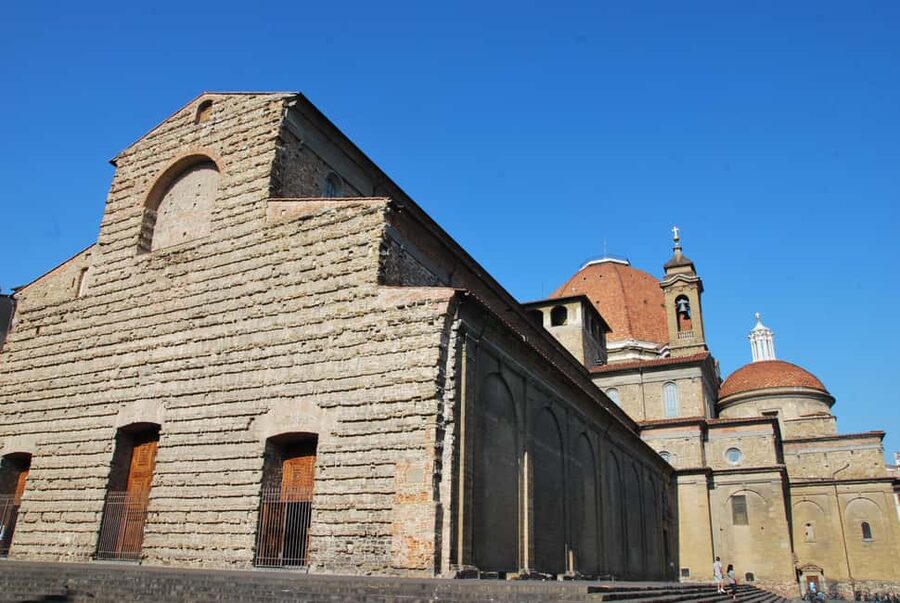
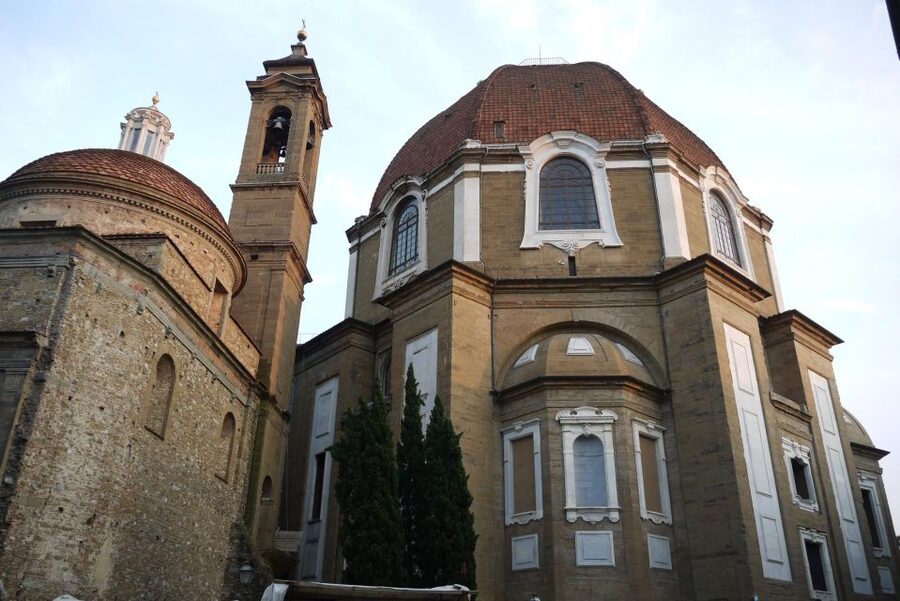
After the palace, the route includes about 15 minutes in Piazza San Lorenzo. This is a brief stop, not a separate major tour, but it gives you a useful transition between the Medici home and their burial place.
You can take photographs and hear more about the area before entering the Medici Chapels. The pause may also help break up the three-hour visit, especially if you want a moment to look around or ask a question.
Do not expect a long guided walk through the square. Its value is practical and visual: you are moving from the family’s palace to the religious complex tied to its legacy. If you want extensive time around San Lorenzo itself, you will need to return independently.
Same royal city, another way in:
- Florence: Palazzo Vecchio Entry Ticket with Audio Guide
★ 4.4 · 837 reviews - Florence: Pitti Palace and Boboli Gardens Ticket & eBook
★ 4.5 · 835 reviews - Florence: Pitti Palace, Boboli Garden, Palatine Gallery Tour
★ 4.9 · 558 reviews - Florence: Palazzo Vecchio Skip-the-Line Entry Ticket
★ 4.2 · 349 reviews
Medici Chapels: marble, memory, and Michelangelo
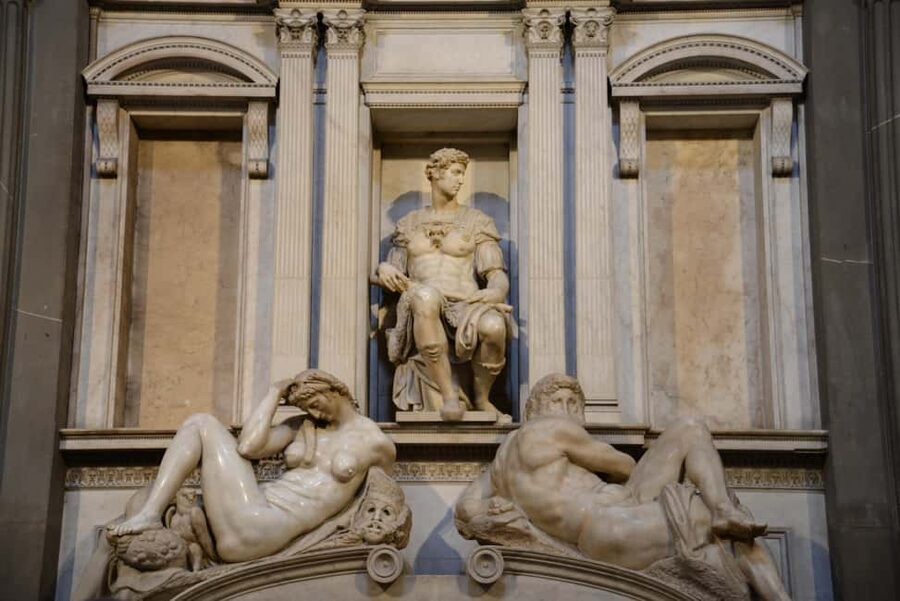
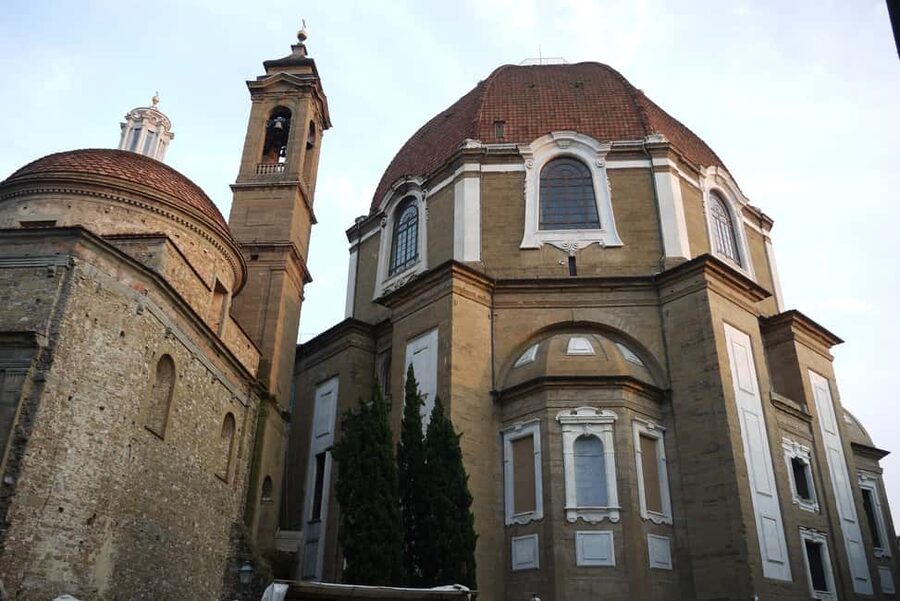
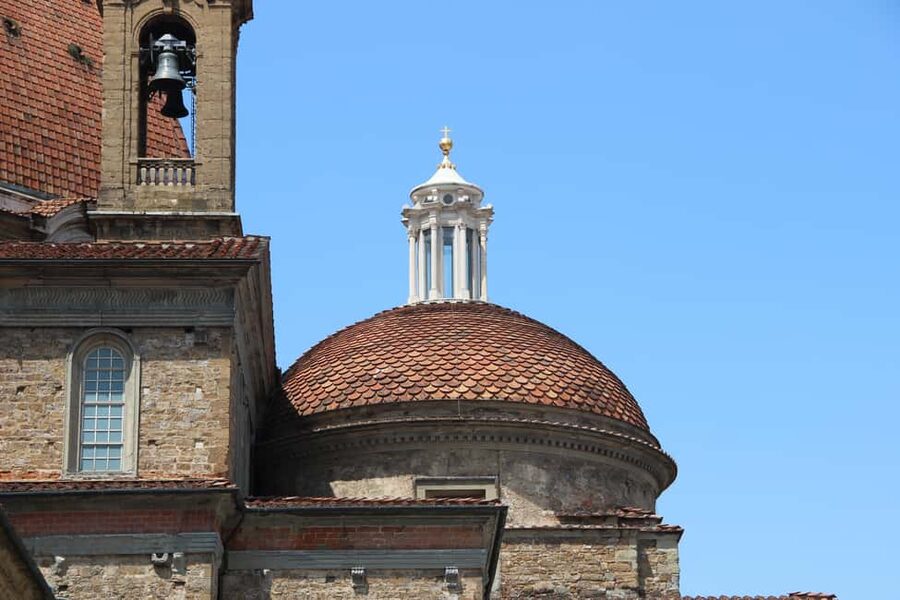
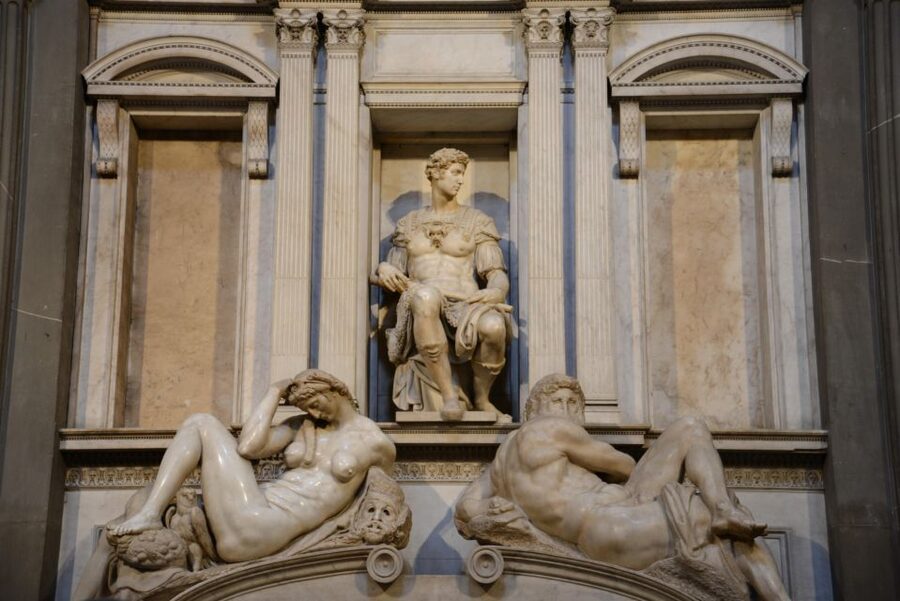
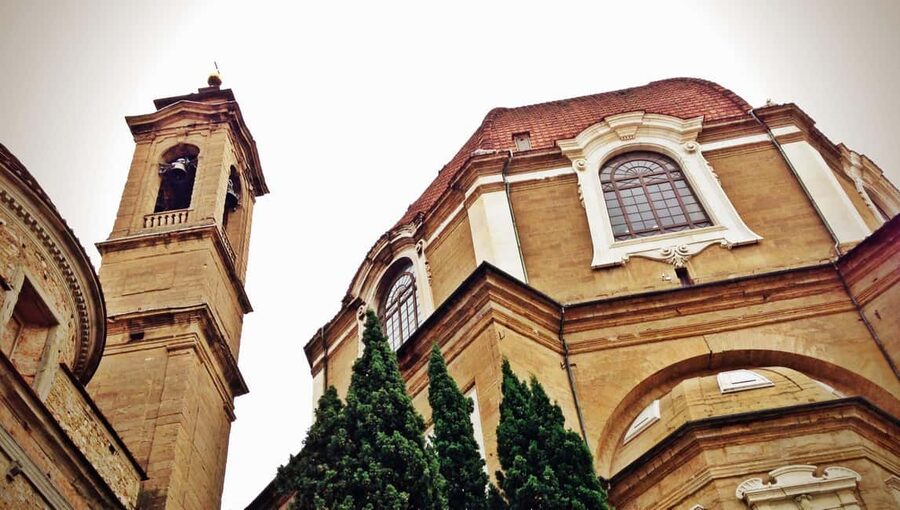
The second major stop is the Medici Chapels, where the family’s ambition becomes grander and more solemn. The complex includes the New Sacristy, the Chapel of the Princes, and the crypt.
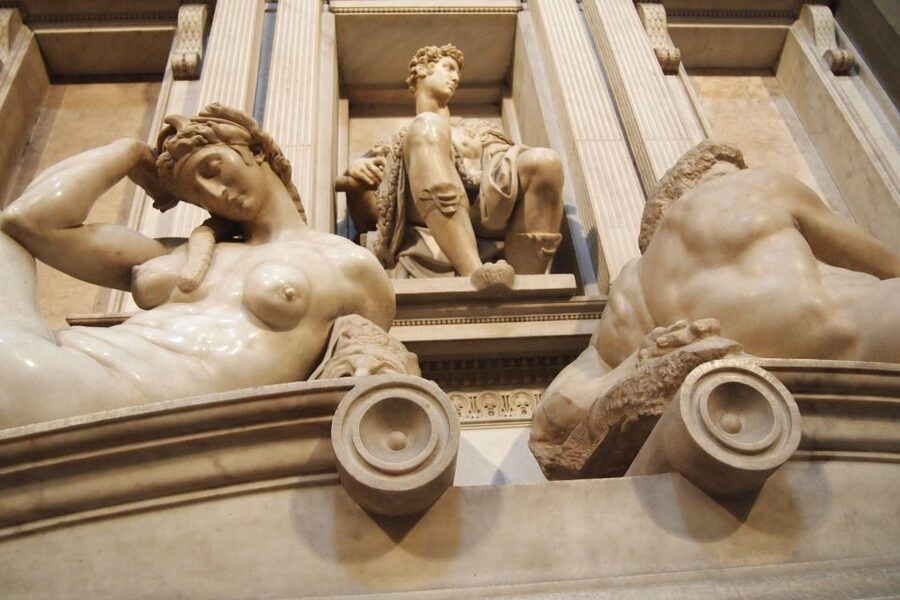
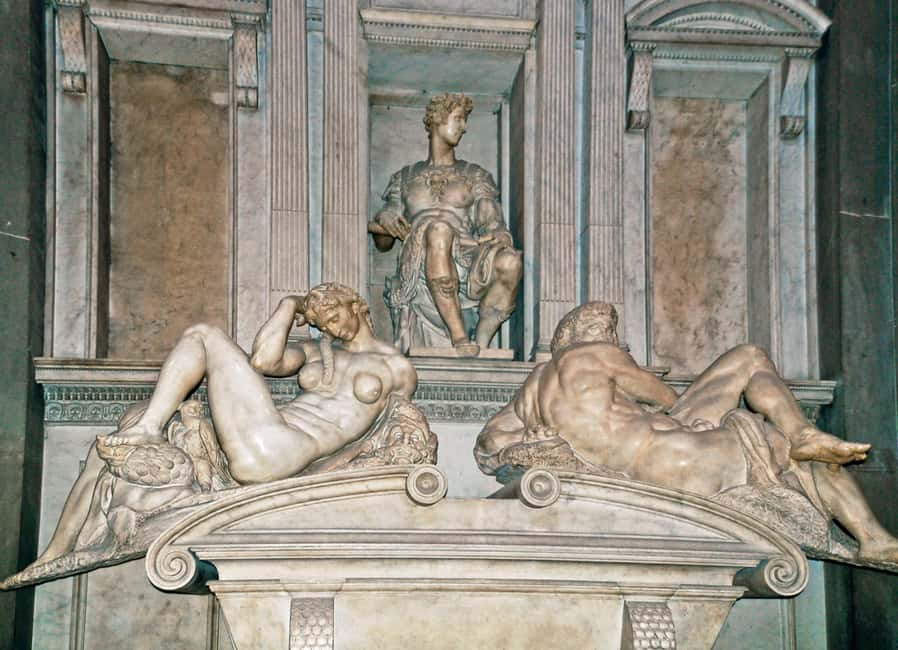
Michelangelo’s New Sacristy is the artistic centerpiece. Its architecture and sculptures were created as a setting for Medici tombs, but the room feels larger than a simple memorial. Michelangelo used figures, movement, light, and architectural structure to create a meditation on time and death.
Your guide can help you read the famous allegorical figures associated with the tombs instead of treating them as isolated statues. This is one of the places where context improves the experience greatly. Without guidance, you may admire the marble and move on. With guidance, you can connect the sculptures to Medici identity and Michelangelo’s ideas about mortality.
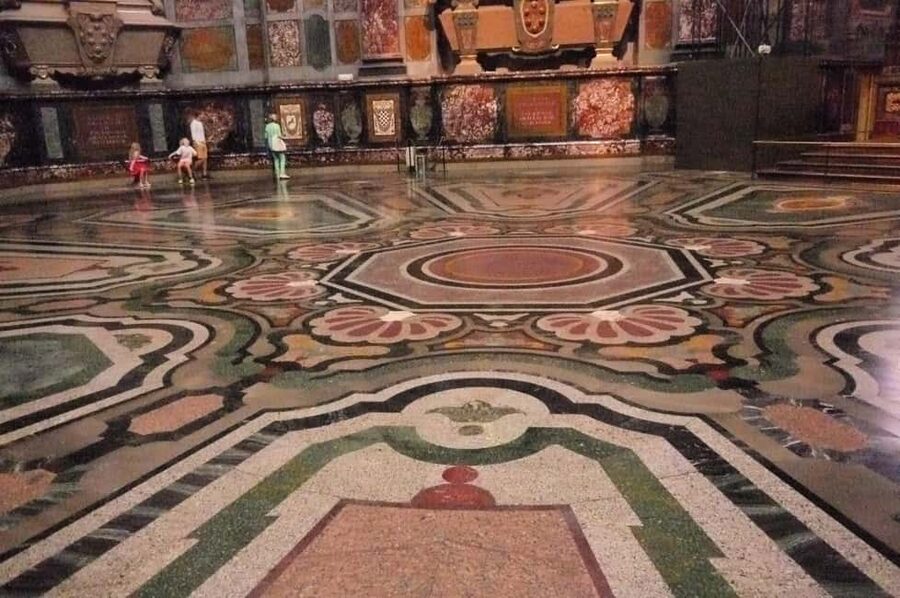
The Chapel of the Princes offers a different kind of spectacle. It is lined with Florentine mosaic made from colored semi-precious stones. The effect is lavish and highly polished, with a decorative style that differs sharply from Michelangelo’s more restrained and sculptural New Sacristy.
That contrast is one of the best features of the visit. The New Sacristy feels focused on form, emotion, and artistic invention. The Chapel of the Princes communicates dynastic wealth through precious materials and grand decoration. Together, they show two different ways the Medici presented themselves.
The Crypt brings the tour back to the family’s actual burial place. It is more solemn than the rooms above and helps ground the display in human reality. The Medici were not only patrons and rulers. They were also a long line of family members who used this complex to preserve their name.
What the private format changes
A private group can make a real difference in places where art requires explanation. You can ask why a certain figure appears in a fresco, how Michelangelo’s tomb design works, or what separates the Chapel of the Princes from the New Sacristy.
The guide can also adjust the pace. Susanna, for example, is described as enthusiastic and accommodating about water breaks and photographs. That kind of flexibility is useful during a three-hour visit, especially for anyone who wants time to look rather than hurry from room to room.
Several guides associated with the experience receive especially warm praise for their ability to make the subject engaging. Rossana is described as friendly and highly informed, while Christina is noted for explaining the Medici rise to power and connecting Renaissance Florence with the modern city. Catherina is praised for keeping attention through the full three hours, and Adriana is remembered for making the visit feel special.
Those names do not guarantee which guide you will receive, and the communication style may differ. One English-language participant found a heavy accent hard to understand. If spoken explanation is essential for you, confirm your preferred language and ask questions early in the booking process.
Is three hours the right length?
Three hours works well for this pairing. One hour at the palace, a short pause at Piazza San Lorenzo, and about an hour at the chapels leaves some room for movement and explanation without making the visit feel like an all-day commitment.
The subject can become complicated quickly. The Medici family includes several generations, political shifts, church connections, and changing artistic tastes. A shorter tour might give you names without meaning. A much longer tour could become tiring unless you are already absorbed by Renaissance politics.
I would schedule this early in your Florence stay if you want the family story to help organize the rest of the city. The Medici influence appears across Florence, and understanding their role can make later visits to churches, galleries, and civic buildings easier to follow.
Value, access, and practical details
The price is not provided here, so I cannot judge the exact cost against other options. The value depends mainly on how much you want guided interpretation and whether your group benefits from a private format.
For a couple or family that wants to ask questions and set its own pace, private guiding can justify a higher price than a basic entry ticket or audio guide. You are paying for the connection between sites, not just admission. If you already know Medici politics and prefer to explore quietly, independent tickets may suit you better.
Skip-the-ticket-line access is included, which can save time when queues are long. It does not mean every part of the experience is free of waiting or access limits, so keep your schedule sensible.
The tour is wheelchair accessible. You need to bring a passport or identity card, and a copy is accepted. It is offered in English, Italian, Spanish, German, French, and Portuguese. You can cancel up to 24 hours ahead for a full refund, and the reserve-now, pay-later option keeps your plans flexible.
Who will get the most from this tour?
I would recommend it most strongly to anyone who wants Florence’s history explained through the people who funded and directed it. It suits first-time visitors who want an early city orientation, as well as repeat visitors who have seen the headline artworks but want to understand the Medici setting.
It is also a good match for art lovers who want more than a checklist. You will see painting, architecture, sculpture, mosaics, and funerary design in one route. The experience is less suitable if you want a broad survey of all Florence attractions, since it stays closely focused on one family.
Families and mixed-interest groups may appreciate the private setup. A guide can explain the story at different levels, pause for pictures, and avoid the fixed pace of a large group. People who dislike guided tours should know that the Medici story is the point here. You will spend much of the three hours listening and discussing, not simply wandering.
Should you book it?
Book this tour if you want the Medici family to become more than a list of names. The Chapel of the Magi, Michelangelo’s New Sacristy, the Chapel of the Princes, and the family crypt provide plenty of visual reward, but the strongest reason to go is the connection between them.
I would choose it near the beginning of a Florence visit, especially if you value a guide who can answer questions and relate Renaissance life to the city you see today. Confirm the language and guide arrangements if clear spoken commentary matters to you. If you prefer complete independence or already have strong Medici knowledge, buy entry separately and explore at your own pace.
For most art and history lovers, this is a focused, worthwhile three hours with a memorable payoff.
FAQ
How long does the Medici Palace and Chapels tour last?
The tour lasts three hours.
Where does the tour begin?
It begins at Palazzo Medici Riccardi.
Where does the tour finish?
It finishes at the Medici Chapels, also called Cappelle Medicee.
Which sites are included?
The tour includes Palazzo Medici Riccardi, the Chapel of the Magi, a short stop at Piazza San Lorenzo, and the Medici Chapels.
Does the tour include Michelangelo’s work?
Yes. The Medici Chapels visit includes the New Sacristy, which was designed by Michelangelo.
Is the Chapel of the Princes included?
Yes. The Chapel of the Princes is part of the Medici Chapels visit and is decorated with Florentine mosaic made from semi-precious stones.
Is the tour private?
Yes. It is offered for a private group.
Which languages are available?
The tour is available in English, Italian, Spanish, German, French, and Portuguese.
What identification should I bring?
Bring a passport or identity card. A copy is accepted.
Fresh palace tours around Florence
- Pitti Palace and Boboli Gardens Private Tour★ 4.7 · 38 reviews
- Florence: Pitti Palace and Boboli Gardens Private Tour★ 4.8 · 46 reviews
- Palazzo Vecchio Small Group Tour★ 4.9 · 10 reviews
- Palazzo Vecchio 90-Minute Morning Guided Tour★ 4.7 · 104 reviews
- Palazzo Vecchio Secret Passages Tour & Lunch or “Gelato”★ 4.3 · 16 reviews
- Palazzo Vecchio: Magnificent Private Tour★ 4.7 · 61 reviews
- Palazzo Vecchio: Private Guided Museum Tour & Tower Tickets★ 4.7 · 18 reviews
- Florence: Palazzo Vecchio Museum★ 4.6 · 56 reviews
Italy Palace Tours: the shortlist.
Doge’s Palace & St. Mark’s Basilica with Terrace Access Tour
Read our review →
Doge’s Palace and St Mark’s Basilica Walking Tour
Read our review →
Legendary Venice: Doge’s Palace, St Mark’s & VIP Terrace Access
Read our review →
Venice In a Day: St Mark’s, Doges Palace Gondola Ride & City Tour
Read our review →
St. Mark’s Basilica & Doge’s Palace Tour with Ticket
Read our review →This visit also appears in