
Review · ITALY
Bari: Simi Palace and Byzantine Church Tour with Ticket
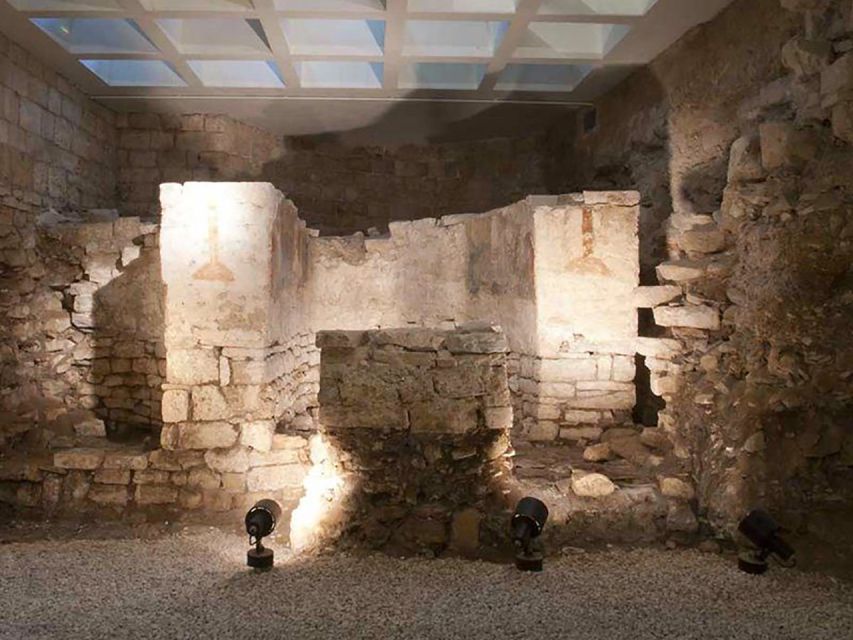
Bari’s Simi Palace is more than a grand old building. Beneath and beside it, you’ll find layers of the city’s past: a Byzantine church, a Roman house, prehistoric pottery, and trade goods from across the Mediterranean. The 9th or 10th-century church ruins are the emotional center of the visit, with three apses, part of the altar, and traces of fresco still visible.
I like two things here. First, the scale model gives you a quick picture of how Bari once looked, which helps the scattered remains make sense. Second, the guide-led format keeps an 80-minute visit focused, rather than leaving you to guess what each fragment means.
The main consideration is scope. This is a compact archaeological tour, not a full-day museum visit, and the modest exhibition may feel brief if you want a large collection or lots of time alone with each object.
Key points
- Three periods in one site: See Roman, Byzantine, prehistoric, and 16th-century layers connected within Simi Palace.
- A church beneath the palace story: View three apses, part of the altar, and fragments of Byzantine fresco.
- Mediterranean trade evidence: Italian-Mycenaean ceramics point to Bari’s old commercial links.
- A helpful scale model: Use the model to picture the settlement and understand the site before examining the ruins.
- Short and focused timing: The 80-minute visit suits a morning or afternoon in Bari without taking over your day.
- Flexible booking choices: English, Italian, French, and Spanish tours are offered, with private groups available.
Why Simi Palace deserves a place in your Bari plans
Bari is often approached through its seafront, old lanes, churches, and food. Simi Palace adds a quieter archaeological stop to that mix. It helps you see the city not as a single medieval destination, but as a place built in layers over many centuries.
The palace itself dates from the 16th century. During restoration work, earlier remains came to light, including a Roman house and a Byzantine church. That combination gives the visit its appeal. You are not simply looking at objects in glass cases. You are seeing parts of the structures and settlements that once occupied the same ground.
I would place this tour high on the list for anyone who enjoys understanding how a city developed. The site is especially useful if you have already walked through Bari and want context for what lies beneath its later buildings. It also works well early in your stay, since the model and archaeological displays can help you picture Bari’s older form.
More palaces to tour around Italy:
- Venice: Doge’s Palace Reserved Entry Ticket
★ 4.6 · 42,716 reviews - Doge’s Palace & St. Mark’s Basilica with Terrace Access Tour
★ 4.7 · 10,697 reviews - Venice: Doge’s Palace and St Mark’s Basilica Walking Tour
★ 4.4 · 6,291 reviews
Starting at the staircase in front of the square
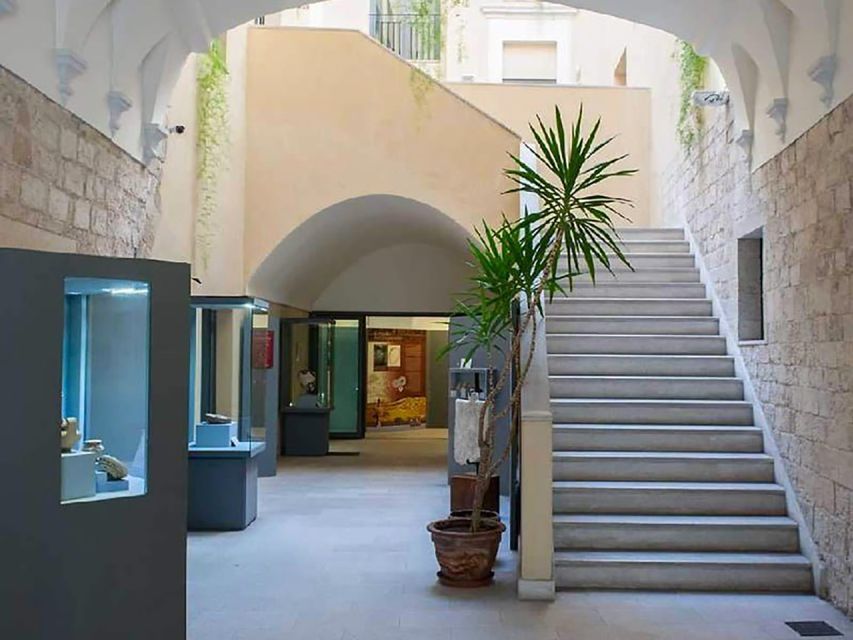
The meeting point is at the staircase in front of the entrance to the square. This is worth noting because the tour does not begin at a distant transport hub or require a separate transfer. You make your way to the stated meeting point, meet the guide, and enter the complex together.
Bring comfortable shoes and clothes. An umbrella and rain gear are also listed as useful items, so check the forecast before setting out. The practical lesson is simple: this is a walking and standing visit, and poor footwear can distract from the archaeology.
The 80-minute duration is a sensible middle ground. It gives the guide enough time to explain the main remains and objects without turning the visit into a long museum session. At the same time, you still have room in the day for Bari’s other sights, a meal, or an unhurried walk through the city.
The permanent exhibition and the first look at Bari’s past
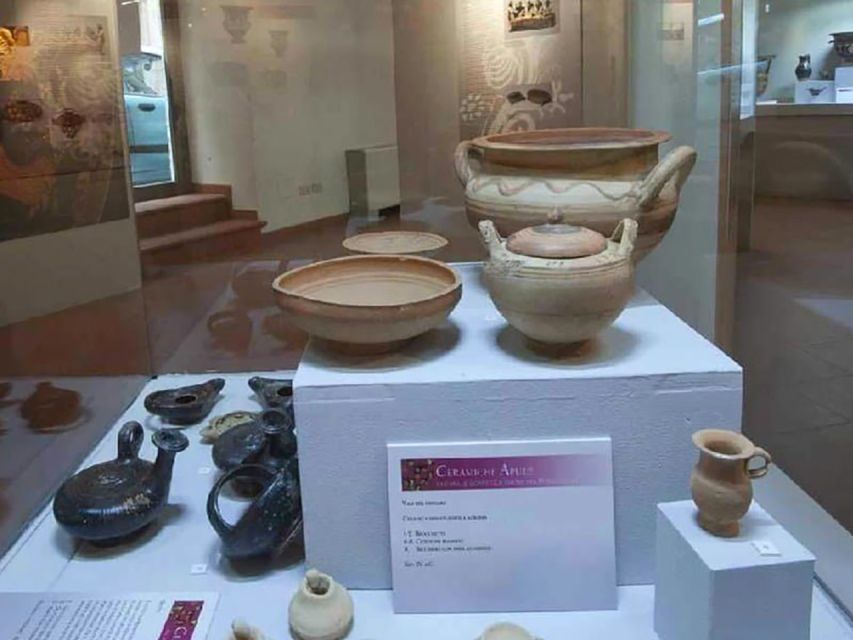
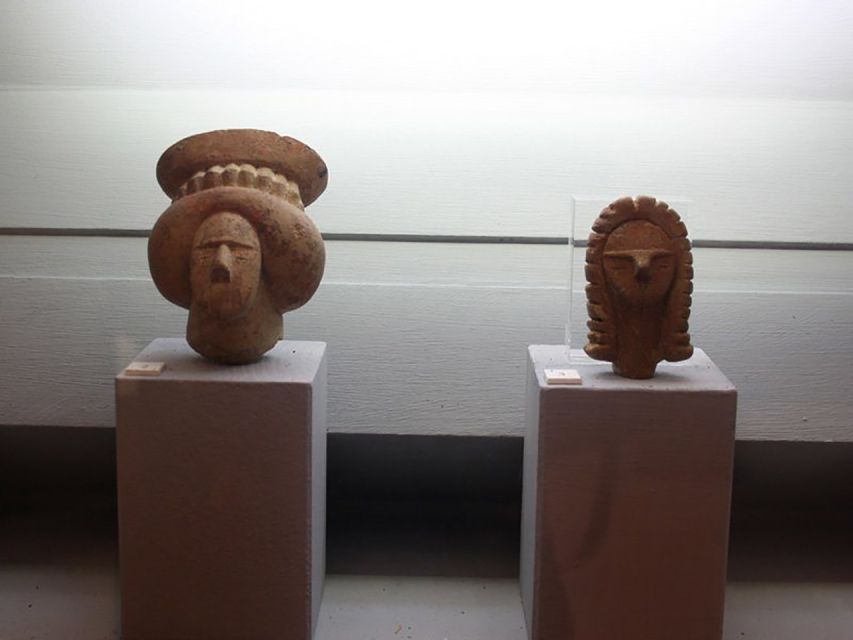
The tour begins with the permanent archaeological exhibition on the ground floor. You can expect to see a range of material, from a model of an original settlement to fragments of prehistoric pottery.
That range matters. A pottery fragment can look ordinary when viewed alone, but it becomes more useful when placed beside a model showing how people lived and organized a settlement. The guide’s job is to connect those pieces, so listen for the explanation of how the objects fit into Bari’s earlier story.
The collection is not described as a vast room-by-room museum, so set your expectations correctly. You are coming for selected evidence and a guided explanation, not hours of independent browsing. That is a benefit if you prefer a clear route and a manageable amount of information.
The model is one of the most practical parts of the visit. Archaeological remains often appear as low walls, partial foundations, and isolated fragments. A scale model lets you form a picture of the settlement before you look closely at the surviving pieces. I find that this kind of visual aid can make a short museum visit much easier to follow.
Prehistoric pottery and Italian-Mycenaean ceramics
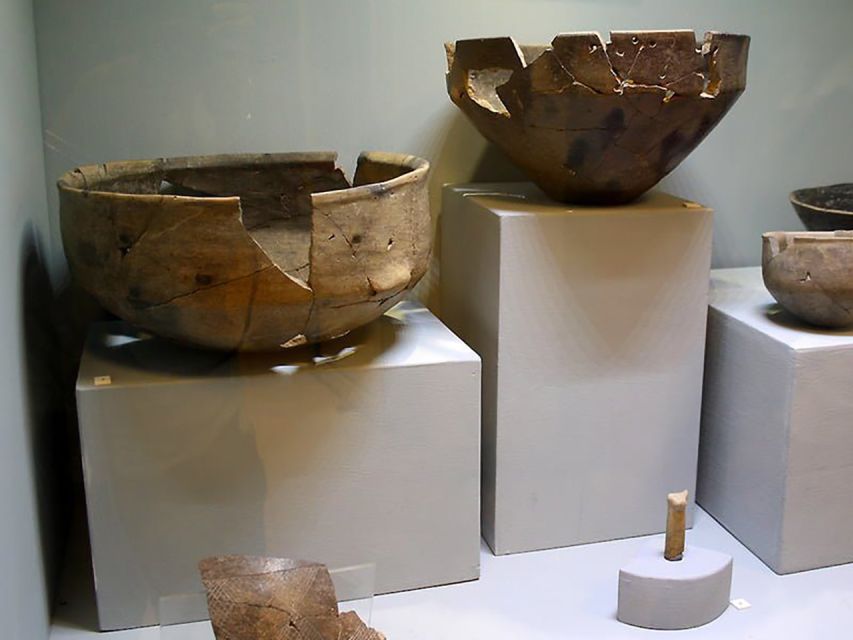
The displays include prehistoric pottery and rare examples of Italian-Mycenaean ceramics. These objects are important because they point beyond Bari itself.
Ceramics can reveal contact between communities even when written records are limited. The Italian-Mycenaean pieces show that Bari was linked to a wider Mediterranean commercial network. You are not just looking at old dishes or broken vessels. You are looking at evidence of movement, exchange, and connections between distant coastal societies.
The guide-led explanation should help you understand why these fragments matter. Without context, pottery can become a parade of similar shapes. With context, you can ask better questions: Where did the objects come from? How did they arrive? What do they suggest about the people living here?
Do not expect every artifact to have a long individual story presented in English, French, Italian, or Spanish. The supplied information confirms these tour languages, but it does not provide a complete object-by-object catalogue. The strength of the visit is the broad picture: Bari’s position allowed it to take part in Mediterranean exchange long before the palace was built.
Same royal city, another way in:
- Legendary Venice: Doge’s Palace, St Mark’s & VIP Terrace Access
★ 4.5 · 5,033 reviews - Florence: Palazzo Vecchio Entrance Ticket & Audioguide
★ 4.4 · 4,822 reviews - Florence: Entrance Ticket to Pitti Palace
★ 4.5 · 4,528 reviews - Venice: Doge’s Palace and St. Mark’s Basilica Tour
★ 4.5 · 3,734 reviews
The Byzantine church beneath Simi Palace
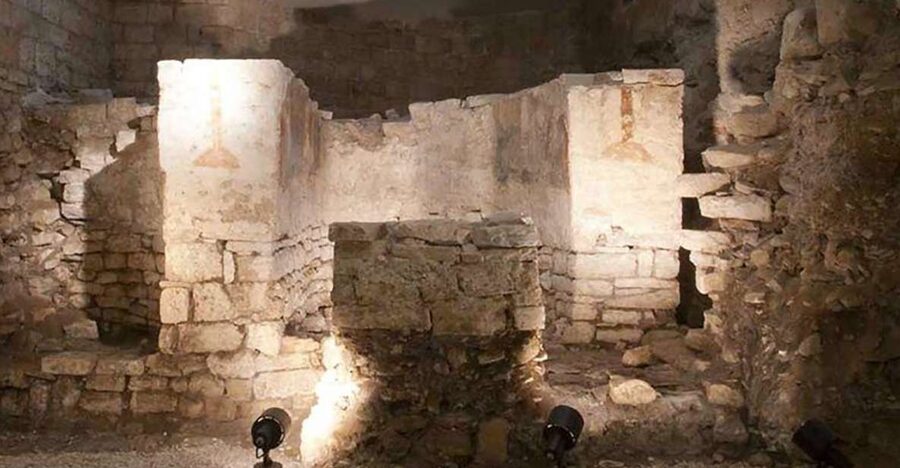
The adjacent church is the most distinctive stop. It dates to the 9th or 10th century and predates the 16th-century palace. The remains include three apses, part of the altar, and fragments of a fresco.
This is where the building’s layered history becomes easiest to grasp. The palace was built on top of an earlier religious site, and the church remains let you see that older foundation directly. Three apses give you a sense of the church’s shape, while the altar area helps identify its purpose even though much of the structure is gone.
The fresco fragments are modest, but that is part of their value. You are seeing only what survived, not a restored fantasy of the original interior. A partial image can make the church feel more real because it reminds you how much has been lost to time, rebuilding, and damage.
I would give this section your full attention. The church is not presented as a complete monument, so the guide’s explanation matters. Look for the relationship between the walls, apses, altar, and surviving decoration. If you rush through, the remains may seem sparse. If you pause and let the layout take shape, the stop becomes far more rewarding.
The Roman house discovered during restoration
The Roman house adds another layer to the story. It was discovered during restoration work, showing that the site’s history reaches back even earlier than the Byzantine church.
This is a useful reminder that archaeological work often changes what we think we know about a building. The palace is not an isolated 16th-century creation. It occupies ground that had already been used, built on, and reshaped over a much longer period.
The information supplied for the tour does not specify the house’s exact layout, decoration, or date. You should therefore treat it as a compact archaeological element rather than expect a fully preserved Roman residence. Its importance comes from the sequence: Roman occupation, Byzantine worship, and later palace construction all meet in one place.
For me, this kind of layering is the central reason to visit. You can see how a city reuses valuable urban ground. Each period leaves something behind, and later buildings do not erase the earlier story completely.
What the guide adds in 80 minutes
A guide is included in the ticket, and the tour is offered in Italian, French, English, and Spanish. That makes the visit more accessible than relying on labels alone, particularly when the most important features are architectural remains rather than large, self-explanatory objects.
The guide should help you move from broad history to specific details: why the palace matters, how the church was identified, what the pottery says about trade, and how the Roman remains fit into the sequence. The tour’s value depends partly on this connection between evidence and interpretation.
A French-language visit has received specific praise for the guide’s effort to speak French clearly. Since guide assignments can vary, treat that as a useful sign rather than a promise about one particular person. If French is your preferred language, select it when booking if that option is available for your chosen time.
Private groups are available. That may suit families, couples, or small groups who want a more personal pace. A private format can also make it easier to ask questions about the model, ceramics, or church remains without worrying about holding up a larger group.
Is $30 good value for this Bari visit?
At $30 per person, the tour is not the cheapest way to spend 80 minutes in Bari. The price includes admission to Simi Palace and the church, as well as the guide, so you are paying for interpretation rather than just entry.
I consider the value reasonable if you care about archaeology and want a structured explanation. The artifacts, scale model, Roman house, and Byzantine remains cover several periods in a short visit. You also avoid spending time trying to work out what the ruins represent on your own.
The value is weaker if you want a large museum with many galleries or a long independent visit. The experience is focused and fairly compact. It earns its price through the guide and the range of historical layers, not through sheer size.
Children up to 11 years old enter free, which can improve the cost for families. The visual model and partial ruins may hold a child’s attention better than a long text-heavy collection, though the tour’s archaeological subject will suit children who can listen for part of the 80 minutes.
Who will enjoy this tour most?
I would recommend Simi Palace to:
- You if you enjoy archaeology but prefer a guide to explain the evidence.
- You if you want to see more than Bari’s later churches and streets.
- You if a short, clearly timed visit fits your schedule.
- You if Roman and Byzantine layers interest you.
- You if you appreciate museums that show objects alongside the place where earlier structures were found.
- You if you are visiting with family and want free admission for children up to age 11.
It may be less suitable if you want a major art museum, a long self-guided visit, or a tour devoted only to the 16th-century palace. The site’s appeal comes from its layers, and the remains are partial rather than complete.
The tour is wheelchair accessible, which makes it a useful choice for visitors who need an accessible archaeological experience. The supplied details do not describe every surface or route feature, so you may still want to confirm any specific access needs when booking.
How to make the most of the visit
Arrive prepared to listen. The physical remains are not enormous, so the explanation is a large part of what you are paying for. Look at the model early, then use it to orient yourself when you reach the church and Roman remains.
Wear comfortable shoes. Pack rain protection if the weather looks unsettled, since an umbrella and rain gear are specifically recommended. The tour does not list refreshments or transport, so plan those separately.
Try to leave a little time around the 80-minute appointment. The visit itself is fixed in length, but Bari rewards an unhurried approach, and you will not want to run straight from the archaeological complex to your next appointment.
The booking terms are useful for a changeable schedule. You can cancel up to 24 hours before the tour for a full refund, and the reserve-now, pay-later option lets you hold a place without paying at once. Check the available starting times before committing, since the duration alone does not tell you when the tour runs.
Should you book Simi Palace?
Book this tour if you want a short, guided look at Bari’s layered past and you value explanation more than a huge collection. The strongest reasons are the Byzantine church remains, the scale model, and the chance to see Roman, prehistoric, Byzantine, and later palace history tied to one site.
Skip it if you want a grand palace interior or a major archaeological museum that could fill half a day. For the right visitor, though, $30 buys a clear introduction to an easily overlooked part of Bari, with admission, a multilingual guide, and a focused 80-minute route included.
FAQ
How long does the Simi Palace and Byzantine Church Tour last?
The tour lasts 80 minutes.
What does the ticket include?
The ticket includes entrance to Simi Palace and the church, along with a tour guide.
How much does the experience cost?
The listed price is $30 per person.
Which languages are available?
Tours are offered in Italian, French, English, and Spanish.
Is the tour wheelchair accessible?
Yes, the activity is listed as wheelchair accessible.
Are private groups available?
Yes, a private group option is available.
Where do I meet the guide?
Meet at the staircase in front of the entrance to the square.
Are children admitted for free?
Children up to 11 years old have free access.
Can I cancel for a full refund?
Yes. You can cancel up to 24 hours in advance for a full refund.
Can I reserve now and pay later?
Yes. The reserve-now, pay-later option lets you keep your plans flexible and pay nothing at the time of booking.
Fresh palace tours around Italy
- Foligno and the frescoes of Palazzo Trinci, a masterpiece of the Middle Ages – Private Tour★ 4.5 · 2 reviews
- Venaria Royal Palace and Gardens in Turin★ 4.0 · 12 reviews
- Tour of Doge’s Palace and Gondola Ride★ 4.5 · 60 reviews
- Full Venice Walking Tour: Doge’s Palace and St. Mark’s★ 4.6 · 32 reviews
- The places of the Medici family: the Palace and the Chapels★ 4.7 · 12 reviews
- St. Mark’s Basilica, Doge’s Palace & Glass Factory Tour★ 4.1 · 216 reviews
- Venice: St Mark’s Basilica and Doge’s Palace Private Tour★ 4.8 · 56 reviews
- Venice: Doge’s Palace and St. Mark’s Basilica Guided Tour★ 4.6 · 458 reviews
Italy Palace Tours: the shortlist.
Doge’s Palace & St. Mark’s Basilica with Terrace Access Tour
Read our review →
Doge’s Palace and St Mark’s Basilica Walking Tour
Read our review →
Legendary Venice: Doge’s Palace, St Mark’s & VIP Terrace Access
Read our review →

Venice In a Day: St Mark’s, Doges Palace Gondola Ride & City Tour
Read our review →
St. Mark’s Basilica & Doge’s Palace Tour with Ticket
Read our review →This visit also appears in