
Review · PALERMO
Tour Cappella Palatina e palazzo Reale: patrimonio Unesco
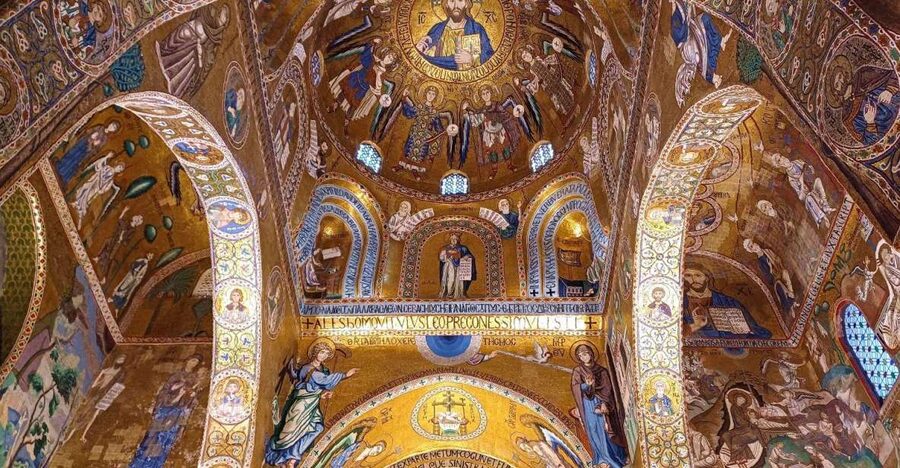
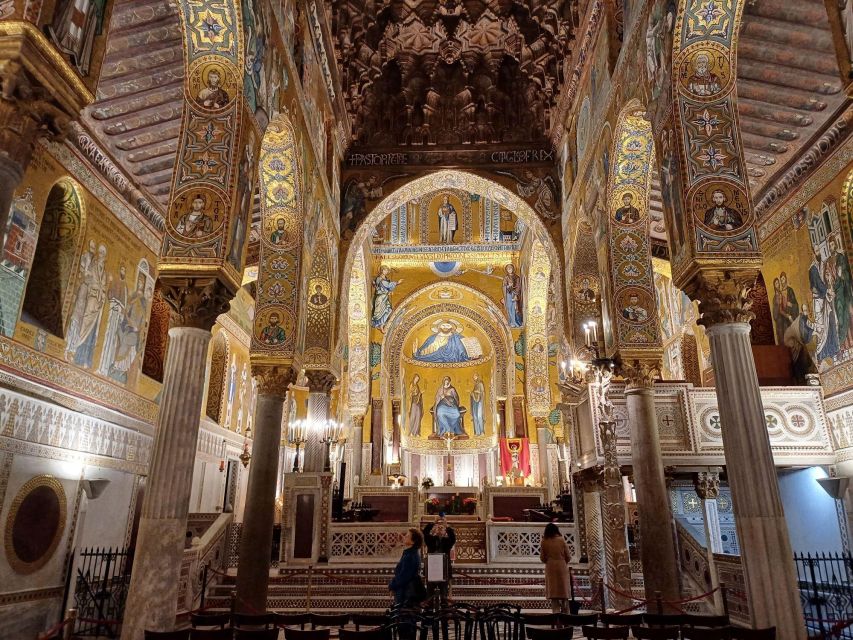
The gold comes first. Inside Palermo’s Palatine Chapel, Byzantine mosaics cover the walls in a glowing biblical scene, while an Islamic muqarnas ceiling hangs above a Romanesque marble floor. The effect is startling because three artistic traditions meet in one small royal chapel.
I like the tour’s low $14 guide fee and its focus on the Royal Palace, a place with more than 2,700 years of history. I also like that guides such as Fabrizio and Claudio explain the mosaic stories, royal rooms, and political past instead of leaving you to admire the decoration without context. The main drawback is clear: the fee does not include admission, and the tour is only in Italian.
Key points to know before booking
- The Palatine Chapel is the main event: Expect Byzantine gold mosaics, an Islamic muqarnas ceiling, and a patterned marble floor.
- The Royal Palace has many lives: It has served as a royal residence, court, treasury, seat of government, and home of the Sicilian Parliament.
- Fabrizio and Claudio are named guides: Recent departures specifically praise their clear, engaging presentations.
- Tickets cost extra: Buy admission at the palace ticket office or through the official website.
- Italian is the only tour language: This is best for Italian speakers or for visitors comfortable following a historical explanation in Italian.
- Plan for modest clothing and standing: Shorts, short skirts, and sleeveless shirts are not allowed, and seating is limited.
Why the Palatine Chapel deserves your time
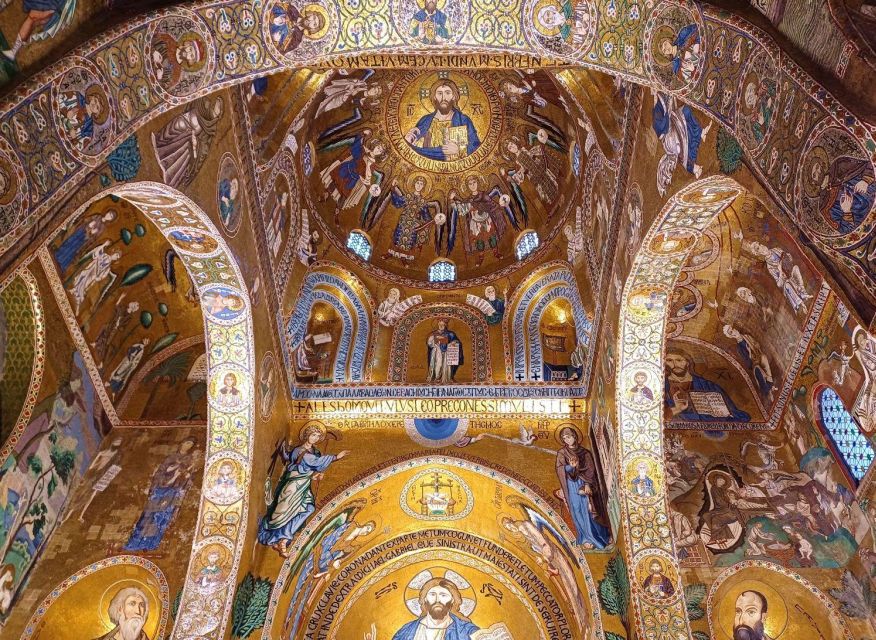
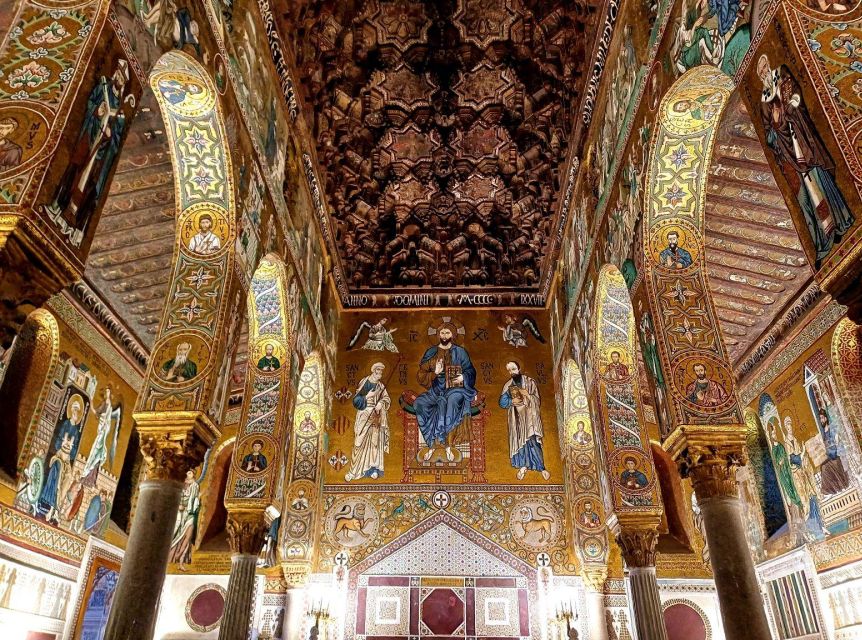
Palermo has plenty of grand churches, but the Palatine Chapel has an unusual visual balance. The walls carry Byzantine mosaics, the ceiling reflects Islamic design, and the floor uses marble inlays linked to the Romanesque tradition. These elements do not feel like separate exhibits. They occupy the same room, built for a Norman king who wanted Palermo to look like the center of a powerful Mediterranean kingdom.
The chapel was built in 1140 by Roger of Hauteville, the first king of Sicily. That date matters because this was not simply a place for private prayer. The chapel also announced royal power. The king’s residence and chapel were connected, allowing faith, ceremony, and government to share one setting.
The mosaics are the visual reason to come. Gold catches the light across the walls, and the biblical scenes form a narrative that your guide can explain in order. Fabrizio has been praised for describing both the details of the mosaic cycle and the story it tells, which is useful when the images begin to blur into one large field of gold.
You can visit the chapel without a guide, but the arrangement is easier to understand when someone explains what you are looking at. The Italian-only format is the key limitation. If you do not understand Italian, you can still see the decoration, but you will lose much of the historical and religious explanation that gives the visit its purpose.
More palaces to tour around Italy:
- Venice: Doge’s Palace Reserved Entry Ticket
★ 4.6 · 42,716 reviews - Doge’s Palace & St. Mark’s Basilica with Terrace Access Tour
★ 4.7 · 10,697 reviews - Venice: Doge’s Palace and St Mark’s Basilica Walking Tour
★ 4.4 · 6,291 reviews
Entering the Royal Palace, from ancient fortress to royal seat
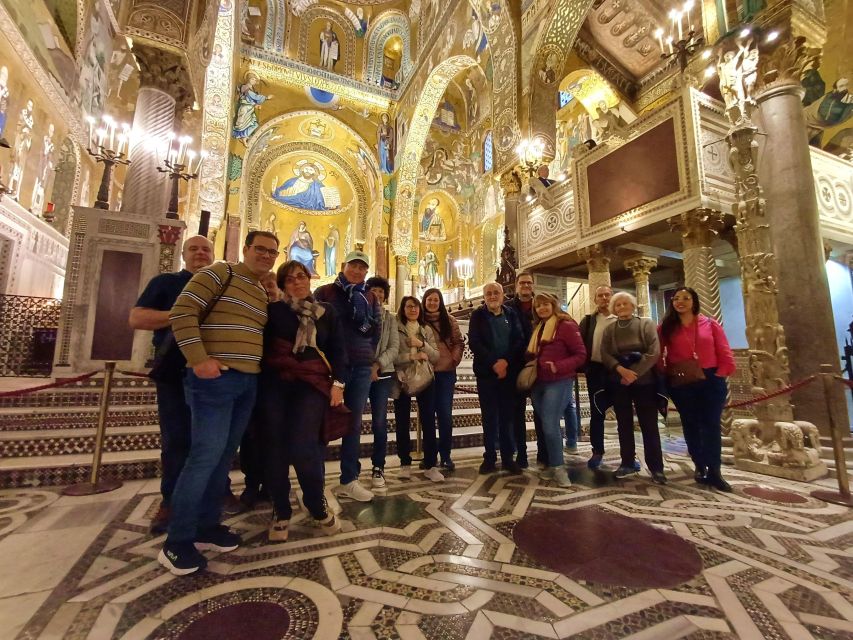
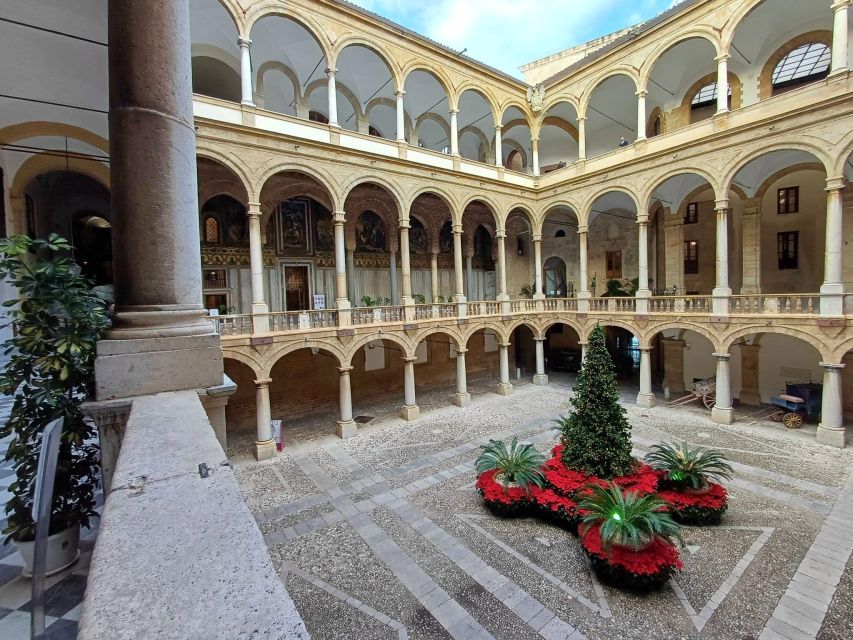
The Royal Palace, also called the Palazzo dei Normanni, has a long and complicated past. Its site began as a fortified settlement when Palermo was founded, and later rulers expanded it into a royal residence. The Norman kings made it their main home and used it for the court, treasury, and royal workshops.
That long timeline gives the palace more weight than a single-period monument. You are not visiting only a Norman building. The palace later served as the seat of the Viceroy, the Court of the Inquisition, and the Sicilian Parliament. Under Frederick II, it became associated with the Sicilian Poetic School, an important moment in the island’s literary history.
A good guide helps you connect these changes. Fabrizio, whose recent tours received particular praise, is described as precise, engaging, and able to explain the palace, the chapel’s mosaic cycle, and the royal rooms as one connected story. Claudio is also praised for an energetic and sustained presentation. Those names are useful when you reserve, though the assigned guide may vary.
The palace is especially valuable for visitors who want to understand Sicily’s mixture of cultures and rulers. The building’s history is not tidy. Norman kings, German imperial power under Frederick II, religious courts, viceroys, and parliament all left their mark. That makes the visit less about admiring one style and more about seeing how Palermo’s center of power changed over time.
The royal rooms and the Chinese-style queen’s chamber
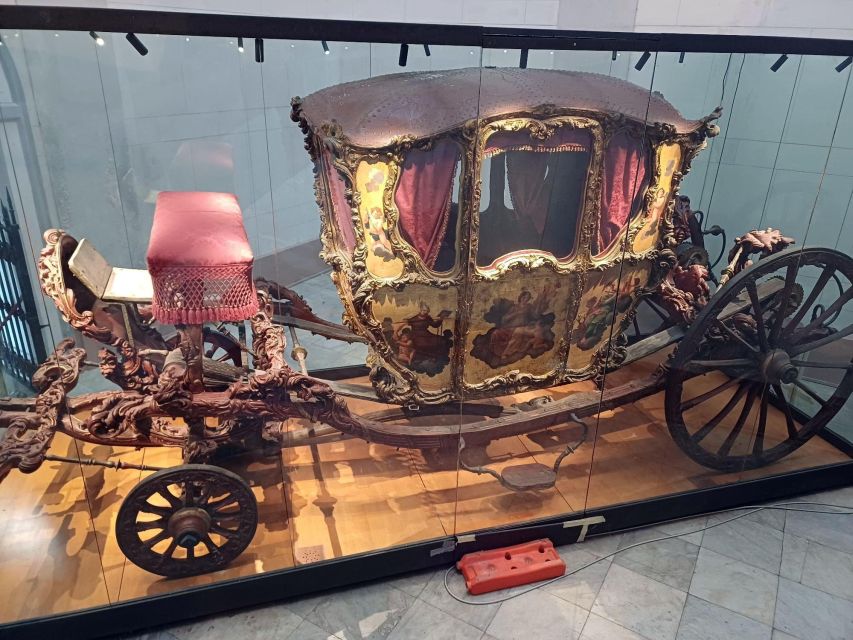
The chapel receives the strongest attention, but the royal rooms add a different kind of interest. Here you move from public religious display to spaces connected with court life. The supplied visit details specifically include a Chinese-style queen’s chamber, an unexpected feature in a palace best known for Norman and Byzantine decoration.
That room is a useful reminder that royal taste did not stop at the medieval period. A Chinese-style interior inside the Royal Palace gives you a glimpse of later fashion and the changing world of the court. It also prevents the palace from feeling like a single frozen chapter in Sicilian history.
Do not expect every room to deliver the same visual drama as the chapel. The mosaics are the unforgettable centerpiece, while the royal chambers help explain how the palace functioned as a residence and working seat of power. The guide’s explanation is important here because the rooms need context to make sense.
The route may also require you to remain on your feet for a good part of the visit. One French-language assessment specifically warns that there are few places to sit. If standing for long periods is difficult, ask about the exact route and breaks before booking.
Frederick II and the palace’s intellectual side
Frederick II is one of the figures linked most closely with the palace’s later importance. He was both king and emperor, and the palace hosted the Sicilian Poetic School during his rule. That gives the building a cultural role beyond administration and ceremony.
The palace was a place where rulers displayed authority, but it was also a setting for writing, learning, and court culture. A guide who explains this part of the story can make Frederick’s connection feel more substantial than a name on a plaque.
I particularly like this angle because it broadens the visit. You see the mosaics and royal interiors, but you also learn how the palace shaped the public and cultural life of Sicily. The site’s importance comes from this combination of architecture, government, religion, and literature.
The wording used to describe Frederick II is grand, but the useful point for you is simple: his connection helps explain why the Royal Palace mattered far beyond its walls. It was a center of power and ideas in medieval Sicily.
Same royal city, another way in:
- Legendary Venice: Doge’s Palace, St Mark’s & VIP Terrace Access
★ 4.5 · 5,033 reviews - Florence: Palazzo Vecchio Entrance Ticket & Audioguide
★ 4.4 · 4,822 reviews - Florence: Entrance Ticket to Pitti Palace
★ 4.5 · 4,528 reviews - Venice: Doge’s Palace and St. Mark’s Basilica Tour
★ 4.5 · 3,734 reviews
What the $14 price really covers
At $14 per person, this is an inexpensive way to add a live explanation to your palace visit. But it is not the full cost of entry. The guided service includes a professional tourist guide, while the admission ticket for the Royal Palace and Palatine Chapel must be purchased separately.
You can buy the ticket at the Royal Palace ticket office or online through the official website. I would handle that separately rather than assuming the $14 reservation includes access. The meeting point is in front of the ticket office, at a kiosk about 100 meters from the palace entrance, so allow time to find the correct spot and sort out admission.
The value depends on your language needs. If you speak Italian, $14 is a reasonable fee for a guide who can connect the chapel’s decoration with the palace’s political story. If you do not speak Italian, the price becomes harder to justify because the main service is spoken explanation, and there is no indication of an English or French option.
The booking terms are flexible. You can reserve now and pay later, and cancellation is free up to 24 hours before the activity for a full refund. The activity is listed as valid for one day, with available starting times shown during booking.
A practical look at the visit
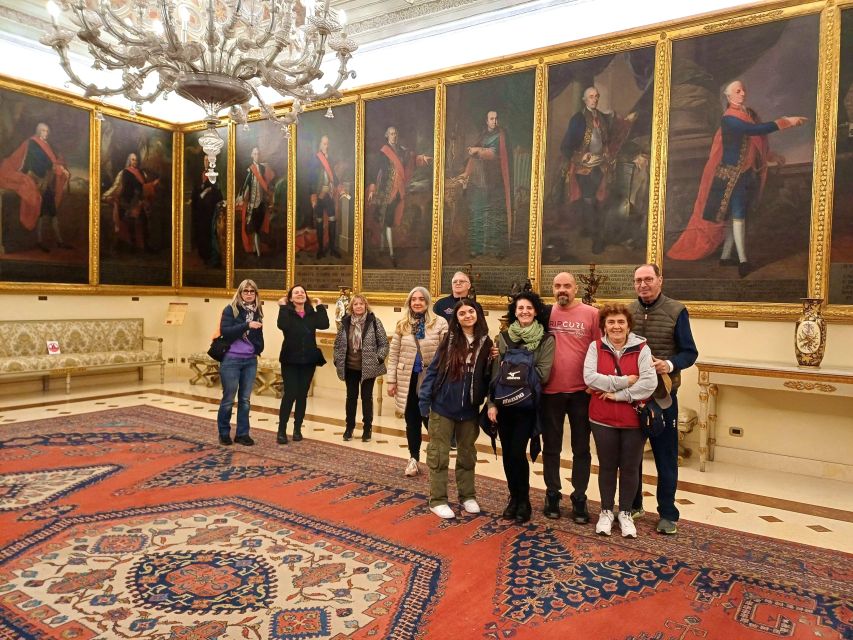
You meet in front of the ticket office, not directly at the palace entrance. The meeting point is a kiosk roughly 100 meters away, so read the location carefully and do not wait at the wrong gate.
From there, the visit covers the Royal Palace and the Palatine Chapel. The guide’s explanation should connect the palace’s 2,700-year timeline with the Norman rebuilding, the royal court, Frederick II, and the later roles of the building. Inside the chapel, the focus shifts to the gold mosaics, biblical scenes, muqarnas ceiling, and marble floor.
The order of the rooms may vary, and no fixed route length is supplied. You should therefore think of this as a guided visit to the palace complex rather than a tightly timed sequence of stops.
Wear clothing that covers your shoulders and knees. Shorts, short skirts, and sleeveless shirts are not allowed. This is both a site rule and a practical point: dress for a religious building even if the palace rooms form a large part of the visit.
The tour is described as wheelchair accessible in one part of the information, but another section says it is not suitable for wheelchair users. That is a real inconsistency, not something to ignore. If you use a wheelchair, contact the provider before booking and confirm the current route, entrances, and access conditions.
The Italian-only format is the biggest decision
This tour is conducted only in Italian. That fact should guide your booking decision more than the low price.
For an Italian speaker, the format may be a strength. You receive a live explanation from a guide and can ask questions in the same language. The praise for Fabrizio points to the type of service to expect: precise descriptions of the palace, the chapel’s narrative mosaics, and the royal rooms. Claudio is described as engaging and tireless, suggesting an active presentation rather than a short introduction.
For a non-Italian speaker, the visit is still visually worthwhile, but the guided portion may offer limited value. You could buy an admission ticket and see the chapel’s decoration independently, but the historical connections would be harder to follow without understanding the guide.
The experience has an overall rating of 4.8 from 183 reviews, with especially strong comments about guide preparation, clarity, and enthusiasm. That pattern matters because the service is mainly about interpretation. It suggests the guide quality is a central part of the purchase, not an extra detail.
Who will enjoy this palace tour most
I would recommend this experience to:
- Italian-speaking visitors who want more than a quick look at the mosaics
- First-time visitors to Palermo who want the city’s royal and political story in one place
- Art and architecture fans interested in Byzantine, Islamic, and Norman influences together
- History-minded visitors curious about Roger of Hauteville, Frederick II, and the Sicilian Parliament
- Anyone who prefers a live guide to reading signs alone
I would be more cautious if you dislike standing, need frequent seating, or do not understand Italian. The chapel is visually powerful, but the tour’s explanatory value depends on language. The clothing rules also mean you should not arrive in beachwear.
Families may appreciate the bold gold decoration, but the guide’s Italian historical explanation may be difficult for younger children who do not speak the language. Since the activity is described as lasting one day rather than giving a precise tour length, check the available start time and schedule before pairing it with another fixed appointment.
A few ways to get more from the chapel
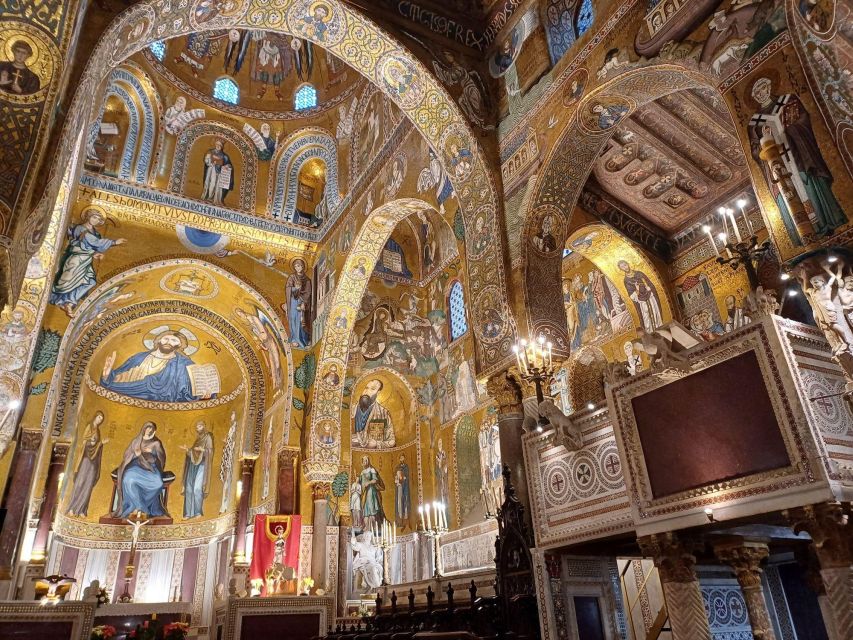
Give yourself time to look up. The ceiling is not a minor detail beside the mosaics. Its muqarnas design reflects Islamic influence and helps explain why the chapel feels different from a standard medieval European church.
Then look across the room at the relationship between the ceiling, walls, and floor. The mosaics, marble inlays, and ceiling belong to different artistic traditions, yet the room was designed as a unified royal statement.
Listen for the story within the mosaics rather than treating them as decoration only. The guide can explain the biblical cycle and help you follow its sequence. This is one of the strongest reasons to choose the guided version.
Finally, connect the chapel to the palace. The chapel was not an isolated work of art. It was part of the residence of rulers who controlled government, religion, money, and culture from this complex.
Should you book the Royal Palace and Palatine Chapel tour?
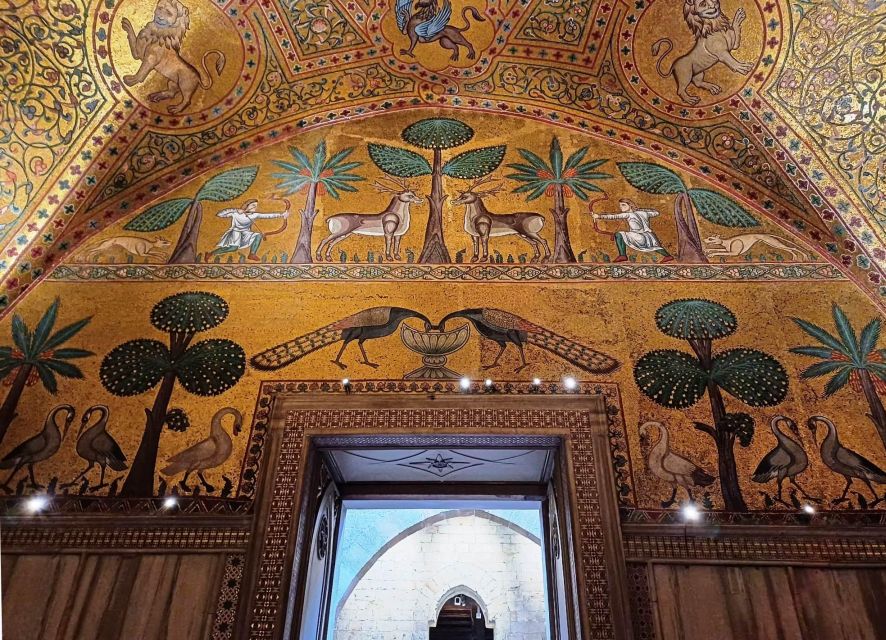
Book it if you speak Italian and want a focused explanation of Palermo’s most important royal site. The $14 guide fee is modest, the chapel is extraordinary, and the palace adds layers of Norman, imperial, religious, and parliamentary history.
Before paying, confirm the separate admission price and buy the palace ticket through the ticket office or official website. Also confirm the guide language, dress requirements, and accessibility if any of those points affect your plans.
Skip this particular guided service if you need English or another language. You can still visit the Royal Palace and Palatine Chapel, but this activity’s main value comes from the Italian commentary. For Italian speakers who can manage a period of standing, it is a practical and fairly priced way to see the gold mosaics with proper context.
FAQ
Is the entrance ticket included in the $14 price?
No. The $14 price covers the professional guide service only. You must buy the Royal Palace and Palatine Chapel admission ticket separately at the ticket office or through the official website.
What language is the tour conducted in?
The tour is conducted only in Italian. No other tour language is provided in the available information.
Where is the meeting point?
Meet in front of the ticket office, at a kiosk about 100 meters from the entrance to the Royal Palace.
What will I see during the visit?
You will visit the Royal Palace and the Palatine Chapel. The experience includes the Byzantine gold mosaics, the Islamic muqarnas ceiling, the Romanesque-style marble floor, royal rooms, and a Chinese-style queen’s chamber.
Who are the named guides?
Fabrizio and Claudio are named guides associated with recent departures. Fabrizio is noted for explaining the palace, mosaic cycle, and royal rooms, while Claudio is described as engaging and energetic.
What clothing is required?
Shorts, short skirts, and sleeveless shirts are not allowed. Wear clothing that covers your shoulders and knees.
Is the tour suitable for wheelchair users?
The information is inconsistent. One section describes the activity as wheelchair accessible, while another says it is not suitable for wheelchair users. Contact the provider before booking to confirm the current access arrangements.
Fresh palace tours around Italy
- Foligno and the frescoes of Palazzo Trinci, a masterpiece of the Middle Ages – Private Tour★ 4.5 · 2 reviews
- Venaria Royal Palace and Gardens in Turin★ 4.0 · 12 reviews
- Tour of Doge’s Palace and Gondola Ride★ 4.5 · 60 reviews
- Full Venice Walking Tour: Doge’s Palace and St. Mark’s★ 4.6 · 32 reviews
- The places of the Medici family: the Palace and the Chapels★ 4.7 · 12 reviews
- St. Mark’s Basilica, Doge’s Palace & Glass Factory Tour★ 4.1 · 216 reviews
- Venice: St Mark’s Basilica and Doge’s Palace Private Tour★ 4.8 · 56 reviews
- Venice: Doge’s Palace and St. Mark’s Basilica Guided Tour★ 4.6 · 458 reviews
Italy Palace Tours: the shortlist.
Doge’s Palace & St. Mark’s Basilica with Terrace Access Tour
Read our review →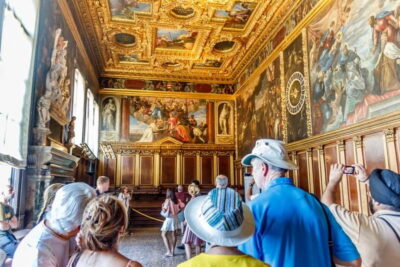
Doge’s Palace and St Mark’s Basilica Walking Tour
Read our review →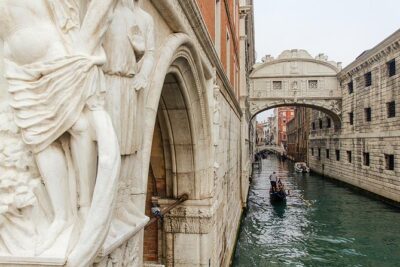
Legendary Venice: Doge’s Palace, St Mark’s & VIP Terrace Access
Read our review →
Venice In a Day: St Mark’s, Doges Palace Gondola Ride & City Tour
Read our review →
St. Mark’s Basilica & Doge’s Palace Tour with Ticket
Read our review →This visit also appears in