
Review · VIETNAM
City Tour By Motorbike w/ War Museum & Reunification Palace
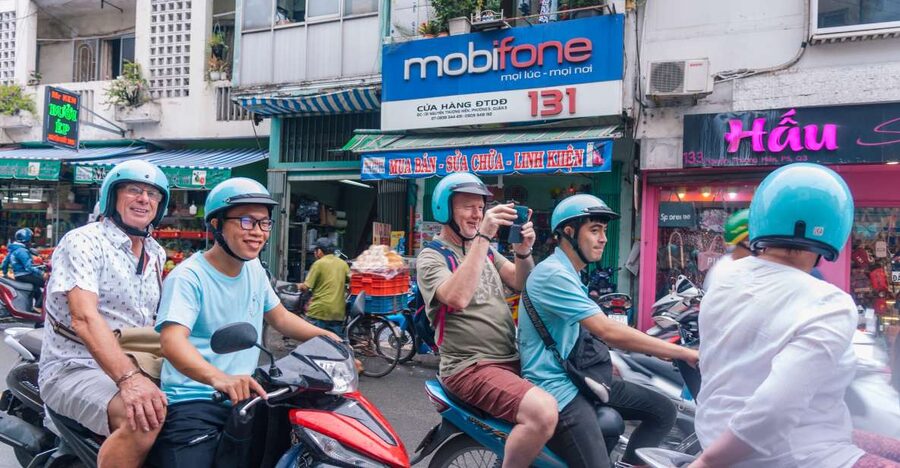
Ho Chi Minh City makes more sense from the back of a scooter. You move past French facades, crowded markets, old pagodas, and modern streets without losing four hours to traffic. The motorbike format is the main draw, giving you a close look at city life while a local driver handles the road.
I like the way this tour joins the War Remnants Museum and Reunification Palace with the city’s grand colonial buildings. I also like the local point of view. Guides such as Tris, Nhi, Brandon, and Zayne bring personal stories and younger Vietnamese perspectives to places that can feel formal or distant.
The main consideration is comfort. Four hours on a scooter means heat, road noise, and constant movement. You ride behind a driver rather than operate the bike yourself, but you should still wear comfortable clothes, secure loose items, and expect a quick pace between stops.
Key points to know before you book
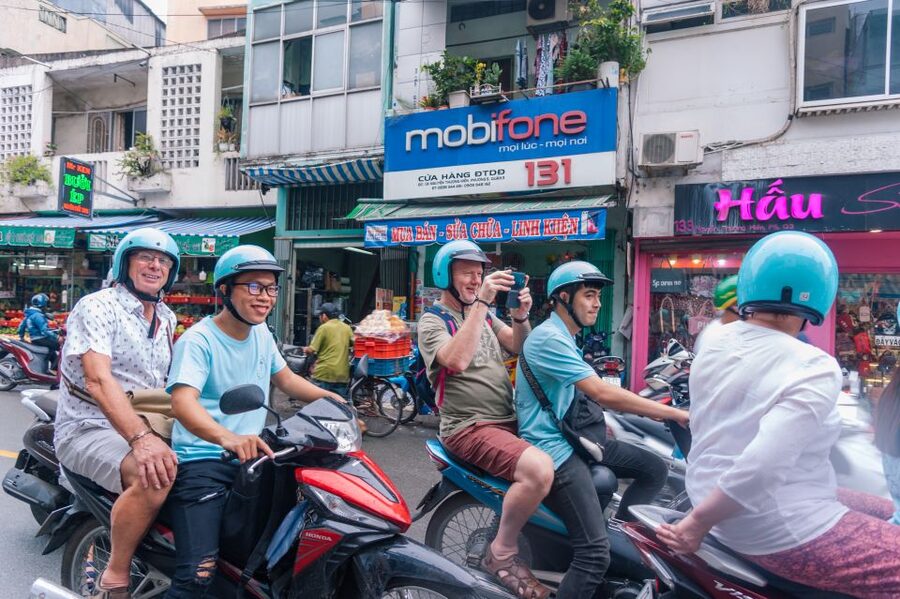
- Scooter travel saves time: Your driver can move between central sights faster than a walking group, especially when traffic is heavy.
- War history gets local context: The museum and palace are not just photo stops. Your guide explains the conflict and its effect on Vietnam.
- French colonial Saigon is part of the route: See Notre-Dame Cathedral, the Central Post Office, the Opera House, and City Hall.
- The drivers receive strong praise for safety: Guides including Michael, Katherine, Thu, and Zayne are noted for careful handling and friendly conversation.
- The price includes key admission fees: The $28 cost covers the War Remnants Museum, Reunification Palace, scooter transport, guide, and kumquat juice.
- Dress rules matter: Cover your knees and shoulders for the pagoda, and avoid shorts, short skirts, and sleeveless shirts.
Why a scooter is the smart way to see central Saigon
Ho Chi Minh City is compact on a map but slow on the street. Walking between the Central Post Office, Ben Thanh Market, the War Remnants Museum, and Reunification Palace can eat up much of a morning. A scooter lets you see more without turning the tour into a long march.
You sit behind a driver, so you do not need a motorbike license or road experience. Your driver handles the traffic while you watch the streets open and close around you. That is a useful arrangement in a city where traffic appears to move by instinct, patience, and a great deal of horn use.
The ride itself is part of the experience. You pass shopfronts, side streets, colonial buildings, and local neighborhoods rather than seeing the city only through a taxi window. One guide took guests through parts of District 3, including local homes and a Buddhist pagoda, when time allowed. That kind of detour gives the tour more personality, though extra stops depend on traffic and the day’s schedule.
Safety is an important part of the decision. The strongest praise goes to the drivers’ caution and smooth handling. Guests specifically felt comfortable with drivers such as Michael, Katherine, Richard, Katy, and Zayne. Still, a scooter is an open vehicle. If you dislike traffic, heat, or sitting on a narrow seat for several hours, a car-based city tour may suit you better.
More palace museums around the world:
- Venice’s Best: Basilica, Doge’s Palace, Gondola & History Gallery
★ 4.5 · 2,478 reviews - Royal Palace & Prado Museum Skip the Line Guided Tour
★ 4.5 · 1,347 reviews - Venice: City Pass with Museums including Doge’s Palace
★ 4.1 · 1,020 reviews
Reunification Palace puts the war in a physical place
Reunification Palace is one of the most useful stops for understanding modern Vietnam. It was the residence of the President of the Republic of Vietnam until April 30, 1975, the date associated with the end of the Second Indochina War.
The building gives the history a physical setting. You see the former seat of South Vietnamese power rather than hearing only a list of dates. The palace’s role helps explain why this location matters so much to the country’s story.
Admission is included, which makes the stop better value than a quick exterior photo. Your guide can help explain the palace’s political role and connect it with the War Remnants Museum later in the visit. Take time to listen here. The value is not just the building itself, but the way it frames the events you will see documented elsewhere.
The palace can feel formal and spacious compared with the lively streets outside. That contrast is useful. You move from the noise of the city into a place tied to government, military decisions, and the transfer of power.
The War Remnants Museum is powerful, difficult, and essential
The War Remnants Museum is the emotional center of the tour. It contains artifacts, photographs, and images documenting the Second Indochina War. The displays present the conflict from a Vietnamese point of view, so you should expect a strong national perspective rather than a neutral textbook account.
That viewpoint is precisely why a local guide helps. Guides such as Nhi, Tris, Bean, and Lux have been praised for explaining the history clearly and answering questions. You can ask about the context behind what you see instead of moving through the exhibits without a frame of reference.
Some material is difficult. Photographs of war, injury, and its long effects are not easy viewing. Give yourself time and do not treat this as a quick box to tick. If you prefer a lighter city tour, this stop may feel heavy, but leaving it out would remove one of the most important parts of the experience.
The museum and Reunification Palace are the two included admissions that give the tour its historical weight. Together, they help you compare political power inside the palace with the human cost shown in the museum.
Notre-Dame Cathedral and the Central Post Office show French Saigon
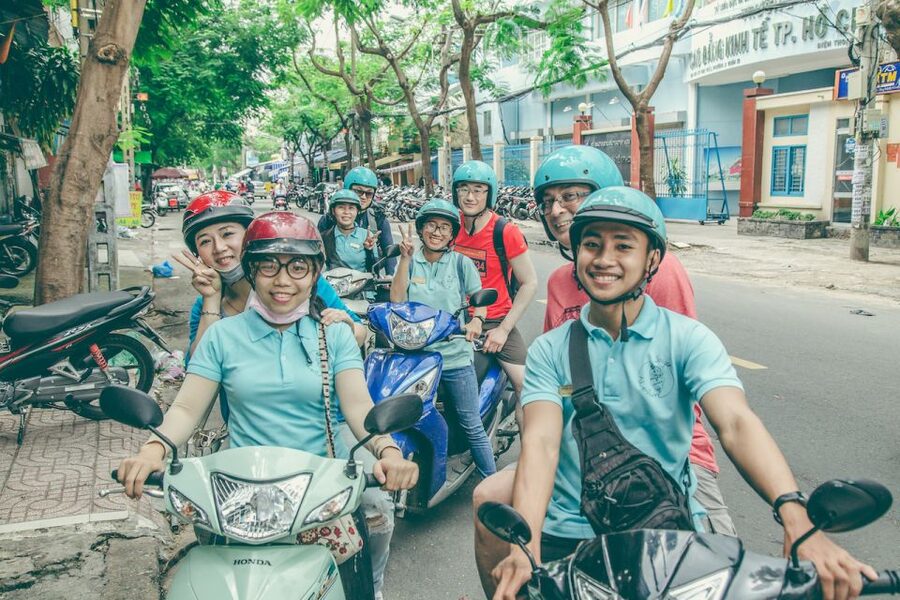
The route then shifts from war history to architecture. Saigon Notre-Dame Basilica was built by French colonists between 1863 and 1880. It was first called the Church of Saigon, or l’Eglise de Saïgon.
The cathedral is an obvious city landmark, but its setting makes it more interesting than a stand-alone monument. You see it as part of the old colonial center, alongside the Central Post Office and other grand civic buildings. The stop is mainly about exterior views and the city’s French-built identity.
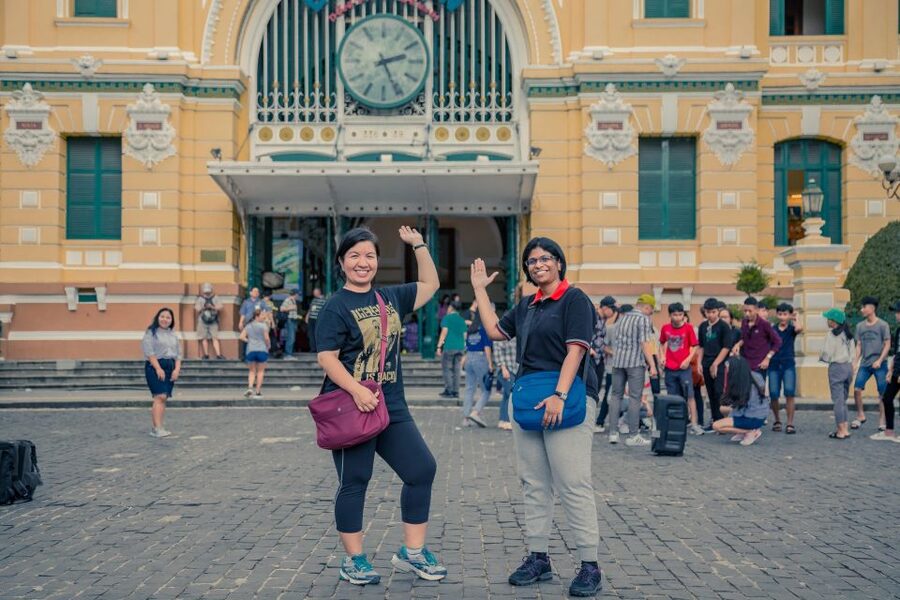
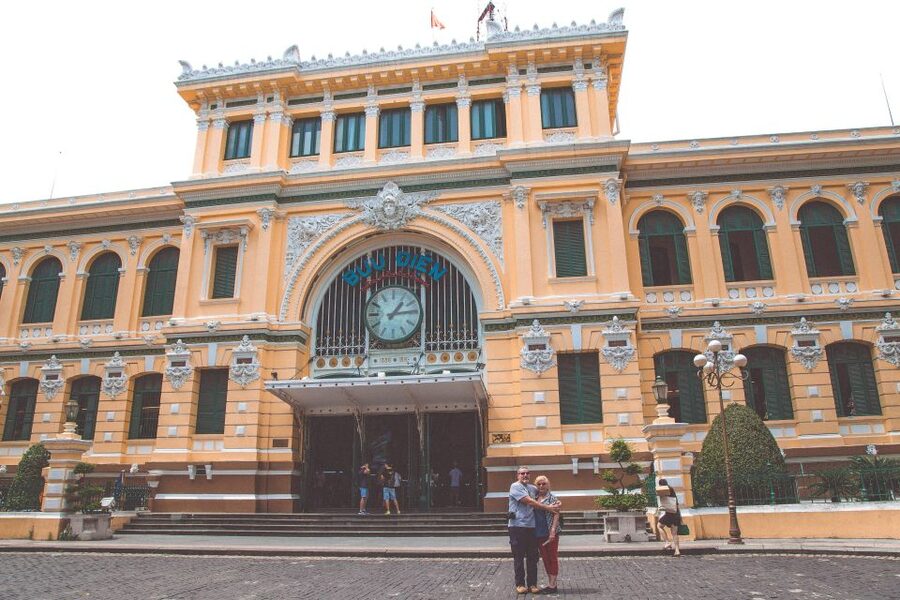
The Central Post Office was constructed between 1886 and 1891. Its design brings together Gothic, Renaissance, and French colonial elements. I like this stop because it still functions as a public place rather than feeling like a sealed museum. You can appreciate the architecture while watching ordinary city business continue around you.
Your guide can point out details you might pass without noticing. This is also a good place for photographs, and several guides have been praised for taking pictures during the tour. Bring a phone or camera, but keep it secure on the scooter between stops.
More palaces to tour around the world:
- Venice: Doge’s Palace Reserved Entry Ticket
★ 4.6 · 42,716 reviews - Paris: Versailles Palace and Gardens Full Access Ticket
★ 4.6 · 41,579 reviews - Granada: Alhambra & Nasrid Palaces Tour with Tickets
★ 4.7 · 19,801 reviews - Sintra: Pena Palace and Park Entrance Ticket
★ 4.2 · 17,410 reviews
City Hall, the Opera House, and Nguyen Hue add modern Saigon
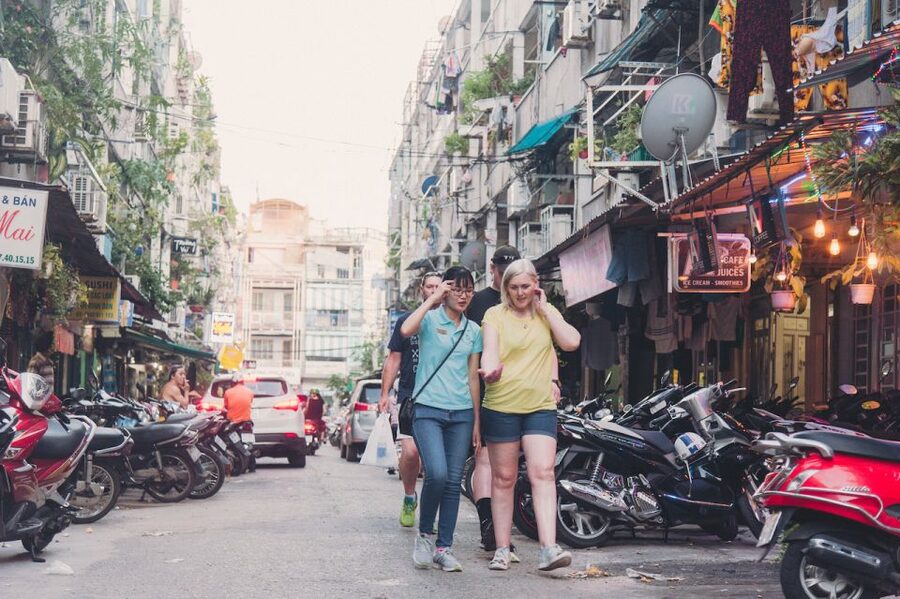
The Ho Chi Minh City People’s Committee building, often called City Hall, and the Opera House give you more examples of French colonial design. They help fill out the picture of central Saigon beyond the cathedral and post office.
The Opera House is especially useful as part of a short architecture circuit. You do not need to spend a long time at each building to understand the visual theme. The scooter keeps the pace moving, so you see several landmarks in one morning rather than choosing only one or two.
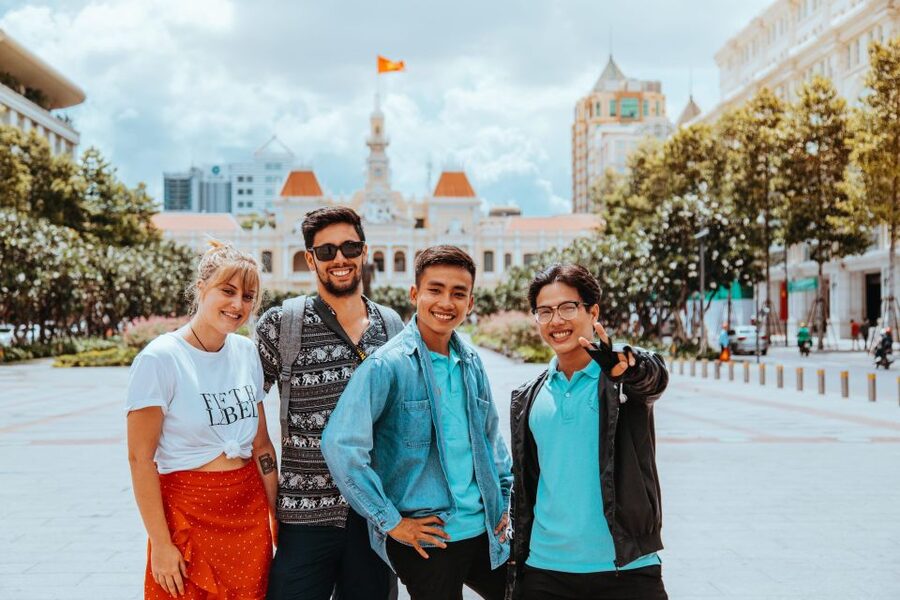
Nguyen Hue Walking Street brings the tour into a more open civic space. It gives you a change from narrow traffic corridors and lets you see a central gathering place in the city. The route combines official buildings with public streets, which makes the city feel more varied than a collection of old facades.
Do not expect a long architectural lecture at every stop. The tour covers a lot in four hours. You get useful explanations and a broad view, but anyone wanting a detailed study of colonial architecture should plan extra time in the city.
Jade Emperor Pagoda requires respectful clothing
Jade Emperor Pagoda brings a religious setting into the route. It is a different experience from the palace, museum, and colonial buildings, and it gives you a look at another part of Ho Chi Minh City’s cultural life.
The clothing rules are clear. You must cover your knees and shoulders to enter temples and pagodas. The tour information also asks you not to wear shorts, short skirts, or sleeveless shirts. Take this seriously, since unsuitable clothing can make the stop awkward or prevent entry.
Wear light, comfortable clothes that still provide coverage. Comfortable shoes are also recommended. You may be sitting on the scooter for much of the tour, but you will get on and off at several stops.
The pagoda is one reason this is more than a standard landmark ride. You move from colonial Christianity to state history, war memory, and local religious practice in a single half-day.
Ben Thanh Market gives the tour a noisy local finish
Ben Thanh Market is one of Ho Chi Minh City’s oldest markets. It existed before the French invasion of Saigon and began as a place where small traders exchanged goods near the Ben Nghe River and a nearby harbor.
Its age matters, but the practical appeal is simple: this is where you see commerce at close range. The market adds food, goods, bargaining, and movement to a route that otherwise includes formal buildings and museums.
You may have time to look around, but do not expect a long shopping session. The tour has several major stops, and the market can be crowded. Keep personal items close and remember that personal purchases are not included in the price.
A guide can help you notice more than the market’s main entrance. Isabelle’s guide showed her markets she would not have found alone and introduced her to several local drinks. That points to the value of asking questions. If you want to know what a product is or how a drink is served, ask your guide rather than guessing.
What the guides add to the four-hour route
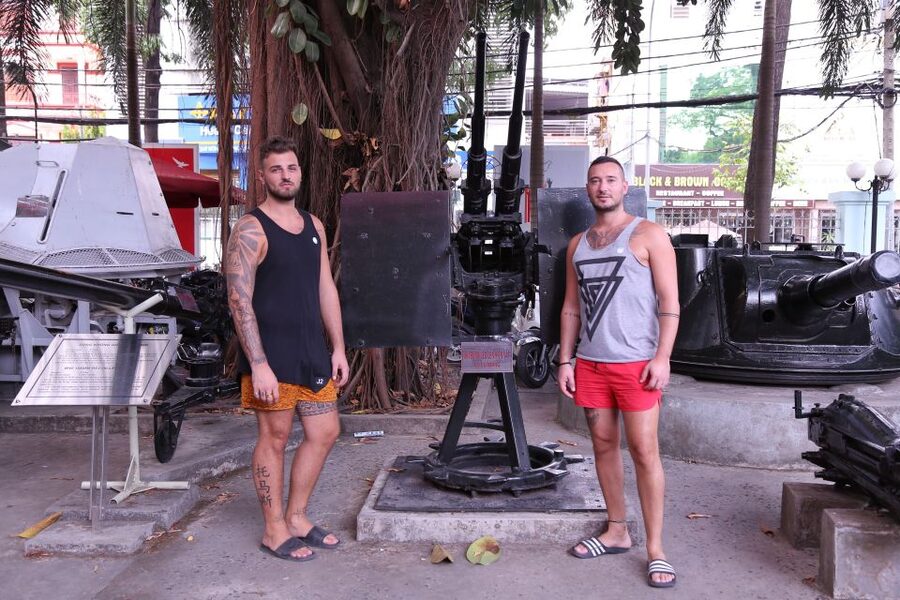
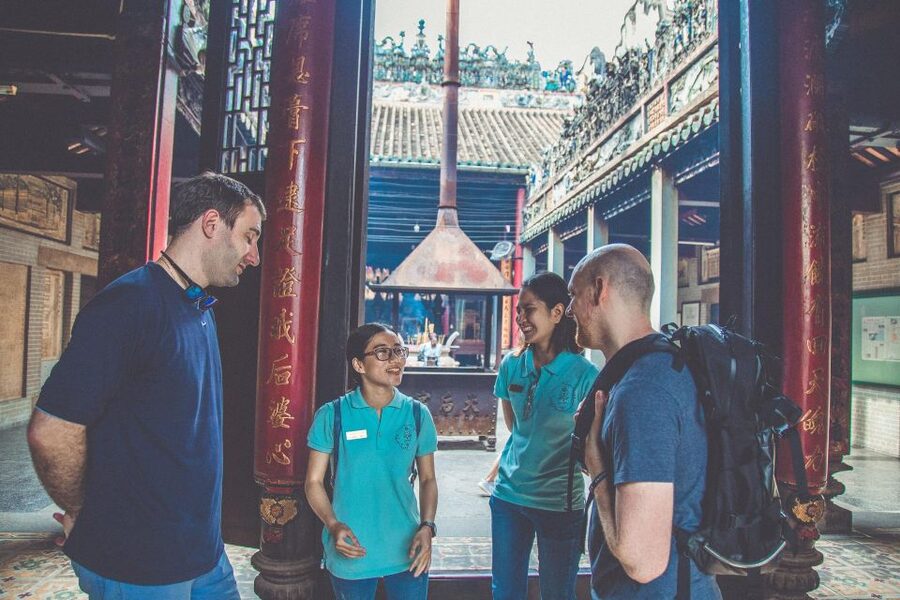
The guide quality is one of the tour’s strongest features. English and Vietnamese are available, and the best guides do more than repeat dates. They explain places in plain language, answer questions, and connect national history with everyday life.
Tris is noted for clear English and strong explanations at the main attractions. Nhi is praised for her facts, friendly manner, and careful driving team. Brandon is described as punctual, kind, and willing to add stops when traffic left extra time.
Zayne offers another useful kind of conversation. His experience and ambitions gave a visitor a view into the concerns of a younger Vietnamese person. That personal exchange can be as memorable as a building, especially if you ask about daily life rather than only historic dates.
Guide assignments can vary, so you should not book expecting one named person. Names such as Bean, Kevin, Johnny, Michael, Katherine, Thu, Tony, Long, Richard, and Katy appear among the team members praised for clear explanations, friendly service, photo help, or safe driving.
The guides also shape the pace. If you ask many questions, the tour may feel more conversational. If you want to cover every listed sight, keep an eye on the clock. Extra stops are possible when traffic is light, but they are not guaranteed.
Is $28 good value for this much Saigon?
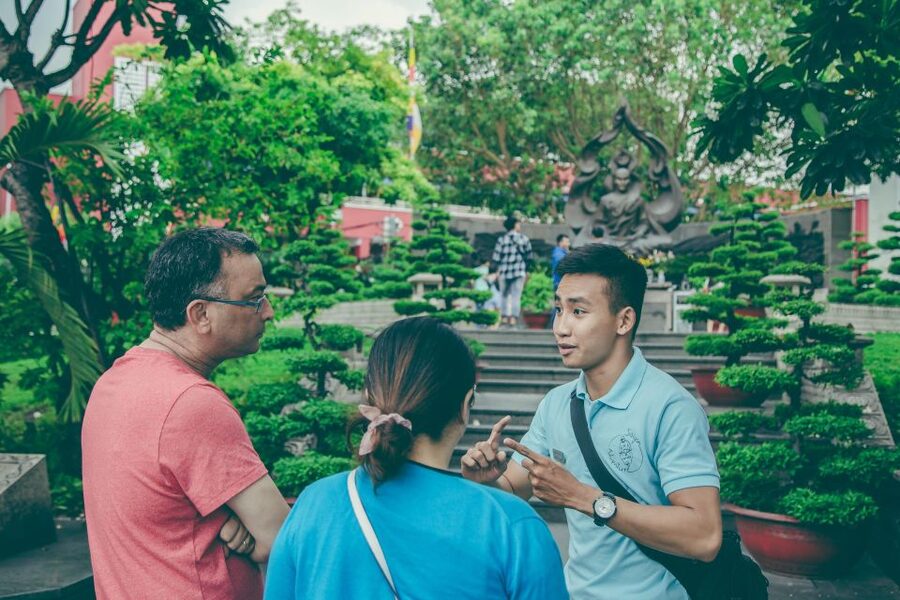
At $28 per person, the price is strong for a four-hour private-driver-style sightseeing experience. It includes an English-speaking guide, scooter with driver, entrance fees for the War Remnants Museum and Reunification Palace, and a kumquat juice.
The entrance fees matter. If you paid for transport and the two main historical sites separately, the total would rise. You are also paying for the time saved by moving between districts without arranging several rides yourself.
A private tour option is available if you want a more personal pace. The standard arrangement may suit solo visitors or couples who want a social, efficient outing, while a private option gives you more control over questions and timing.
Pickup is included only in Districts 1 and 3. If you stay elsewhere, you may pay an extra charge or go to the meeting point at Cyclo Resto, 133 Nguyen Du, Ben Thanh Ward, District 1. Check this before booking, since the meeting point can change the practical value of the tour.
Cancellation is free up to 24 hours before the start, and you can reserve now and pay later. Availability and starting times should be checked for your chosen date.
Who should book this motorbike city tour?
I would choose this tour if I had limited time in Ho Chi Minh City and wanted both history and street-level views. It is especially useful early in a visit because it gives you a map of the central sights and helps you decide where to return later.
It also suits solo visitors who want a local guide, couples who enjoy moving around by scooter, and first-time visitors who do not want to work out city transport on their own. The 91 percent perfect score for transport fits the experience’s main strength: getting around efficiently and safely with a local driver.
I would think twice if you need a slow, quiet morning or if you are uncomfortable on two wheels. The museum content may also be intense for some people. Families should check the clothing requirements and decide whether younger children would manage the scooter ride and war exhibits comfortably, since no child-specific arrangements are provided.
My practical verdict
Book this tour if you want a fast, personal introduction to Ho Chi Minh City and you are comfortable riding behind a scooter driver. The best parts are the careful local drivers, the range of stops, and the link between the War Remnants Museum, Reunification Palace, and daily city life.
Choose a different format if you want long museum visits, a quiet vehicle, or a detailed architecture tour. For most first-time visitors with only half a day, though, the $28 price gives you a lot: major sights, useful historical context, local conversation, included admissions, and a memorable ride through Saigon’s streets.
FAQ
How long does the motorbike city tour last?
The tour lasts four hours.
How much does the tour cost?
The listed price is $28 per person.
What places are included?
The route includes Reunification Palace, the War Remnants Museum, Notre-Dame Cathedral, the Central Post Office, Ben Thanh Market, the Opera House, Ho Chi Minh City People’s Committee building, Nguyen Hue Walking Street, and Jade Emperor Pagoda.
Are entrance fees included?
Yes. Entrance fees for the War Remnants Museum and Reunification Palace are included.
Who drives the scooter?
An English-speaking or Vietnamese-speaking guide drives the scooter while you ride as a passenger.
Is hotel pickup available?
Pickup is available in Districts 1 and 3. Pickup from other districts may cost extra, or you can go to the meeting point at Cyclo Resto, 133 Nguyen Du, Ben Thanh Ward, District 1.
What languages are available?
The tour is offered in English and Vietnamese.
What should I wear?
Wear comfortable clothes and shoes. Shorts, short skirts, and sleeveless shirts are not allowed. You must cover your knees and shoulders to enter temples and pagodas.
What is included besides transport and admissions?
The tour includes an English-speaking guide, scooter with driver, entrance fees, and kumquat juice. Personal expenses are not included.
Fresh palace tours around the world
- Bangkok Private Grand Palace Emerald Buddha and Reclining Buddha★ 4.5 · 2 reviews
- Bangkok Markets, Palaces and Temples Excursion★ 5.0 · 8 reviews
- Bangkok Two Temple Tour: Wat Pho, Emerald Buddha & Grand Palace★ 5.0 · 4 reviews
- Bangkok Royal Road – Top 3 Major Monuments (Grand Palace, Wat Pho, Wat arun)★ 4.5 · 111 reviews
- Bangkok Grand Palace and Emerald Buddha Tour★ 4.0 · 91 reviews
- Bangkok’s Landmarks Tour : GrandPalace WatTraimit WatPho WatArun★ 5.0 · 8 reviews
- Private Tour: Grand Palace,Wat Phra Kaew, Museum&Cooking Class★ 5.0 · 7 reviews
- Bangkok Grand Palace & Emerald Buddha Flexible Entry with Audio★ 3.5 · 3 reviews
Vietnam Palace Tours: the shortlist.

2-Day Royal Palace Ha Long Bay & Ti Top Island Cruise
Read our review →
HCM: War Remnants Museum & Independence Palace Walking Tour
Read our review →
Free E-Sim War Remnants Museum & Independence Palace Tour
Read our review →
Vung Tau Full-Day Tour with Beach, Christ Statue & White Palace
Read our review →This visit also appears in