
Review · FRANCE
Guided tour of the Château de Chambord
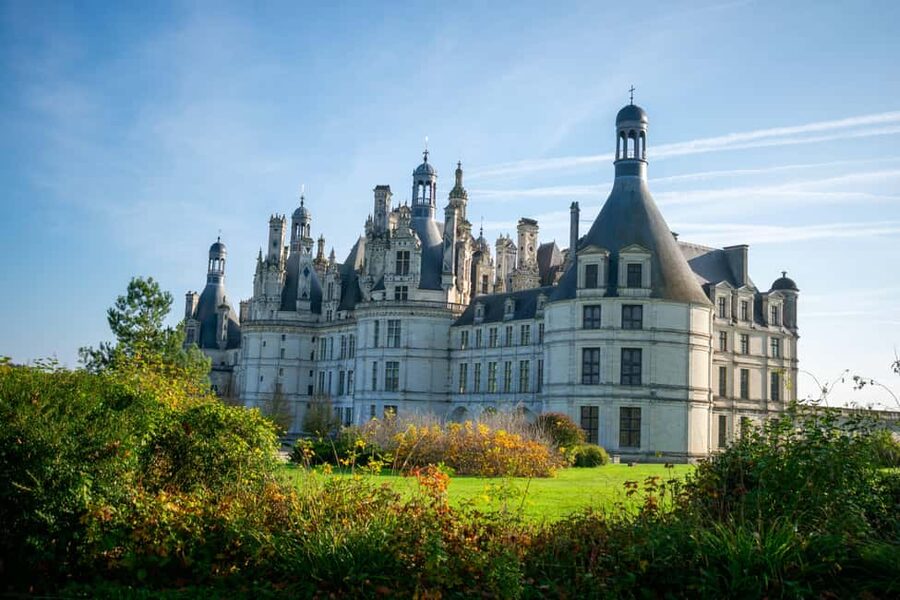
Château de Chambord is not a quiet country manor. It is Francis I’s grand Renaissance gamble, packed with towers, stairways, and architectural surprises. This 90-minute guided visit helps you make sense of the spectacle, with Sarah Guibout-Chatelain using questions and playful role-play rather than a dry speech.
I like the small group of up to 10 and the way the tour finishes on the terraces, where the building’s wild roofline makes more sense. I also like that Sarah’s tour is built for a wide age range, with children and adults invited to take part. The catch is simple: admission to Chambord costs extra, and the tour includes plenty of standing and stairs.
Key points to know before booking
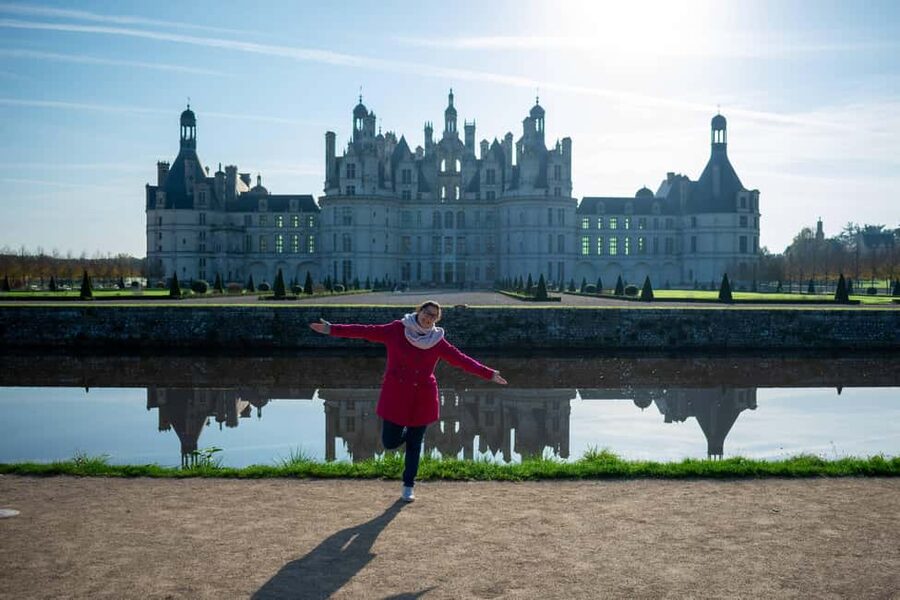
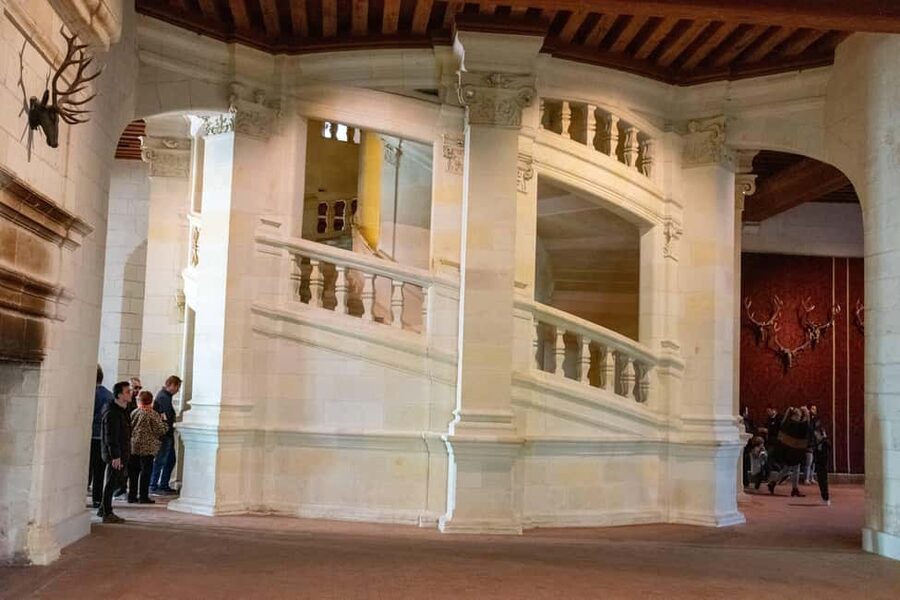
- The double-helix staircase is the star: You can climb the famous staircase while imagining yourself as a French courtier.
- Sarah Guibout-Chatelain leads the visit: She guides in English or French and adds humor, questions, and historical storytelling.
- The castle ticket is separate: Buy admission directly from the Château de Chambord ticket office before you arrive.
- The tour ends on the terraces: You get a useful final look at the roofline and surrounding grounds from above.
- Cold and drafts are part of the deal: The castle is open to the outside in places, so bring warm layers, especially in winter.
- This is not a step-free visit: You will walk, stand, and climb stairs for 90 minutes, with no elevator for the upstairs section.
Why Chambord makes more sense with a guide
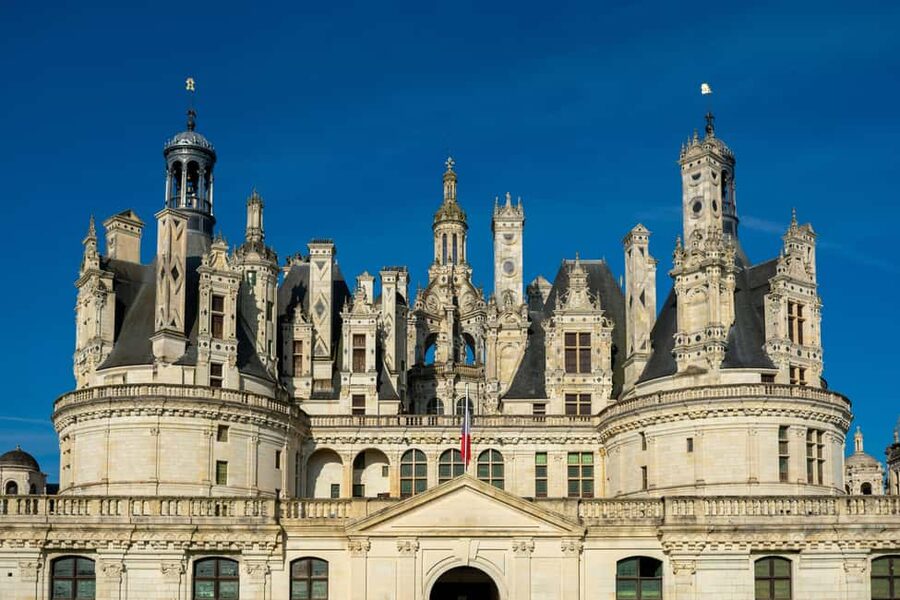
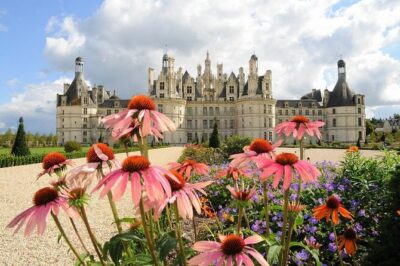
Chambord can be dazzling and confusing at the same time. You see a huge Renaissance façade, a forest of chimneys, and a roof crowded with towers, but the building’s purpose and story are not always clear at first glance.
That is where this tour earns its place. Sarah frames the château around Francis I and his bold plan to create what became known as the Jewel of the French Renaissance. You are not simply pointed toward a room and given a date. You are asked to think about the people who built, used, and admired this remarkable project.
I especially like the interactive approach. Sarah asks questions, invites you to picture yourself as a member of the French court, and uses the staircase as part of the lesson. That keeps the visit moving and gives children something to do besides follow an adult from room to room.
You should still have realistic expectations. This is a 90-minute introduction, not a full-day study of every room and architectural detail. If you want to examine the château at your own pace, you will need time before or after the tour.
The strong rating of 4.9 from 25 bookings fits the experience described here. The most consistent praise centers on Sarah’s enthusiasm, clear communication, humor, and ability to make the building’s past feel vivid. One French booking described the visit as a way to make a leap back in time, while another praised the way Sarah added life to an already magnificent site.
More Loire chateau tours around France:
- From Paris: Full-Day Loire Valley Chateaux Tour
★ 4.4 · 1,269 reviews - Loire Valley: Château Royal d’Amboise Entrance Ticket
★ 4.6 · 476 reviews - Château of Azay-le-Rideau Entry Ticket
★ 4.7 · 227 reviews
Meeting Sarah at Château de Chambord
The meeting point is in front of the castle entrance, though the exact starting place can vary with the option you book. Check your booking details carefully rather than assuming that every departure uses the same spot.
Sarah is the named guide for this experience. She offers tours in English and French, so make sure you choose the language that suits your group. Some content may be presented in its original language, a small point worth noting if you are booking for children or anyone who prefers a fully translated visit.
The group is limited to 10 people. That matters inside a building where a large crowd can make it hard to hear or ask questions. A small group also gives Sarah more room to bring people into the conversation, especially during the interactive parts.
Headphones and a microphone are provided. This is useful in a large stone château, where sound can scatter and nearby visitors may create background noise. You should still stay close enough to follow the group, but the audio equipment removes one common problem with guided sightseeing.
Arrive ready to begin at the scheduled time. The supplied information does not promise that late arrivals can be accommodated, and a short tour leaves little room to catch up if you miss the opening story.
Francis I and the idea behind the château
The tour gives you a simple thread to follow: Francis I had an ambitious vision, and Chambord was the result. That story helps turn a grand façade into a human project rather than a pile of stone and decoration.
The château is described as one of Europe’s most prestigious castles and France’s second most visited castle. Those labels tell you that this is a major stop, but they do not explain why it feels so unusual. The guide’s job is to connect the scale of the building with the choices behind it.
Sarah’s style appears to favor quick explanations, humor, and questions rather than long academic speeches. That is a good match for a first visit. You get enough context to understand what you are seeing without spending the full 90 minutes staring at one carved doorway.
I would book this tour if you are arriving with little background on French Renaissance architecture. It is also a smart choice for families, since the guide actively asks for answers and uses imagination as part of the tour.
If you already know Chambord well, the value depends on what you want. Sarah’s personality and presentation may add something fresh, but the short format will not cover every corner of the building.
The double-helix staircase takes center stage

The famous double-revolution staircase is the clearest reason to take this guided visit rather than simply walk around with a basic audio device. Two stairways wind around a central structure, allowing people to move through the building without following the same path in the usual way.
The tour asks you to imagine yourself as a French courtier while using the staircase. That may sound playful, and it is, but it also gives you a practical way to understand how the feature works. You are not just looking at an architectural oddity. You are thinking about movement, status, and life inside a royal château.
This is also the part of the tour where the physical demands become clear. You need suitable shoes, and you should be comfortable climbing steps. There is no elevator for the upstairs visit, and the tour involves walking and standing for the full hour and a half.
The staircase is likely to be a favorite moment for children, but adults should not dismiss the interactive element as a gimmick. Chambord’s design is easier to remember when you take part in it. The guide turns a complicated feature into something you can picture and explain afterward.
More palaces to tour around France:
- Paris: Versailles Palace and Gardens Full Access Ticket
★ 4.6 · 41,579 reviews - Versailles: Skip-the-Line Tour of Palace and Gardens Access
★ 4.7 · 10,429 reviews - From Paris: Versailles Palace & Gardens with Transportation
★ 4.6 · 6,222 reviews - Versailles: Skip-the-Line Guided Palace Tour and Full Access
★ 4.6 · 5,214 reviews
Rooms, routes, and the final terrace view
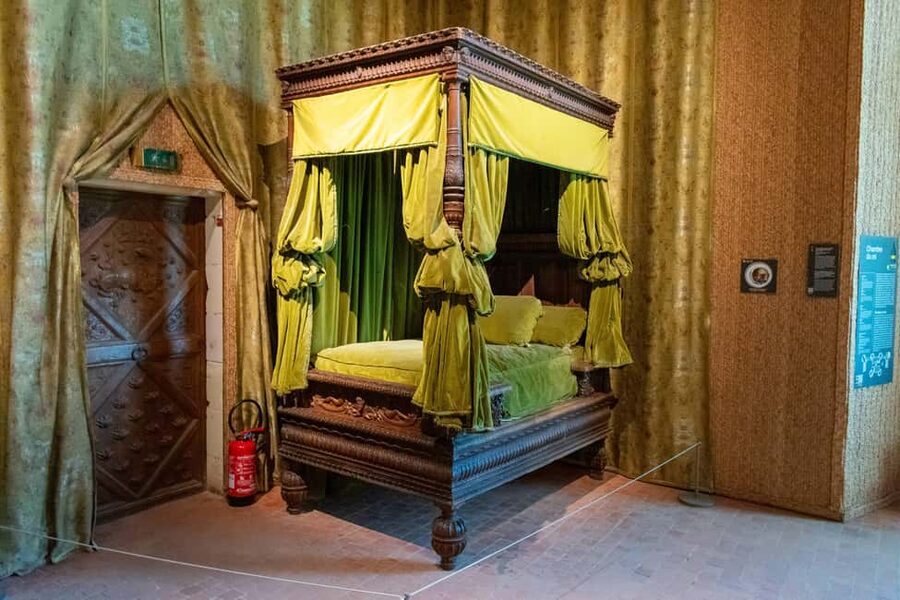
The route takes place inside Château de Chambord and ends on the terraces. The supplied details do not list every room visited, so you should not book this expecting a fixed checklist of named interiors.
Instead, think of the visit as a guided path through the castle’s main story and major architectural features. Sarah helps you understand what you are looking at, then brings the tour to the terraces, where the château’s roofline becomes the final subject.
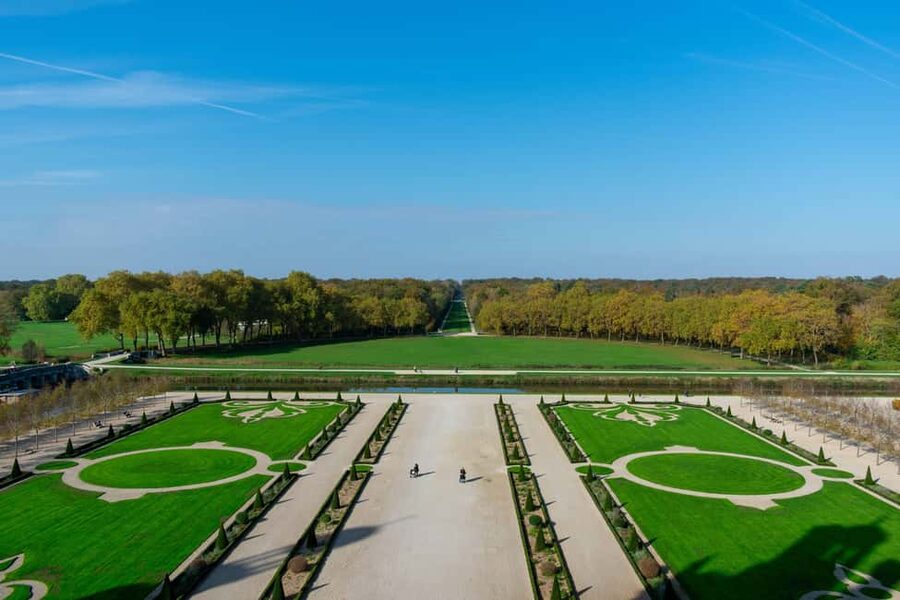
The terraces are an important finish. From there, you can better appreciate the many towers, chimneys, and decorative forms that make Chambord look almost unreal. The end point also gives the tour a natural shape: you begin with the building’s story and finish with a broad view of the structure itself.
You may want to allow extra time after the guided portion for your own visit, if your admission and schedule permit it. The 90 minutes are designed to provide structure and explanation, not to replace every moment you might want inside the château.
Remember that the entrance ticket is not included in the $53 tour price. You must buy castle admission separately through the official ticket office. Add the two costs together before deciding if the experience fits your budget.
Is the $53 price worth it?
At $53 per person, this is not the cheapest way to enter Chambord. The price covers the live 90-minute guide, the small group, and the microphone and headphones, but not the castle ticket itself.
I see the value in the guide rather than the admission. Chambord is the kind of place where the architecture can overwhelm the story. Sarah gives you a way to connect the two, and the interactive format is more personal than following information on a screen.
One booking specifically compared the live guide favorably with the castle’s iPad guides. That does not mean the digital option is poor, only that you should decide what kind of visit you want. If you prefer independence and silence, an individual guide may suit you better. If you want explanations, questions, and a human voice leading the way, the extra cost has a clearer purpose.
The small group also makes the price easier to justify. A limit of 10 participants is far more manageable than a large bus group, especially when the guide is asking people to respond. In one booking, only two people attended, effectively creating a private visit. You should not count on that, but the group limit leaves open the possibility of a very personal experience.
The best value comes when you care about context. If your main goal is to take photographs of the exterior, you may not need this tour. If you want to understand Francis I’s project and make sense of the staircase, the price is easier to defend.
Cold interiors and practical clothing advice
Bring a warm layer. Chambord can be cold because parts of the castle are continually open to the outside, and one November visit was specifically marked by a lack of heating. Winter visitors should take this seriously, but even in milder weather, a sweater or light jacket is sensible.
Wear shoes suited to stairs and extended standing. You will be on your feet for 90 minutes, and the route includes climbing. Comfortable footwear matters more here than dressing for a formal château visit.
Large luggage and oversized bags are not allowed. Selfie sticks, flash photography, and touching the exhibits are also prohibited. Pack light and keep your hands free for the staircase and the group pace.
Strollers are allowed on the ground floor, but you must leave them downstairs for the upstairs section. That makes the tour less convenient with very young children who still need a stroller, so plan around carrying or walking during the upper-level part.
Children need a passport or ID card. Unaccompanied minors cannot join the tour, and the activity is not suitable for wheelchair users or people with mobility impairments. These are not minor details: the route has stairs, standing, and no elevator.
Who will enjoy this tour most?
I would recommend it most strongly to first-time visitors who want a clear introduction without spending half a day in a lecture. Families may also like the questions and courtier role-play, especially if children respond well to being included.
It works well for anyone who wants to tour in English or French and prefers a small group. Sarah’s communication, enthusiasm, and humor are central to the experience, so you should be comfortable with an active guide who expects you to answer and participate.
This is less suitable for you if you need a seated, step-free visit. It is also not the best fit if you want complete independence, unlimited photography, or a quiet route through every room.
Book early if your schedule is tight. The group limit is only 10, and the most personal version of the experience is likely to come from a smaller departure. Leave enough time to buy or collect your separate castle admission as well.
My call: book it if context matters
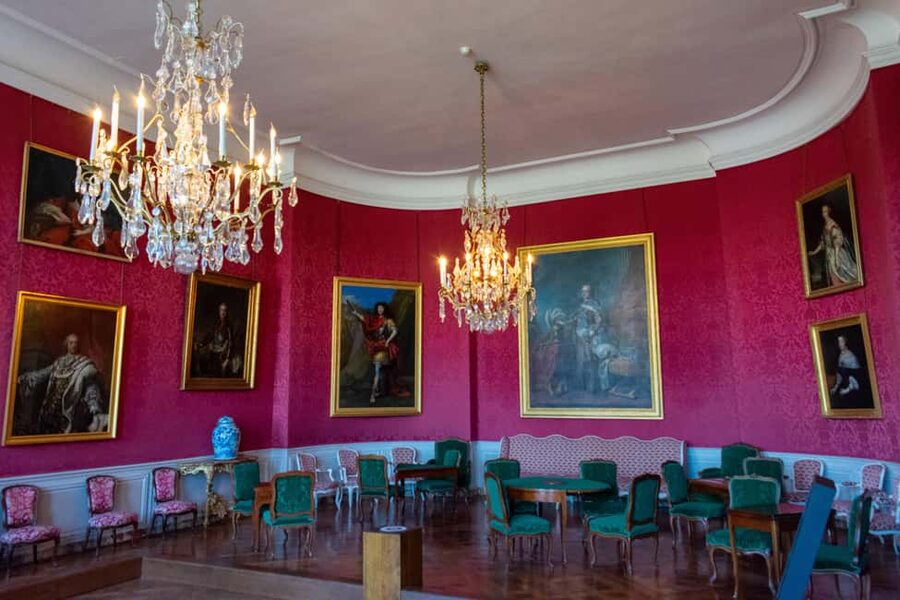
I would book this tour if you want Chambord to be more than a spectacular backdrop. The castle’s size and design are easy to admire, but Sarah’s questions and storytelling give you a clearer reason to care about the staircase, Francis I’s grand plan, and the people connected to the building.
The main warnings are practical: pay for admission separately, dress warmly, wear good shoes, and expect stairs. If those conditions work for you, the small group and lively presentation make $53 a reasonable price for a focused introduction to one of France’s great castles.
Skip it if you already have detailed knowledge of Chambord or prefer to explore alone. For most first-time visitors, though, this is a useful way to turn a visually overwhelming visit into one you can actually follow and remember.
FAQ
Is the Château de Chambord entrance ticket included?
No. The castle admission ticket is not included in the $53 tour price. You need to buy it separately through the Château de Chambord ticket office.
How long does the guided visit last?
The guided visit lasts 90 minutes, or one and a half hours.
Who leads the tour?
Sarah Guibout-Chatelain leads the tour.
What languages are available?
The live guide is available in English and French. Some content may be shown in its original language.
How large is the group?
The group is limited to 10 participants.
Where does the tour meet?
The guide meets you in front of the castle entrance. The precise meeting point may vary depending on the option you book.
Does the tour include the double-helix staircase?
The guided visit includes the famous double-revolution staircase as part of the castle tour, and participants may be invited to imagine themselves as French courtiers while using it.
Is the tour accessible to wheelchair users?
No. The tour is not suitable for wheelchair users or people with mobility impairments. It includes walking, standing, and climbing stairs, and there is no elevator for the upstairs visit.
Can I bring a stroller?
Strollers are allowed on the ground floor, but you must leave them downstairs for the upstairs portion of the tour.
What should I bring and avoid?
Bring warm clothing, suitable shoes, and a passport or ID card for children. Large bags, luggage, selfie sticks, flash photography, and touching the exhibits are not allowed.
Fresh palace tours around France
- Wine Tasting Tour at Châteauneuf du Pape★ 5.0 · 36 reviews
- Visit of the cellars of Château Gigognan with tasting★ 5.0 · 3 reviews
- Wines from Châteauneuf-du-Pape and surrounding areas in 1/2 day★ 5.0 · 96 reviews
- 8 Hours Group Tour in Châteauneuf du Pape★ 5.0 · 10 reviews
- Morning Wine Tour to Chateauneuf du Pape from Avignon★ 4.5 · 70 reviews
- Châteauneuf du Pape Wine Day Tasting Tour including Lunch from Avignon★ 5.0 · 287 reviews
- Highlights of Provence : Chateauneuf du Pape & Luberon★ 4.5 · 189 reviews
- In Depth Chateauneuf du Pape★ 5.0 · 16 reviews
Loire Valley Chateau Tours: the shortlist.

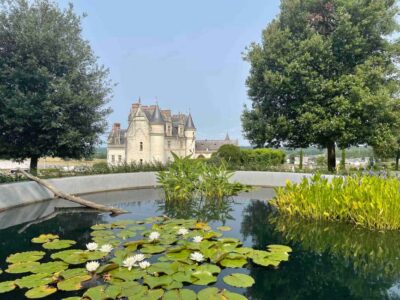
Loire Valley: Château Royal d’Amboise Entrance Ticket
Read our review →
Day Tour of Chateaux of Chenonceau, Chambord & Caves Ambacia from Tours/Amboise
Read our review →
From Tours: Chambord, Chenonceau & Lunch at Family Chateau
Read our review →
Tours: Chateaux Azay-le-Rideau and Villandry Morning Tour
Read our review →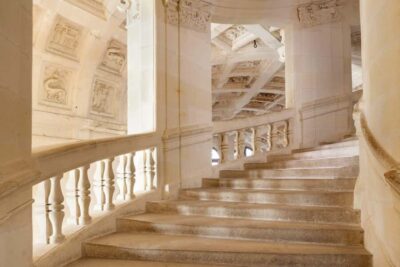
From Tours/Amboise: Chenonceau & Chambord Chateaux Day Trip
Read our review →
From Tours : Full-Day Chambord & Chenonceau Chateaux
Read our review →This visit also appears in