
Review · ITALY
Mantova City Center and Ducal Palace: 3-Hour Guided Tour
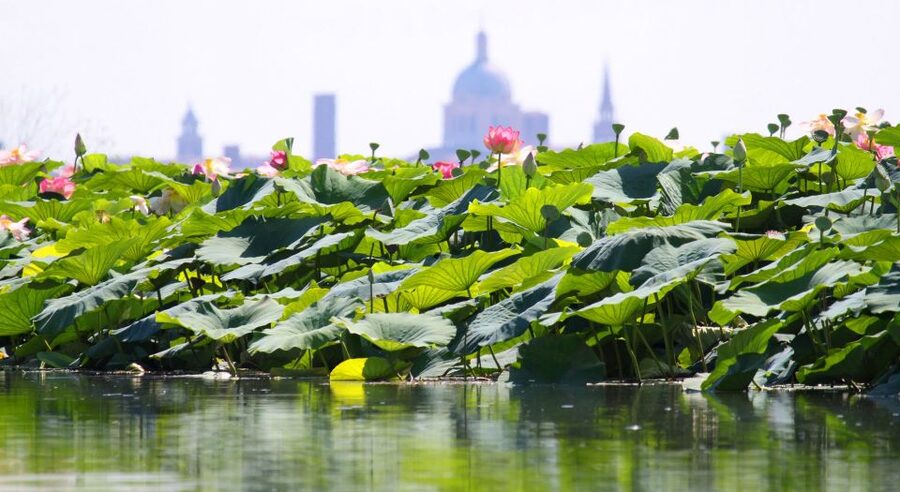
Mantova rises from three small lakes, with canals, the Mincio River, and old stone streets shaping the city at every turn. This private walk connects the water-bound setting to the Gonzaga family’s grand court, with a visit to Rigoletto’s House, Piazza Sordello, and the Ducal Palace area.
I like the personal scale here: the price is $124.61 for up to five people, and guide Manuela Roversi can give you the kind of patient, tailored attention that helped one late-arriving guest settle in without losing the thread. I also like the range, from Mantegna’s famous frescoes to ordinary medieval lanes and market squares. The main catch is that the Ducal Palace admission costs extra, and three hours may feel short if you want to see its enormous collection at a slow pace.
Key points to know before you book
- Three lakes shape the city: Mantova’s canals, waterways, and river explain much about its unusual setting.
- The Ducal Palace is the grand finale: The Gonzaga complex has about 1,000 rooms, connected galleries, courtyards, and gardens.
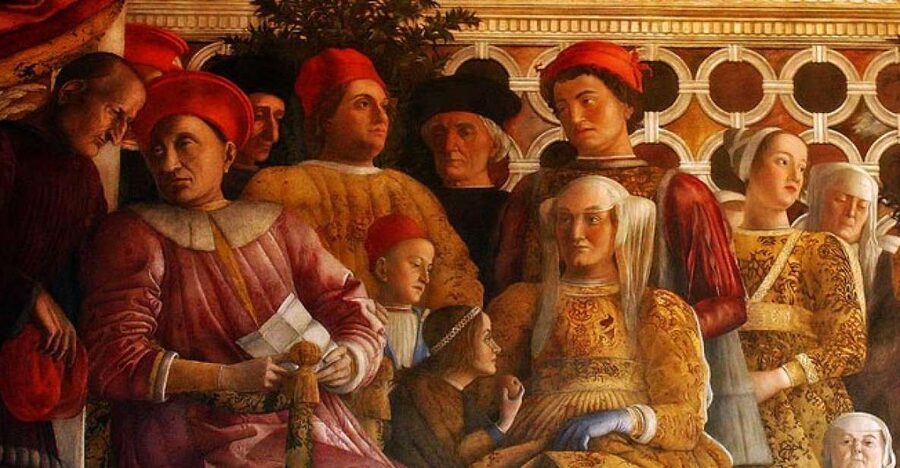
- Mantegna’s Wedding Room is the prized sight: Entry to this room can be limited, especially on the first Sunday of the month.
- You visit major squares on foot: Piazza Sordello, Piazza delle Erbe, Piazza Mantegna, and Piazza Leon Battista Alberti all feature on the route.
- Manuela Roversi leads the experience: The tour is offered in English, Italian, Spanish, or German.
- The tour is private for up to five people: That makes the $124.61 group price more appealing for a small party than for a solo visitor.
Mantova, where water meets the old city
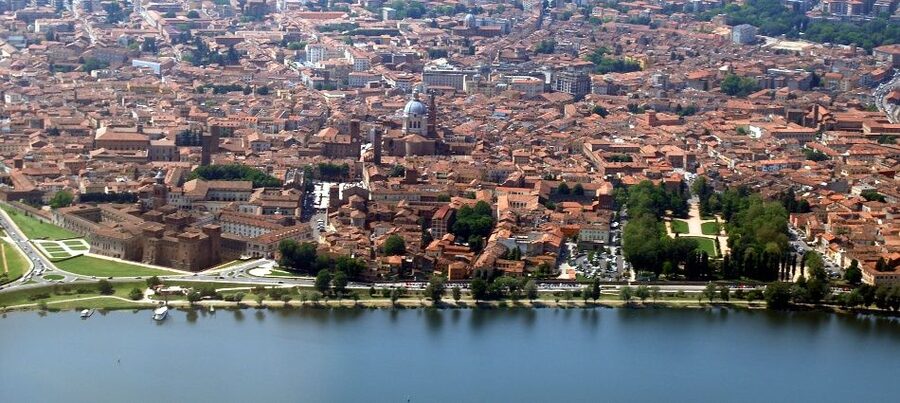
Mantova can feel almost unreal at first. Three small lakes surround the city, while the Mincio River and the medieval Rio canal thread through local life. This is not just scenery for a postcard. The water helped shape Mantova’s defenses, trade, and identity.
I like beginning with this setting because it gives the walking tour a clear theme. You are not simply moving from one handsome building to another. You are seeing how a city grew between earth and water, then became the seat of one of northern Italy’s most powerful ruling families.
The city is also tied to familiar names. Virgil was born here, Shakespeare placed Romeo in Mantua after his flight from Verona, and Verdi set Rigoletto in the city. Those links add a little drama, but the real pleasure is seeing how the literary and musical stories sit beside working streets, churches, arcades, and old civic buildings.
The tour begins at Rigoletto’s House, at Piazza Sordello 23, near the entrance to the inner courtyard. This is a practical meeting point because Piazza Sordello puts you right beside several of the city’s most important monuments.
More three-hour palace visits around Italy:
- Alhambra, Nasrid Palaces, and Generalife 3-Hour Guided Tour
★ 4.4 · 889 reviews - 3-hour: Palace of King Jan Sobieski in Wilanow/inc. Pick-up/
★ 4.7 · 27 reviews - 3 hours of Tour in the Wines of Châteauneuf-du-Pape
★ 5.0 · 13 reviews
Rigoletto’s House and Piazza Sordello
Rigoletto’s House is tied to the opera’s Mantova setting, though the character is fictional. From here, the tour moves into the city’s historic core, where grand façades gather around Piazza Sordello.
The square gives you views of the Ducal Palace façade and the Cathedral. You will also see Vicolo Bonacolsi, a narrow lane leading toward Piazza Broletto, where the medieval Palazzo del Podesta, Palazzo del Massaro, and Arengario create a dense cluster of civic architecture.
This is a good place for a guide to explain how Mantova’s rulers used buildings and public spaces to project authority. A map or guidebook can show you the names, but it is harder to understand the relationship between the palace, cathedral, lanes, and civic buildings without someone pointing out what connects them.
The walk is not built around a single monument. Its strength is the way the stops fit together. You get the broad ceremonial view in Piazza Sordello, then smaller architectural details in the lanes and neighboring squares.
Inside the Gonzaga world at the Ducal Palace
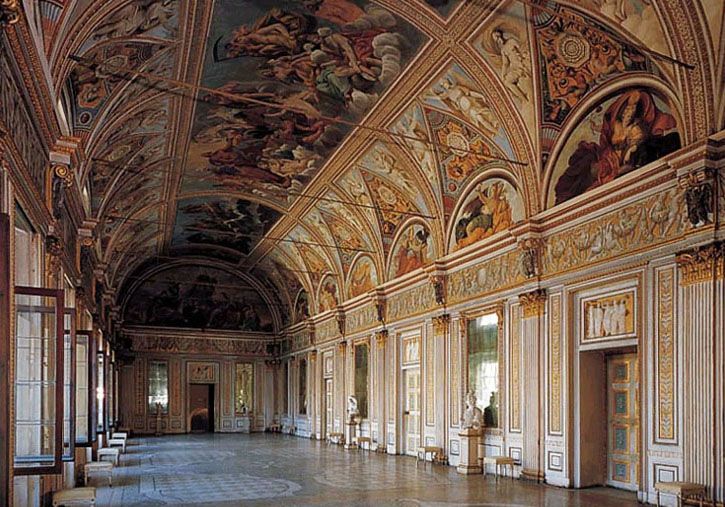
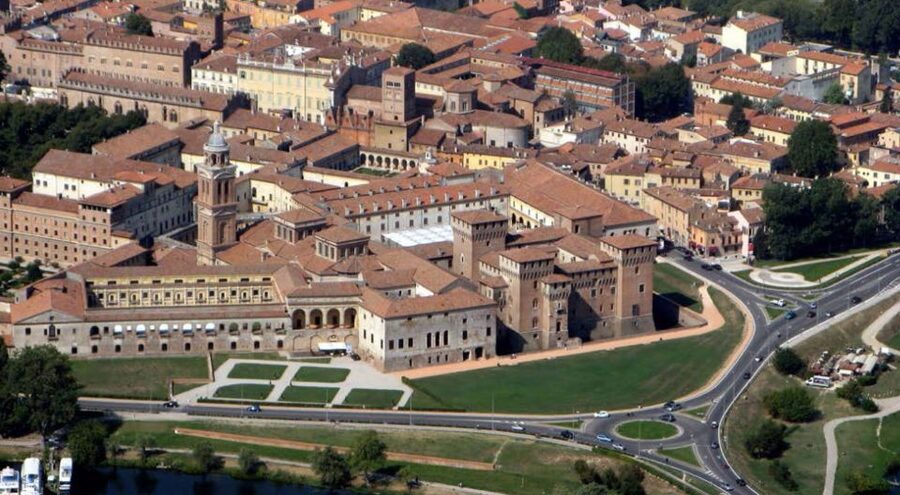
The Ducal Palace is the heart of the experience. The Gonzaga family built and expanded it between the 14th and 17th centuries as their residence and seat of government. It is not one simple palace, but a huge complex of buildings linked by corridors and galleries.
The scale is difficult to grasp from the outside. The complex contains about 1,000 rooms and covers roughly 34,000 square meters, with inner courts and gardens woven into the plan. You might enter expecting a grand residence and find something closer to a small city built for a ruling dynasty.
The palace is now Italy’s largest museum, with important architectural and painted works throughout the complex. The most famous room is Mantegna’s Camera degli Sposi, or Wedding Room, known for its remarkable frescoes. If you care about Renaissance art, this room alone gives the palace a strong reason for a visit.
The tour includes assistance with booking Ducal Palace admission, but the entrance ticket is not part of the tour price. The listed fee is €13. I would budget for that separately and confirm the current arrangement when booking, since palace access and timed entry can affect the pace of the walk.
The palace and castle limit groups to no more than 25 people. Your private group is already smaller than that, with a maximum of five people, so you should not need to worry about the large-group limit. Larger parties need extra guides and advance arrangements.
One important detail concerns the first Sunday of each month. Palace admission is free then, but tickets cannot be booked in advance. Only 1,500 people per day can enter the room painted by Mantegna, so free-admission Sundays may not be the best choice if that room is your main goal.
The castle, churches, and Gonzaga court
The route includes the exterior of Saint George Castle, part of the Ducal Palace complex. You will also see Piazza Castello, Piazza Santa Barbara, and Piazza Lega Lombarda.
These stops help you read the palace as a court complex rather than a single showpiece. The castle, religious buildings, public squares, and private residences all supported Gonzaga power. The Gonzagas were major patrons of the arts, and their influence can be seen in the buildings they commissioned and the artists and musicians they brought to Mantova.
The Cathedral adds another layer. Its location beside the palace shows how closely political and religious authority were placed together. Since the church is an active place of worship, access can be restricted during services.
I would plan the timing with care. Churches close at noon and reopen at 3 p.m. During services, you cannot enter simply to look around. If church interiors matter to you, ask for a starting time that fits those hours.
You also need to dress properly. Shoulders must be covered in churches, and shorts are not allowed. A wide scarf or sarong is an easy item to carry, especially in warm weather.
More palaces to tour around Italy:
- Venice: Doge’s Palace Reserved Entry Ticket
★ 4.6 · 42,716 reviews - Doge’s Palace & St. Mark’s Basilica with Terrace Access Tour
★ 4.7 · 10,697 reviews - Venice: Doge’s Palace and St Mark’s Basilica Walking Tour
★ 4.4 · 6,291 reviews - Legendary Venice: Doge’s Palace, St Mark’s & VIP Terrace Access
★ 4.5 · 5,033 reviews
Piazza Broletto and Mantova’s medieval center
From Piazza Sordello, the walk takes in Piazza Broletto and its medieval civic buildings. The Palazzo del Podesta, Palazzo del Massaro, and Arengario show a different side of Mantova from the palace’s courtly grandeur.
This part of the route is valuable because it keeps the city from becoming a parade of aristocratic residences. You see the spaces where government, trade, and public business took place. The scale is more civic and compact, and the buildings help explain how the medieval city worked before the Gonzaga court expanded its reach.
A private guide can adjust the amount of time spent here. If you already know Mantova’s civic architecture, you may want more time in the Ducal Palace. If this is your first visit, I would stay alert in these squares, since details such as the old arcades and connected façades can be easy to miss when you are focused only on the larger palace.
Piazza delle Erbe and the Clock Tower
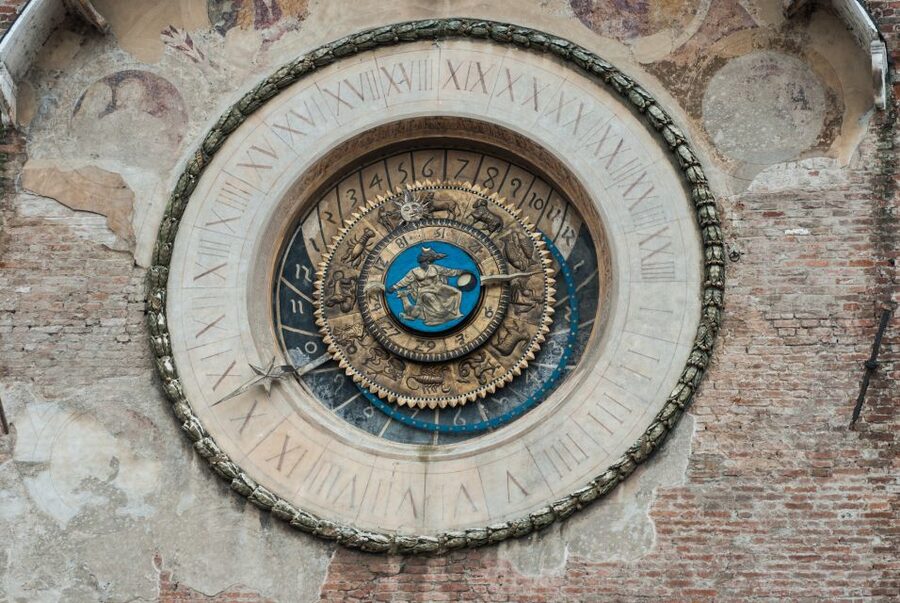
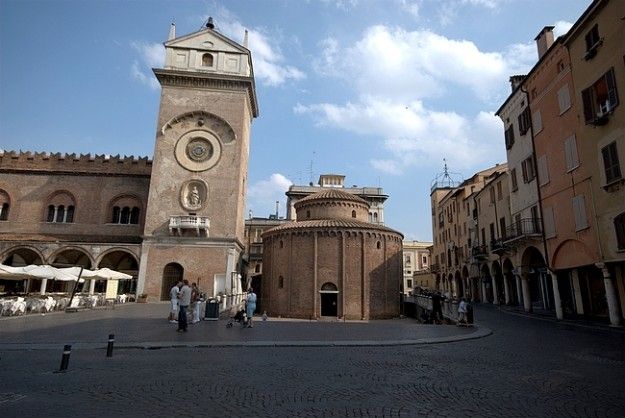
Piazza delle Erbe brings you into another important part of the old center. The square is framed by the Palazzo della Ragione, the Clock Tower, and the Church of San Lorenzo.
The Palazzo della Ragione is one of the clearest reminders that Mantova was shaped by civic life as much as by court culture. The Clock Tower adds a strong vertical marker, while San Lorenzo gives the square a religious presence.
You will also see the façade of the Merchant’s House. Its name points to the commercial side of the city, and its position near the square makes it a useful stop when explaining how trade fit into Mantova’s urban structure.
This is the kind of portion of the walk I find especially useful for orientation. The buildings are close together, the route is easy to follow, and you can compare civic, religious, and commercial architecture within a few minutes.
Piazza Mantegna and Sant’Andrea
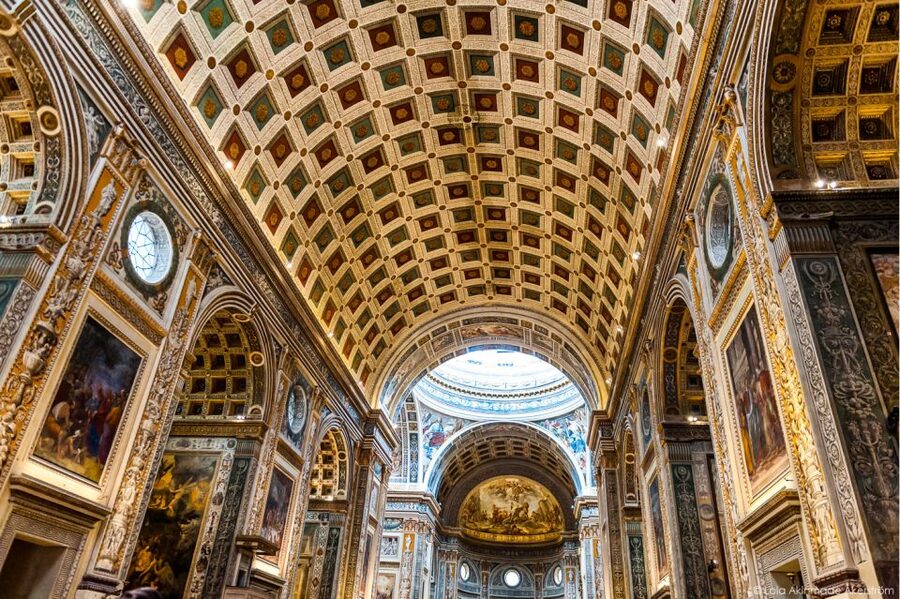
Piazza Mantegna leads to the Basilica of Sant’Andrea, designed by Leon Battista Alberti. The basilica is one of Mantova’s major architectural sights and adds a grand Renaissance note to the route.
The square also connects the city’s artistic story to its built environment. Mantegna’s name is linked to the nearby palace and its famous frescoes, while Alberti’s design gives you another way to see how Mantova’s rulers used art and architecture to shape their capital.
The route continues to Piazza Leon Battista Alberti, where you can see the former cloister of the Sant’Andrea Monastery. This is a quieter architectural detail than the basilica façade, but it helps fill out the picture of the religious institutions that once formed part of the city’s daily life.
Church access depends on the time of day and whether services are taking place. The tour can still show you the exterior and explain the building even if the doors are closed.
The optional Bibiena Theatre stop
The tour does not require entrance tickets for the city-center sights. The exception is the optional Bibiena Theatre, where Mozart played at age 13. Entry costs €2.
That small fee can be worthwhile if the theater is open and you enjoy historic performance spaces. It is not the main focus of the tour, so I would treat it as an extra rather than a reason to book the walk.
Ask about the theater when arranging your start time. The route includes plenty of major sights, and a three-hour visit has a fixed limit. If you want every interior, the Bibiena Theatre, the churches, and a full palace visit, you may need to choose priorities.
What the private format adds
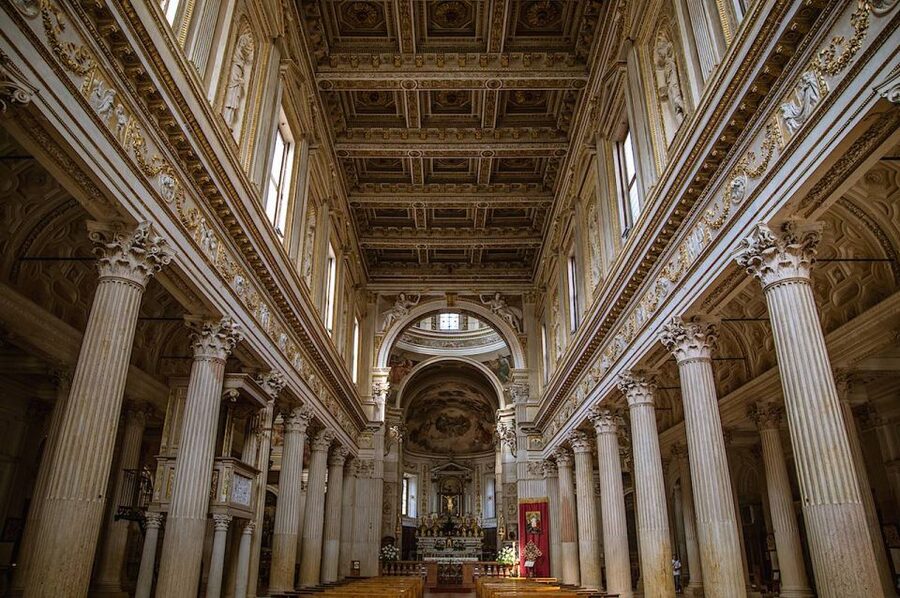
The group limit is five people, which changes the feel of the tour. You are not following a large crowd through narrow streets or waiting for a distant guide’s explanation. You can ask about a detail, pause for a photograph, or spend more time on a subject that interests your group.
Manuela Roversi is the named guide for this experience. One especially useful detail is her patience with timing. She waited for a late guest who arrived 15 minutes after the scheduled start, then began at the Ducal Palace by explaining its background before moving on. That approach matters in Mantova, where the palace can seem overwhelming without a clear framework.
The guide’s role is also important for art. The palace contains far more than one famous fresco, and a good explanation can help you notice the other painted and architectural elements rather than rushing straight to the Wedding Room.
The listed languages are English, Italian, Spanish, and German. You should select the language that suits your group when checking availability.
Is $124.61 good value for five people?
At $124.61 per group of up to five, the price works best for a small party. Split between five people, it is about $25 per person before palace admission. For two people, the cost is higher per head, but you still get a private guide for three hours rather than joining a general group.
The Ducal Palace ticket is extra, and the optional Bibiena Theatre costs €2. That means you should compare the total cost with your plans for the day, not just the advertised tour price.
I think the value is strongest if you want context and personal attention. Mantova’s center is walkable, and you can see many exteriors on your own. The guide earns the cost by connecting the Gonzaga buildings, the art, the water, and the literary references into one story.
If your main goal is only to enter the palace and see Mantegna’s frescoes, you may prefer to spend your money on admission and explore independently. If you want the palace to make sense within Mantova’s wider city, the private format is more convincing.
Who should book this Mantova walk?
I would recommend it to first-time visitors who want a clear introduction to the historic center without losing time deciding which square or palace entrance comes next. It also suits families or friends who can share the group price and want to ask questions as they go.
Art lovers will get the most from the Ducal Palace, especially if they arrange admission and hope to see the Wedding Room. Architecture fans will appreciate the contrast between Alberti’s Sant’Andrea, medieval civic buildings, the castle exterior, and the palace complex.
The tour is less suitable if you want a slow, museum-only visit. Three hours must cover the center and palace context, and the palace itself is large enough to occupy much longer. It is also not ideal if you arrive at a time when church interiors are closed and seeing them inside is a priority.
Cancellation is flexible up to 24 hours before the tour for a full refund, and you can reserve now and pay later. That helps if your Mantova plans depend on train schedules or a broader Lombardy itinerary.
Should you book the three-hour Mantova tour?
Book it if you want Mantova explained as a connected city, not just a checklist of palaces. The water, Gonzaga court, Rigoletto, Mantegna, medieval squares, and Sant’Andrea all fit together here, and a private guide can adjust the emphasis for your group.
Before booking, confirm the start time, set aside the €13 Ducal Palace admission, and avoid assuming that free first-Sunday entry guarantees access to Mantegna’s room. Wear church-appropriate clothing and carry a scarf if needed.
For a small group, the $124.61 price is fair, especially with a guide such as Manuela Roversi who can give the palace a useful frame before you confront its huge scale. If you want independent wandering and only a quick look at the main squares, skip the tour. If you want the city’s art and architecture to tell one coherent story, this is a strong three-hour introduction.
FAQ
Where does the tour begin?
The tour begins at Rigoletto’s House, Piazza Sordello 23, near the entrance to the inner courtyard.
Where does the tour end?
The activity ends back at the meeting point at Rigoletto’s House.
How long is the tour?
The guided walking tour lasts three hours.
Is the tour private?
Yes. It is a private group experience for up to five people.
Which languages are available?
The guide can provide the tour in English, Italian, Spanish, or German.
Is the Ducal Palace entrance ticket included?
No. The Ducal Palace entrance fee is listed separately at €13, and the tour includes assistance with booking admission.
Does the tour include the Bibiena Theatre?
The theater is an optional stop. Admission costs €2.
Can I visit the Ducal Palace for free?
Admission to the Ducal Palace is free on the first Sunday of each month, but entry cannot be booked in advance. Access to Mantegna’s room may be impossible on those days because only 1,500 people can enter it per day.
What should I wear for the churches?
Your shoulders must be covered, and shorts are not allowed inside the churches. A wide sarong is suggested if you need an easy covering.
Fresh palace tours around Italy
- Foligno and the frescoes of Palazzo Trinci, a masterpiece of the Middle Ages – Private Tour★ 4.5 · 2 reviews
- Venaria Royal Palace and Gardens in Turin★ 4.0 · 12 reviews
- Tour of Doge’s Palace and Gondola Ride★ 4.5 · 60 reviews
- Full Venice Walking Tour: Doge’s Palace and St. Mark’s★ 4.6 · 32 reviews
- The places of the Medici family: the Palace and the Chapels★ 4.7 · 12 reviews
- St. Mark’s Basilica, Doge’s Palace & Glass Factory Tour★ 4.1 · 216 reviews
- Venice: St Mark’s Basilica and Doge’s Palace Private Tour★ 4.8 · 56 reviews
- Venice: Doge’s Palace and St. Mark’s Basilica Guided Tour★ 4.6 · 458 reviews
Italy Palace Tours: the shortlist.
Doge’s Palace & St. Mark’s Basilica with Terrace Access Tour
Read our review →
Doge’s Palace and St Mark’s Basilica Walking Tour
Read our review →
Legendary Venice: Doge’s Palace, St Mark’s & VIP Terrace Access
Read our review →
Venice In a Day: St Mark’s, Doges Palace Gondola Ride & City Tour
Read our review →
St. Mark’s Basilica & Doge’s Palace Tour with Ticket
Read our review →This visit also appears in