
Review · FRANCE
Narbonne: visit the Archbishops’ Palace and Cathedral
Narbonne’s story is laid out in a remarkably compact walk. In two hours, you move from the ancient Via Domitia to the former Archbishop’s Palace, through a Gothic cathedral and cloister, then finish by the canal near Les Halles. It is a smart way to get your bearings without spending half a day on your feet.
I like the way this tour connects grand architecture with everyday Narbonne. The palace and cathedral give you the big historical setting, while Les Halles and the Promenade des Barques show where the city still gathers. I also like that the guide, Marion Quart, is praised for explaining complex subjects with humor and simple language.
The main consideration is that several worthwhile sights are only viewed from outside or are not included in the basic price. The Donjon, museum, and Treasure Room require a separate €12 admission ticket, so add that cost if you want the full palace experience.
Key points to know before you book
- Roman Narbonne begins at the Via Domitia: You start with one of the city’s clearest links to antiquity.
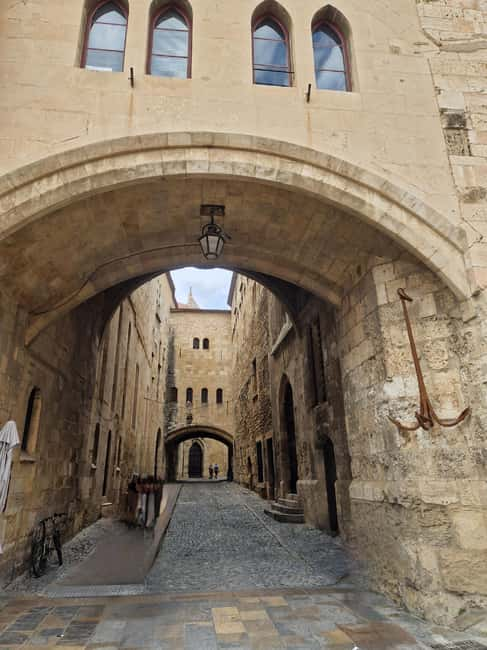
- The Archbishop’s Palace is the tour’s central setting: You enter its courtyard and see the Grand Staircase, exterior details, Passage de l’Ancre, and archbishop’s garden.
- Saint-Just and Saint-Pasteur Cathedral rewards your eyes upward: The vaulted ceiling, organ, and two historic altarpieces are the main interior highlights.
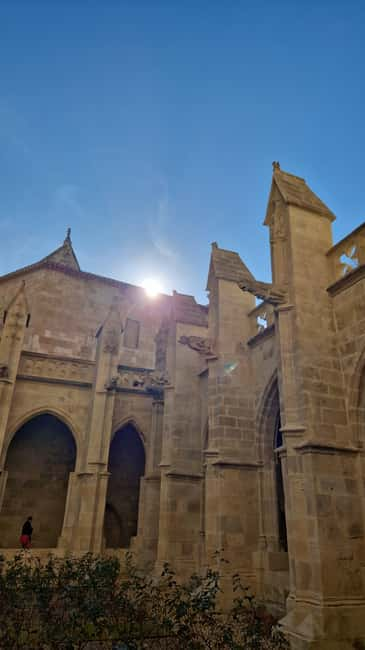
- The cloister adds Gothic drama: Gargoyles rise above the walkways, giving the cathedral complex a sharper, more memorable edge.
- The finish is local rather than purely monumental: You walk along the Promenade des Barques to Pont des Marchands and Les Halles.
- Marion Quart shapes the experience: Her style, based on the available feedback, is warm, clear, enthusiastic, and suited to people who enjoy stories without a lecture.
Why this short Narbonne walk works so well
I like tours that explain a city through several layers rather than parking you in front of one famous building. This one does that neatly. Narbonne appears first as an ancient settlement, then as an important religious center, and finally as a living southern French city with a market and canal promenade.
The route is also practical. The meeting point is in front of the main entrance to Les Halles de Narbonne, near the war memorial. From there, you do not need to arrange transport between stops. The experience lasts about two hours, which gives you enough time to see the principal sites while leaving room in your day for lunch, the museum, or further wandering.
At $23 per person, the value is strongest if you want interpretation rather than a simple list of buildings. The architecture is free to admire from the street, but the guide provides the connections: why the palace matters, how the cathedral fits into Narbonne’s story, and how the historic center leads naturally toward the market.
You should not think of this as an all-access ticket to every room. The basic tour includes the palace courtyards, cathedral, cloister, garden, Via Domitia, Passage de l’Ancre, Pont des Marchands, and Les Halles. Admission to the Donjon, town museum, and Treasure Room is separate and costs €12.
More palaces to tour around France:
- Paris: Versailles Palace and Gardens Full Access Ticket
★ 4.6 · 41,579 reviews - Versailles: Skip-the-Line Tour of Palace and Gardens Access
★ 4.7 · 10,429 reviews - From Paris: Versailles Palace & Gardens with Transportation
★ 4.6 · 6,222 reviews
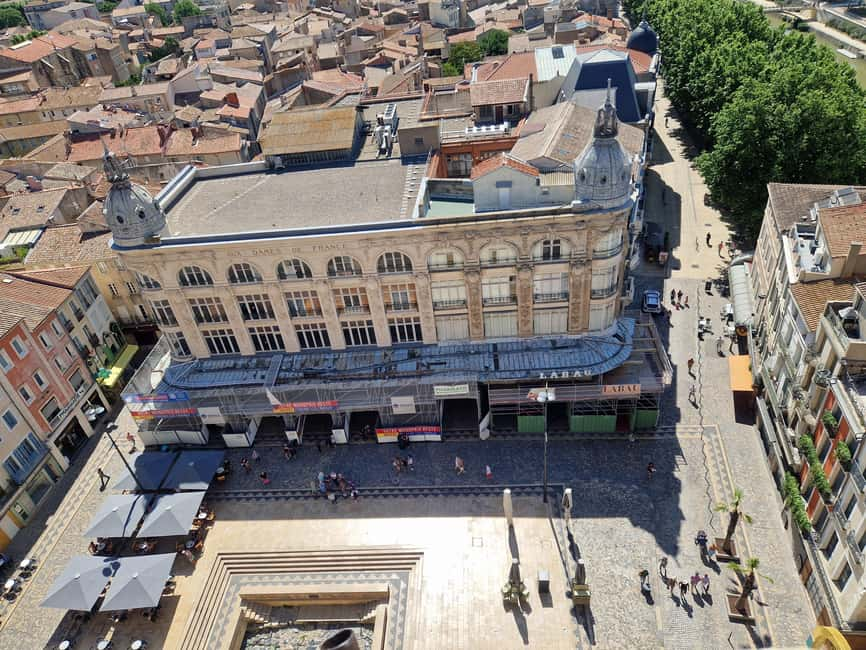
Starting at Les Halles and the Via Domitia
Beginning near Les Halles gives the tour a useful local anchor. This is not a remote meeting point beside a coach park. You start near an emblematic market and later return to the same part of town, so the opening and closing stops help you understand how Narbonne’s center fits together.
The first major historical marker is the Via Domitia. This ancient Roman road is important because it makes Narbonne’s earliest urban role visible under your feet. Rather than treating Roman Narbonne as an abstract date in a guidebook, the tour places you directly beside one of its physical traces.
I find this a good opening because it establishes scale. You begin with the long view, then move toward the medieval and religious buildings that define the city center today. Marion Quart can use this transition to show how Narbonne changed over time without separating each period into unrelated facts.
Do not expect an archaeological site visit that fills the entire morning. The Via Domitia is one stop within a tightly planned walk. Its value comes from the context the guide gives it and from seeing how close it is to the later palace and cathedral.
Entering the Archbishop’s Palace courtyard
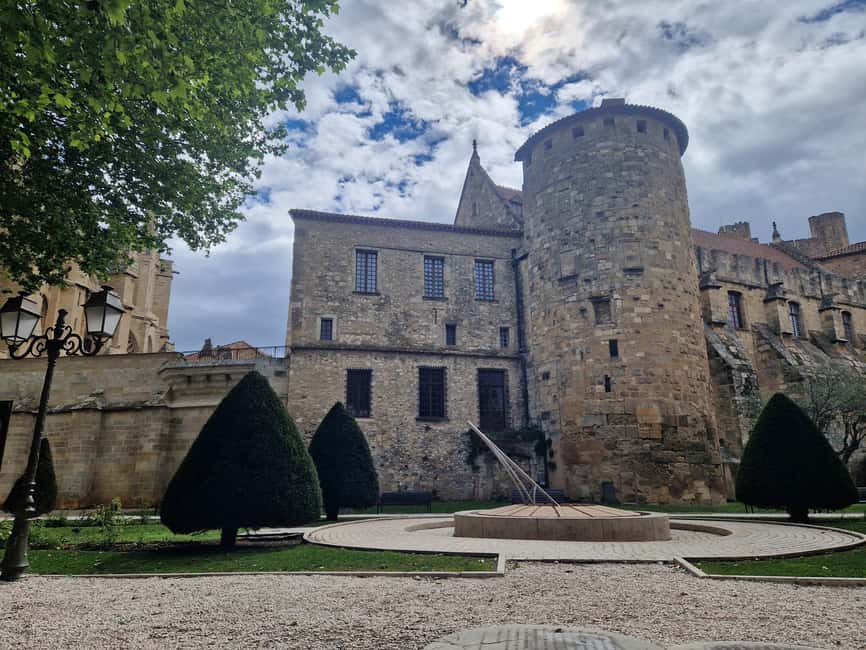
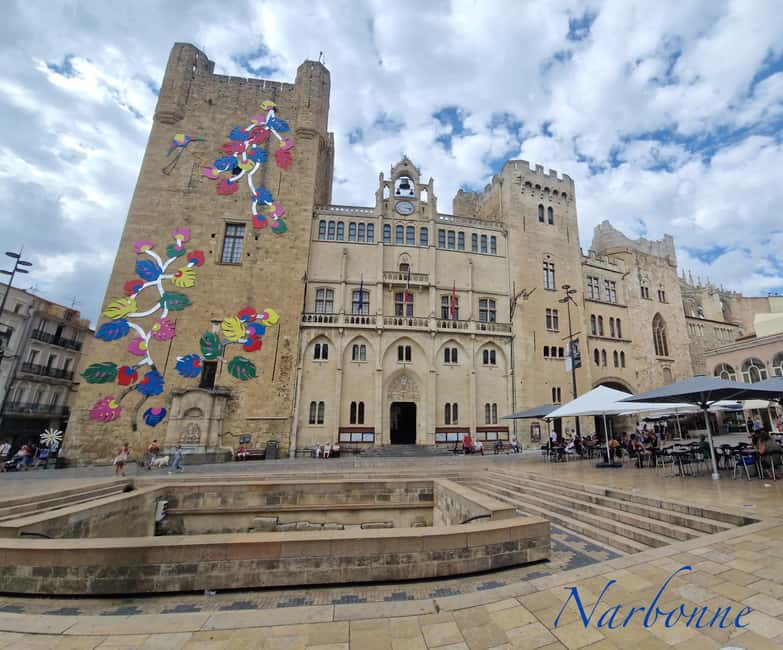
The former Archbishop’s Palace is the visual center of the visit. The tour takes you to today’s Place de l’Hôtel de Ville, where the palace façade tells its story through architecture. You then enter the main courtyard and see the Grand Staircase.
That movement from public square to interior courtyard matters. From outside, the palace reads as part of Narbonne’s civic center. Inside, the courtyard gives you a stronger sense of how the archbishops occupied and used the complex. The Grand Staircase adds a ceremonial touch, making clear that this was not simply a private residence tucked behind the cathedral.
I would pay close attention to the façade before going inside. The description of the experience specifically points to what it has to tell you, so this is a place to listen rather than hurry toward the next doorway. A good guide can turn decorative details and the building’s position on the square into a short lesson in power, faith, and city life.
The tour also includes the Passage de l’Ancre and the archbishop’s garden. These smaller spaces help prevent the visit from becoming a single courtyard-and-cathedral circuit. You get glimpses of the palace’s different edges, including the transition from formal religious architecture to a quieter garden setting.
The limitation is clear: the Donjon is not included, nor are the museum and Treasure Room. If you want to inspect those areas, you can buy the additional €12 admission ticket. If your priority is the main architectural story, the included courtyard and exterior access may be enough. If you collect art or want more palace interiors, budget extra time and money.
Crossing the cloister beneath the gargoyles
The route then leads into the cathedral cloister. This is one of the most atmospheric parts of the walk, not because it needs a long explanation, but because the setting gives you time to look closely.
Gargoyles tower above the cloister walkways, adding a touch of medieval theater. They are easy to miss when you are focused on reaching the cathedral interior, so I would slow down here. Look upward, notice the stonework, and let the guide explain how this space connects the palace and cathedral.
The cloister is also a useful pause between the political authority of the archbishops and the scale of the cathedral. Its proportions are more intimate. You can better appreciate the relationship between open air, enclosed passages, carved stone, and the buildings around them.
Because the tour is private, the experience should be easier to shape around your interests than a large public walk. The supplied information does not state the maximum group size, so I would not assume complete one-on-one attention, but the private format is a useful feature for families or small parties who want to ask questions.
Same royal city, another way in:
- Versailles: Skip-the-Line Guided Palace Tour and Full Access
★ 4.6 · 5,214 reviews - From Paris: Versailles Palace Guided Tour & Gardens Access
★ 4.7 · 3,574 reviews - Versailles Palace and Gardens Tour from Paris
★ 4.5 · 3,390 reviews - Versailles Palace Bike Tour with Market & Marie-Antoinette hamlet
★ 5.0 · 2,680 reviews
Looking up inside Saint-Just and Saint-Pasteur Cathedral
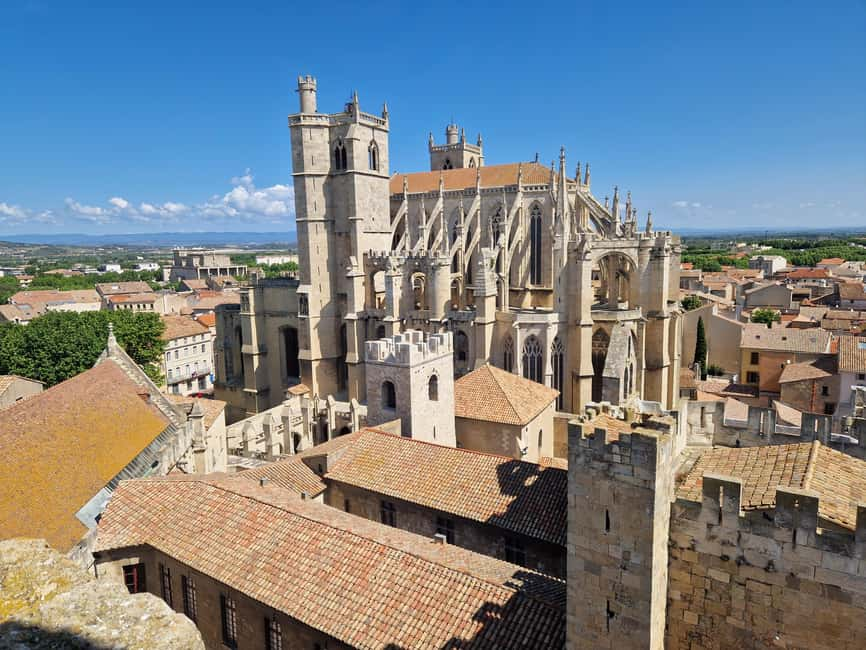
Saint-Just and Saint-Pasteur Cathedral is the tour’s major interior stop. Its 14th-century Gothic design is best understood from inside, where the height of the vaulted ceiling becomes the central experience.
I like the fact that the visit does not stop with a quick look at the nave. The route includes the monumental organ, a 17th-century altarpiece, and a 14th-century sculpted altarpiece. Together, these give you several ways to read the building: upward through its structure, outward toward its furnishings, and close up through sculpture.
The vaulted ceiling is the feature to expect first. Gothic architecture can lose its force when reduced to photographs or a few exterior angles. Standing beneath the vaults lets you grasp the vertical ambition of the cathedral, even during a short visit.
The organ offers a different kind of scale. It is not just another decorative object, but one of the cathedral’s major visual features. The two altarpieces then bring the focus down to crafted religious art. The older sculpted piece is described as a picture book, which is a useful way to approach it: take time to read the scenes and figures rather than treating it as background decoration.
I would keep your expectations balanced. This is a guided visit, not a long specialist study of every chapel or artwork. The tour selects a few important features and explains them within the larger story of Narbonne. That makes it accessible, but art specialists who want exhaustive detail may need the separate museum or Treasure Room admission.
The tour includes both exterior and interior views of the cathedral. That matters because the Gothic character changes as you move around it. Outside, you can consider the building as part of the palace complex. Inside, you feel its height and see how religious art shaped the space.
Ending at Pont des Marchands and Les Halles
The final section changes the mood. After the palace and cathedral, you stroll along the Promenade des Barques toward Pont des Marchands and Les Halles.
The Promenade des Barques gives the tour a more open finish. It is a pleasant contrast to courtyards, cloisters, and vaulted interiors. The walk also returns you toward the market area, so the city’s present-day life comes back into view after the historical concentration of the palace and cathedral.
Pont des Marchands is another useful reminder that Narbonne’s identity is not limited to church architecture. The bridge is part of the city’s older urban fabric, and its inclusion helps connect the waterway, streets, and market district.
Ending at Les Halles is especially practical. You can continue inside the market after the tour, stop for food, or use the area as a base for further exploration. The visit does not finish at an isolated monument where you must work out what to do next.
The market itself is included as access, but no specific food tasting is promised. I would treat Les Halles as a chance to see an important meeting place and make your own plans for eating, rather than expecting a guided culinary tour.
Marion Quart’s guiding style
The guide is Marion Quart, and her personality appears to be a major part of the experience. The available feedback repeatedly describes her as passionate, professional, enthusiastic, and able to explain the city without making the visit feel heavy.
That matters in Narbonne because the route contains several different subjects: Roman roads, archiepiscopal power, Gothic structure, religious art, a canal-side walk, and a market. A guide who can connect those pieces with humor and simplicity will make the two hours feel coherent rather than crowded.
I would book this especially if you enjoy history but do not want a formal academic lecture. One French participant praised the way Marion made the visit engaging for the full two hours. Another described her as thoughtful and easy to follow. An English-language comment also singled out her depth of detail and friendly manner.
The listed tour languages are French and Sangro. Since Sangro is unusual wording for a language listing, confirm the available language when booking if you need something specific. The information does not list English as an offered language, so English-speaking visitors should check before paying.
Who should choose this tour?
I see this as a strong choice for first-time visitors to Narbonne, especially if you want a clear introduction before exploring alone. The route covers the city’s main historic center without asking you to commit to a full-day program.
It also suits people who care about architecture. The palace façade, Grand Staircase, cloister gargoyles, Gothic vaulting, organ, and altarpieces give you plenty to study. You will get more from the visit if you enjoy looking at stonework and asking why a building was designed the way it was.
Families and small private groups may appreciate the format. The route is wheelchair accessible, and the two-hour length keeps the commitment manageable. Still, cathedral and palace visits involve historic buildings, so anyone with specific mobility needs should confirm the practical route details before arrival.
You might choose another option if you want extensive museum time, a food-focused tour, or entry to every paid palace section. Those interests are possible here only with the additional €12 admission ticket, and food tasting is not part of the stated experience.
Timing, price, and practical details
The tour costs $23 per person and lasts two hours. For that price, you receive a guided walk with access to the listed palace, cathedral, cloister, garden, Via Domitia, Passage de l’Ancre, Pont des Marchands, and Les Halles.
I consider that fair value if you would otherwise move through these places without understanding their connections. The separate €12 ticket is the only extra admission clearly identified, and it applies to the Donjon, museum, and Treasure Room.
Meet in front of the main entrance to Les Halles, near the war memorial. Marion will be wearing a green neckerchief and carrying her professional card, which should make her easy to identify.
You can cancel up to 24 hours before the start for a full refund, and you can reserve now while paying later. Those terms are useful if your Narbonne plans depend on weather or changing travel arrangements.
Should you book this Narbonne experience?
Book it if you want Narbonne explained through its strongest sights in a short, well-shaped walk. The combination of Via Domitia, Archbishop’s Palace, Gothic cathedral, cloister, Pont des Marchands, and Les Halles gives you more range than a palace-only visit.
I would be particularly happy to recommend it to history-minded visitors who prefer a warm guide to a recorded audio tour. Marion Quart’s reported style, clear, enthusiastic, humorous, and attentive, is a strong reason to choose this particular experience.
Think twice if your main goal is unrestricted access to the Donjon, museum, and Treasure Room, or if you need an English-language tour. In those cases, confirm the language and add the €12 admission before booking. For most visitors seeking a compact introduction to central Narbonne, the $23 price and two-hour route make a sensible pairing.
FAQ
How long does the Narbonne tour last?
The experience lasts two hours.
What is the meeting point?
Meet in front of the main entrance to Les Halles de Narbonne, near the war memorial. The guide will wear a green neckerchief and have her professional card.
Who is the guide?
The guide is Marion Quart.
What does the tour include?
It includes the Via Domitia, the Archbishops’ Palace and its interior and exterior courtyards, the Passage de l’Ancre, the cloister, the cathedral inside and outside, the archbishop’s garden, the Promenade des Barques, Pont des Marchands, and access to Les Halles.
Is admission to the Donjon included?
No. Admission to the Donjon, the town museum, and the Treasure Room is not included. These areas are available with a separate €12 admission ticket.
Is the experience wheelchair accessible?
Yes, the activity is listed as wheelchair accessible.
What languages are available?
The listed languages are French and Sangro. Some content is shown in its original language, so confirm the language details if you need a particular option.
Fresh palace tours around France
- Wine Tasting Tour at Châteauneuf du Pape★ 5.0 · 36 reviews
- Visit of the cellars of Château Gigognan with tasting★ 5.0 · 3 reviews
- Wines from Châteauneuf-du-Pape and surrounding areas in 1/2 day★ 5.0 · 96 reviews
- 8 Hours Group Tour in Châteauneuf du Pape★ 5.0 · 10 reviews
- Morning Wine Tour to Chateauneuf du Pape from Avignon★ 4.5 · 70 reviews
- Châteauneuf du Pape Wine Day Tasting Tour including Lunch from Avignon★ 5.0 · 287 reviews
- Highlights of Provence : Chateauneuf du Pape & Luberon★ 4.5 · 189 reviews
- In Depth Chateauneuf du Pape★ 5.0 · 16 reviews
France Palace Tours: the shortlist.
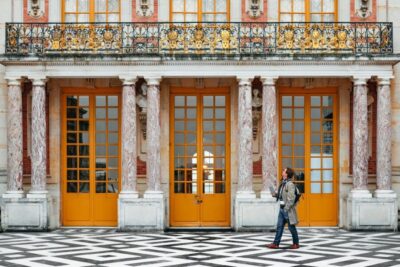
Versailles Palace and Gardens Full Access Ticket
Read our review →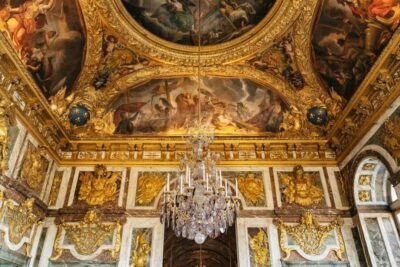
Skip-the-Line Tour of Palace and Gardens Access
Read our review →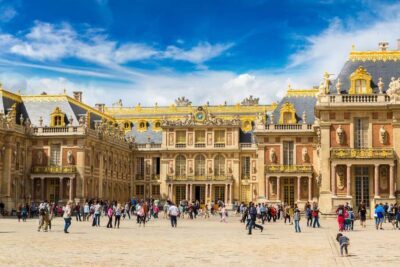
Versailles Palace & Gardens with Transportation
Read our review →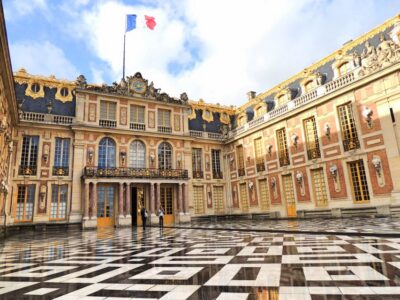
Skip-the-Line Guided Palace Tour and Full Access
Read our review →
Versailles Palace Guided Tour & Gardens Access
Read our review →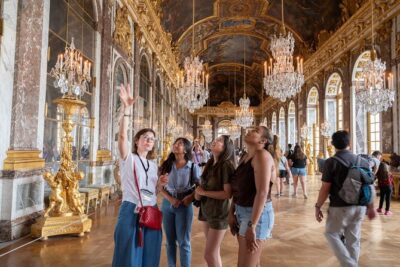
Versailles Palace and Gardens Tour from Paris
Read our review →
Versailles Palace Bike Tour with Market & Marie-Antoinette hamlet
Read our review →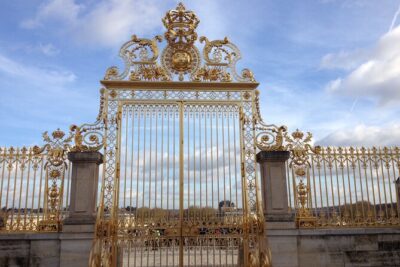
Versailles Palace Guided Tour with Reserved Entry
Read our review →This visit also appears in