Review · ROME
Private Tour – National Museum of Palazzo Massimo
Rome’s Palazzo Massimo is the place to see how ancient Romans actually lived, worshipped, remembered the dead, and decorated their homes. The museum’s Boxer at Rest and the painted rooms from the Villa Livia give the tour two memorable anchors, but the real value is learning how these objects fit into daily Roman life.
I like the private format, since your guide can shape the two hours around your group instead of following a large crowd. I also like that admission is included, so the $150.18 per-person price covers the guide and museum tickets in one payment.
The main caution is guide reliability. One serious account describes a guide who never arrived, even though the museum collection itself was still excellent. The tour has a 4.9 rating from 51 reviews and is recommended by 98 percent of customers, but I would still keep your booking confirmation and provider contact details handy.
Key points at a glance
- Boxer at Rest: See one of the museum’s best-known ancient sculptures during a focused private visit.
- Villa Livia frescoes: Examine painted decoration from an important Roman villa and learn how elite houses were decorated.
- Ancient Roman beliefs: The guide covers calendars, ancestor worship, portraits, religious practice, and attitudes toward the dead.
- Two-hour private visit: Your group has its own guide, with museum admission included in the price.
- Simple central meeting point: Meet at Palazzo Massimo alle Terme at 2:30 pm and finish back at the same location.
- Important bag rule: Backpacks and bags must be left in the museum checkroom before you tour the galleries.
Why Palazzo Massimo is a smart Rome museum choice
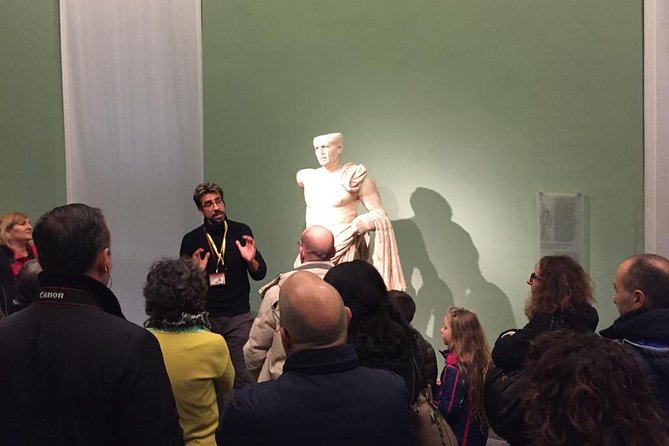
Rome is full of ruins, but ruins can leave you guessing. You see a broken wall, a column base, or a fragment of pavement, then move on without knowing how the space looked or felt when it was in use. Palazzo Massimo helps fill in those gaps with objects taken from the Roman world.
This tour focuses on the people behind the remains. You learn how Romans organized time with calendars, represented important figures, decorated their homes, honored ancestors, and connected everyday life with religion. That makes the museum useful even if you are not an art specialist.
I especially like the way the subjects connect. A portrait is not treated as only a face. A fresco is not just a patch of color. The guide’s task is to show how art, family memory, household decoration, civic identity, and religious practice worked together.
The museum also gives you a break from Rome’s outdoor sights. After hours among ruins and busy streets, two quiet hours indoors can be welcome. The visit is short enough to fit into an afternoon but focused enough to give structure to a collection that could otherwise feel broad.
More Private Palace Tours in Italy
- Private Tour – Palazzo Barberini
★ 5.0 · 23 reviews - Colosseum, Roman Forum and Emperors’ Palace Private Guided Tour
★ 5.0 · 14 reviews - Doria Pamphilj Palace Gallery and Museum Private Tour with Local Guide
★ 4.5 · 10 reviews
Meeting the guide at 2:30 pm
The meeting point is Palazzo Massimo alle Terme, at Largo di Villa Peretti 2. The tour begins at 2:30 pm and ends back at the meeting point after about two hours. Since hotel pickup and private transportation are not included, you need to make your own way to the museum.
The location is near public transportation, which helps, but the tour does not include a ride from your hotel. Plan to arrive early enough to find the entrance, locate the meeting point, and deal with the bag check without cutting into your museum time.
The start time has both advantages and limits. An afternoon appointment can fit well after a morning visit to another Roman sight. It may also work nicely on a day when you want a cooler indoor stop. On the other hand, the fixed 2:30 pm departure gives you less flexibility than a tour with several daily start times.
Your group participates privately, so you are not sharing the guide with strangers. That matters in a museum where a short explanation can easily turn into a longer question. You can ask for more help with Roman religion, portraits, architecture, or household decoration depending on what catches your attention.
No guide name is supplied for this experience, so you cannot choose a particular historian or request a named guide in advance based on the available information. The tour is offered in English.
Ancient calendars and the Roman sense of time
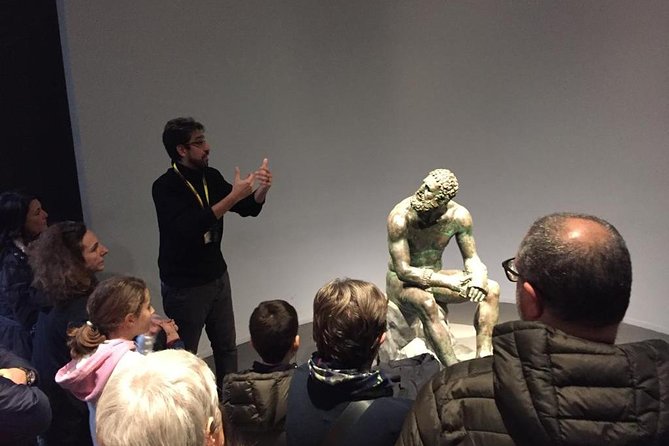
One of the more unusual themes is the Roman calendar. This is a useful subject because it shows that ancient life was organized by systems that were both practical and connected to public and religious custom.
You will not simply look at a calendar as an old object. The tour aims to explain how Romans used calendars and how time fit into their institutions and religious life. That gives you a better way to understand the city outside the museum, where monuments and festivals were tied to civic schedules and sacred practice.
I like this part because it moves beyond the familiar list of emperors and battles. Many museum visits focus on who ruled Rome. This one also asks how ordinary systems helped people understand the year, plan activities, and take part in public life.
The information provided does not specify the exact calendar objects or displays used during the visit, so you should not expect a guaranteed single exhibit. Instead, think of the calendar subject as one part of the guide’s larger interpretation of Roman habits, traditions, and institutions.
Portraits, ancestors, and the Roman family
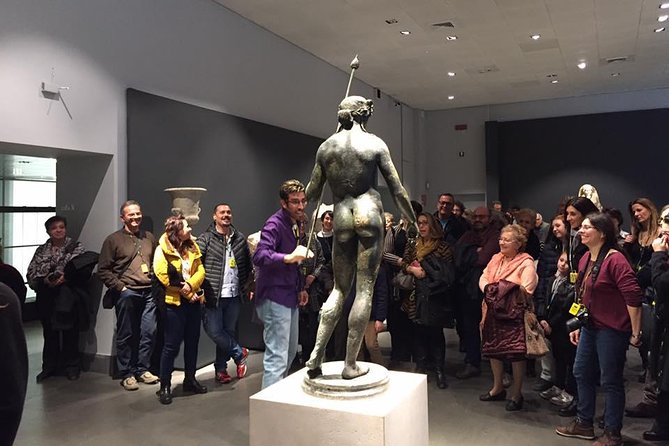
The tour also looks at how Romans portrayed their heroes and how they venerated deceased family members. These subjects belong together. Roman portraiture was not only about making a face look attractive. It could carry ideas about family, status, memory, and respect.
Ancestor worship gives the museum visit a personal side. The dead were not simply absent from Roman life. They could remain important through images, rituals, and family remembrance. A guide can help you read portraits and related objects as part of those practices instead of seeing them as isolated pieces of marble.
This is one of the strongest reasons to choose a private visit. If you are curious about the difference between a public hero, a family ancestor, and a religious figure, you can ask directly. A large group tour often has to keep moving. A private guide has more room to follow the questions that make the subject meaningful to you.
The tour also addresses the religious aspect of ancient Roman life. That does not mean every room becomes a lecture on Roman mythology. The emphasis is on understanding how belief and ritual appeared in Roman habits, institutions, and treatment of the dead.
More Private Palace Tours in Rome
- Palazzo Barberini: 2-Hour Private Tour
★ 4.9 · 9 reviews - National Museum of Palazzo Massimo: 2-Hour Private Tour
★ 5.0 · 3 reviews
The Boxer at Rest and what to expect from the sculpture
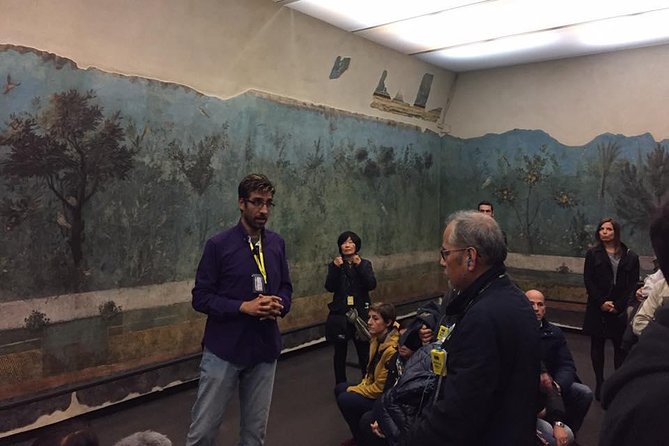
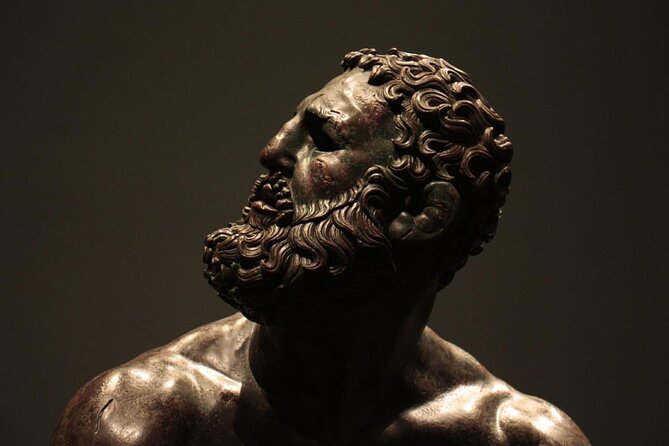
The Boxer at Rest is a major reason many people will want this tour. The sculpture shows an exhausted seated boxer, and its physical presence makes it an effective centerpiece for a museum visit. The supplied information specifically identifies it as a highlight, so it is a key work to expect during the tour.
A guide can help you look at more than the subject. You can consider the pose, the signs of strain, and the way the sculpture presents the boxer as a real person rather than an idealized god or ruler. The available details do not specify exactly which aspects the guide will emphasize, so allow the discussion to develop around your group’s interests.
I value this stop because it gives the tour a clear visual memory. Even if the calendar or religious themes feel abstract, the boxer is direct and human. It helps connect ancient artistic practice with the body, effort, fatigue, and emotion.
The tour is not advertised as a sculpture-only visit. You will see the boxer within a wider museum program that includes frescoes, mosaics, portraits, calendars, and religious material. If you want a long, specialist study of this one sculpture, two hours may feel brief. If you want it placed within Roman art and society, the balance is more useful.
Villa Livia frescoes and Roman home decoration
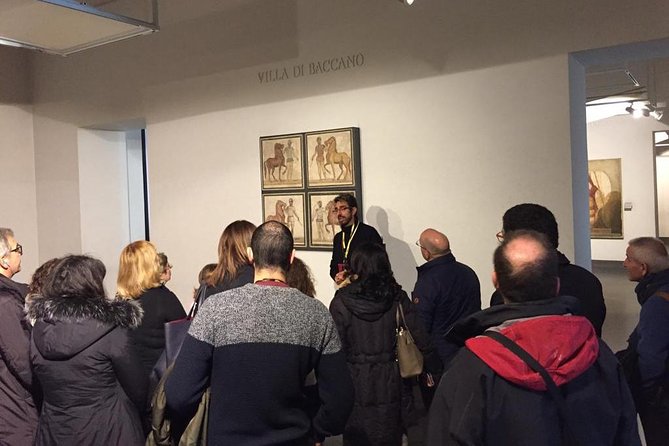
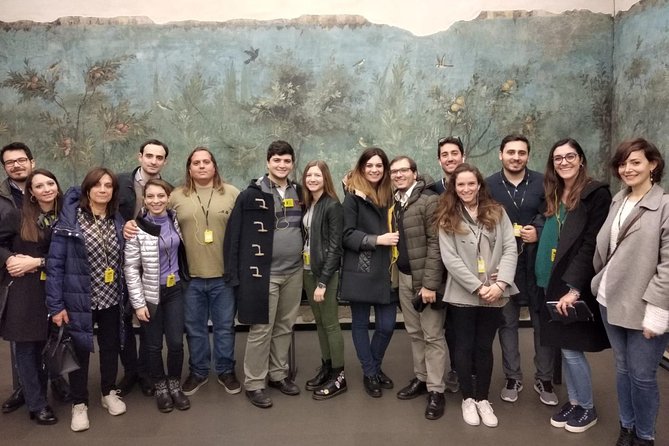
The frescoes from the Villa Livia offer a different experience from the Boxer at Rest. Instead of a single figure, you see how Romans decorated living spaces. The tour uses these paintings to discuss houses, artistic practice, and the way people experienced their surroundings.
Frescoes and mosaics tell you that Roman interiors mattered. Decoration was not an afterthought confined to museums. It shaped the spaces where people lived, received others, and expressed taste and status. Looking at these remains can help you imagine the buildings whose walls are now ruined across Rome.
The Villa Livia material is especially helpful after visiting archaeological sites. At a ruin, you may see the outline of rooms but not their color or visual effect. Painted decoration gives those spaces back some of their character, even though the original setting is gone.
The available description does not identify the exact scenes or colors you will study, so I would avoid booking this solely for one particular fresco panel. Book it for the broader explanation of Roman domestic decoration. The combination of frescoes, mosaics, and architectural context is what makes the subject worthwhile.
From museum objects to Rome’s broken ruins
The guide’s larger aim is to connect the museum with the streets outside. When you pass Roman ruins later in your visit, you can think about how those buildings were used, decorated, and experienced rather than treating them as piles of ancient stone.
That connection is the tour’s best practical benefit. Palazzo Massimo gives you preserved art and objects. Rome gives you remains of the buildings that once held them. Seeing both lets you understand the city with more imagination and less guesswork.
You may also find that the museum changes how you view famous monuments. A building was not only an engineering project. It had rooms, rituals, decoration, people, and social rules. The tour’s attention to calendars, families, religion, and houses supplies that human scale.
Because the visit lasts about two hours, it does not attempt to explain every period or gallery in the museum. That is a strength if you want a clear theme. It is a limitation if you hope to see the full collection at length.
Is $150.18 per person good value?
At $150.18 per person, this is not a cheap museum visit. The price makes more sense if you are booking for a small private group and care about interpretation rather than simply entering the building.
Your fee includes admission tickets, a professional guide, a local guide, and the private tour. You do not pay separately for museum entry, which makes the total easier to understand. Group discounts are also available, though the exact discount is not specified.
The value depends on how you use the guide. If you want someone to connect ancient calendars, Roman religion, ancestor worship, portraits, domestic decoration, and the museum’s major works, the private structure can be worthwhile. If you are comfortable reading labels and exploring independently, the price may feel high.
One factor deserves honest attention: a guide not arriving would seriously damage the value of any private tour. The overall score is 4.9 from 51 reviews, and 98 percent of customers recommend the experience, so the general record is very strong. Still, the single report of a missing guide is specific enough that I would confirm the meeting details before departure.
Who will enjoy this private museum visit?
I would recommend the tour to you if you like history explained through daily life. It suits people who want to understand how Romans organized time, remembered family members, decorated homes, and practiced religion.
It is also a good match for first-time visitors who have already seen Roman ruins but still feel unsure about what those buildings looked like in use. The Villa Livia frescoes and mosaics can give the outdoor remains more meaning.
Families and small groups may appreciate the private format. You can ask questions at your own pace, and the guide does not have to manage a large mixed group. The two-hour length is also manageable for people who do not want an all-day museum program.
Independent art lovers should compare the cost with a solo visit. The museum collection is described as excellent even without the guide, so a self-guided visit remains a reasonable alternative. You are paying for explanation, structure, and private attention, not just for access.
The tour is not a good fit if you need hotel transportation, a flexible departure time, or a visit longer than two hours. It also may not suit you if you dislike leaving personal bags in a checkroom, since that is mandatory for bags and backpacks.
Practical details that affect your visit
Admission is included, but private transportation and hotel pickup are not. You meet at the museum and return there at the end. The site is near public transportation, so you can plan your own route without arranging a separate car.
Most people can participate, according to the available information. No special restriction is stated, but you should account for the museum’s checkroom rule and arrive ready to leave bags and backpacks there.
The booking confirmation arrives at the time of booking. Free cancellation is available until 24 hours before the start time for a full refund. If you cancel or make changes less than 24 hours before the 2:30 pm start, the payment is not refunded and changes are not accepted.
I would save the confirmation on your phone and keep the meeting address visible. That is basic Rome planning, but it matters when a private tour depends on finding one guide at one entrance at one set time.
Should you book the Palazzo Massimo private tour?
Book it if you want ancient Rome explained through people and habits, not only emperors and monuments. The Boxer at Rest, Villa Livia frescoes, Roman calendars, ancestor worship, portraits, and household decoration give the two hours a clear purpose.
The price is easiest to justify for a small group that values a private English-speaking guide and wants admission handled in advance. Solo visitors or budget-conscious couples may prefer the museum on their own, especially since the collection can reward independent exploration.
My final advice is simple: choose this tour for interpretation, not just entry. Confirm the meeting details before you go, arrive early for the checkroom, and keep your schedule flexible enough to reach Largo di Villa Peretti by 2:30 pm. With those precautions, it offers a focused way to make Rome’s ruins feel more like lived-in places.
FAQ
Where does the Palazzo Massimo private tour begin?
It begins at Palazzo Massimo alle Terme, Largo di Villa Peretti 2, 00185 Rome, Italy.
What time does the tour start?
The tour starts at 2:30 pm.
How long does the experience last?
The visit lasts approximately two hours and ends back at the meeting point.
Is museum admission included?
Yes. The price includes the museum tickets.
Is this a private tour?
Yes. Only your group participates in the activity.
Is transportation included?
No. Private transportation and hotel pickup and drop-off are not included. The museum is near public transportation.
What is the cancellation policy?
You can cancel at least 24 hours before the experience start time for a full refund. Cancellations or changes made less than 24 hours before the start time are not accepted and are not refunded.
More palace museums around Rome
- Rome: Palazzo Venezia Reserved Entrance with Museum
★ 4.2 · 52 reviews - Palazzo Barberini (Bernini Exhibition Is Not Included)
★ 4.0 · 34 reviews - Venice’s Best: Basilica, Doge’s Palace, Gondola & History Gallery
★ 4.5 · 2,478 reviews - Royal Palace & Prado Museum Skip the Line Guided Tour
★ 4.5 · 1,347 reviews
Fresh palace tours around Rome
- Rome: Vittoriano with Rooftop & Palazzo Venezia Hosted Entry★ 4.2 · 306 reviews
- Rome: Palazzo Venezia Reserved Entrance with Museum★ 4.2 · 52 reviews
- Rome: Opera Concert in Palazzo Doria Pamphilj★ 4.1 · 28 reviews
- Rome: Palazzo Altemps Reserved Entrance Ticket★ 4.5 · 49 reviews
- Rome: Colonna Palace Guided Tour★ 4.9 · 70 reviews
- Rome: Palazzo Barberini Galleria Corsini Ticket & Audioguide★ 3.9 · 322 reviews
- Rome: Barberini Palace Guided Tour★ 4.8 · 4 reviews
- Palazzo Barberini (Bernini Exhibition Is Not Included)★ 4.0 · 34 reviews
Private Palace Tours: the shortlist.
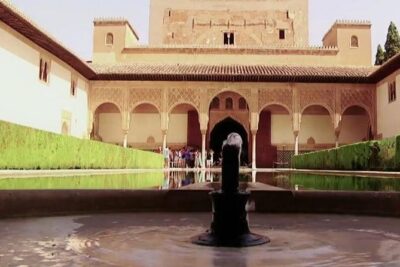
Alhambra Private/Small Group Tour & Nasrid Palaces Skip the Line
Read our review →
Grand Palace, Wat Pho, and Wat Arun Private Tour
Read our review →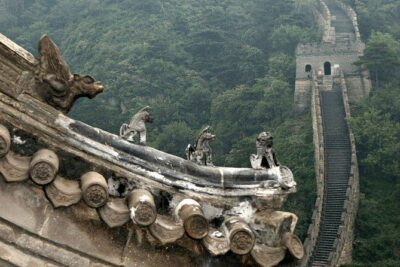
Mutianyu Great Wall&Summer Palace Excursion:Group/Private Options
Read our review →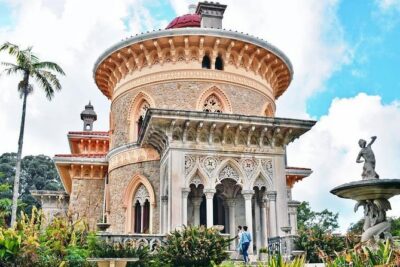
Private Tour of Sintra, Cabo da Roca and Cascais with 2 Palaces
Read our review →
Private 4hrs Venice Tour: Doge’s Palace, Grand Canal & St Mark’s
Read our review →
Knossos Palace Skip-the-Line Ticket & Private Guided Tour
Read our review →