
Review · TURIN
Turin: Entrance ticket for Palazzo Reale & audioguide
Turin’s Royal Palace gives you a close look at Savoy power, from the Chinese Cabinet and private royal apartments to the grand ballroom and one of Europe’s finest armour collections. The included smartphone audio guide also covers Turin’s monuments, but its palace content deserves careful checking before you pay $46.
I like the freedom of a self-guided visit, and I like the route through the Royal Armoury, where you can see centuries of weapons and even a sword linked to Napoleon. The main drawback is serious: the audio guide may be hard to access or may offer only a short Turin introduction rather than useful commentary inside the palace.
Key points to know before you book
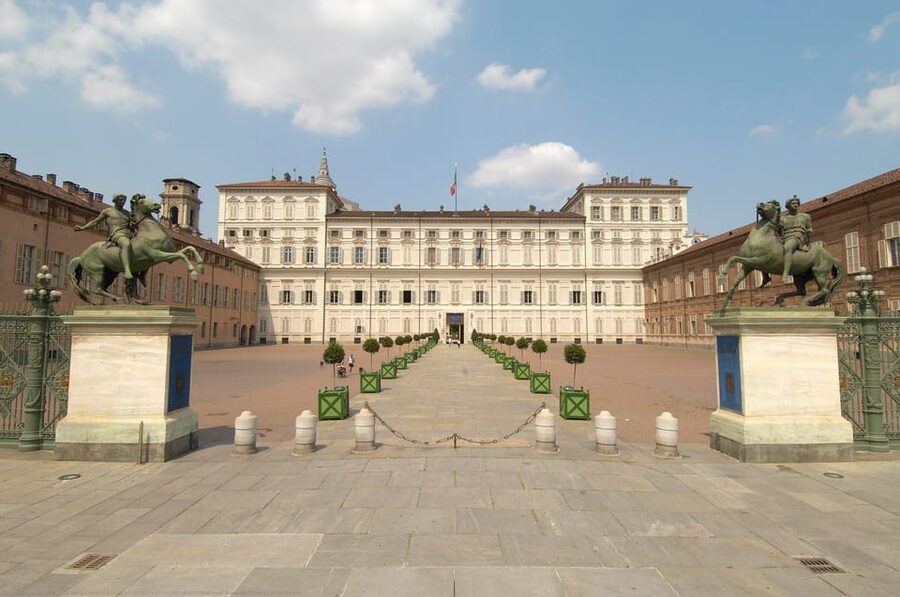
- The Royal Palace is the main event: You’ll visit the Piano Nobile, royal apartments, Queen’s rooms, throne room, ballroom, and Royal Armoury.
- Juvarra’s staircase is a highlight: The Scala delle Forbici uses marble and sweeping curves to create an unusually light-looking grand staircase.
- The audio guide runs on your phone: It is offered in English, Italian, French, German, Spanish, Russian, and Traditional Chinese.
- Bring your own headphones: Headphones are not included, and all audio content depends on your smartphone.
- Check the value carefully: The listed price is $46 per person, while a direct palace ticket may be much cheaper.
- Children have a special rule: The 10 to 17 child option includes audio access but no palace entry ticket.
What this Turin experience really includes
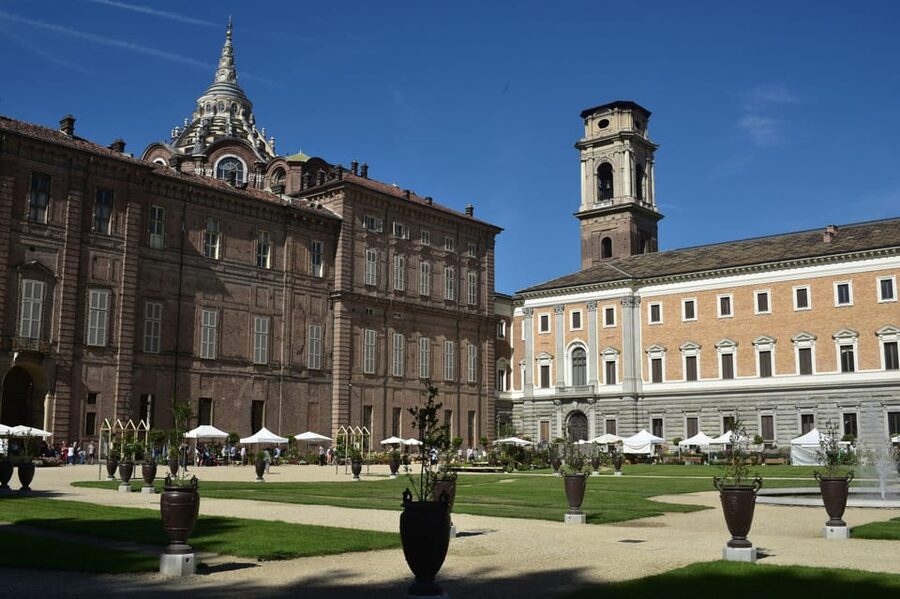
This is not a guided walking tour with a person leading you through Turin. It is a Royal Palace admission ticket paired with digital audio content for the city and its monuments.
You download the audio guide to your smartphone and select the sections connected with the palace. The planned visit lasts about three hours, though the exact pace is yours. You can pause, skip, or replay the material instead of following a group on someone else’s schedule.
That freedom is useful in a palace filled with rooms that deserve different amounts of time. You might move quickly through a formal reception room, then pause longer in the Armoury or at the Scissor Staircase. The trouble is that the audio system appears to be the weak link. Make sure you can find the palace content, not just the general Turin introduction.
The audio guide is available in seven languages: English, Italian, French, German, Spanish, Russian, and Traditional Chinese. This is helpful for independent visitors who prefer listening to reading, though the quality and amount of palace-specific material matter more than the number of language choices.
More Palace Entry Tickets in Italy
- Venice: Doge’s Palace Reserved Entry Ticket
★ 4.6 · 42,716 reviews - Florence: Palazzo Vecchio Entrance Ticket & Audioguide
★ 4.4 · 4,822 reviews - Florence: Entrance Ticket to Pitti Palace
★ 4.5 · 4,528 reviews
Entering the former Savoy seat in Turin
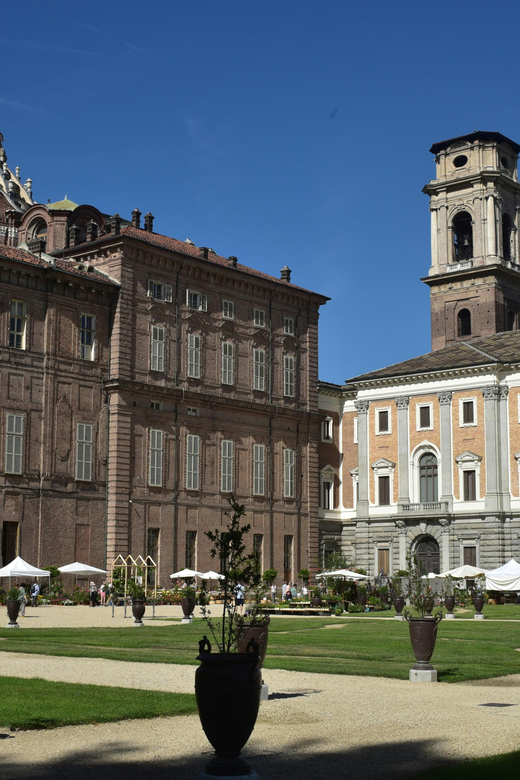
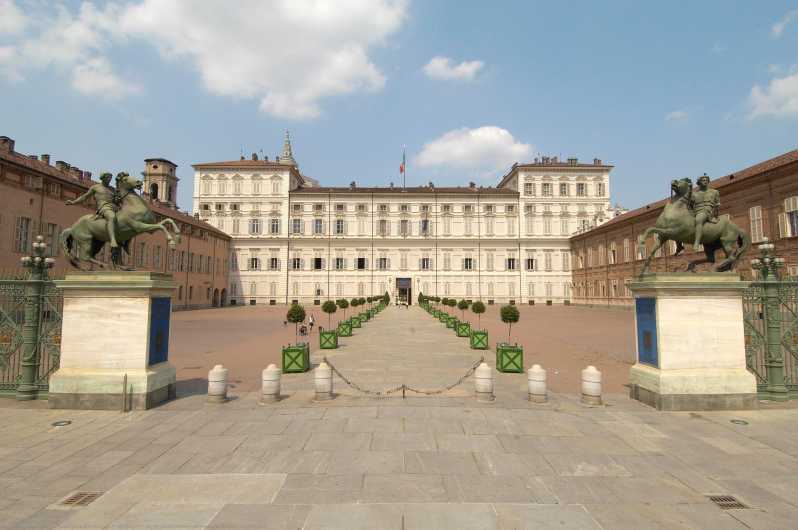
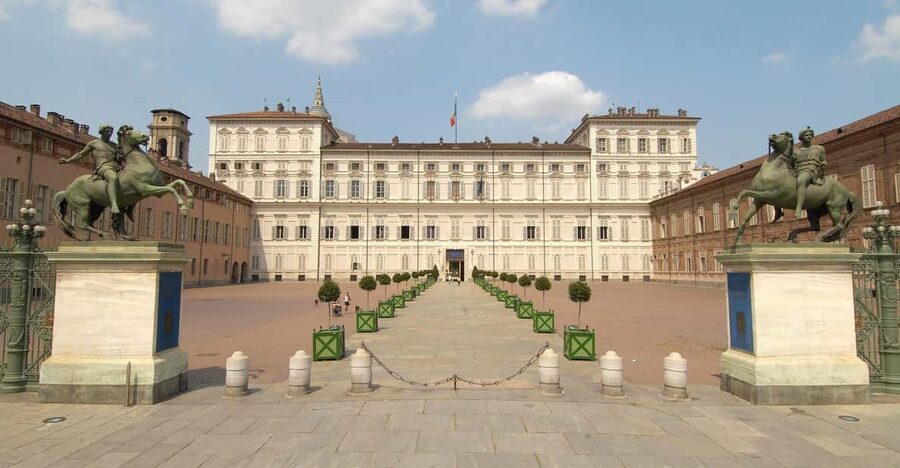
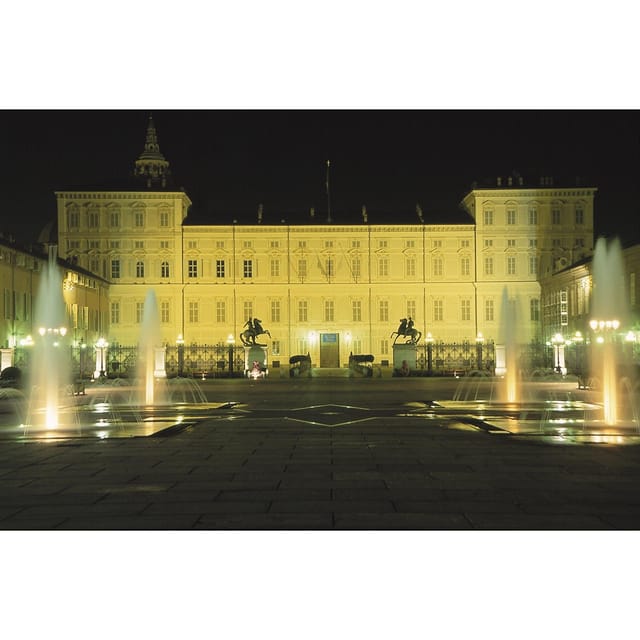
The Royal Palace was the monumental home of the Savoy dynasty and the most important Savoy residence in Piedmont. It is also part of the UNESCO World Heritage listing for the Savoy residences, which gives the building wider importance beyond its individual rooms.
Your visit begins on the Piano Nobile, the main ceremonial level. This is where the palace presents its public face: formal spaces made for court life, state occasions, and carefully managed royal image-making.
One room singled out in the route is the Chinese Cabinet. Its name tells you something about the taste of European courts, which often prized Asian-inspired decoration and imported luxury objects. Here, the small scale and decorative focus offer a change from the larger ceremonial rooms.
The palace is best read as a sequence of contrasts. You move from public display to private living areas, from grand architecture to small decorative rooms, then back to rooms designed for ceremony. An audio guide can help connect those spaces, but the visit still has value even when you stop to study the furnishings and architectural details on your own.
The Scissor Staircase and Juvarra’s design
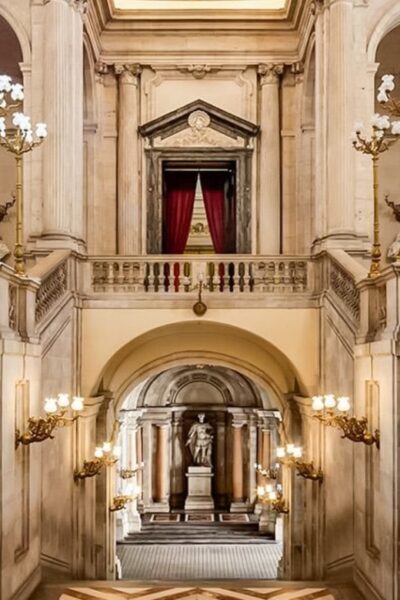
To reach the second floor, you use the Scala delle Forbici, or Scissor Staircase. It was designed by Filippo Juvarra, one of the leading architects connected with the Savoy court.
The staircase is made of marble and is described as imposing yet light and sinuous. That combination is the point. A staircase in a royal palace is not just a way to change floors. It is part of the show, controlling how people arrived, moved, and were seen.
I would slow down here even if the audio commentary is brief. Look at the way the stairs curve and how the marble keeps the design from feeling heavy. This is one of the clearest architectural moments on the route, and it gives you a reason to look up from your phone.
The staircase also provides a useful pause between the representative rooms below and the more personal royal apartments above. It marks a shift from public ceremony toward the private world of the monarchs.
Charles Albert’s private apartments
The Private Apartments of the King were renovated in the 19th century for King Charles Albert. The rooms kept earlier furniture and furnishings, so the result is not a single-period interior. Instead, you see later changes layered over older court decoration.
That layering is worth noticing. Royal residences rarely remain frozen in the era of their first construction. Each ruler adjusts rooms to current taste, practical needs, or political fashion. In these apartments, the retained furnishings help connect the 19th-century renovation with the palace’s earlier life.
The King’s rooms are also where the visit becomes less about public ceremony and more about how a monarch lived within a heavily controlled setting. The material is still formal, but the purpose differs from a throne room or ballroom.
The audio guide should be most useful here if it explains the rooms in order. Unfortunately, the available information about this experience does not guarantee that each room has a matching track. You should check the room number or title on your phone before listening so you do not end up hearing a general Turin segment while standing in the wrong apartment.
Same royal city, another way in:
- Doge’s Palace & St. Mark’s Basilica with Terrace Access Tour
★ 4.7 · 10,697 reviews - Venice: Doge’s Palace and St Mark’s Basilica Walking Tour
★ 4.4 · 6,291 reviews - Legendary Venice: Doge’s Palace, St Mark’s & VIP Terrace Access
★ 4.5 · 5,033 reviews - Venice: Doge’s Palace and St. Mark’s Basilica Tour
★ 4.5 · 3,734 reviews
Daniel’s Gallery and the Queen’s rooms
The apartments lead to Daniel’s Gallery, described as one of the best-preserved Baroque rooms in the palace. This room adds another style to the visit, after the 19th-century royal interiors and the earlier Savoy settings.
Baroque rooms are designed to impress through movement, decoration, and theatrical effect. Daniel’s Gallery is likely to feel more unified than the renovated apartments because its period character has remained more intact. Give it time instead of treating it as a corridor between rooms.
The route then continues into the Queen’s apartments. You’ll see the dining room and the Alcove Room, where the wedding bed once stood. The bed is an important reminder that royal life involved ritual as well as comfort. Marriage, succession, and family presentation all had a place within these apartments.
The sequence also gives you a sense of rank. The Queen’s rooms are not simply spare bedrooms. They belong to a formal system of court life, where rooms had specific functions and where private spaces could still be carefully staged.
The throne room and ballroom
Near the end of the palace route, the mood becomes more solemn in the Queen’s Throne Room and Ballroom. These spaces return you to the public side of monarchy, but with a stronger emphasis on ceremony.
A throne room is designed around authority. The room’s purpose is not casual comfort but controlled access, formal audiences, and visual hierarchy. Even without a long explanation, the layout and decoration should make that clear.
The Ballroom offers the grandest change of scale. It was built for court events, and its function helps explain why royal residences contain so many rooms that seem too large for ordinary life. These were stages for diplomacy, marriage celebrations, and social rank.
You may find that the palace works best when you compare these spaces with the private apartments. The King’s rooms and Queen’s rooms show royal domestic life, while the throne room and ballroom show monarchy as public performance. That contrast is one of the most useful themes to keep in mind during the visit.
Finishing in the Royal Armoury
The visit ends in the Royal Armoury, described as one of the world’s richest collections of armour. This is not a small afterthought. It brings together armour from several centuries and adds a strong historical counterpoint to the palace interiors.
The collection includes pieces connected with the Napoleonic era, including a sword said to have belonged to Bonaparte. That kind of object gives the final section a direct link to major European conflict and political change.
I would save enough energy for this part. Visitors often spend most of their attention on painted ceilings and royal bedrooms, then rush through the weapons collection. Here, the objects are more tangible. Armour shows how rulers and soldiers presented power in metal, while the sword connects that display to a famous military figure.
The Armoury also makes the palace feel less like a decorative residence and more like a political center. The Savoy court was connected with military authority, and the collection helps make that connection visible.
Is the smartphone audio guide worth using?
The idea is good. A multilingual audio guide lets you explore at your own speed, and seven language choices make the experience accessible to a wide range of visitors. You do not need to join a fixed group or wait for a guide to finish explaining a room.
The practical issue is reliability. The audio guide codes are sent by email, usually within the day before the visit. The booking confirmation itself does not provide entry to the palace, so you need the separate Royal Palace ticket email as well as the audio codes.
One particularly important warning concerns the amount of content. The available feedback describes an audio guide that was difficult to download and, in one case, offered only about ten minutes of general information about Turin rather than a full commentary on the palace. Another complaint was that the audio did not match the rooms being visited.
That means I would not book this product solely for the audio. Treat the ticket as the core purchase, and consider the audio a possible extra. Read the instructions before arriving, download everything when you have a reliable connection, and bring headphones. If the palace tracks are missing, the room signs and printed information inside may be more useful than the phone content.
The $46 price and the child-ticket problem
At $46 per person, this is expensive for a self-guided palace visit. The price may make sense to you if the ticket gives convenient timed access and the audio content is full, accurate, and easy to use. But the value drops quickly if the audio is only a short city introduction.
A direct entry price mentioned in the supplied information is about €15, which creates a large gap. I would compare the official Royal Palace price before booking. You are paying a substantial premium for digital content that may not work as expected.
The child rule needs special care. The Child 10 to 17 years option provides the audio guide but no ticket for entry to the palace. That is unusual enough to check before payment. Do not assume that selecting the child category covers admission.
There is no transportation included. This is not a problem if you are already visiting central Turin, but you will need to arrange your own way to the palace. Food and drinks are not allowed inside, and pets are not allowed except for assistance dogs.
The visit is wheelchair accessible, which is useful for anyone who needs step-free access. The listed duration is three hours, but the self-guided format means you can spend more or less time depending on your interest and how well the audio works.
Who should book this Royal Palace visit?
I can see this working best for an independent visitor who wants palace admission without joining a group. It also suits families and couples who prefer to move at their own pace, provided everyone understands the child-ticket rule and has a compatible phone.
It is a reasonable choice for someone who already plans to explore Turin’s monuments and likes having one audio platform for the city. The seven language options are a real benefit for non-Italian speakers.
I would be more cautious if the palace is your main reason for booking. In that case, the $46 price needs stronger justification than a short or poorly matched audio track. You may get better value by buying direct admission and using the palace’s own information, if available.
Book only after checking the email delivery process and the exact ticket category. Your tickets and audio codes should arrive by email within the day before the visit. If they do not arrive, the instructions say to call the provider. Do not rely on the GetYourGuide confirmation alone for entry.
Should you book it?
Book this if you value flexibility, need one of the seven listed languages, and are comfortable treating the audio guide as a bonus rather than the main reason to pay more. The Royal Palace itself offers plenty to see, especially the Scissor Staircase, Daniel’s Gallery, the Queen’s rooms, and the Royal Armoury.
Skip it if the $46 price is hard to justify or if you expect detailed, room-by-room narration. Compare the direct palace ticket first. For many people, the smarter choice may be simple entry, your own research, and a careful look at the palace’s rooms without depending on a troublesome audio download.
FAQ
Where is this experience located?
It takes place in Turin, in Italy’s Piedmont region, with the palace visit at the Royal Palace of Turin.
How long does the visit take?
The listed duration is three hours. Since the visit is self-guided, you control how quickly you move through the rooms.
Is entry to the Royal Palace included?
Yes, Royal Palace entry is included for the standard ticket type. The child option for ages 10 to 17 does not include a palace entry ticket.
Which languages are available for the audio guide?
The audio guide is available in English, Italian, French, German, Spanish, Russian, and Traditional Chinese.
Do I need to bring headphones?
Yes. Headphones are not included, so you should bring your own if you want to listen comfortably from your smartphone.
Is transportation included?
No. Transportation is not included in the experience.
How do I receive the palace ticket and audio guide codes?
The tickets and audio guide codes are sent to your email within the day before the visit. The booking confirmation itself does not allow entry to the palace.
What happens if I do not receive the tickets by email?
The instructions say to call the provider if the tickets are not in your email.
Are food and drinks allowed inside?
No. Food and drinks are not allowed.
Is the Royal Palace wheelchair accessible?
Yes, the activity is listed as wheelchair accessible.
Fresh palace tours around Italy
- Foligno and the frescoes of Palazzo Trinci, a masterpiece of the Middle Ages – Private Tour★ 4.5 · 2 reviews
- Venaria Royal Palace and Gardens in Turin★ 4.0 · 12 reviews
- Tour of Doge’s Palace and Gondola Ride★ 4.5 · 60 reviews
- Full Venice Walking Tour: Doge’s Palace and St. Mark’s★ 4.6 · 32 reviews
- The places of the Medici family: the Palace and the Chapels★ 4.7 · 12 reviews
- St. Mark’s Basilica, Doge’s Palace & Glass Factory Tour★ 4.1 · 216 reviews
- Venice: St Mark’s Basilica and Doge’s Palace Private Tour★ 4.8 · 56 reviews
- Venice: Doge’s Palace and St. Mark’s Basilica Guided Tour★ 4.6 · 458 reviews
Palace Entry Tickets: the shortlist.

Buckingham Palace: The State Rooms Entrance Ticket
Read our review →
Prague Castle and Lobkowicz Palace Entry Tickets
Read our review →This visit also appears in