
Review · ITALY
Florence: Palazzo Vecchio Museum
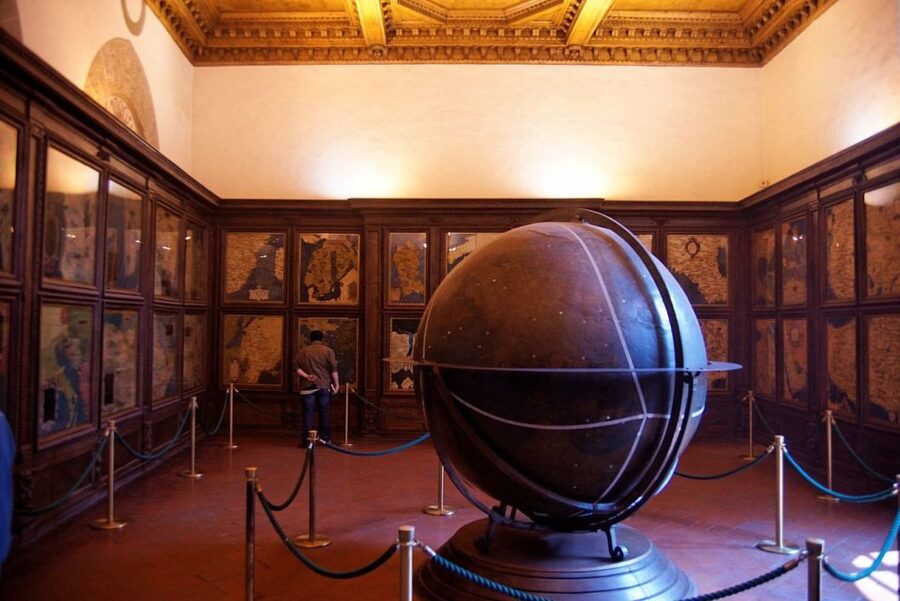
Florence’s Salone dei Cinquecento is the main event here: a huge government hall filled with painted decoration, political drama, and Medici ambition. The scale alone helps explain how Florence’s rulers wanted power to look. I like that this tour also reaches the Medici apartments, so you see both the public face of government and the private rooms of the family behind it.
I also like the two-hour format. It gives you a proper guided visit without swallowing half your day, and reserved tickets remove one common museum worry. The main caution is price: at $93 per person, this is a serious splurge for a short museum visit, and the quality depends heavily on the individual guide.
Key points to know before booking
- The Hall of the Five Hundred takes center stage: Expect a vast room with major frescoes and decoration by Renaissance artists including Giorgio Vasari.
- You see both power and private life: The tour includes public government spaces and the Medici family apartments.
- The visit lasts two hours: About 90 minutes cover Palazzo Vecchio, with roughly 30 minutes devoted to the Salone dei Cinquecento.
- Guiding quality matters: Several guides have been praised for clear, detailed explanations, but one poorly organized visit was late, rushed, and thin on art information.
- Languages are broad: Live guiding is offered in English, Italian, Spanish, French, and German.
- Private tours and hotel pickup are possible: Pickup is limited to certain central locations and must be checked in advance.
Why Palazzo Vecchio deserves a place in your Florence plans
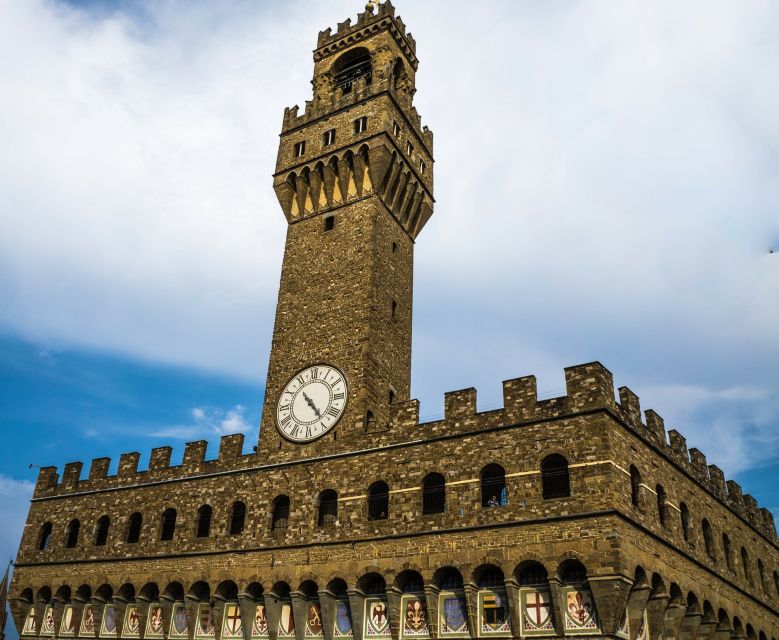
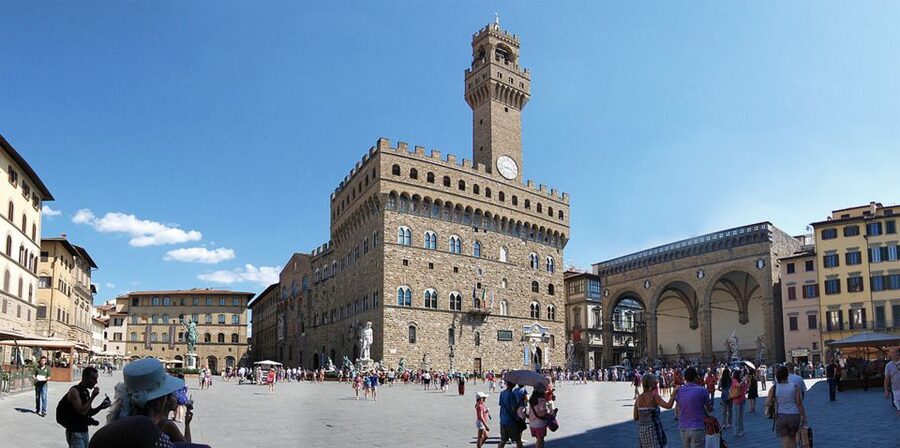
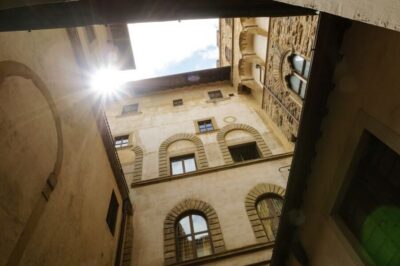
Palazzo Vecchio is Florence’s town hall, a museum, and a working civic building all at once. It sits in Piazza della Signoria, one of the city’s most important public squares, and its stern medieval exterior looks more like a fortress than a palace.
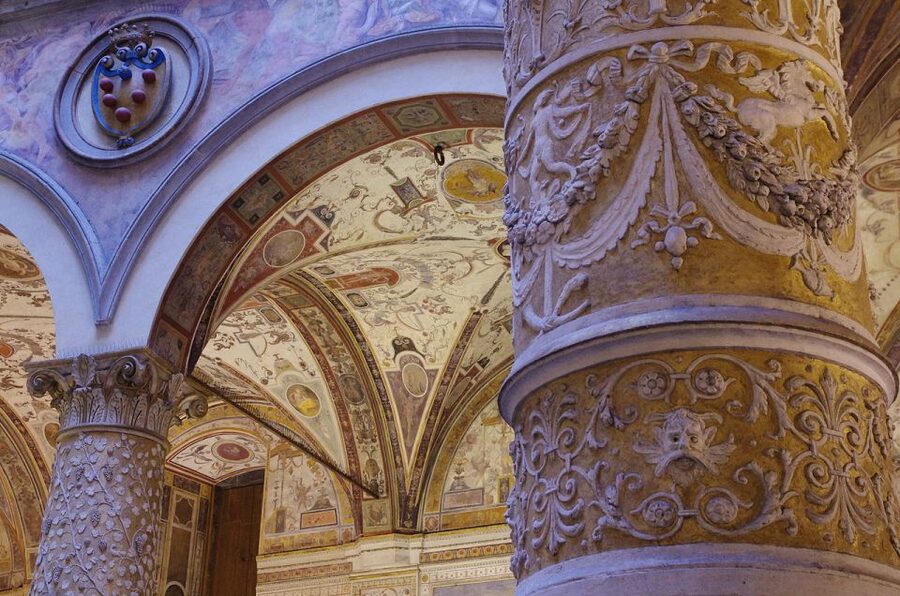
The building began in the 13th century as the seat of Florence’s government and the Signoria. Its heavy stone walls and Arnolfo Tower gave the city a strong symbol of civic authority. Inside, the mood changes quickly. Government rooms become grand ceremonial halls, and the Medici family’s taste appears in painted ceilings, decorated walls, and private apartments.
I find the building especially useful for understanding Florence beyond its famous churches and galleries. The Uffizi shows art as a collection. Palazzo Vecchio shows how art was used to display authority. Here, painting, architecture, sculpture, and politics share the same rooms.
Because Florence City Hall still occupies the building, Palazzo Vecchio is not simply an old palace turned into a museum. It remains tied to the city’s public life. That gives the visit a useful sense of purpose: you are not only looking at beautiful rooms, you are seeing the place where Florence was governed.
More Palazzo Vecchio and Pitti tours around Florence:
- Florence: Palazzo Vecchio Entrance Ticket & Audioguide
★ 4.4 · 4,822 reviews - Florence: Uffizi, Pitti Palace & Boboli Combined 5-Day Pass
★ 4.5 · 1,726 reviews - Florence: Palazzo Vecchio Guided Tour
★ 4.8 · 1,260 reviews
Starting in Piazza della Signoria
Your meeting point depends on the option you choose. Some bookings include a guide meeting you directly at your hotel, but the pickup service is limited to a certain area and is available only if the walk to the palace is practical. If you choose this option, give the exact hotel location when booking and wait for confirmation.
Without pickup, you meet the guide at the designated point and continue on foot. Since the information supplied does not name one fixed meeting place for every booking, check your confirmation carefully rather than assuming the guide will meet you at the palace entrance.
Bring a passport or identity card. Headphones may be supplied if needed, which can help in a crowded palace or with a larger group. The booking can be made as a private tour, but group arrangements depend on the option selected.
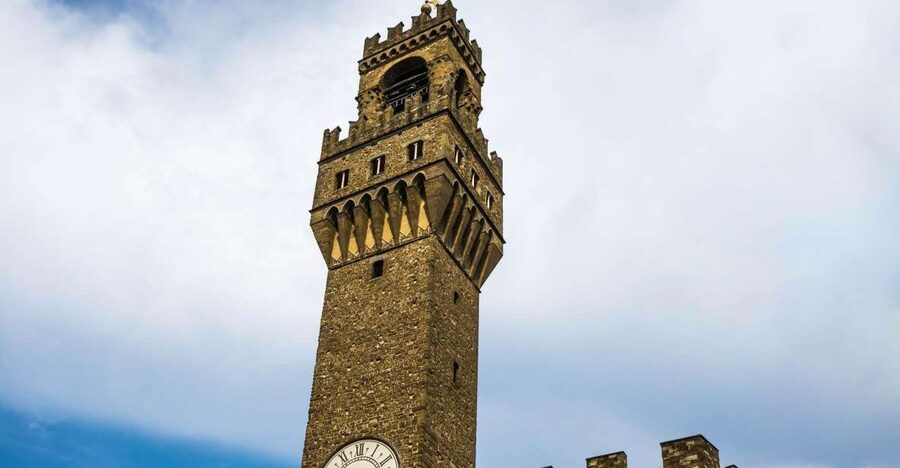
The palace itself is easy to recognize. Look for the square’s massive stone town hall and the tall Arnolfo Tower above it. Taking a few minutes to study the exterior helps set up the visit. This was built to project strength, not softness. The building’s severe lines tell you that Florence’s government wanted to be taken seriously.
The first 90 minutes: rooms built for power
The main guided portion lasts about an hour and a half. Your guide leads you through the museum’s important interiors, explaining the building, the Medici family, and the artistic program around you.
The most useful part of this approach is the connection between rooms. You are not just moving from one decorated chamber to another. You can see how Florence’s civic government, the Medici court, and Renaissance art came together under one roof.
The palace contains richly decorated rooms with painted ceilings, elaborate wall decoration, and important works linked to artists such as Michelangelo and Donatello. The supplied information does not specify exactly which works are covered on every departure, so do not expect a fixed list of individual masterpieces. The guide’s route and the day’s museum conditions can shape what you see.
That flexibility makes the guide important. A strong guide can point out the political meaning behind a room, explain why the Medici apartments look different from public halls, and help you connect names and events without making the visit feel like a classroom lecture. Several experiences have received high praise for detailed explanations and careful guiding.
At the same time, you should know the risk. One poor visit was marked by a late arrival, a rushed entry, confusion about the route, and very little explanation beyond calling rooms and paintings beautiful. That is not a small issue at this price. If the guide is not adding context, a museum brochure or audio guide may offer better value.
The Medici apartments and the family behind the display
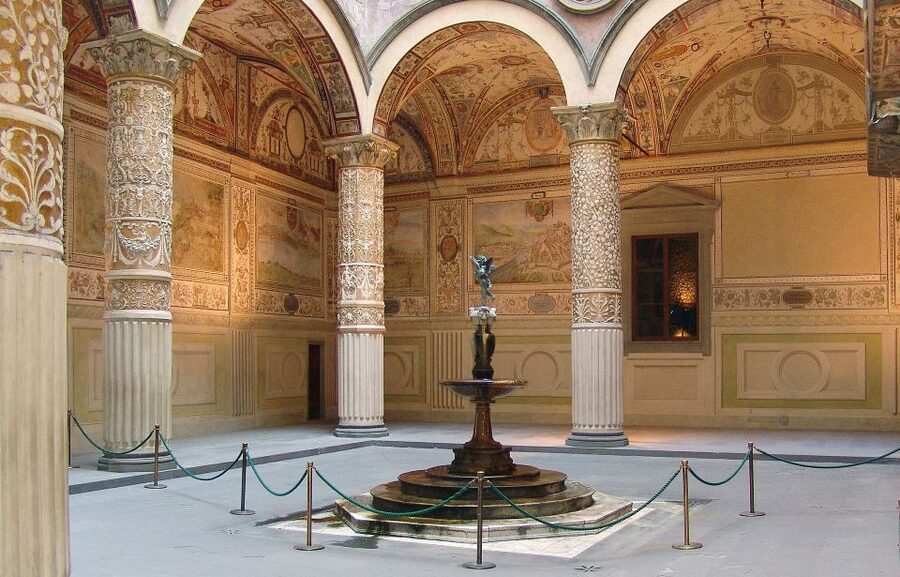
The Medici apartments are one of the tour’s strongest reasons to book. These rooms were designed to show wealth and power, but they also offer a more personal view of the family that shaped Florence.
Public halls were built to impress officials and citizens. Private apartments reveal how the ruling family wanted to live and be seen. The decoration is not casual. It turns residence into a statement, using art and elaborate design to reinforce the Medici position.
I like this part of the tour because it gives you a change of scale. The Salone dei Cinquecento is enormous and public. The apartments feel more connected to the people who lived within the palace, even though their decoration still serves a political purpose.
Do not expect a simple domestic tour. The rooms are presented as part of the Medici court, with their wealth and authority on display. Your guide’s explanation matters here, since the meaning of the decoration is easier to grasp when someone points out how private space supported public power.
If you have already visited other Medici sites in Florence, this stop can add another piece to the picture. If this is your first introduction to the family, it gives you a useful starting point without requiring a full day of palace visits.
More palace museums around Florence:
- Florence: Pitti Palace, Boboli Garden, Palatine Gallery Tour
★ 4.9 · 558 reviews - Florence: Pitti Palace and Palatina Gallery Ticket and Tour
★ 4.9 · 255 reviews - Florence: Palatina Gallery and Pitti Palace Guided Tour
★ 4.6 · 158 reviews - Florence: Museum Pass–David, Uffizi, Pitti Palace & Gardens
★ 4.2 · 134 reviews
Thirty minutes inside the Salone dei Cinquecento
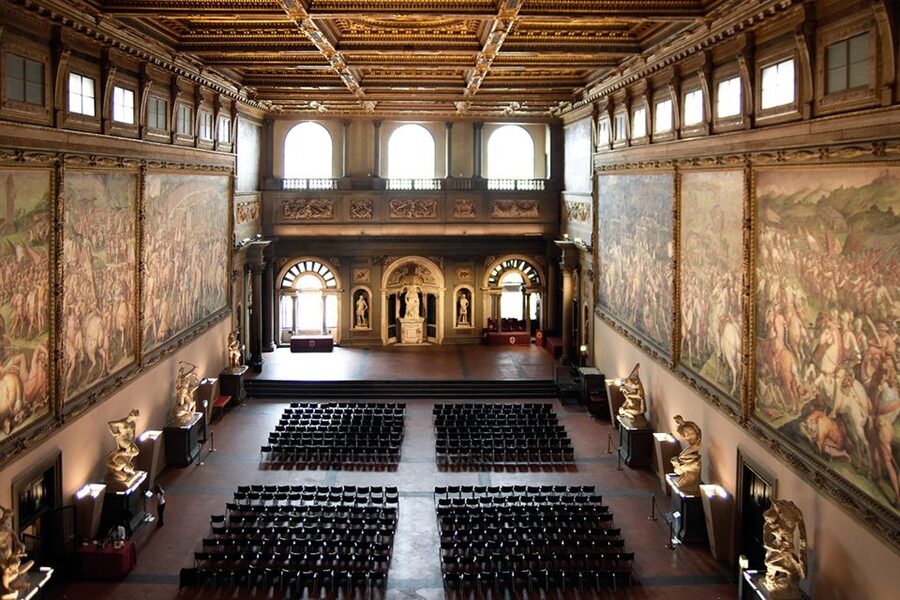
The final half hour focuses on the Salone dei Cinquecento, also called the Hall of the Five Hundred. This was the government hall, built for Florence’s civic leadership and named for the large council it housed.
The room’s size is the first thing you notice. It was made for public business on a grand scale, not for quiet contemplation. The vast dimensions helped turn government into theater. Officials and visitors were meant to feel the importance of the city and the people directing it.
The walls and ceiling carry an ambitious artistic program. Giorgio Vasari is closely associated with the hall’s frescoes and decoration, and the palace’s wider artistic story includes Renaissance figures such as Leonardo da Vinci, Michelangelo, and Donatello. The supplied tour details describe works connected with these artists, but the exact commentary can vary by guide and route.
This is the place where a good explanation earns its keep. Without context, you may mainly see a very large decorated room. With a clear guide, you can understand why the hall was built, how art supported civic authority, and how the Medici family’s presence changed Florence’s political setting.
One practical point: the hall can take up a large share of the visit. One experience was criticized for spending too long in the Room of the Five Hundred, while the rest of the palace received less attention. I would not call that automatically wrong, since the hall is the palace’s major sight, but you should decide what you want before the tour starts. If you prefer a broader overview, tell the guide early that you want balanced time in the apartments and other rooms.
Is $93 a fair price for two hours?
At $93 per person, this is not a budget museum visit. The price covers reserved admission and a professional guide for two hours, with headphones if needed. A private option costs more in practical terms, although the exact price depends on the booking choice.
I think the value depends on your priorities. If you want to enter with a reserved ticket, understand the palace’s political story, and ask questions as you go, a guided visit can be worthwhile. Palazzo Vecchio has enough layers that a good guide can save you from simply admiring surfaces.
If you mainly want to see the rooms at your own pace, the cost is harder to defend. The poor experience described above shows why. A guide who arrives late, gets lost inside, and offers only vague comments does not provide the service you are paying for.
The strongest reason to choose this tour is not speed. It is interpretation. You are paying for someone to explain why the rooms look the way they do and how the Medici family fits into Florence’s government. I would book it when that context matters to you, especially on a first Florence visit or when you have limited time.
Guide quality can make or break the visit
The experience has received a 4.6 rating from 56 submitted ratings, with several top marks for informative guiding. One Italian-language visit was described as wonderful and full of information and curiosities. Another guide was praised for being highly informative and well prepared.
Those positive comments point to the tour’s best possible version: a focused walk through the palace where the guide brings out details you might miss alone. The available guiding languages are Italian, English, Spanish, French, and German, so you can choose the language that lets you follow art and political explanations comfortably.
But I would not ignore the lower score. A bad guide can affect the whole two hours, especially in a museum where room names and artwork labels are not enough. At this price, arriving on time, knowing the route, and explaining more than basic visual impressions should be the minimum.
You can improve your chances by confirming the meeting point, arriving early, and stating your interests at the start. Tell the guide if you want more time in the Medici apartments, more art history, or a stronger focus on Florence’s government. That will not fix an unprepared guide, but it can make a good guide’s time more useful.
Who will enjoy this Palazzo Vecchio tour?
I would recommend it to you if you want a guided introduction to Florence’s government and the Medici family in a compact format. Two hours is a sensible length for a museum stop during a busy city visit.
It also suits visitors who prefer a live explanation to reading wall labels. The palace has large rooms, famous names, and a complicated political background. Having someone organize the story can make the building easier to remember.
A private group may be the best choice for families or people with specific interests, since you can ask questions more freely and request a pace that suits your group. The supplied details confirm that a private tour is available, but not the exact group size or price.
I would be more cautious if you are mainly looking for the cheapest way inside or if you prefer complete independence. At $93, this is a guided experience with a premium price. It makes sense when the guide’s explanation is central to your visit.
Practical details that matter on the day
The activity lasts two hours, with availability depending on the starting time you choose. About 90 minutes are allocated to Palazzo Vecchio as a whole, followed by about 30 minutes focused on the Salone dei Cinquecento.
You should bring a passport or ID card. The meeting point may change with the selected option, and hotel pickup is not a general door-to-door service. It is limited to hotels within a certain area and takes place on foot, with the guide meeting you no more than 15 minutes before the start.
Cancellation is allowed up to 24 hours before the activity for a full refund. You can also reserve now and pay later, which helps if you are still arranging your Florence schedule.
Should you book Palazzo Vecchio?
Book this tour if you want the Medici story, the Hall of the Five Hundred, and the palace’s government role explained by a live guide in two hours. The reserved ticket and compact schedule are useful, and the best guides appear to provide the clear background that makes Palazzo Vecchio much more than a series of decorated rooms.
Think twice if $93 feels high for a short museum visit or if you are comfortable using your own guidebook. The experience is strongly tied to the person leading it, and one poor visit was not worth the price.
My advice is to choose the tour for its interpretation, not just for entry. Confirm the language, meeting point, and pickup details, then tell the guide what you most want to see. If you get a prepared guide, Palazzo Vecchio can be one of Florence’s most revealing stops.
FAQ
How long does the Palazzo Vecchio tour last?
The tour lasts two hours. About 1.5 hours are spent touring Palazzo Vecchio, with around 30 minutes focused on the Salone dei Cinquecento.
What parts of Palazzo Vecchio are included?
The tour includes the Palazzo Vecchio Museum, the Salone dei Cinquecento, and the Medici family apartments.
What languages are available?
Live guiding is available in Italian, English, Spanish, French, and German.
Is this a private tour?
A private group option is available, but shared and private arrangements depend on the option selected when booking.
Are tickets included?
Reserved tickets are included, along with a professional guide for two hours. Headphones are provided if necessary.
Is hotel pickup available?
Optional hotel pickup is available only in a limited area. The guide meets you at the hotel no more than 15 minutes before the activity, and the tour continues on foot.
What should I bring?
Bring a passport or identity card.
Can I cancel the booking?
You can cancel up to 24 hours before the activity for a full refund. Reserve now and pay later is also available.
Fresh palace tours around Florence
- The places of the Medici family: the Palace and the Chapels★ 4.7 · 12 reviews
- Pitti Palace and Boboli Gardens Private Tour★ 4.7 · 38 reviews
- Florence: Pitti Palace and Boboli Gardens Private Tour★ 4.8 · 46 reviews
- Palazzo Vecchio Small Group Tour★ 4.9 · 10 reviews
- Palazzo Vecchio 90-Minute Morning Guided Tour★ 4.7 · 104 reviews
- Palazzo Vecchio Secret Passages Tour & Lunch or “Gelato”★ 4.3 · 16 reviews
- Palazzo Vecchio: Magnificent Private Tour★ 4.7 · 61 reviews
- Palazzo Vecchio: Private Guided Museum Tour & Tower Tickets★ 4.7 · 18 reviews
Palazzo Vecchio and Pitti Palace Tours: the shortlist.
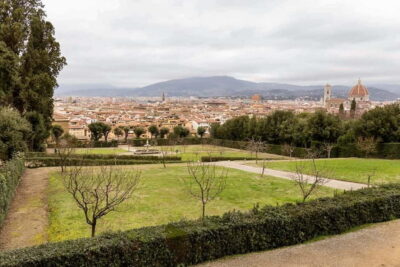
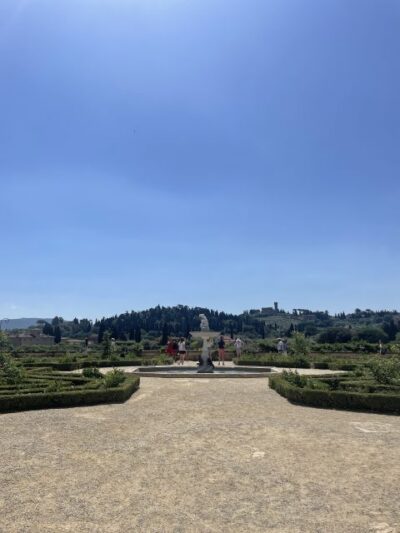
Uffizi, Pitti Palace & Boboli Combined 5-Day Pass
Read our review →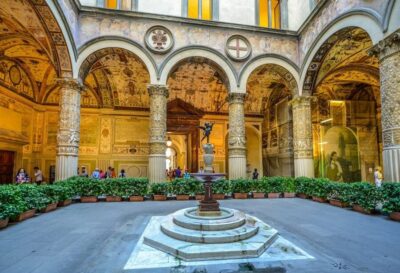
Palazzo Vecchio: Skip-the-Line Entry and Secret Passage Tour
Read our review →
Pitti Palace, Boboli Garden, Palatine Gallery Tour
Read our review →This visit also appears in