Review · ROME
Palazzo Barberini: 2-Hour Private Tour
Palazzo Barberini packs centuries of Italian art into a single Roman palace, with Raphael’s La Fornarina and Caravaggio’s troubled story at the center. The two-hour private format gives you room to ask questions instead of moving with a large crowd.
I like the clear sweep from medieval religious art to the theatrical Baroque, and I like that Pietro da Cortona’s ceiling receives proper attention rather than becoming a quick glance overhead. The main drawback is the price, $135.94 per person, which makes the tour best for visitors who want guided interpretation, not simply museum entry.
A second point needs checking before you book: the highlights describe a stroll ending in Piazza Navona, but the meeting details say the activity ends back at the museum meeting point. Ask the provider to confirm the final stop.
Key points to know before you book
- Raphael’s La Fornarina: See one of the museum’s best-known paintings and hear the stories tied to Raphael and his model.
- Caravaggio’s darker side: Learn about the artist known as the Cursed Painter, along with the conflicts and drama surrounding his life.
- A full art-history arc: Move from the Middle Ages through the Renaissance and into the Baroque, with political and religious change explained along the way.
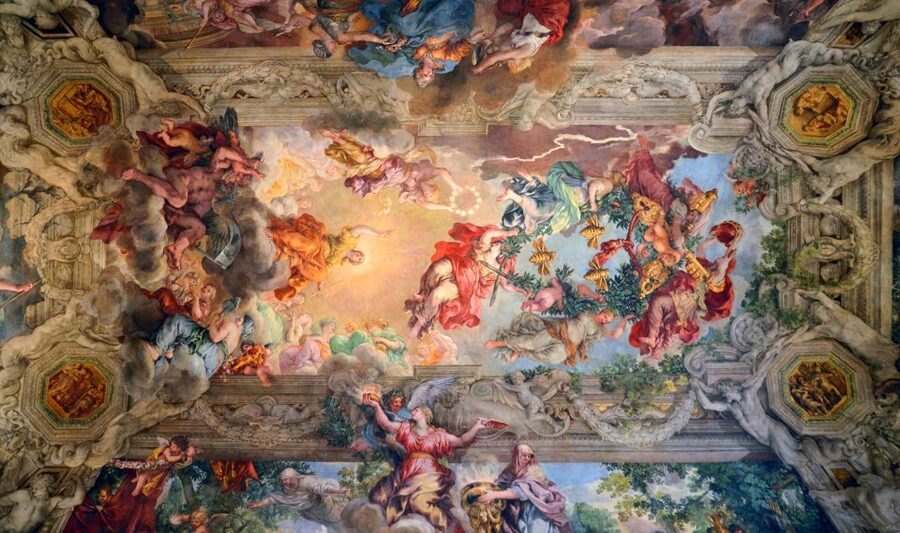
- Pietro da Cortona’s ceiling: Look up for one of Rome’s grandest examples of Baroque illusion and decoration.
- A genuinely private visit: You have a live guide in English or Italian and a private group rather than a large shared tour.
- Two hours with a clear limit: The duration suits a focused museum visit, but it leaves little time for every room or artist.
Palazzo Barberini puts Italian art under one roof
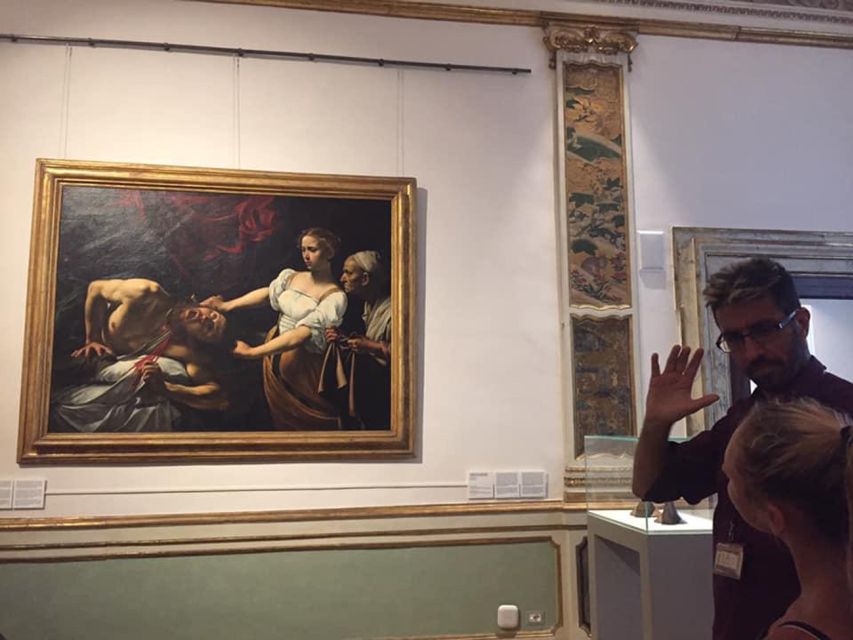
Palazzo Barberini is a useful place to study how Italian art changed over time. Instead of seeing isolated masterpieces in separate museums, you move through a sequence of styles, from the Middle Ages to the Baroque.
That progression matters. Medieval art often centers on religious devotion and formal presentation. Renaissance painting brings greater interest in human likeness, space, and classical ideals. The Baroque then adds movement, theatrical light, emotional force, and grand visual effects.
Your guide is meant to connect those changes to the religious and political shifts behind them. That is the real reason to consider a private tour. A painting can be beautiful on its own, but the story of why it looks that way gives you a firmer grasp of Italian art.
You should expect interpretation rather than a simple list of names and dates. The tour focuses on Raphael, Titian, Caravaggio, El Greco, Guido Reni, and Pietro da Cortona, while using their work to explain wider changes in taste and power.
More Private Palace Tours in Italy
- Private Tour – National Museum of Palazzo Massimo
★ 5.0 · 51 reviews - Private Tour – Palazzo Barberini
★ 5.0 · 23 reviews - Colosseum, Roman Forum and Emperors’ Palace Private Guided Tour
★ 5.0 · 14 reviews
Raphael’s La Fornarina gives the visit its human face
One of the clearest highlights is Raphael’s La Fornarina. You will see the painting and hear the story connected to Raphael and the woman portrayed in it.
The work is a useful bridge between art history and personal drama. Raphael is not presented only as a famous painter from the Renaissance. You also get the human story around an artist whose reputation, relationships, and working life have helped keep public interest alive.
I would give this painting time rather than treating it as a quick photograph stop. Ask your guide what details to notice and how the work fits into Raphael’s place in the Renaissance. Since the tour is private, this is the moment to speak up if you want more attention on technique, symbolism, or the story behind the sitter.
The painting is also one reason this tour works well for first-time museum visitors. You do not need to arrive with a strong background in Renaissance art. The guide can use one memorable work to explain a larger period.
Titian and the move toward expressive painting
Titian brings another important voice into the tour. His work helps show the changing direction of Italian painting, particularly the growing interest in color, presence, and emotional effect.
The supplied details do not name a specific Titian painting, so you should not expect a promised single centerpiece in the same way that you can expect La Fornarina. Still, his inclusion gives the guide a chance to place Renaissance art in a broader setting.
This part of the visit may appeal most if you want connections between artists rather than a greatest-hits parade. You can compare Titian’s approach with Raphael’s, then see how later painters pushed painting toward stronger drama and mood.
A private guide can make that comparison more useful. Instead of wondering why two paintings from the same broad period feel different, you can ask directly about color, composition, religious purpose, or the changing taste of patrons.
Caravaggio brings drama, conflict, and shadow
Caravaggio is presented as the so-called Cursed Painter, a label that points to the darker stories surrounding his life. His work and reputation give the tour a sharper edge after the more polished world associated with Raphael and Titian.
You will hear about the stories behind Caravaggio and the forces that shaped his art. The tour description emphasizes both his paintings and his life, so expect the guide to connect his difficult personal story with the power of his work.
Caravaggio is particularly useful for showing what makes the Baroque feel different. His art is known for strong contrast, direct human emotion, and scenes that feel close enough to touch. The museum visit lets you consider how painting could become more immediate and forceful.
I would not book this tour solely for Caravaggio unless you first confirm exactly which works are included in the route. The information promises attention to Caravaggio, but it does not name individual paintings. The strength here is the guided explanation, not a guaranteed checklist of specific canvases.
More Private Palace Tours in Rome
- Doria Pamphilj Palace Gallery and Museum Private Tour with Local Guide
★ 4.5 · 10 reviews - National Museum of Palazzo Massimo: 2-Hour Private Tour
★ 5.0 · 3 reviews
El Greco and Guido Reni widen the picture
El Greco and Guido Reni are also part of the collection shown during the tour. Their inclusion keeps the visit from becoming a three-name circuit focused only on Raphael, Titian, and Caravaggio.
For you, this means the museum experience has more range. You get to see how different artists handled religious subjects, figures, color, and emotion. The guide can show how artists did not all respond to the same period in the same way.
Guido Reni is especially useful in a discussion of the Baroque, since the period was not one single look. Some Baroque works feel energetic and theatrical. Others can appear controlled, graceful, and idealized. El Greco adds another distinctive voice, giving you another point of comparison.
Since the tour lasts only two hours, the guide will have to select what receives the most time. That is a normal limitation, not a flaw, but it means you should tell the guide if one of these artists matters most to you.
Pietro da Cortona’s ceiling demands an upward glance
The ceiling by Pietro da Cortona is one of the tour’s most memorable visual stops. It is a major example of Roman Baroque decoration, and it rewards you for looking above eye level.
Ceilings are easy to miss in museums. Visitors often move from painting to painting with their eyes fixed on the walls. Here, the ceiling changes the scale of the visit. Instead of seeing art as framed objects, you see how Baroque artists and patrons used architecture, painting, and illusion together.
Your guide will help explain what makes the ceiling important. You might find the discussion especially useful if grand Roman churches and palaces are on your itinerary, since it gives you a way to recognize the period’s love of motion, spectacle, and visual surprise.
The ceiling also breaks up the two-hour route nicely. After studying individual works by Raphael, Titian, or Caravaggio, you get a large-scale work that fills the room and changes your sense of space.
The route from the Middle Ages to the Baroque
The broad historical order is one of this tour’s strongest features. You are not simply shown famous pictures. You are guided through a sequence that explains why Italian art changed.
The medieval section provides the starting point. Religious art dominated much of the period, and paintings often followed established forms. From there, the Renaissance brought new interest in observation, the human body, individual identity, and classical influence.
The later material becomes more dramatic. Religious and political shifts helped create demand for art that could persuade, move, and impress. That is where the Baroque style enters with its strong emotion, theatrical presentation, and grand decoration.
This explanation can help you make sense of Rome beyond Palazzo Barberini. Once you understand the contrast between Renaissance balance and Baroque energy, churches, fountains, palaces, and paintings across the city become easier to read.
I like this kind of structure because it keeps the visit from becoming a museum sprint. You leave with a basic map of Italian art, not just a few famous names. The tradeoff is that two hours cannot cover every artist or room in detail.
Why a private guide may justify the price
At $135.94 per person, this is not a low-cost way to enter Palazzo Barberini. The price includes entry tickets, a live guide, and a private group, so you are paying for both admission and personal attention.
The value depends on your travel style. If you already know the collection well and prefer to read labels at your own pace, a private tour may feel expensive. If the names Raphael, Titian, Caravaggio, and Pietro da Cortona mean little to you, the guide can give the paintings a useful framework.
The private format is also helpful for mixed-interest groups. One person can ask about Caravaggio’s life, another can focus on Renaissance technique, and someone else can ask about the politics behind Baroque art. You do not have to follow a fixed lecture without questions.
With only nine reviews and a rating of 4.9, the available feedback points to a very positive experience, but the small number means I would avoid treating the score as a guarantee. The clearest value comes from the tour’s design: a focused museum visit, a private guide, and an art-history explanation in two hours.
Timing, meeting point, and what to carry
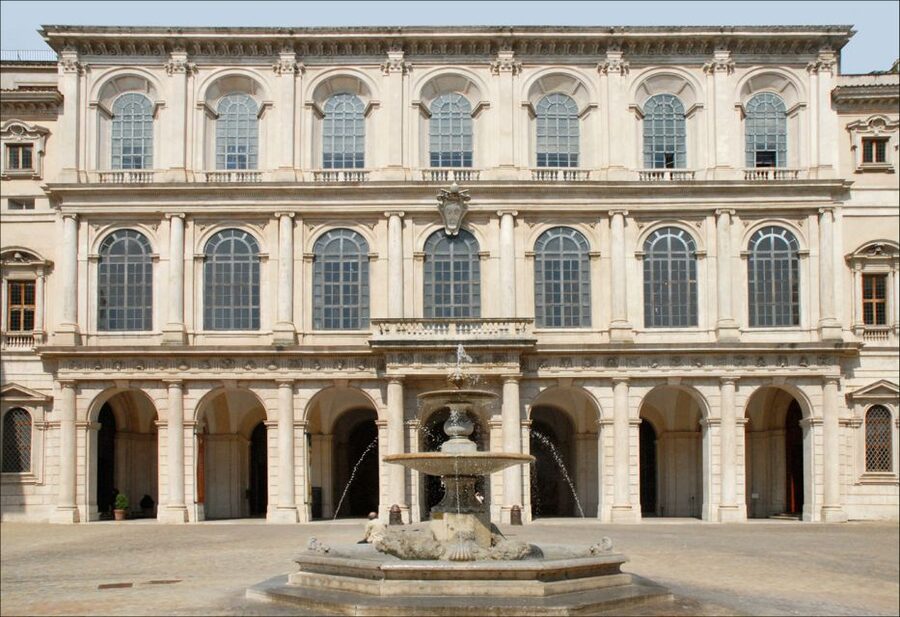
Plan to arrive 15 minutes before the start. Your guide waits in the museum courtyard in front of the entrance, holding a sign with the tour name. Entry tickets are handed out at the start, so arriving late could make the opening more difficult.
There is no hotel pickup or drop-off. You need to make your own way to the museum. The activity takes place rain or shine, though the main visit is inside.
Leave luggage and large bags behind. They are not allowed. Bring identification for children, since a passport or ID card is specifically required for them.
The tour is offered in English or Italian. If you are booking for a family, note that the experience is not suitable for people with mobility impairments or wheelchair users. That limitation is important to settle before paying.
The tour ends at the meeting point according to the practical activity details. At the same time, the highlights describe a finish in Piazza Navona, the symbol of Roman Baroque. Because those two details do not match, confirm whether Piazza Navona is included as a guided walk or simply part of the advertised theme.
Who will get the most from these two hours
I would recommend this experience to you if you want a guided introduction to Italian art and prefer a private setting. It suits first-time visitors who want help making sense of different periods, as well as returning visitors who want to focus on a few major painters.
It is also a good match for people who enjoy stories about artists. Raphael’s La Fornarina and Caravaggio’s difficult reputation add a human thread to the art. You are not limited to dates, titles, and technical terms.
The tour may be less suitable if your priority is a slow, independent museum visit. Two hours gives you a clear route, but not unlimited time with every work. It may also be poor value if you are mainly interested in one artist and do not want the larger Middle Ages to Baroque survey.
Families should think about the mobility restriction and the requirement for children to carry identification. People with large bags will need to make other arrangements before arriving.
Should you book Palazzo Barberini: 2-Hour Private Tour?
Book it if you want a focused art lesson with a private guide, especially if Raphael, Caravaggio, and Baroque Rome are high on your list. The historical sequence, La Fornarina, Caravaggio’s story, and Pietro da Cortona’s ceiling give the two hours a strong shape.
At $135.94 per person, the tour needs to provide more than entry. Its value lies in the guide’s ability to connect the paintings, explain the religious and political changes behind them, and answer your questions in a private group.
Before booking, confirm the ending point, check the mobility requirements, and decide if a two-hour overview fits your pace. If those details work for you, this is a practical way to see Palazzo Barberini with more meaning than a quick walk through on your own.
FAQ
How long does the Palazzo Barberini private tour last?
The tour lasts two hours. Starting times vary, so check availability when booking.
What is included in the price?
Entry tickets, a live guide, and a private tour are included.
What languages are available?
The tour is available in English and Italian.
Where does the tour start?
Meet your guide in the museum courtyard, in front of the entrance. The guide will hold a sign with the tour name.
How early should I arrive?
Arrive 15 minutes before the scheduled start time.
Is hotel pickup included?
No. Hotel pickup and drop-off are not included.
Can I bring luggage or a large bag?
No. Luggage and large bags are not allowed. Children should bring a passport or ID card.
More two-hour palace visits around Rome
- Bangkok: 2 Hours Grand Palace & Wat Pho Private Tour
★ 4.9 · 15 reviews
Fresh palace tours around Rome
- Rome: Vittoriano with Rooftop & Palazzo Venezia Hosted Entry★ 4.2 · 306 reviews
- Rome: Opera Concert in Palazzo Doria Pamphilj★ 4.1 · 28 reviews
- Rome: Palazzo Altemps Reserved Entrance Ticket★ 4.5 · 49 reviews
- Rome: Palazzo Venezia Reserved Entrance with Museum★ 4.2 · 52 reviews
- Rome: Colonna Palace Guided Tour★ 4.9 · 70 reviews
- Rome: Palazzo Barberini Galleria Corsini Ticket & Audioguide★ 3.9 · 322 reviews
- Rome: Barberini Palace Guided Tour★ 4.8 · 4 reviews
- Palazzo Barberini (Bernini Exhibition Is Not Included)★ 4.0 · 34 reviews
Private Palace Tours: the shortlist.
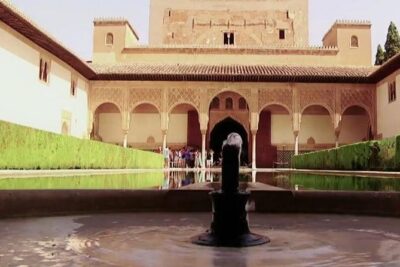
Alhambra Private/Small Group Tour & Nasrid Palaces Skip the Line
Read our review →
Grand Palace, Wat Pho, and Wat Arun Private Tour
Read our review →
Mutianyu Great Wall&Summer Palace Excursion:Group/Private Options
Read our review →
Private Tour of Sintra, Cabo da Roca and Cascais with 2 Palaces
Read our review →
Private 4hrs Venice Tour: Doge’s Palace, Grand Canal & St Mark’s
Read our review →
Knossos Palace Skip-the-Line Ticket & Private Guided Tour
Read our review →