
Review · PALACES WORLDWIDE
Palazzo Falson Historic House Museum entrance ticket
Palazzo Falson is not simply another old building in Mdina. It is a medieval family home packed with more than 3,500 objects, from 17th-century paintings to silver, armour, jewellery, rugs, and books. The rooms let you see how a collector lived, not just how a palace looked from the outside.
I like the 17-room layout, which gives the collection a human scale, and I like the rooftop cafeteria, where you can pause over coffee with broad views across Mdina and beyond. The main consideration is that the sheer number of objects may feel dense if you prefer a quick, open room-by-room museum.
- Second-oldest surviving building in Mdina: The palace began in the early 13th century and follows a Sicilian medieval design.
- Forty-five collections in 17 rooms: Expect paintings, silver, furniture, jewellery, Oriental rugs, armoury, books, and manuscripts.
- A collector’s actual home: Captain Olof Frederick Gollcher lived here and assembled much of the collection.
- Important old paintings: Works are attributed to artists including Mattia Preti and Jusepe de Ribera.
- Audio guide included: Choose English, French, German, Italian, Maltese, or Spanish.
- Terrace views: The upper-floor cafeteria offers a useful rest stop after the museum rooms.
A medieval house at the heart of Mdina
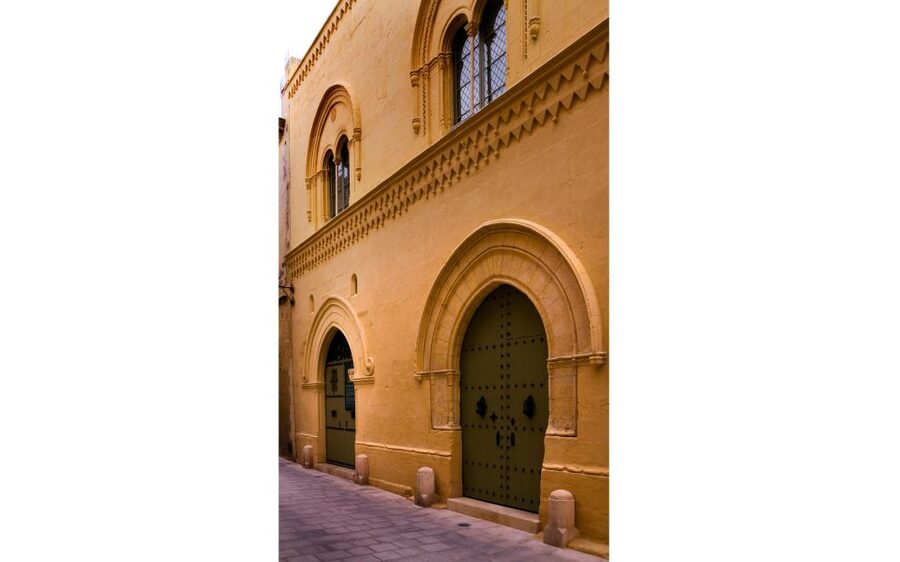
Palazzo Falson is one of the best places in Mdina to see domestic medieval architecture up close. It is the second-oldest building still standing inside the walled city, with origins reaching back to the early 13th century.
The palace was built as a family residence for Maltese nobility. Its design reflects Sicilian examples from the period. Rooms wrap around an internal courtyard, while the upper piano nobile held the principal living quarters. The rooms at the back of the courtyard form the oldest section of the building.
That arrangement matters. You are not moving through a grand public palace designed only for ceremonies. You are moving through a home shaped by family life, status, collecting, and changing ownership. The building feels more personal than a large state palace, and the objects make more sense when you see them in that setting.
Mdina itself adds useful context. This was Malta’s former capital, and Palazzo Falson sits within the old walled city. A visit works well as part of a walking day in Mdina, especially if you want more than narrow streets, stone facades, and views from the city walls.
From Maltese nobility to Captain Gollcher
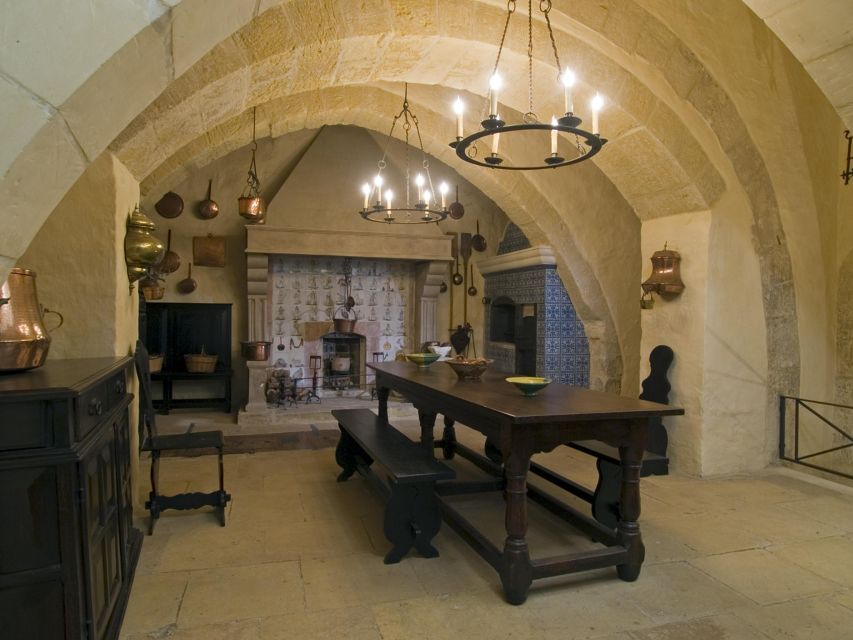
The property changed hands over the centuries. In the early 16th century, it was inherited by Vice Admiral Michele Falson, who also served as head of Mdina’s town council.
The palace has an important connection with the arrival of the Knights of the Order of St. John. After Emperor Charles V gave Malta to the order, Grand Master Philippe Villiers de L’Isle Adam was hosted by Maltese nobles at Palazzo Falson after taking possession of Mdina on November 13, 1530.
The most recent owner was Captain Olof Frederick Gollcher, who lived from 1889 to 1962. Swedish by descent, Gollcher was an artist, researcher, philanthropist, and collector. He received several honours, but his lasting mark on the palace is the collection he assembled inside it.
This is the key to the museum. You are not seeing a random storehouse of antiques. You are seeing the home of a serious collector whose interests ranged across art, furniture, books, decorative objects, arms, and historical pieces. The collection gives the building its character.
More Palace Entry Tickets in the world:
- Venice: Doge’s Palace Reserved Entry Ticket
★ 4.6 · 42,716 reviews - Sintra: Pena Palace and Park Entrance Ticket
★ 4.2 · 17,410 reviews - Granada: Alhambra and Nasrid Palaces Entry Ticket
★ 4.6 · 15,130 reviews
Seventeen rooms and 45 separate collections
The museum’s main strength is its range. Forty-five specific collections are spread through 17 rooms, with more than 3,500 objects in total.
That number sounds impressive, but it also tells you how to plan your visit. You should allow enough time to look closely, rather than treating Palazzo Falson as a ten-minute stop between Mdina’s main streets. The ticket is valid for one day, giving you flexibility to fit the house around the rest of your Mdina visit.
The displays include:
- Paintings
- Silver
- Furniture
- Jewellery
- Oriental rugs
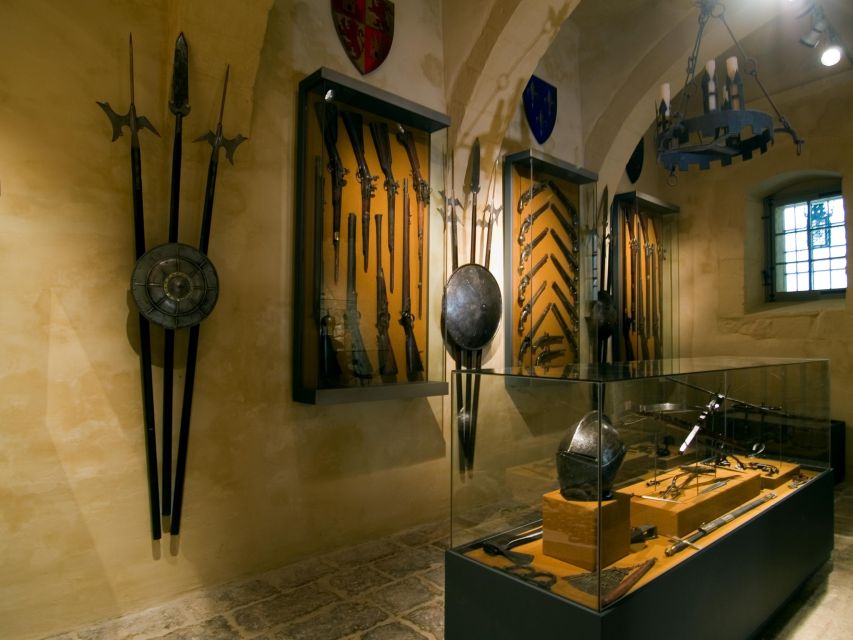
- Armoury
- Books
- Manuscripts
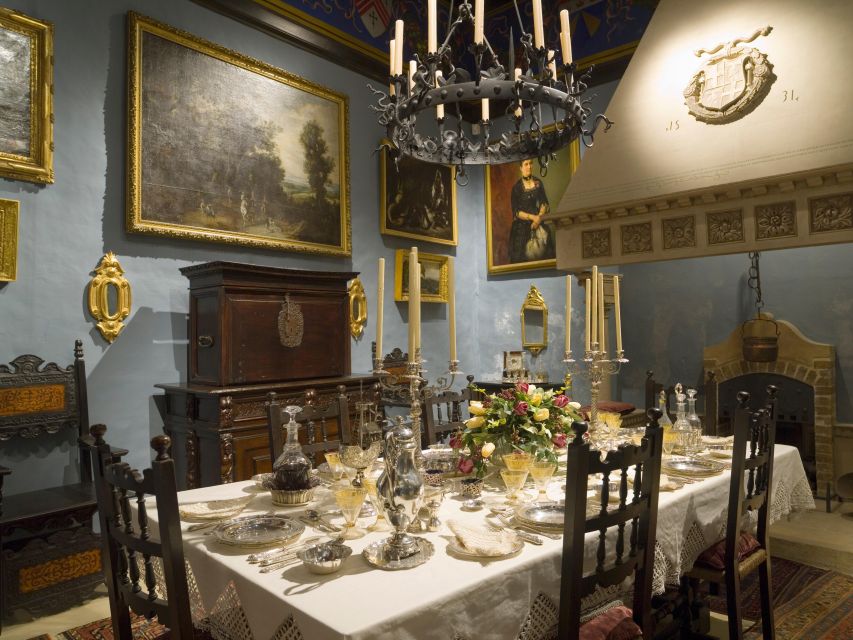
Each category changes the mood of the visit. Paintings give the house an art-museum side. Silver and jewellery show the formal and decorative tastes of earlier owners. Furniture helps you picture the rooms as lived-in spaces. Armoury adds a harder edge, while the library points to Gollcher’s intellectual interests.
You may find the variety more memorable than any single object. One room can suggest domestic life, another collecting and scholarship, and another the status of a noble household. The collection rewards a steady pace.
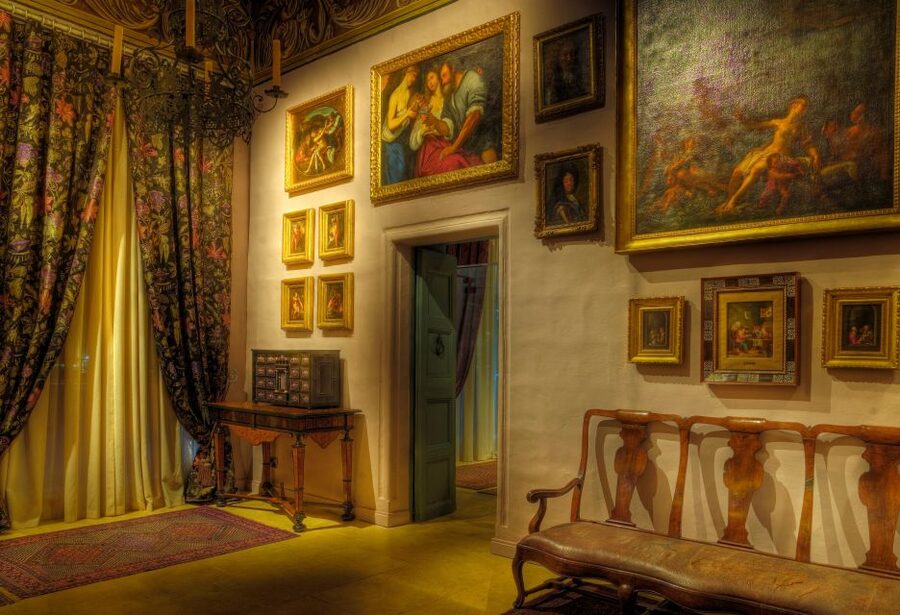
The paintings worth your close attention
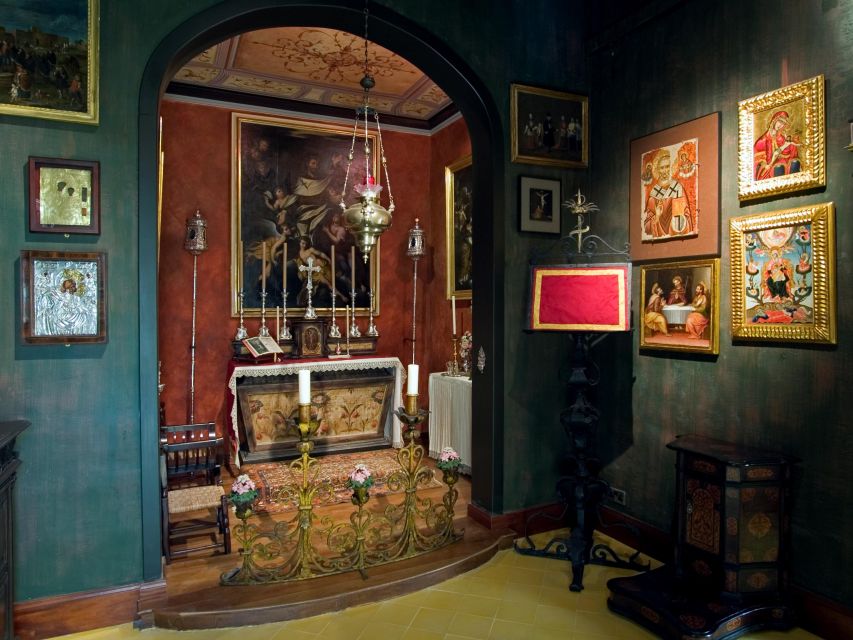
The painting collection includes several significant 17th-century works. Some are attributed to Mattia Preti, Jusepe de Ribera, Jakob-Ferdinand Voet, Charles Beale, and Juriaen van Streeck.
These attributions give the art displays extra weight, but you should treat them as part of a larger house collection rather than expecting a large specialist gallery. The appeal lies in seeing important paintings among furniture and personal objects, within rooms that were designed as a home.
Mattia Preti is particularly relevant to Malta. He was one of the major artists associated with the island, and works attributed to him provide a strong link between Palazzo Falson and Malta’s wider artistic story. The names connected with the other paintings also point to the broad European reach of Gollcher’s collecting.
If art is your main reason for visiting, use the audio guide and printed information to give the paintings proper attention. Without context, a busy room of objects can be hard to read. With some explanation, you can better understand why particular works matter.
The library, manuscripts, and the collector’s mind
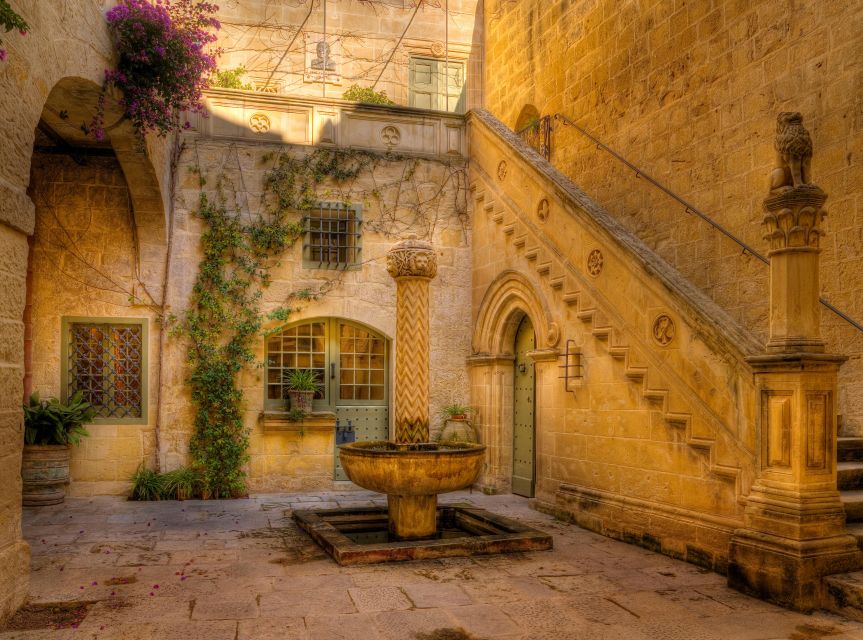
The library contains more than 4,500 books, along with valuable manuscripts. This is one of the most revealing parts of the collection because it shows that Gollcher was not collecting only attractive objects.
Books take up space, require care, and reflect long-term interests. A collection of this size suggests a person who read, researched, and wanted to preserve material beyond the usual decorative arts. The manuscripts add another layer, connecting the house with written records and scholarship.
You should not expect to inspect every book individually. The value of this section is the sense of scale and purpose. The library helps explain why Palazzo Falson feels like the home of a collector rather than a standard historic house furnished for display.
For me, this is one of the strongest reasons to use the audio guide. The objects may catch your eye first, but the story behind them helps you see the house as a record of Gollcher’s interests.
More palace museums around the world:
- Venice’s Best: Basilica, Doge’s Palace, Gondola & History Gallery
★ 4.5 · 2,478 reviews - Royal Palace & Prado Museum Skip the Line Guided Tour
★ 4.5 · 1,347 reviews - Venice: City Pass with Museums including Doge’s Palace
★ 4.1 · 1,020 reviews - The Hague: Escher in The Palace Museum Ticket
★ 4.6 · 896 reviews
What the audio guide adds
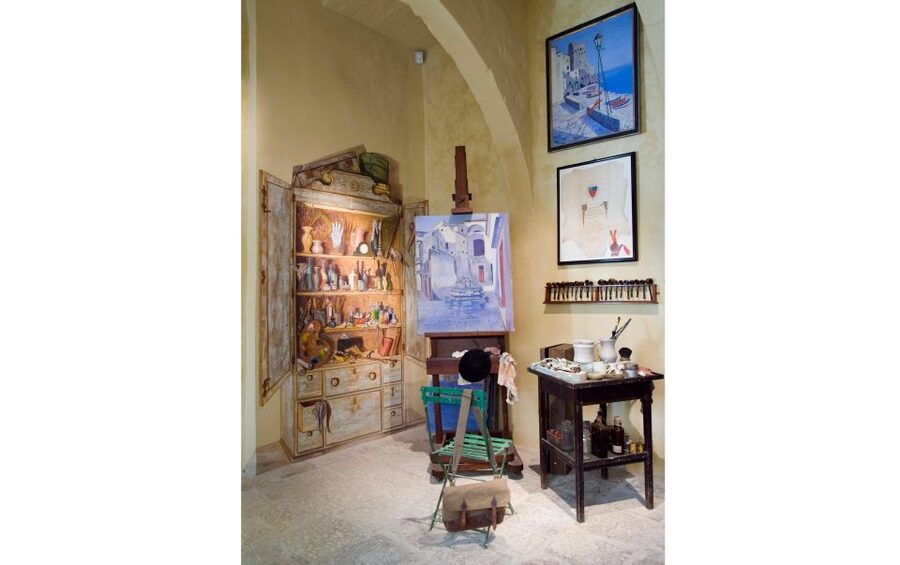
An audio guide is included with the ticket in English, French, German, Italian, Maltese, or Spanish. Printed information is also available in a much wider set of languages, including Arabic, Chinese, Czech, Dutch, English, French, German, Greek, Hungarian, Italian, Japanese, Maltese, Polish, Portuguese, Russian, Slovak, Spanish, and Swedish.
That combination makes the visit easier to manage at your own speed. You can stop for longer at paintings or objects that interest you, then move on without waiting for a live group.
The listed host or greeter language is English, but this is not presented as a scheduled guided walking tour. The audio guide is the main interpretive tool. If you want a personal conversation about the palace, ask at the entrance, but you should plan on exploring independently with recorded information.
The printed material is useful if you prefer to read, need a quick reference, or want to share the visit with someone using a different language. Still, the audio guide will likely be the better choice for understanding the rooms as you move through them.
The courtyard, noble floor, and room-by-room rhythm
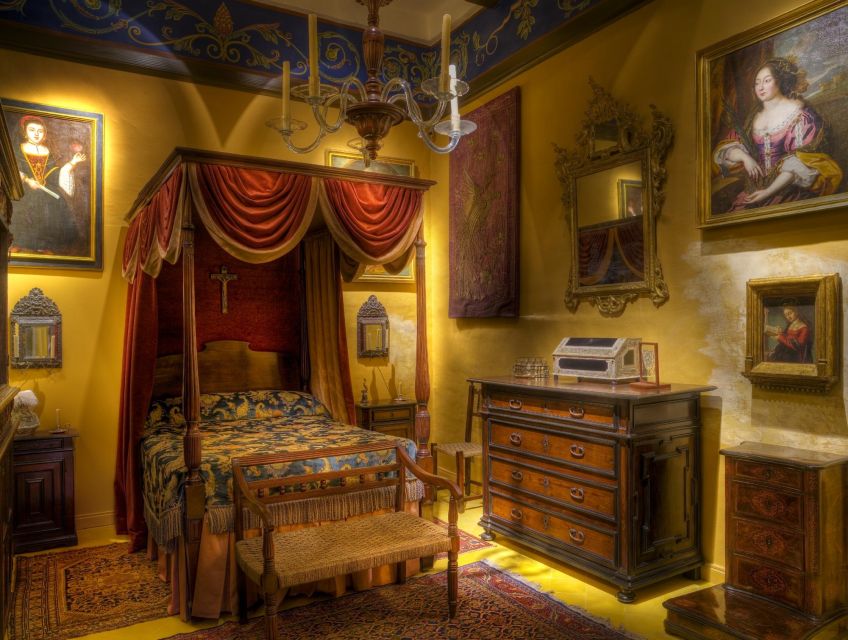
The palace’s internal courtyard helps you understand its medieval structure. Rooms are arranged around this central space, and the noble floor sits above it. The building’s oldest rooms are at the back of the courtyard.
The route is valuable because the architecture and collection support each other. You can look at a piece of furniture and then consider the room around it. You can notice how the building’s shape reflects its age, rather than viewing objects in a modern white gallery.
The two-storey design also creates a natural change in pace. The lower areas connect you with the basic medieval structure, while the upper living quarters present the more formal domestic world of the noble level. Since the original living quarters are on the piano nobile, do not rush through the upper floor.
The collection is large enough that not every object will hold your attention equally. That is normal. Pick the rooms and categories that matter most to you, then allow the audio guide to direct you toward important pieces.
Finishing on the terrace above Mdina
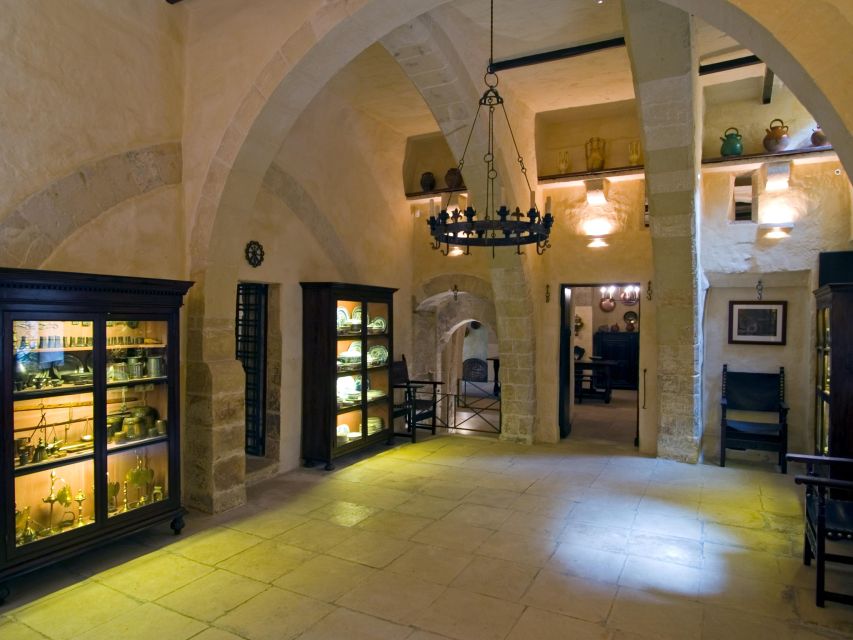
After the rooms, the upper-floor cafeteria gives you a simple but welcome finish: coffee with views of Mdina and the surrounding area.
This is not just a convenient refreshment stop. It gives you a chance to step away from the crowded visual detail of the collection and look at the city as a whole. The contrast works well. Inside, you have been studying rooms, objects, books, and paintings. Outside, you can take in the wider setting that made Mdina such an important fortified city.
A recent visit included touring the house and then enjoying coffee on the rooftop. That is a sensible way to plan your time. Have the drink after the museum rather than treating the cafeteria as a reason to skip the rooms.
The terrace may also be your best place for photographs, though the key value is the pause. Palazzo Falson asks you to pay attention to many small things. A quiet break afterward helps the visit feel complete.
Is $15 good value?
At $15 per person, Palazzo Falson is reasonably priced for a specialized museum in one of Malta’s major historic cities.
You are paying for more than access to a single old house. The ticket covers a medieval palace, 17 rooms, 45 collections, more than 3,500 objects, an audio guide, and access to a terrace cafeteria with views. The large library and the paintings attributed to well-known artists add real substance.
The value depends on your interests. If you want a quick photo stop or a broad introduction to all of Malta’s history, this may feel too focused. If you like historic homes, collecting, paintings, books, and decorative arts, $15 buys a substantial visit.
The one-day validity helps. You do not need to force the museum into a fixed short slot, and you can plan it around your walk through Mdina. Free cancellation up to 24 hours before the visit and the option to reserve now and pay later also make the booking less rigid.
Who will enjoy Palazzo Falson most?
I would recommend this museum to you if you enjoy historic interiors and prefer personal stories to grand national displays. The connection with Captain Gollcher gives the house a clear human focus.
It also suits art lovers who want to see 17th-century works attributed to painters such as Mattia Preti and Jusepe de Ribera. Book enthusiasts will find the library and manuscripts especially worthwhile. Anyone interested in silver, rugs, furniture, jewellery, or armoury will have plenty to examine.
Families should note that children under six are not permitted. Older children may appreciate the armour and unusual objects, but the collection’s value depends on patience and attention. It is not designed as a hands-on children’s attraction.
The museum is also a good choice for an independent visit. You do not need to join a large group or follow a guide at a set pace. The audio guide provides structure, while the room layout lets you stop when something catches your eye.
Practical timing and visit tips
The experience is listed as lasting one day, which refers to ticket validity rather than a fixed one-day tour schedule. Starting times depend on availability, so check the available slot when booking.
Plan your Mdina day so you have time for both the palace and the city itself. Palazzo Falson is worth more than a hurried glance, especially if you want to use the audio guide. Give yourself room to look at the library, paintings, furniture, and smaller decorative objects.
I would also keep the terrace cafeteria in your plan. The rooftop coffee is a modest extra, but it gives the visit a natural ending and lets you enjoy Mdina from above. If you are choosing between a rushed palace visit and a slower one with time for the terrace, choose the slower option.
The overall rating available for the experience is 4.7 from 22 reviews, which fits the attraction’s strongest qualities: the house is unusual, the collection is broad, and the rooftop break adds comfort. Still, the museum will work best for people who enjoy detail. If you prefer only a few major highlights, the number of objects may feel like a lot.
Should you book Palazzo Falson?
Book it if you want to see Mdina through the life of a collector, not only through its streets and fortifications. The combination of a medieval noble house, Gollcher’s personal collection, important old paintings, a large library, and rooftop views gives you a varied visit for $15.
Skip it if your time in Mdina is extremely short or if you have little interest in interiors and decorative arts. For everyone else, especially independent visitors who like to explore at their own pace, Palazzo Falson is a well-priced addition to a day in the old capital.
FAQ
Where is Palazzo Falson Historic House Museum?
Palazzo Falson is in Mdina, Malta, inside the walled historic city.
How much does admission cost?
The entrance ticket costs $15 per person.
How long is the ticket valid?
The ticket is valid for one day. Starting times depend on availability.
What is included with admission?
Admission includes entry to Palazzo Falson, an audio guide, and printed information.
Which languages are available for the audio guide?
The audio guide is available in English, French, German, Italian, Maltese, and Spanish.
Are young children allowed to visit?
Children under six years old are not permitted.
Can I cancel the booking?
You can cancel up to 24 hours in advance for a full refund. You can also reserve now and pay later.
More royal history around the world
- Madrid Essential: Historic Center, Plaza Mayor & Royal Palace
★ 5.0 · 6,416 reviews - Tokyo: Imperial Palace and Shogun Historical Walking Tour
★ 5.0 · 2,251 reviews - Dubai: Abu Dhabi Grand Mosque, Palace, and Heritage Village
★ 4.8 · 1,265 reviews - Tokyo: Imperial Palace Japanese History Walking Tour
★ 4.9 · 987 reviews
Fresh palace tours around the world
- Bangkok Private Grand Palace Emerald Buddha and Reclining Buddha★ 4.5 · 2 reviews
- Bangkok Markets, Palaces and Temples Excursion★ 5.0 · 8 reviews
- Bangkok Two Temple Tour: Wat Pho, Emerald Buddha & Grand Palace★ 5.0 · 4 reviews
- Bangkok Royal Road – Top 3 Major Monuments (Grand Palace, Wat Pho, Wat arun)★ 4.5 · 111 reviews
- Bangkok Grand Palace and Emerald Buddha Tour★ 4.0 · 91 reviews
- Bangkok’s Landmarks Tour : GrandPalace WatTraimit WatPho WatArun★ 5.0 · 8 reviews
- Private Tour: Grand Palace,Wat Phra Kaew, Museum&Cooking Class★ 5.0 · 7 reviews
- Bangkok Grand Palace & Emerald Buddha Flexible Entry with Audio★ 3.5 · 3 reviews
Palace Entry Tickets: the shortlist.


Buckingham Palace: The State Rooms Entrance Ticket
Read our review →

Prague Castle and Lobkowicz Palace Entry Tickets
Read our review →This visit also appears in