
Review · TOKYO
Tokyo: Imperial Palace and Shogun Historical Walking Tour
The most interesting part of this tour is the way Edo Castle’s remains sit inside today’s Imperial Palace grounds. You walk through massive stone gates, past old defensive walls, and onto the foundation of the former castle keep, then move into quiet gardens shaped by the refined taste of the Edo period.
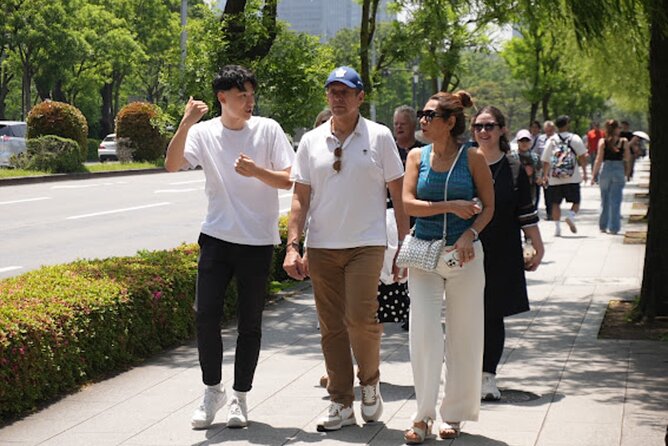
I like the guide-led storytelling, especially when guides such as Jim, Tony, Miguel, and Lasse connect the shogunate, the Emperor, the imperial family, and modern Tokyo. I also like the small-group format, capped at 15 people, which makes it easier to ask questions and hear the commentary.
The main consideration is simple: this is a history-focused walking tour, not a tour of palace interiors. The East Gardens are free to enter, so you are paying $22 mainly for context, direction, and company. A few guides may explain at length, and the route includes slopes.
Key points to know before booking
- Edo Castle’s keep foundation: Stand on the base of the former castle keep and picture the power once concentrated here.
- Ninomaru Garden: See ponds, seasonal flowers, and formal garden design linked to the Edo period.
- Small groups: The maximum group size is 15, a useful balance between personal attention and a social atmosphere.
- Guides with different strengths: Jim is praised for detailed historical explanations, Tony for broad context, and Miguel for stories and modern cultural connections.
- A gentle but real walk: The pace is relaxed, but you should expect slopes and time on your feet.
- Strong value for history fans: At $22, the price is reasonable if you want the gardens to make sense rather than simply wander through them.
What the $22 price actually buys you
The Imperial Palace East Gardens can be visited without paying an admission fee. That fact matters when judging this tour. You are not buying entry to a secret palace room or an exclusive imperial site. You are paying for a guide to turn scattered stones, walls, gardens, and gates into a coherent story.
For many people, that is the difference between seeing an attractive public garden and understanding why the ground matters. The guide explains how Edo Castle served as the seat of shogun power, how the imperial family fits into Japan’s later history, and how the site relates to Tokyo today.
At $22 per person, I consider the cost fair for a two-hour walking experience with a maximum of 15 people. It is especially good value if you are new to Japanese history or want a useful introduction early in your stay. If you already know the Edo period well and prefer to explore at your own speed, you may feel that the free gardens are enough.
The price also avoids the cost and effort of researching the site in advance. You can arrive with only a basic idea of the shogunate and still follow the story. Guides have been praised for explaining architecture, culture, legends, and modern Japanese customs in plain terms.
More Palace Walking Tours around Tokyo:
- Tokyo Castle & Imperial PalaceーShogun Walking Tour
★ 4.7 · 1,068 reviews - Tokyo: Imperial Palace Japanese History Walking Tour
★ 4.9 · 987 reviews - Tokyo: Imperial Palace and Shogun Walking Tour
★ 4.9 · 935 reviews
Meeting at Wadakura Fountain Park
The tour begins at Starbucks Coffee in Kokyo Gaien Wadakura Fountain Park, at 3-1 Kōkyogaien in Chiyoda City. The meeting point is near public transportation, and the mobile ticket makes it practical for visitors who do not want to print paperwork.
Give yourself enough time to find the Starbucks and confirm the exact meeting point. One serious problem reported on this experience involved confusion over communication and a change of location, with the group leaving before the participant reached the new meeting place. The guide was later described as pleasant and helpful, but the delay meant the palace grounds closed before the full route could be completed.
That is a useful warning. Arrive before the stated start time, keep your phone available, and check any same-day messages carefully. The tour ends back at the meeting point, so you do not need to arrange a separate return transfer.
The group limit of 15 is important here. A group this size can move through gates and paths without becoming a large crowd, while still giving the tour a social feel. Several people have enjoyed meeting others during the walk, but you should not expect a private tour.
Entering the former power center of Edo
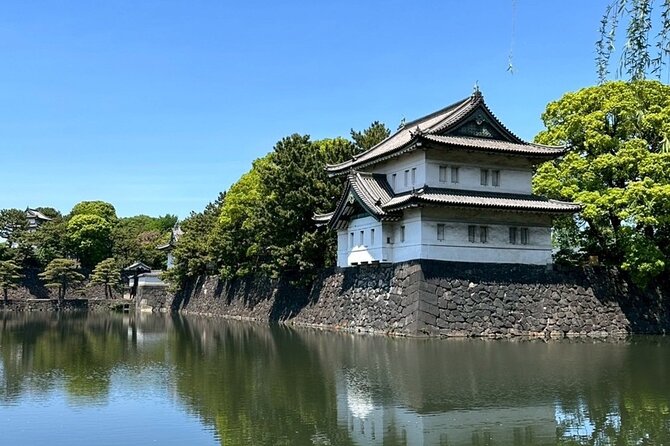
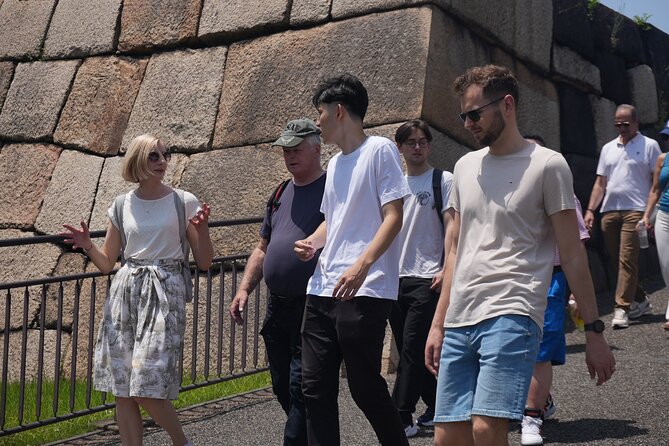
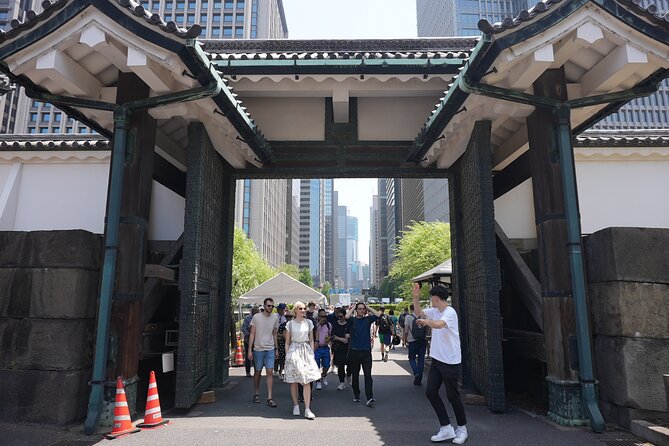
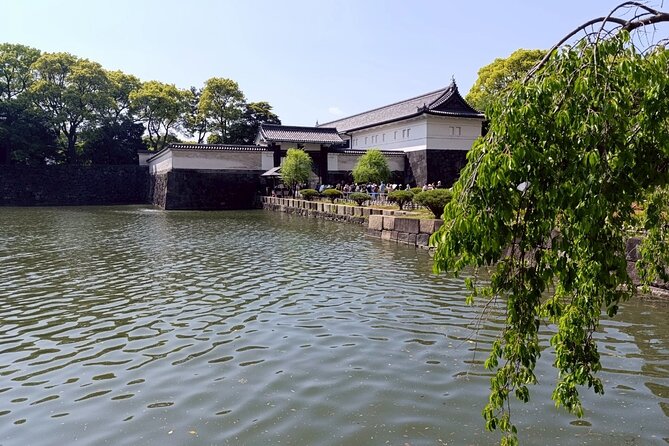
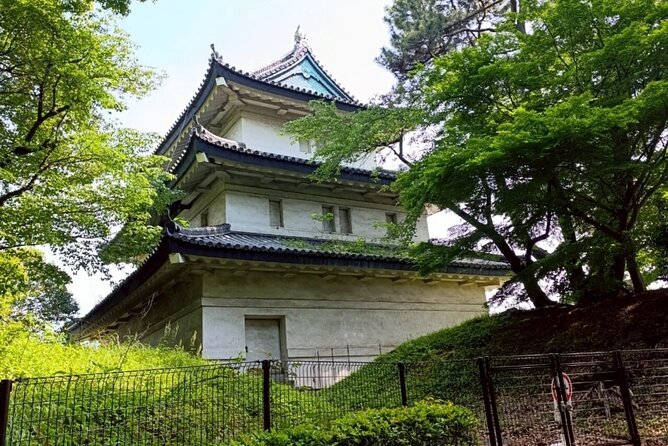
The first part of the route takes you through the old castle grounds. The physical remains are what make this visit worthwhile. You will see imposing stone gates, castle-wall foundations, and the base of the former keep. There is no towering castle building waiting at the top, so the guide’s explanation gives the ruins their meaning.
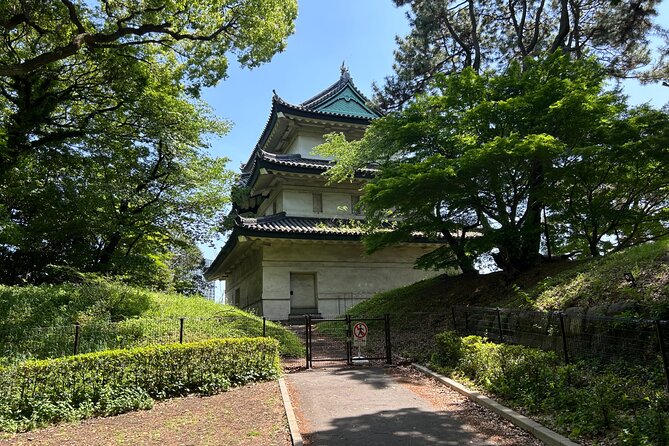
The keep foundation is a strong stop. From there, the guide can help you picture the scale and importance of Edo Castle during the shogun era. This is where the tour’s title earns its place. You are not just hearing a general account of Japanese history. You are standing on the site connected to the military government that ruled Japan for centuries.
The stonework also gives the tour a physical focus. Instead of hearing dates in a classroom, you can look at the defensive walls and gates that once controlled access to the castle. Jim has been praised for taking time with questions and explaining the finer points of the site. Guides such as Tony and Dylan have also been noted for pointing out details about the palace grounds and their purpose.
Do not expect every guide to tell the story in exactly the same way. Some focus on political history, while others add legends, cultural customs, or comparisons between Japanese and Western ideas of government. That variety can be a strength, though the quality depends partly on who leads your group.
Ninomaru Garden and the quieter side of the grounds
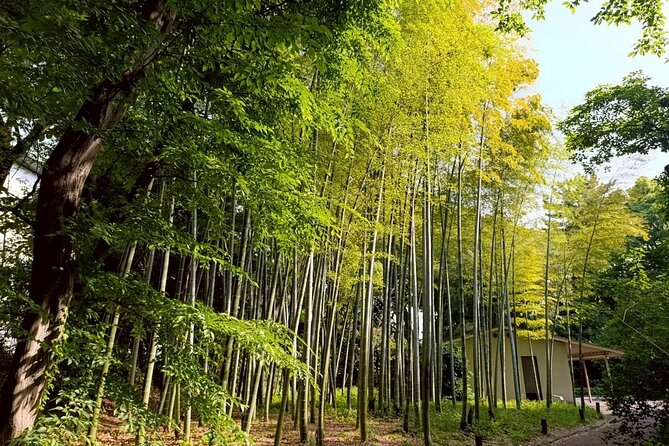
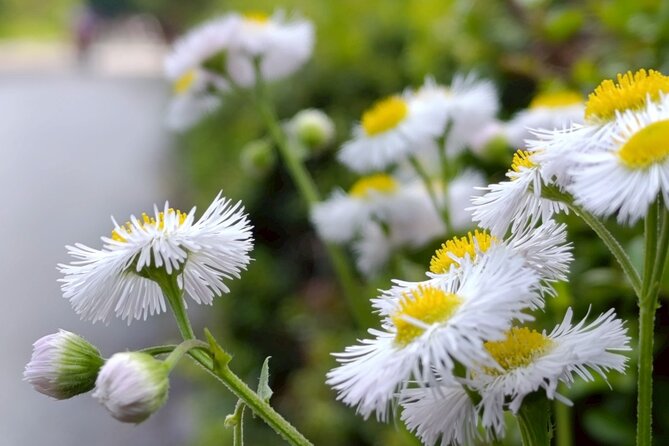
After the castle remains, the walk moves into Ninomaru Garden. This is the calmer part of the experience, with ponds, seasonal flowers, and carefully arranged scenery. The garden shows a different side of the Edo period, one based on controlled beauty and quiet observation rather than military strength.
I like this contrast. The stone gates and castle base explain power, while Ninomaru explains taste, leisure, and garden design. The route gives you both in one compact visit.
Seasonal conditions will affect what you see. Flowers may be at their best during one visit and less noticeable during another, but the ponds and garden structure remain part of the appeal. The grounds can also be busy, so a guide who keeps the group together is useful. Tony has been praised for checking that everyone was present before moving on, a small habit that makes a difference in a public garden.
The garden section may feel slow if you want nonstop sightseeing. That is not necessarily a fault. The tour is meant to give you time to listen, look, and ask questions. Still, one guide was described as repeating points and holding stops longer than some people preferred. If you like a brisk route with short explanations, make that part of your booking decision.
More Royal Palace Tours around Tokyo:
- Tokyo Castle & Imperial PalaceーShogun Walking Tour
★ 5.0 · 724 reviews - Tokyo: Imperial Palace East Gardens Walking Tour
★ 4.8 · 353 reviews - Tokyo: Imperial Palace, Sensō-ji Temple, & Tokyo Tower Tour
★ 4.5 · 339 reviews - Tokyo: Edo Castle & East Garden of the Imperial Palace Tour
★ 4.7 · 112 reviews
How the history is explained
This experience is strongest when the guide links several periods instead of treating the palace as an isolated sight. You may hear about Edo Castle and the shogunate, then move into the role of the Emperor and the imperial family, followed by a few connections to present-day Tokyo.
Jim has been praised for combining architecture, history, and Japanese culture into one clear account. Tony is often credited with explaining the Edo period, the shogunate, the Emperor, and the imperial family in a way that gives the grounds a larger meaning. Miguel has been noted for adding historical facts, modern Tokyo insights, and lighter stories.
Lasse is described as especially passionate about Japanese history. If you enjoy a guide who takes the subject seriously, that approach may suit you. Other guides may be more relaxed and conversational, which can make the tour easier for first-time visitors.
You do not need to complete a history course before arriving. Still, you will get more from the walk if you know the basic difference between the Emperor and the shogun. The tour can provide that foundation, but it is not designed as a detailed academic seminar.
Some people will welcome the amount of information. Others may find the explanations too long, especially when several stops cover related material. I would choose this tour for curiosity and context, not for a fast checklist of photo stops.
What the walking is really like
The advertised duration is about two hours, with roughly 90 minutes listed for the East Gardens and Edo Castle ruins. That leaves time for gathering the group, moving between points, and returning to the meeting place.
The pace is generally described as easy, but this is still a walking tour. You may encounter slopes, uneven historical surfaces, and stretches where you are standing while the guide speaks. Comfortable shoes are the practical choice. The tour is not a bus ride with brief exits, and you should plan your energy accordingly.
The route reaches places that a bus cannot. That is one of its real advantages. A vehicle can show you broad Tokyo streets, but it cannot take you through old gates, along castle walls, and into garden paths at walking speed.
Most people can participate, according to the activity information. The experience is near public transportation, and it ends where it begins. Specific accessibility details are not provided, so anyone with mobility concerns should check the route conditions before booking, especially because slopes are part of the walk.
Guide quality can shape the day
The feedback about guides is highly positive overall, but it also makes an important point: your experience depends on the individual leading the group.
Several guides receive praise for clear explanations, warmth, and patience. Jim is repeatedly associated with careful answers and strong historical detail. Tony is valued for broad context and for making sure the group stays together. Miguel is praised for stories, culture, and modern connections. Other named guides, including Blake, Izzy, Dylan, Mitchi, John, and Lasse, are also described as friendly or informative.
One mixed account described a newer guide who appeared unsure of some historical answers and relied on a supervising guide. That does not mean every departure has the same issue, but it is fair to say the tour is not a scripted museum audio guide. It has a human element, for better and occasionally for worse.
The strongest guides seem to do three things well: explain the setting before moving on, welcome questions, and keep the group moving at a reasonable pace. If you get a guide who talks too long or repeats points, the garden itself still has value, but the experience may feel less balanced.
Who should book this experience
I would recommend this tour to first-time Tokyo visitors who want a clear introduction to the city’s political and royal past. It works well near the beginning of a trip because it gives you useful background for other sights, neighborhoods, and temples.
It also suits anyone who enjoys stories more than simple sightseeing. The gardens are peaceful, but the main reward is learning what happened here and why the remaining walls and foundations matter.
This tour is a good fit for:
- History fans interested in the shogunate, Edo Castle, and the imperial family
- Visitors who prefer walking to bus sightseeing
- People who want a small group rather than a large organized outing
- Couples, solo visitors, and families who enjoy guided explanations
- Anyone who wants to ask questions instead of reading a guidebook while walking
You may want to skip it if you have limited time, dislike standing for commentary, or mainly want to see palace interiors. You might also prefer a self-guided visit if you already know the site well or want to stop only for photographs.
Practical booking advice
Book only if you are comfortable paying for interpretation rather than admission. The gardens themselves are free, but a guide can help you notice the difference between a castle remnant, a garden feature, and an imperial-era reference that might otherwise pass without meaning.
The activity offers free cancellation when you cancel at least 24 hours before the local start time. Changes or cancellations made less than 24 hours ahead are not accepted for a refund. That gives you some flexibility, but do not leave changes until the last day.
Because the meeting point is specific and communication has occasionally caused trouble, arrive early and check your booking details. Keep the mobile ticket easy to open. These small steps can protect the limited time available before the palace grounds close.
Should you book the Imperial Palace walking tour?
Book it if you want the East Gardens to tell a story rather than serve as a pleasant green break in the city. For $22, the combination of Edo Castle ruins, Ninomaru Garden, a small group, and a guide-led history lesson is a sound deal.
The tour is not perfect. The free gardens mean the price needs to be judged honestly, guide quality can vary, and some explanations may feel too long. But the best guides, including Jim, Tony, Miguel, and Lasse, add the context that turns old stonework into a meaningful visit.
I would choose this experience for a first or second day in Tokyo, especially if Japanese history is new to you. Arrive early, wear comfortable shoes, expect slopes, and bring a little patience for the talking. You will leave with a clearer sense of how shogun rule, Edo Castle, the Emperor, and modern Tokyo fit together.
FAQ
How long does the Imperial Palace and Shogun Historical Walking Tour last?
The experience lasts about two hours. The East Gardens and Edo Castle ruins portion is listed as approximately 90 minutes, with the remaining time used for gathering, walking, and returning to the meeting point.
What is included in the tour?
The guided walking route includes the Imperial Palace East Gardens and the Edo Castle ruins, including the former keep foundation, stone gates, castle walls, and Ninomaru Garden. Admission to the garden area is included with the activity.
Where does the tour meet?
The meeting point is Starbucks Coffee in Kokyo Gaien Wadakura Fountain Park, at 3-1 Kōkyogaien, Chiyoda City, Tokyo 100-0002, Japan.
Where does the tour end?
The activity ends back at the original meeting point.
How large is the group?
The maximum group size is 15 people.
Can I cancel for a full refund?
Yes. You can cancel at least 24 hours before the experience starts for a full refund. Cancellations or changes made less than 24 hours before the local start time are not accepted for a refund.
More royal history around Tokyo
- Tokyo: Imperial Palace, the history of Japan (ENGLISH GUIDE)
★ 5.0 · 77 reviews - Imperial Palace Tour: Discover Samurai History with a Guide
★ 5.0 · 12 reviews - Madrid Essential: Historic Center, Plaza Mayor & Royal Palace
★ 5.0 · 6,416 reviews - Venice’s Best: Basilica, Doge’s Palace, Gondola & History Gallery
★ 4.5 · 2,478 reviews
Fresh palace tours around Tokyo
- Tokyo: Imperial Palace East Gardens Walking Tour★ 4.8 · 353 reviews
- Tokyo walking tour around Imperial Palace and Tokyo Station★ 5.0 · 3 reviews
- Tokyo: Imperial Palace, the history of Japan (ENGLISH GUIDE)★ 5.0 · 77 reviews
- Tokyo: Imperial Palace with Nostalgic Alley Kagurazaka tour★ 4.3 · 8 reviews
- Tokyo: Pvt. Tour – Edo Castle & Imperial Palace East Gardens★ 4.8 · 63 reviews
- Tokyo: Edo Castle Ruins & Imperial Palace East Garden Tour★ 4.4 · 13 reviews
- Tokyo: Imperial Palace East Gardens and Tokyo Station Tour★ 5.0 · 16 reviews
- Tokyo: Edo Castle & East Garden of the Imperial Palace Tour★ 4.7 · 112 reviews
Royal Palace Tours: the shortlist.


Royal Palace Expert Guided Tour with Skip-the-Line
Read our review →
Dubai To Abu Dhabi: Grand Mosque, Royal Palace & Etihad Towers
Read our review →
Madrid Essential: Historic Center, Plaza Mayor & Royal Palace
Read our review →

Abu Dhabi Day-Trip Grand Mosque, Royal Palace & Lunch
Read our review →
Louvre Entry & Etihad Tower/Royal Palace Options
Read our review →This visit also appears in