
Review · SEOUL
Seoul: Deoksugung Palace Night Tour
Deoksugung Palace gives you a compact lesson in Korea’s difficult jump into the modern age. Within one royal compound, you’ll see traditional halls, a king’s sleeping quarters, and a Western-style building where Emperor Gojong drank coffee. The setting is especially striking in the evening, when the palace takes on a quieter, more dramatic mood.
I like the clear historical focus and the way the tour connects buildings to the Daehan Empire, rather than treating the palace as a string of pretty courtyards. I also like the architecture lesson, which shows Korean design meeting Western influence in one small site. The main caution is that reservations are not confirmed on weekends and holidays, and the tour may be canceled if fewer than four people book.
Key points at a glance
- Emperor Gojong’s palace: Follow the story of Korea’s first and last emperor and his struggle to regain sovereignty.
- A rare architectural mix: Compare Korean royal buildings with Jungkwanheon Hall, a Western-influenced coffee and dining space.
- Five important palace stops: See Daehanmun Gate, Junghwajeon, Seokeodang, Hamnyeongjeon, and Jungkwanheon.
- English-speaking local guide: Guides such as Sally Sung, Joy, and Alan have been praised for clear explanations and patient answers.
- Two hours in central Seoul: Meet outside Exit 1 of City Hall Station, then walk directly into the palace.
- Flexible ending: You can stay after the guided portion to take photos and look around at your own pace.
Why Deoksugung tells a different Korean royal story
Many palace visits in Seoul focus on older dynasties and grand royal ceremony. Deoksugung offers something different. Its importance comes from the short, troubled period when Korea was trying to act as a modern independent empire while facing intense pressure from Japan.
The palace served as royal quarters for 13 years. That short period gives the site a concentrated feel. You are not trying to cover a huge royal complex with dozens of halls. Instead, the guide uses a handful of buildings to explain the rise of the Daehan Empire, Emperor Gojong’s position, and the loss of Korean sovereignty under Japanese occupation.
That context matters. Without it, Deoksugung can seem like a pleasant collection of gates, courtyards, and painted wooden buildings. With it, the palace becomes a place tied to a national struggle. You’ll see where the king lived, worked, rested, and received visitors during a time when royal power was under severe strain.
I find that this kind of visit works best for anyone who wants more than photographs. The buildings are the evidence, but the story gives them weight.
More Gyeongbokgung Palace Tours around Seoul:
- Best Seoul City Tour (Gyeongbokgung Palace,Insadong,Namsan Tower)
★ 5.0 · 1,647 reviews - Seoul City Sightseeing Tour Including Gyeongbokgung Palace, N Seoul Tower, and Namsangol Hanok Village
★ 5.0 · 1,423 reviews - Seoul Half-Day City Highlight, Palace Tour with Hanbok
★ 4.9 · 764 reviews
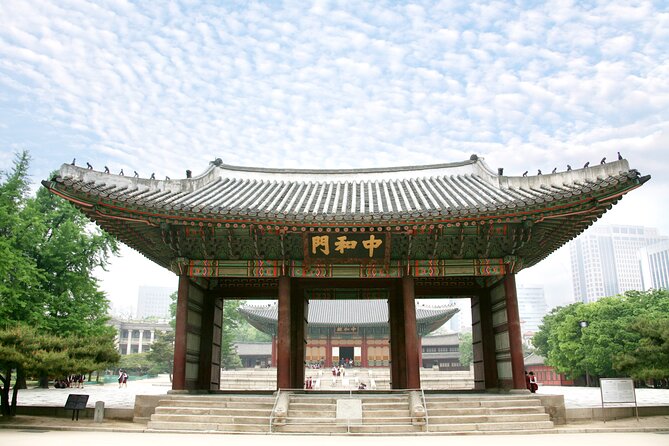
Meeting at City Hall and entering through Daehanmun Gate
The tour begins outside Exit 1 of City Hall Station. This is a practical meeting point in central Seoul, and you should allow enough time to find the correct exit and identify the guide before the group moves on.
From there, you go through Daehanmun Gate, the main entrance to Deoksugung Palace. The gate sets up the visit well because it marks the shift from the modern city into a royal compound connected to one of Korea’s most unsettled eras.
Your guide leads the walk rather than leaving you to decipher the site alone. That is useful here because the palace buildings do not explain their own role in English. A guide can point out what made each space important and connect the physical setting to Emperor Gojong’s story.
The activity lasts two hours. That is enough time for a focused visit without turning the palace into an exhausting full-day commitment. You’ll spend the time walking and listening, so comfortable shoes are worth bringing.
The exact start time can vary, and the experience may be offered in the morning or evening. Check the available time when booking. The evening option is the natural choice if you want the palace after dark, but a morning visit may suit you better if you prefer a brighter view of the buildings.
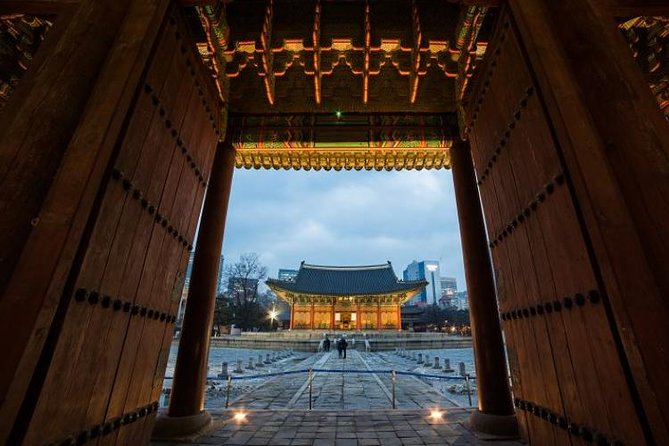
Junghwajeon, the main throne hall
The first major building on the route is Junghwajeon, the main throne hall. This is where the formal side of royal power comes into view.
A throne hall can easily become a quick photo stop, but the guide’s explanation is what makes it useful. You’ll learn how this space represented authority during the Daehan Empire and how that authority was tested by outside control. The hall gives the political story a physical center.
This is also a good point to pay attention to the difference between appearance and function. Korean royal architecture is designed around ceremony, order, and hierarchy. The placement of the hall, the open space in front, and the approach through the palace all help communicate rank.
You should expect the guide to spend time explaining the building rather than rushing from one structure to another. That pace is one reason the two-hour format works. It gives each stop a purpose.
If you are mainly looking for a large palace with endless halls, Deoksugung may feel modest. Its strength is not scale. It is the way a small number of buildings tell a very specific modern Korean story.
Seokeodang and the personal side of King Gojong
Next comes Seokeodang, described as King Gojong’s most beloved building. This stop shifts the focus from public ceremony to the king’s personal connection with the palace.
That detail helps keep the tour from becoming only a political lecture. You’ll see how a royal compound was also a place of daily life, preference, and private feeling. The building becomes more memorable when you understand that it mattered to Gojong personally.
The guide can also use Seokeodang to explain how Korean-style architecture differs from the Western elements added elsewhere in the palace. Look closely at the rooflines, woodwork, and overall proportions. Then compare what you see here with Jungkwanheon later in the route.
The visit is still history-heavy, but it is not only about dates. Gojong’s connection to Seokeodang helps you picture the emperor as a person living through political pressure, not merely as a name in a textbook.
More Palace Night Tours in Seoul:
- Seoul: Palace, Temple and Market Guided Foodie Tour at Night
★ 4.9 · 750 reviews - Seoul: Nighttime Tour of Palace, Market, Naksan Park & More
★ 4.9 · 143 reviews - Venice: Lords of the Night Prison’s Palace Cells & Tortures
★ 4.0 · 1,067 reviews - Exclusive Evening at Schönbrunn Palace: After-Hours Audiotour, Dinner, Concert
★ 4.0 · 930 reviews
Hamnyeongjeon, the emperor’s bedchamber
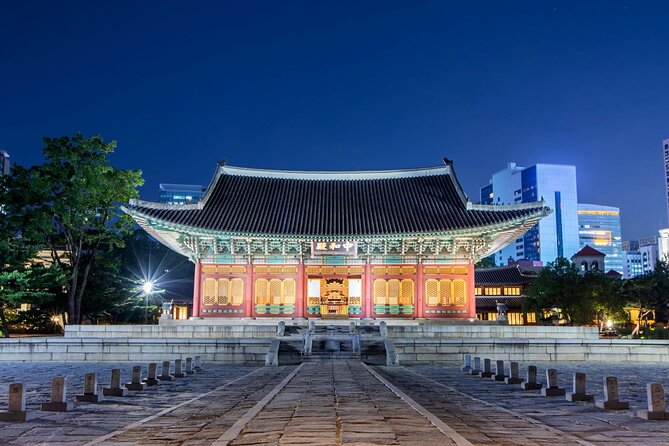
Hamnyeongjeon was the king’s bedchamber. This is one of the most intimate stops because it shows where the emperor slept rather than where he performed official duties.
A royal bedchamber also helps explain the scale of the palace. Deoksugung is not just a ceremonial setting. It was a working residence, with separate spaces for public events, private life, rest, and administration.
At this point, the tour’s arrangement makes sense. Junghwajeon introduces official power. Seokeodang adds personal attachment. Hamnyeongjeon brings you into the private part of royal life. Each stop adds another piece to the same story.
The guide’s role is important here. Details about function and ownership are easy to miss if you walk through alone. Past participants have singled out Sally Sung, Joy, and Alan for clear explanations, accurate information, and patient answers. You may not have one of those particular guides, but the tour is designed around live English guidance rather than a written route.
Jungkwanheon Hall and the palace’s Western influence
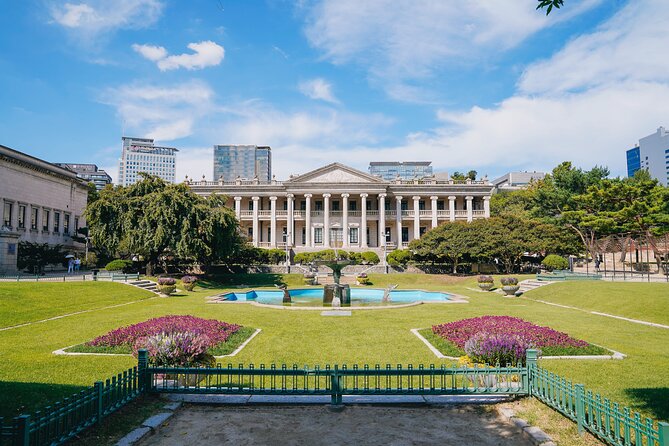
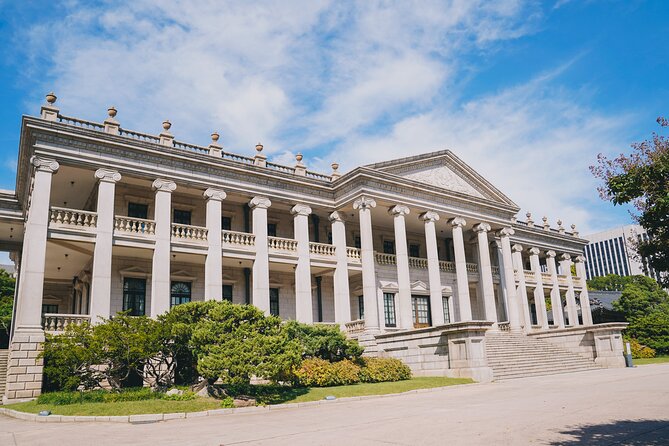
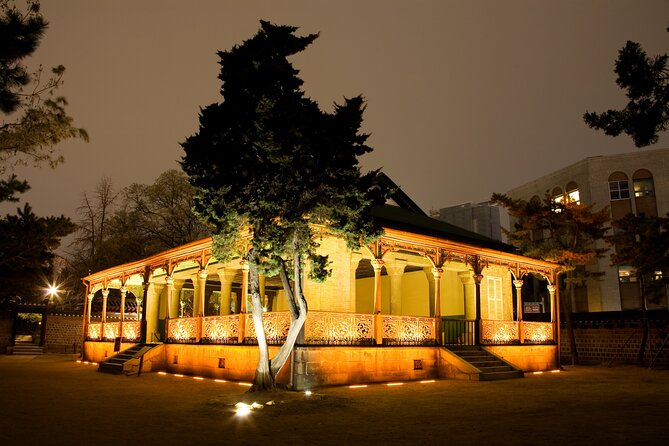
The most unusual stop is Jungkwanheon Hall, a cafeteria where Emperor Gojong enjoyed coffee. It is also the clearest sign of the palace’s Western influence.
This building gives the tour its strongest visual contrast. The traditional Korean halls reflect one set of design ideas, while Jungkwanheon points toward a changing court and a country dealing with new international pressures. The building is not an unrelated decoration. It reflects the wider transformation taking place around the emperor.
Coffee is a small detail, but a useful one. It makes the period easier to picture. You can imagine Gojong in a royal compound that still followed Korean court traditions while adopting unfamiliar Western habits and forms.
I like this stop because it avoids a simple old-versus-new story. Deoksugung was not just a traditional palace with one foreign building added for show. It was a place where Korean identity, royal authority, and outside influence met in a tense period.
Your guide can explain these contrasts while you look at the structure itself. That combination is more helpful than hearing a broad statement about Western influence without seeing a clear example.
A difficult story told without losing the sense of place
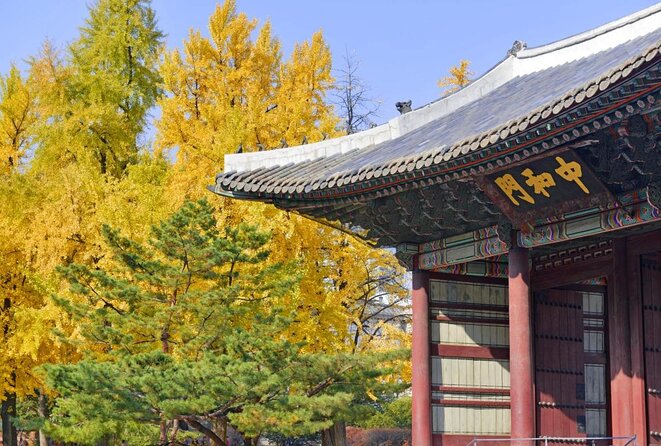
The Daehan Empire story is sad and politically heavy. Emperor Gojong was the first and last emperor, and the tour explains his struggle to regain sovereignty under Japanese occupation.
That subject deserves attention, but the palace setting keeps the visit grounded. You are learning the story in the rooms and courtyards where royal life continued under pressure. The tour does not separate history from place.
You should also expect the experience to present Korea’s modern past through the palace and its buildings. It is not described as a full survey of every event connected to Japanese colonial rule. If you want a detailed military, political, or citywide history of the period, you may need another museum or tour as well.
For a two-hour walk, though, this focus is sensible. You get the milestones that explain why Deoksugung matters, without leaving the palace grounds to cover a wider subject.
Is $38 a fair price?
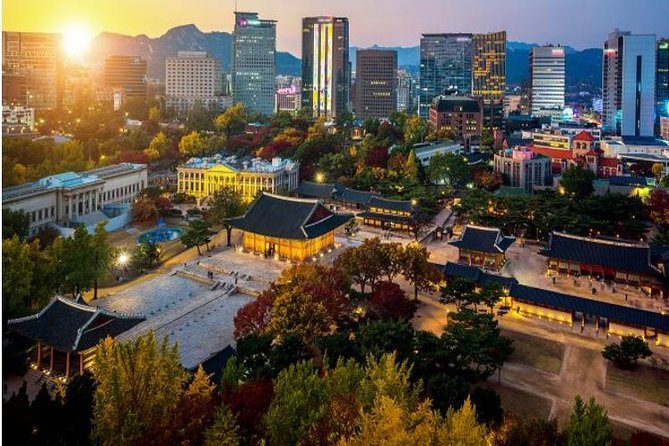
At $38 per person, the value depends on how much you want interpretation. The entrance fee is included, as is a local guide, so you are paying for a compact guided history walk rather than simply admission to the palace.
If you already know Korean royal history and are happy to read signs or explore alone, the price may feel high for a two-hour visit. The palace is not large, and you could choose to see it without a guide.
I think the cost makes more sense for a first visit to Seoul, especially if you want the background explained in English. The complicated relationship between the Daehan Empire, Emperor Gojong, and Japanese colonial rule is easier to follow when someone leads you from building to building.
The high rating of 4.9 from 22 ratings also fits the tour’s main strength: the guide. Sally Sung has been praised for detailed answers, Joy for making the visit beautiful and interesting, and Alan for telling the material clearly. Those comments point to the part of the experience that determines its value. You are not paying for a long list of attractions. You are paying for a well-explained visit to a compact historical site.
Who will enjoy this palace walk?
I would choose this tour if you:
- Want a short, focused introduction to modern Korean history
- Prefer a live English-speaking guide to exploring alone
- Care about the story behind buildings, not only their appearance
- Like comparing traditional Korean architecture with Western influence
- Are staying near central Seoul and want an easy two-hour activity
- Enjoy evening sightseeing and a quieter palace atmosphere
It is also a good fit for people who do not want an all-day palace program. The route covers five named sites and keeps the subject narrow enough to follow.
You may want to skip it if you prefer a completely independent visit, need a broad tour of Seoul’s royal sites, or want a longer historical program. The experience is wheelchair accessible, but the route still involves moving through a historic palace, so it is sensible to confirm current access details when booking if you have particular mobility needs.
Timing, group size, and the small practical catches
The tour needs at least four participants to operate. If fewer than four book, it can be canceled, with notice sent through WhatsApp. That rule is worth taking seriously if your Seoul schedule is tight.
Reservations cannot be confirmed on weekends and holidays. The provider also sends meeting information and timing by email or WhatsApp, so check both before heading to City Hall Station.
Free cancellation is available up to 24 hours before the activity for a full refund. A same-day cancellation or no-show receives no refund. You can also reserve now and pay later, which helps if you are still arranging the rest of your Seoul plans.
Bring comfortable shoes. The tour is only two hours, but you will be walking through the palace while listening to explanations at several stops.
After the guided portion, you can stay behind to explore and take photographs at your own pace. That is a useful touch. The guide gives you the structure, then you get a little unhurried time for the views and details that caught your eye.
Should you book the Deoksugung Palace Night Tour?
Book it if you want a compact, story-led palace visit with a strong focus on Emperor Gojong, the Daehan Empire, and the meeting of Korean and Western architecture. The guide is the key reason to choose it, and the named guides have earned praise for clear, patient explanations.
The best reason to book is not simply that Deoksugung is attractive. It is that the palace lets you see Korea’s move toward modernity in a very small space. You will enter through Daehanmun, stand at the main throne hall, see the king’s private rooms, and finish with the unusual coffee connection at Jungkwanheon Hall.
Skip it if you only want free time for photographs or a huge royal complex with many more buildings. Also keep the four-person minimum and weekend confirmation rule in mind.
For most first-time visitors who want history without giving up an evening in central Seoul, this is a worthwhile two-hour choice. It is focused, manageable, and much more meaningful than a quick walk through the palace without context.
FAQ
Where does the Deoksugung Palace tour meet?
Meet your guide outside Exit 1 of City Hall Station.
How long does the tour last?
The tour lasts two hours.
What language is the tour conducted in?
The live tour guide speaks English.
What places are included in the palace walk?
The route includes Daehanmun Gate, Junghwajeon, Seokeodang, Hamnyeongjeon, and Jungkwanheon Hall.
Is the palace entrance fee included?
Yes. The entrance fee and a local tour guide are included.
Can I cancel for a full refund?
Yes, you can cancel up to 24 hours in advance for a full refund. No refund is issued for a no-show or cancellation on the day of the tour.
Fresh palace tours around Seoul
- Seoul: UNESCO Sites tour: Palace, Shrine & Bukchon Village★ 4.8 · 26 reviews
- Seoul: Royal Palace Morning Tour including Cheongwadae★ 4.5 · 12 reviews
- Seoul: Gyeongbok Palace and Bukchon Hanok Walking Tour★ 4.8 · 157 reviews
- Seoul: UNESCO Palace and Street Foods Guided Tour★ 5.0 · 6 reviews
- Seoul: Professional Hanbok Photography at Gyeongbok Palace★ 4.9 · 172 reviews
- Seoul: Hanbok Photo Tour at Gyeongbokgung Palace★ 5.0 · 9 reviews
- Seoul: Gyeongbokgung Palace Half Day Tour★ 4.9 · 111 reviews
- Seoul: Gyeongbokgung Palace Tour & Lunch at Authentic Market★ 4.5 · 2 reviews
Gyeongbokgung Palace Tours: the shortlist.
Best Seoul City Tour (Gyeongbokgung Palace,Insadong,Namsan Tower)
Read our review →
Seoul City Sightseeing Tour Including Gyeongbokgung Palace, N Seoul Tower, and Namsangol Hanok Village
Read our review →
Seoul Half-Day City Highlight, Palace Tour with Hanbok
Read our review →
Professional Hanbok Photography at Gyeongbok Palace
Read our review →
This visit also appears in