
Review · SEOUL
Seoul: Gyeongbokgung Palace Half Day Tour
Gyeongbokgung Palace is the Seoul sight that gives the city its historical heart. Built in 1395 as the main palace of the Joseon Dynasty, it offers grand gates, formal courtyards, royal residences, and the beautiful Gyeonghoeru Pavilion. A guide helps turn those buildings into a story about kings, queens, court rules, and five centuries of Korean life.
I like the two-hour length, which gives you a clear introduction without taking over your day. I also like the guides’ practical approach. Joy, Alan, Sally, and Sora have been praised for explaining the palace clearly, answering questions, taking photos, and connecting old palace life with modern Seoul. The main consideration is that the tour needs at least four participants, and weekend or holiday bookings may not be confirmed.
Key points to know
- Meet outside Exit 5 of Gyeongbokgung Station: Find the stairs in front of the National Palace Museum of Korea.
- Hear the palace explained in English: The guides focus on Joseon history, architecture, royal life, and the purpose of each major area.
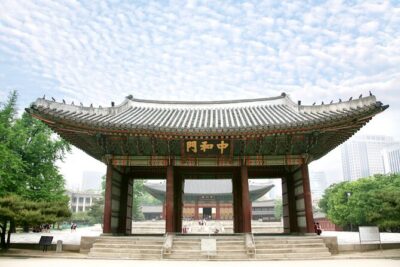
- Finish at Gyeonghoeru Pavilion: This grand pavilion sits beside a man-made lake and once hosted royal events.
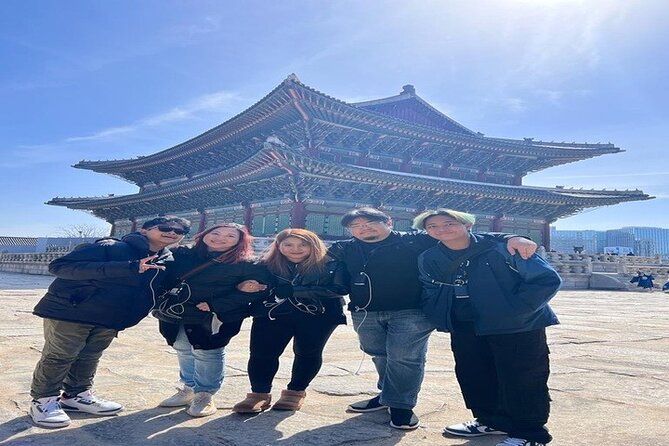
- Allow time for photos: Guides have helped families and solo visitors find good photo spots and take pictures.
- Tickets are included: The $38 price covers the local guide and palace admission.
- Plan around the minimum group rule: The tour can be canceled if fewer than four people book.
Why Gyeongbokgung deserves a guided visit
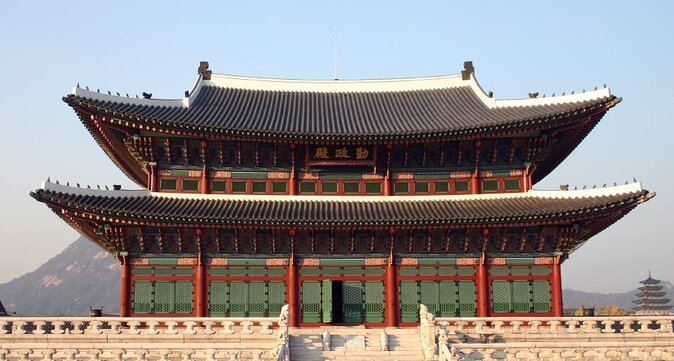
Gyeongbokgung is not just a collection of old buildings. It was the main stage for royal government during the Joseon Dynasty, which ruled Korea for roughly five centuries. Without some explanation, you can admire the rooflines and painted details but miss why the spaces were arranged as they were.
I find this palace especially useful early in a Seoul visit. The tour gives you a working introduction to Korean royal culture, the Joseon political system, and the way architecture reflected rank and function. Afterward, other historic sites around the city make more sense.
The palace is also a place where scale matters. You move from the formal main gate into broad ceremonial areas, then toward buildings tied to court life and state events. A live guide can point out details you might otherwise walk past, including the difference between spaces used for official duties and those connected with the royal family.
The experience is not designed as a long academic lecture. It is a brisk, guided walk with time for questions and photos. That makes it a good fit if you want context but still plan to visit other sights in Seoul the same day.
More Gyeongbokgung Palace Tours around Seoul:
- Best Seoul City Tour (Gyeongbokgung Palace,Insadong,Namsan Tower)
★ 5.0 · 1,647 reviews - Seoul City Sightseeing Tour Including Gyeongbokgung Palace, N Seoul Tower, and Namsangol Hanok Village
★ 5.0 · 1,423 reviews - Seoul Half-Day City Highlight, Palace Tour with Hanbok
★ 4.9 · 764 reviews
Starting at Gyeongbokgung Station Exit 5
The meeting point is outside Gyeongbokgung Station Exit 5, at the stairs in front of the National Palace Museum of Korea. This is a convenient starting place because the station brings you directly to the palace district, but pay attention to the exact meeting instructions.
One visitor had trouble because a map directed them to the wrong spot. A WhatsApp message from the guide helped them find the group, so check your email and WhatsApp before leaving your hotel. I would arrive early enough to identify the museum and stairs without rushing.
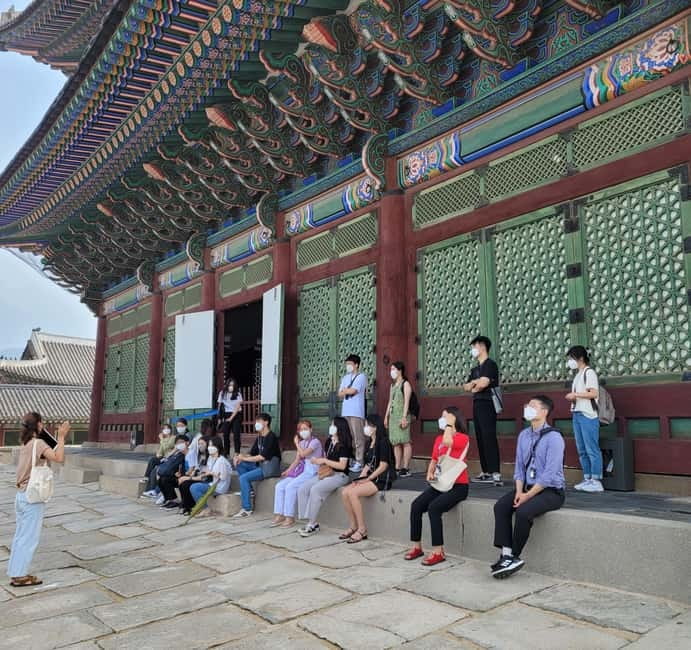
The palace grounds are large, and the tour begins by heading toward the main gate. This first stretch is useful because it lets you get your bearings before the formal explanation begins. You will want comfortable shoes. Two hours on palace paths is not difficult, but the visit involves steady walking and standing.
The tour is wheelchair accessible. Still, the palace covers a broad area, so anyone who needs frequent breaks should confirm the practical route with the operator before booking.
Passing through the main gate
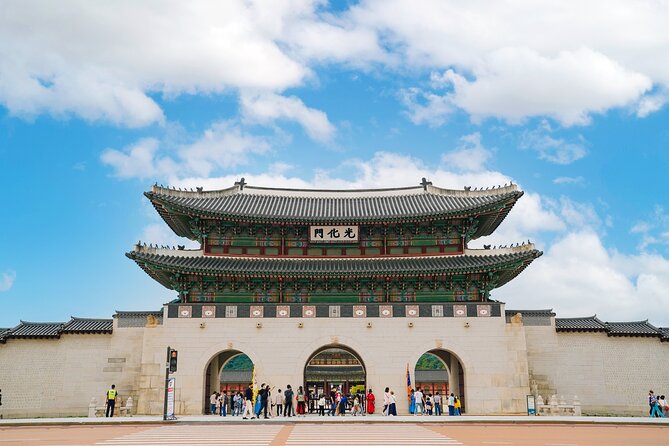
The main gate sets the tone. It is an imposing entrance, built to announce the importance of the royal compound before you even reach the inner buildings. A guide can explain how the palace functioned as more than a residence. It was also a place of ceremony, administration, and carefully ordered court life.
This is where the tour begins to connect architecture with authority. The arrangement of gates, courtyards, halls, and open spaces was not random. The palace expressed who held power and where different kinds of business took place.
Your guide will point out the places where kings and queens once appeared and explain how the Joseon court operated. That context is one of the main reasons to choose the guided option. You can take excellent photographs on your own, but it is harder to understand what each building was for without help.
The guides use slightly different styles. Joy has been praised for making history lively and for explaining figures such as King Sejong and the effect of his work on Korea. Alan has been described as funny, friendly, and good at answering questions. Sally is often noted for a clear explanation of palace functions, while Sora has provided engaging stories about the dynasty and court life.
The exact guide depends on the date, so you should not book expecting one particular person. The useful pattern is that the guides explain the site in accessible English rather than assuming you already know Korean history.
Understanding Joseon court life in the palace halls
The Joseon Dynasty shaped Korean society for about 500 years, and this tour uses the palace to explain that long period. You will hear about the royal family, the roles of kings and queens, and the way court life was organized.
I like this part because it moves beyond dates and names. The palace becomes a place where you can picture official meetings, royal ceremonies, family life, and strict social rules. Several guides have also answered questions about Korea today, which can help you connect the old capital with modern Seoul.
The amount of information appears to be well judged for a two-hour visit. One guide was praised for giving the right amount of detail at each stop, while another was appreciated for leaving time to enjoy the setting. That balance matters. A palace tour can become tiring if every building turns into a long lecture.
You should still expect the tour to be an introduction, not a full course in Korean history. Visitors who want a more extensive account of the dynasty may wish for a longer visit. One person specifically wished they had booked a more extended tour after enjoying the guide’s explanations.
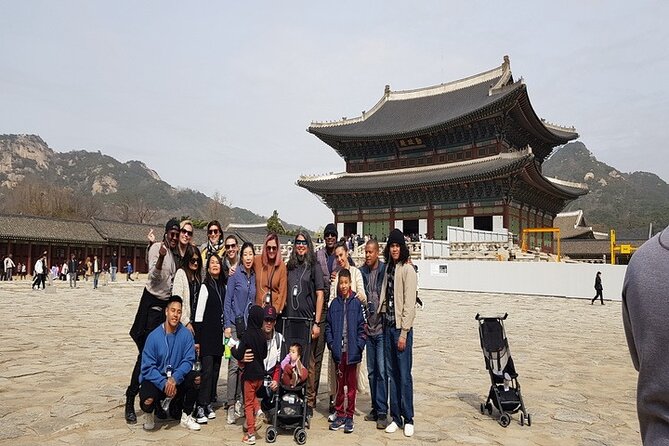
The group size also affects the experience. A small group allows you to ask questions and stay close to the guide. It can feel more personal than following a large crowd, but the tour may not run if fewer than four people are booked.
More Palace Day Trips in Seoul:
- Seoul Day Tour: Gyeongbok Palace, Bukchon, Gwangjang Market
★ 4.7 · 7 reviews - Neuschwanstein & Linderhof Castle-Fairytale Day Tour from Munich
★ 4.5 · 7,275 reviews - Neuschwanstein Castle and Linderhof Palace Day Trip from Munich
★ 4.5 · 1,756 reviews - From Paris: Giverny and Versailles Palace Guided Day Trip
★ 4.5 · 1,324 reviews
Finding the best photo stops
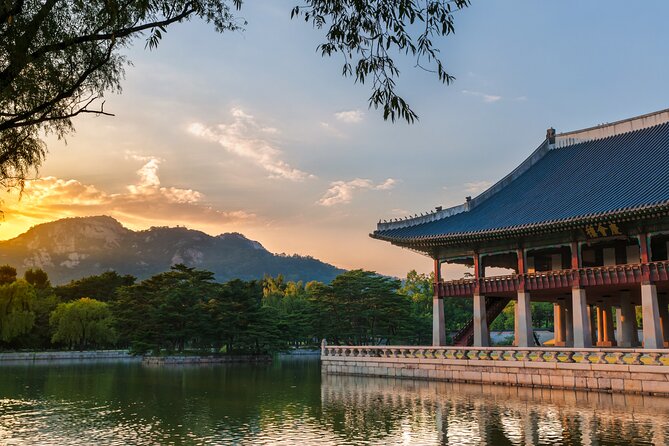
Gyeongbokgung is highly photogenic, and the tour leaves room for pictures rather than treating photography as an interruption. Guides have helped families pose, taken photographs for solo visitors, and pointed out good places to frame the buildings.
That small service can make a real difference if you are traveling alone or with a family. You can enjoy the visit instead of trying to fit everyone into a timed phone shot. It also helps to tell the guide if you want a few minutes for photos.
The palace is particularly rewarding for visitors who enjoy architectural detail. You can look closely at the painted wooden decoration, roof shapes, open courtyards, and the relationship between buildings. The guide’s explanation gives those details a purpose instead of leaving them as decoration alone.
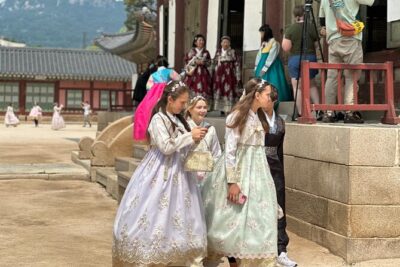
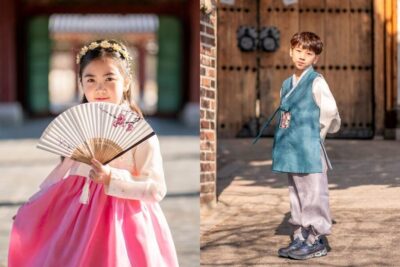
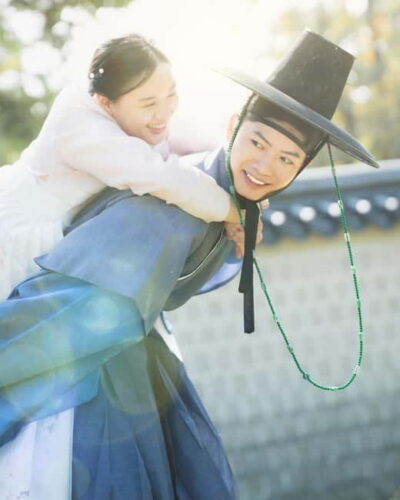
A practical tip: consider renting a hanbok before the tour if that is part of your Seoul plan. One visitor wished they had done so. The activity does not include traditional clothing rental, so arrange it separately and allow enough time to reach the meeting point.
Finishing at Gyeonghoeru Pavilion
The tour ends at Gyeonghoeru Pavilion, the palace’s largest pavilion beside a man-made lake. It was used as an event hall for royal gatherings, and its position over the water gives the final stop a more open, graceful feel than the formal courtyards near the entrance.
This is a strong place to end because it brings together the palace’s ceremonial purpose and its visual appeal. You get a final piece of architectural explanation, then a chance to look around and take photographs.
The pavilion is not merely a pretty backdrop. Its size and setting show how the royal compound could host major occasions as well as daily government business. Your guide can explain its role in the palace system and place it within the larger story of the Joseon court.
After the guided portion, you have time to explore at your own pace. I value this arrangement. The guide gives you the structure you need, then you can return to a building, courtyard, or photo spot that caught your attention.
The changing guard ceremony and timing
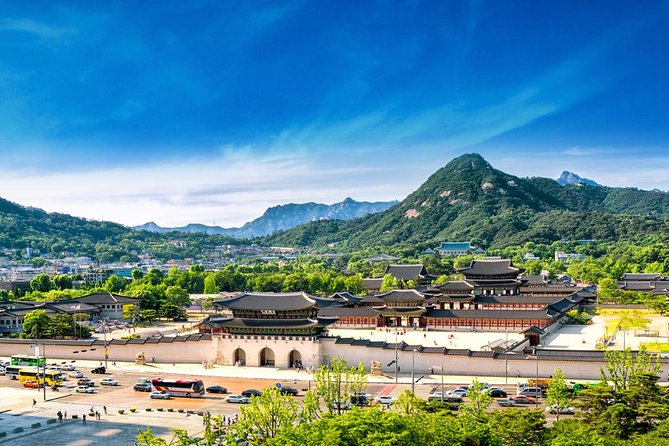
Some tours have been timed so the group could see the changing of the guards ceremony. This can add color and movement to the visit, with a more public display of palace tradition than the quieter architectural stops.
The ceremony is not listed as a guaranteed inclusion, so treat it as a possible bonus rather than the reason to book. If seeing it is important to you, ask about the schedule before confirming your time.
Starting time also matters for comfort. Reviews describe guides choosing shaded areas on hot days and even bringing hand warmers during cold weather. Seoul weather can change the feel of an outdoor palace visit quickly, so dress for the season and bring comfortable shoes.
The tour lasts two hours, which is enough for a guided overview but not necessarily enough for every corner of the full estate. I would plan extra time afterward if you want a slower look at the grounds.
Is $38 a fair price?
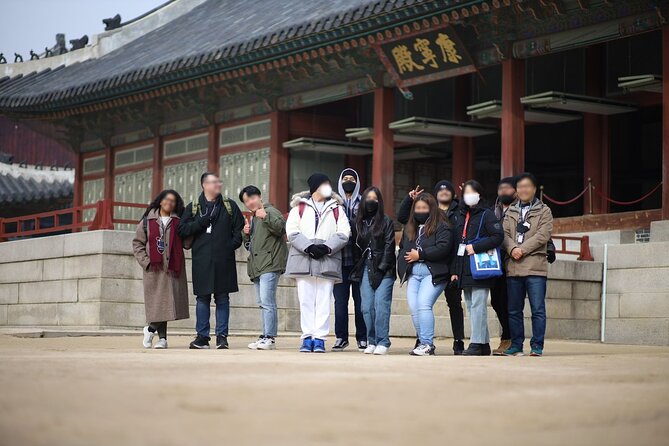
At $38 per person, the cost includes the palace entrance ticket and a live English-speaking guide. I consider that a fair price for a short introduction to one of Seoul’s key sights, especially if you value clear historical context and the chance to ask questions.
The value comes from the guide rather than from transport or food. You make your own way to the station, and there are no meals or travel insurance included. If you only want to walk through the palace and take photographs, visiting independently may cost less and give you more freedom.
For a first visit, though, the guide can save you from treating Gyeongbokgung as a series of attractive but confusing buildings. The tour explains how the palace worked, why the spaces mattered, and how the Joseon Dynasty affected Korean society.
The price is also reasonable for solo visitors who want a little social contact. The group setting gives you someone to talk with, and guides such as Joy have created a friendly atmosphere for people visiting alone. Families may also appreciate the help with photographs and the simple explanations.
Who will get the most from this tour?
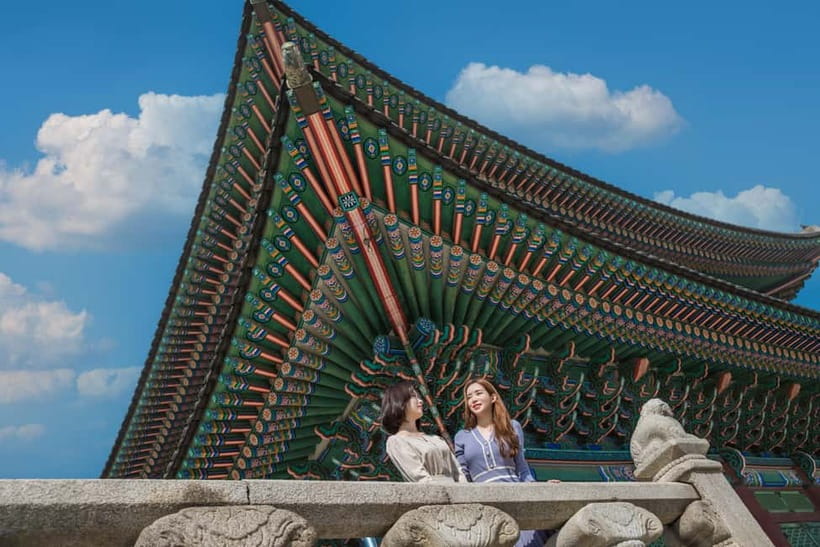
I would choose this tour if you are visiting Seoul for the first time, have limited time, or want a straightforward introduction to Korean history. It should suit adults, families, and solo visitors who enjoy asking questions rather than reading every sign independently.
It is also a good choice if you want to connect palace buildings with daily life and government. The guides have answered questions about modern Korean life as well as the past, which gives the visit a wider frame.
You may prefer an independent visit if you want to spend several hours photographing details, move at your own pace from the start, or focus on architecture without much narration. You should also think twice if your schedule cannot handle a possible change in confirmation, since the activity may be canceled when fewer than four participants book.
The English language option is the one described here. The tour is wheelchair accessible, and comfortable footwear is the only specific item listed to bring.
Booking rules worth knowing before you pay
You can reserve now and pay later, which is useful if your Seoul schedule is still changing. You can cancel up to 24 hours before the tour for a full refund.
A same-day cancellation or no-show receives no refund. Weekend and holiday reservations cannot be confirmed in the usual way, so check the operator’s message carefully rather than assuming your booking is final.
If the group has fewer than four participants, the tour will be canceled and the notice will be sent by WhatsApp. Keep that messaging service available while you are in Seoul, and check your phone before setting out.
These rules are not difficult, but they matter because this is a timed activity with a specific meeting point. A few minutes spent checking the confirmation can prevent a stressful start.
Should you book the Gyeongbokgung Palace tour?
I would book it if you want a clear, friendly introduction to Seoul’s most important royal palace, especially during a first visit. The $38 fee covers admission and a two-hour English tour, and the guides have consistently focused on useful history, palace functions, photos, and questions.
I would skip it only if you strongly prefer complete independence or need a guaranteed weekend departure. For everyone else, the short format, central meeting point, and time to continue exploring afterward make this a practical way to begin understanding Gyeongbokgung.
FAQ
How long is the Gyeongbokgung Palace tour?
The tour lasts two hours. After the guided portion, you can spend additional time exploring the palace on your own.
What is included in the price?
The $38 price includes a local tour guide and the entrance ticket to Gyeongbokgung Palace.
Where do I meet the guide?
Meet outside Exit 5 of Gyeongbokgung Station, at the stairs in front of the National Palace Museum of Korea.
What language is the tour conducted in?
The live tour guide speaks English.
Is the tour wheelchair accessible?
Yes, the activity is listed as wheelchair accessible.
What should I bring?
Bring comfortable shoes for walking around the palace grounds.
Can I cancel for a refund?
You can cancel up to 24 hours in advance for a full refund. No refund is issued for a no-show or a cancellation on the day of the tour.
What happens if fewer than four people book?
The tour may be canceled if fewer than four participants book. The cancellation notice is sent by WhatsApp.
Fresh palace tours around Seoul
- Seoul: UNESCO Sites tour: Palace, Shrine & Bukchon Village★ 4.8 · 26 reviews
- Seoul: Royal Palace Morning Tour including Cheongwadae★ 4.5 · 12 reviews
- Seoul: Gyeongbok Palace and Bukchon Hanok Walking Tour★ 4.8 · 157 reviews
- Seoul: UNESCO Palace and Street Foods Guided Tour★ 5.0 · 6 reviews
- Seoul: Hanbok Photo Tour at Gyeongbokgung Palace★ 5.0 · 9 reviews
- Seoul: Professional Hanbok Photography at Gyeongbok Palace★ 4.9 · 172 reviews
- Seoul: Gyeongbokgung Palace Tour & Lunch at Authentic Market★ 4.5 · 2 reviews
- Seoul: Modern Hanbok Dress Photoshoot Gyeongbokgung Palace★ 5.0 · 2 reviews
Gyeongbokgung Palace Tours: the shortlist.
Best Seoul City Tour (Gyeongbokgung Palace,Insadong,Namsan Tower)
Read our review →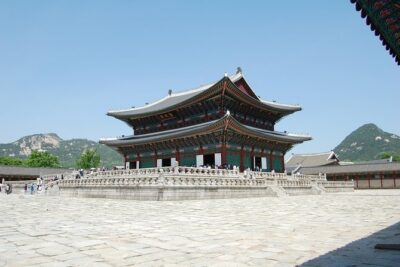
Seoul City Sightseeing Tour Including Gyeongbokgung Palace, N Seoul Tower, and Namsangol Hanok Village
Read our review →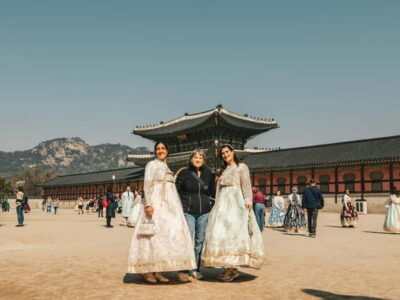
Seoul Half-Day City Highlight, Palace Tour with Hanbok
Read our review →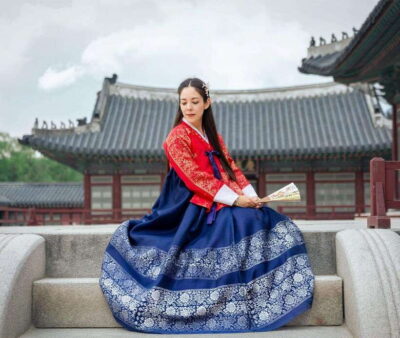
Professional Hanbok Photography at Gyeongbok Palace
Read our review →
This visit also appears in