
Review · MADRID
Historic Madrid on foot: From the Palace to Sol
Madrid’s story comes alive on this walk from the opera house to Puerta del Sol. You’ll move through royal squares, old Habsburg streets, the Royal Palace district, Plaza Mayor, and the city’s central meeting point, while hearing about assassinations, theater superstitions, Galileo, Quevedo, and some wonderfully odd local customs.
I like the small group of seven because it should be easy to hear the guide and ask questions. I also like the route’s range: you get royal Madrid, medieval traces, literary connections, grand civic spaces, and the city’s most famous street in only two hours.
The main drawback is the walking itself. The tour is not suited to wheelchair users, people with mobility impairments, or those with a low level of fitness, and comfortable shoes are essential.
Key points
- A two-hour route through central Madrid: Walk from Plaza de Isabel II to Puerta del Sol, with Gran Vía added near the end.
- Theater lore with a strange phrase: Learn about the Teatro Real and the origin of ¡Mucha m!.
- Royal Madrid in one compact stretch: See the Royal Palace, Almudena Cathedral, Plaza del Oriente, and a Galileo-linked statue.
- Old Madrid details: Explore Madrid de los Austrias, Calle del Codo, and the foundations of the old Almudena Cathedral.
- A small group capped at seven: English and Spanish tours allow for a more personal pace than a large city walk.
- Good value at $23: You get two hours of live history and orientation before exploring more of Madrid on your own.
From Ópera to the story behind Madrid
Meet opposite the monument to Isabel II in Plaza de Isabel II, beside Ópera metro station. This is a useful starting point because the square sits directly beside several of Madrid’s major sights, and you can reach it easily by metro.
The walk begins behind the Teatro Real with a map showing how Madrid looked in earlier times and what the route will cover. That small orientation matters. Madrid can feel like a series of grand plazas and narrow lanes until someone explains how the pieces fit together.
This is not a museum tour with long stops inside buildings. It is a city walk built around views, street corners, monuments, and stories. You will spend most of the two hours outdoors, moving from one part of central Madrid to the next.
The guide speaks English or Spanish. Some material may be presented in its original language, so this suits you best if you are comfortable hearing place names, expressions, or historical references as they are used locally.
More Palace Walking Tours around Madrid:
- Madrid Old Town & Royal Palace Walking Tour Skip the Line Ticket
★ 4.5 · 1,829 reviews - Private Visit to the Royal Palace and Walking Tour of Madrid
★ 5.0 · 4 reviews - Madrid: Old Town Walking Tour and Royal Palace Private Tour
★ 5.0 · 2 reviews
Teatro Real and the curious origin of a theater expression
The first major stop is the Teatro Real, Madrid’s grand opera house. The guide explains its history and the many roles it has played over time, giving you more than a quick look at its exterior.
The most memorable detail here may be the explanation of ¡Mucha m!, a theater expression that roughly translates into a very rude phrase. It is the kind of small cultural curiosity that can make a city feel more human. Instead of only hearing dates and architectural facts, you get a glimpse of the customs and language attached to Madrid’s performance life.
The theater section also gives you an early sense of the tour’s tone. Expect history mixed with colorful stories, local expressions, and details that are easy to remember after the walk ends.
You will not be attending a performance, and the tour does not include a stated theater visit. If you want to see the Teatro Real from inside, you would need to arrange that separately. The value here is the context and the exterior setting.
Plaza del Oriente and Madrid’s royal center
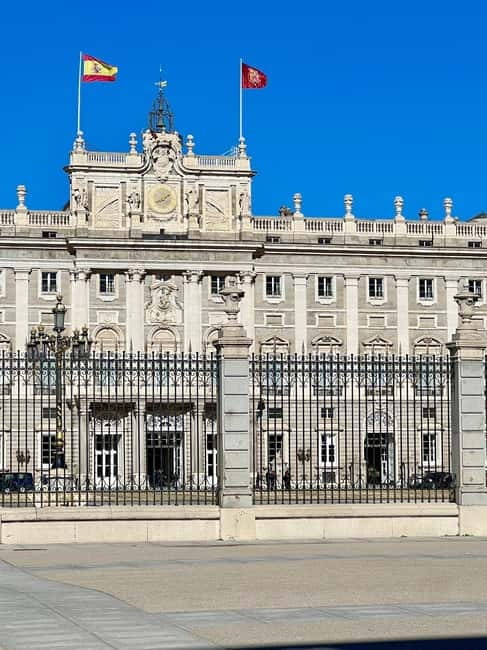
From the theater, the route continues through Plaza del Oriente. This open square leads toward the Royal Palace and helps you understand how Madrid presents its monarchy through architecture, statues, and ceremonial spaces.
The Royal Palace is described as the largest palace in Western Europe and remains the official seat of the Spanish monarchy. The guide discusses the palace rather than promising entry, so plan on viewing and learning from the outside during this walk.
That distinction is important. If your main goal is to tour the palace rooms, this experience will not replace a dedicated palace ticket. If you want the palace to make sense before visiting it, the walk offers a useful introduction without taking up half a day.
The group size also matters here. With no more than seven participants, you should have a better chance of hearing the explanation near a busy public square. The guide can also respond to questions without the stop turning into a formal lecture.
Almudena Cathedral and a statue linked to Galileo
The next part brings together royal, religious, and scientific stories. You will hear about Almudena Cathedral, Madrid’s major cathedral, and a statue whose construction involved Galileo Galilei himself.
That last detail is a good example of the route’s appeal. Madrid’s central streets are full of familiar monuments, but the interesting part is often the connection behind them. A statue can become a doorway into European science, royal patronage, or the changing identity of the city.
You should expect to discuss the cathedral and nearby landmarks from the route, not to take part in a dedicated cathedral visit. The tour keeps moving, so you get a broad sense of the district rather than a long architectural study of one building.
For a first day in Madrid, that approach can work well. You get enough background to decide which sights deserve a longer return visit.
More royal history around Madrid:
- Madrid Essential: Historic Center, Plaza Mayor & Royal Palace
★ 5.0 · 6,416 reviews - Madrid in a Day Tour:Royal Palace, Historic Center & Prado Museum
★ 5.0 · 628 reviews - Madrid: Royal Palace, Prado Museum & Historic Center Tour
★ 4.6 · 50 reviews - Tour of the historic Royal Palace of Madrid
★ 5.0 · 2 reviews
Madrid de los Austrias and the old Almudena foundations
The walk then turns into Madrid de los Austrias, the part of the city associated with Habsburg rule. Here the mood changes. Grand royal spaces give way to older streets, irregular corners, and traces of earlier Madrid.
The guide points out curious neighbors who look toward the foundations of the old Almudena Cathedral. That detail gives the route a grounded, street-level feel. You are not only looking at polished monuments. You are also being directed toward remains and fragments that can be easy to miss on your own.
This section is where comfortable shoes become especially important. The tour is only two hours, but it involves continuous walking through central streets. You should wear practical footwear and clothing suited to the season and weather.
The guide also covers the assassination attempt on Alfonso XIII and some scatological traditions. The latter will not suit every taste, but it reflects the kind of informal storytelling promised by the tour. Madrid’s past includes royal ceremony and serious political events, but it also includes bodily humor, gossip, superstition, and strange public customs.
That balance can be useful if you prefer history with personality. If you want a strictly academic presentation, the jokes and odd details may feel less central to your interests.
Calle del Codo and Quevedo’s Madrid
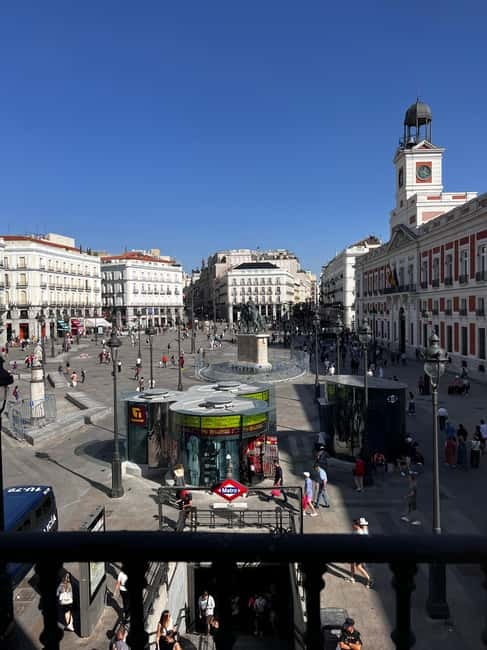
One of the more specific stops is Calle del Codo, a narrow street linked with the writer Quevedo. The route uses this corner to connect Madrid’s physical streets with its literary life.
A street like this is easy to pass without context. A guide changes the experience by explaining who walked there and why the place matters. You may not spend long on the lane, but it becomes part of a larger picture of writers, public life, and old Madrid.
The walk also discusses the beginnings of the Villa of Madrid. This is useful because the city’s modern role can overshadow its earlier development. The route gives you a basic timeline, moving from the city’s origins through royal expansion and into the central Madrid you see today.
Do not expect every period of Madrid’s past to receive equal attention. Two hours is enough for a lively outline, not a full course in Spanish history. The strength is the connections between places, not exhaustive detail.
Plaza Mayor, from market to city stage
The route continues to Plaza Mayor, one of Madrid’s defining public spaces. The guide explains that it began as a market and now has more than four centuries of history, including fires, memories of war, and the many public uses that have shaped it.
Plaza Mayor is the sort of place that benefits from a guide because its broad, uniform appearance can hide the events held there. Once you know it was a market and has survived fires and wartime memories, the square feels less like a postcard and more like a public stage with a long record.
The guide also points out the restaurant presented as the oldest in the world. This is a memorable stop for food-minded visitors, though the tour does not include a meal. If you want to eat there, treat it as a separate plan and check its current opening details yourself.
The square can be crowded, and the tour’s pace may pause while the guide finds a workable place to speak. The small group helps, but this is still a public plaza in the center of Madrid. Keep your belongings secure and stay close enough to hear.
Puerta del Sol and the center of Spain
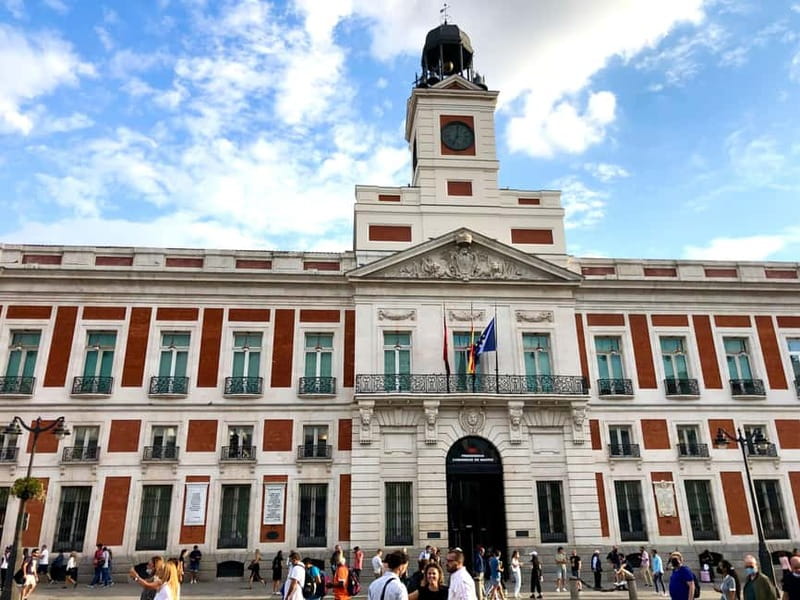
After Plaza Mayor, it takes only a few steps to reach Puerta del Sol. This is the heart of Madrid and the natural climax of the route.
Here you will see the point from which Spain’s roads begin, along with the starting point for Madrid’s street numbering. The guide explains why this busy square matters beyond its shops, traffic, and crowds.
Puerta del Sol is also one of the easiest places to use as a base for later exploring. From here, you can continue through central Madrid, return by metro, or follow the route toward Gran Vía.
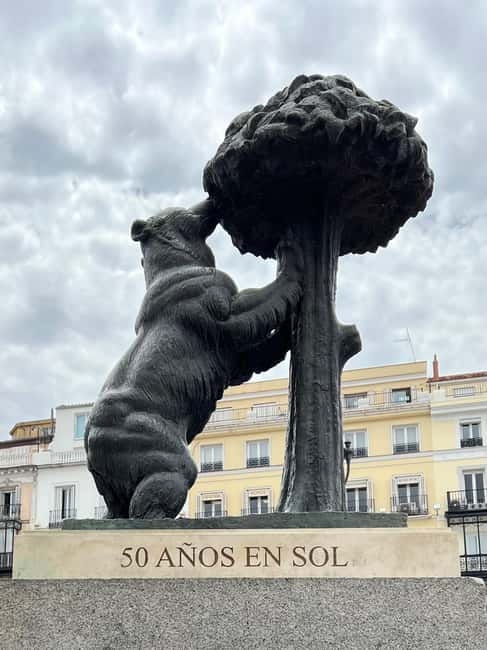
The walk ends beside the statue of the bear and the strawberry tree, one of Madrid’s best-known symbols. Finishing here gives you a clear landmark and a memorable image of the city.
Gran Vía legends before the final stop
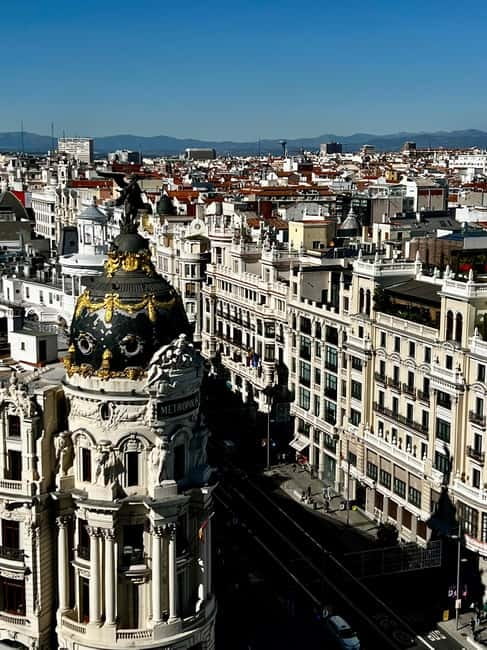
Near the end, the route goes up to Gran Vía to discuss some of its legends before returning to Puerta del Sol. This adds a more modern layer to a walk that has mostly focused on royal and older Madrid.
Gran Vía is one of the city’s famous avenues, and its stories help show how Madrid changed beyond the old Habsburg center. You do not get a full tour of the avenue, but the short excursion broadens the route and keeps it from feeling like a single-period history lesson.
The return to Sol also keeps the ending practical. You finish in a central location rather than at a distant neighborhood or an unclear street corner.
What the $23 price gets you
At $23 per person, this is a reasonable price for a two-hour live walking tour with a group limited to seven. You are paying for a guide who connects a long list of central landmarks and adds stories you might not find by simply walking between them.
The value is strongest if you are new to Madrid. In two hours, you get a map of the historic center, an introduction to the city’s major symbols, and enough context to choose what you want to revisit.
The price does not include palace admission, food, or a stated interior visit to the Teatro Real or Almudena Cathedral. That keeps the cost down, but it also means you should not book this expecting a ticketed attraction tour.
You can cancel up to 24 hours before the start for a full refund, and you can reserve now and pay later. Those options are useful when your Madrid schedule is still changing.
Who will enjoy this walk most
I would choose this tour for a first visit to Madrid, especially if you want your first hours in the city to feel organized without being locked inside a museum.
It suits you if you enjoy:
- Royal buildings and public squares
- Short historical stories with unusual details
- Literary and political connections
- A guide who can offer practical city tips
- Walking at a steady pace through central Madrid
- Small groups rather than large guided crowds
The attentive approach described in the available feedback, along with the emphasis on city tips and local history, suggests that you should expect more than a list of dates. Still, no individual guide name is provided, so you cannot choose the tour based on a particular person.
This is not a good fit if you have a low level of fitness, mobility limitations, or need wheelchair access. The tour requires walking, and the route includes historic central streets. Comfortable shoes are not optional advice here.
Practical advice before you go
Meet at the monument to Isabel II in Plaza de Isabel II, opposite the Ópera metro station. Arrive ready to walk, since the tour begins with an orientation and then moves through several districts.
Wear comfortable clothing and shoes suited to the weather. Madrid can be hot in warm months and cool in winter, and the activity takes place outdoors.
The tour is available in English and Spanish. Some content may be delivered in its original language, so ask the guide for clarification if a phrase or historical name goes by too quickly.
Alcohol and drugs are not allowed, and intoxicated participants are not suitable for the activity. The tone is cultural and educational, not a nightlife outing.
Should you book Historic Madrid on Foot?
Book it if you want a compact introduction to Madrid that connects the Royal Palace, Almudena Cathedral, Madrid de los Austrias, Plaza Mayor, Gran Vía, and Puerta del Sol in one walk. The small group and $23 price make it especially appealing at the beginning of a city break.
Skip it if you need step-free access, cannot manage two hours of walking, or mainly want entry into the palace or cathedral. For everyone else, this is a smart way to get your bearings, collect a handful of memorable stories, and decide where to spend more time afterward.
FAQ
Where does the Madrid walking tour begin?
It begins opposite the monument to Isabel II in Plaza de Isabel II, near Ópera metro station.
How long does the tour last?
The walking tour lasts two hours.
What sights are included on the route?
The route includes the Teatro Real, Plaza del Oriente, the Royal Palace area, Almudena Cathedral, Madrid de los Austrias, Calle del Codo, Plaza Mayor, Gran Vía, Puerta del Sol, and the statue of the bear and strawberry tree.
Is the tour offered in English?
Yes. The tour is available in English and Spanish. Some content may be presented in its original language.
How large is the group?
The group is limited to seven participants.
Is the tour suitable for wheelchair users?
No. The activity is not suitable for wheelchair users, people with mobility impairments, or people with a low level of fitness. Comfortable footwear is recommended.
Fresh palace tours around Madrid
- Madrid: Royal Palace Guided Tour with Entry Ticket★ 5.0 · 58 reviews
- The Royal Palace of Madrid: Small Group Guided Tour★ 3.2 · 6 reviews
- The Most Complete Tour of Madrid: Austrias, Cathedral, Palace – Local Guides★ 4.2 · 41 reviews
- Madrid: Royal Palace and Almudena Cathedral Small-Group Tour★ 4.6 · 219 reviews
- Tour of the historic Royal Palace of Madrid★ 5.0 · 2 reviews
- Private Visit to the Royal Palace and Walking Tour of Madrid★ 5.0 · 4 reviews
- Private guided tour Royal Palace & Royal Collections Gallery★ 5.0 · 4 reviews
- Royal Palace of Madrid Skip-the-Line and Retiro Park Tour★ 4.5 · 78 reviews
Palace Walking Tours: the shortlist.
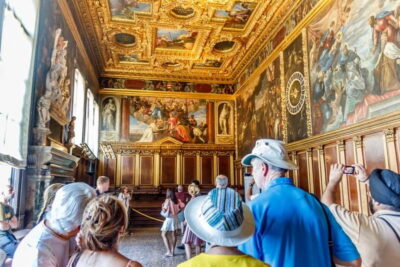
Doge’s Palace and St Mark’s Basilica Walking Tour
Read our review →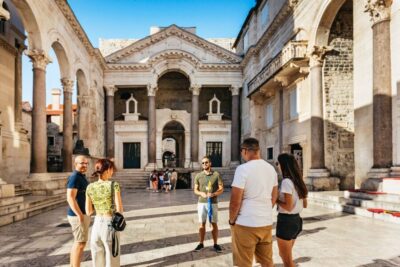
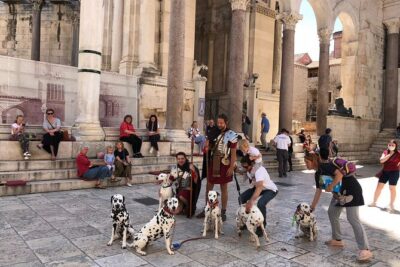
Walking Tour of Split and Diocletian’s Palace
Read our review →
Grand Palace and Wat Phra Kaew Guided Walking Tour
Read our review →
Imperial Palace and Shogun Historical Walking Tour
Read our review →
Madrid Old Town & Royal Palace Walking Tour Skip the Line Ticket
Read our review →
Knossos Palace Skip-the-Line Guided Walking Tour
Read our review →
Tokyo Castle & Imperial PalaceーShogun Walking Tour
Read our review →This visit also appears in