
Review · INDIA
Individual Gujarat tour 2024-2025 (nature and palaces)
Gujarat’s best moments come far from India’s usual first-time route. You move from Ahmedabad’s carved old neighborhoods to Jain temples, palace hotels, salt flats, village workshops, wild lions, and leopards watched from the hills of Jawai. I especially like the mix of private comfort and unusual stops, plus the chance to meet artisans and see daily life beyond major monuments.
I also like that the route gives you time to get to know Gujarat’s people and scenery instead of racing through a short city break. The main consideration is the pace: long drives, early starts, 3,700 steps at Palitana, and several safari days require moderate fitness and patience.
Key points to know before booking
- Private 16-day route: You travel in your own air-conditioned vehicle with a driver, rather than joining a large group.
- Four wildlife outings: The price includes two leopard safaris, one lion safari, and one Wild Ass Sanctuary safari.
- Palace accommodation: Neelam Bagh Palace, Gondal’s former palace hotel, and Balram Palace add a special sense of place.
- Serious cultural variety: You visit Jain temples, Hindu monuments, Islamic buildings, Buddhist caves, textile villages, and old merchant neighborhoods.
- A demanding Palitana climb: Reaching the hilltop temples means about 3,700 one-way steps, usually around two hours up.
- Good for returning India visitors: The route avoids a standard Golden Triangle circuit and reaches less familiar parts of western India.
Why Gujarat makes a strong second India trip
This is not a quick collection of famous sights. It is a broad circuit through Gujarat, Rajasthan, and the Jawai region, with the private car giving you flexibility between stops. The route begins and ends in Ahmedabad, making the international flight plan straightforward.
I would choose this trip after already seeing one of India’s classic routes. Ahmedabad, Lothal, Bhuj, the Ranns, Palitana, and Jawai offer a different picture of the country: dry country, trading towns, craft traditions, religious centers, and wildlife reserves.
The $2,808.17 price per person covers the private vehicle, driver, hotels, breakfast for 13 days, dinner for 14 days, two lunches, GST, and four safari outings. Flights are extra, as are personal purchases and any alcohol license or drinks in Ahmedabad. For a private 16-day journey with several palace stays and substantial transport, the price can make sense, particularly if two people are sharing the arrangement.
The tradeoff is that this is not a cheap backpacking route. You pay for a private car, air conditioning, door-to-door transfers, and a carefully connected route. You also spend many hours on the road. That comfort matters in Gujarat, where the itinerary covers a large area.
More palaces to tour around India:
- Jaipur Guided City Tour: City Palace, Jantar, Hawa & Jal Mahal
★ 5.0 · 186 reviews - Tipu Palace + Koté Vishnu + Fort + KR Market + Jain Temple = Bengaluru Pété Walk
★ 5.0 · 150 reviews - Full-Day Jaipur City Tour with Amber Fort and City Palace
★ 5.0 · 99 reviews
Ahmedabad begins with old pols and Gandhi’s ashram
After arriving from Europe, you receive a traditional welcome and transfer to your hotel. Rooms are available from noon, so an early arrival may mean waiting before check-in. Dinner is provided at the hotel on the first evening.
The next day begins in Ahmedabad’s old city. The Heritage Walk takes you through pols, the old residential quarters where houses were grouped together in compact neighborhoods. This is one of the strongest parts of the trip because you see the city at street level, rather than only from a car window.
Swaminarayan Temple, Jama Masjid, and Sidi Sayad Mosque show different sides of Ahmedabad’s religious and architectural life. Sidi Sayad Mosque is known for its delicate stone work, while the old city walk gives you a better feel for how people lived within these tightly planned quarters.
Sabarmati Ashram adds a quieter note. Gandhi lived there for several years, and the stop helps place his work within the city where it happened. The afternoon is free, with time for the hotel pool or personal errands. Ahmedabad has special alcohol regulations, and the tour information notes that you can obtain a license at an alcohol shop if needed.
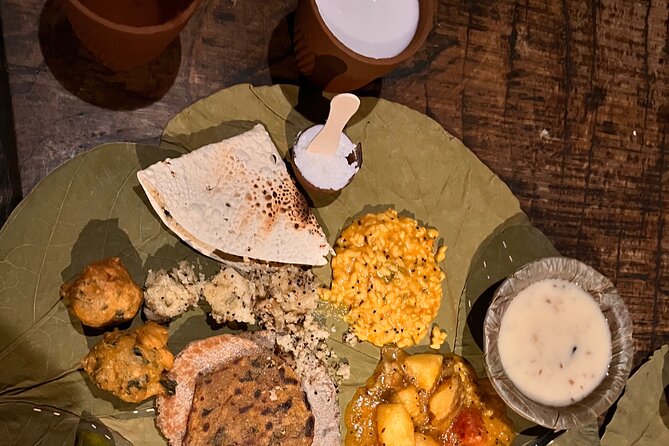
A local meal in the evening is a useful touch. It gives you a chance to try regional food in a less formal setting, though the exact restaurant is not specified.
Lothal and Bhavnagar bring archaeology and palace comfort
The drive from Ahmedabad to Bhavnagar takes about five hours, with a stop at Lothal. This ancient settlement was inhabited around 3700 BC and became a trading port connected to the Indus civilization. Its ruins are not polished like a grand palace, so you need some imagination, but the site gives the trip real archaeological weight.
After Lothal, you continue to Bhavnagar and have time for a short walk through the city center. Your hotel is Neelam Bagh Palace, designed by a German architect and now used as a palace hotel. This is where the trip’s live-like-a-Maharaja theme becomes tangible.
Palace accommodation is not just decoration. It changes the rhythm of a long road trip. After several hours in the car, checking into an old royal property gives you a memorable evening and a stronger sense of Gujarat’s former princely states.
Palitana asks for effort, patience, and good shoes
Palitana is one of the trip’s most demanding and rewarding days. The Shatrunjaya Hill complex contains more than 800 Jain temples, reached by roughly 3,700 steps each way. The climb usually takes about two hours up and one hour down.
You should take this seriously. Start early, wear suitable shoes, and expect heat, exertion, and crowds of pilgrims. The site is sacred to Jains, so respectful clothing and behavior matter.
Porters can carry you in a palanquin if you cannot manage the climb. The supplied information gives a typical cost of about 50 to 60 euros for a group of four porters, plus a tip. This is an unusual option, but it may make the visit possible for someone who cannot walk the full route. Confirm the current price with your driver or local contact before setting out.
The temples reward the effort with an extraordinary concentration of religious architecture. This is not a quick photo stop. You should allow the full time and accept that the physical challenge is part of the experience.
Same royal city, another way in:
- Bangalore: Palace, Temples, Fort & Markets Walking Tour
★ 4.9 · 97 reviews - Old Bangalore Historical Walk thro Palace, Temples, Fort & Market
★ 5.0 · 60 reviews - Bangalore: Walking Tour of Fort, Palaces, and Market
★ 5.0 · 58 reviews - 2-Day Private Tour of Jaipur from Delhi: City Palace, Hawa Mahal and Amber Fort
★ 4.5 · 29 reviews
Gir National Park is the wildlife centerpiece
The early morning safari at Gir is one of the strongest reasons to book this route. Gir is the only place outside Africa where Asiatic lions roam freely in the wild. The reserve also supports other animal and bird species, and people from communities such as the Rebari and Siddi live near the protected area.
A safari is never a guaranteed sighting, so keep your expectations sensible. You are paying for the opportunity to search the reserve, not a staged animal encounter. The early start also means this day begins before you may feel fully recovered from the previous driving days.
The Siddi community adds an unusual cultural detail. Their ancestors came primarily from southeast Africa, through histories that included trade, sailing, forced labor, slavery, and military service. Seeing Siddi communities near Gir can remind you how widely people and cultures have moved across the Indian Ocean.
The afternoon is free. That is welcome after an early wildlife outing, and it gives the driver or tour leader room to add a local surprise if conditions allow.
Junagadh and Gondal combine many architectural traditions
On the way to Gondal, you visit Junagadh Fort, Bibi ka Makbara, and Buddhist caves dating to the Ashoka period. The buildings show Hindu, Muslim, and European influences close together. This section rewards anyone who likes architecture that does not fit into a single category.
Gondal then returns you to palace culture. Navlakha Palace overlooks the river and rises more than 30 meters above the surrounding area. You also stay in a former palace converted into a hotel, with breakfast and dinner included.
The town’s extras are unusually varied. You visit an Ayurvedic company, see a collection of Ravi paintings, and look at old-timer cars. These are not the biggest monuments on the route, but they create a fuller picture of princely life and local enterprise.
Bhuj and Kutch show Gujarat at its most personal
You have three nights in Bhuj, staying at a hotel beside a lake. On arrival, you visit the Textile Museum of Kutch. This is an important stop because the region’s textiles are not just souvenirs. Embroidery, fabric patterns, and family techniques carry local identity from one generation to the next.
The following day takes you to Mandvi. En route, you visit a Jain temple, then continue to Vijay Vilas Palace. Mandvi once attracted wealthy traders dealing in diamonds and precious stones, and it still has a shipbuilding tradition using traditional methods.
The unfinished wooden boats along the shore may be more revealing than a completed monument. They show a working craft still connected to the town’s past. You return to Bhuj to see Prag Mahal and the palace commissioned by Maharao Lakhpatji in 1750. Prag Mahal uses Italian Gothic design and was damaged by the major earthquake in the region.
Kutch villages and the Great Rann bring color and open space
The Kutch village day is one of the best for meeting artisans. Families from different clans live in the villages and sell their work, turning the streets into open-air displays of regional craft. In the southern villages, Meghwal families are known for elaborate embroidery.
You should treat these visits as community encounters, not just shopping stops. Look carefully at the work, ask before photographing people, and remember that buying directly can support the families whose skills you came to see.
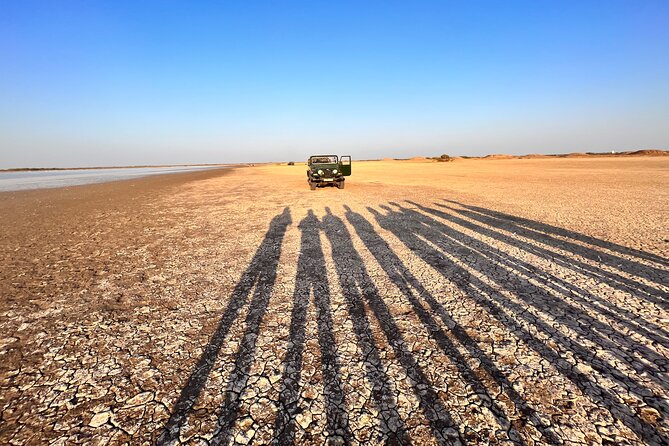
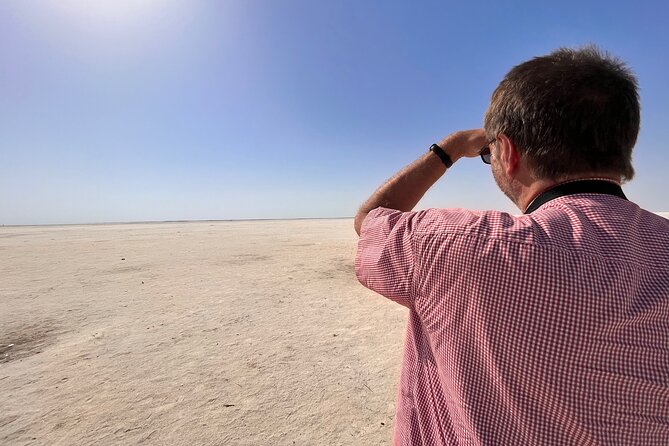
Later, you reach the Great Rann of Kutch, the White Desert. The broad salt plain is a sharp change from the close quarters of Ahmedabad and the detailed palace interiors. Timing matters here because the quality of the light changes through the day, but the schedule allows you to return to Bhuj in the evening.
Little Rann wildlife is a quieter safari day
The route then moves to Bajana, near Dasada, with an overnight stay at Royal Safari Camp. This is an eco-friendly village setting close to the Little Rann of Kutch and the Wild Ass Sanctuary.
Lunch is included, and you have time to rest before the late afternoon outing. The sanctuary is known for wild asses and also supports many bird species. It is a different wildlife experience from Gir and Jawai, with open country rather than a forest safari.
The camp provides a useful break from palace hotels. You get a more outdoors-focused night without giving up organized meals or transport. As always with wildlife, sightings vary, but the reserve adds a valuable ecological contrast to the cultural visits.
Modhera, Patan, and Sidhpur lead back toward Rajasthan
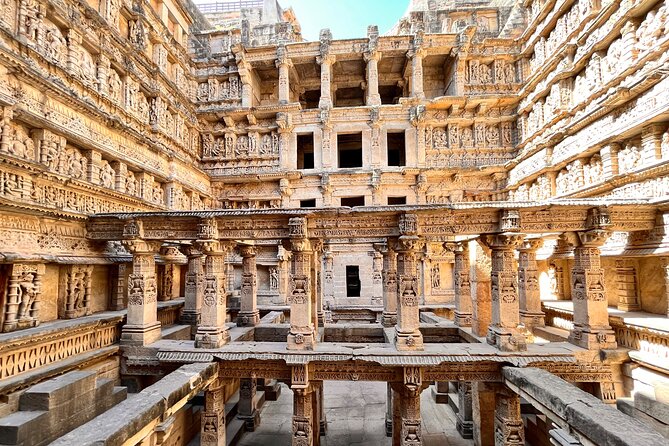
The next day is packed with historic sites. Modhera Sun Temple is an 11th-century monument and one of the finest examples of its period in India. Patan’s Rani Ki Vav, an ornate stepwell commissioned by Queen Udaymati in memory of her husband Bheema I, is another major architectural stop.
Stepwells are especially useful for understanding how water shaped life in dry parts of western India. Rani Ki Vav is not simply a practical structure. Its carved levels turn water access into a carefully designed public and religious space.
Sidhpur changes the mood again. Its European-influenced houses, called manzils, line streets that can feel wonderfully out of place in a standard India route. The day continues to Palanpur, where Balram Palace dates to the 19th century and sits beside the Macchu River. The route description includes spacious suites, making this another comfortable overnight stop before the longer drive toward Jawai.
Jawai offers two chances to look for leopards
The road to Jawai passes through the mountains, with a stop at Ranakpur Jain Temple. Give the temple its full hour. Its detailed stone carving makes it one of the journey’s strongest religious buildings.
At Jawai, you take a jeep safari in search of leopards and spend the night in a tented hotel. The setting is more basic and outdoorsy than the palace properties, but sleeping under the stars gives this section a distinct character.
Two leopard safaris are included, one on arrival and another the next day. The supplied experience information gives a striking estimate that 90 percent of safari participants see leopards, but you should still regard that as a guide’s expectation rather than a promise. Wildlife remains unpredictable.
The second safari is followed by free time and access to the pool. That pause matters because the route has been busy. You can enjoy the tented camp at a slower pace instead of treating Jawai as another one-hour stop.
Returning to Ahmedabad and judging the value
The final full day returns you to Ahmedabad, with Adalaj ki Vav on the way. This stepwell provides one last look at Gujarat’s water architecture before you check into your Ahmedabad hotel in the evening.
On departure day, the room can be used until 10 a.m., depending on hotel arrangements, and you transfer to the international airport according to your flight time. The recommended flight plan is to land in Ahmedabad on day two and fly home on day sixteen. Booking flights directly in Germany is suggested because EU air passenger protections apply directly to that booking.
The tour includes mobile ticketing and private transportation, but no restroom on board. That detail matters on long road days. Plan stops with your driver and keep water, medication, and small snacks close at hand.
Who should book this Gujarat route?
Book it if you want an individual journey with a private car, unusual cultural stops, palace hotels, and several wildlife outings. It is especially well suited to people who have already seen another part of India and want a less predictable route through western India.
You should be comfortable with long drives, early safari starts, heat, uneven walking, and the Palitana climb. The route is not ideal if you want a slow resort holiday or a short list of major monuments close together.
The two available ratings are both five-star reviews, and the praise centers on the cultural variety, the chance to meet local people, the handicrafts, and the organizer’s support. Piyush Mathur is named as the organizer and was described as reachable before and during the journey. That kind of contact can matter on a private trip, particularly for women traveling together or for anyone who wants help adjusting the pace.
Free cancellation is available up to 24 hours before the start time. Weather or minimum-participant issues can also lead to a changed date or full refund under the stated policy.
FAQ
How long is the Gujarat tour?
The tour lasts approximately 16 days, beginning with the flight to Ahmedabad and ending with the return flight from Ahmedabad.
Where does the tour begin and end?
The route begins and ends in Ahmedabad, India. The international flight is not included.
Is this a private tour?
Yes. You travel only with your own group in a private air-conditioned vehicle.
Is a driver included?
Yes. Private transportation with an air-conditioned vehicle and driver is included.
How many safaris are included?
The package includes two leopard safaris, one lion safari in Gir, and one Wild Ass Safari in the Little Rann of Kutch.
How difficult is the Palitana visit?
The Shatrunjaya Hill temples require about 3,700 steps one way. The climb usually takes around two hours, with about one hour to come down. Porters with a palanquin may be hired for an additional fee and tip.
Are meals included?
Breakfast is included on 13 days, dinner on 14 days, and lunch on two days. Lunch, dinner, breakfast, and overnight accommodation are specifically included at Royal Safari Camp Bajana.
Does the tour include flights?
No. International flights are not included. The suggested schedule has you arrive in Ahmedabad on day two and depart on day sixteen.
What level of fitness is needed?
A moderate level of physical fitness is recommended. You should be prepared for long drives, early safari outings, walking at historic sites, and the Palitana stairs.
Can I cancel for a full refund?
You can cancel at least 24 hours before the experience start time for a full refund. Changes or cancellations made less than 24 hours ahead are not accepted under the stated policy.
Fresh palace tours around India
- Story of Mysore Silk tour from Bangalore to experience Silk Weaving & Palace★ 5.0 · 28 reviews
- Lalbagh+Bull Temple+Tipu Palace+Market+Lunch=Bangalore City Tour★ 5.0 · 9 reviews
- 2 Day Bandipur Safari and Mysore Palace Tour★ 4.5 · 4 reviews
- Private Tour: Bangalore City Tour Including LalBagh & Tipu Palace★ 4.0 · 4 reviews
- Vadodara Palace, Champaner & Pavagad temple from Ahmedabad with guide★ 5.0 · 2 reviews
- Private Jaipur Tour: City Palace, Jantar, Hawa & Jal Mahal★ 5.0 · 2 reviews
- Overnight Pangong Tour From Leh With Thiksey & Shey Palace★ 5.0 · 4 reviews
- Mysore: Palace, Art Gallery & Devaraja Market Walking Tour★ 5.0 · 7 reviews
India Palace Tours: the shortlist.
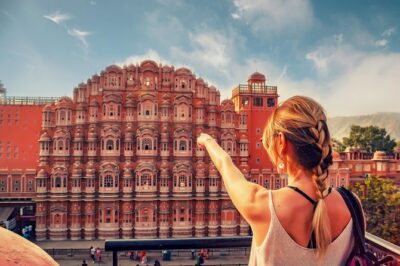
Jaipur Guided City Tour: City Palace, Jantar, Hawa & Jal Mahal
Read our review →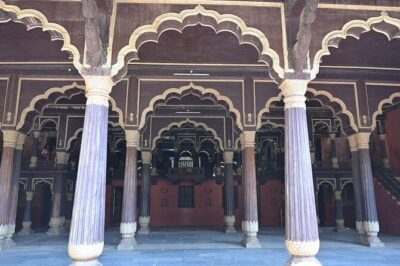
Tipu Palace + Koté Vishnu + Fort + KR Market + Jain Temple = Bengaluru Pété Walk
Read our review →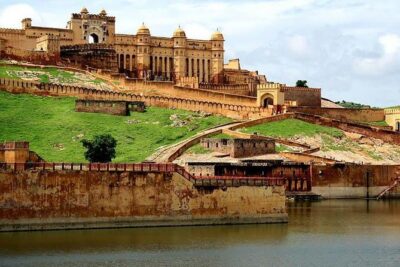
Full-Day Jaipur City Tour with Amber Fort and City Palace
Read our review →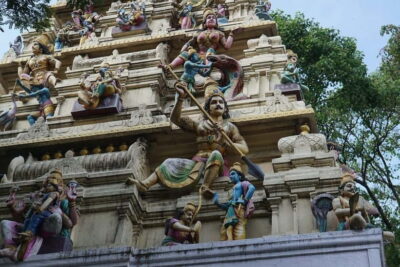
Bangalore: Palace, Temples, Fort & Markets Walking Tour
Read our review →
Old Bangalore Historical Walk thro Palace, Temples, Fort & Market
Read our review →
Bangalore: Walking Tour of Fort, Palaces, and Market
Read our review →
2-Day Private Tour of Jaipur from Delhi: City Palace, Hawa Mahal and Amber Fort
Read our review →
Story of Mysore Silk tour from Bangalore to experience Silk Weaving & Palace
Read our review →This visit also appears in