
Review · BANGALORE
Old Bangalore Historical Walk thro Palace, Temples, Fort & Market
Old Bangalore comes alive fastest in KR Market, where flowers, fruit, vegetables, workers, cows, bicycles, and traffic share the same tight streets. This walk links that daily commotion with a 230-year-old teak palace, a Hindu temple, a surviving slice of Bangalore Fort, and a quiet Jain shrine. You get history, religion, and ordinary city life in one compact outing.
I like the small group size of up to 10 people, which should make it easier to hear the guide and ask questions. I also like the range of stops: the walk is not only about monuments, and it is not only a market tour. Guides such as Raghavendra and Vanaja have helped visitors with photo tips, onward plans, and the practical details of moving through old Bangalore.
The main consideration is the pace and setting. You will walk through crowded, noisy streets for several hours, and some temple or monument access can change with working hours and the season. Cover your legs and shoulders, and carry a scarf if you are a woman visiting the temples.
Key points
- Tipu Sultan’s 230-year-old teak palace: See an unusual wooden palace built in Islamic style beside the fort area.
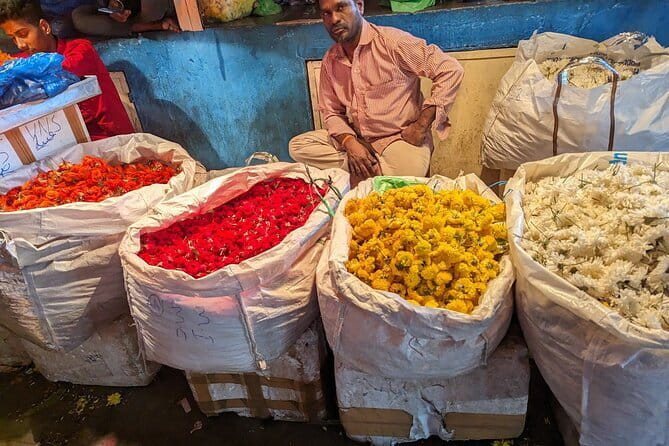
- KR Market for one full hour: Expect a close look at Bangalore’s working market life, from flowers and produce to porters, sellers, vehicles, and cows.
- Two very different temples: Compare the Hindu Kote Venkataramana Temple with the quieter, finely worked Jain shrine.
- A compact history lesson: Follow Bangalore from Kempegowda’s 16th-century mud fort to the stone structure rebuilt by Hyder Ali in the 1760s.
- Convenient finish: The walk ends near Chickpet metro station, useful if you want to continue exploring on your own.
- Practical clothing matters: Legs and shoulders must be covered for temple visits, and ladies should carry a scarf.
Why this three-hour walk works so well
Old Bangalore is not a single monument waiting behind a gate. It is a working part of the city, where historic buildings sit beside shops, religious places, traffic, and market streets. This route makes sense because it connects those pieces on foot rather than treating them as separate sights.
The tour lasts about three to four hours, with five stops. That is long enough to give each place some attention without taking an entire day from your Bangalore plans. The strongest part is the contrast. You may move from carved stone and temple prayers to the shouts of KR Market, then into the calm interior of a Jain temple.
I would choose this walk early in a Bangalore visit. It gives you a useful sense of how the old center fits together, and a guide can explain what you are seeing instead of leaving you to guess at the details. The route is also a good match for a short stay or a work trip when you have only a few free hours.
The advertised cost is $22.38 per person. For that price, entry to the monuments is included, along with a licensed Government of India approved guide. Lunch, gratuities, and transport from your hotel are extra. The value is strongest if you want interpretation and local orientation, not simply admission to a palace and fort.
More market visits around Bangalore:
- Tipu Palace + Koté Vishnu + Fort + KR Market + Jain Temple = Bengaluru Pété Walk
★ 5.0 · 150 reviews - Bangalore: Walking Tour of Fort, Palaces, and Market
★ 5.0 · 58 reviews - Lalbagh+Bull Temple+Tipu Palace+Market+Lunch=Bangalore City Tour
★ 5.0 · 9 reviews
Tipu Sultan’s teak palace begins the story

The walk starts at Tipu Sultan’s Summer Palace on Tippu Sultan Palace Road in the Chamrajpet area. Allow about 45 minutes here. The palace is about 230 years old and built mainly from teak wood, with Islamic architectural features that set it apart from the stone temples and fort remains nearby.
That wooden construction is the first detail to notice. Many people arrive in Bangalore expecting grand stone buildings, so the palace offers a different texture and a more intimate scale. Its age also connects the site with the period when Bangalore was changing from a fortified settlement into a more politically important city.
The guide’s role matters most here. A palace can be visually appealing but hard to understand without context. You can ask about Tipu Sultan, the building’s design, and how the palace relates to the fort. Guides named Raghavendra and Vanaja have been praised for answering questions and explaining details clearly, while Vasuki has been helpful with advance communication and practical advice.
The stop is not a long palace tour. Forty-five minutes gives you time to look closely without making the first part of the walk drag. If you are especially interested in military history or royal architecture, you may wish the visit went deeper, but the compact timing helps the full route hold together.
Kote Venkataramana Temple and its carved walls
The Kote Venkataramana Temple is next door to the palace, so there is no long transfer between the two. Built in 1690 by Chikkadevaraja Wodeyar, it brings a different layer of Bangalore’s past into view.
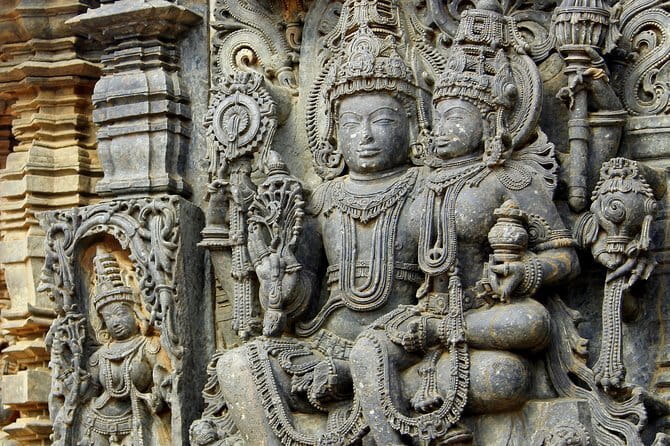
The temple is dedicated to Vishnu, and the stonework includes carved figures from Indian mythology. The walls and detailed surfaces reward a slow look, even though the scheduled visit is about 30 minutes. You may also see prayers being offered by Hindu worshippers, which gives the place a living religious purpose rather than making it feel like a museum stop.
You need to dress with care. Legs and shoulders should be covered, and ladies should carry a scarf. This is not a minor suggestion. Appropriate clothing allows you to enter respectfully and avoids a last-minute problem at the temple.
The guide can also help you understand how to behave inside a working place of worship. You should expect some quiet observation rather than a long formal explanation at every moment. The value here is the combination of architecture and active religious life.
Bangalore Fort, from mud walls to surviving stone
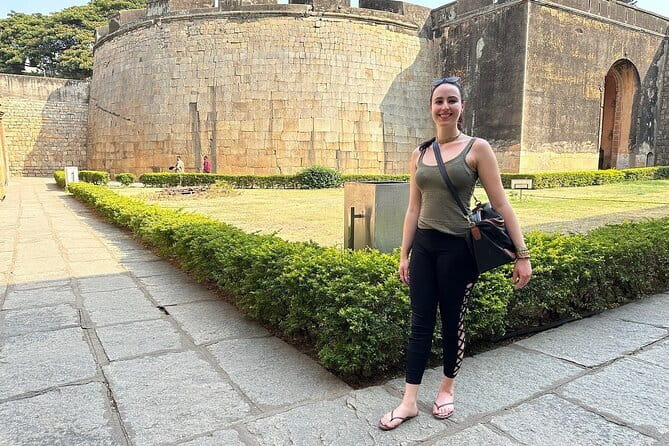
Bangalore Fort follows the temple. Kempegowda, regarded as the founder of Bangalore, built the original fort in the 16th century as a mud structure. Hyder Ali later rebuilt it in stone during the 1760s.
Only about 5 percent of the fort remains today. That fact sets the right expectation: you are not entering a complete fortress with walls stretching around an old city. Instead, you are seeing a preserved fragment and learning how much the city has changed around it.
The site is described as neatly maintained and open to visitors. The planned stop is about 30 minutes, which is enough for the guide to explain the fort’s place in Bangalore’s development and for you to take in the remaining structure.
I like this stop because it keeps the history grounded. A guide can point out the difference between the original mud fort and the later stone version, helping you understand why so little remains. If you want a large, intact fort complex, this will feel limited. If you want a quick historical link between old Bangalore and the modern city, it fits the route well.
More shopping stops around Bangalore:
- Bangalore Walking Tour KR Flower Market,Fort,Tippu palace
★ 5.0 · 8 reviews - Versailles Palace Bike Tour with Market & Marie-Antoinette hamlet
★ 5.0 · 2,680 reviews - Versailles Bike Tour with Market, Gardens & Guided Palace Tour
★ 5.0 · 1,121 reviews - Seoul: Palace, Temple and Market Guided Foodie Tour at Night
★ 4.9 · 750 reviews
One hour inside the working life of KR Market
Sri Krishnarajendra Market, usually called KR Market, is the most sensory part of the walk. The scheduled visit lasts about an hour, making it the longest stop.
Here, the focus shifts from formal history to the city as it functions every day. You will see vendors, buyers, workers, coolies, hawkers, bicycles, vehicles, cows, and dogs sharing a busy commercial area. Fruits, flowers, and vegetables bring color and scent, while the sounds of bargaining, movement, engines, and work create a noisy soundtrack.
This is not a polished market made for sightseeing. That is precisely why it is useful. You get a close look at the buying and selling that supports daily life in Bangalore. The guide helps you notice the structure behind the apparent confusion: who is carrying goods, where produce is sold, and how people move through streets crowded with different kinds of traffic.
Keep your attention on your footing and on the group. The streets can be tight and crowded, and you will encounter walkers, sellers, vehicles, and animals in the same space. The walk is designed to take you through the action, not to view it from a quiet platform.
Photography advice can be valuable here. Raghavendra has helped with photo tips, and a good guide can tell you when to pause and when to keep moving. Ask before photographing people, especially workers who are busy with their jobs.
KR Market may be the stop that stays with you longest, but it will not suit everyone. If you dislike noise, crowds, or an untidy urban setting, this hour may feel demanding. If you want to see how old Bangalore works beyond its monuments, it is the essential part of the route.
The quiet change of mood at the Jain temple
The final stop is Shri Adinath Jain Shwetamber Mandir in the Chickpet area. The visit is planned for about an hour and provides a marked change from the market.
Jainism originated in India and has a history of at least 2,500 years. Its central principles include non-violence and vegetarianism. The temple gives you a chance to learn about those ideas while looking at its carvings and inlay work.
The contrast with KR Market is the point. After the noise and movement of the streets, the temple offers a quieter place to look closely. You may notice how the design, surfaces, and devotional setting create a different kind of experience from the Hindu temple earlier in the walk.
Again, modest clothing is required. The temple is a religious site, so follow the guide’s instructions and keep your visit respectful. The hour here allows more time than the 30-minute temple stop, which is helpful if you want to ask questions about Jain beliefs and architecture.
The walk ends at the Jain temple on Chickpet Road, close to Chickpet metro station. That makes the finish practical. You can continue by metro or make your own plans in the Chickpet area rather than having to return to the starting point.
What the guide adds to the experience
A guide is the main reason to book this route instead of visiting the sights separately. The places are spread through an active part of the city, and the guide connects them into a clear story.
The experience has included guides named Raghavendra and Vanaja, as well as a husband-and-wife team. You may not receive a particular guide, so treat those names as examples rather than a guarantee. The useful qualities to look for are clear explanations, help with temple customs, and a willingness to answer questions.
Advance communication is another practical strength. Vasuki has helped explain arrangements before the walk, while guides have also offered suggestions about photography and onward plans after the tour. That matters if you have only a short amount of time in Bangalore and want to continue exploring once the walk ends.
The group limit is 10 people. That is small enough for conversation, although the actual number in your group can vary. A smaller group is especially useful in the market, where staying together and hearing instructions can be harder.
Timing, clothing, transport, and value

The meeting point is Tipu Sultan’s Summer Palace at 42 Tippu Sultan Palace Road in Kamalanagar, Chamrajpet. The end point is Shri Adinath Jain Shwetamber Mandir on Chickpet Road, near Chickpet metro station.
Hotel transport is not included, but the operator can arrange a pickup and return for an extra fee. You need to provide your hotel details so the cost can be proposed. This may be worthwhile if you are unfamiliar with Bangalore or staying far from the starting point, but the route itself begins and ends near public transport.
Lunch is not included, and the tour does not provide a meal break in the supplied schedule. Plan accordingly, especially if you are booking the walk during a normal lunch period. Tips for the guide are also extra.
Entry fees at the monuments are included. The temples are listed as free entry, but access to all monuments and temples can depend on opening hours and seasonal changes. Confirming the start details after booking is sensible.
Most people can take part, but you should be comfortable walking through city streets for several hours. The information provided does not promise hotel accessibility arrangements or a private vehicle between stops, so ask before booking if you have mobility needs that require special planning.
Free cancellation is available when you cancel at least 24 hours before the local start time. Cancellations or changes made less than 24 hours before the experience are not refunded or accepted.
Who should book this old Bangalore walk
I would recommend it to you if you want a first look at Bangalore that includes more than a palace. The route suits people who enjoy local markets, religious architecture, short history talks, and walking through active city streets.
It is also a good choice for a short business trip. In three to four hours, you can see several important parts of old Bangalore without committing a full day. The metro finish gives you flexibility afterward.
Families with older children may find the changing scenery useful, though the market can be noisy and crowded. Anyone sensitive to heat, street traffic, or close quarters should think carefully about the conditions. This is not a quiet heritage stroll.
You should also book it if you prefer learning how to read a place. The guide can explain why the palace is wooden, how the fort changed, what the temple carvings represent, and how the market functions. Those links are hard to build from isolated visits.
Should you book it?
Book this walk if you want old Bangalore in working form, not a list of polished sights. The best parts are the unusual teak palace, the one-hour look at KR Market, and the sharp contrast between Hindu and Jain religious spaces.
Skip it if you want a relaxed route with little traffic, a complete fort, or a long palace visit. For $22.38, the tour offers good value when you use the guide’s context and cover several sites in one outing. Dress properly, plan your transport, and leave room in your schedule for the market’s noise and movement.
FAQ
How long does the Old Bangalore Historical Walk last?
The experience lasts approximately three to four hours.
What is the price of the tour?
The listed price is $22.38 per person. Group discounts are available.
What is included in the price?
Entry fees at all monuments are included, along with the guided walking experience.
Are lunch and hotel transport included?
No. Lunch, guide gratuities, and transport are not included. Hotel pickup and return transport may be arranged for an additional fee.
Where does the walk begin?
The walk begins at Tipu Sultan’s Summer Palace, 42 Tippu Sultan Palace Road, Kamalanagar, Chamrajpet, Bengaluru.
Where does the walk end?
The walk ends at Shri Adinath Jain Shwetamber Mandir on Chickpet Road. It is close to Chickpet metro station.
What should I wear for the temple visits?
Your clothing should cover your legs and shoulders. Ladies should also carry a scarf.
How many people can join the walk?
The activity has a maximum group size of 10 people.
Can I cancel for a full refund?
Yes. You can cancel for a full refund if you do so at least 24 hours before the experience start time. Changes or cancellations made less than 24 hours before the start are not accepted or refunded.
More royal history around Bangalore
- Madrid Essential: Historic Center, Plaza Mayor & Royal Palace
★ 5.0 · 6,416 reviews - Venice’s Best: Basilica, Doge’s Palace, Gondola & History Gallery
★ 4.5 · 2,478 reviews - Tokyo: Imperial Palace and Shogun Historical Walking Tour
★ 5.0 · 2,251 reviews - Dubai: Abu Dhabi Grand Mosque, Palace, and Heritage Village
★ 4.8 · 1,265 reviews
Fresh palace tours around Bangalore
- Story of Mysore Silk tour from Bangalore to experience Silk Weaving & Palace★ 5.0 · 28 reviews
- Lalbagh+Bull Temple+Tipu Palace+Market+Lunch=Bangalore City Tour★ 5.0 · 9 reviews
- 2 Day Bandipur Safari and Mysore Palace Tour★ 4.5 · 4 reviews
- Private Tour: Bangalore City Tour Including LalBagh & Tipu Palace★ 4.0 · 4 reviews
- Bangalore Walking Tour KR Flower Market,Fort,Tippu palace★ 5.0 · 8 reviews
- Bangalore City Tour: Lalbagh, Tipu Palace & Bull Temple★ 4.4 · 3 reviews
- Bangalore City Tour: Walking, Palace & Temples★ 3.6 · 7 reviews
- Private Tour: Mysore Palace and Srirangapatna Day Trip from Bangalore★ 4.5 · 13 reviews
India Palace Tours: the shortlist.
Jaipur Guided City Tour: City Palace, Jantar, Hawa & Jal Mahal
Read our review →
Tipu Palace + Koté Vishnu + Fort + KR Market + Jain Temple = Bengaluru Pété Walk
Read our review →
Full-Day Jaipur City Tour with Amber Fort and City Palace
Read our review →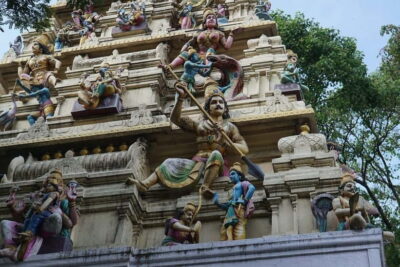
Bangalore: Palace, Temples, Fort & Markets Walking Tour
Read our review →
Bangalore: Walking Tour of Fort, Palaces, and Market
Read our review →
2-Day Private Tour of Jaipur from Delhi: City Palace, Hawa Mahal and Amber Fort
Read our review →
Story of Mysore Silk tour from Bangalore to experience Silk Weaving & Palace
Read our review →
Elephant Activities Feed, Paint & Ride with Pickup
Read our review →This visit also appears in