
Review · SEOUL
Seoul: Colonial History Tour with Prison&Palace, Market Food
Seodaemun Prison is the emotional center of this Seoul tour. Its cells and exhibits show what Korean independence fighters faced during Japanese rule, then the route shifts to royal architecture, a foreign journalist’s support for Korea, and a generous meal in Namdaemun Market. I like that the day does not treat history as a string of photo stops. You get time at the prison, a guided look at Deoksugung, and food that brings you back into present-day Seoul.
I also like the contrast between Dilkusha and Deoksugung Palace. One is a small historic home tied to international reporting on Korea’s independence movement; the other shows traditional Korean design beside Western buildings. The main consideration is pace: four hours covers a lot, and moderate walking plus serious subject matter may feel demanding if you prefer a slow sightseeing day.
Key points at a glance
- Seodaemun Prison takes 80 minutes: This is the longest stop and gives the colonial history its proper weight.
- Dilkusha adds an international viewpoint: Learn about American journalist Albert W. Taylor and his support for Korea’s cause.
- Deoksugung shows old Korea meeting the modern world: Traditional palace grounds share space with Western-style architecture.
- Namdaemun supplies the reward: Try handmade knife-cut noodles in Kalguksu Alley, along with street foods such as hotteok and gimbap.
- The tour is led in English: Guides including Janice and Ron have been praised for clear historical explanations and helpful answers about Korean culture.
- Plan for steady walking: Wear comfortable shoes, and note that the activity is not suitable for wheelchair users.
Why this four-hour route works
This is not a general Seoul highlights tour. It focuses on a particular question: how did Korea move from colonial oppression and a struggle for independence toward the modern city you see today?
The route handles that question in stages. Seodaemun Prison presents the human cost of Japanese rule. Dilkusha shows how news of Korea’s situation reached the outside world. Deoksugung brings you into the royal center of a country trying to respond to foreign pressure and rapid change. Seoul City Hall and Sungnyemun Gate connect those earlier chapters to the city around you. Namdaemun then gives you a practical, everyday ending through food.
I like this structure because the locations are close enough to form a story, not just a collection of unrelated landmarks. You move from confinement to royal power, from political reporting to public streets and market stalls.
The experience lasts four hours and begins at Dongnimmun Station, Exit 5. You meet the guide near the station entrance, then finish back at the same meeting point. Transportation is included, although the vehicle route can change to walking if conditions require it. That makes good shoes more important than the short duration might suggest.
More food and drink near the palace gates around Seoul:
- Medoc or Saint Emilion Wine Tasting and Chateau from Bordeaux
★ 5.0 · 1,415 reviews - The Only Locally Owned Non-Touristy Food Tour by Spade & Palacio
★ 5.0 · 701 reviews - Dijon: La Cave du Palais Burgundy Wine Tasting Experience
★ 4.8 · 400 reviews
Seodaemun Prison, where the past feels close
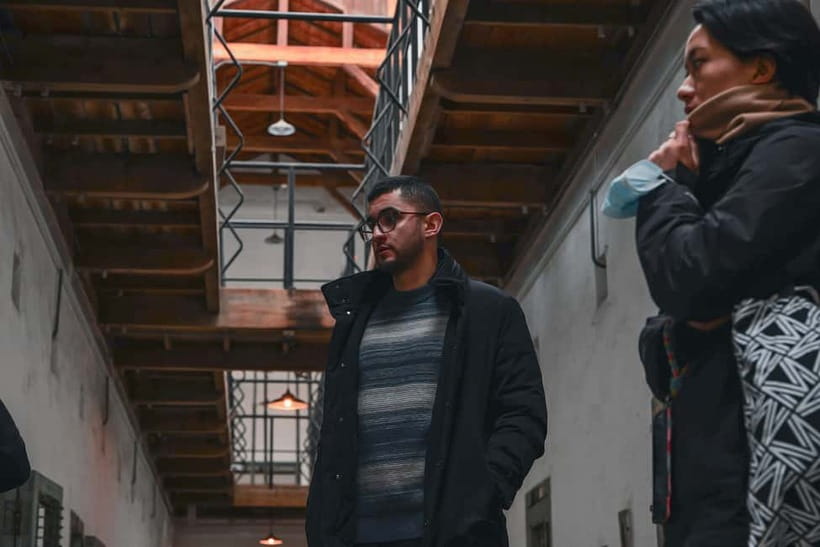
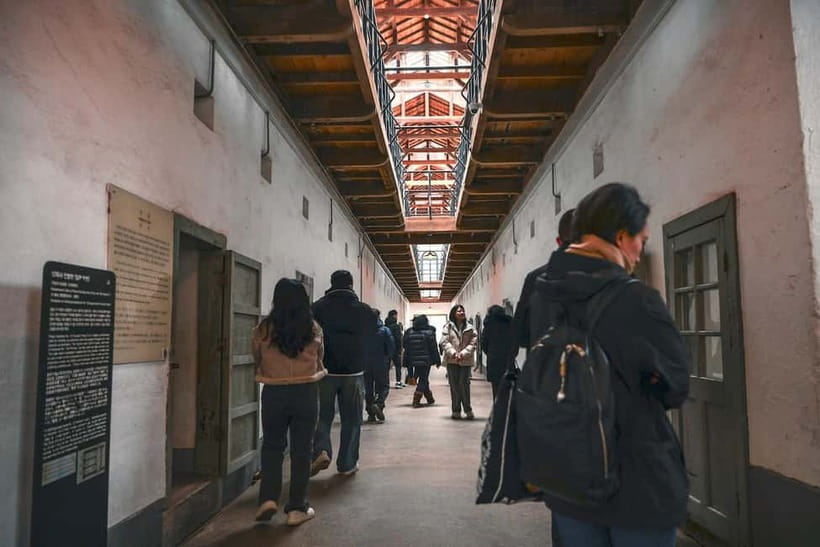
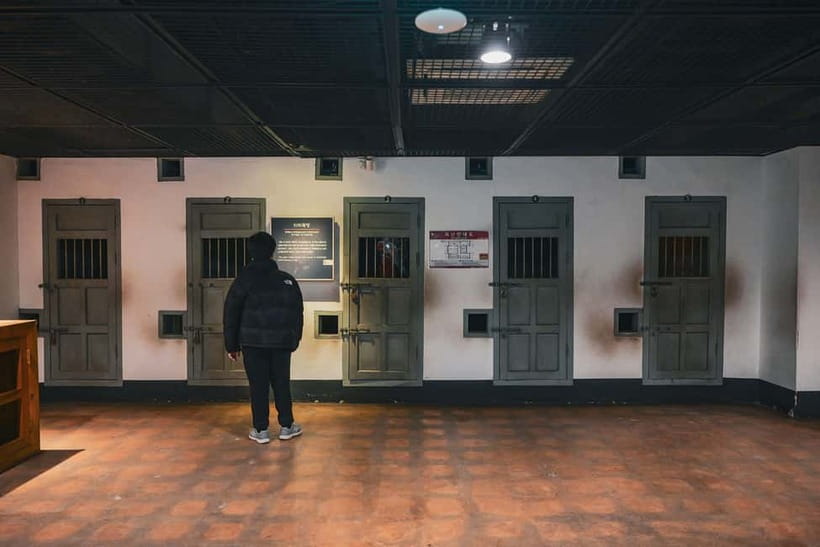
The first major stop is Seodaemun Prison History Hall, with about 80 minutes for a guided visit. That is a useful amount of time here. A quick pass through the site would give you a few stark images, but not enough time to understand why the place matters.
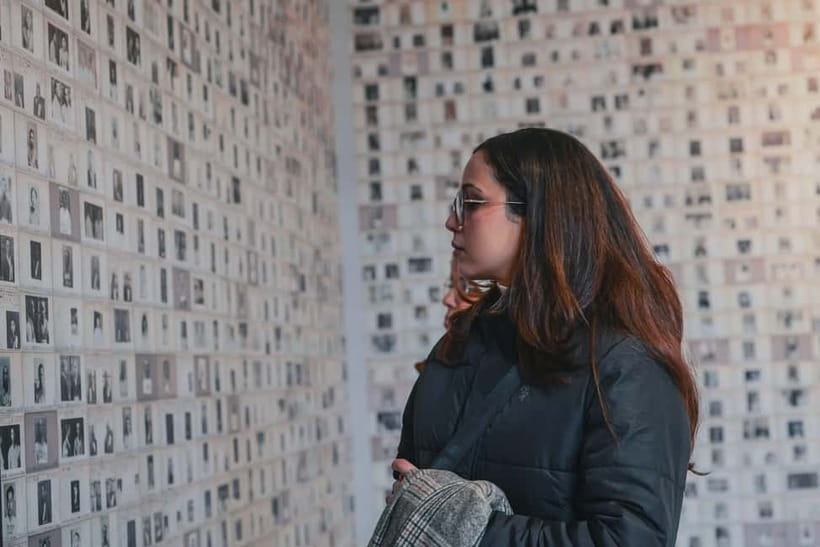
The prison was used during Japanese colonial rule, and the tour explains the suffering of Korean independence fighters held there. You can expect a sober visit rather than a light museum stop. The subject includes imprisonment, hardship, and resistance, so the tone is serious.
I would pay attention to the guide’s explanations instead of rushing from room to room. The value of a guide here is context. Without it, you may see cells and exhibits but miss how they connect to Korea’s independence movement and the broader political pressure of the period.
This part can be emotionally difficult. One review described the experience as combining history, food, and a touch of emotional damage, which is a fair warning in plain language. The prison is meant to make you uncomfortable enough to think, not simply provide an attractive backdrop for photographs.
The 80-minute stop also helps the tour avoid a common problem with history tours: giving the most important site the least time. If your main reason for booking is Korean colonial history, this is the part that makes the experience worthwhile.
Dilkusha and Albert W. Taylor’s international connection
The next stop is Dilkusha, the former home of American journalist Albert W. Taylor. The guided visit lasts about 15 minutes, so you should think of it as a focused historical pause rather than a long house tour.
Taylor supported Korea’s independence cause and helped share Korea’s situation with an international audience. That gives the house a useful role in the day’s story. Seodaemun shows the struggle inside Korea. Dilkusha introduces someone from outside the country who used journalism and personal connections to help carry that story farther.
The short visit means the guide’s explanation matters. You will not have a large block of time to study every room or architectural detail. Instead, expect a concise account of Taylor’s role and the house’s connection to Korea’s political history.
I like this stop because it prevents the tour from presenting independence only as a purely domestic story. It shows how foreign residents and international reporting could affect the way Korea’s cause was understood beyond the peninsula.
Deoksugung Palace and a royal mix of styles
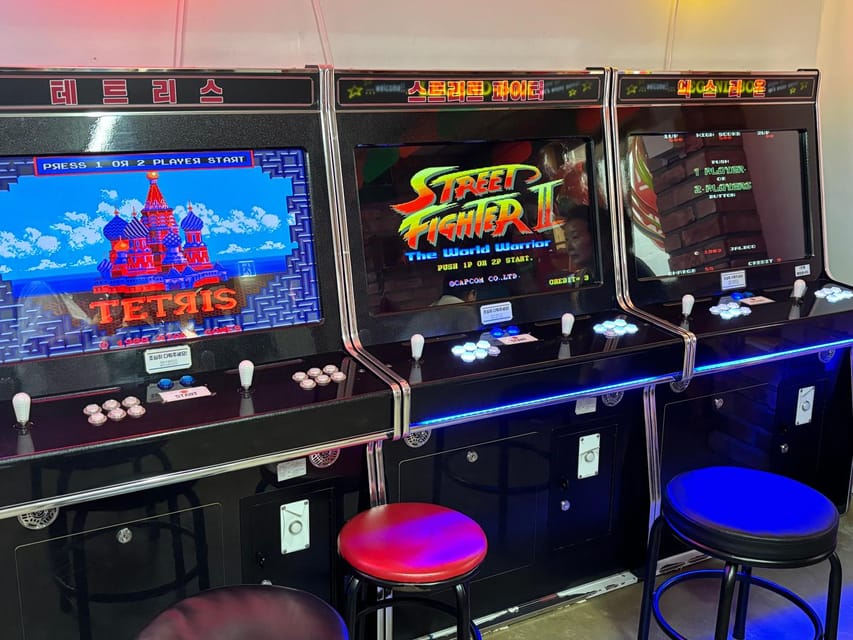
Deoksugung receives about an hour, making it the second major historical stop after Seodaemun Prison. Here, the mood changes. Instead of prison walls and resistance stories, you see a royal setting shaped by Korea’s attempt to respond to modernization and political upheaval.
The palace is especially useful for architecture. Traditional Korean buildings share the grounds with Western-style structures, creating a clear visual record of a country negotiating outside influence while retaining its own royal traditions. You do not need to be an architecture specialist to notice the contrast.
The guide places the buildings in their political setting, which is more helpful than simply naming styles. Deoksugung was not just a pretty palace visit. It represents a period when Korea faced pressure, new ideas, and major changes in how power and government worked.
I would save questions for this section if you want to understand how the palace fits with Seoul’s colonial and modern history. Guides Janice and Ron have been noted for answering questions about Korean culture and other periods of history, so this is a good point to ask for connections beyond the basic route.
The palace stop also gives the tour visual breathing room after Seodaemun. Still, an hour is not unlimited. You will get a guided overview, not every corner of the grounds or a full study of palace architecture.
More food stops near the palaces around Seoul:
- Seoul: Palace, Temple and Market Guided Foodie Tour at Night
★ 4.9 · 750 reviews - Taman sari water castle, sultan palace & local food tasting
★ 4.7 · 11 reviews - Alhambra and Nasrid Palaces and Local Food Experience
★ 4.9 · 4 reviews
Seoul City Hall and Sungnyemun Gate
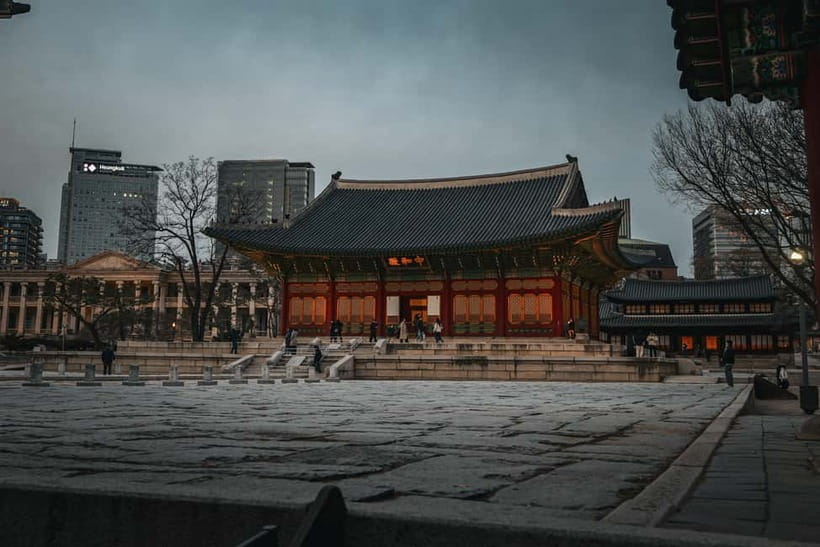
Two shorter visits connect the palace area with the market. Each is listed at about 10 minutes, so keep your expectations realistic. These are brief orientation stops, not extended museum visits.
Seoul City Hall represents the city’s transformation from a colonial past into a modern democracy. The stop helps you notice that the surrounding city is part of the history lesson. Government buildings, busy streets, and modern urban life are not separate from the earlier sites you have visited.
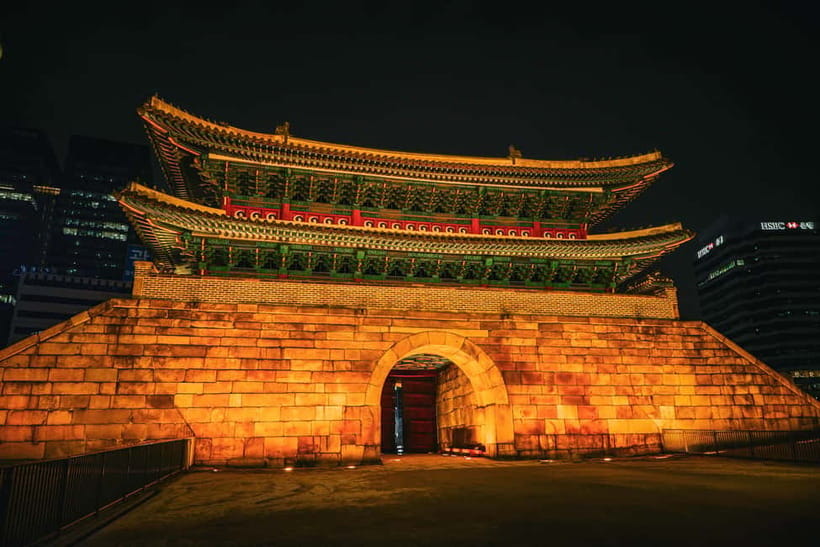
Sungnyemun, also called Namdaemun Gate, brings you farther back in time. The 600-year-old gate served as the southern entrance to Seoul during the Joseon Dynasty and is identified as a national treasure. Its presence adds an older layer to the tour, before the colonial period and before the city’s modern redevelopment.
The contrast is quick but effective: palace, government center, historic gate, then traditional market. I would not book this tour expecting long, detailed visits at City Hall or Sungnyemun. Their purpose is to show how different periods sit beside each other in central Seoul.
Namdaemun Market, where the history turns edible
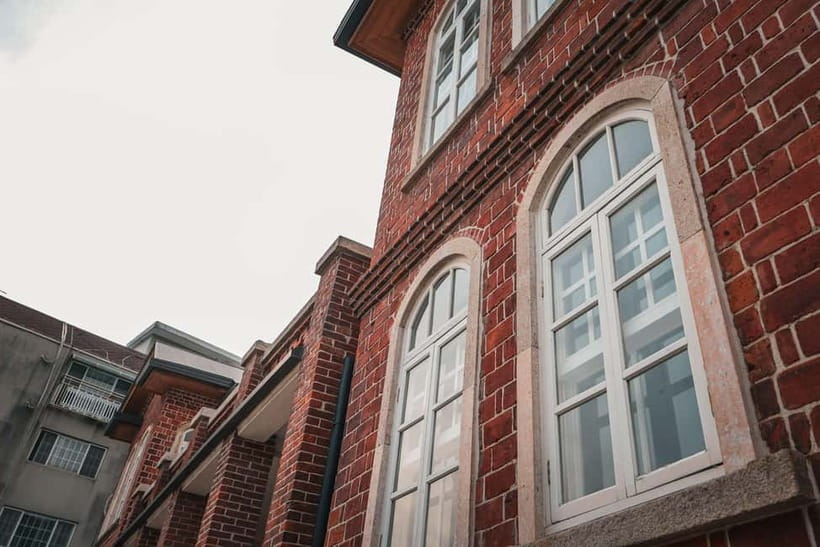
The final hour takes place at Namdaemun Market, described as Korea’s largest and oldest traditional market. Vendors have traded here for more than 600 years, and the market gives you a lively change of pace after the heavier historical stops.
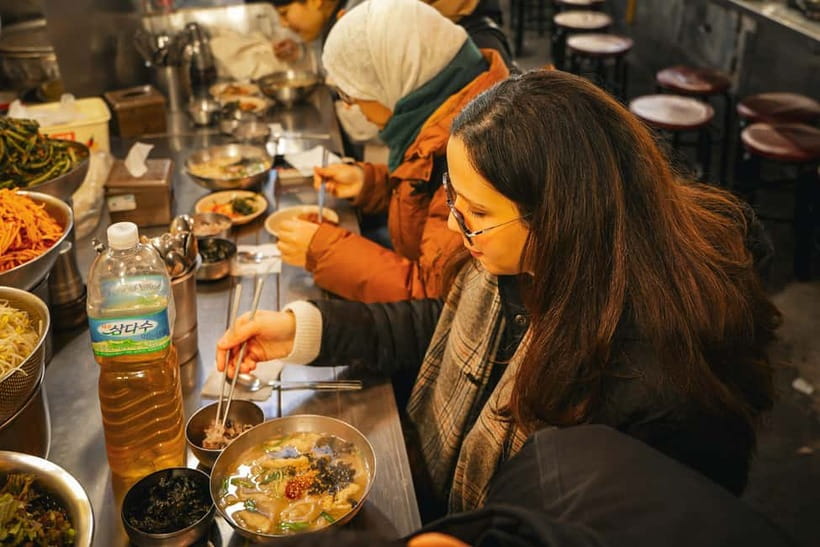
The food portion includes tastings and a meal in Kalguksu Alley. Kalguksu means handmade knife-cut noodles, and you can expect a warm bowl served in the close, informal setting of small food stalls. This is the kind of meal that works well after several hours on foot: hot, filling, and straightforward.
You may also try familiar Korean street foods such as hotteok and gimbap. Hotteok is a sweet filled pancake, while gimbap is rice and fillings rolled in seaweed. The supplied details do not specify every tasting or portion, so do not treat the food stop as an unlimited feast. Think of it as guided sampling and a market meal.
This is one of my favorite parts of the design. Food is not added as a random bonus at the end. Namdaemun gives you a way to experience present-day Seoul after hearing about political struggle, royal change, and national identity. You get to see how history lives alongside ordinary shopping and eating.
The market can be crowded and noisy, and the stalls are informal. That is part of the appeal, but it may not suit you if you want a quiet restaurant with a long, leisurely meal. The guide helps you find the relevant food areas and explains what you are eating, which is useful if you are not familiar with Korean market dishes.
What the guide adds to the experience
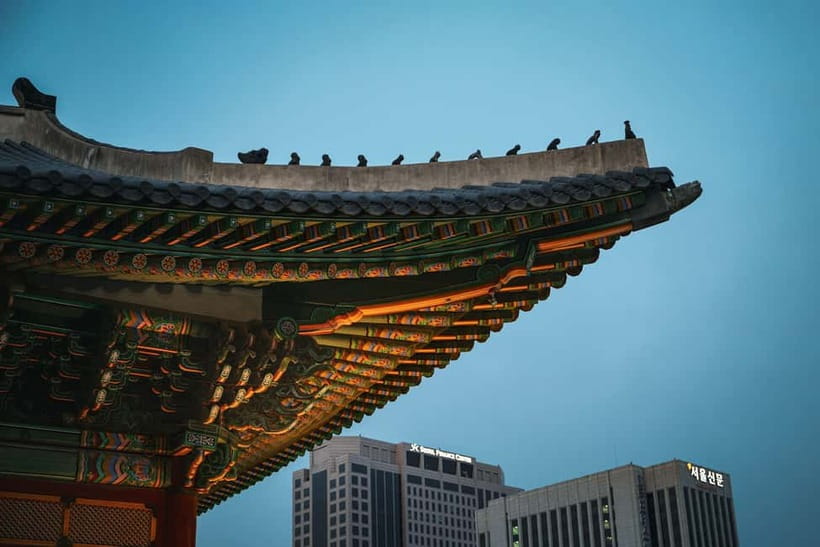
The tour is conducted in English by a professional guide with training in Korean history. That matters most at Seodaemun, Dilkusha, and Deoksugung, where the buildings alone cannot explain the political story.
Janice has been praised for her passion and fascinating historical stories. Ron has been described as friendly and willing to answer questions about Korean culture, food, and other periods of history. Guide assignments can vary, so you should not assume one particular person will lead your date, but these names give you an idea of the personal approach the company aims for.
A good guide also helps with transitions. The route moves between a prison museum, a private historic house, a palace, public landmarks, and a market. Without a clear thread, those places could feel scattered. The guide’s job is to show why they belong together.
I would come prepared with questions. Ask about the independence movement, the role of foreign journalists, the palace’s Western buildings, or the foods at Namdaemun. The tour appears best suited to people who want conversation and explanation, not just transportation between photo stops.
Is $58 a fair price?
At $58 per person, the price includes the English-speaking guide, entrance fees, transportation costs, and food tastings at Namdaemun Market. For four hours, that is a reasonable package if you value structure and historical explanation.
The strongest value comes from combining several paid or time-consuming stops in one morning or afternoon. You do not need to arrange separate admission to Seodaemun Prison History Hall, Dilkusha, or Deoksugung Palace, and you do not need to work out how to connect them yourself.
The food adds practical value too. A market can be enjoyable but confusing on your first visit, especially when menus and stalls move quickly. Having a guide lead you to Kalguksu Alley and explain the food makes the final hour easier.
The price is less compelling if you prefer independent sightseeing or already know Seoul’s central landmarks. You could visit some of these places on your own, set your own pace, and spend more or less on food. You are paying here for the route, interpretation, admissions, and organization.
The tour offers free cancellation up to 24 hours before the start and allows you to reserve now and pay later. Those policies are helpful if your Seoul schedule is still changing.
Who should book this tour?
I would recommend it to first-time visitors who want more than palace photographs. It suits you especially well if modern Korean history is a major interest and you want the colonial period explained in clear English.
It also works for people who like a balanced day. You get serious history, architecture, urban context, and local food in one compact route. The market meal prevents the experience from becoming four hours of museums and memorial sites.
Families with older children or teenagers may find the contrast useful, though Seodaemun’s subject matter can be heavy. History students, culture-focused visitors, and anyone curious about Korean independence will likely get the most from it.
I would hesitate if you have limited mobility. The tour includes a moderate amount of walking, is not suitable for wheelchair users, and the vehicle route may become a walking route depending on conditions. Comfortable shoes are essential.
The activity notes also say it is not suitable for people with altitude sickness. No altitude details are provided, so if that warning applies to you, ask the operator before booking.
Should you book the Seoul Colonial History and Market Food Tour?
Book it if you want a compact, guided explanation of how colonial rule, independence, royal modernization, and modern Seoul fit together. The combination of an 80-minute Seodaemun visit, a concise Dilkusha stop, an hour at Deoksugung, and food at Namdaemun gives the day a clear shape.
The best reasons to go are the serious treatment of Seodaemun Prison, the unusual Albert W. Taylor connection, and the satisfying shift from history to handmade noodles and market food. The main tradeoff is pace. You will cover a lot in four hours, and some stops are brief.
For a first Seoul visit, I see this as a strong choice if you want meaning along with sightseeing. If your priority is a relaxed palace morning or a dedicated food tour, choose something slower and more specialized. If you want history that ends with a warm bowl of noodles, this tour earns its place on your schedule.
FAQ
How long is the tour?
The activity lasts four hours.
Where does the tour begin?
It begins at Dongnimmun Independence Gate Station, Exit 5.
Where does the tour end?
The tour ends back at the meeting point.
What language is the tour conducted in?
The live guided tour is conducted in English.
What is included in the price?
The price includes an English-speaking professional guide, entrance fees, transportation costs, and food tastings at Namdaemun Market.
Is food included?
Yes. Food tastings are included at Namdaemun Market, including a visit to Kalguksu Alley for handmade knife-cut noodles. The experience also highlights foods such as hotteok and gimbap.
How much walking is involved?
The tour involves a moderate amount of walking. Comfortable shoes are recommended.
Is the tour suitable for wheelchair users?
No. The activity is listed as not suitable for wheelchair users.
Can I cancel for a full refund?
Yes. You can cancel up to 24 hours in advance for a full refund.
More shopping stops around Seoul
- Versailles Palace Bike Tour with Market & Marie-Antoinette hamlet
★ 5.0 · 2,680 reviews - Versailles Bike Tour with Market, Gardens & Guided Palace Tour
★ 5.0 · 1,121 reviews - Grand Palace, Damnoen Floating Market & Maeklong Market Tour
★ 4.8 · 173 reviews - Crete: Knossos Palace, Heraklion City, Market Guided Tour
★ 4.2 · 164 reviews
More market visits around Seoul
- Seoul: Nighttime Tour of Palace, Market, Naksan Park & More
★ 4.9 · 143 reviews - Seoul: Gyeongbok Palace, N Tower, & Local Market City Tour
★ 4.9 · 107 reviews - Seoul Day Tour: Gyeongbok Palace, Bukchon, Gwangjang Market
★ 4.7 · 7 reviews - Seoul: Gyeongbokgung Palace Tour & Lunch at Authentic Market
★ 4.5 · 2 reviews
Fresh palace tours around Seoul
- Seoul: UNESCO Sites tour: Palace, Shrine & Bukchon Village★ 4.8 · 26 reviews
- Seoul: Gyeongbok Palace and Bukchon Hanok Walking Tour★ 4.8 · 157 reviews
- Seoul: UNESCO Palace and Street Foods Guided Tour★ 5.0 · 6 reviews
- Seoul: Royal Palace Morning Tour including Cheongwadae★ 4.5 · 12 reviews
- Seoul: Hanbok Photo Tour at Gyeongbokgung Palace★ 5.0 · 9 reviews
- Seoul: Professional Hanbok Photography at Gyeongbok Palace★ 4.9 · 172 reviews
- Seoul: Gyeongbokgung Palace Half Day Tour★ 4.9 · 111 reviews
- Seoul: Gyeongbokgung Palace Tour & Lunch at Authentic Market★ 4.5 · 2 reviews
Seoul Palace Tours: the shortlist.
Gyeongbok Palace, Bukchon Village, and Gwangjang Tour
Read our review →
Best Seoul City Tour (Gyeongbokgung Palace,Insadong,Namsan Tower)
Read our review →
Small-Group Royal Palace and Seoul City Tour (hotel pick-up)
Read our review →
Seoul City Sightseeing Tour Including Gyeongbokgung Palace, N Seoul Tower, and Namsangol Hanok Village
Read our review →
Seoul Half-Day City Highlight, Palace Tour with Hanbok
Read our review →
Palace, Temple and Market Guided Foodie Tour at Night
Read our review →
Seoul Highlights: Gyeongbok Palace, Insadong & N Seoul Tower
Read our review →
This visit also appears in