
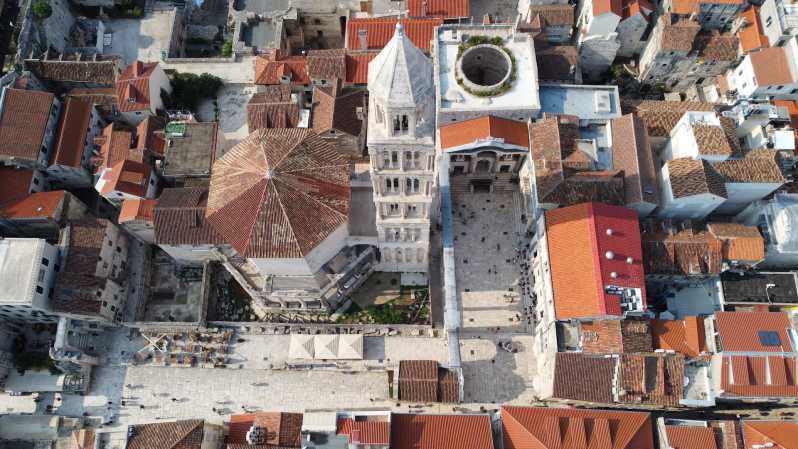
Review · PALACES WORLDWIDE
Split: Diocletian’s Palace Private walking tour
Diocletian’s Palace is not a quiet ruin behind a ticket booth. It is a 1700-year-old Roman complex where people still live, work, worship, and pass through ancient corridors. This private walking tour helps you read that unusual mix of imperial stone and everyday Split life.
I like the small-group format, capped at 10 people, and the chance to shape the visit around your interests. I also like the clear route through the Peristyle, Cathedral, Vestibule, and Golden Gate, which gives you a useful framework for exploring the center afterward. The main consideration is that churches or other sights may close for services or events, and parts of the route are not wheelchair accessible.
Key points
- A living Roman palace: Ancient rooms are part of modern Split, not isolated museum displays.
- Five important stops: The route covers the Peristyle, Cathedral, Vestibule, North Gate, and Church of St. Martin.
- Private, but not oversized: Your group can include up to 10 participants, with an individually customizable program.
- A strong first look at Split: One review describes the tour as a quick way to see the highlights and get your bearings in the city center.
- A praised guide: Dana is specifically identified as an enthusiastic guide who leads an engaging private visit.
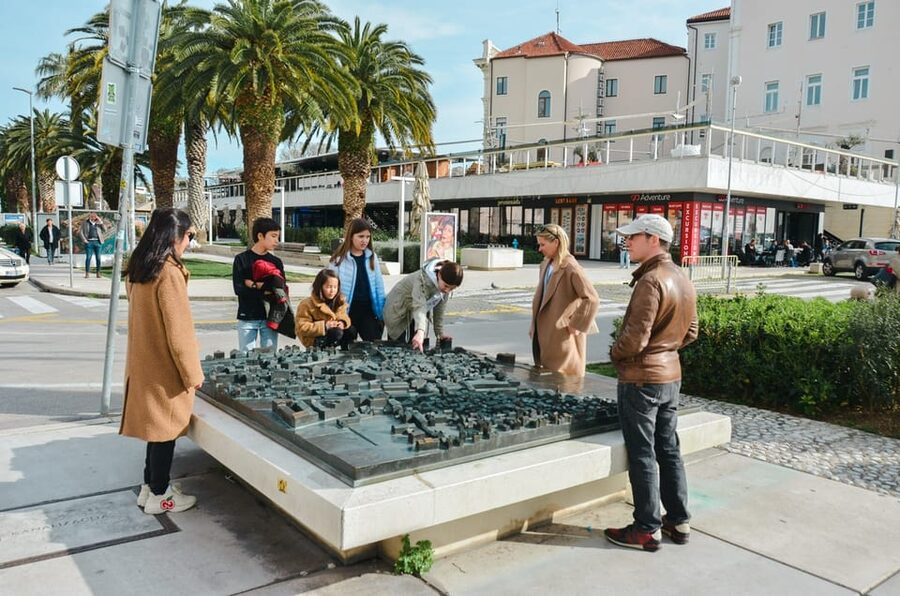
- Easy meeting point: Begin by the bronze model of Split at the eastern end of the Riva promenade, then return there at the end.
Why Diocletian’s Palace feels different from a normal museum
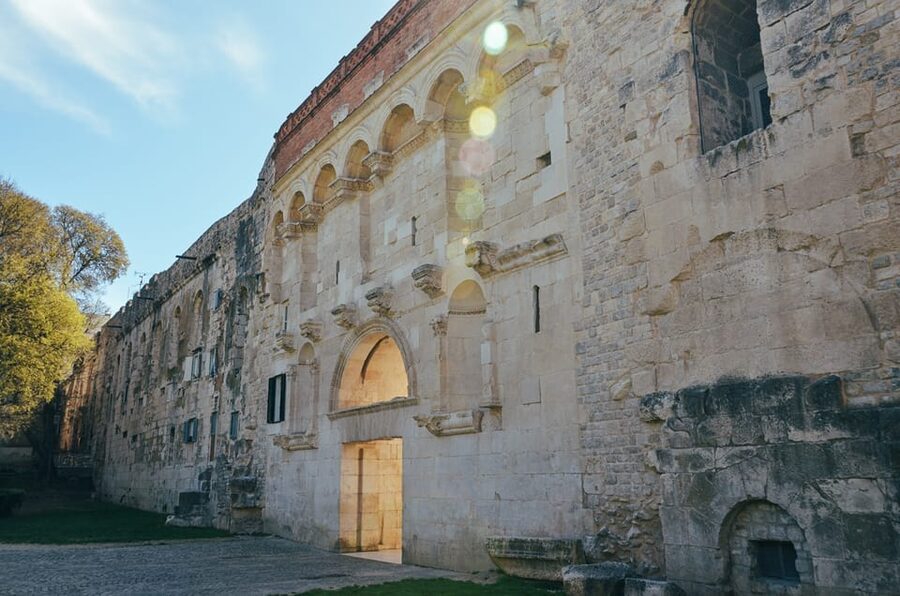
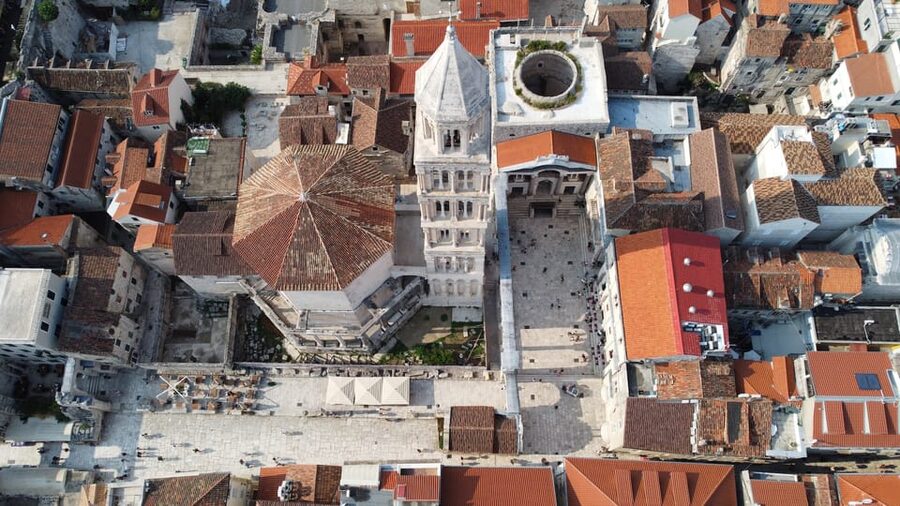
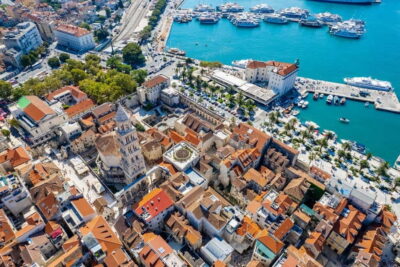
The first thing to understand is the setting. Diocletian’s Palace is not simply a preserved Roman building that you enter, inspect, and leave. The old palace forms the core of central Split, so the tour takes place among homes, shops, streets, and daily city life.
That makes the experience more useful than a quick look at disconnected ruins. You learn how the palace was arranged, why its gates and courtyards mattered, and how later generations changed the building. At the same time, you see how ancient walls still function as part of a living city.
A guide matters here because the Roman remains are not always obvious. A column, passage, or stone wall can look like background architecture until you understand its original purpose. The tour connects those pieces and gives you a mental map of the center.
This is especially helpful if you are new to Split. One of the strongest points of the experience is its ability to show the major sights quickly while helping you get your bearings. Afterward, you should have a better sense of where the main palace spaces sit in relation to one another.
More Diocletian's Palace Tours around Split:
- Split: Old Town and Diocletian Palace Walking Tour
★ 4.9 · 4,727 reviews - Walking Tour of Split and Diocletian’s Palace
★ 5.0 · 2,588 reviews - Split & Diocletian’s Palace Walking Tour
★ 5.0 · 1,125 reviews
Meeting at the bronze model on the Riva
The tour begins at the bronze model of Split at the eastern end of the Riva promenade. This is a practical meeting place because the Riva is one of the city’s central public spaces, and the model gives you an immediate visual introduction to the old town.
Starting with a model is useful for this particular tour. Diocletian’s Palace can feel confusing at street level, especially because modern Split has grown inside and around the Roman plan. A short look at the model can help you picture the palace as a planned imperial residence rather than a collection of random old buildings.
The activity ends back at the same meeting point. That makes the tour easy to fit into a day of sightseeing, since you do not need to arrange transport back from a distant neighborhood.
The available languages are English, German, and French. If language is important for your group, select the option that lets you follow historical explanations comfortably. The supplied information does not give a duration, so check the current booking details before planning another timed activity afterward.
The Peristyle, where ceremony met imperial power
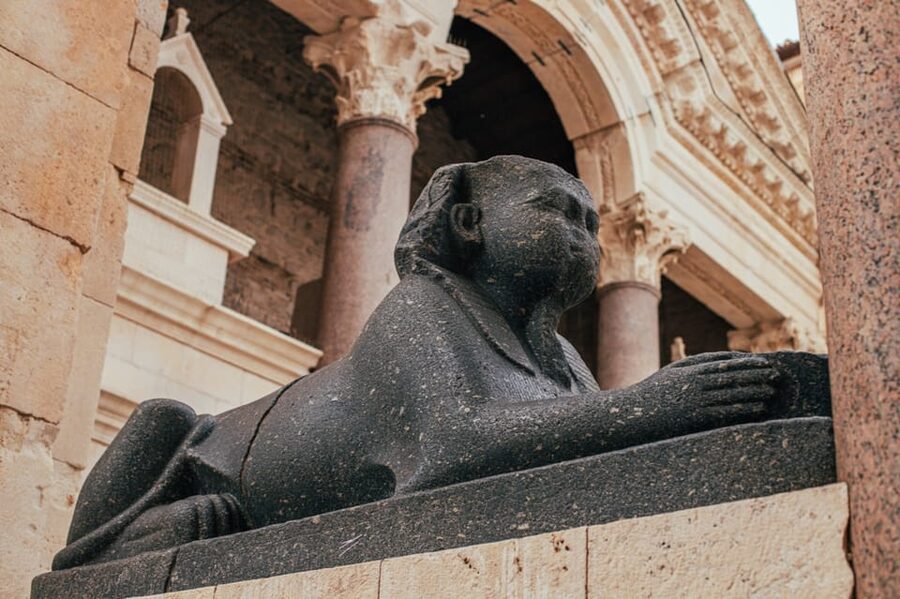
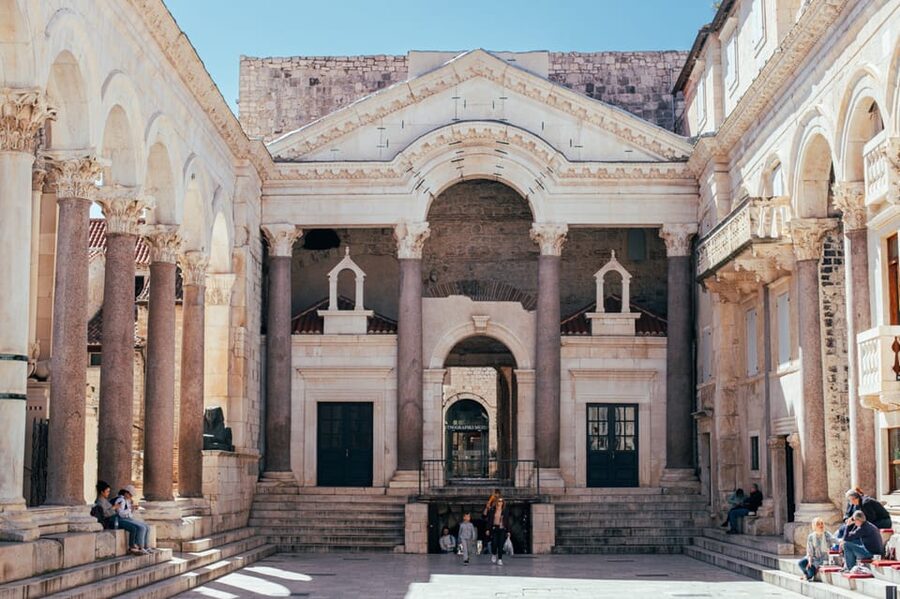
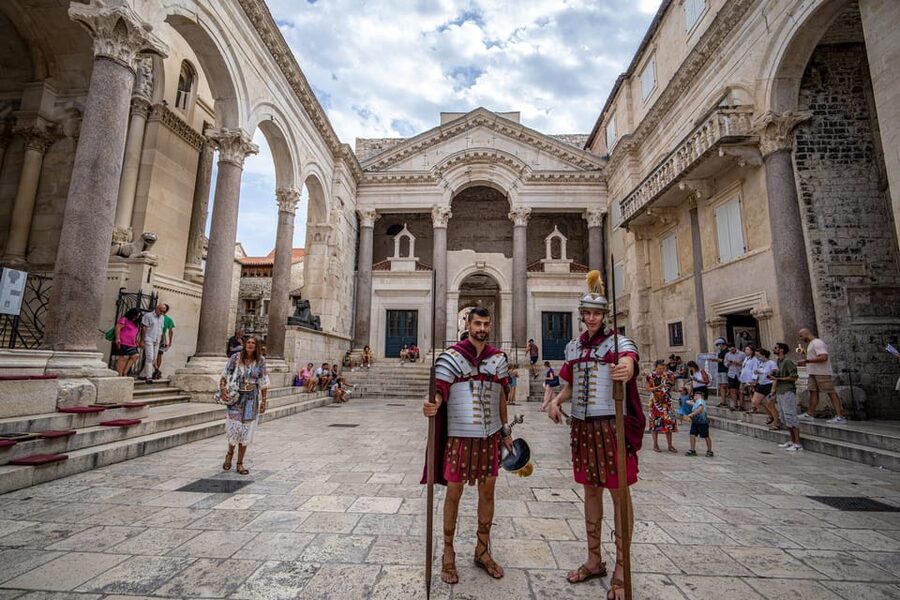
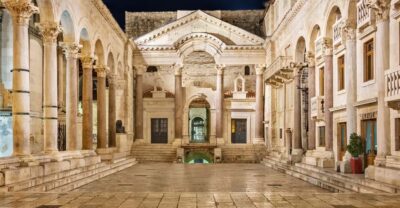
The Peristyle is one of the essential stops. In Diocletian’s time, this open space served as an important meeting place, but it was more than a public square. It was also a ceremonial stage where the emperor was worshipped as the son of Jupiter.
That detail changes the way you look at the space. The Peristyle was built to express rank and authority. Diocletian was not presenting himself as an ordinary ruler. The setting helped connect him with the Roman gods and created a formal place where his subjects encountered imperial power.
Your guide can help you separate the physical space from its later uses. The stones you see today have passed through many periods, but the Peristyle still gives you one of the clearest impressions of the palace’s original purpose.
I would pay close attention here to the scale and arrangement of the square rather than rushing straight to photographs. The value is in understanding how architecture controlled movement and attention. You are standing in a place designed for public ceremony, even though modern Split now moves through it as part of the city center.
Split Cathedral, a mausoleum changed by Christianity
Split Cathedral has one of the most striking stories on the route. The building began as the mausoleum of Emperor Diocletian, then changed purpose after Christianity took hold. Diocletian’s remains disappeared, and the former imperial burial structure became a cathedral.
That change gives the building two identities at once. You are looking at a monument connected to a Roman emperor and a later Christian place of worship. The transition also shows how buildings can survive by being adapted rather than preserved exactly as first intended.
The tour highlights the cathedral’s history and exterior. Because church services may sometimes prevent access, the exact visit can vary. If the interior is unavailable, the guide may need to adjust the program, but the building’s outside still offers an important lesson in how Split reused the palace.
This is one of the stops where a guide can add real value. Without context, you might simply see a cathedral in an old Roman setting. With context, you can understand the unusual sequence: imperial mausoleum, disappearance of the emperor’s remains, and conversion into a Christian cathedral.
More Palace Walking Tours around Split:
- Split: Diocletian Palace & Old Town Guided Walking Tour
★ 4.7 · 882 reviews - Diocletian’s Palace and Old Town SMALL GROUP Walking Tour
★ 5.0 · 502 reviews - Split: 1.5-Hour Walking Tour and Diocletian’s Palace
★ 4.7 · 256 reviews - Split and Diocletian’s Palace walking tour with a local guid
★ 4.9 · 36 reviews
The Vestibule and the road to the emperor’s private rooms
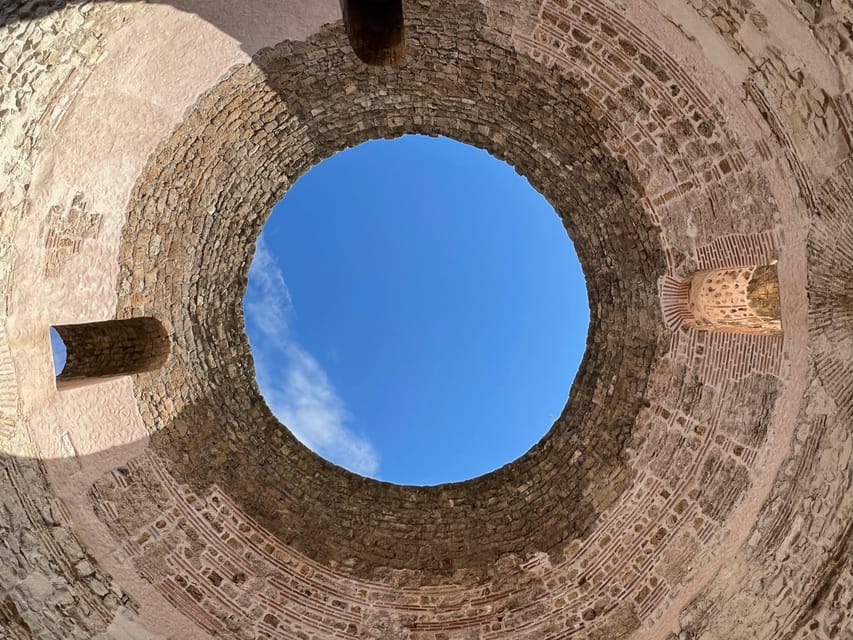
The Vestibule served as the grand entrance to Diocletian’s private chambers. It was not just a hallway. It marked the passage from more public areas of the palace toward the emperor’s personal quarters.
That distinction is worth noticing. Roman palaces used architecture to control who could approach the ruler and how they arrived. The Vestibule welcomed dignitaries from across the world, so its role was tied to ceremony, access, and status.
The stop also helps you picture the palace as a residence, not only a military or civic complex. Diocletian built and inhabited this place, and the tour follows the line between his public image and private life.
You should expect the guide to explain how this entrance worked within the larger plan. The tour is not simply a list of old rooms. Its best feature is the connection between each space and the emperor’s daily authority.
The North Gate, also called the Golden Gate

The North Gate was the most important city gate during the Roman period. It is also known as the Golden Gate, or Porta Aurea, and it gives the tour a strong architectural focus.
Gates are easy to overlook because modern streets pass through them so naturally. Yet this entrance once controlled movement into the palace. Its importance came from both its construction and its place in the Roman plan.
At the former guard corridor inside the gate, you will find the Church of St. Martin, described as the city’s smallest church. This is a fine example of how later religious buildings fit into the old palace structure rather than replacing the entire Roman setting.
The contrast is part of the pleasure here. A massive imperial gate leads to a tiny church in a former guard passage. That compact change of scale helps you see how the palace was reused over the centuries.
Why a private group of up to 10 matters
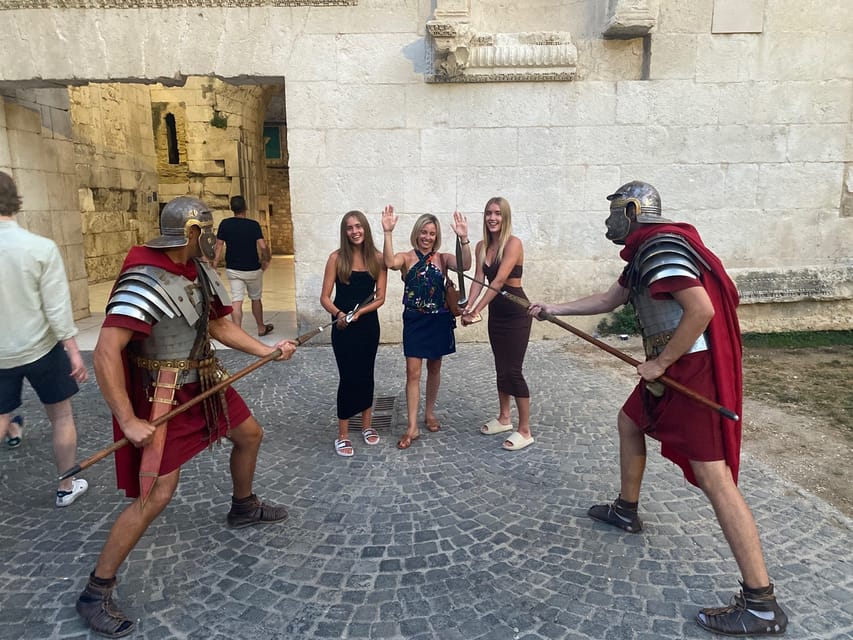
The experience is designed for a maximum of 10 participants and is individually customizable. That is a useful middle ground. You get more personal attention than on a large city tour, but you do not need to arrange a completely separate program for every person in your party.
Customization is especially helpful in a place with several layers of history. You may care most about Roman architecture, imperial life, religious change, or the way residents use the palace today. Tell the guide what interests you before the visit so the route can give those subjects enough attention.
Dana is specifically named as a guide for this experience. Her approach is described as enthusiastic, and that matters in a city where the best explanations need to connect ancient facts with the streets around you. A lively guide can keep the palace from feeling like a sequence of dates and names.
The group limit also makes it easier to ask questions. If you want to pause at the Peristyle, clarify the Cathedral’s changing role, or understand the Golden Gate’s design, a small group gives you more room to do so than a crowded excursion.
The value of $135 per person
At $135 per person, this is not the cheapest way to see Split’s old center. The price makes the most sense if you value a private guide, a flexible program, and a small group limited to 10 people.
I would look at the cost in relation to your party size. For a family or group of friends, a private format may offer better value than paying for several separate public activities, especially if you want to ask questions or adjust the emphasis. For a solo visitor or a couple, the price is harder to justify unless personal guidance is a high priority.
The tour also gives you something a self-guided walk may not: a clear explanation of why each space mattered. You can certainly walk past the Peristyle, Cathedral, Vestibule, and Golden Gate on your own. The fee pays for the connections among those places, along with the chance to understand the palace as a working part of Split.
Admission details are not specified in the supplied information, so check what is included before booking. That is particularly important if you expect interior access to the Cathedral or Church of St. Martin.
What can change on the day
The route is subject to practical limits. Church services or special events may prevent access to certain sights, requiring a small change in the program. This is normal for a living historic center, but it is worth knowing before you arrive.
The site is only partly wheelchair accessible. The tour can be adapted to special needs, but you must inform the provider in advance. Ask about the exact route and surfaces if anyone in your group has limited mobility.
The word private should also be read alongside the group limit. This is an individually customizable guided visit, but the stated maximum is 10 participants. Confirm the arrangement for your booking if you need a tour exclusively for your own party.
You can reserve now and pay later, which helps if your Split plans may shift. Cancellation is allowed up to 24 hours before the activity for a full refund.
Who will get the most from this Split tour
This tour suits a first-time visitor who wants a clear introduction to central Split without spending the day sorting out the Roman remains alone. It is also a good match for anyone who enjoys history but prefers a walking route to a traditional museum.
Families and mixed-interest groups may appreciate the customizable format. One person can ask about Roman emperors, another can focus on Christian architecture, and the guide can tie both subjects to the same buildings.
It is less ideal if you want a long, highly specialized archaeological study or a guaranteed visit inside every church. Access can change, and the tour focuses on several major places rather than one site in extreme depth.
I would also choose it early in a Split stay. The route is designed to show the highlights and help you understand the city center, so it can make later independent walks more rewarding.
Should you book the Diocletian’s Palace private walking tour?
Book it if you want an organized introduction to Split’s Roman core, prefer a small private group, and value explanations over simply taking photographs. The strongest reasons are the living setting, the clear selection of major sites, and the chance to customize the focus.
The praise for Dana’s enthusiasm is another positive sign, especially for visitors who want a guide who keeps the past connected to the streets around them. Just remember the $135 per-person price, the possible changes caused by church services or events, and the partial wheelchair access.
If those conditions fit your plans, this is a practical first step into Split. It gives you the palace’s main story, from imperial ceremony at the Peristyle to the reused guard corridor at the Golden Gate, without treating the old center as a lifeless ruin.
FAQ
Where does the tour begin?
It begins at the bronze model of the city of Split at the eastern end of the Riva promenade.
Where does the tour end?
The activity ends back at the meeting point.
How many people can join the tour?
The tour is designed for a maximum of 10 participants.
Is the tour customizable?
Yes. The program is individually customizable.
Which languages are available?
The tour is available in English, German, and French.
Can I visit every sight listed on the route?
Not always. Some sights may be closed because of events or church services, in which case the program may be adjusted.
Is the tour wheelchair accessible?
The site is partially accessible. The tour can be adapted to special needs if you notify the provider in advance.
Can I cancel for a full refund?
Yes. You can cancel up to 24 hours in advance for a full refund.
More Private Palace Tours in Split
- Split: Private Walking Tour with Diocletian’s Palace
★ 5.0 · 30 reviews - Split: Palace & Old Town Private Walking Tour-Entrance incl.
★ 4.8 · 8 reviews - Split: Private Walking Tour and Diocletian’s Palace
★ 5.0 · 3 reviews - Alhambra Private/Small Group Tour & Nasrid Palaces Skip the Line
★ 4.5 · 921 reviews
Fresh palace tours around Split
- Split: Private Walking Tour and Diocletian’s Palace★ 5.0 · 3 reviews
- Split: Diocletian’s Palace Virtual Reality Experience★ 4.4 · 308 reviews
- Split: Jewish Heritage & Diocletian’s Palace Walking Tour★ 5.0 · 3 reviews
- Split and Diocletian’s Palace walking tour with a local guid★ 4.9 · 36 reviews
- Split: 1.5-Hour Walking Tour and Diocletian’s Palace★ 4.7 · 256 reviews
- Split: Private Walking Tour with Diocletian’s Palace★ 5.0 · 30 reviews
- Split: Old Town and Diocletian’s Palace Walking Tour★ 3.3 · 3 reviews
- Essential Diocletian’s Palace Tour for First-Time Visitors★ 4.9 · 79 reviews
Diocletian's Palace Tours: the shortlist.
Walking Tour of Split and Diocletian’s Palace
Read our review →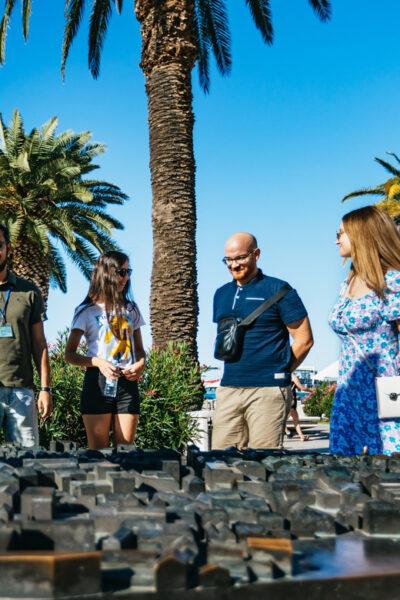
Game of Thrones Tour with Diocletian’s Palace Cellar
Read our review →
Essential Diocletian’s Palace Tour for First-Time Visitors
Read our review →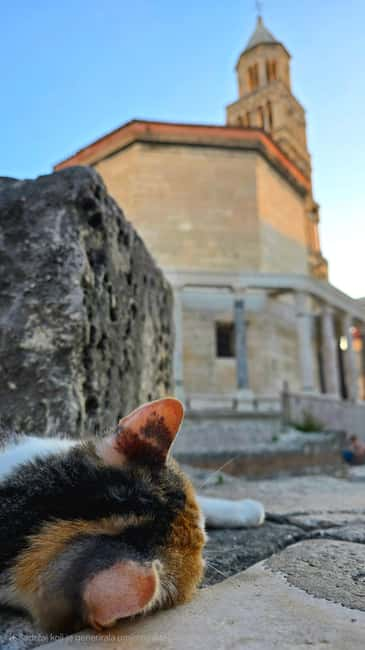
Split and Diocletian’s Palace walking tour with a local guid
Read our review →This visit also appears in