
Review · PALACES WORLDWIDE
Split & Diocletian’s Palace Walking Tour
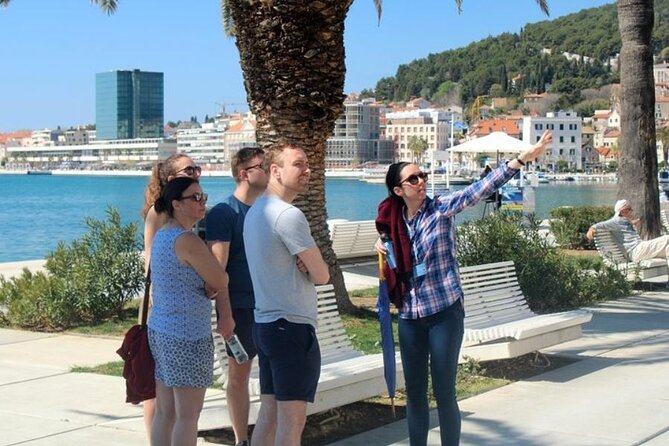
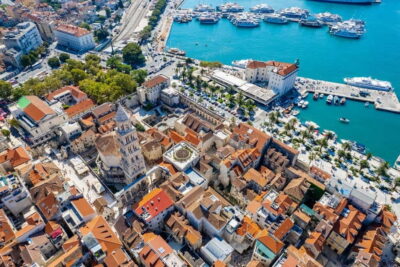
Split’s old town is not a museum set apart from modern life. It grew inside and around a 1,700-year-old Roman palace, where homes, shops, cafés, churches, and narrow lanes now fill the spaces once built for Emperor Diocletian. This 90-minute walk gives you a quick way to understand how that unlikely mix came to be.
I like the tour’s compact route and its focus on places you might otherwise pass without understanding. I also like the local touch: guides such as Mia, Slavko, Ivana, and Tino have been praised for clear English, humor, personal stories, and useful restaurant advice.
The main drawback is its size. With as many as 49 people, it can feel less personal than a private walk, and the one-and-a-half-hour format offers a strong overview rather than a close look at every monument. Construction around the Golden Gate may also make the meeting point harder to find.
Key points at a glance
- Walk inside a living Roman palace: Diocletian’s Palace is still part of everyday Split, not simply an isolated archaeological site.
- See the city’s essential sights: The route includes the Golden Gate, Cathedral of Saint Domnius, Pjaca, City Clock, and Riva Harbor.
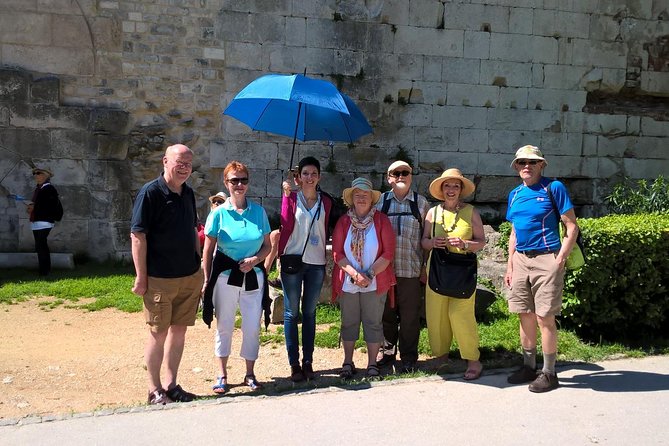
- Get local guidance: Guides including Mia, Slavko, Ivana, Tino, and others add stories about Split, Croatia, restaurants, shops, and local life.
- A useful 90-minute introduction: You get your bearings quickly before exploring the old town on your own.
- Good value at $21.77: The price is modest for an English-language history walk led by a local guide.
- Plan for a group setting: The tour can accept up to 49 people, so do not expect the intimacy of a private tour.
Why Diocletian’s Palace is the right place to begin
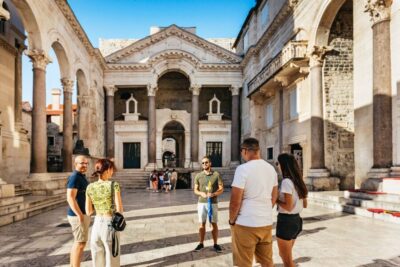
Many city tours show you a few old buildings, then send you on your way. Split is different. The historic center is built into the remains of a palace commissioned by the Roman emperor Diocletian, and the palace walls still shape the streets you walk today.
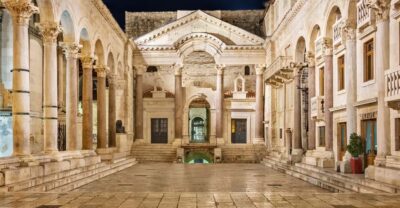
That makes the setting unusually easy to experience. You are not looking at ancient stones from behind a barrier. You are walking past doors, shops, apartments, and cafés within the old complex. A guide helps you connect those ordinary scenes to the Roman structure beneath them.
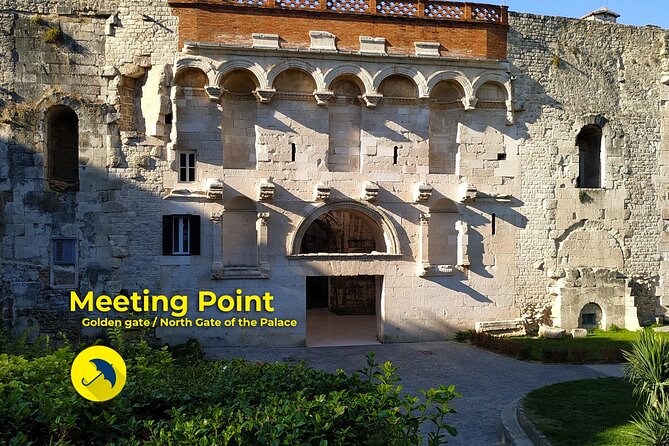
The tour begins at the Golden Gate, at Dioklecijanova 7. This is one of the main entrances into the old palace area and a sensible starting point for a first look at Split. Allow extra time to get there, especially if construction is affecting the streets around the gate.
From the meeting point, the guide leads you through medieval lanes and palace spaces. The route is short enough to fit into a morning, afternoon, or a port-day schedule, yet long enough to show how the palace connects with the later city.
More Diocletian's Palace Tours around Split:
- Split: Old Town and Diocletian Palace Walking Tour
★ 4.9 · 4,727 reviews - Walking Tour of Split and Diocletian’s Palace
★ 5.0 · 2,588 reviews - Split: Diocletian Palace & Old Town Guided Walking Tour
★ 4.7 · 882 reviews
The Golden Gate and the palace walls
The first hour is devoted mainly to Diocletian’s Palace. The palace is described as 1,700 years old, and that age matters because the building has not survived as a single frozen monument. It has changed purpose many times.
Your guide’s job here is to explain the layers. Roman imperial planning, medieval streets, later homes, shops, and religious buildings all occupy the same compact area. Without help, you can see impressive stonework but miss the bigger point: Split’s old center is a working city shaped by an ancient structure.
This is also where guide quality matters most. The strongest guides on this walk have included Mia, Slavko, Ivana, Tino, Antonia, Marta, Maria, and others. The guide assigned to your departure may differ, but the most useful qualities to expect are clear English, a lively delivery, and the ability to answer questions without turning the walk into a lecture.
Several guides have also added personal details. Ivana, for example, has shared stories about growing up inside the palace walls. That kind of local connection helps you see the complex as a neighborhood, not just a collection of historic sites.
The palace portion is also where the tour can feel busiest. A group of up to 49 people is permitted, and narrow lanes do not give every person an equally good view at every stop. Stay close enough to hear, and expect the guide to pause in open areas when possible.
Cathedral of Saint Domnius and the Roman past
The Cathedral of Saint Domnius is one of the key sights included on the walk. It is especially interesting because it occupies a structure tied to Diocletian himself, linking the Roman imperial past with the later Christian city.
The supplied details do not specify an interior admission ticket, and the tour inclusions describe sightseeing rather than paid entry into separate attractions. You should therefore think of this stop as an exterior and historical explanation unless your guide says otherwise.
This is a good example of why a guided walk helps. A cathedral can look like one more old building when you are moving through a crowded center. With context, it becomes part of the story of how Split reused and reshaped the palace over centuries.
Do not expect a long cathedral visit or a dedicated religious-art tour. The strength here is the connection between sites. The guide shows you how the palace, cathedral, streets, and public squares fit into one small historic center.
Pjaca, or Narodni Trg
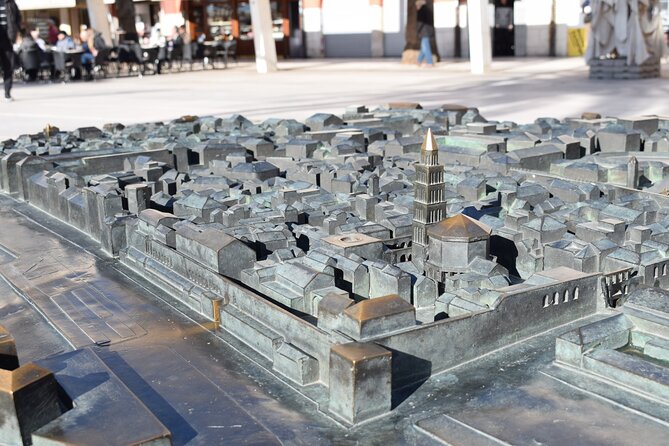
The next stop is Narodni Trg, commonly called Pjaca, where the tour spends about ten minutes. This square helps you see the old city as a public meeting place rather than only a Roman ruin.
The guide explains the square’s former importance and how it fits into Split’s civic life. Ten minutes is enough for an orientation and a few photographs, but not enough for a long discussion of every building around it.
I like this brief stop because it breaks up the palace walk. After the dense lanes and ancient walls, an open square gives you a clearer sense of the city’s later development. It is also a useful place to remember for your own wandering after the tour.
A short stop does have a trade-off. If you enjoy architecture and want detailed commentary on façades, building dates, or local political history, you may want to return here independently. The tour gives you the key idea, then keeps moving.
More Palace Walking Tours around Split:
- Diocletian’s Palace and Old Town SMALL GROUP Walking Tour
★ 5.0 · 502 reviews - Split: 1.5-Hour Walking Tour and Diocletian’s Palace
★ 4.7 · 256 reviews - Split and Diocletian’s Palace walking tour with a local guid
★ 4.9 · 36 reviews - Split: Private Walking Tour with Diocletian’s Palace
★ 5.0 · 30 reviews
The 24-hour City Clock
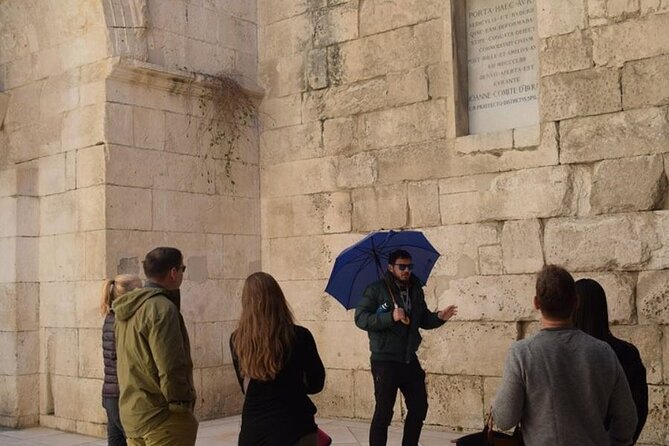
The City Clock is another quick stop, lasting about ten minutes. Its unusual feature is a 24-hour display, sometimes described as a sun clock. It is the sort of detail that is easy to overlook if you are simply following a map through Split.
This stop shows the tour’s practical value. The route is not limited to the most famous headline monument. It also points out city features that make Split feel distinctive and gives you a reason to notice them later.
The clock is not presented as a long standalone attraction. Think of it as one piece in a walking lesson about Split’s squares, streets, and public spaces. The guide may also use the stop to tie the city’s everyday rhythm to its older traditions.
Because the stop is brief, keep your expectations in line. You will see and understand the feature, but this is not a technical clock tour or a long photo break.
The Riva promenade and the end of the walk
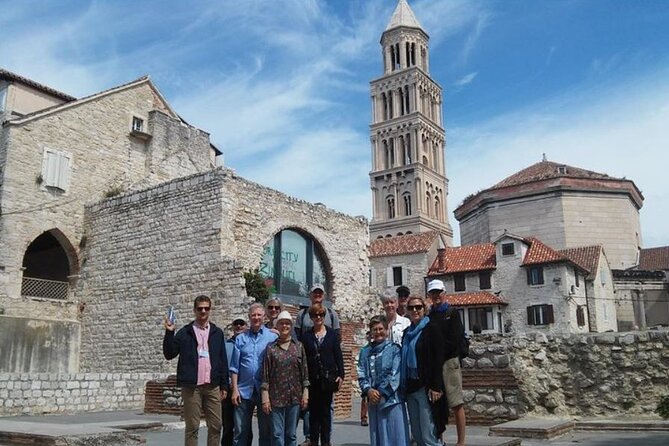
The final listed stop is Riva Harbor, the famous waterfront promenade. It is one of the busiest public streets in Split and provides a sharp change from the enclosed lanes inside the palace.
Riva is a good place to end because it gives you a sense of the city beyond the old walls. The harbor, promenade, cafés, and open views help you orient yourself for the rest of your stay. You are also close to many places where you can continue walking after the guide departs.
The tour returns to the meeting point at the Golden Gate rather than ending at the waterfront. That matters if you have a dinner reservation, a ship departure, or another timed activity. The walk lasts about 90 minutes, but you should still allow a little extra time for the group to gather, answer questions, and make its way back.
Guides have also been useful with practical advice at the end of the walk. Restaurant and coffee recommendations have been part of the experience for some departures, along with warnings about tourist traps. Treat this as helpful local direction, not a guaranteed dining consultation, since the exact guide and style can vary.
What the guides add
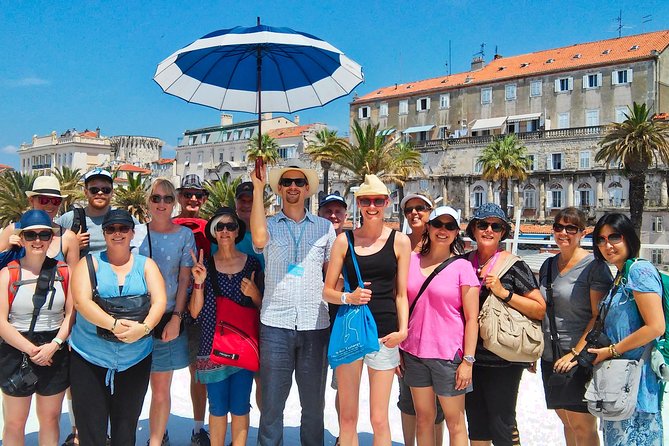
The strongest feature of this experience is the guiding. A self-guided walk can show you the same streets, but it is harder to understand why a Roman palace became a medieval town and then a modern city.
The guides praised most highly have been described as energetic, funny, patient, warm, and easy to hear. Those traits matter in Split, where lanes can be noisy and a group can spread out quickly. A guide who speaks clear English and keeps the pace steady makes the hour and a half far more useful.
Different guides bring different strengths. Mia has been noted for humor, local recommendations, and a friendly manner. Slavko has been described as lively and entertaining. Ivana has shared personal connections to the palace and detailed cultural stories. Tino has been appreciated for patience, clear speech, and an even pace.
You should not assume you will receive a particular guide unless the booking specifically confirms one. Still, the range of guide feedback suggests that the operator has several strong local presenters rather than relying on one personality.
The tour also appears able to respond when conditions change. On one occasion involving severe weather, guides arrived at the meeting point and offered a refund or a new date. That is useful to know, though the formal policy remains the rule: poor weather can lead to a different date or a full refund.
Is $21.77 a good price?
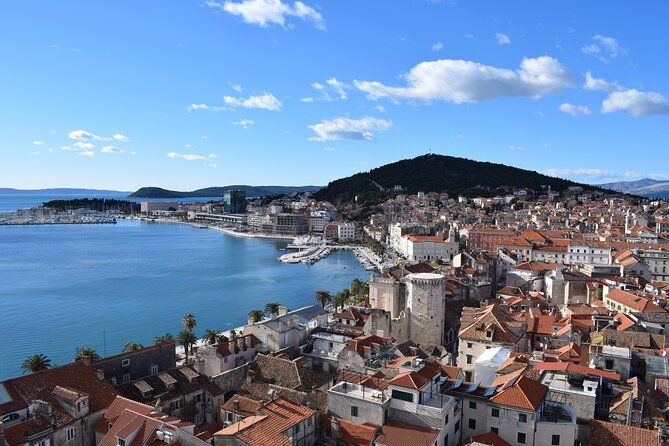
At $21.77 per person, this is a reasonable price for a guided introduction to Split. You are paying for an English-language local guide, not for entrance to a string of paid monuments. The value comes from the explanation, the route, and the time saved figuring out the old town on your own.
I would especially consider it good value if Split is new to you or you have only part of a day. Ninety minutes gives you a framework. Afterward, you can return to the places that interest you, browse the palace shops, sit on Riva, or explore the lanes with more confidence.
The value is lower if you want a small-group or private experience. A group of up to 49 people is allowed, and a larger departure can make questions and photographs less relaxed. You may also want a separate paid visit if your main goal is to spend substantial time inside a specific museum, cathedral area, or archaeological space.
Group discounts are available, but the exact saving is not provided. If you are booking for a family or larger party, check the final price before paying.
Timing, walking, and practical comfort
The tour is offered in English and lasts about one hour and 30 minutes. Children must be accompanied by an adult, service animals are allowed, and the activity is near public transportation.
The route is on foot through old streets and public squares. Most people can take part, but you should be comfortable walking for the duration and standing while the guide talks. One guide adjusted the pace for a family member who had difficulty walking, which suggests some flexibility, but it is wise to explain mobility concerns before the walk begins.
Split’s old center can be confusing at first. The Golden Gate address is specific, but construction around the area may make the meeting point harder to reach. Go early, keep the address available on your phone, and do not cut it close if you have a ship, bus, or restaurant booking afterward.
The tour requires good weather. You can cancel for a full refund up to 24 hours before the start time. Cancellations or changes within 24 hours are not refunded or accepted, except that weather-related cancellation may bring an alternate date or full refund.
This experience is booked, on average, 26 days ahead. That does not guarantee that every departure sells out, but it is a sensible reason to reserve early if your schedule is fixed.
Who should book this Split walking tour?
I would choose this tour for a first visit to Split, a short stay, or a day when you want an efficient introduction before exploring alone. It also suits cruise passengers who need a clear route and a compact time commitment, provided the timing works with the ship.
It is a good fit for families with older children, couples, and adults who prefer stories and local context over a formal museum visit. The guides’ humor and personal stories can keep the walk lively, while the route covers the main landmarks without taking half a day.
I would look elsewhere if you want a private guide, a small group, extensive interior access, or a specialist focus on Roman architecture. You may also prefer to walk independently if you already know Split and only want time for shopping, cafés, or photography.
Should you book it?
Book it if you want to understand Split quickly and see the old town through local eyes. The price is fair, the route covers the essential sights, and the 90-minute length leaves plenty of time for your own discoveries afterward.
Just plan for a group setting, possible construction near the Golden Gate, and an overview rather than a detailed monument tour. For most first-time visitors, that is a sensible trade: you get the story of the palace, the shape of the city, and practical ideas for what to do next.
FAQ
How long does the Split and Diocletian’s Palace walking tour last?
The tour lasts approximately one hour and 30 minutes.
What language is the tour offered in?
The walking tour is offered in English.
Where does the tour begin?
It begins at the Golden Gate, at Dioklecijanova 7, 21000 Split, Croatia.
Where does the tour end?
The activity ends back at the meeting point near the Golden Gate.
What sights are included?
The route includes Diocletian’s Palace, the Cathedral of Saint Domnius, Narodni Trg, also called Pjaca, the City Clock, and Riva Harbor.
Is admission to the sights included?
The tour includes sightseeing of Diocletian’s Palace and lists admission tickets as free for the scheduled stops. Food, drinks, and hotel pickup or drop-off are not included.
What happens if the weather is poor?
The experience requires good weather. If it is canceled because of poor weather, you will be offered a different date or a full refund. You can also cancel up to 24 hours before the start time for a full refund.
Fresh palace tours around Split
- Split: Private Walking Tour and Diocletian’s Palace★ 5.0 · 3 reviews
- Split: Diocletian’s Palace Private walking tour★ 5.0 · 3 reviews
- Split: Diocletian’s Palace Virtual Reality Experience★ 4.4 · 308 reviews
- Split: Jewish Heritage & Diocletian’s Palace Walking Tour★ 5.0 · 3 reviews
- Split and Diocletian’s Palace walking tour with a local guid★ 4.9 · 36 reviews
- Split: 1.5-Hour Walking Tour and Diocletian’s Palace★ 4.7 · 256 reviews
- Split: Private Walking Tour with Diocletian’s Palace★ 5.0 · 30 reviews
- Split: Old Town and Diocletian’s Palace Walking Tour★ 3.3 · 3 reviews
Diocletian's Palace Tours: the shortlist.
Walking Tour of Split and Diocletian’s Palace
Read our review →
Game of Thrones Tour with Diocletian’s Palace Cellar
Read our review →
Essential Diocletian’s Palace Tour for First-Time Visitors
Read our review →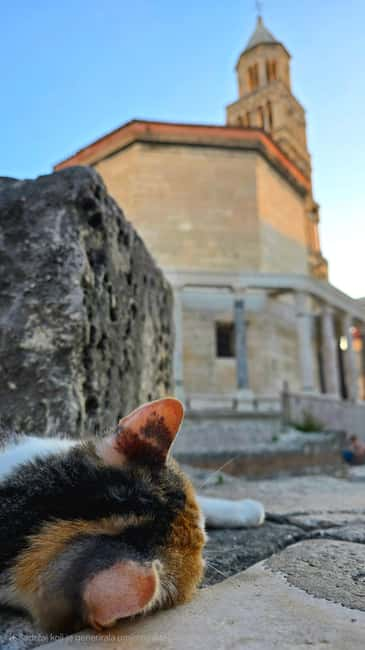
Split and Diocletian’s Palace walking tour with a local guid
Read our review →This visit also appears in