
Review · PALACES WORLDWIDE
Split: 1.5-Hour Walking Tour and Diocletian’s Palace
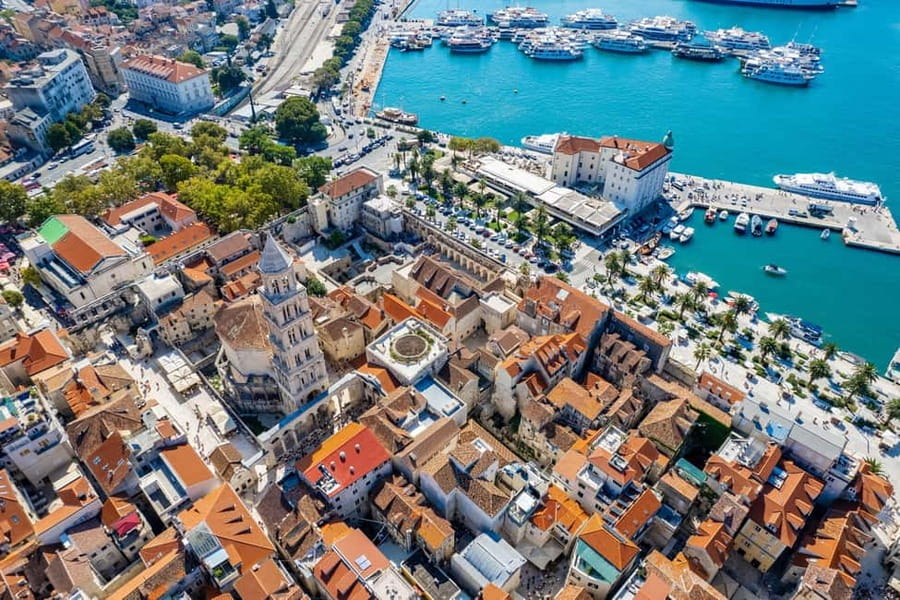
Diocletian’s Palace is not a fenced-off ruin. It is the center of Split, where Roman walls hold homes, shops, cafés, churches, and narrow lanes. This tour helps you read that jumble, from the black-granite Egyptian sphinx at Peristyle to the waterfront Riva, in one brisk walk.
I like two things especially: the route gives you a fast, useful map of the old town, and the guides add local perspective rather than stopping at dates and emperors. Guides including Ana, Sandra, Ivan, and Jelena have been praised for warm storytelling, restaurant tips, and clear explanations of present-day Split.
The main consideration is pace. Ninety minutes to two hours is enough for orientation, not a slow archaeological study. Entrance fees are not included, and uneven streets, steps, and heat make this a poor choice for anyone with limited mobility.
Key points to know before you book
- A Roman palace that became a living city: Diocletian’s Palace is woven into Split’s everyday streets, shops, homes, and squares.
- A smart first-day orientation: The route links the Golden Gate, palace cellars, Peristyle, cathedral, Fruit Square, People’s Square, and Riva.
- Local advice is part of the value: Guides have offered practical suggestions about food, viewpoints, and other things to do in Split.
- Two languages are available: Tours are offered in English and Spanish.
- The tour stays short and focused: Plan on 90 minutes to two hours, with stops generally lasting about 5 to 15 minutes.
- Bring proper shoes: The old town involves walking on historic surfaces, and the tour is not recommended for people with mobility impairments.
Why Diocletian’s Palace is different from a normal monument
Many ancient sites sit apart from modern life. Split’s palace does the opposite. Emperor Diocletian built this huge retirement residence at the turn of the fourth century, but the old walls now form the core of a working Croatian city.
That is the key idea to keep in mind as you walk. You are not simply touring a Roman building. You are moving through a city that reused, altered, and filled the palace over many centuries.
The route begins near the South Tours Travel Agency, though the exact meeting point can vary with the option you book. From there, the guide leads you through the old town instead of leaving you to puzzle over a street map. That matters in Split, where a lane can suddenly open onto a Roman court, a medieval square, or a busy modern promenade.
The walk mixes major sights with small transitions. You see Roman remains, later stone buildings, twentieth-century additions, market areas, and places where local life carries on around ancient walls. I find that combination more useful than a tour focused only on isolated monuments.
More Diocletian's Palace Tours around Split:
- Split: Old Town and Diocletian Palace Walking Tour
★ 4.9 · 4,727 reviews - Walking Tour of Split and Diocletian’s Palace
★ 5.0 · 2,588 reviews - Split & Diocletian’s Palace Walking Tour
★ 5.0 · 1,125 reviews
Golden Gate: starting with the palace walls
The Golden Gate is one of the clearest places to understand the scale and defensive design of Diocletian’s Palace. The guide explains how the palace was organized and how the old gates connected it to the wider city.
You get about ten minutes here, enough for an introduction and photographs. Do not expect a long architectural lecture at the gate. Its value is as a starting point: after this stop, the narrow lanes and surviving walls make more sense.
The palace once had four major gates. On this walk, you also hear about the South Gate and see the North and West Gates later in the route. This gives you a better sense of the palace as a planned Roman complex rather than a loose collection of old stones.
The guide’s storytelling style matters here. Several guides used by this experience, including Sandra, Ana, Ivan, and Jelena, have been described as lively and clear, with anecdotes that help keep the history from becoming a string of hard-to-remember names.
Game of Thrones Museum and modern Split
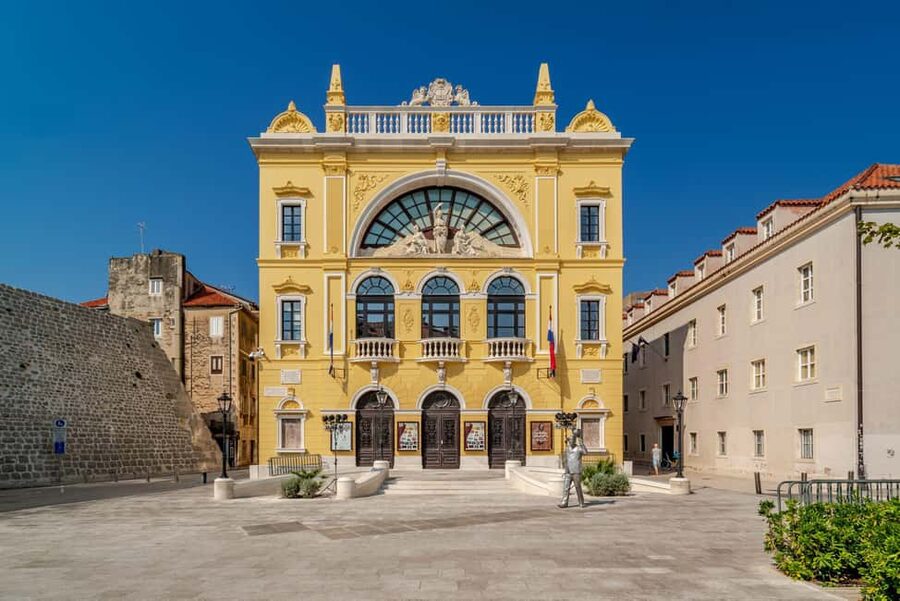
A short stop near the Game of Thrones Museum adds a modern layer to the tour. The series used parts of Split and Diocletian’s Palace for filming, so the location connects the ancient setting with a recent pop-culture story.
This is only about five minutes, so treat it as a quick orientation rather than a museum visit. The attraction is not listed as an included entrance, and entrance fees are not part of the tour price.
I like this brief stop because it acknowledges how many people first become curious about Split. You can enjoy the filming connection without letting it take over a tour that is mainly about the city’s Roman and Croatian past.
One useful detail from the guiding style is that Game of Thrones locations may receive extra attention when the group is interested. Sandra, for example, has been known to add filming information beyond the basic route. That flexibility can make a small-group tour feel more personal, but it depends on the guide and time available.
People’s Square and Fruit Square
People’s Square, or Pjaca, shows how Split grew beyond the original palace walls. The square is tied to the later civic life of the city, and its buildings help you see architectural changes after the Roman period.
The stop lasts about ten minutes. Your guide places the square within the wider story of Split, then leads you toward Fruit Square, or Voćni Trg.
Fruit Square is a good example of how old names preserve local memory. Its former market role gives the area a practical, everyday character. This is not just a place to admire façades. It helps you picture how people used the city over time.
The route’s mix of architectural periods is one of its strongest features. Within a short walk, you may hear about imperial Roman planning, later religious buildings, market life, and newer construction from the twentieth century. If you want a single period studied in detail, this tour will feel too broad. If you want to understand how Split became the city you see now, the variety works well.
More Palace Walking Tours around Split:
- Split: Diocletian Palace & Old Town Guided Walking Tour
★ 4.7 · 882 reviews - Diocletian’s Palace and Old Town SMALL GROUP Walking Tour
★ 5.0 · 502 reviews - Split and Diocletian’s Palace walking tour with a local guid
★ 4.9 · 36 reviews - Split: Private Walking Tour with Diocletian’s Palace
★ 5.0 · 30 reviews
Riva waterfront and the view toward Marjan Hill
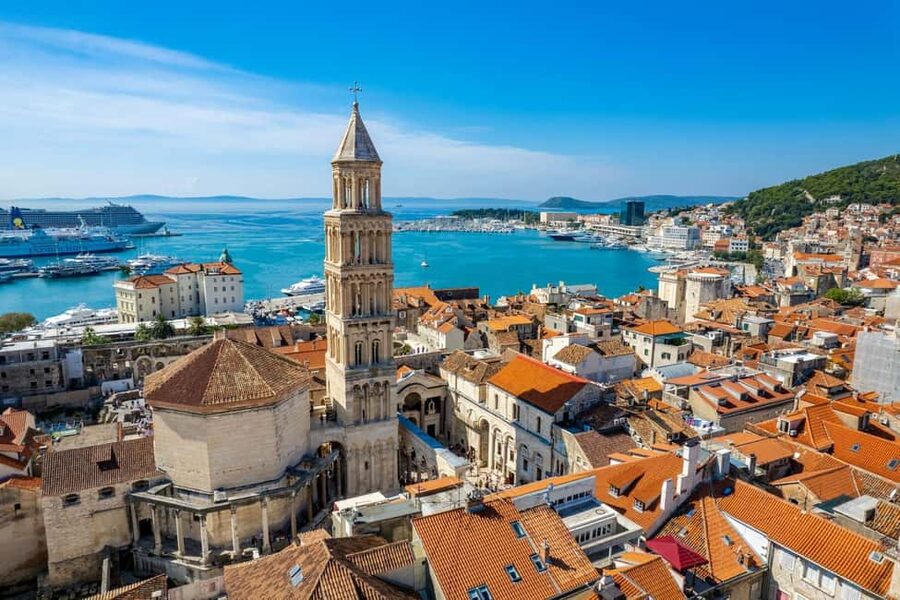
The walk then reaches Riva, Split’s waterfront promenade. This is where the tour shifts from enclosed lanes and stone walls to open views, sea air, and the daily rhythm of the city.
The guide points out Marjan Hill across the water. The view gives you a helpful sense of Split’s setting and offers a welcome change after the tighter streets inside the palace.
Riva is also a practical stop. Your guide may explain the port and current city life, as Ana did on one tour, rather than treating the waterfront as a quick photo background. You can ask about places to eat, nearby sights, or how to use your remaining time in Split.
The timing can affect this part of the walk. An evening departure may be more comfortable in summer, and one tour at 6 p.m. was praised as a good choice because it avoided the strongest heat and some of the crowds. An early start can also help, but the exact available times vary, so check before booking.
The palace cellars and the route into Roman Split

The palace cellars are one of the tour’s central stops. You go below the present-day city to see the Roman-era foundation spaces that supported the upper palace.
These underground rooms are valuable because they show the original plan more clearly than many of the streets above. The palace has changed repeatedly, but the cellars help you understand how the imperial residence was laid out.
The visit is listed at about 15 minutes, so the guide must keep the explanation moving. You will get the main purpose and historical context, along with time to look around, but this is not a full archaeological tour.
Entrance fees are not included in the $41 price. That is important when comparing the cost with other walking tours. The fee pays for the guide and the structured route, while any paid entry to the cellars or other attractions comes separately.
For me, the cellars justify much of the tour’s historical focus. They turn the palace from a set of impressive walls into a building with a plan, a function, and a clear connection between its Roman past and present streets.
Peristyle and the Egyptian sphinx
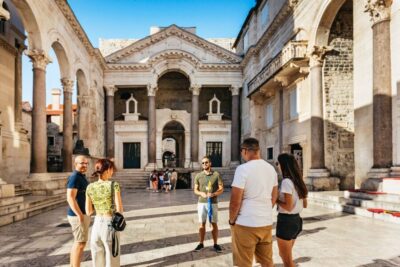
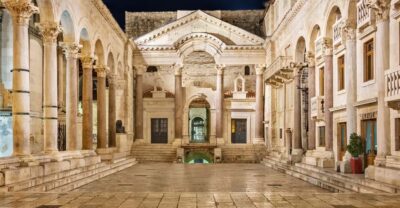
Peristyle is the visual center of the walk. This grand palace square contains the surviving Egyptian sphinx carved from black granite, one of the tour’s most unusual details.
The sphinx helps explain Diocletian’s imperial image and the wide reach of Roman power. You do not need to be an ancient-history specialist to appreciate the contrast: an Egyptian monument placed within a Roman imperial complex that later became part of a Croatian city.
The stop lasts about ten minutes. Expect an explanation of the square, the palace, and the way later buildings frame the Roman space. The acoustics and stone surfaces make this one of the places where a good guide can make a real difference.
Listen for the guide’s ability to connect facts with stories. The strongest guiding reported for this experience came from people such as Sandra, Jelena, and Ana, who mixed dates with anecdotes and local perspective. That approach suits Peristyle, where a short story can help you remember what a bare list of emperors would not.
Cathedral of Saint Domnius and Vestibul

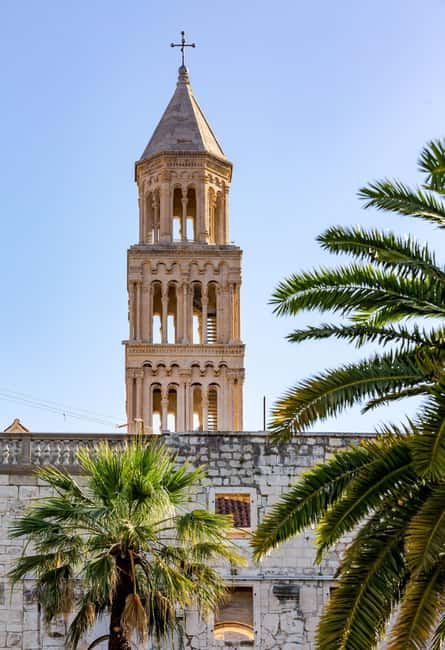
The Cathedral of Saint Domnius occupies what began as Diocletian’s mausoleum. The tour presents it as the oldest Catholic cathedral in the world, a remarkable change in purpose from imperial tomb to Christian cathedral.
You receive about ten minutes of guided attention here. The guide explains the Roman origin of the building and its later religious role, showing how Split repeatedly adapted the palace rather than abandoning it.
The itinerary also includes Vestibul, a circular entrance space connected with the imperial apartments. This is scheduled as a roughly ten-minute visit and photo stop.
Vestibul is a good place to look up, check the shape of the space, and see how the palace’s formal areas differ from the tight lanes outside. It also gives you a natural pause for photographs before the tour returns toward the agency.
The cathedral and Vestibul may leave you wanting more time. One past participant felt a longer version with the cathedral and Jupiter’s Temple would have been better. That is a fair criticism if your main goal is detailed interior visits. The tour provides an overview, but it does not promise extended time at every monument or include all entrance fees.
How the guide shapes the experience
The route is fixed, but the tone can change with the guide. English and Spanish are offered, and guides named in past bookings include Ana, Sandra, Ivan, Jelena, Elena, Iva, and others.
The most useful guide qualities here are clear explanations, local knowledge, and a relaxed pace. Ana has been praised for showing Split through a Croatian perspective and for offering practical advice about local taverns and food. Ivan has been noted for his warm manner and tips on authentic places to eat. Sandra has brought strong enthusiasm for the city’s past and has helped groups find shortcuts through the old town.
Small groups can make a real difference. Some departures have ended up as private or nearly private walks, while other outings have included both English and Spanish speakers. A mixed-language group can slow the rhythm and make the tour less focused, so ask about the language arrangement if that matters to you.
The tour also appears to work well for people who want orientation before exploring alone. You learn where the palace gates, main squares, cathedral, waterfront, and cellars sit in relation to one another. Afterward, you are better placed to return to the places that caught your attention.
Is $41 a fair price for 90 minutes to two hours?
At $41 per person, this is not the cheapest way to hear a few facts about Split. It can be good value if you use it as your first introduction to the city and take advantage of the guide’s practical advice afterward.
The price includes the guide for 90 minutes to two hours. It does not include entrance fees, food, or drinks. That means you should budget separately if you want to enter paid sections of the palace or stop for refreshments.
Value depends on your travel style. If you enjoy wandering without a plan and are happy to read signs or use a guidebook, you may prefer to explore independently. If you want the old town explained in a logical order, with local advice and a clear sense of how Roman, medieval, and modern Split fit together, the fee is easier to justify.
The tour is especially useful on a first visit, during a short port stop, or at the beginning of a stay. It gives you the basics without taking half a day.
Who should book this Split walking tour?
I would choose this tour if you want a compact introduction to Split’s major sights, especially Diocletian’s Palace, and you value a local voice more than a long specialist lecture.
It suits couples, first-time visitors, families with older children who can walk comfortably, and anyone with only a morning or afternoon available. The 90-minute length can also be a plus if your attention fades during long tours.
You should think twice if you have limited mobility. The route uses old-town streets and historic surfaces, and the activity is specifically not recommended for people with mobility impairments. Comfortable walking shoes are essential.
I would also look elsewhere if you want guaranteed entry into every palace attraction, a long cathedral visit, or a detailed study of Roman archaeology. This is a city orientation with meaningful historical stops, not a full-day museum program.
Should you book it?
Book it if you want to understand Split quickly and then explore with confidence. The best parts are the living Roman setting, the cellars and Peristyle, the cathedral’s unusual conversion from mausoleum, and the chance to ask a local guide where to eat and what to see next.
Choose an early or evening departure if heat and crowds concern you, and check the language and meeting point before you pay. If you can walk comfortably and accept that entrance fees are extra, this is a practical first step into Split’s old town.
FAQ
How long does the walking tour last?
The tour lasts between 90 minutes and two hours. Starting times vary, so check availability when booking.
What languages are available?
The tour is offered in English and Spanish.
Does the price include entrance fees?
No. The $41 price includes the guide for the walking tour, but entrance fees, food, and beverages are not included.
What sights are included on the route?
The route includes the Golden Gate, Game of Thrones Museum area, People’s Square, Fruit Square, Riva, Diocletian’s Palace, Peristyle, Cathedral of Saint Domnius, and Vestibul. The walk returns to the South Tours Travel Agency.
Is the tour suitable for people with limited mobility?
No. The activity is not recommended for people with mobility impairments. Comfortable walking shoes are recommended.
Can I cancel the booking?
Yes. You can cancel up to 24 hours in advance for a full refund. The reserve-now, pay-later option lets you book without paying immediately.
Fresh palace tours around Split
- Split: Private Walking Tour and Diocletian’s Palace★ 5.0 · 3 reviews
- Split: Diocletian’s Palace Private walking tour★ 5.0 · 3 reviews
- Split: Diocletian’s Palace Virtual Reality Experience★ 4.4 · 308 reviews
- Split: Jewish Heritage & Diocletian’s Palace Walking Tour★ 5.0 · 3 reviews
- Split and Diocletian’s Palace walking tour with a local guid★ 4.9 · 36 reviews
- Split: Private Walking Tour with Diocletian’s Palace★ 5.0 · 30 reviews
- Split: Old Town and Diocletian’s Palace Walking Tour★ 3.3 · 3 reviews
- Essential Diocletian’s Palace Tour for First-Time Visitors★ 4.9 · 79 reviews
Diocletian's Palace Tours: the shortlist.

Walking Tour of Split and Diocletian’s Palace
Read our review →
Game of Thrones Tour with Diocletian’s Palace Cellar
Read our review →
Essential Diocletian’s Palace Tour for First-Time Visitors
Read our review →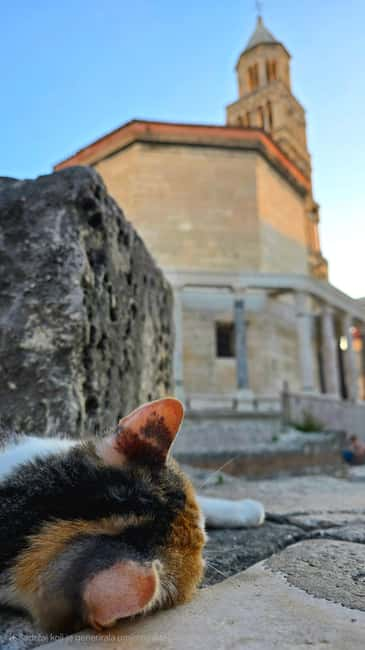
Split and Diocletian’s Palace walking tour with a local guid
Read our review →
This visit also appears in