
Review · TOKYO
Tokyo: Imperial Palace East Gardens and Tokyo Station Tour
The best part of this tour is the sharp change in scenery. You begin among palace moats, stone walls, gardens, and Edo Castle ruins, then walk into Marunouchi’s polished office district before finishing at red-brick Tokyo Station. I like the clear link between old and new Tokyo, and I like that the tour uses real places to explain Japan’s shoguns and emperors rather than treating history as a list of dates. The main drawback is the amount of walking in 150 minutes, especially if the weather is hot or your shoes are poor.
I also like the guide-led approach. Yuki has earned especially strong praise for making the past easy to picture, using humor, useful facts, and simple explanations. You’ll see the Ninomaru Garden, Ote-mon Gate, Hyakunin Bansho Guardhouse, Fujimi-yagura, and Nijubashi views, but the experience depends on the guide helping you understand why each place matters.
Key points to know before booking
- Edo Castle becomes easier to picture: Ruins, guardhouses, a watchtower, and a scale model help explain the former castle complex.
- The route links three different Tokyos: You move from palace gardens to Marunouchi architecture and then to Tokyo Station.
- Yuki is a highly praised guide: Her style is described as humorous, organized, kind, and easy to follow.
- The walk takes 150 minutes: Expect a moderate amount of walking, with comfortable shoes and water strongly advised.
- The tour ends at Tokyo Station: This is useful if you want to continue sightseeing or use the station for transport.
- The price is $38 per person: That is fair if you want historical interpretation, not just a stroll through public spaces.
Starting beside Wadayura Fountain Park
The meeting point is the Starbucks Coffee Imperial Palace Outer Garden Wadayura Fountain Park shop. This places you near Kokyo Gaien National Garden and the broad open spaces outside the palace grounds.
That starting point makes practical sense. You begin near the Imperial Palace but not inside a crowded rail station, and the early part of the walk sets up the contrast between Tokyo’s government center and its commercial heart. Check the exact meeting instructions when booking, since large Tokyo areas can have several nearby entrances and landmarks.
From here, the route heads toward the East Gardens. You are not paying an extra admission fee for the gardens, but the value of the tour is not the ticket. It is the explanation of what you are seeing: how Edo Castle worked, where guards stood, and how the palace grounds changed over time.
More Palace Gardens and Grounds in Tokyo:
- Tokyo: Imperial Palace East Gardens Walking Tour
★ 4.8 · 353 reviews - Tokyo: Edo Castle & East Garden of the Imperial Palace Tour
★ 4.7 · 112 reviews - Tokyo: Pvt. Tour – Edo Castle & Imperial Palace East Gardens
★ 4.8 · 63 reviews
Entering Edo Castle through Ote-mon Gate
Ote-mon Gate gives the tour a strong opening. This was a major entrance to Edo Castle, the seat of the Tokugawa shogunate during the Edo period. The gate, walls, and moats help you picture a fortified seat of power rather than simply a pleasant park.
Your guide can point out the practical side of castle design. Entry was controlled. Guards watched movement. Thick stone walls and water-filled moats were not decorative touches. They protected the center of political power in Japan.
The tour includes the Hyakunin Bansho Guardhouse, a stop that adds human scale to the castle story. A guardhouse can look modest beside Tokyo’s modern towers, but it helps explain how carefully movement around the castle was managed.
I would pay close attention here if you are interested in samurai history. The guide’s job is especially useful at places like this, where the physical remains are impressive but not always self-explanatory. Without context, you might walk past a wall or gate and miss its role.
Ninomaru Garden and the calm center of the East Gardens
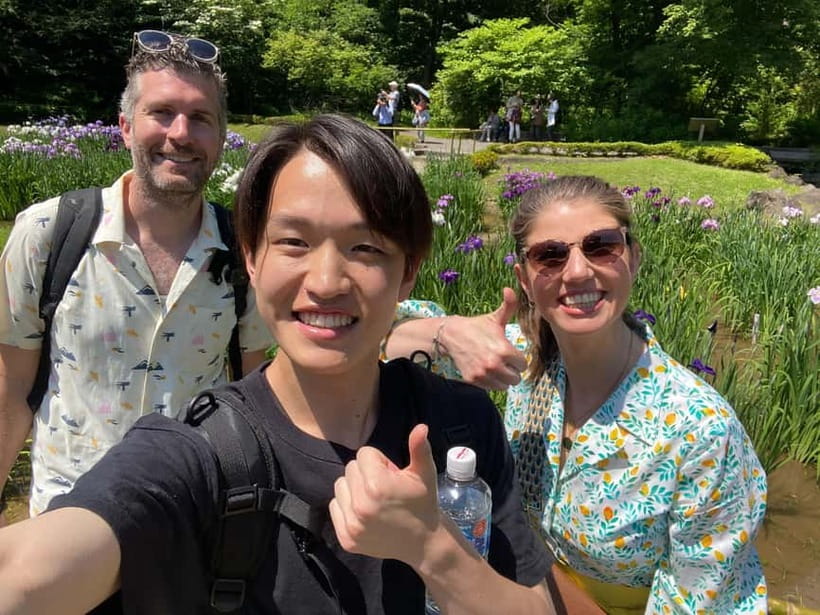
The Ninomaru Garden is one of the gentler portions of the walk. Its garden design gives you a break from fortress walls and political history, while still connecting to the former castle grounds.
The contrast matters. Japanese gardens are not simply empty green space. Their paths, water, stones, planting, and views are arranged to shape how you move and what you notice. Your guide offers cultural context about garden design, so you can look at the setting with more purpose.
The East Gardens are a good place to slow down and take photographs, though flash photography is not allowed. Bring a camera if you wish, but also leave room to listen. The appeal of this section is partly visual and partly historical.
Reviews of the experience repeatedly praise the explanations of each section of the garden. That is useful if this is your first visit, but it also helps if you have already been here. One person who had visited before found the place had more historical meaning than expected once the guide explained it.
Finding the Edo Castle ruins and Fujimi-yagura
The East Gardens preserve traces of Edo Castle, including the Honmaru area and the Fujimi-yagura watchtower. You will not see a complete castle rising above the trees. Instead, you find fragments, open grounds, stone foundations, and surviving structures that require some imagination.
That is where the included scale model of Edo Castle’s main keep earns its place. A model gives you the missing shape. It helps connect the broad grounds under your feet with the enormous castle complex that once occupied them.
I like this approach because it avoids pretending that ruins speak for themselves. You get the physical remains, then a visual aid and a guide’s explanation to fill in the gaps. Guides such as Yuki are praised for making the castle feel real and for explaining what Tokyo looked like roughly 400 years ago.
The Honmaru area also helps show the scale of the former castle grounds. You will want comfortable shoes here. The route is not described as difficult, but it does involve a moderate amount of walking, and there is no advantage to rushing through a site that rewards careful looking.
More Royal Palace Tours around Tokyo:
- Tokyo: Imperial Palace and Shogun Historical Walking Tour
★ 5.0 · 2,251 reviews - Tokyo Castle & Imperial PalaceーShogun Walking Tour
★ 4.7 · 1,068 reviews - Tokyo: Imperial Palace Japanese History Walking Tour
★ 4.9 · 987 reviews - Tokyo: Imperial Palace and Shogun Walking Tour
★ 4.9 · 935 reviews
Nijubashi views and Kokyo Gaien National Garden
The route includes scenic views of Nijubashi and a walk through Kokyo Gaien National Garden. These views offer a different way to understand the Imperial Palace. You are no longer looking only at old castle remains. You are seeing the palace area as a major civic and ceremonial center in present-day Tokyo.
Nijubashi is one of the city’s familiar palace views, and it gives the tour a strong photo stop. Conditions can affect the experience, so weather-appropriate clothing, sunscreen, a hat, and water are sensible choices.
This part of the walk also helps connect the East Gardens to the wider palace setting. The tour is not confined to one garden enclosure. It uses the surrounding grounds to explain the relationship between the former Edo Castle and the modern Imperial Palace.
There is a practical limit here. The palace area can feel open and exposed, especially in warm weather. You should not expect continuous shade or a leisurely garden visit with no time pressure. The guide needs to keep the route moving so the group can reach Marunouchi and Tokyo Station within 150 minutes.
The ten-minute walk into Marunouchi
The move from the Imperial Palace area to Marunouchi takes about ten minutes on foot. That short transition is one of the smartest parts of the route because it makes Tokyo’s transformation visible without a bus ride or a long break.
You go from moats and historic grounds into one of the city’s best-known business districts. Marunouchi brings office towers, carefully designed public spaces, modern architecture, and art into the picture. The change is quick, and that is the point.
Your guide continues the commentary during the Marunouchi section, so the modern buildings are not just scenery between historic stops. You learn how the area functions as part of present-day Tokyo and how it relates to the palace district nearby.
The modern section may appeal less if you want a full palace tour with little urban walking. For me, though, it gives the history a useful ending. Tokyo is not preserved as a museum. Old power centers sit beside offices, shopping areas, transit hubs, and public art.
Marunouchi architecture before the final station
Marunouchi is where the tour shifts from samurai-era architecture to the city’s newer face. You will see a mix of contemporary buildings and historic sites, with your guide drawing attention to the details that are easy to miss when you are simply trying to cross the district.
This is also a good section for people who like architecture but do not want a separate architecture tour. The experience does not promise a detailed survey of every building, so keep your expectations in check. Its strength is the broad comparison between the palace grounds and the surrounding business district.
The walk gives you a useful sense of scale. Tokyo Station is close enough to reach on foot, but the district between the palace and station is full of visual change. In a short distance, you move through several periods of Tokyo’s development.
Because the guide languages include English, Japanese, Spanish, Chinese, and French, you have several options when choosing a departure. The supplied information does not specify that every departure offers every language, so check the available language and starting time before you reserve.
Finishing at the restored red-brick Tokyo Station
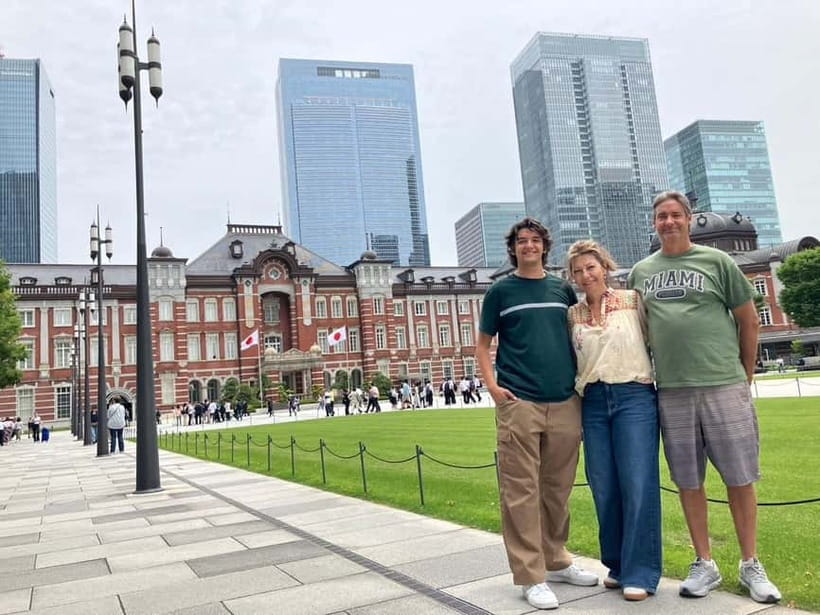
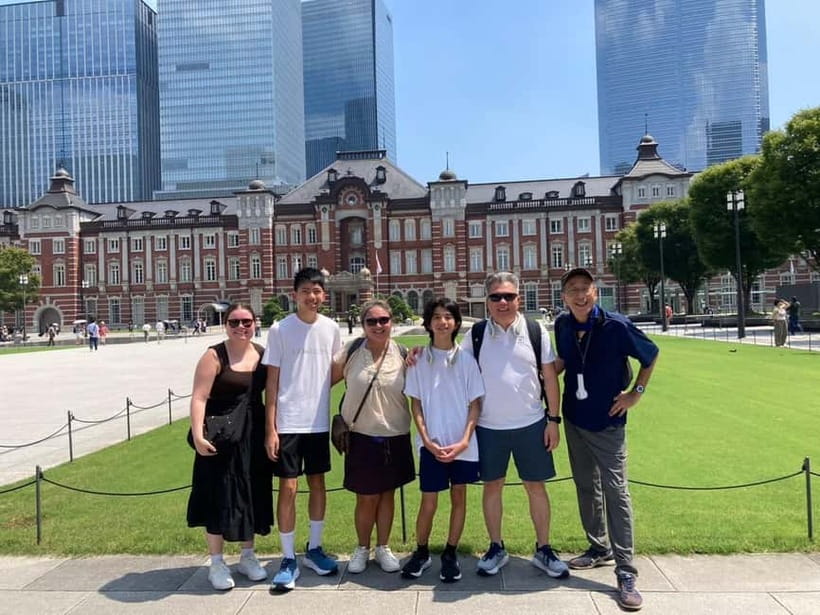
The final stop is Tokyo Station, with the tour ending at the station itself. The restored red-brick exterior provides a satisfying finish after the palace grounds and modern Marunouchi buildings.
Tokyo Station is more than a transport point on this route. It represents the city’s modern growth and its connection to the wider country. Ending here makes the tour feel like a short story about Tokyo’s changing centers of power: castle, palace, business district, and railway hub.
The guide covers the station exterior, not a full station-history visit or an interior tour. That distinction matters. You will have time to appreciate the facade and take photographs, but this is not designed as a detailed railway architecture experience.
The location is useful after the tour. Since you finish at Tokyo Station, you can continue by train, find food nearby, or use the area as a base for the next part of your day. Just remember that the tour ends at the station, so any onward plans should allow time to orient yourself in a large transport complex.
What the guide adds for your $38
At $38 per person, this is not the cheapest way to walk around the Imperial Palace area. Much of the route is made up of public spaces, and the East Gardens do not require an admission fee.
The price makes more sense if you want interpretation. You are paying for a live guide who connects the gate, garden, guardhouse, castle ruins, model, watchtower, palace views, Marunouchi, and Tokyo Station into one story. That is the difference between seeing a sequence of places and understanding how they fit together.
The strongest feedback centers on the guide’s delivery. Yuki is described as easy to understand, humorous, organized, kind, and good at turning facts into scenes you can picture. Several comments focus on her explanations of the Edo period, the shogunate, the castle, and the garden.
That praise is specific enough to matter. History tours can become dry when the guide simply recites names and dates. Here, the most valued quality is the ability to make the past feel concrete while keeping the mood friendly.
The total rating is 5 out of 5 from 16 reviews, but I would still judge the tour against your own needs. If you already know Edo-period history and prefer to explore at your own pace, you may find the $38 less attractive. If the Imperial Palace is new to you, the context can make the fee worthwhile.
Walking comfort, weather, and access
Wear comfortable shoes. The tour covers gardens, former castle grounds, public parks, Marunouchi streets, and the area around Tokyo Station. A moderate walk over two and a half hours is manageable for many people, but it is not a seated sightseeing experience.
Bring water, sunscreen, a hat, a camera, and clothing suited to the forecast. The route includes outdoor sections, and the supplied guidance specifically calls attention to weather conditions.
Backpacks are not allowed, and smoking is not allowed. Flash photography is also prohibited. These rules may affect how you pack, so keep your belongings light and use a small permitted bag only if the operator allows it.
The activity is wheelchair accessible. Because the route still involves a moderate amount of walking, you should confirm the exact needs of your party before booking, especially if walking distance or rest periods are important.
Free cancellation is available up to 24 hours before the start for a full refund, and you can reserve now and pay later. Those options are useful when your Tokyo schedule is still shifting.
Who should book this palace-to-station walk?
I would recommend this tour to first-time visitors who want a clear introduction to central Tokyo’s history. It suits people who like a mix of gardens, ruins, architecture, and city streets rather than a single-theme museum visit.
It is also a good fit for history fans who want help connecting the Tokugawa shogunate to the modern Imperial Palace. The scale model, castle remains, guardhouse, and watchtower offer solid visual anchors for the story.
You may enjoy it less if you want a slow garden stroll, a private tour, or a detailed visit inside Tokyo Station. The schedule is compact, and the route keeps moving toward its final stop.
Should you book the Tokyo Palace and Station tour?
Book it if you want a guided historical walk with a strong visual contrast. The East Gardens and Edo Castle remains provide the substance, while Marunouchi and Tokyo Station show how sharply Tokyo has changed.
The $38 price is reasonable when you value a good guide, especially one with Yuki’s reported mix of humor, organization, and clear storytelling. Bring good shoes, plan for outdoor weather, and expect moderate walking.
Skip it if you prefer wandering alone or already have a firm grasp of Edo Castle and the Imperial Palace grounds. For most first visits, though, this is an efficient way to see several important parts of central Tokyo without losing the thread between them.
FAQ
How long does the tour last?
The tour lasts 150 minutes, or two and a half hours.
Where does the tour begin?
It begins at Starbucks Coffee Imperial Palace Outer Garden Wadayura Fountain Park.
Where does the tour finish?
The tour finishes at Tokyo Station.
What places are included?
The route includes Ninomaru Garden, the Imperial Palace East Gardens, Ote-mon Gate, the Hyakunin Bansho Guardhouse, the Honmaru area, Kokyo Gaien National Garden, Marunouchi, and Tokyo Station.
Is admission to the Imperial Palace East Gardens included?
Yes. Entry to the Imperial Palace East Gardens is included, and no admission fee is required.
Which languages are available?
Live guides are available in English, Japanese, Spanish, Chinese, and French. Check the selected departure for the language offered.
What should I bring?
Bring comfortable shoes, water, a hat, sunscreen, a camera, and clothing suited to the weather. Backpacks, smoking, and flash photography are not allowed.
Fresh palace tours around Tokyo
- Tokyo: Imperial Palace East Gardens Walking Tour★ 4.8 · 353 reviews
- Tokyo walking tour around Imperial Palace and Tokyo Station★ 5.0 · 3 reviews
- Tokyo: Imperial Palace, the history of Japan (ENGLISH GUIDE)★ 5.0 · 77 reviews
- Tokyo: Imperial Palace with Nostalgic Alley Kagurazaka tour★ 4.3 · 8 reviews
- Tokyo: Pvt. Tour – Edo Castle & Imperial Palace East Gardens★ 4.8 · 63 reviews
- Tokyo: Edo Castle Ruins & Imperial Palace East Garden Tour★ 4.4 · 13 reviews
- Tokyo: Edo Castle & East Garden of the Imperial Palace Tour★ 4.7 · 112 reviews
- Tokyo: Edo Castle and Imperial Palace Guided Walking Tour★ 5.0 · 6 reviews
Palace Gardens and Grounds: the shortlist.
Versailles Palace and Gardens Full Access Ticket
Read our review →
Skip-the-Line Tour of Palace and Gardens Access
Read our review →
Schönbrunn Palace & Gardens Skip-the-Line Tour
Read our review →
Alhambra & Gardens Tour w/Nasrid Palaces Option
Read our review →
Versailles Palace & Gardens with Transportation
Read our review →
Versailles Palace Guided Tour & Gardens Access
Read our review →
Versailles Palace and Gardens Tour from Paris
Read our review →
Versailles Full Day Bike Tour with Palace, Gardens, & Picnic
Read our review →This visit also appears in