
Review · TOKYO
Tokyo: Imperial Palace, the history of Japan (ENGLISH GUIDE)
Tokyo’s Imperial Palace is more than a handsome garden in the middle of the capital. Beneath the clipped trees and quiet paths sits the former base of Edo Castle, the center of political power for more than 350 years. This walking tour helps you connect those stones, gates, ponds, and gardens to the story of modern Japan.
I like the small-group feel, which makes it easier to ask about Japanese mythology, language, the imperial family, and everyday life. I also like the mix of castle ruins, garden views, special Koi, and photo spots rather than a lecture with nothing to see.
The main thing to check before booking is the language. The experience title says English guide, but the practical information lists French as the guide language, and the featured guide, Nicolas, is described as Franco-Japanese. Confirm this point before you pay.
Key points to know before you book
- Edo Castle history: Walk across the former base of Edo Castle, which dates back more than 350 years.
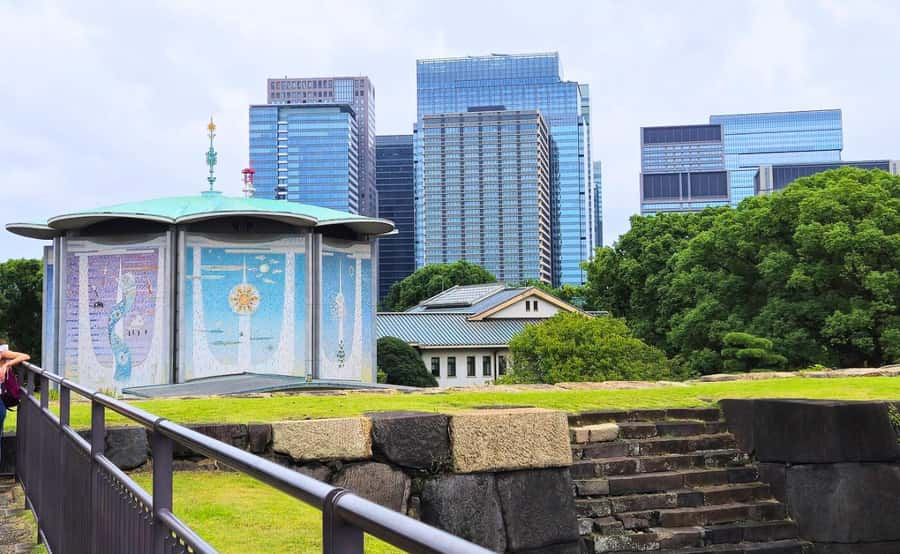
- Eastern Palace gardens: See oriental gardens, palace ruins, trees from different Japanese prefectures, and quiet water features.
- A special Koi population: Look for Koi described as unique to this palace site.
- Guide-led context: The tour explains why the main castle no longer exists and how Japan changed over time.
- Convenient meeting point: Meet beside the Starbucks near the fountain in Wadakuramon Fountain Park, a five to ten-minute walk from Tokyo or Otemachi Station.
- Language check needed: The listing is marked French in the details, even though the title says English guide.
Why Edo Castle explains modern Tokyo
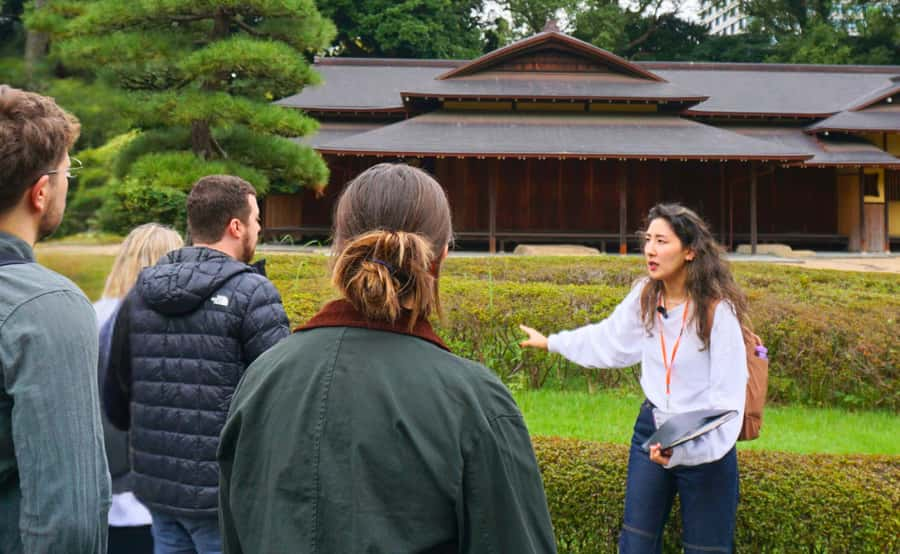
The best reason to take this tour is that it gives the Imperial Palace grounds a clear story. Without context, you may see a broad gate, stone walls, trees, ponds, and a few ruins. With a guide, those pieces become evidence of the former Edo Castle and the political world that shaped Japan.
Edo Castle was the base of the shogunate, and the tour places you on the former castle grounds. The supplied details describe this part of the visit as more than 350 years old. That time span matters. You are not simply looking at an old building. You are walking through a site linked to the long period when Japan was governed from Edo, the city that became Tokyo.
The tour also connects the old palace to Japan today. That is useful if you want more than isolated facts about emperors, shoguns, or castle architecture. A good guide can show how the country changed and how the imperial family fits into the modern story.
The main castle no longer survives, but that absence is part of the lesson. Your guide explains why. You also get to see a miniature structure of the former palace, which helps you picture the scale and layout that the remaining foundations cannot show on their own.
More Royal Palace Tours around Tokyo:
- Tokyo: Imperial Palace and Shogun Historical Walking Tour
★ 5.0 · 2,251 reviews - Tokyo Castle & Imperial PalaceーShogun Walking Tour
★ 4.7 · 1,068 reviews - Tokyo: Imperial Palace Japanese History Walking Tour
★ 4.9 · 987 reviews
Meeting at Wadakuramon Fountain Park
The meeting point is practical, but give yourself enough time to find it. From Tokyo Station or Otemachi Station, walk five to ten minutes to Wadakuramon Fountain Park. Once in the park, look for the Starbucks near the fountain.
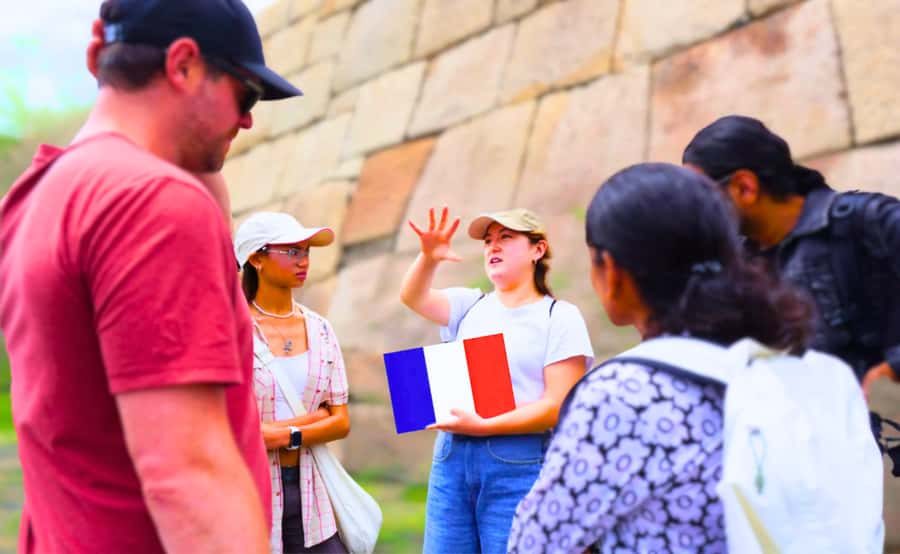
Your guide will be holding a sign with the Sunrise Adventure logo. This is worth noting because the palace area has broad open spaces and several entrances. Do not rely on spotting the guide at the gate itself. Meet at the park first, then walk together to Otemon, the large main gate.
There is a strict late-arrival rule. If you are not there within 10 minutes of the meeting time, the group may leave without you. Tokyo train stations can take longer to navigate than expected, especially if you arrive with luggage or use a different station exit, so build in a little extra time.
The activity returns to the same meeting point at the end. That makes the start and finish easy to combine with other plans in central Tokyo.
Passing through Otemon into the palace grounds
Otemon gives the walk a proper sense of arrival. You enter through the major gate and leave the city traffic behind. From there, the guide leads you through the palace grounds and the oriental gardens.
The appeal is the change of pace. Tokyo is one of the world’s busiest capitals, yet the palace grounds offer room to pause. The tour is still a walking experience, so expect to spend the visit outdoors on foot rather than inside a museum or palace room.
The grounds also give your guide natural points for explanation. Stone walls and former military spaces can seem abstract if you do not know what you are seeing. A guide can connect the physical remains to the people who used them, including the former soldiers’ barracks.
You should wear clothing that suits the forecast. The tour runs in good weather or bad, and there is no suggestion that it moves indoors when conditions change. Comfortable walking clothes and protection from rain or sun are sensible choices.
Palace ruins and the missing main castle

The missing main castle is one of the tour’s most useful teaching points. Many visitors expect an Imperial Palace visit to include grand interiors or a complete central keep. This experience does not provide that.
Instead, you see the surviving parts of the former complex and hear why the main castle disappeared. The ruins, foundations, and miniature structure work together. The guide’s explanation supplies the part that the stones cannot.
This is also where expectations matter. The tour does not include access to the inner palace. You remain in the eastern gardens and former Edo Castle area. If your main goal is to enter the working Imperial Palace or see private imperial rooms, this is not the right product.
If you want a historical walk through the accessible grounds, the limitation is less serious. The experience focuses on the former castle and its setting, not on a ceremonial palace interior.
More royal history around Tokyo:
- Imperial Palace Tour: Discover Samurai History with a Guide
★ 5.0 · 12 reviews - Madrid Essential: Historic Center, Plaza Mayor & Royal Palace
★ 5.0 · 6,416 reviews - Venice’s Best: Basilica, Doge’s Palace, Gondola & History Gallery
★ 4.5 · 2,478 reviews - Dubai: Abu Dhabi Grand Mosque, Palace, and Heritage Village
★ 4.8 · 1,265 reviews
Gardens, trees, and the special Koi
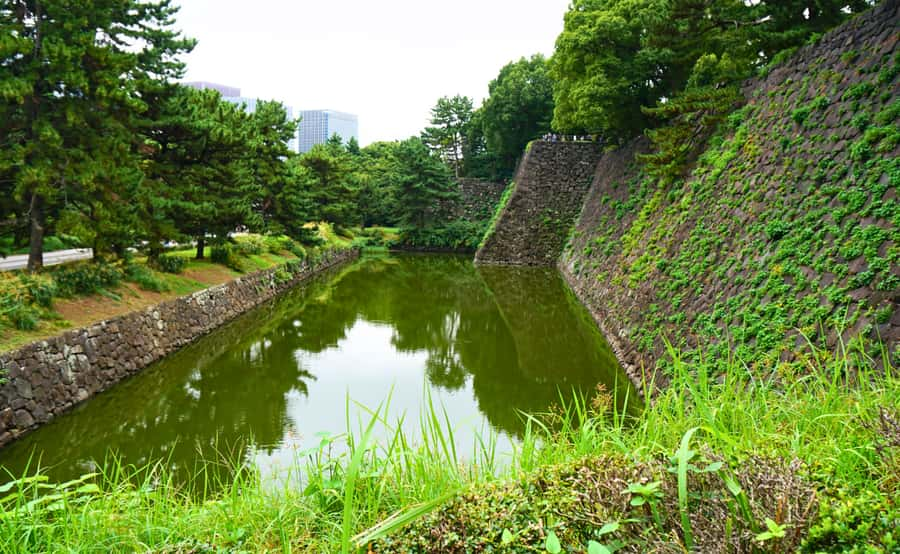
The garden section adds variety to the history. You move from gates and ruins to oriental garden scenery, water, plantings, and trees connected with different prefectures of Japan.
That detail gives the grounds a national reach. You are not seeing only a garden designed for one residence. You are also seeing examples tied to different parts of Japan, which gives the guide another way to talk about the country as a whole.
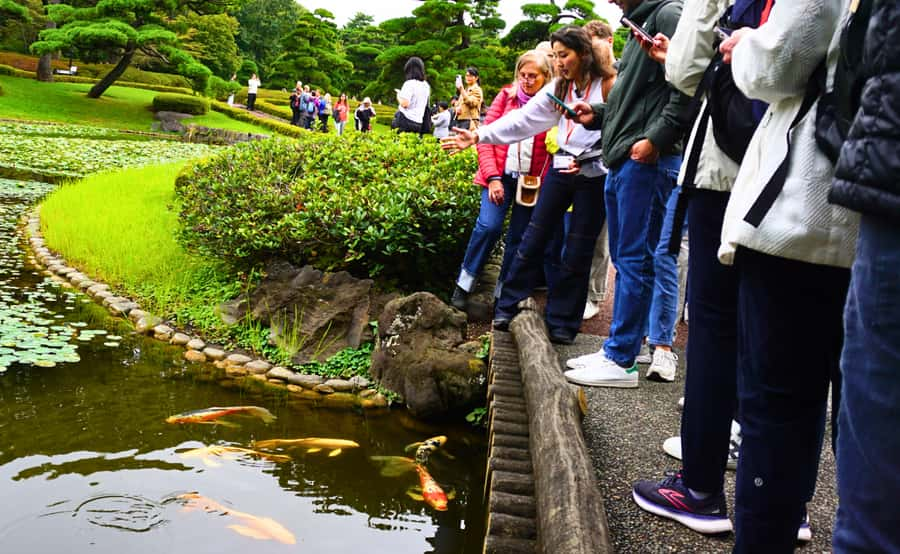
The Koi are a small but distinctive part of the route. The experience points out a breed that can only be found here. This is the sort of detail that can turn an ordinary pond stop into a memorable one, especially if you enjoy gardens, animals, or Japanese cultural traditions.
Do not expect the Koi alone to justify the price. Their value is in the setting and the explanation around them. The same is true of the trees and garden views. The guide makes these features more meaningful by explaining where they fit into the palace grounds and Japanese culture.
A guide-led conversation, not just a walk
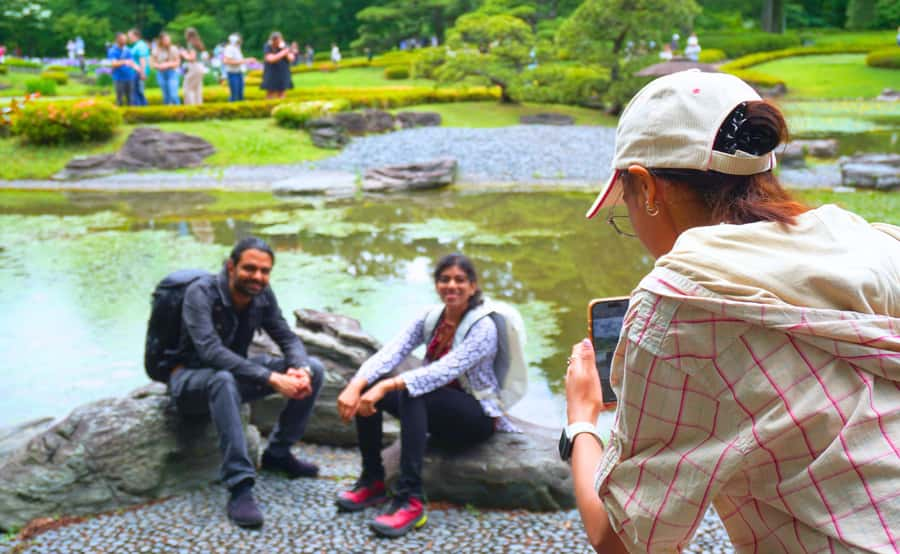
The strongest part of this experience is likely to be the guide’s role. The featured guide, Nicolas, is described as Franco-Japanese, and the supplied information says he discussed Japanese mythology, the language, Japan in general, and the imperial family during one small-group visit.
That range is useful because the palace grounds raise questions beyond dates and architecture. You may want to ask how Japanese terms work, how mythology relates to national identity, or how the imperial family fits into the country’s story. A guide who welcomes those questions can make the walk feel personal rather than fixed and rushed.
The group described for Nicolas’s tour had five people. Group size can vary, since no fixed maximum is provided, but a small group is a real advantage here. You can hear explanations more clearly, ask follow-up questions, and spend less time waiting for a large crowd to gather.
One particularly pleasant possibility is that a good conversation continues after the formal visit. The information describes the guide and group eating together afterward. That is not presented as a guaranteed part of the tour, so do not book expecting a meal. Still, it suggests the experience can be social as well as instructional when the group and guide click.
Is $40 a fair price?
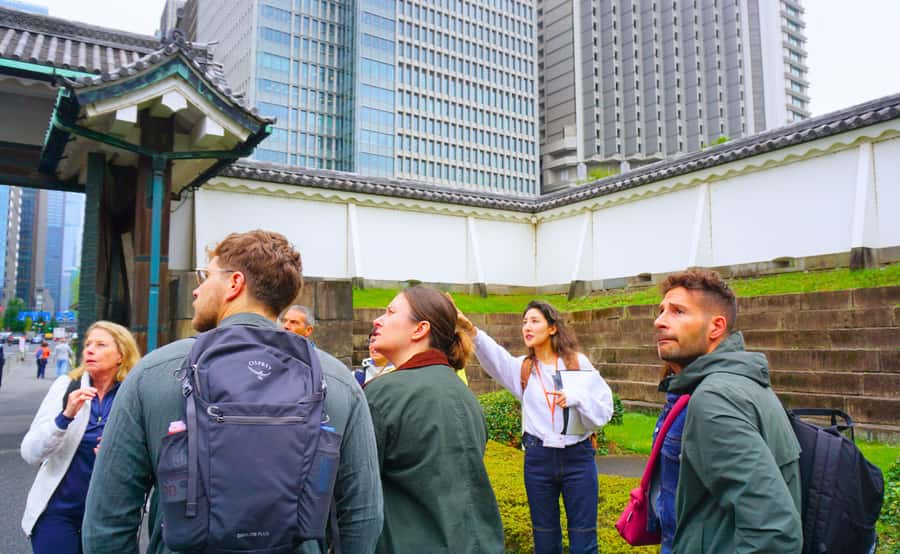
At $40 per person, this is not the cheapest way to see the Imperial Palace grounds. You can visit many public areas in Tokyo without paying for a guide. The price pays for interpretation, organization, and the chance to ask questions in a small group.
I think the value depends on your goals. If you already know Edo-period history and prefer to wander alone, you may find the fee hard to justify. The gardens and outer grounds can be appreciated without a paid tour.
If you want to understand how the old castle relates to Japan’s political development, the price is more reasonable. You are paying for the connections between the gate, barracks, ruins, garden, Koi, and modern imperial story. That context is difficult to get from a quick self-guided walk.
The language issue affects the value directly. The title calls this an English-guide experience, but the details list French, and the supplied guide information also identifies French as the language. If you need English, confirm before booking. If French suits you, the experience may be a strong match, particularly if you enjoy discussion rather than a scripted explanation.
Who will enjoy this Imperial Palace walk
I would point this tour toward several types of visitors:
- You want a clear introduction to Japan’s political and imperial history.
- You enjoy walking through historic places instead of only viewing exhibits.
- You like asking questions about culture, language, mythology, and daily life.
- You prefer a small group to a large sightseeing crowd.
- You want palace gardens and ruins with useful photo stops.
- You are staying near Tokyo Station or Otemachi Station and want a convenient central activity.
Families with older children may also appreciate the mix of open space, castle remains, gardens, and Koi. The provided information does not give an age minimum or accessibility details, so check those points directly if they matter for your group.
This is less suitable if you want to enter the inner palace, see a complete castle building, or spend the visit indoors. It is also a poor fit if you need a confirmed English tour and do not settle the language question in advance.
Photo opportunities and the pace of the visit

The experience specifically includes good spots for photos. The most useful pictures will likely come from the contrast between formal gates, old stonework, garden scenery, palace remains, and water with Koi.
The photo value is not just about taking attractive pictures. These views help you remember the layout of the former complex. A miniature palace structure also gives you a visual reference for what the larger site once looked like.
No tour duration is provided, so you should not build a tightly timed connection around it. The tour starts and ends near the same fountain park, but the walking time inside the grounds is not stated. Ask the operator for the expected length if you have a train reservation, restaurant booking, or another timed activity afterward.
Because the visit is outdoors, the weather will shape the experience. On a clear day, the gardens and photo stops should be easier to enjoy. In rain, the historical explanations still have value, but the walk may feel less comfortable. The official advice is simple: dress for the conditions and be ready for the tour to operate in either good or bad weather.
Booking details that matter
The experience costs $40 per person and offers a reserve-now, pay-later option, which can help if you are still arranging a Tokyo schedule. You can cancel up to 24 hours in advance for a full refund.
The meeting point is not the inner palace entrance. Start at the Starbucks beside the fountain in Wadakuramon Fountain Park, near Tokyo Station and Otemachi Station. Your guide should have the Sunrise Adventure sign.
Smoking, drones, alcohol, drugs, littering, and skateboards are not allowed. These rules fit the formal public setting and the need to keep the palace grounds quiet and protected.
The most important booking step is still language confirmation. The experience is presented under an English title, while the details say French. Nicolas is identified as a Franco-Japanese guide, but another guide may lead your departure. Ask Sunrise Adventure to confirm the exact guide language for your date.
Should you book this Tokyo Imperial Palace tour?
Book it if you want the former Edo Castle grounds explained by a guide who can connect the ruins to Japan’s wider story. The strongest features are the small-group conversation, the palace history, the garden setting, and the chance to ask about subjects such as mythology, language, and the imperial family.
Skip it if your priority is entering the inner palace or seeing a complete castle. You should also skip it, or confirm carefully first, if you require English, because the supplied details list French despite the English tour title.
For the right audience, $40 is a fair price for context in one of Tokyo’s most important historic places. Just arrive early at the fountain park, dress for the weather, and settle the guide language before booking.
FAQ
Where does the tour begin?
Meet at the Starbucks near the fountain in Wadakuramon Fountain Park. The park is a five to ten-minute walk from Tokyo Station or Otemachi Station.
How do I identify the guide?
The guide will be near the fountain and holding a sign with the Sunrise Adventure logo.
Which stations are closest to the meeting point?
Tokyo Station and Otemachi Station are both listed as nearby stations.
Does the tour enter the inner Imperial Palace?
No. Access to the inner palace is not included.
Does the tour visit the former Edo Castle grounds?
Yes. The route includes the former base of Edo Castle, which dates back more than 350 years.
Is the main castle still standing?
No. The main castle no longer exists. The guide explains why, and the tour includes a miniature structure of the former palace.
What can I see in the palace grounds?
The tour includes oriental gardens, palace ruins, former soldiers’ barracks, special Koi, trees from different prefectures of Japan, and photo locations.
Is the tour in English or French?
The title identifies an English guide, but the detailed language information lists French. Confirm the language with Sunrise Adventure before booking.
What happens if I arrive late?
If you do not arrive within 10 minutes of the meeting time, the tour may start without you.
Can I cancel for a refund?
You can cancel up to 24 hours in advance for a full refund.
Fresh palace tours around Tokyo
- Tokyo: Imperial Palace East Gardens Walking Tour★ 4.8 · 353 reviews
- Tokyo walking tour around Imperial Palace and Tokyo Station★ 5.0 · 3 reviews
- Tokyo: Imperial Palace with Nostalgic Alley Kagurazaka tour★ 4.3 · 8 reviews
- Tokyo: Pvt. Tour – Edo Castle & Imperial Palace East Gardens★ 4.8 · 63 reviews
- Tokyo: Edo Castle Ruins & Imperial Palace East Garden Tour★ 4.4 · 13 reviews
- Tokyo: Imperial Palace East Gardens and Tokyo Station Tour★ 5.0 · 16 reviews
- Tokyo: Edo Castle & East Garden of the Imperial Palace Tour★ 4.7 · 112 reviews
- Tokyo: Edo Castle and Imperial Palace Guided Walking Tour★ 5.0 · 6 reviews
Royal Palace Tours: the shortlist.


Royal Palace Expert Guided Tour with Skip-the-Line
Read our review →
Dubai To Abu Dhabi: Grand Mosque, Royal Palace & Etihad Towers
Read our review →
Madrid Essential: Historic Center, Plaza Mayor & Royal Palace
Read our review →

Abu Dhabi Day-Trip Grand Mosque, Royal Palace & Lunch
Read our review →
Louvre Entry & Etihad Tower/Royal Palace Options
Read our review →This visit also appears in