
Review · SEOUL
Seoul: Deoksugung Palace Heritage Walking Tour
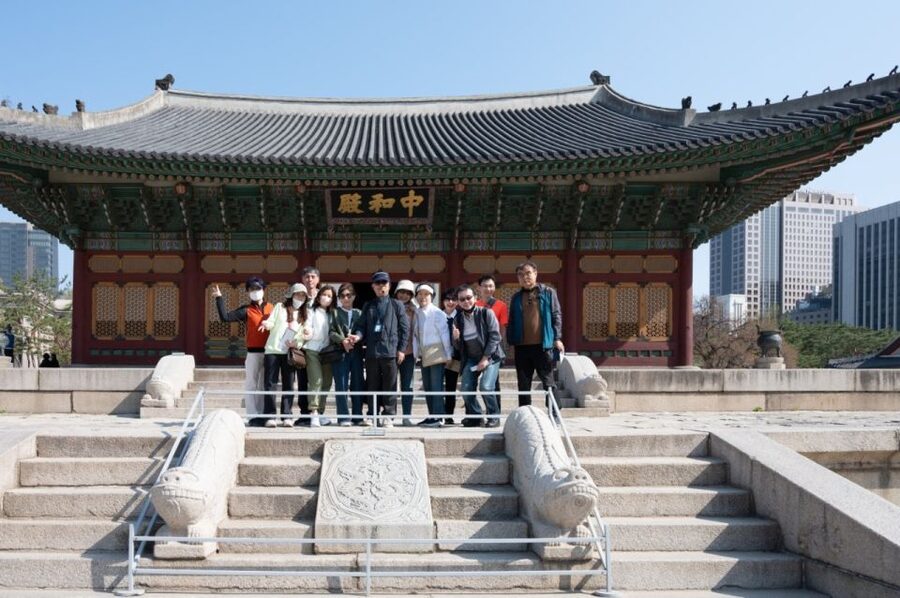
Deoksugung Palace is where old Korea and the modern world meet. You’ll move from royal courtyards to former missionary sites, a Russian diplomatic outpost, preserved homes, and the monuments of Gwanghwamun Square. I like that this tour explains not just what you see, but why Seoul changed so sharply around these places. I also like the route’s mix of major sights and quieter streets.
The main drawback is simple: this is a real walking tour, not a hop-on, hop-off outing. Three hours on foot, with a café break but no included food or transportation, will suit curious walkers best. The $56 price is fair if you want a guide to connect the dots, less so if you only want palace entry.
Key points to know
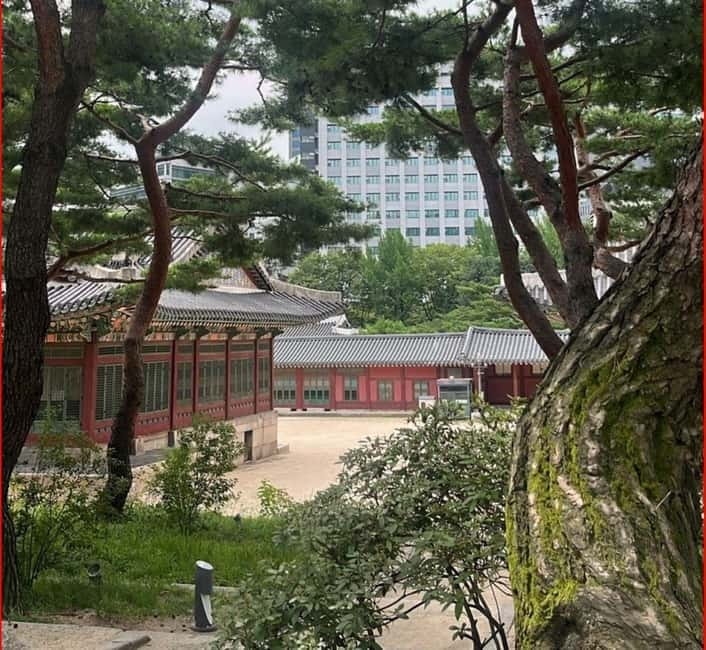
- Deoksugung Palace sets the scene: Learn how a royal relative’s residence became a principal palace during the Japanese invasion of 1592.
- Jeongdong-gil adds modern Korean history: Pass Paichai Academy, Chungdong First Methodist Church, the Russian Embassy, and Gyeonggyojang.
- Donuimun Museum Village preserves everyday Seoul: See homes and buildings representing the 1900s through the 1980s.
- Gwanghwamun Square explains national symbols: Your guide interprets the statues and monuments instead of leaving you to guess at their meaning.
- Cheonggyecheon finishes the walk well: Follow Seoul’s restored stream, once a drainage ditch, now lined with art, cafés, restaurants, and occasional festivals.
- You can choose your touring style: Shared and private options are available, with English and Korean-speaking guides.
Why this route tells Seoul’s story so well
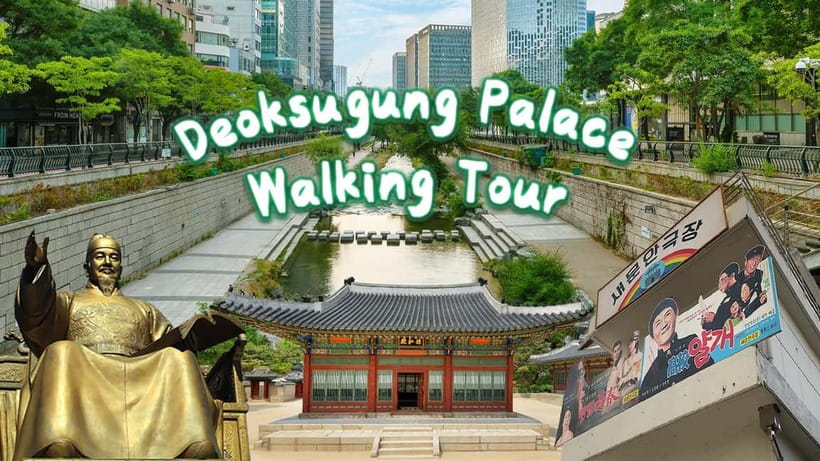
Many Seoul sightseeing routes jump between grand palaces, shopping streets, and modern towers. This one works differently. It follows a fairly compact stretch of central Seoul and uses the walk between sights to explain how Korea moved from a royal state into a country shaped by foreign contact, occupation, political change, and rapid urban growth.
That gives the tour a useful sense of order. Deoksugung Palace introduces the late Joseon Dynasty. Jeongdong-gil shows where foreign missionaries and embassies took root. Donuimun Museum Village brings the story into ordinary homes and neighborhood buildings. Gwanghwamun Square presents national memory in public form, and Cheonggyecheon shows how Seoul has reshaped an old urban problem into a pleasant civic space.
I especially like the balance between famous sights and places you might miss on your own. You get a palace, but you also get a church, an academy, an embassy, a former political site, preserved houses, and a stream. The route gives you more than royal architecture.
More Gyeongbokgung Palace Tours around Seoul:
- Best Seoul City Tour (Gyeongbokgung Palace,Insadong,Namsan Tower)
★ 5.0 · 1,647 reviews - Seoul City Sightseeing Tour Including Gyeongbokgung Palace, N Seoul Tower, and Namsangol Hanok Village
★ 5.0 · 1,423 reviews - Seoul Half-Day City Highlight, Palace Tour with Hanbok
★ 4.9 · 764 reviews
Meeting at City Hall Station
The meeting point is in front of the Deoksugung Palace ticket office, near Exit 2 of City Hall Station. That is a practical starting point because you begin beside one of Seoul’s major historic sites rather than spending the first part of the tour finding it.
You’ll want comfortable shoes. The schedule includes palace walking, street walking, a twenty-minute walk between stops, and a final half hour beside Cheonggyecheon. The pace should be manageable for most people who are used to city walking, but the tour is not designed for someone hoping to remain seated.
The experience lasts three hours. Since no transportation is included, plan to arrive at the meeting point on your own and arrange your onward journey from the Cheonggyecheon finish at 1 Cheonggyecheon-ro in Jongno-gu. Food and drinks are also your responsibility, though the route includes a short café stop.
Deoksugung Palace and the late Joseon court
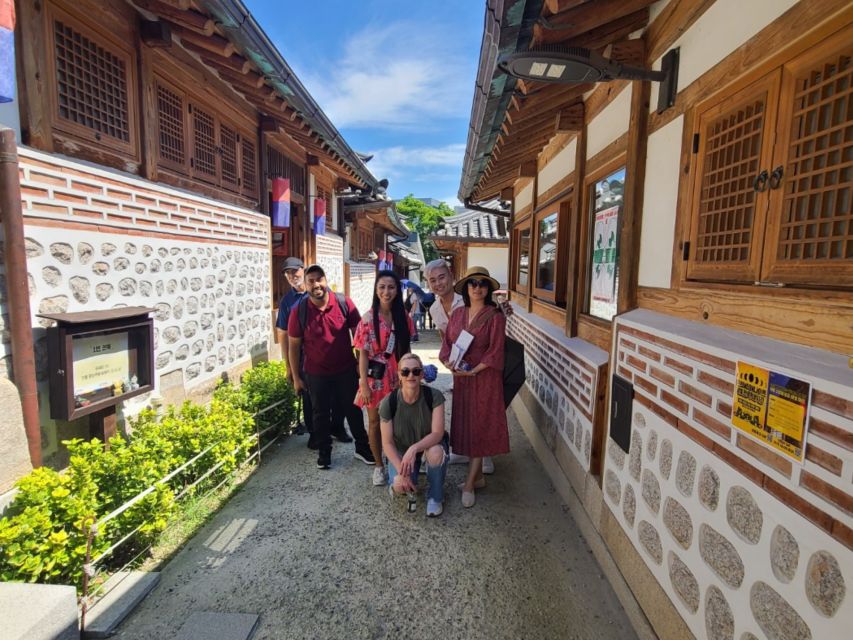
The first main visit lasts about 45 minutes. Deoksugung is an excellent place to begin because its story reaches across several periods of Korean history.
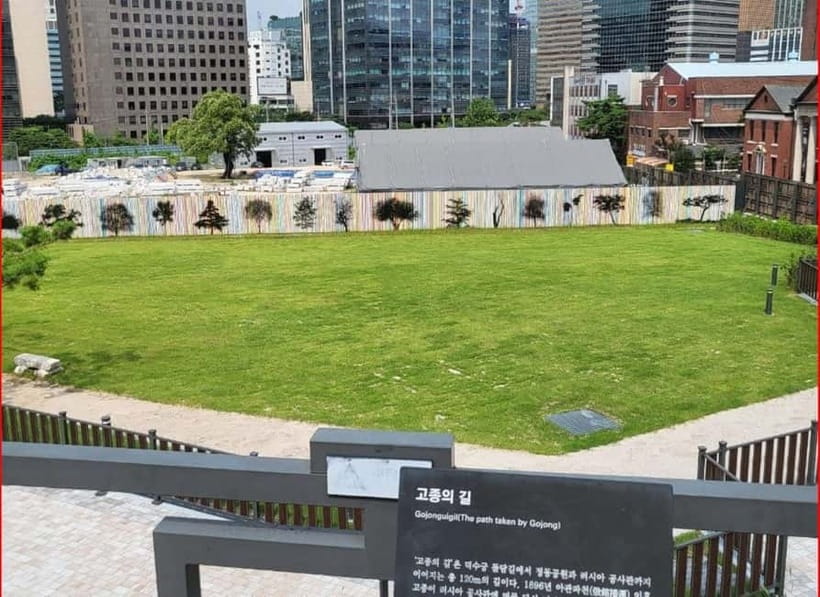
The site began as a residence for a royal relative in the late 14th century. During the Japanese invasion of 1592, it became a principal palace. That change alone tells you something about the upheaval of the time. A private royal residence was drawn into the center of national affairs.
Your guide will use the palace to explain the Joseon Dynasty’s roughly 500-year legacy, with special attention to its later period. You’ll hear about the court at a time when Korea was facing pressure from outside powers and beginning to open toward the wider world.
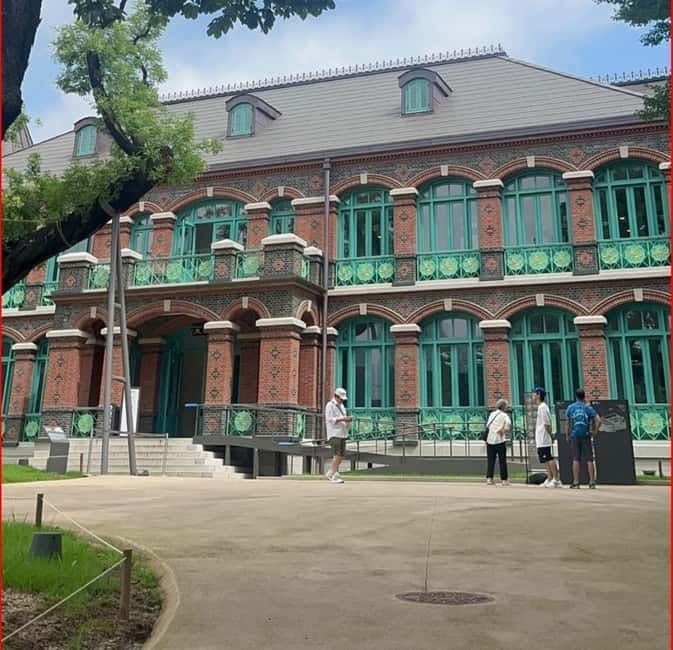
Deoksugung is also useful for showing Korean and Western elements together. The palace is not only a preserved royal compound. It reflects the period when imported ideas, diplomatic contact, and new building styles began to sit alongside older court traditions.
I would listen closely here rather than rushing to photograph every gate and courtyard. The value of this stop comes from the explanation. Without context, the palace can look like a series of elegant buildings. With a guide, it becomes a place where Korea’s political and cultural direction began to shift.
Jeongdong-gil, where foreign influence took root
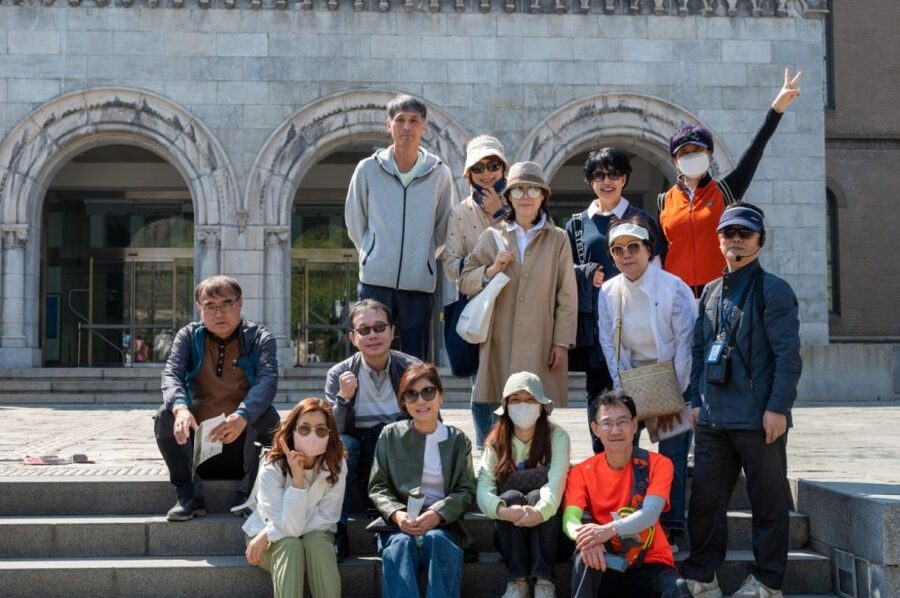
After the palace, the tour moves through Jung-gu and along Jeongdong-gil. This portion lasts about 20 minutes and is one of the route’s strongest features.
Jeongdong-gil was the original location of important foreign missionary institutions and several foreign embassies. It offers a clear look at the outside forces that helped shape modern Korea. The street is not simply a scenic connection between larger attractions. It is part of the story.
You’ll pass Paichai Academy, Chungdong First Methodist Church, the Russian Embassy, and Gyeonggyojang. Each place points to a different part of Korea’s encounter with foreign education, religion, diplomacy, and politics.
A guide matters here because some of these locations may not explain themselves. A building can appear quiet and ordinary while carrying an important connection to Korea’s modern transformation. The commentary turns a street walk into a lesson about how new institutions entered the capital.
This section also gives the tour a more local feel. You are not confined to palace grounds or formal squares. You are walking through the city, seeing how history sits beside daily life. Keep your eyes open between the named stops, since the route’s character comes partly from moving through the neighborhood itself.
More Palace Walking Tours around Seoul:
- Seoul: Gyeongbok Palace and Bukchon Hanok Walking Tour
★ 4.8 · 157 reviews - Venice: Doge’s Palace and St Mark’s Basilica Walking Tour
★ 4.4 · 6,291 reviews - Split: Old Town and Diocletian Palace Walking Tour
★ 4.9 · 4,727 reviews - Walking Tour of Split and Diocletian’s Palace
★ 5.0 · 2,588 reviews
A short café pause, not a meal stop
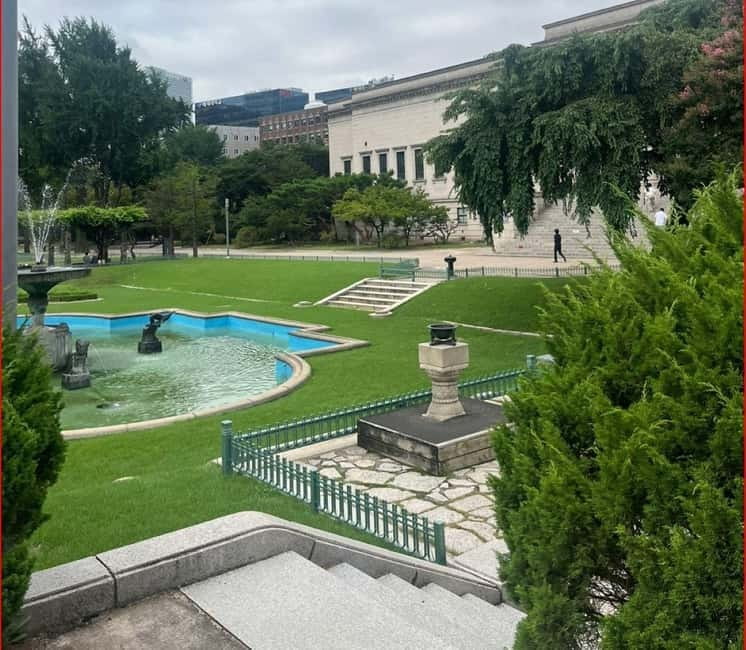
The schedule includes about 15 minutes at a local café for coffee or tea. This is a welcome pause after the palace and street walking, but it is not a meal break.
Food and drinks are not included in the tour price. If you need more than a quick drink, eat before the tour or plan a proper meal afterward. The short stop is best viewed as a chance to rest, ask follow-up questions, and continue the conversation with your guide.
This pause may also help if you choose the private option. The tour allows room for questions, and past feedback has praised the guides for handling subjects beyond the buildings themselves. Mitch, one guide named in a particularly warm account, was praised for answering questions about Korean work culture and the school system as well as the historic sites.
That detail matters. You are not limited to memorized dates and architectural labels. If your guide is able to offer the same broad discussion, the café stop becomes a useful moment to connect Korea’s past with life today.
Donuimun Museum Village and everyday Seoul
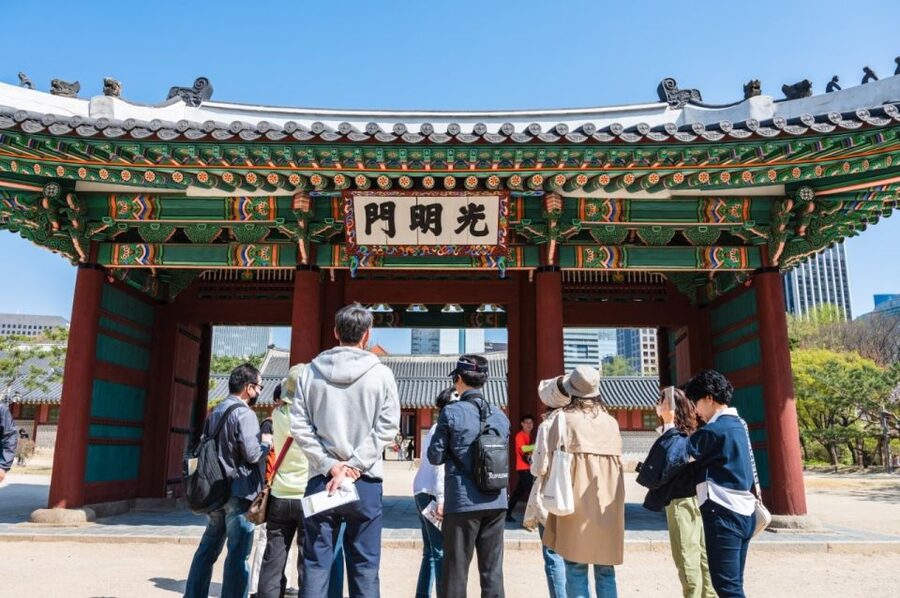
The next stop is Donuimun Museum Village, with about 20 minutes for a guided visit. Founded in September 2017, the outdoor village preserves 40 of 63 houses in the historic Saemunan district.
The buildings represent Seoul from the 1900s through the 1980s. That time span makes this stop different from Deoksugung. The palace shows royal life and national events. Donuimun shows the changing shape of the city through homes and neighborhood buildings.
You’ll see examples of architecture from several decades rather than one carefully preserved historical period. That makes the village useful for understanding how Seoul developed before the city’s rapid modernization reshaped so much of its older fabric.
The allotted time is fairly short, so expect an introduction rather than an exhaustive museum visit. Your guide will point out the key features and explain why the district matters. If you enjoy old homes, urban development, or the small details of daily life, this stop may be one of the most rewarding parts of the walk.
It is also a good reminder that history does not belong only to royal families and famous leaders. Houses, streets, and ordinary neighborhoods can reveal how a city changed.
Gwanghwamun Square and the government corridor
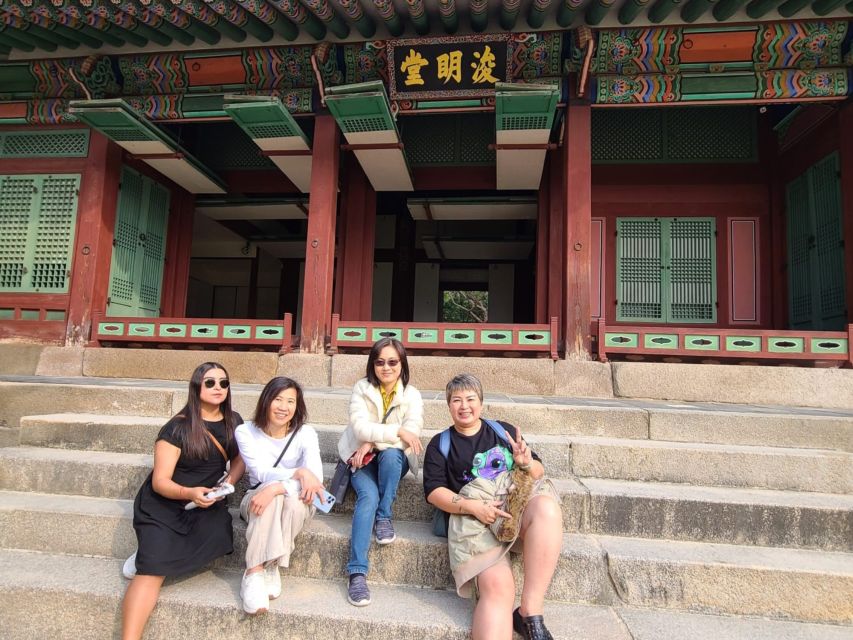
After another walk of about 20 minutes, you reach Gwanghwamun Square for a 30-minute guided visit. This is one of Seoul’s major public spaces and a central part of the city’s symbolic core.
The square is often associated with grand statues and national monuments, but the important question is what those symbols represent. Your guide will explain the stories behind them and connect the square to key moments in Korea’s journey.
The route also highlights Seoul’s government corridor. This helps you read the city beyond its tourist sights. The area is not only a place for photographs. It represents the relationship between public memory, national leadership, civic identity, and the modern state.
I like having this stop after Donuimun. First, you see how ordinary neighborhoods changed. Then, you see how the nation presents its history in a major civic space. The contrast gives the tour a wider reach.
Gwanghwamun Square can feel more formal and open than the palace lanes and neighborhood streets. If you are sensitive to sun or weather, keep that in mind. The guide’s interpretation is the main reason to visit this part with the tour, since the statues and monuments carry meanings that are easy to miss when viewed alone.
Cheonggyecheon, from drainage ditch to city retreat
The final stop is Cheonggyecheon, where you’ll spend about 30 minutes walking and sightseeing. The stream was once an unsightly drainage ditch. It has since been renovated into one of central Seoul’s major public spaces.
Today, the stream is lined with sculptures, restaurants, and cafés. Festivals are held there at various times of year. It is a pleasant place to finish because the setting becomes more relaxed after the palace, historic institutions, and formal monuments.
This final stop also adds a modern city lesson. Seoul’s past is not only preserved in old buildings. It is also visible in decisions about urban design and public space. Cheonggyecheon shows how a difficult part of the city was remade for walking, art, and leisure.
The tour ends at 1 Cheonggyecheon-ro in Jongno-gu. Since transportation is not included, check your plans before setting out. You may want to continue along the stream, find a café or restaurant, or make your own way to another part of central Seoul.
What the $56 price gets you
At $56 per person, this tour is priced as a guided history walk rather than simple admission to a palace. The fee includes an English-speaking historical guide and entrance tickets, including pre-booked admission to Deoksugung Palace and Donuimun Museum Village.
That can be good value if you want help understanding the connections between the stops. A palace ticket alone would not explain why Jeongdong-gil mattered, how foreign institutions shaped modern Korea, or why Gwanghwamun’s monuments carry such weight.
The value is lower if you prefer to move quickly, take photographs, or read at your own pace. You are paying for interpretation and conversation, not transportation, meals, or a long private vehicle transfer.
You can choose a private group or a shared group adventure. A private format should suit people who want more control over questions and pace, while a shared group may offer a livelier outing at the same basic structure. The exact starting times depend on availability.
The tour also offers free cancellation up to 24 hours before departure and a reserve-now, pay-later option. If the minimum number of participants is not reached, the activity may be canceled, with an alternative date or full refund offered by email one day before departure.
Who will get the most from this walk
I would choose this tour if you want historical context and prefer to learn while walking through the city. It is especially useful for a first Seoul visit when you want to understand how the Joseon court, foreign contact, modern institutions, public monuments, and urban renewal fit together.
It suits visitors who ask questions. The strongest praise has focused on the guides’ ability to explain both the official sites and wider subjects such as Korean work culture and education. If you enjoy conversation as much as sightseeing, that is a real advantage.
It may be less suitable if you want a palace-only visit, a relaxed café crawl, or a tour with minimal walking. The schedule is full, the café break is brief, and food and transportation are not included.
Should you book it?
Book this tour if you want Seoul explained as a living city rather than a set of isolated attractions. The combination of Deoksugung Palace, Jeongdong-gil, Donuimun Museum Village, Gwanghwamun Square, and Cheonggyecheon gives you several different views of Korea’s past and present.
I would be most inclined to book the private option if you have strong questions or limited time. Choose the shared format if you want a structured introduction at a lower overall group cost. Either way, wear good walking shoes, arrive at City Hall Station early, and expect the guide’s stories to be the main reason this route is worth the $56.
FAQ
Where does the tour begin?
The meeting point is in front of the Deoksugung Palace ticket office, near Exit 2 of City Hall Station.
Where does the tour finish?
The tour finishes at 1 Cheonggyecheon-ro in Jongno-gu, Seoul, beside Cheonggyecheon.
How long does the experience last?
The walking tour lasts three hours.
What languages are available?
The tour is available with English or Korean-speaking guides.
Is a private tour option available?
Yes. You can choose a private group or a shared group experience.
Are entrance tickets included?
Yes. The experience includes entrance tickets, including admission to Deoksugung Palace and Donuimun Museum Village.
Are food and drinks included?
No. Food and drinks are not included. The schedule does include a short café break for coffee or tea.
Do I need to arrange transportation?
Yes. Transportation is not included. You are responsible for reaching the meeting point and arranging transportation after the tour.
What should I bring?
Bring comfortable shoes because the experience is a walking tour. You should also have an instant messaging method available for emergency contact and location finding on the day of departure.
More royal history around Seoul
- Seoul: Colonial History Tour with Prison&Palace, Market Food
★ 5.0 · 5 reviews - Madrid Essential: Historic Center, Plaza Mayor & Royal Palace
★ 5.0 · 6,416 reviews - Venice’s Best: Basilica, Doge’s Palace, Gondola & History Gallery
★ 4.5 · 2,478 reviews - Tokyo: Imperial Palace and Shogun Historical Walking Tour
★ 5.0 · 2,251 reviews
Fresh palace tours around Seoul
- Seoul: UNESCO Sites tour: Palace, Shrine & Bukchon Village★ 4.8 · 26 reviews
- Seoul: UNESCO Palace and Street Foods Guided Tour★ 5.0 · 6 reviews
- Seoul: Royal Palace Morning Tour including Cheongwadae★ 4.5 · 12 reviews
- Seoul: Gyeongbok Palace and Bukchon Hanok Walking Tour★ 4.8 · 157 reviews
- Seoul: Hanbok Photo Tour at Gyeongbokgung Palace★ 5.0 · 9 reviews
- Seoul: Professional Hanbok Photography at Gyeongbok Palace★ 4.9 · 172 reviews
- Seoul: Gyeongbokgung Palace Half Day Tour★ 4.9 · 111 reviews
- Seoul: Gyeongbokgung Palace Tour & Lunch at Authentic Market★ 4.5 · 2 reviews
Gyeongbokgung Palace Tours: the shortlist.
Best Seoul City Tour (Gyeongbokgung Palace,Insadong,Namsan Tower)
Read our review →
Seoul City Sightseeing Tour Including Gyeongbokgung Palace, N Seoul Tower, and Namsangol Hanok Village
Read our review →
Seoul Half-Day City Highlight, Palace Tour with Hanbok
Read our review →
Professional Hanbok Photography at Gyeongbok Palace
Read our review →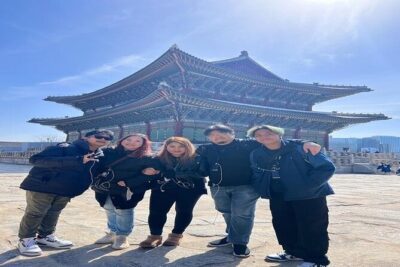
This visit also appears in