
Review · TOKYO
Tokyo Castle & Imperial PalaceーShogun Walking Tour
Edo Castle once covered an enormous part of central Tokyo, and this tour helps you see the fortress that is easy to miss beneath today’s city. You’ll walk past moats, gates, stone walls, palace grounds, and gardens while learning how the shogun ruled Japan and how the imperial family carried its tradition into the modern age. The castle ruins are the main surprise: there is far less standing architecture than many people expect, but the scale and defenses become clear when a guide points out what you are seeing.
I like the small group of up to 10, which makes it easy to ask questions and keep close to the guide. I also like the balance between political history and quiet garden time, especially at Ninomaru Garden, where trees from across Japan and special koi add a calm finish to the walk. The main consideration is that much of the two-hour tour is outside, and the Imperial Palace grounds include slopes and sections where you need to walk on foot.
Key points to know before you book
- Edo Castle is mostly a story of walls, moats, gates, and scale, not a visit to a preserved castle building.
- The group is limited to 10 people, giving you a better chance to hear the guide and ask questions.
- English is the only tour language, with no Japanese-language support provided.
- The gardens offer a welcome change of pace, with seasonal plants, old trees, stonework, and special koi.
- Guides set the tone of the experience, with Anju, Fuma, Yuka, Tomo, Keiko, Kosei, and others praised for clear explanations and warm conversation.
- The $23 price is reasonable for a guided introduction, especially if you want context that signs and scenery alone cannot provide.
Why Edo Castle makes sense as a first Tokyo history stop
Tokyo can feel modern at first glance: trains, towers, glass offices, and crowds moving in every direction. The Imperial Palace grounds offer a different view. Here, the city’s political story begins with a fortified castle and the long rule of the Tokugawa shoguns.
Edo Castle was once the largest castle in Japan. It was the headquarters of the shogun, the military ruler who controlled Japan during the long Edo period. That period brought roughly 260 years of relative peace under the Tokugawa government, a striking contrast to the warfare that came before it.
The walk does not take you through a fully restored castle interior. Instead, you learn to read the surviving pieces: a moat that forced attackers into a narrow approach, a gate built to control movement, or a stone wall that shows how much labor and planning went into the fortress.
This is where a guide earns the fee. Without explanation, a large wall can look like simply an old wall. With context, it becomes part of a layered defense system and a clue to the power of the shogun.
The tour also connects Edo Castle to the present Imperial Palace. That link gives the walk more weight than a simple samurai sightseeing outing. You are not only learning about warriors and castles. You are also considering how Japan’s imperial institution, said to stretch back 2,600 years, has survived changes in government, war, modernization, and society.
More Palace Walking Tours around Tokyo:
- Tokyo: Imperial Palace and Shogun Historical Walking Tour
★ 5.0 · 2,251 reviews - Tokyo: Imperial Palace Japanese History Walking Tour
★ 4.9 · 987 reviews - Tokyo: Imperial Palace and Shogun Walking Tour
★ 4.9 · 935 reviews
Meeting at Wadakura Fountain Park
The meeting point is in front of Starbucks Coffee Kōkyo Gaien Wadakura Fountain Park Store, at 3-1 Kōkyo Gaien, Chiyoda City, Tokyo. Look for a guide holding a sign marked Local Guide Stars.
This is a practical place to begin because you are already near the Imperial Palace grounds. Still, allow enough time to find the correct Starbucks. Tokyo has many branches, and the full name, Kōkyo Gaien Wadakura Fountain Park Store, matters.
The walk returns to the same location after about two hours. That makes the tour easy to fit into a morning or afternoon plan. You can continue toward Tokyo Station, arrange lunch nearby, or use the experience as an introduction before exploring another part of central Tokyo.
Sakurada Tatsumi Yagura and the first look at the defenses
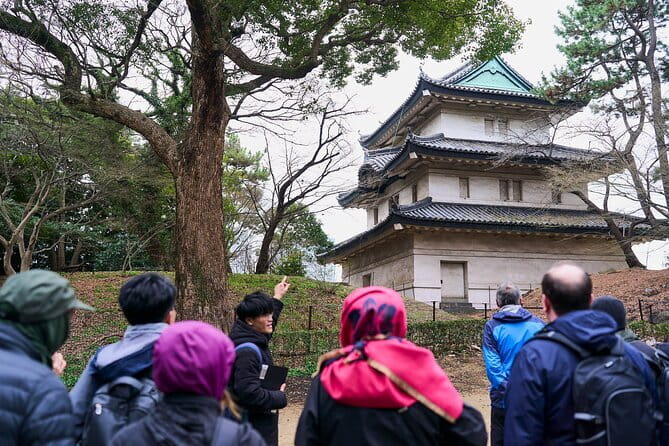
The first stop is Sakurada Tatsumi Yagura, where the guide pauses for photographs and an introduction to the castle’s protective layout. A yagura is a fortified turret, and this one helps you picture how the castle watched over approaches to the inner grounds.
The stop itself is short, about five minutes, but it sets up the rest of the walk. You begin looking for function rather than decoration. Why is the wall placed here? How did water, stone, gates, and narrow routes work together?
If you are hoping to step inside a grand castle keep, adjust your expectations now. This is an outdoor history walk among surviving features, not a museum tour through furnished rooms. The reward comes from seeing how the pieces fit together.
Ote-Mon Gate and the logic of controlled entry
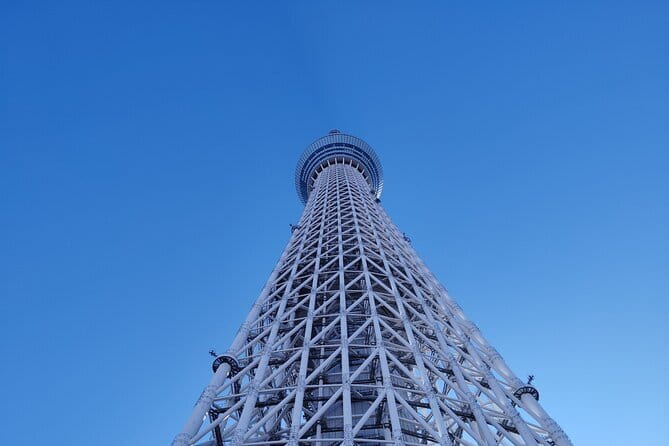
Ote-Mon Gate receives about 15 minutes, giving the guide more time to explain how people entered the castle and how access could be controlled. Large gates were not just ceremonial entrances. They were part of a defensive system designed to slow, inspect, and direct anyone approaching the heart of power.
This is one of the better places to ask questions. You can connect the physical structure to the social order of the Edo period: the shogun at the center, retainers and officials arranged around him, and strict rules governing movement and rank.
The gate also provides a useful reminder that samurai history was not only about battles. Much of the shogun’s power depended on administration, loyalty, ceremony, and control. A good guide brings those less dramatic parts of the era into the story.
Guides such as Anju, Fuma, and Kosei have been singled out for making these details easy to follow. Kosei, in particular, has been appreciated for comparing Japanese culture with life abroad, which can help you connect old customs to modern Japan.
More Royal Palace Tours around Tokyo:
- Tokyo Castle & Imperial PalaceーShogun Walking Tour
★ 5.0 · 724 reviews - Tokyo: Imperial Palace East Gardens Walking Tour
★ 4.8 · 353 reviews - Tokyo: Imperial Palace, Sensō-ji Temple, & Tokyo Tower Tour
★ 4.5 · 339 reviews - Tokyo: Edo Castle & East Garden of the Imperial Palace Tour
★ 4.7 · 112 reviews
The Imperial Palace grounds today
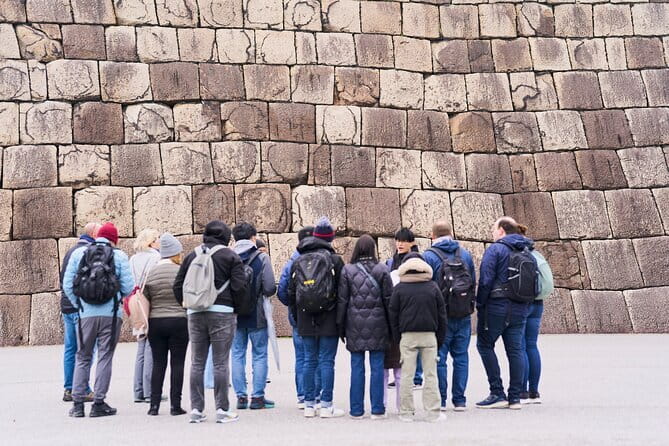
The walk then reaches the Tokyo Imperial Palace area, with about 20 minutes for explanation, sightseeing, and photographs. The palace is the residence of Japan’s emperor, but the experience here is mainly about the grounds and the surrounding history rather than a tour of private interior rooms.
That distinction is important. You are seeing an active symbol of Japan’s imperial system from public areas, not entering every part of the royal residence. The guide explains how the site changed from shogunal headquarters to imperial center and how the older castle remains still shape the modern compound.
This section can feel more spacious and formal than the gate area. The open grounds, broad views, old stonework, and carefully maintained surroundings give you a sense of the site’s importance. Take photographs, but keep listening. The visual setting is attractive, yet the political story is what makes it worth visiting.
The tour’s English-only format works best if you are comfortable following spoken explanations while walking. The guides are described as clear and patient, and several have been praised for answering questions rather than rushing through a prepared script.
Ninomaru Garden and a quieter side of Tokyo
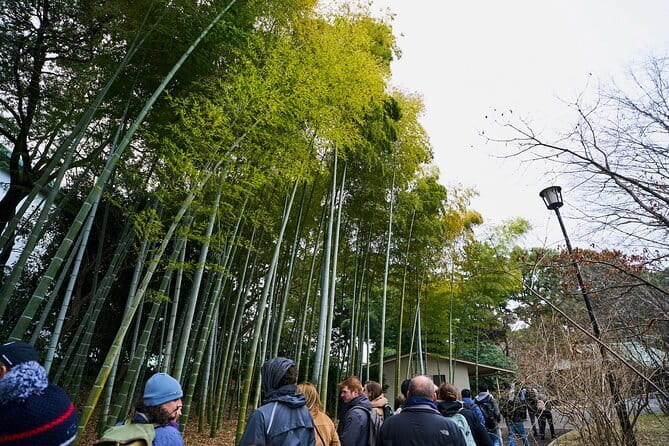
Ninomaru Garden receives about 15 minutes and offers a change from military structures and political history. The garden shows how the castle grounds were also places of order, beauty, and controlled leisure.
Expect seasonal plants, old trees, carefully arranged paths, and water features. Special koi are another small highlight. The garden does not require a long stop to make an impression, but it gives you time to slow down and notice details that can be lost in a city sightseeing schedule.
I especially like this part for visitors who want more than samurai facts. The garden helps explain the culture surrounding the castle, where nature was shaped with care and where visual balance mattered. It also provides a calmer setting for photographs.
The garden is not a separate full-day garden visit. Fifteen minutes goes quickly, so you should think of it as one chapter in a broader walk. If your main goal is extended garden photography, you may want extra time after the tour, if access and opening conditions allow.
Edo Castle ruins and the power of empty space

The Edo Castle ruins receive about 10 minutes, but their importance is greater than the brief stop suggests. The remains help you understand the size of the former castle and the distance between its key areas.
This is where imagination does much of the work. You may see foundations, walls, open ground, and traces of former structures rather than a complete castle. A guide can fill in the missing architecture with stories about the shogun, retainers, palace life, and the castle’s defensive layers.
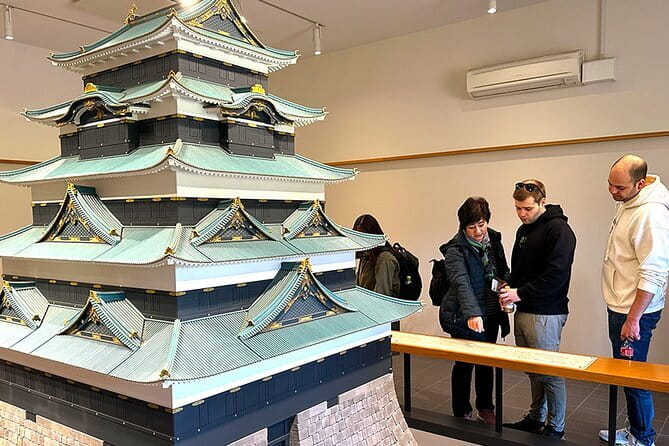
The tour also includes a view of a miniature structure representing part of the former palace. That model is useful because it gives you a clearer idea of what has disappeared. Instead of looking at a bare foundation and guessing, you get a visual bridge between the surviving site and the lost buildings.
If you have watched a drama about the Edo period, this section may sharpen your sense of place. The walk does not recreate a television set, but it connects the fictional world of shoguns and retainers with a real location in the middle of present-day Tokyo.
Imperial Palace East Gardens and the final walk
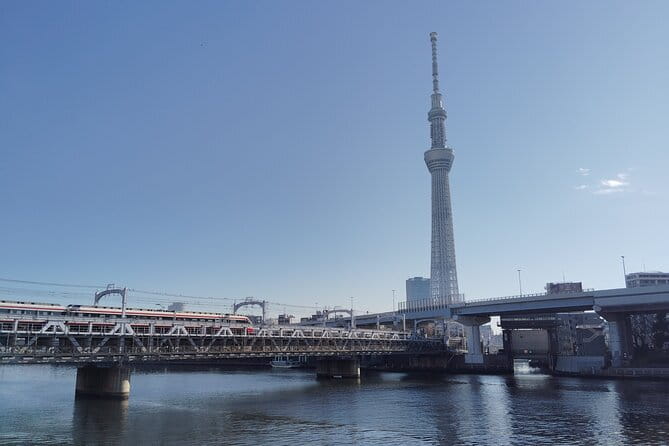
The Imperial Palace East Gardens receive about 20 minutes, the longest single garden stop on the route. This is a fitting final section because it brings together stonework, plants, water, palace remains, and views across the grounds.
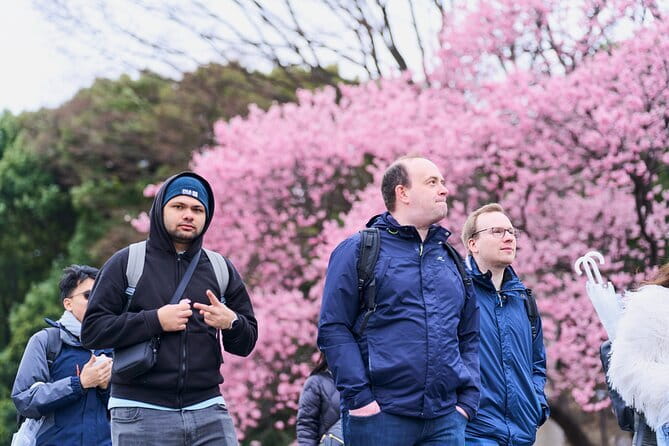
You can expect time for photographs and for the guide to point out trees from different parts of Japan. The special koi are another memorable detail, particularly for families and anyone who enjoys noticing small features along a walk.
The East Gardens also show why a two-hour route works well here. The palace grounds are large, and it would be easy to spend an entire day wandering without understanding what you are seeing. The guide gives you a framework, then leaves you with enough interest to return on your own.
Several guides, including Yuka, Tomo, Keiko, Mai, Koyo, and Kazuki, have been praised for keeping a comfortable pace. That matters because the route includes frequent stops but still covers a sizeable area. A good pace lets you hear the explanation without making the walk feel like a forced march.
What the $23 price really buys you
At $23 per person, this is an affordable guided experience for central Tokyo. The Imperial Palace grounds and East Gardens are important public spaces, and the tour’s value lies less in admission than in interpretation.
You are paying for two hours of structure, historical explanation, photographs, and the chance to ask questions in a small group. If you simply want to walk through the grounds, you may decide that the price is unnecessary. If you want to understand the castle’s defenses, the shogun’s role, and the change from Edo Castle to Imperial Palace, the fee is easier to justify.
One visitor felt the price was slightly high because the gardens may not carry a separate entrance charge. That is a fair point. You should book this for the guide and the storytelling, not because it bundles expensive entry tickets.
The rating is 4.7 from 1,068 reviews, and the praise is unusually consistent around guide quality, clear English, friendly personalities, useful answers, and a relaxed pace. Names that appear repeatedly include Anju, Fuma, Yuka, Tomo, Keiko, Kosei, and Kazuki. The guide assigned to your departure may differ, but the experience clearly depends on having someone who can make the remaining walls and gardens meaningful.
Practical details that affect your day
Wear shoes suitable for steady outdoor walking. The route includes slopes and places where you need to walk or go down on foot, even though wheelchairs are available within the Imperial Palace grounds. The tour is not fully indoors, so dress for the day’s weather and bring protection from sun or rain as needed.
A security check takes place when entering the Imperial Palace. Do not bring knives or alcohol. Photography is encouraged, so keep your camera ready, but remember that the tour moves between stops and is not built around long photo sessions.
The small group limit of 10 is a real advantage. You can hear more easily than in a large coach group, and the guide can respond to personal questions. It also means you should arrive at the stated meeting point on time, since a small walking group is less able to wait.
Free cancellation is available up to 24 hours in advance for a full refund, and you can reserve now and pay later. Those policies help if your Tokyo schedule is still shifting.
Who should book this Imperial Palace walk?
I would choose this tour if you are interested in samurai culture, the Edo period, Japanese government, imperial traditions, or the growth of Tokyo. It is also a good first or second-day activity because it gives you historical bearings before you visit other parts of the city.
Families may like the koi, gardens, gates, and short explanations at several different stops. People who have seen a samurai drama may find the political background especially useful, but you do not need prior knowledge to follow the walk.
You may want to skip it if you strongly prefer indoor museums, dislike walking outside in uncertain weather, or expect to enter a restored castle filled with original rooms. The route is about seeing remains and public grounds, then using a guide’s explanations to reconstruct what is gone.
My verdict on the Tokyo Castle and Imperial Palace walk
Book this tour if you want the Imperial Palace to become more than a photogenic wall, moat, and broad lawn. For $23, the small group, English guide, castle context, gardens, and connection between shogun rule and the modern imperial system offer good value.
Choose it especially if you want an approachable history lesson rather than a formal lecture. Anju, Fuma, Yuka, Tomo, Keiko, and other guides have been praised for warmth, patience, humor, and clear storytelling. Just come prepared for outdoor walking and remember that the castle itself survives mainly through ruins, defenses, and the shape of the grounds.
FAQ
How long does the Tokyo Castle and Imperial Palace tour last?
The tour lasts two hours and returns to the Starbucks Coffee Kōkyo Gaien Wadakura Fountain Park Store.
Where does the tour meet?
Meet in front of Starbucks Coffee Kōkyo Gaien Wadakura Fountain Park Store at 3-1 Kōkyo Gaien, Chiyoda City, Tokyo.
How do I identify the guide?
The guide holds a sign that says Local Guide Stars.
What language is the tour conducted in?
The tour is conducted in English only. Japanese-language support is not available.
How large is the group?
The tour is limited to 10 participants.
What places are included in the walk?
The route includes Sakurada Tatsumi Yagura, Ote-Mon Gate, Tokyo Imperial Palace, Ninomaru Garden, Edo Castle ruins, and the Imperial Palace East Gardens.
Is the Imperial Palace included?
The tour includes the Imperial Palace grounds and East Gardens. It does not state that private palace interiors are included.
Is there a security check?
Yes. You pass through a security check when entering the Imperial Palace. Knives and alcohol are not allowed.
Is the tour suitable for wheelchair users?
Wheelchairs are available and can be used within the Imperial Palace grounds. Some slopes and areas require walking or going down on foot.
Can I cancel the booking?
You can cancel up to 24 hours in advance for a full refund. You can also reserve now and pay later.
Fresh palace tours around Tokyo
- Tokyo: Imperial Palace East Gardens Walking Tour★ 4.8 · 353 reviews
- Tokyo walking tour around Imperial Palace and Tokyo Station★ 5.0 · 3 reviews
- Tokyo: Pvt. Tour – Edo Castle & Imperial Palace East Gardens★ 4.8 · 63 reviews
- Tokyo: Imperial Palace, the history of Japan (ENGLISH GUIDE)★ 5.0 · 77 reviews
- Tokyo: Imperial Palace with Nostalgic Alley Kagurazaka tour★ 4.3 · 8 reviews
- Tokyo: Edo Castle Ruins & Imperial Palace East Garden Tour★ 4.4 · 13 reviews
- Tokyo: Imperial Palace East Gardens and Tokyo Station Tour★ 5.0 · 16 reviews
- Tokyo: Edo Castle & East Garden of the Imperial Palace Tour★ 4.7 · 112 reviews
Royal Palace Tours: the shortlist.


Royal Palace Expert Guided Tour with Skip-the-Line
Read our review →
Dubai To Abu Dhabi: Grand Mosque, Royal Palace & Etihad Towers
Read our review →
Madrid Essential: Historic Center, Plaza Mayor & Royal Palace
Read our review →

Abu Dhabi Day-Trip Grand Mosque, Royal Palace & Lunch
Read our review →
Louvre Entry & Etihad Tower/Royal Palace Options
Read our review →This visit also appears in