
Review · TOKYO
Tokyo: Edo Castle & East Garden of the Imperial Palace Tour
Tokyo’s East Garden gives you a rare look at the ground where Edo Castle once ruled Japan. You walk past old stone walls, castle remains, ponds, and carefully tended gardens while your guide explains how shoguns governed the country and how the imperial family later used the site. The setting is calm, but the stories are anything but quiet.
I like the slow pace and the way strong guides such as Hitoshi, Naoko, Masahito, and Shigeru use pictures, stories, and cultural details to make the ruins easier to understand. I also like the clear meeting point at Wadakura Fountain Park and the chance to see the garden’s famous koi. The main drawback is simple: you do not enter the Imperial Palace itself, and the garden is closed on Mondays and Fridays.
Key points to know before you book
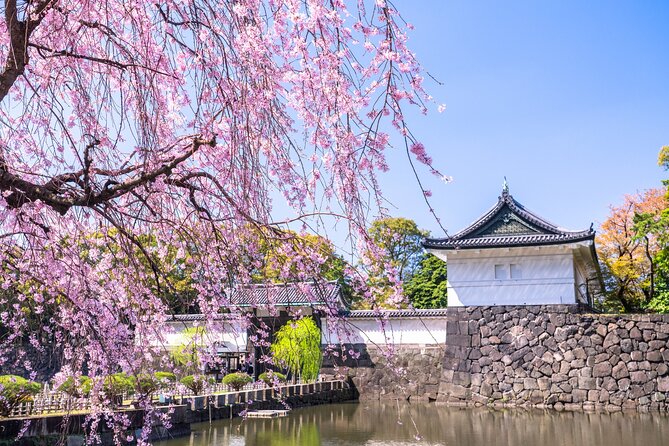
- Edo Castle history: Walk through the former grounds of the shogun’s main castle, with surviving walls and building remains.
- English-speaking guides: Guides including Hitoshi, Naoko, Masahito, Shigeru, and Mikio have been praised for clear explanations and patient pacing.
- Two-hour walking tour: The route returns to Wadakura Fountain Park, making this an easy half-day addition to a Tokyo itinerary.
- Garden and koi: Enjoy ponds, plants, open lawns, and the unusual koi that are a special feature of the visit.
- No Inner Palace access: The tour covers the East Gardens only. It does not enter the private Imperial Palace grounds.
- Important scheduling detail: The East Garden closes every Monday and Friday, and bags are inspected at entry.
Why the East Garden is worth your time
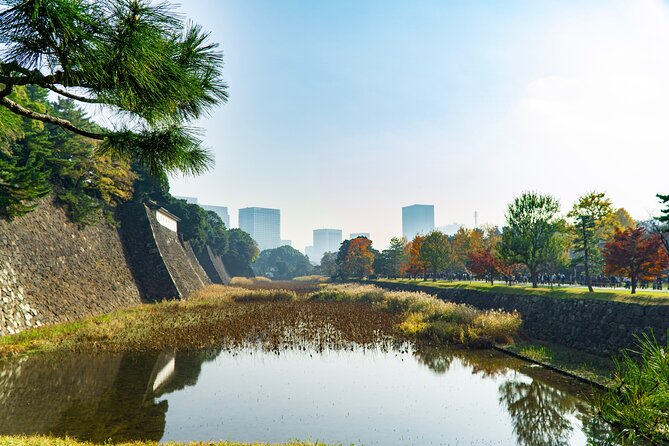
Tokyo can feel like a city of glass towers, neon signs, and packed train platforms. The East Garden offers a sharp change of pace. You are still in central Tokyo, yet the broad paths, old stonework, ponds, and clipped greenery create room to slow down.
This is not simply a garden walk. The ground beneath the trees was once part of Edo Castle, the center of political power during the shogun era. That connection gives the garden its real appeal. You are not looking at decorative scenery in isolation. You are walking through the site where military rulers, regional lords, palace officials, and servants once moved through a tightly ordered world.
I especially like this tour for visitors who want Japanese history explained in plain English. Without a guide, you can enjoy the plants and walls, but it is easy to miss what made the site important. A guide can show you where major structures once stood, explain the role of the shoguns, and connect the castle period with the imperial family of modern Japan.
The tour is also a good fit early in a Tokyo visit. It gives you useful context for temples, castles, museums, and other historic sites you may see later.
More Palace Gardens and Grounds in Tokyo:
- Tokyo: Imperial Palace East Gardens Walking Tour
★ 4.8 · 353 reviews - Tokyo: Pvt. Tour – Edo Castle & Imperial Palace East Gardens
★ 4.8 · 63 reviews - Tokyo: Imperial Palace East Gardens and Tokyo Station Tour
★ 5.0 · 16 reviews
Meeting at Wadakura Fountain Park
The tour begins at Wadakura Fountain Park, in front of the fountain. Your guide holds a sign marked Gotcha, which makes the meeting point easier to identify than a vague instruction such as meet near the palace.
Allow yourself enough time to reach the fountain without rushing. Tokyo’s central districts are well connected, but the Imperial Palace area has wide roads, large open spaces, and several entrances. A clear meeting point matters here.
From the fountain, the guide leads the group toward the East Gardens. The route begins in an open urban setting and gradually shifts toward the palace grounds. This short transition helps you understand the site’s location before the historical explanation begins.
At the entrance, expect a baggage inspection. This is worth planning around, especially if you have been shopping in Tsukiji or Asakusa. Japanese knives and similar items may be treated as weapons, so leave them in a coin locker or another secure place before meeting the guide.
Walking through former Edo Castle grounds
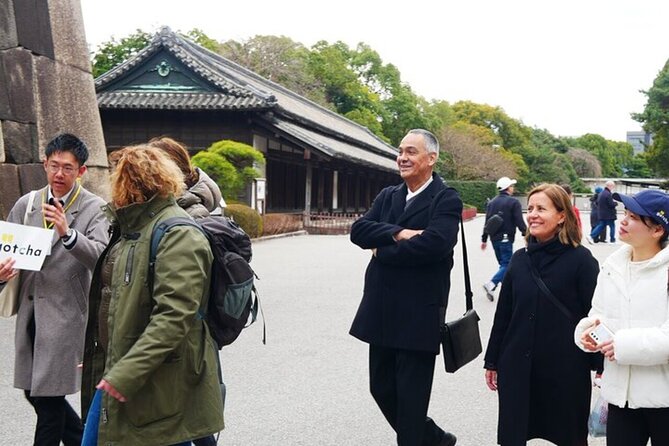
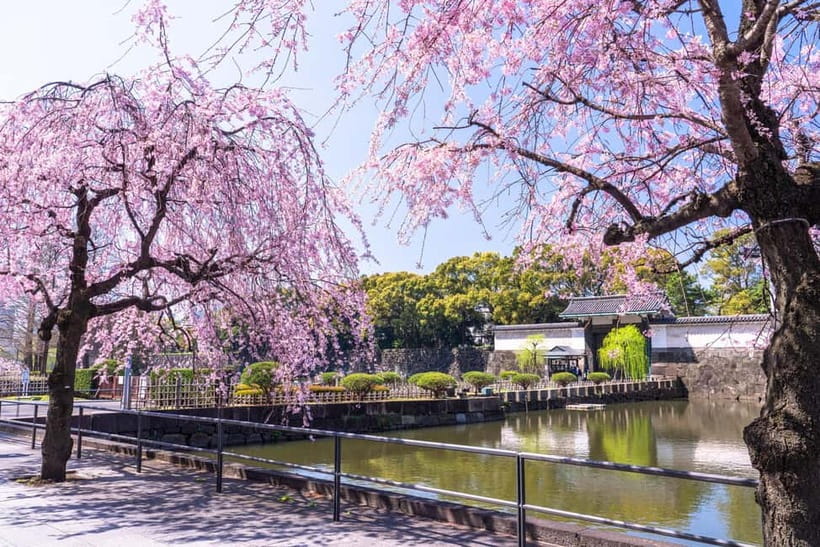
The strongest part of the tour is the way it combines physical remains with visual explanation. Edo Castle was a vast complex, but much of the original architecture is gone. What remains includes stone walls, foundations, gates, and traces of former structures.
That means this is not a tour of grand castle interiors. You will not walk through preserved rooms filled with original furnishings. Instead, the guide helps you read the site. A wall becomes evidence of defense and status. A foundation shows the scale of a building that no longer exists. A broad open area suggests the order and ceremony of the old castle compound.
This is where the guide makes a real difference. Naoko has used pictures and visual explanations to show how the area looked in earlier periods. Mikio has been praised for bringing the Edo period to life with images and stories about shoguns, daimios, and ninjas. Those tools are especially useful for children and for anyone who finds castle ruins hard to picture.
The historical scope is wider than a single building. You learn about the shoguns who controlled Japan, the daimios who governed regional domains, and the later imperial role of the palace grounds. Guides also add cultural details, so the tour does not feel like a list of dates and names.
The garden itself, ponds, plants, and koi
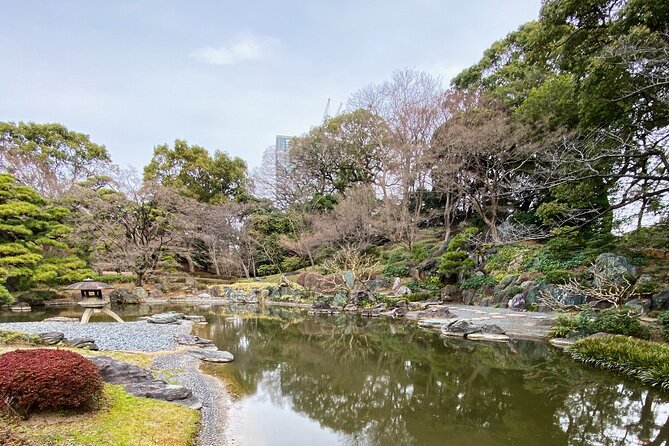
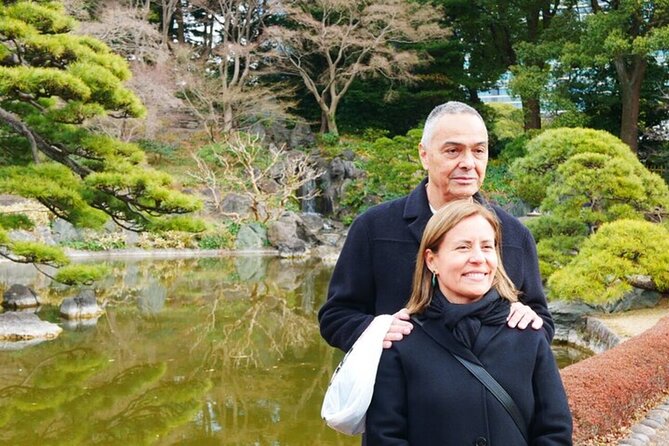
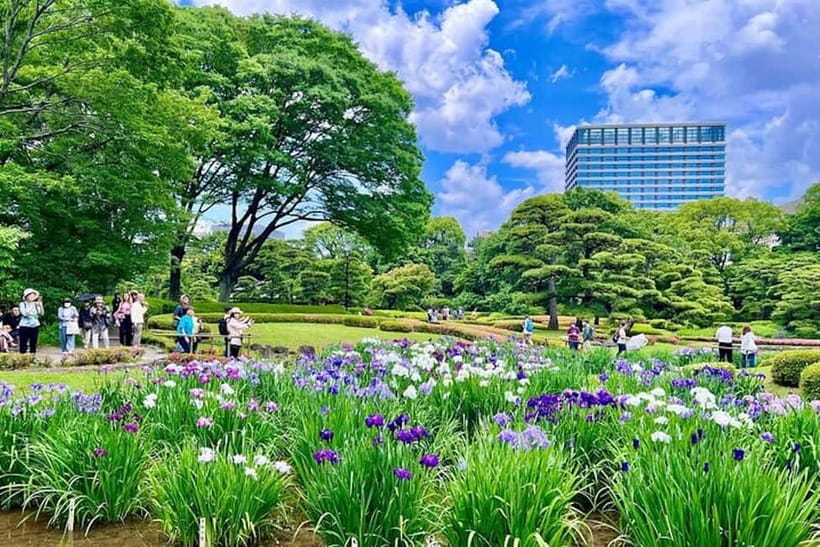
The East Garden has a quiet beauty that balances the political story. You pass through planted areas, open spaces, ponds, and carefully arranged garden scenery. The garden gives you time to look around rather than rushing from one monument to the next.
Your guide may point out the meaning or importance of particular trees and plants. On one tour, Shigeru explained the significance of the vegetation as well as the history of the site. This kind of detail helps you notice features you might otherwise walk past.
The koi are one of the tour’s more unusual talking points. The experience highlights a special breed of koi as a must-see feature, so keep an eye on the ponds rather than treating them as background scenery. The fish add a lighter, more playful moment to a tour that otherwise focuses on power, war, government, and royal tradition.
Spring can be particularly attractive. One guide took a group to nearby cherry blossoms, although that extra stop should not be treated as a guaranteed part of every tour. Weather also changes the experience. Visitors have enjoyed the walk in sunshine and continued with guides through heavy rain. The paths and stories remain worthwhile in poor weather, but you will want suitable shoes and rain protection.
More Royal Palace Tours around Tokyo:
- Tokyo: Imperial Palace and Shogun Historical Walking Tour
★ 5.0 · 2,251 reviews - Tokyo Castle & Imperial PalaceーShogun Walking Tour
★ 4.7 · 1,068 reviews - Tokyo: Imperial Palace Japanese History Walking Tour
★ 4.9 · 987 reviews - Tokyo: Imperial Palace and Shogun Walking Tour
★ 4.9 · 935 reviews
What the guides add to the experience
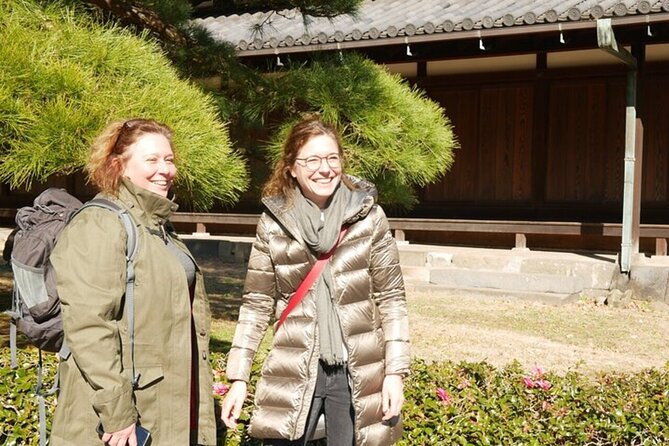
The guide quality is the biggest reason to pay for this tour when the garden itself can be entered for free. The best guides do more than point at walls. They set up the story before you enter, answer questions, adjust the pace, and help you understand how Japanese society worked.
Hitoshi has been praised for clear English, broad knowledge of Japanese history, and care with different walking needs. He has helped a wheelchair user during the visit and has also walked with people toward the subway after the tour. That shows a helpful approach, but you should still ask the operator about your own mobility needs before booking.
Naoko is another strong choice for visitors who enjoy a patient teaching style. She has guided senior groups, answered questions carefully, and used pictures to explain the site. Her style appears well suited to families and older visitors who prefer a measured walk rather than a fast route.
Masahito has been described as friendly, prepared, and good-humored. He has also helped visitors with directions after the tour. Shigeru has offered broad historical context, taken photos, and even folded origami cranes for participants. These personal touches are not promised on every departure, but they show the kind of guide-led experience you may receive.
Mikio has been especially good at adapting the pace for small groups. He has stopped often, answered many questions, and allowed extra time when needed. The experience may vary by guide, yet the repeated pattern is clear: the human explanation is the product’s main value.
Is $42 a fair price?
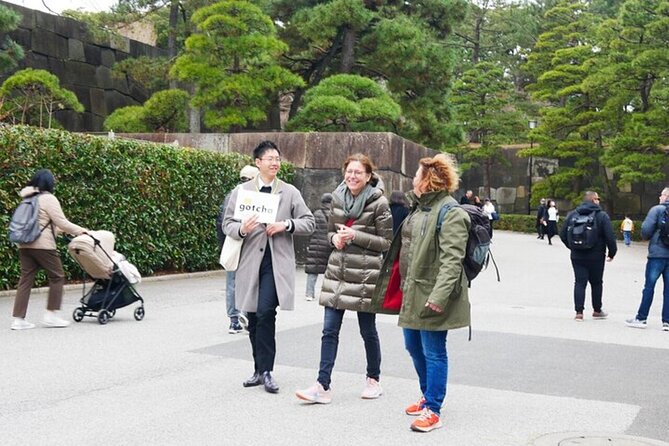
At $42 per person, this is not the cheapest way to see the East Garden. The garden itself is free to enter, so you are paying for interpretation, organization, and the chance to ask questions in English.
For a history-focused visitor, that can be good value. A guide can explain the Edo period, shogun government, imperial traditions, architecture, plants, and garden design in two focused hours. You also avoid wandering past important remains without knowing what they were.
The value is less convincing if you only want a peaceful stroll or are already well read on Japanese history. You could enter the garden independently and spend the money on another attraction. One participant reasonably pointed out that the same price can help cover a much longer day trip to Nikko or Mount Fuji.
I see this as a context purchase, not a full-day sightseeing bargain. You pay for a compact lesson in Tokyo’s political and cultural past. That makes the price easier to justify for a first visit, a short stay, or a family that wants the children to understand what they are seeing.
The two-hour pace and physical demands
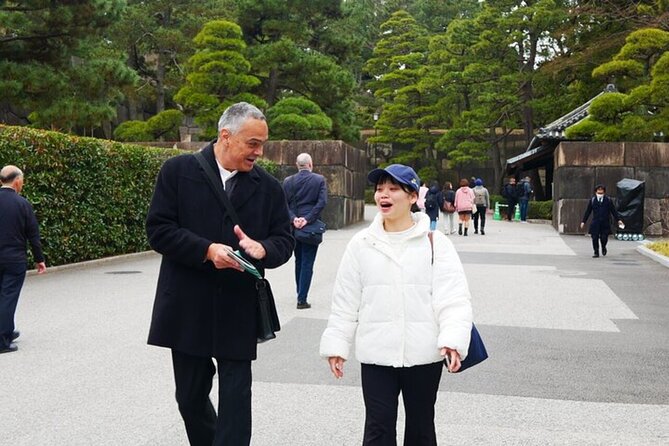
The advertised duration is two hours, and the route begins and ends at Wadakura Fountain Park. This makes it easy to pair with another central Tokyo activity on the same day.
The pace is generally relaxed. Guides have allowed small stops, answered questions, and slowed down for senior participants. You should still expect to walk through a large outdoor site, with no guarantee that every section will be flat or effortless for every person.
Comfortable shoes are a sensible choice. The tour takes place outdoors, and the experience depends on walking between historic remains and garden areas. Bring water in warm weather and rain protection during wet periods.
The two-hour limit is also useful. The Imperial Palace grounds can feel hard to grasp on a first visit because of their size and open spaces. A guide keeps the visit focused without turning it into an exhausting history lecture.
What the tour does not include
The most important limitation is that this is not an Inner Palace visit. You do not enter the private Imperial Palace, and the tour does not promise access to rooms used by the imperial family.
Instead, you visit the East Gardens, which occupy former Edo Castle grounds. That distinction should be clear before you book. If your main goal is to see palace interiors, this is the wrong experience.
The garden may also close for reasons beyond the normal Monday and Friday schedule, though no additional closures are specified here. Check the available starting times and operating date before committing your day.
Because bags are inspected at the entrance, avoid arriving with objects that could cause a problem. The warning about Japanese knives is especially important if you plan to combine this tour with shopping in Tsukiji, Asakusa, or another market district.
Who should book this walking tour?
I would choose this tour for you if you want a calm introduction to Tokyo’s past, prefer explanations in English, or find historic ruins more interesting once someone gives them a clear story.
It suits families particularly well. One guide made the history accessible for a nine-year-old, and several guides have used pictures, stories, and small facts to keep the visit lively. It also suits older visitors who prefer a slower pace and the ability to stop for questions.
The tour is less suitable if you want a dramatic castle interior, a full-day excursion, or a completely independent walk. It is also not the best choice on a packed day when you can spare only a short window, since the two-hour route works best when you allow time to reach the meeting point and pass through inspection.
Free cancellation up to 24 hours before departure and the reserve-now, pay-later option make planning easier. The live guide speaks English, and the tour returns to its starting area, which keeps the rest of your day flexible.
Should you book the Edo Castle and East Garden tour?
Book it if you want the East Garden to make sense, not just look pretty. The garden entry may be free, but the guide can connect stone walls, foundations, ponds, plants, and koi with the story of shoguns, emperors, and Japanese culture.
I would especially recommend it early in your Tokyo stay, when a two-hour history lesson can give shape to everything you see afterward. Just remember the two key limits: the garden is closed Mondays and Fridays, and the tour does not enter the Imperial Palace itself.
For visitors who value clear explanations, patient guides, and a gentle walking pace, $42 is a reasonable price. For independent sightseers who only want photographs and greenery, enter on your own and save the fee.
FAQ
How long does the Tokyo East Garden tour last?
The guided walking tour lasts two hours and begins and ends at Wadakura Fountain Park.
Where do I meet the guide?
Meet in front of the fountain at Wadakura Fountain Park. The guide holds a sign that says Gotcha.
Does the tour enter the Imperial Palace?
No. The tour visits the East Gardens, which were built on the former grounds of Edo Castle. It does not enter the Inner Palace.
Which days is the East Garden closed?
The East Garden is closed on Mondays and Fridays.
Is the tour conducted in English?
Yes. The activity includes a live English-speaking tour guide.
Can I bring Japanese knives into the garden?
Visitors are subject to a baggage inspection when entering the Imperial Palace grounds. If you buy Japanese knives or similar items in Tsukiji, Asakusa, or elsewhere, leave them in a coin locker or another secure place before the meeting.
Fresh palace tours around Tokyo
- Tokyo: Imperial Palace East Gardens Walking Tour★ 4.8 · 353 reviews
- Tokyo walking tour around Imperial Palace and Tokyo Station★ 5.0 · 3 reviews
- Tokyo: Imperial Palace, the history of Japan (ENGLISH GUIDE)★ 5.0 · 77 reviews
- Tokyo: Imperial Palace with Nostalgic Alley Kagurazaka tour★ 4.3 · 8 reviews
- Tokyo: Pvt. Tour – Edo Castle & Imperial Palace East Gardens★ 4.8 · 63 reviews
- Tokyo: Edo Castle Ruins & Imperial Palace East Garden Tour★ 4.4 · 13 reviews
- Tokyo: Imperial Palace East Gardens and Tokyo Station Tour★ 5.0 · 16 reviews
- Tokyo: Edo Castle and Imperial Palace Guided Walking Tour★ 5.0 · 6 reviews
Palace Gardens and Grounds: the shortlist.

Versailles Palace and Gardens Full Access Ticket
Read our review →
Skip-the-Line Tour of Palace and Gardens Access
Read our review →
Schönbrunn Palace & Gardens Skip-the-Line Tour
Read our review →
Alhambra & Gardens Tour w/Nasrid Palaces Option
Read our review →
Versailles Palace & Gardens with Transportation
Read our review →
Versailles Palace Guided Tour & Gardens Access
Read our review →
Versailles Palace and Gardens Tour from Paris
Read our review →
Versailles Full Day Bike Tour with Palace, Gardens, & Picnic
Read our review →This visit also appears in