
Review · TOKYO
Tokyo: Edo Castle and Imperial Palace Guided Walking Tour
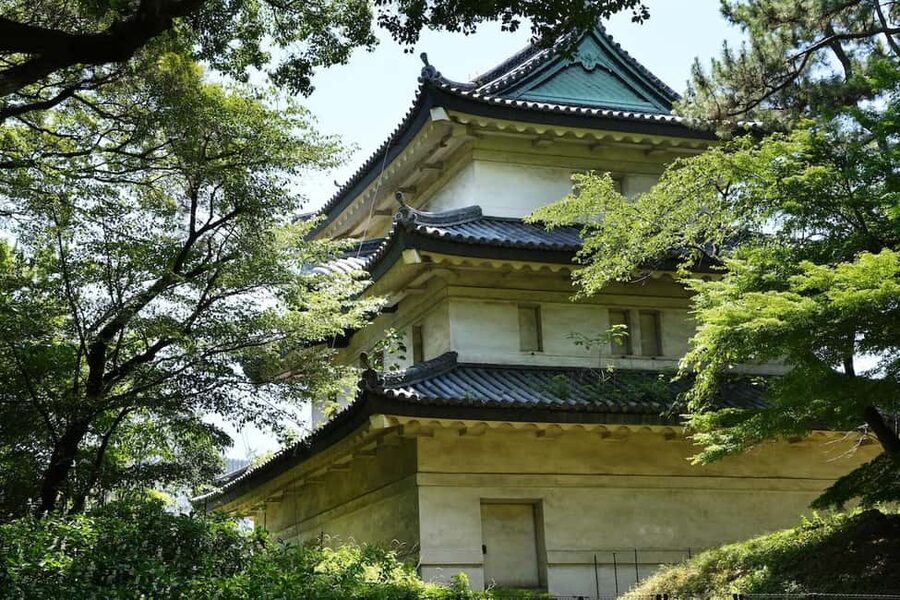
Tokyo’s Imperial Palace is not just a grand residence behind fences. It occupies the heart of Edo Castle, the seat of the Tokugawa Shogunate for 260 years. This walking tour helps you read the surviving moats, gates, guardhouses, and stonework as clues to how power worked in old Japan.
I like two things right away: the small group, capped at eight, and the 1650s map that gives the walk a clear sense of place. I also like the route’s focus on details you could easily miss alone, including guardhouse rules, the political role of the inner palace, and differences in the stone walls. The main drawback is simple: this is a long outdoor walk with limited indoor sightseeing, so cold weather, rain, or tired feet can change the experience.
Key points at a glance
- A 150-minute history walk: Follow the former Edo Castle from Tokyo Station to Hirakawa Bridge and Gate.
- An English-speaking guide: Hear the story of the Tokugawa Shogunate, the Meiji Restoration, and the people who lived within the castle.
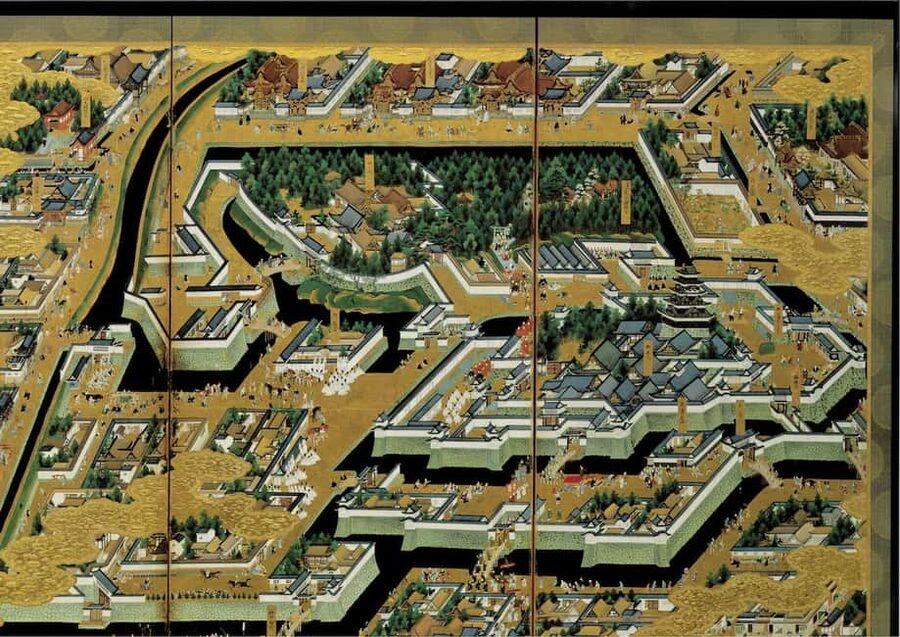
- A useful old map: A map of Edo in the 1650s helps you compare the modern city with the shogun’s capital.
- Castle remains, not reconstructed rooms: The main sights are gates, moats, stone walls, guardhouses, ruins, and the former Honmaru site.
- A genuinely small group: With no more than eight participants, questions should be easier to ask than on a large city tour.
- Very low listed price: At $3.22 per person, the value is strongest if you want historical explanation rather than entrance tickets or refreshments.
Why Edo Castle makes a better walking lesson than a palace photo stop
The former Edo Castle covers a large central area of Tokyo, but much of its story survives in fragments. You see a gate here, a moat there, and a huge stone wall that may look plain until someone explains who built it, why it was placed there, and how people moved through it.
That is the main reason I find this experience useful. The tour turns an open-air walk into a lesson in government, defense, rank, and urban planning. You are not simply looking at the present Imperial Palace. You are tracing the seat of a military government that directed Japan for more than two centuries.
The guide uses a map showing Edo in the 1650s. That gives you a way to picture the castle when it was the center of political life and the shogun’s residence. Modern Tokyo can make the old layout hard to grasp, so a visual reference is especially helpful at the beginning.
The walk also connects two major changes in Japanese history. Edo Castle was the center of Tokugawa power, then became the Imperial Palace after the Meiji Restoration. The experience does not treat these as isolated dates. It shows how the same site changed meaning as Japan’s system of government changed.
You should set your expectations correctly. This is not a tour of furnished palace rooms, throne halls, or private imperial interiors. The appeal is the outdoor evidence: stone construction, moats, gates, ruins, and the shape of the old compound.
More Palace Walking Tours around Tokyo:
- Tokyo: Imperial Palace and Shogun Historical Walking Tour
★ 5.0 · 2,251 reviews - Tokyo Castle & Imperial PalaceーShogun Walking Tour
★ 4.7 · 1,068 reviews - Tokyo: Imperial Palace Japanese History Walking Tour
★ 4.9 · 987 reviews
Starting beneath Tokyo Station’s historic dome
Meet at the ground floor of the Marunouchi South Exit at Tokyo Station. The easiest landmark is the Western-style historic yellow dome above the exit. The listed coordinates are 35.68048457383692, 139.76571024138642.
This is a practical starting point because Tokyo Station is easy to identify, but give yourself time to find the correct exit. Tokyo Station is large, and arriving at the wrong side can turn a simple meeting into a rushed city crossing. The tour begins on foot, so arrive ready to walk rather than expecting a bus or train transfer.
The first walk takes about five minutes to the Mitsubishi Ichigokan Museum. The museum stop is guided for around 10 minutes. Based on the route, this opening section helps place the old castle area within modern Marunouchi, where today’s office towers and formal streets occupy territory connected to the former castle town.
I like beginning here instead of starting at a gate with no context. You first get your bearings, then begin the shift from modern Tokyo to Edo-era Tokyo. The short stop also keeps the tour moving quickly.
Sakurada-mon Gate and the outer edge of power
From the museum, you walk about seven minutes to Sakurada-mon Gate. The guide spends around 10 minutes here, giving this large gateway more attention than a quick photograph would allow.
Gates matter in a castle because they control movement. They are also places where architecture and politics meet. A gate tells you that access was managed, visitors were watched, and different parts of the compound had different levels of importance.
The route then continues through several short stops. One is listed at a location in Chiyoda City, followed by a stop near the Sakashita Gate security police box. Each guided explanation lasts about five minutes. These brief talks may feel compact, but they help break the walk into manageable pieces.
You then reach Kikyo-mon Gate, another key point in the old castle’s network of entrances. The tour continues to Sakurada Tatsumi Yagura, where you get a closer look at a surviving corner tower. The word yagura refers to a tower structure, and this stop helps you see how the castle combined defense with controlled access.
The route uses walking stretches of roughly five minutes between many stops. That is comfortable for most people at an ordinary pace, but the total time adds up. If you prefer a slow, unhurried stroll with long pauses, the schedule may feel active.
Ote-mon Gate reveals the castle’s working machinery
After another short walk, the group reaches Ote-mon Gate. This gate receives a five-minute explanation before the route moves to the Ote-San’no Gate ruins.
These places are valuable because they show the castle as a functioning administrative center, not merely a military fortification. A castle complex needed routes for officials, guards, messengers, servants, and visitors. The gates helped sort people according to their role and status.
The next stop, Hyakunin Bansho Guardhouse, gets about seven minutes. A guardhouse can seem like a small structure beside the larger walls, yet it gives you a closer sense of daily control. People entering the inner areas did not simply walk through at will. They passed through systems of inspection and supervision.
This is one of the tour’s better choices for anyone curious about ordinary castle life. The grand names belong to shoguns and emperors, but the castle also depended on guards and workers who handled the practical business of keeping the compound secure.
The route’s short explanations work best if you like a steady stream of facts. You will not spend half an hour at every gate. Instead, you move from one piece of evidence to the next and build a larger picture as you go.
More Royal Palace Tours around Tokyo:
- Tokyo: Imperial Palace and Shogun Walking Tour
★ 4.9 · 935 reviews - Tokyo Castle & Imperial PalaceーShogun Walking Tour
★ 5.0 · 724 reviews - Tokyo: Imperial Palace East Gardens Walking Tour
★ 4.8 · 353 reviews - Tokyo: Imperial Palace, Sensō-ji Temple, & Tokyo Tower Tour
★ 4.5 · 339 reviews
The Honmaru site and the story of the missing tower
The longest stop comes at the site of Edo Castle’s Honmaru, or main hall. The guide spends about 30 minutes here, making it the central teaching point of the walk.
The Honmaru was the castle’s main area and an important center of authority. Today, the open site requires explanation because the original buildings are not all present. This is where the 1650s map becomes especially useful. You can compare the ground beneath your feet with the former arrangement of the castle.
One particularly interesting piece of history concerns the Meireki Fire, a major fire that struck Edo. Afterward, the castle’s main tower base was completed, but the decision was made to prioritize rebuilding the city over reconstructing the tower itself. That choice says a lot about practical government. A dramatic symbol was less urgent than restoring homes, streets, and daily life.
I appreciate this kind of story because it moves beyond dates and rulers. It shows decision-making under pressure. The castle was not only a symbol of authority. It was tied to the welfare and recovery of the enormous city around it.
The Honmaru stop also offers room for questions. An English-speaking guide leads the tour, and the small group size should make it easier to ask about confusing points. The information provided does not name the guide, so you should not expect a particular person by name when booking.
The open setting has a tradeoff. You get a direct sense of the site, but you are exposed to the weather. In February, for example, a warm coat would matter. Comfortable shoes are essential, and I would also bring water, since drinks are not included.
Stone walls, moats, and the small clues in the masonry
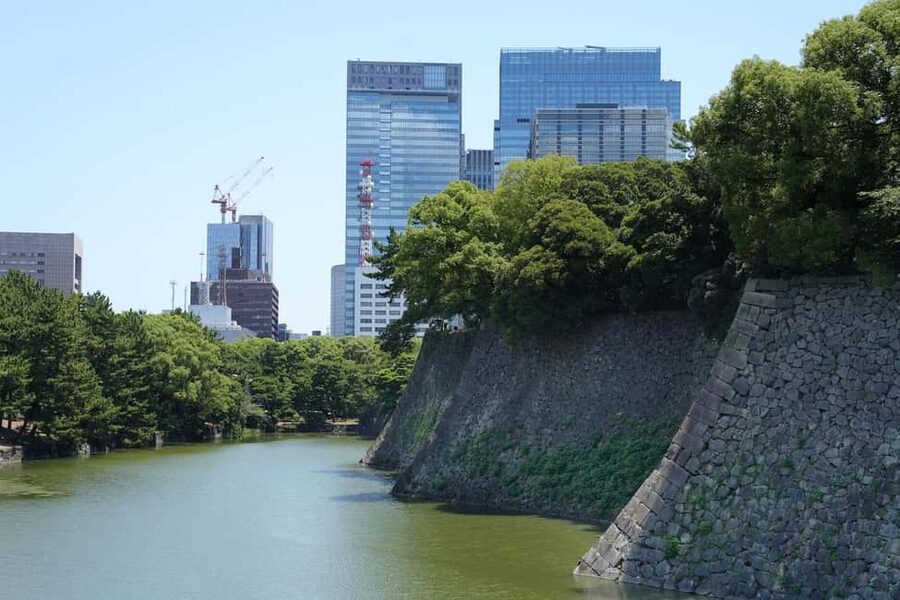
One of the most rewarding parts of the walk is the attention given to the castle’s stonework. Edo Castle was built through tenka fushin, a system in which powerful lords were assigned major construction work. That means the walls can reveal differences in building style from one section to another.
You may notice both tightly fitted stones and walls using a more mixed approach, where smaller stones help fill the spaces between larger blocks. The guide points out that different lords used subtly different methods. For someone who enjoys architecture, this turns a long wall into something worth studying.
The moats are just as important. They show how the castle used water, distance, and controlled crossings to create layers of defense. Even where buildings have disappeared, the moat and wall lines help preserve the old plan.
I would not come expecting dramatic battlements at every turn. Much of the pleasure comes from looking carefully. If you enjoy having a guide explain why a quiet wall matters, this route gives you plenty to work with. If you mainly want interior rooms and restored decoration, the experience may feel too bare.
Kita-Hanebashi, Takebashi, and Hirakawa Bridge
After the Honmaru site, the route continues to Kita-Hanebashi Gate for about five minutes of guided explanation. The group then walks roughly five minutes to Takebashi, followed by another five-minute walk to Hirakawa Bridge.
These later stops help you see how the old castle’s entrances and crossings connected. The route does not end at the most famous point and send you back to the station. Instead, it continues across the northern side of the former castle area, finishing at Hirakawa Gate.
Hirakawa Bridge receives around seven minutes of attention before the tour ends at Hirakawa Gate. This finish is useful for visitors planning the rest of the day because you are not returned to Tokyo Station. Check your onward route before beginning, especially if you have a timed reservation elsewhere.
The walk from start to finish takes 150 minutes, including the explanations. Many individual walking sections are only four to seven minutes, but there are several of them. The tour is easy to understand as a sequence, yet it still requires sustained time on your feet.
What the guide adds to the Tokugawa and Meiji story
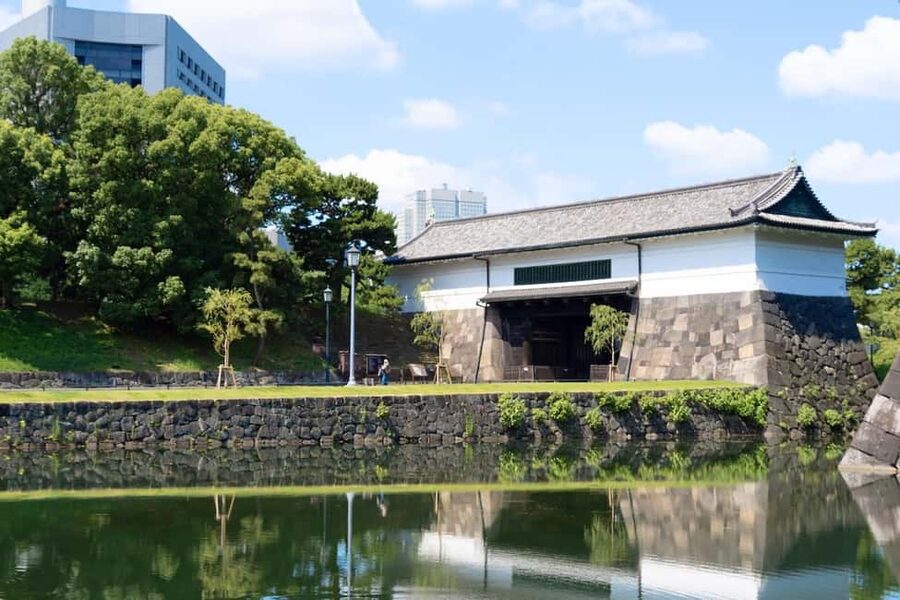
The basic historical outline is familiar: Tokugawa rule lasted 260 years, then the Meiji Restoration changed Japan’s political order, and Edo Castle became the Imperial Palace. The guide’s job is to show how those broad events affected this particular place.
You hear about the shogun’s residence and the people who lived and worked within the castle. The discussion can also reach less obvious subjects, including the political side of the inner palace, the use of an unclean gate, and the belt-shaped outer enclosure connected with castle access and custom.
Those details matter because they show that the castle had social rules as well as stone defenses. Who could enter, which route they used, and how parts of the compound were separated all reflected rank and purpose.
A Japanese-language participant described the discussion as covering Edo’s formation, Tokugawa government, cultural development, the Meireki Fire, the choice not to rebuild the main tower, and differing masonry styles. That range suggests a tour with plenty of historical detail rather than a simple landmark walk.
The guide also takes questions seriously. That matters on a subject with unfamiliar terms and overlapping eras. You can ask for clarification instead of quietly losing the thread.
Price, group size, and practical value
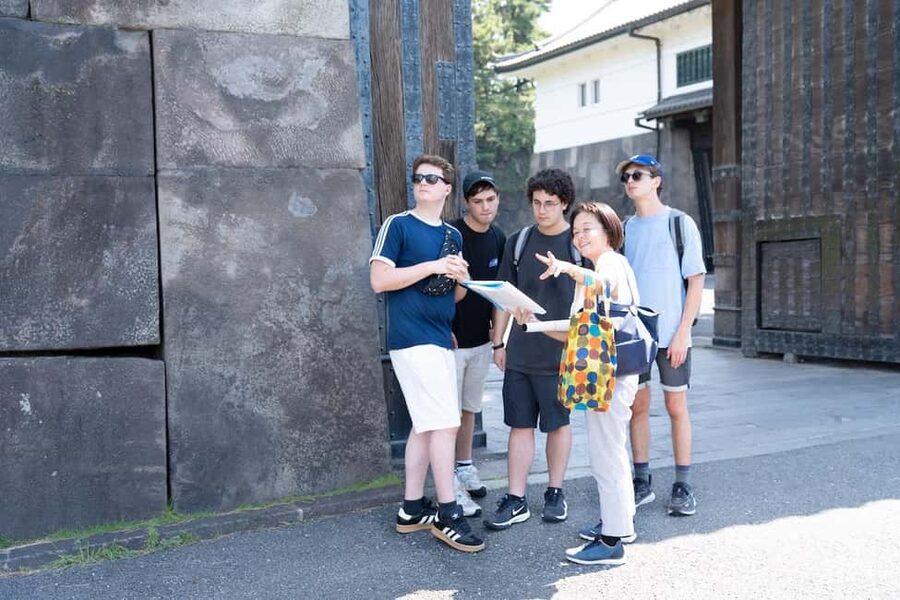
The listed price is $3.22 per person, which is exceptionally low for a 150-minute guided experience. At that price, the value is easy to see if you want historical interpretation and a small group. You are paying for an English-speaking guide and a small gift, not for meals, drinks, or transportation to the meeting point.
The tour does not include food or refreshments. Eat beforehand or plan a stop after the walk. The route contains many short explanations, but there is no stated meal break.
A group limit of eight is a real advantage. It should keep the guide close enough to hear and make questions practical. It also means the experience is less anonymous than a large group moving from gate to gate.
The tour is described as wheelchair accessible. Since it covers a long outdoor route with moats, gates, bridges, and castle grounds, you should still consider your own comfort with the specific walking distance and surfaces. The clear advice for everyone is to wear comfortable shoes.
Free cancellation is available up to 24 hours before the start for a full refund, and you can reserve now and pay later. Those terms help if your Tokyo schedule is still shifting, but the main decision is whether you want a history-focused walk rather than a palace interior visit.
Who should book this Edo Castle walk
I would recommend it to you if you enjoy history that is tied to visible places. You will get the most from it if you like asking why a gate was built, how a moat worked, or why a ruined tower base can tell a political story.
It also suits first-time visitors who want to understand the Imperial Palace area before seeing more of Tokyo. The route begins at a familiar transport landmark and gradually connects modern Marunouchi with the old shogun’s city.
Families with older children may find the gates and guardhouses easier to understand than a long museum display. The small group can also help if you want to ask questions as the route unfolds.
I would think twice if you want an indoor tour, a short photo stop, or a fully restored castle. This is an outdoor history lesson, and the weather is part of the deal. The Imperial Palace is seen as the current residence of the Emperor, but the tour’s main subject is the former Edo Castle and the traces left around it.
Should you book it?
Book this tour if you want the Imperial Palace area to make sense. The strongest reasons are the small group, the 1650s map, the detailed attention to gates and stone walls, and the long Honmaru stop where the story of the Meireki Fire and the missing main tower comes alive.
Skip it if you need air-conditioned sightseeing or want to enter richly furnished palace rooms. For everyone else, the $3.22 price makes this a remarkably affordable way to spend two and a half hours learning how Tokyo grew from the shogun’s capital into the modern imperial city.
FAQ
Where does the tour meet?
The meeting point is on the ground floor at the Marunouchi South Exit of Tokyo Station. Look for the Western-style historic yellow dome.
How long does the walking tour last?
The tour lasts 150 minutes, or two and a half hours.
What language is the tour conducted in?
The tour is conducted in English by a live English-speaking guide.
What sights are included?
The route includes the Mitsubishi Ichigokan Museum area, Sakurada-mon Gate, Sakashita Gate, Kikyo-mon Gate, Sakurada Tatsumi Yagura, Ote-mon Gate, Ote-San’no Gate ruins, Hyakunin Bansho Guardhouse, the Honmaru site, Kita-Hanebashi Gate, Takebashi, Hirakawa Bridge, and Hirakawa Gate.
Is the tour wheelchair accessible?
Yes, the activity is described as wheelchair accessible.
What should I bring or wear?
Wear comfortable shoes for the walking route. Meals, drinks, and transportation to the starting point are not included.
Fresh palace tours around Tokyo
- Tokyo: Imperial Palace East Gardens Walking Tour★ 4.8 · 353 reviews
- Tokyo walking tour around Imperial Palace and Tokyo Station★ 5.0 · 3 reviews
- Tokyo: Imperial Palace, the history of Japan (ENGLISH GUIDE)★ 5.0 · 77 reviews
- Tokyo: Imperial Palace with Nostalgic Alley Kagurazaka tour★ 4.3 · 8 reviews
- Tokyo: Pvt. Tour – Edo Castle & Imperial Palace East Gardens★ 4.8 · 63 reviews
- Tokyo: Edo Castle Ruins & Imperial Palace East Garden Tour★ 4.4 · 13 reviews
- Tokyo: Imperial Palace East Gardens and Tokyo Station Tour★ 5.0 · 16 reviews
- Tokyo: Edo Castle & East Garden of the Imperial Palace Tour★ 4.7 · 112 reviews
Royal Palace Tours: the shortlist.


Royal Palace Expert Guided Tour with Skip-the-Line
Read our review →
Dubai To Abu Dhabi: Grand Mosque, Royal Palace & Etihad Towers
Read our review →
Madrid Essential: Historic Center, Plaza Mayor & Royal Palace
Read our review →
Abu Dhabi Day-Trip Grand Mosque, Royal Palace & Lunch
Read our review →
Louvre Entry & Etihad Tower/Royal Palace Options
Read our review →This visit also appears in