
Review · TOKYO
Tokyo: Imperial Palace Japanese History Walking Tour
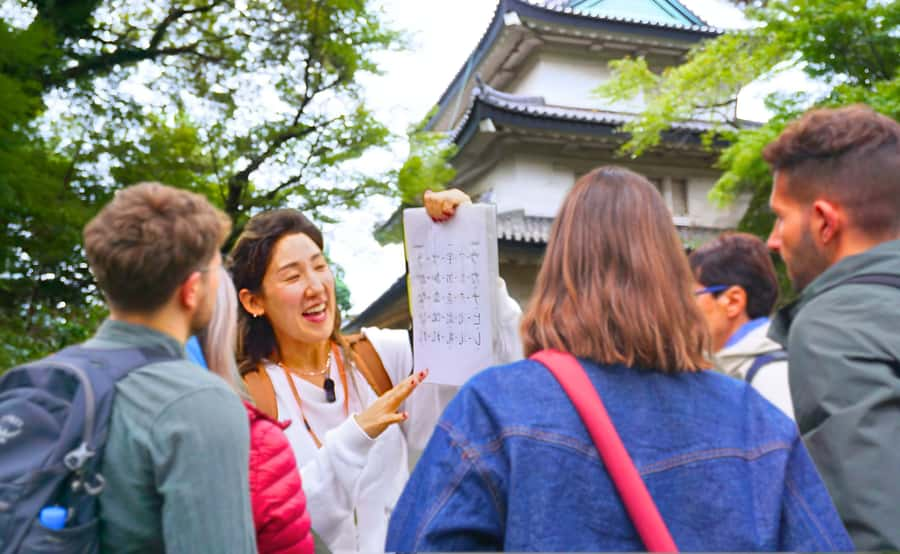
The most interesting part of this Imperial Palace walking tour is the change in viewpoint. You are not simply looking at gardens in central Tokyo. You are walking across the former grounds of Edo Castle, where shoguns held power before the emperor’s palace took its place. The castle itself is gone, but its stone walls, gates, ruins, gardens, and stories remain.
I like two things right away. First, the guide gives you the political background needed to make sense of Japan’s past, from farmer and samurai to daimyo and shogun. Second, the route mixes serious history with pleasant details, including royal koi, bamboo, old trees donated to the emperor, and useful Tokyo advice from guides such as Mika, Natsumi, Lakki, and Alexandre. The main consideration is physical: this is an outdoor walk in all weather, and it is not suitable for people with low fitness, mobility limitations, back or heart problems, recent surgery, or pregnancy.
Key points
- Walk through the former Edo Castle grounds: See surviving gates, stonework, ruins, and the place where shogun power once operated.
- Learn the story behind the missing castle: A miniature model helps you picture the original complex before it became part of the imperial grounds.
- Expect an interactive guide: Guides ask questions, explain customs, answer follow-ups, and often help with photos and Tokyo suggestions.
- Enjoy more than monuments: The route includes bamboo, a traditional samurai house, royal koi fish, and trees presented to the emperor.
- Plan for Tokyo weather: The tour runs rain or shine, with considerable time outside and limited shade in some areas.
- Know what you will not see: The Inner Palace is closed to the public and is not part of this experience.
Why Edo Castle is the right place to start Japanese history
Tokyo can feel modern, huge, and hard to read. The Imperial Palace grounds give you a useful starting point because this is where several chapters of Japan’s political story overlap.
Edo Castle was the center of shogun power for more than 350 years. The shogun was the military ruler, while the emperor occupied a different role in Japan’s traditional system. The tour explains how authority worked among farmers, samurai, daimyo, and the shogun, then connects that older order with the later imperial period.
That context matters. Without it, a castle wall is just a wall and a garden is just a garden. With a guide, the stones become evidence of military planning, social rank, and the scale of the old castle complex.
The tour is especially useful early in a Tokyo visit. It gives you a basic timeline for the Edo and Meiji eras, along with a clearer sense of how Tokyo grew from Edo into the capital you see today. Several guides also give suggestions for food, etiquette, and places to visit afterward, which can help you plan the rest of your stay.
More Palace Walking Tours around Tokyo:
- Tokyo: Imperial Palace and Shogun Historical Walking Tour
★ 5.0 · 2,251 reviews - Tokyo Castle & Imperial PalaceーShogun Walking Tour
★ 4.7 · 1,068 reviews - Tokyo: Imperial Palace and Shogun Walking Tour
★ 4.9 · 935 reviews
Meeting at Wadakuramon fountain
The meeting point is practical but deserves care. From Tokyo Station or Otemachi Station, walk about five to ten minutes to Wadakuramon fountain park. Your guide waits near the fountain by the Starbucks, holding a Sunrise Adventure sign.
I would allow extra time for this first meeting, especially if you are unfamiliar with Tokyo Station. The station is large, and a few unhurried minutes can save a rushed start. Look for the fountain and the guide’s sign rather than relying only on the café.
This arrangement has one advantage: you meet in a recognizable public place before entering the palace grounds. Guides have also been praised for being easy to identify and for helping with small practical matters. One guide provided cooling gifts during hot weather, while another brought mosquito spray for the garden paths. Those touches are not guaranteed, but they show the sort of hands-on help you may receive.
The activity ends back at the same meeting point. That makes it easy to continue toward Tokyo Station, Otemachi, or another part of the city without figuring out a new exit.
Passing through Otemon Gate
From the fountain, the group walks toward Otemon Gate, the grand entrance to the palace grounds. This is where the atmosphere changes. Tokyo traffic and office towers remain nearby, but the broad entrance and old stone defenses point back to the castle that once controlled Edo.
The guide’s job here is to make the transition clear. You learn what the gate protected, why the castle complex needed strong defenses, and how the site changed after Japan’s political system changed.
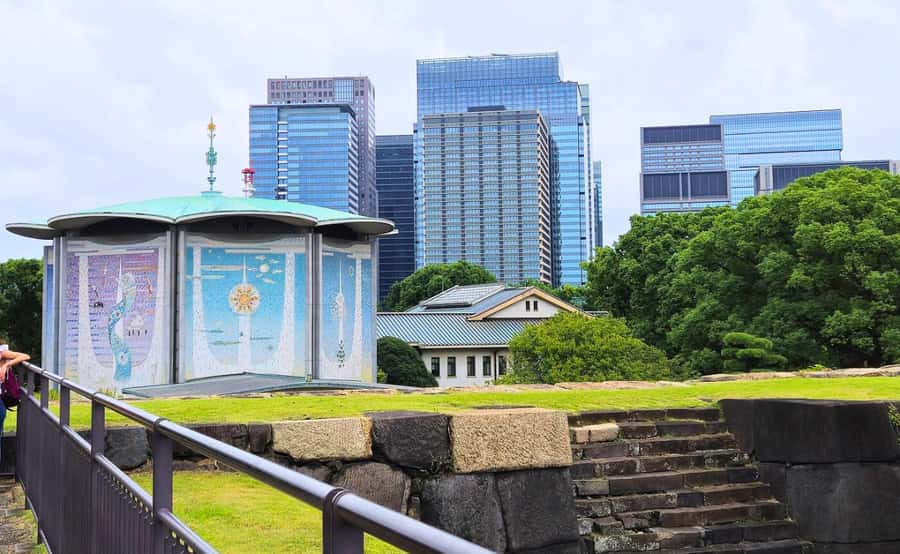
Do not expect a preserved European-style castle with rooms open for inspection. The original Edo Castle is no longer standing in that form. The value comes from the surviving grounds and the explanation of what once occupied them.
That distinction is important when deciding if this tour suits you. If you want ornate interiors or access to royal rooms, this is not the right choice. If you want to understand the site through its remaining walls, gardens, and historical layout, it works much better.
Using the miniature model to picture Edo Castle
One of the most useful stops is the miniature model showing the former castle. It fills in what the empty spaces cannot show.
A model helps you grasp the size and arrangement of the old complex, especially when you are standing among gardens that now feel open and calm. Your guide can connect the model to the ground beneath your feet, helping you imagine gates, towers, defensive sections, and the scale of shogun authority.
This is also a good moment to ask questions. The tour is designed to be interactive rather than a nonstop lecture. Guides such as Natsumi and Mika have been praised for explaining difficult subjects clearly, while Lakki and Alexandre have been noted for giving extra time to questions. Individual guide style will vary, but the format allows conversation.
Families can benefit from this stop because a model often makes the past easier to understand than a long explanation alone. The tour also uses questions and small historical details to keep the walk moving, which is more engaging than standing still through a formal talk.
More Royal Palace Tours around Tokyo:
- Tokyo Castle & Imperial PalaceーShogun Walking Tour
★ 5.0 · 724 reviews - Tokyo: Imperial Palace East Gardens Walking Tour
★ 4.8 · 353 reviews - Tokyo: Imperial Palace, Sensō-ji Temple, & Tokyo Tower Tour
★ 4.5 · 339 reviews - Tokyo: Edo Castle & East Garden of the Imperial Palace Tour
★ 4.7 · 112 reviews
Reading the castle ruins and samurai past
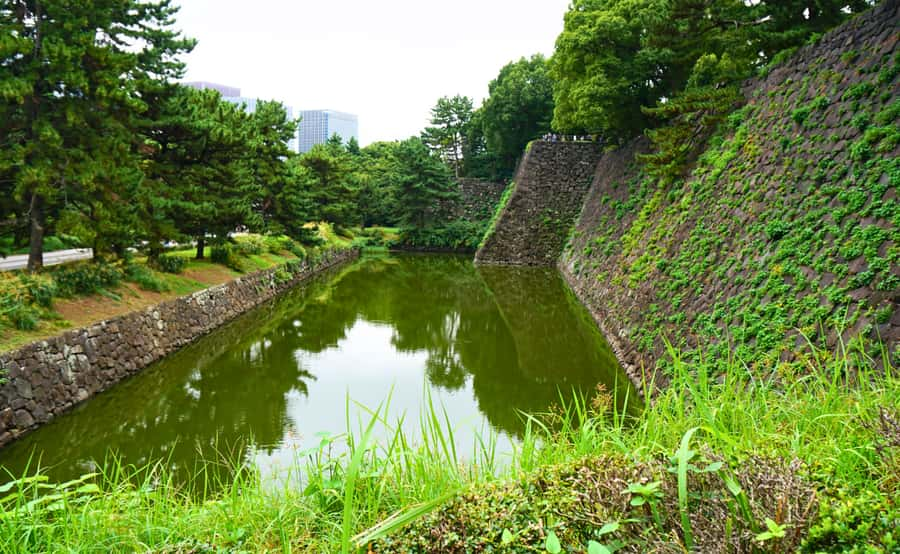
The route includes the remains of Edo Castle and an old samurai house. These stops connect the grand political story with the people who supported it.
The social ranking system is a central theme. You learn how farmers, samurai, daimyo, and the shogun fit into the old order. The point is not simply to memorize titles. It is to understand how land, military service, loyalty, and authority were arranged during the Edo period.
The samurai material adds texture because it brings the system down to human scale. The castle was not only a residence or a monument. It was a working center of government, ceremony, military power, and strict social rules.
Guides also explain the change from shogun rule to the imperial period. That transition is one reason this walk is more useful than a simple garden stroll. You are not only seeing attractive grounds. You are following the political change that helped shape modern Japan.
The ruins are not a full archaeological site with every section open. Some visitors may find the physical remains modest compared with the original castle’s importance. That is where a clear guide makes a real difference.
Bamboo, royal koi, and trees from across Japan

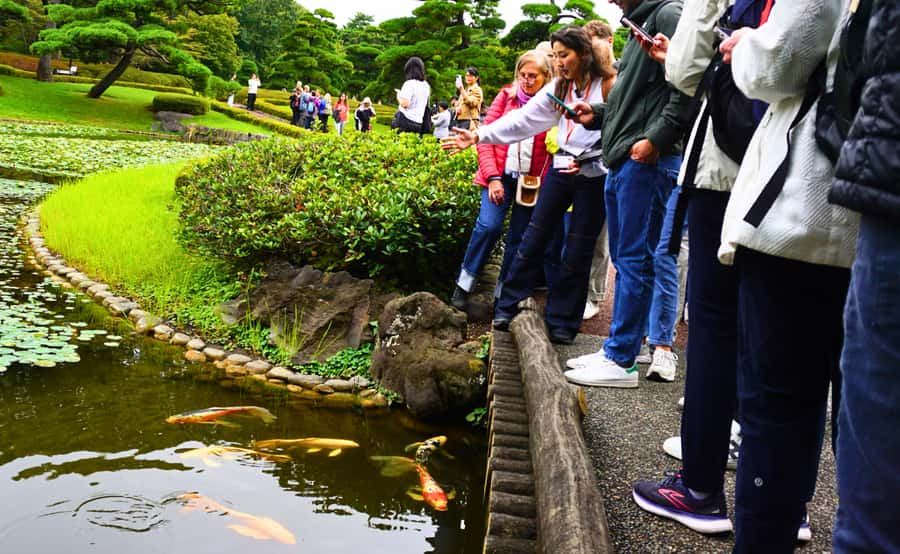
The tour is not all dates and political titles. You also get a peaceful walk through the gardens, with bamboo, trees from different parts of Japan, and koi fish associated with the royal grounds.
The bamboo section gives the walk a quieter rhythm. It is a good place for photographs and a welcome break after the heavier castle explanations. The koi ponds add another visual highlight, especially for families and anyone who enjoys gardens more than military history.
The trees have their own story. Some were given to the emperor from different parts of Japan, making the plantings a small expression of national connection. Your guide can turn what might look like ordinary landscaping into a detail about royal tradition and Japan’s regions.
These stops also explain why the tour feels broader than a castle talk. You get architecture, politics, nature, ceremony, and local observations in one route. The setting is calm, but it is not empty of meaning.
Bring mosquito repellent if you are sensitive to bites. One guide supplied some during a visit, but I would not depend on that. Wear comfortable shoes and clothing suited to the forecast.
Guide quality makes the biggest difference

The strongest part of this experience is the guide. A palace grounds visit can be pleasant on its own, but the historical value depends heavily on the person leading the walk.
Mika has been praised for clear English, careful answers, photo help, and attention to the group’s comfort in hot weather. Natsumi is known for storytelling, historical detail, and practical recommendations for lunch and other Tokyo stops. Lakki brings warmth, humor, and a strong grasp of Japanese culture.
Alexandre leads tours in French as well as English and has been especially appreciated for explaining Japanese history in French. Other guides, including Nico, Hugo, Arief, Fei, and Lucky, have also been described as friendly and helpful. The available languages are English and French.
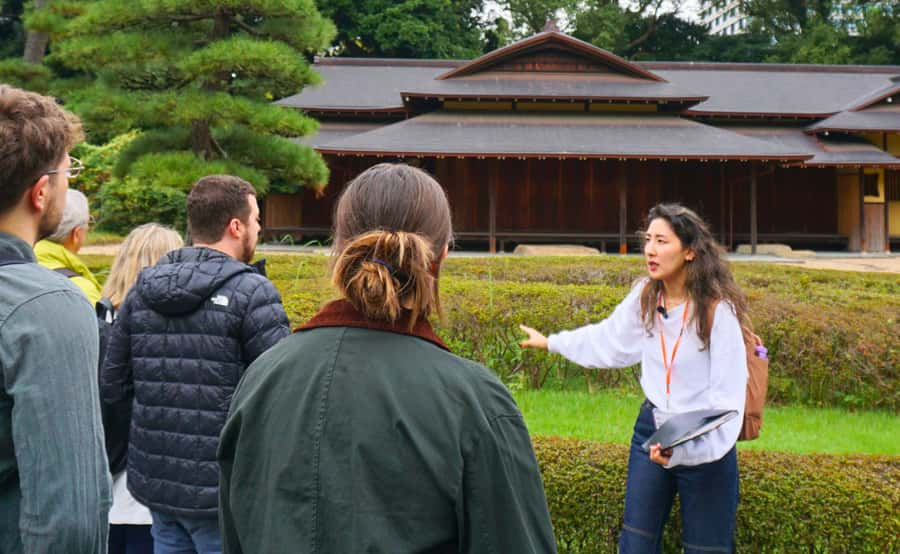
The guide style is generally conversational. You can ask about the palace, Japanese customs, food, etiquette, or places to visit. Some guides take photos for you, and several have offered suggestions beyond the formal route.
Do keep expectations sensible. A shared walking tour cannot guarantee a specific guide, a private pace, or a completely personalized route. If you happen to have a particularly good connection with your guide, ask for their recommendations during the walk rather than waiting until the end.
Heat, rain, walking, and the practical side
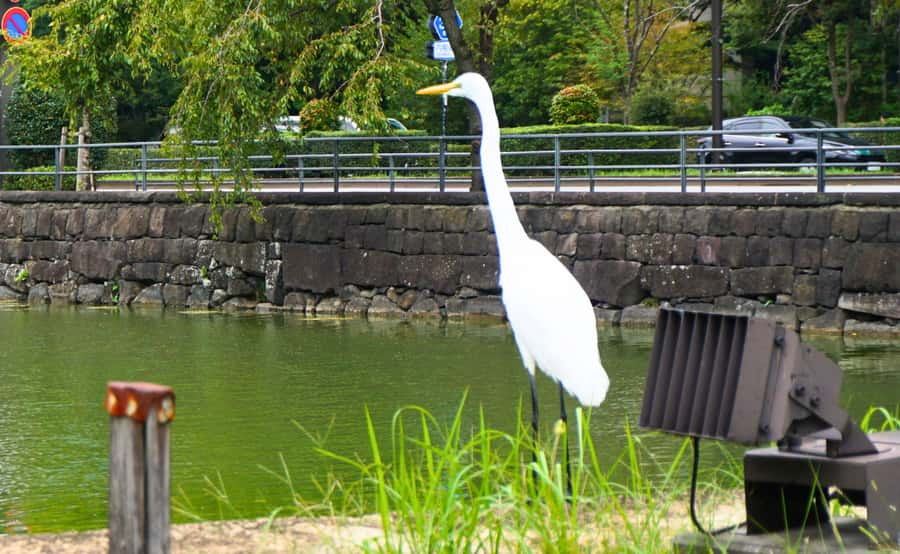
This is an outdoor activity, and it runs rain or shine. Tokyo’s summer heat can make the walk feel harder than the history. Shade beneath the large trees helps, and good guides adjust stops when possible, but you should still bring water, sun protection, and light clothing in hot weather.
Rain changes the experience too. The gardens can be atmospheric, but wet paths and umbrellas make it harder to hear and move comfortably. A rain jacket is more useful than a large umbrella in a walking group.
The route is not suitable for wheelchair users or people with mobility impairments, and the activity is also not recommended for people with back problems, heart problems, recent surgery, low fitness, or pregnancy. Those limits are worth taking seriously. This is not a seated palace presentation.
Comfortable shoes matter because you walk through open grounds rather than moving between nearby indoor rooms. The activity usually takes about two hours, according to the tour details and guide descriptions. That is long enough to build a useful historical picture without taking up an entire day.
Weapons, sharp objects, smoking, drones, alcohol, drugs, skateboards, and fire-making are not allowed. These rules are straightforward, but palace grounds are controlled public space, so pack lightly and follow them.
Is $32 a good value?
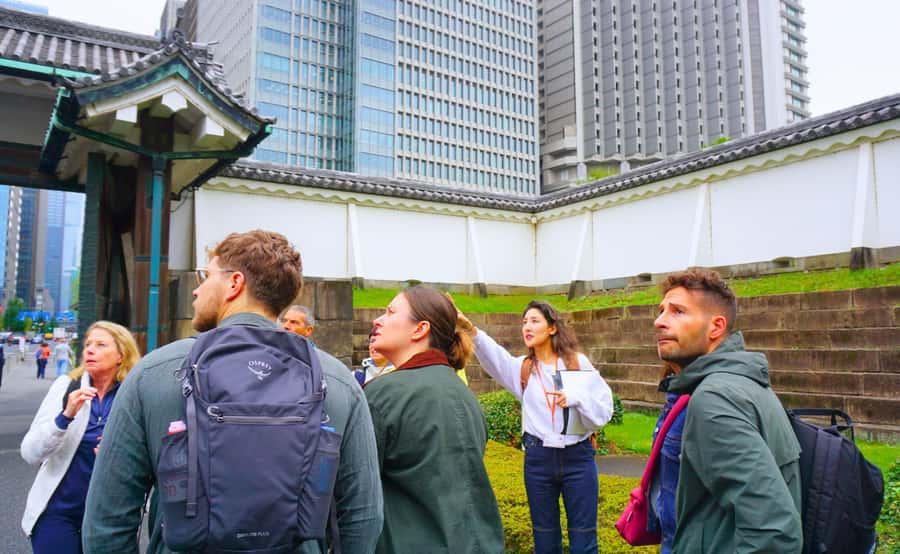
At $32 per person, this is a reasonable price for a guided introduction to one of Tokyo’s most important sites. You are paying for access to a local explanation, not for entry into a private palace interior or a meal.
The value is strongest if you want historical context. A free walk through the gardens can show you the scenery, but it may not explain the relationship between Edo Castle, the shogun, the samurai system, and the later imperial palace. A good guide turns separate sights into one story.
The price is less compelling if you mainly want quiet garden time or independent photography. A shared tour means stopping when the guide stops and listening to the group’s questions. You also do not enter the Inner Palace, which is not open to the public.
The experience includes photo opportunities, the gardens, bamboo, royal koi, and guide assistance with further Tokyo plans. You can reserve now and pay later, and cancellation is allowed up to 24 hours before the activity for a full refund. Those flexible terms help if your Tokyo schedule is still changing.
The rating is 4.9 from 987 reviews, which supports the idea that guide quality is usually the main strength. Still, the most useful way to judge the tour is to match it with your interests and fitness level, not to rely on the number alone.
Who should book this palace walk?
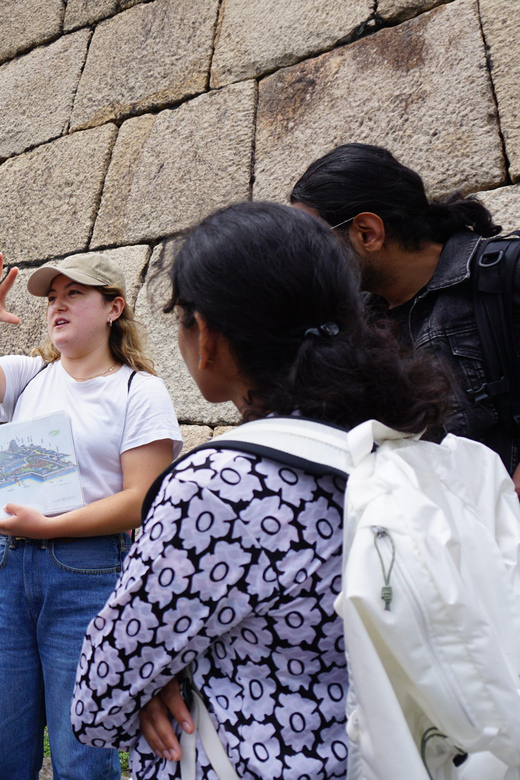
I would recommend it to first-time Tokyo visitors who want a clear introduction to Japanese history without spending a full day in a museum. It is also a good fit for people who enjoy asking questions, taking photos, and learning from a local guide.
Families with older children may like the interactive approach, especially the castle model, samurai story, and koi. History fans will appreciate the Edo to Meiji framework, while casual visitors can enjoy the gardens and still take away a better understanding of Tokyo.
It is less suitable for anyone expecting access to the private palace, an indoor tour, or a completely flat and effortless outing. Hot weather, rain, garden insects, and walking are all part of the deal.
Should you book it?
Book this tour if you want the Imperial Palace grounds to make sense rather than simply look attractive. The strongest reasons are the guide-led explanation of Edo Castle, the practical connection between shogun and emperor, and the chance to ask questions in English or French.
Skip it if your priority is entering the Inner Palace, avoiding outdoor walking, or exploring entirely on your own. For $32, though, it offers a useful historical foundation, pleasant gardens, and the chance to start your Tokyo visit with a clearer idea of how Japan’s capital became what it is today.
FAQ
Where does the Imperial Palace walking tour meet?
Meet your guide near the Starbucks by the fountain in Wadakuramon fountain park. Tokyo Station and Otemachi Station are about a five to ten minute walk away. The guide holds a Sunrise Adventure sign.
Where does the tour end?
The activity ends back at the original meeting point near Wadakuramon fountain park.
Does the tour enter the Inner Palace?
No. The Inner Palace is not open to the public and is not included in this activity.
What languages are available?
The tour is available in English and French.
What will I see during the walk?
You will see Otemon Gate, former Edo Castle grounds and ruins, a miniature model of the old castle, an old samurai house, bamboo, royal koi fish, gardens, and trees given to the emperor.
Does the tour run in bad weather?
Yes. The tour takes place rain or shine, so wear clothing suited to the forecast and prepare for outdoor walking.
Who should avoid this activity?
It is not suitable for pregnant women, people with back, heart, or mobility problems, wheelchair users, people with recent surgery, or people with a low level of fitness.
More royal history around Tokyo
- Tokyo: Imperial Palace, the history of Japan (ENGLISH GUIDE)
★ 5.0 · 77 reviews - Imperial Palace Tour: Discover Samurai History with a Guide
★ 5.0 · 12 reviews - Madrid Essential: Historic Center, Plaza Mayor & Royal Palace
★ 5.0 · 6,416 reviews - Venice’s Best: Basilica, Doge’s Palace, Gondola & History Gallery
★ 4.5 · 2,478 reviews
Fresh palace tours around Tokyo
- Tokyo: Imperial Palace East Gardens Walking Tour★ 4.8 · 353 reviews
- Tokyo walking tour around Imperial Palace and Tokyo Station★ 5.0 · 3 reviews
- Tokyo: Imperial Palace, the history of Japan (ENGLISH GUIDE)★ 5.0 · 77 reviews
- Tokyo: Imperial Palace with Nostalgic Alley Kagurazaka tour★ 4.3 · 8 reviews
- Tokyo: Pvt. Tour – Edo Castle & Imperial Palace East Gardens★ 4.8 · 63 reviews
- Tokyo: Edo Castle Ruins & Imperial Palace East Garden Tour★ 4.4 · 13 reviews
- Tokyo: Imperial Palace East Gardens and Tokyo Station Tour★ 5.0 · 16 reviews
- Tokyo: Edo Castle & East Garden of the Imperial Palace Tour★ 4.7 · 112 reviews
Royal Palace Tours: the shortlist.


Royal Palace Expert Guided Tour with Skip-the-Line
Read our review →
Dubai To Abu Dhabi: Grand Mosque, Royal Palace & Etihad Towers
Read our review →
Madrid Essential: Historic Center, Plaza Mayor & Royal Palace
Read our review →

Abu Dhabi Day-Trip Grand Mosque, Royal Palace & Lunch
Read our review →
Louvre Entry & Etihad Tower/Royal Palace Options
Read our review →This visit also appears in