
Review · TOKYO
Tokyo Castle & Imperial PalaceーShogun Walking Tour
Tokyo’s Imperial Palace grounds make more sense when you see them as the remains of Edo Castle, not simply as a green park in central Tokyo. This two-hour walk follows the defenses that protected the shogun, then shifts to gardens, castle ruins, and the modern imperial system.
I like the way the tour connects small details, such as a guardhouse or stone gate, to the larger story of samurai rule. I also like the practical size, advertised for groups of up to 10, and the modest $23.88 price. The main caution is simple: this is an English-only walking tour, and much of the route is exposed to the weather, with steep slopes and stairs.
Key points to know before you book
- Edo Castle’s defenses: See original gates, thick stone walls, guardhouses, and the surviving Sakurada Tatsumi Yagura turret.
- A strong history focus: The guide explains samurai ranks, shogun rule, castle security, and Japan’s 2,600-year imperial system.
- A peaceful finish: Ninomaru Garden brings koi, seasonal plants, and quiet paths after the military sites.
- Useful guide support: Guides including K, Keiko, Tomo, Ai, Anju, and Yuki have been praised for clear explanations, humor, visual aids, and patience with questions.
- Good value at $23.88: You pay for interpretation rather than entry tickets, since the listed stops are free.
- Plan for the walk: Bring water, wear comfortable shoes, and avoid knives and alcohol because of the security check.
Why Edo Castle is the real subject of this tour

The name Imperial Palace can make you expect a palace interior. That is not what you see here. The Emperor’s residence is closed to the public, and the tour focuses on the surrounding grounds, which occupy the former site of Edo Castle.
That distinction matters. Edo Castle was the center of shogun power, and its surviving gates, walls, guardhouses, towers, and gardens give you a physical way to understand that period. You are not just hearing a list of dates. You are looking at the places where guards controlled movement and where the castle’s layout helped protect its ruler.
The tour also places the present imperial system in a longer story, described as a 2,600-year legacy. Your guide will connect the shoguns and samurai era with the imperial institution that remains today. For a first visit to Tokyo, that context can help explain why the city feels full of both modern energy and older layers.
More Palace Walking Tours around Tokyo:
- Tokyo: Imperial Palace and Shogun Historical Walking Tour
★ 5.0 · 2,251 reviews - Tokyo Castle & Imperial PalaceーShogun Walking Tour
★ 4.7 · 1,068 reviews - Tokyo: Imperial Palace Japanese History Walking Tour
★ 4.9 · 987 reviews
Meeting at Wadakura Fountain Park
The tour begins at the Starbucks Coffee in Kokyo Gaien Wadakura Fountain Park, at 3-1 Kōkyogaien in Chiyoda City. The meeting point is near public transportation and sits in the broad open area around the Imperial Palace.
Give yourself enough time to find the correct Starbucks and guide. The final stop is the ginkgo-lined avenue in front of Tokyo Station, although the activity information also says it ends back at the meeting point. Since those two details do not perfectly match, confirm the end point with the guide at the start if you have a train reservation or another tour immediately afterward.
The route takes about two hours. That is a useful length for most sightseeing days. You get a proper introduction to the palace grounds without giving up half a day, and the walk is long enough to move beyond the most obvious photo stops.
Sakurada Tatsumi Yagura and the first lesson in castle defense
The opening stop is Sakurada Tatsumi Yagura, a surviving turret from the Edo period. This is a good place to begin because the structure gives you an immediate sense of how the castle was watched and protected.
The guide discusses the security systems that still shape access to the Imperial Palace. Pay attention to the position of the turret and the way the castle used height, walls, gates, and controlled approaches. The stop lasts about 20 minutes, making it the longest single explanation near the start.
You will not be entering a furnished castle interior. The value is in reading the surviving structure and the ground around it. If you enjoy military design, old fortifications, or practical history, this part will likely be one of the strongest sections.
Otemon Gate and the samurai guardhouses
At Kokyo Otemon Gate, the tour reaches two huge gates and original stone walls. The guide explains how the entrance was designed to slow, control, and expose anyone trying to reach the shogun.
This is where a simple walk through a gate becomes a lesson in power. Castle entrances were not decorative openings. Their turns, walls, and checkpoints helped decide who could move forward and who had to stop.
The next three stops focus on the people who worked inside that system:
- Constable Guardhouse: This smaller building was used by lower-ranking samurai. The guide explains who these men were and why their post mattered.
- Hyakunin Bansho Guardhouse: This larger guardhouse held many samurai and played a major role in castle security.
- Obansho Guardhouse: Near the inner gate, this post was connected with higher-ranking samurai and their duties.
Each stop lasts about 10 minutes. That rhythm keeps the tour moving, though you should expect plenty of standing while the guide talks. The guardhouses are especially useful if you want to understand that samurai society was not made up only of famous warriors and shoguns. Rank, duty, and access to the castle all mattered.
Several guides have used laminated pictures to show earlier castle layouts, guard towers, the royal family, and how the grounds once looked. That kind of visual aid can help when you are standing beside a low wall or an altered building and trying to imagine the original complex.
More Royal Palace Tours around Tokyo:
- Tokyo: Imperial Palace and Shogun Walking Tour
★ 4.9 · 935 reviews - Tokyo: Imperial Palace East Gardens Walking Tour
★ 4.8 · 353 reviews - Tokyo: Imperial Palace, Sensō-ji Temple, & Tokyo Tower Tour
★ 4.5 · 339 reviews - Tokyo: Edo Castle & East Garden of the Imperial Palace Tour
★ 4.7 · 112 reviews
Fujimi-yagura and the view from the old watchtower
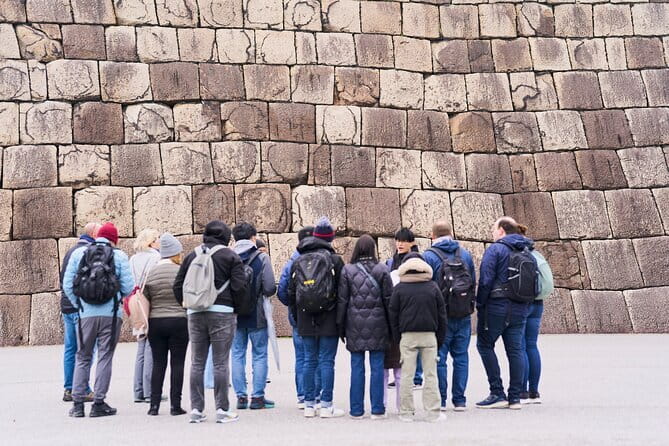
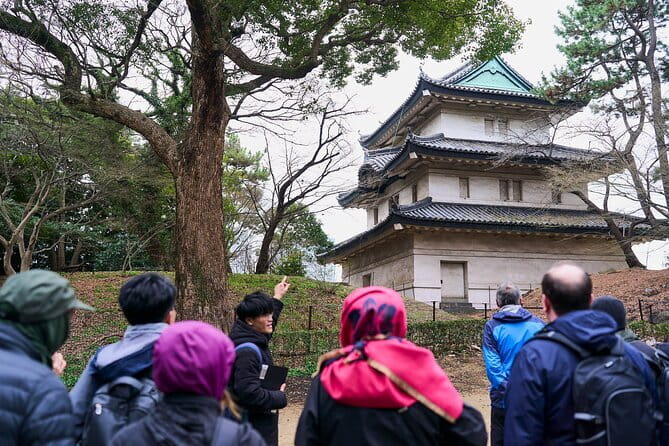
Fujimi-yagura is an old watchtower overlooking the grounds. The guide explains its former role and why it was important.
This stop adds another layer to the defense story. The earlier gates and guardhouses show how people were controlled on the ground. The watchtower suggests how the castle was observed from above. You get a better idea of Edo Castle as a working fortress, not just a royal compound.
The itinerary allows about 10 minutes here. That is enough for an explanation and photographs, but it is not a long viewing stop. Keep your expectations realistic: the route offers exterior views and historical interpretation, not access to every tower or a tour of the Emperor’s residence.
The scale model at Kokyo Sannomaru Shozokan

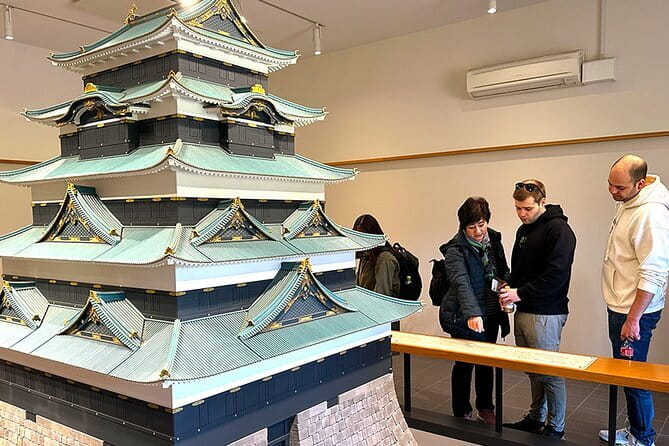
At Kokyo Sannomaru Shozokan, you can see a scale model of the former Edo Castle and visit a souvenir shop with palace-related goods.
The model may be one of the most useful visual moments of the tour. Edo Castle covered a large area, and it can be hard to understand its scale from a few remaining walls and gates. A model helps you connect the separate stops into one organized complex.
This is also a natural point to pause and review what you have seen. If the guide has additional images or diagrams, this is where those pieces can reinforce the earlier explanations. The stop lasts about 10 minutes, so do not expect a long museum visit.
Edo Castle’s missing main tower
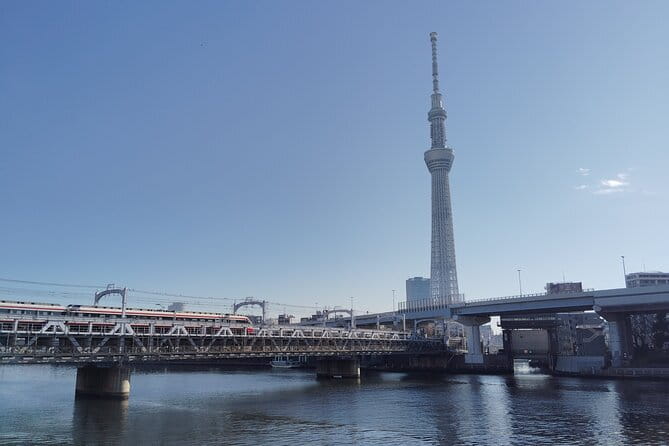
The East Gardens of the Imperial Palace include the former site of Edo Castle’s main tower. The tower itself is gone, but the site lets the guide explain why it no longer stands and what remains.
Ruins can be more instructive than a perfectly preserved building. Here, the absence of the tower makes you think about fire, change, and the way political centers are rebuilt or erased over time. The guide can also place the tower within the wider castle plan, which makes the earlier gates and guardhouses easier to understand.
The stop lasts around 15 minutes. You will spend time outdoors, so sun protection matters, especially in warm weather. One useful practical tip from the experience is to bring water, a hat, or an umbrella. Much of the walk has little shade.
Ninomaru Garden changes the mood
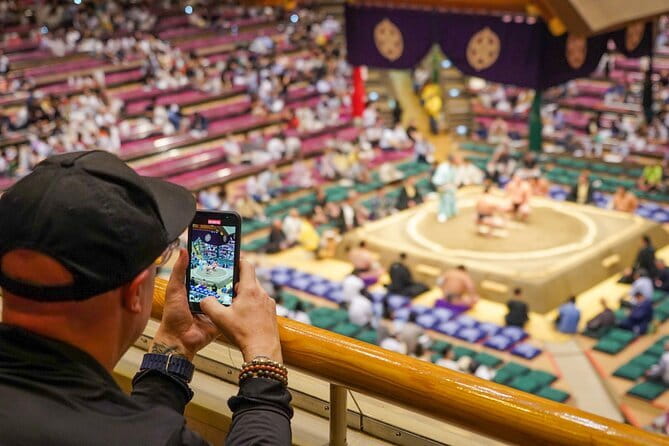
Ninomaru Garden is the quiet turn in the route. After the gates, walls, guardhouses, and watchtower, you reach a traditional Japanese garden with seasonal plants and a pond containing koi.
I like this contrast. The tour does not present the Imperial Palace grounds as only a military site. The garden shows the cultivated, peaceful side of the former castle compound, and it gives you a slower place to look around and take photographs.
The garden stop lasts about 15 minutes. Seasonal plants mean the exact appearance will vary, but the pond, koi, and traditional design provide a clear change from the hard stone and defensive architecture earlier in the walk.
One point to keep in mind is that a garden visit by itself may feel easy to manage without a guide. The guide earns the price here by explaining why the garden belongs in the story of the castle and palace grounds, rather than treating it as a pretty ending with no context.
The guides make the biggest difference
The strongest part of this experience is the quality of the guide assigned to your group. Names connected with especially strong tours include K, Keiko, Tomo, Ai, Anju, Yuki, Yuta, Shin, Nana, Mayuko, Mako, and Franky.
K is repeatedly described as clear, enthusiastic, funny, and able to answer questions in fluent English. Keiko has used laminated images to make the castle layout and history easier to follow. Tomo has been praised for being accommodating, while Anju and Yuta are noted for making the walk both educational and enjoyable.
That does not guarantee a particular guide on your date. It does show what the tour is designed to offer: spoken explanation, questions, stories about Edo and the shoguns, and help connecting Japanese history to the places in front of you.
There is one important exception. At least one participant found the English difficult to follow and left early, saying the garden could be visited without a guide. Since the tour is English only and no Japanese support is available, this is not the right choice if you need bilingual assistance or prefer a mostly self-guided visit.
Is $23.88 good value?
At $23.88 per person, this is a fairly easy tour to justify if Japanese history is new to you. The stops themselves are listed as free, so the cost pays for the guide’s time, explanations, route planning, and historical context.
You can walk through the East Gardens on your own, but you may not understand the differences between the guardhouses or notice how the castle’s defensive design worked. A good guide turns a collection of walls and trees into a readable plan.
The tour is less useful for someone who already knows Edo-period history and mainly wants quiet time in the garden. You might prefer to explore independently if your priority is photography, a slow pace, or avoiding scheduled commentary.
The advertised group size is up to 10, which should allow questions and make it easier to hear the guide. The activity information also lists a maximum of 60 travelers, so the final group size may depend on the departure arrangement. If a very small group is essential to you, confirm that point before booking.
Weather, shoes, security, and physical effort
You will walk for about two hours, including steep slopes and stairs. Most people can participate, but this is not a flat, indoor sightseeing experience.
Wear comfortable footwear. Bring water, particularly in hot weather, and consider a hat or umbrella because much of the route is exposed to the sun. One guide has handed out sweets and menthol napkins during a very hot walk, but you should not rely on that. Your own water and sun protection are the safer plan.
There is a security check to enter the Imperial Palace grounds. Do not bring knives or alcohol. The activity has no stated health restrictions, but the slopes and stairs are the main physical points to consider.
The mobile ticket is convenient, and confirmation arrives at booking. Free cancellation is available up to 24 hours before the start time. Cancellations or changes made inside that period are not accepted for a refund.
Who should book this walk?
I would choose this tour early in a Tokyo visit if you want a clear introduction to the shogun era, samurai ranks, and the Imperial Palace grounds. It gives you a useful framework for later visits to museums, temples, and other Edo-period sites.
It also suits families and mixed-age groups who want history delivered in short sections rather than through a long museum lecture. Guides have been patient with questions, and the route includes enough visual variety to keep the walk moving.
You may want to skip it if you are seeking access to the Emperor’s residence, an indoor palace tour, or a long visit inside historic buildings. You should also think twice if you dislike walking in heat or need support in a language other than English.
Should you book the Tokyo Castle and Imperial Palace walk?
Book it if you want the Imperial Palace grounds to mean more than a pleasant park. For $23.88, the combination of Edo Castle defenses, samurai guardhouses, castle ruins, a scale model, and Ninomaru Garden offers solid value.
The high 4.9 rating from 725 ratings and 99 percent recommendation fit the tour’s main strengths: strong guides, clear stories, a sensible two-hour route, and a good balance between military history and garden scenery. Just remember what you are buying. This is an outdoor, English-language walk around historic remains, not entry to the Emperor’s residence or a full palace interior tour.
FAQ
How long does the Tokyo Castle and Imperial Palace tour last?
The tour lasts approximately two hours.
How much does the tour cost?
The listed price is $23.88 per person.
Is the tour conducted in English?
Yes. The tour is conducted in English only, and Japanese language support is not available.
Where does the tour begin?
It begins at Starbucks Coffee in Kokyo Gaien Wadakura Fountain Park, 3-1 Kōkyogaien, Chiyoda City, Tokyo 100-0002, Japan.
Where does the tour end?
The activity information says it concludes at the meeting point, while the route description says it concludes in front of the ginkgo-lined avenue stretching toward Tokyo Station. Confirm the final end point with your guide.
Can I visit the Emperor’s residence?
No. The Emperor’s residence is not open to the public.
Are the tour stops free to enter?
The listed stops have no admission ticket charge.
What should I avoid bringing?
Do not bring knives or alcohol because there is a security check to enter the Imperial Palace grounds.
Is the tour physically demanding?
You will need to walk for about two hours, including steep slopes and stairs. Comfortable shoes, water, and protection from the sun are recommended.
Fresh palace tours around Tokyo
- Tokyo: Imperial Palace East Gardens Walking Tour★ 4.8 · 353 reviews
- Tokyo walking tour around Imperial Palace and Tokyo Station★ 5.0 · 3 reviews
- Tokyo: Imperial Palace, the history of Japan (ENGLISH GUIDE)★ 5.0 · 77 reviews
- Tokyo: Imperial Palace with Nostalgic Alley Kagurazaka tour★ 4.3 · 8 reviews
- Tokyo: Pvt. Tour – Edo Castle & Imperial Palace East Gardens★ 4.8 · 63 reviews
- Tokyo: Edo Castle Ruins & Imperial Palace East Garden Tour★ 4.4 · 13 reviews
- Tokyo: Imperial Palace East Gardens and Tokyo Station Tour★ 5.0 · 16 reviews
- Tokyo: Edo Castle & East Garden of the Imperial Palace Tour★ 4.7 · 112 reviews
Royal Palace Tours: the shortlist.


Royal Palace Expert Guided Tour with Skip-the-Line
Read our review →

Dubai To Abu Dhabi: Grand Mosque, Royal Palace & Etihad Towers
Read our review →
Madrid Essential: Historic Center, Plaza Mayor & Royal Palace
Read our review →

Abu Dhabi Day-Trip Grand Mosque, Royal Palace & Lunch
Read our review →
Louvre Entry & Etihad Tower/Royal Palace Options
Read our review →This visit also appears in